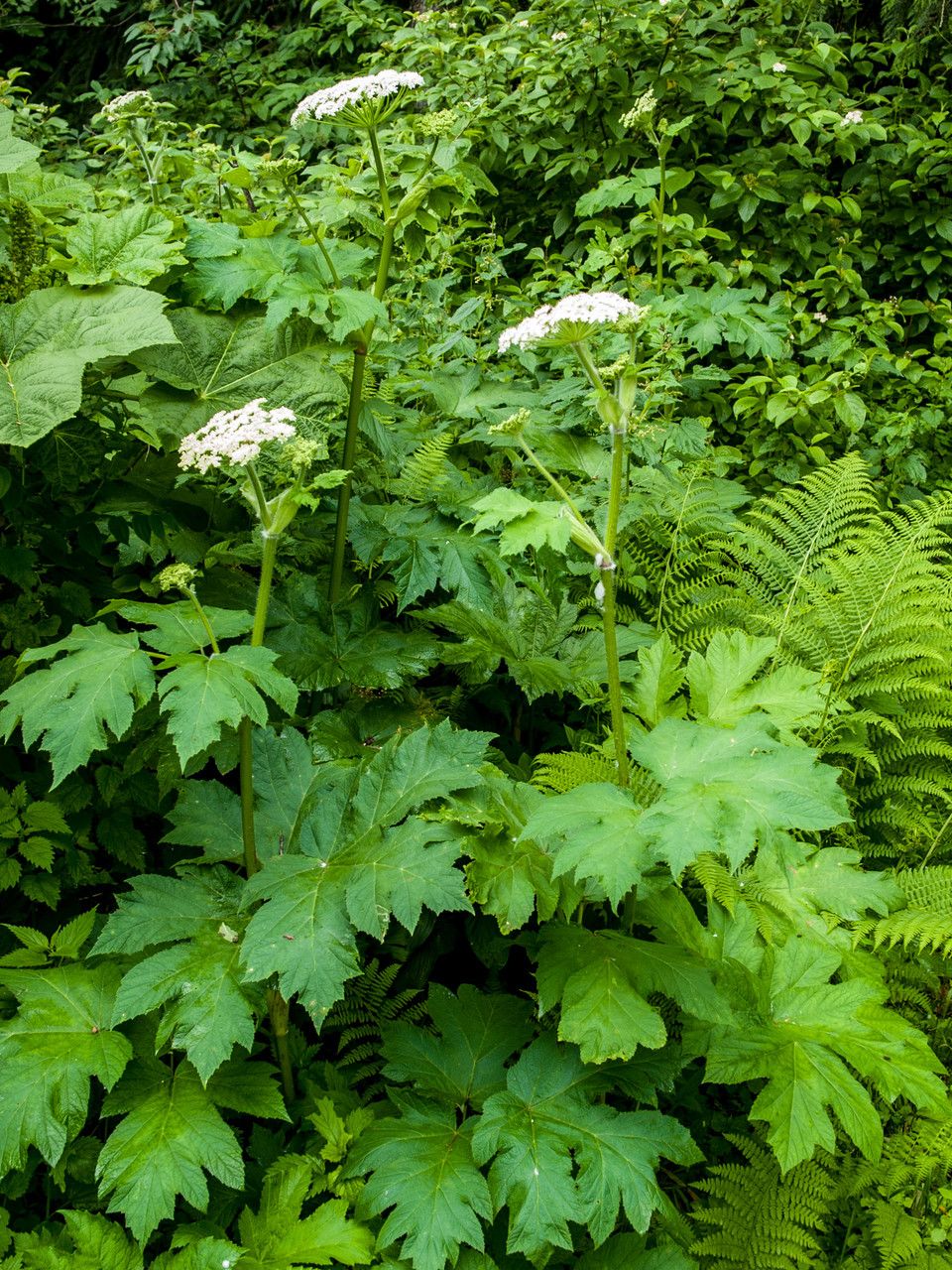
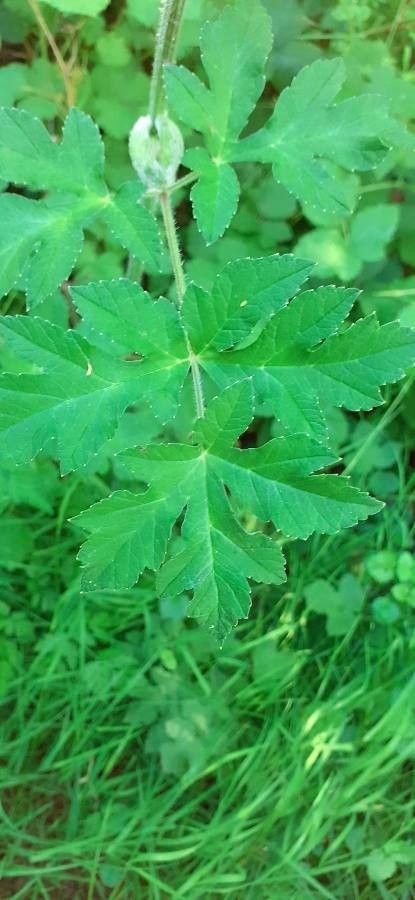
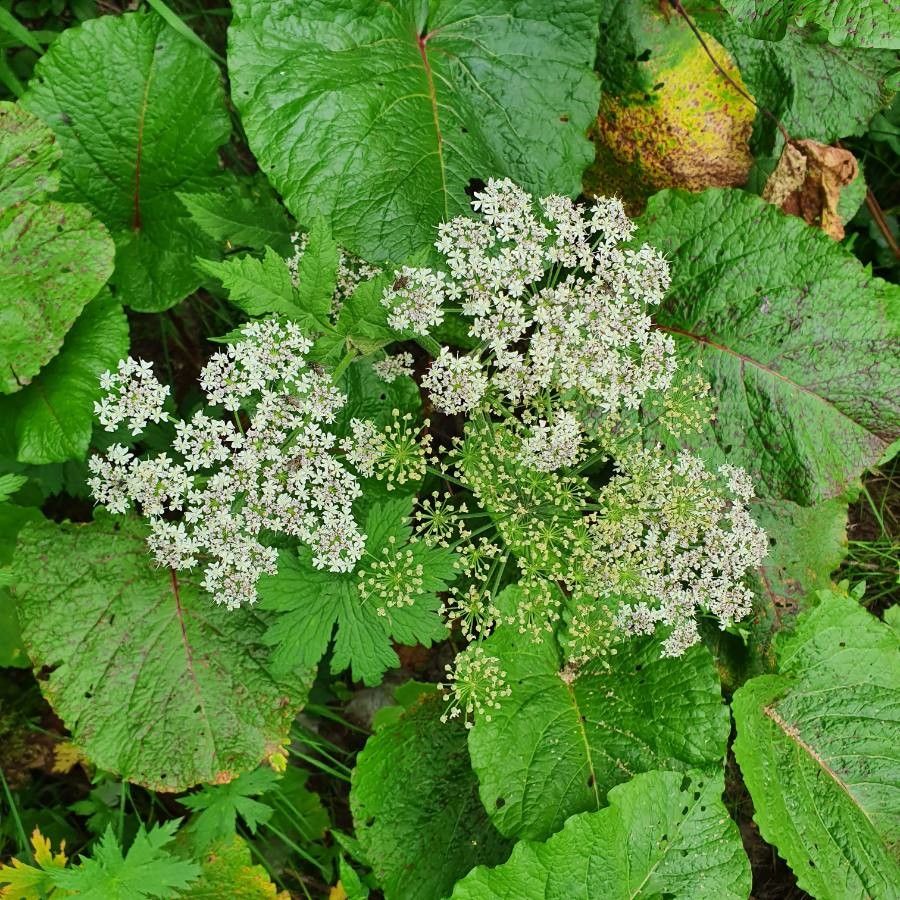
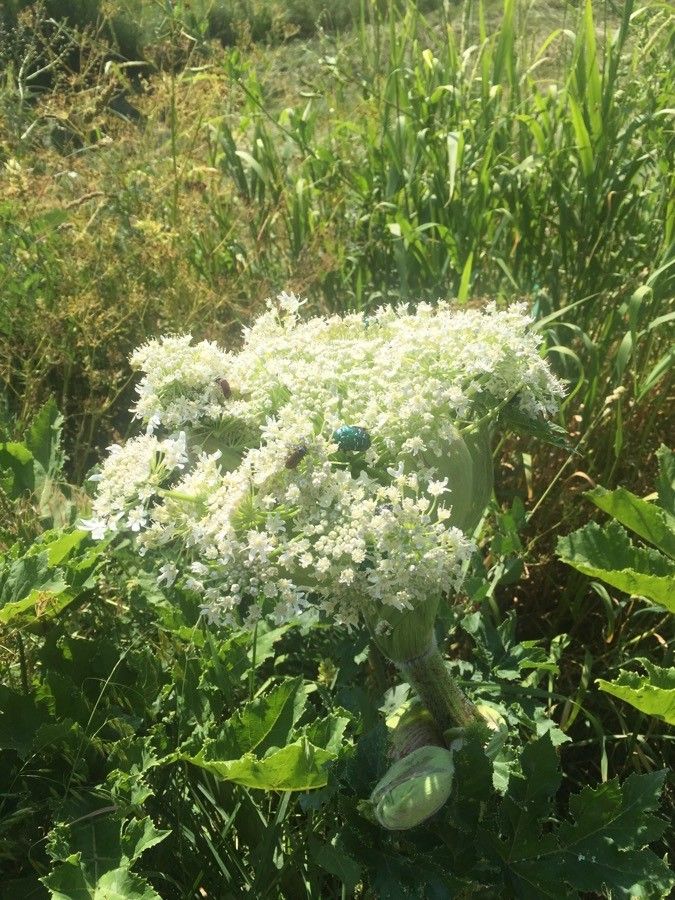
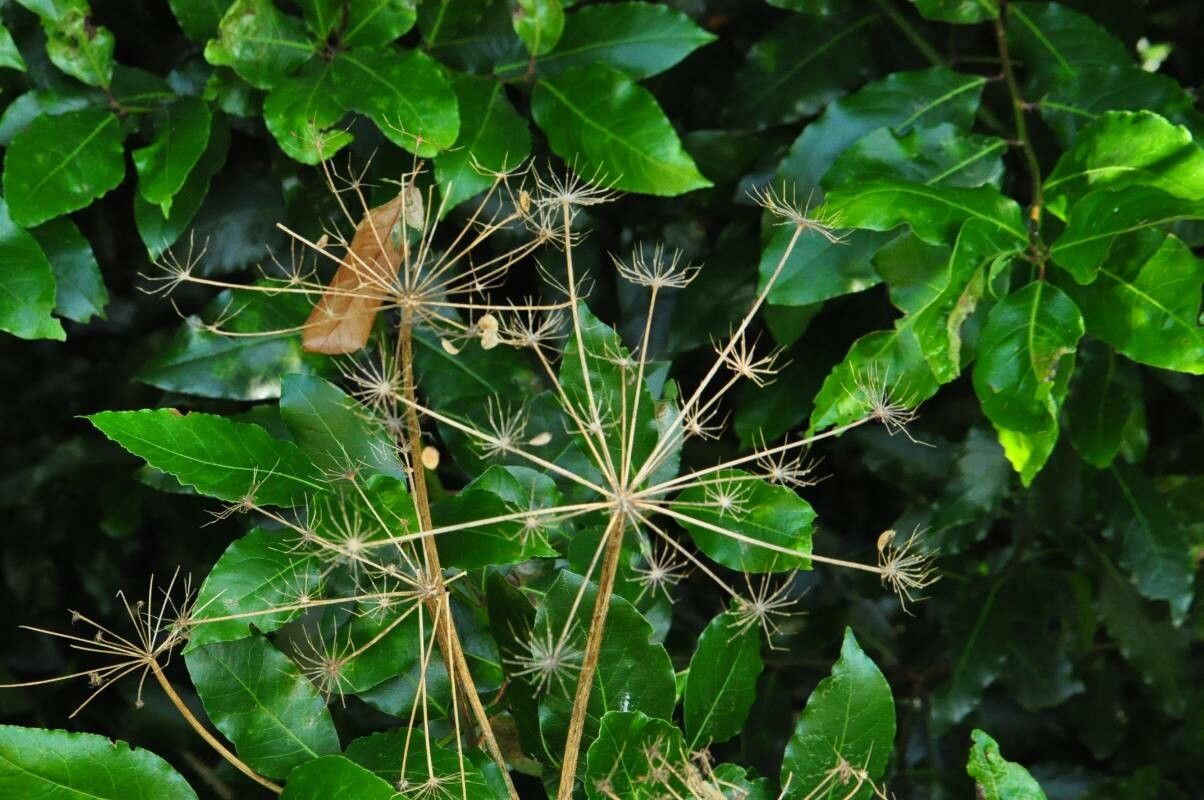
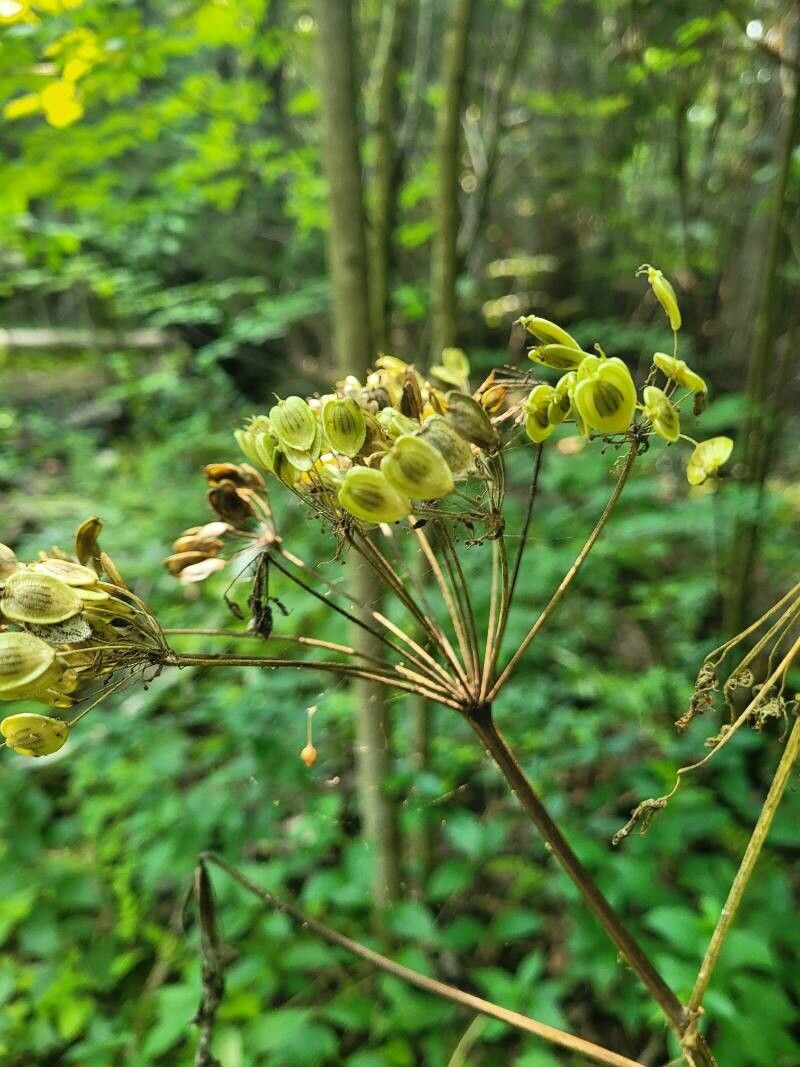
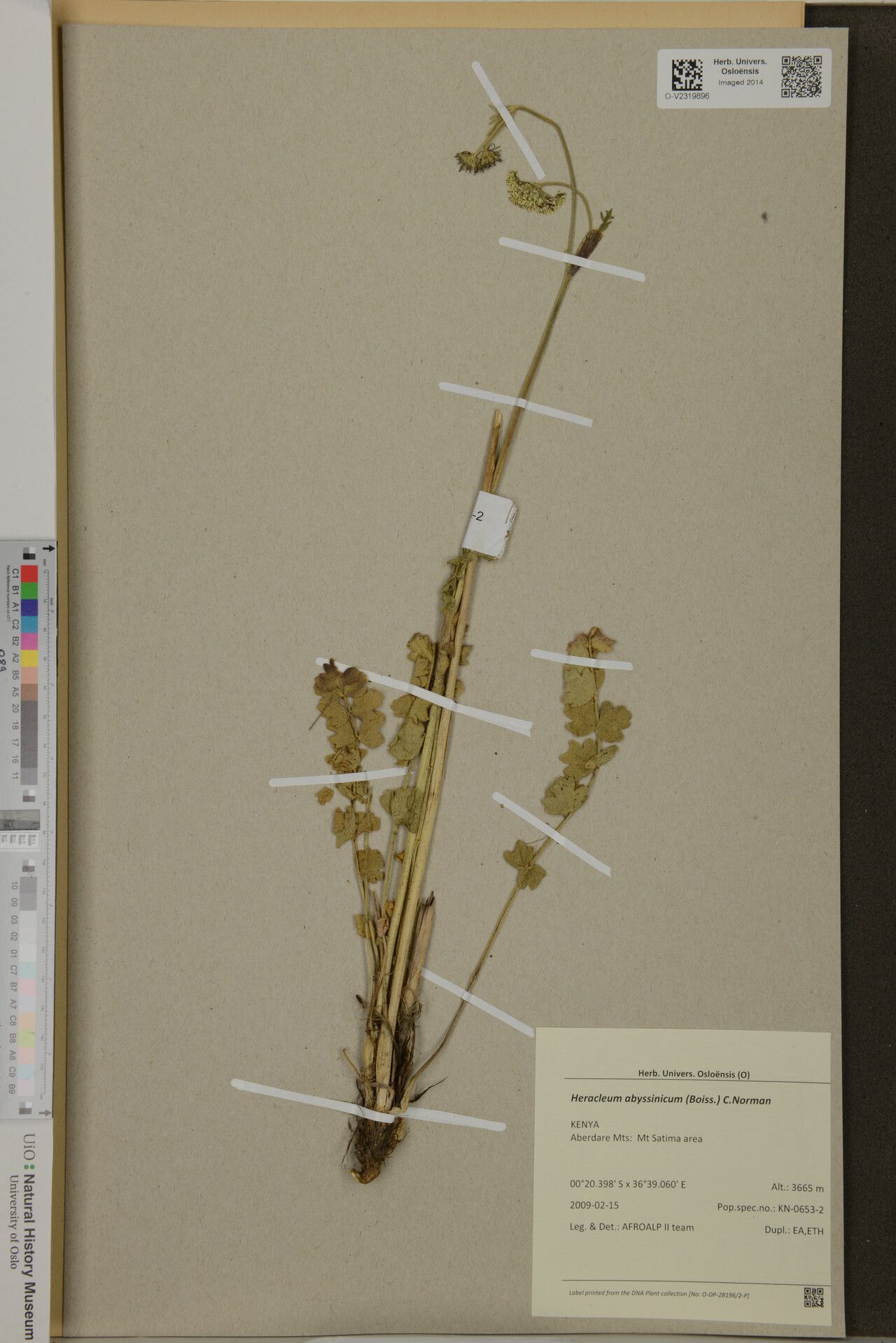
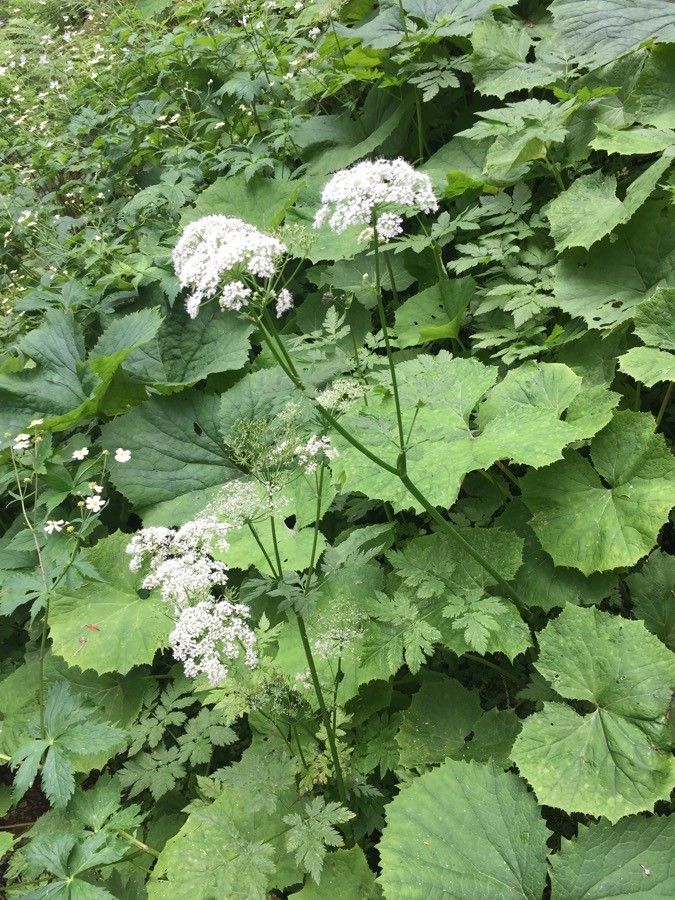
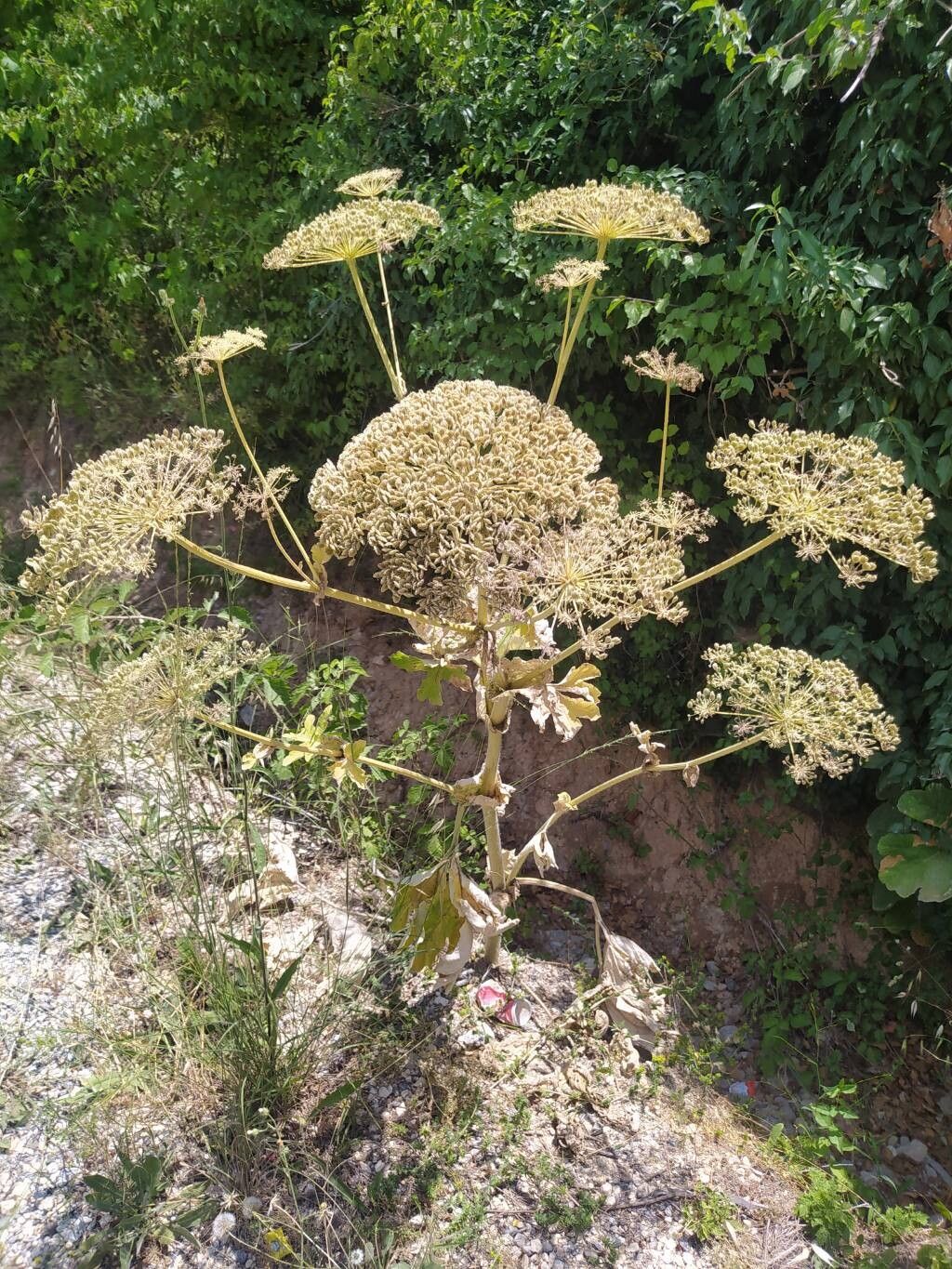
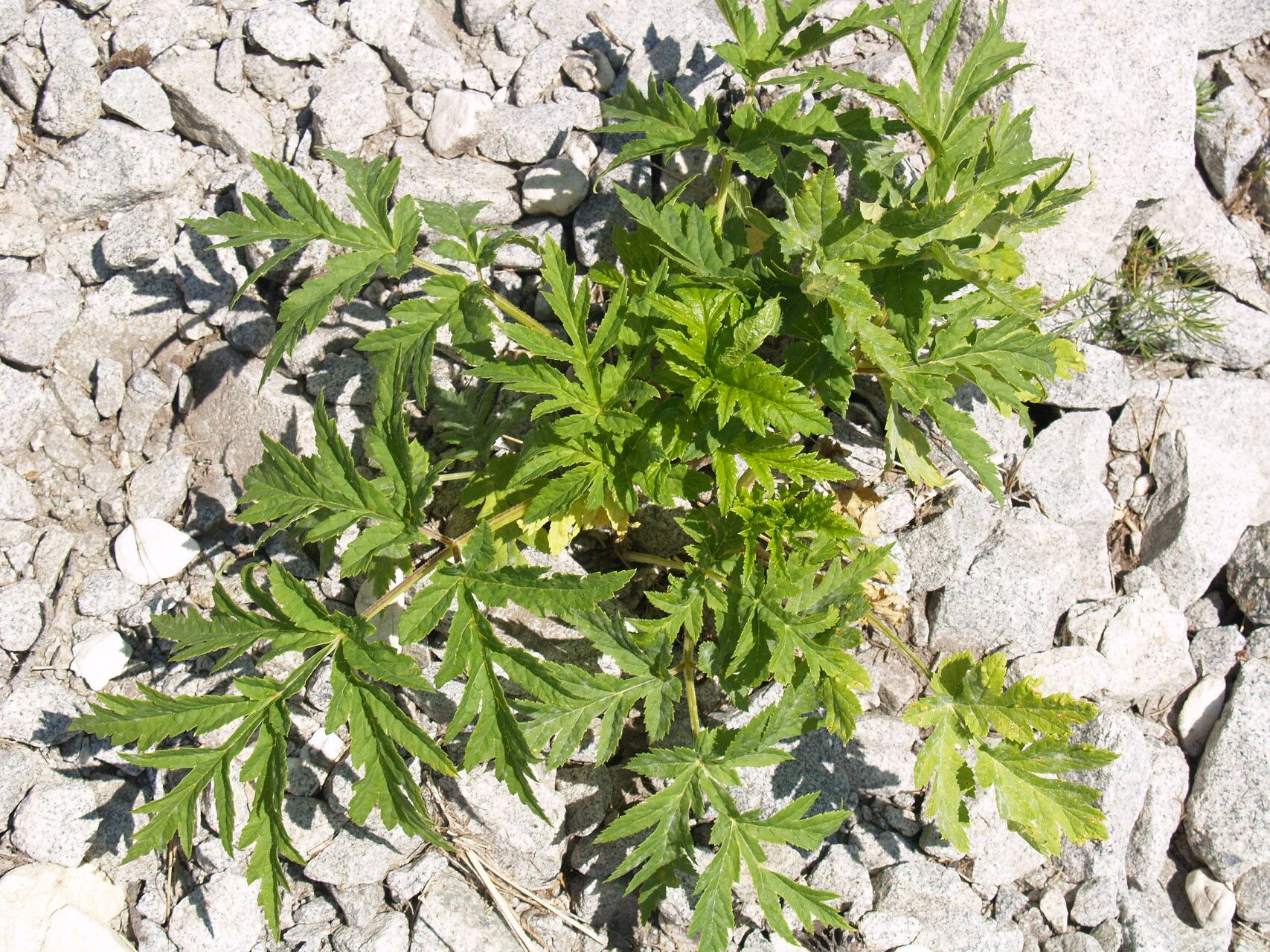
Heracleum lanatum, commonly known as Cow Parsnip or Indian Celery, is a perennial plant in the Apiaceae family. Native to North America, it thrives in diverse habitats, including meadows, forests, and wetlands. The plant can grow to a height of 2 to 3 meters, with large, deeply lobed leaves featuring toothed edges. Its flowers are white or cream-colored, forming large umbels that can reach up to 30 cm in diameter. Cow Parsnip serves as a crucial food source for various wildlife, including deer, elk, moose, bears, and small mammals like rodents. Indigenous peoples have also used it medicinally to treat skin irritations caused by poison ivy or insect bites. However, it's important to note that Cow Parsnip's sap contains chemicals called furanocoumarins, which can cause skin irritation when exposed to sunlight (a condition known as phytophotodermatitis). Therefore, it is essential to avoid direct contact with the plant when harvesting or handling it. Overall, Heracleum lanatum is a beautiful native plant with significant ecological importance, but it should be handled with care due to its potential health risks.
Cow parsnip is fairly resistant to disease and generally not prone to illnesses. Nonetheless, it can be affected by pests and diseases present in its environment. Those infections tend to be mild. For care, this plant requires moderate maintenance. It should be pruned regularly to keep a neat appearance and encourage healthy growth. Fertilizing can also help stimulate flowering. Cow parsnip is appropriate for anyone with outdoor space, such as a garden or patio, and does not demand much gardening experience. When cultivated indoors, it may need more attentive care.
How to keep Heracleum Lanatum.
Light
Cow parsnip grows best with plenty of light, though it can also thrive in places that receive a moderate amount of light. Its steady development depends on this exposure. Too much or too little light can impair its growth, reflecting the light conditions of its native habitat.
Temperature
Cow parsnip is an herbaceous temperate plant that usually grows in cooler climates with average temperatures between 0 and 35 ℃ (32 and 95 ℉). It can withstand frosty, moist conditions during its spring growing period. In summer it prefers slightly higher elevations and cooler temperatures to avoid dehydration and heat stress. To prevent excessive transpiration in the warmer months, it is advisable to water the plant regularly and provide adequate shade.
Fertilizer
One fertilizer application in spring is generally adequate for Cow parsnip, though multiple feedings can maximize growth. Feed every month to every month and a half. Fertilization improves leaf appearance and function, encouraging consistent color and a healthy texture. It also promotes root growth and nutrient uptake for the plant’s long-term health.
Botanical profile.
- Plant Type
- Herb
- Life Cycle
- Perennial
- Genus
- Heracleum
- Family
- Apiaceae
- Hardiness Zone
- 3-9
- Mature Height
- 2.13 m
- Mature Spread
- 30 cm to 61 cm
- Leaf Color
- Green
- Leaf Type
- Deciduous
- Flower Color
- White
- Flower Size
- 20.32 cm
- Bloom Time
- Late spring, Early summer, Mid summer
- Planting Time
- Autumn
- Harvest Time
- Mid summer
Other names.