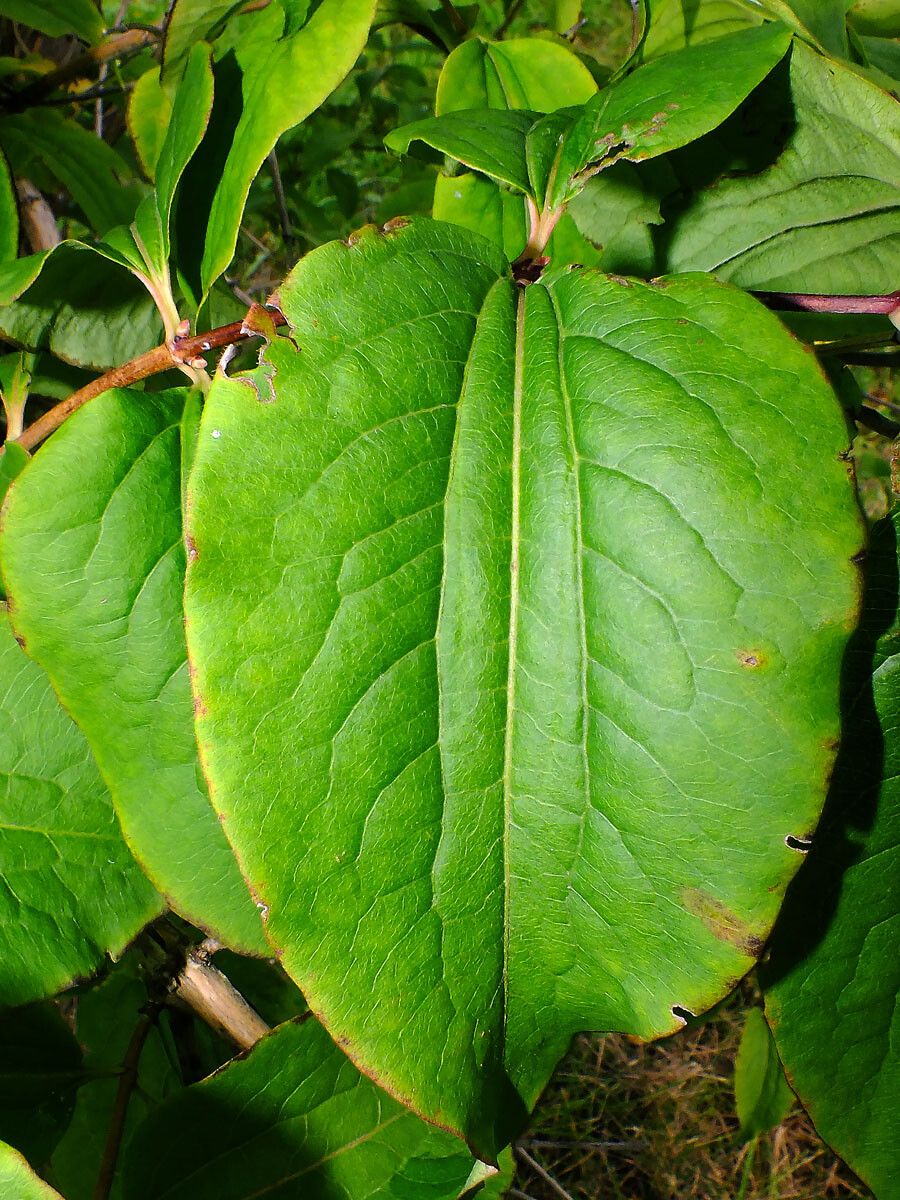
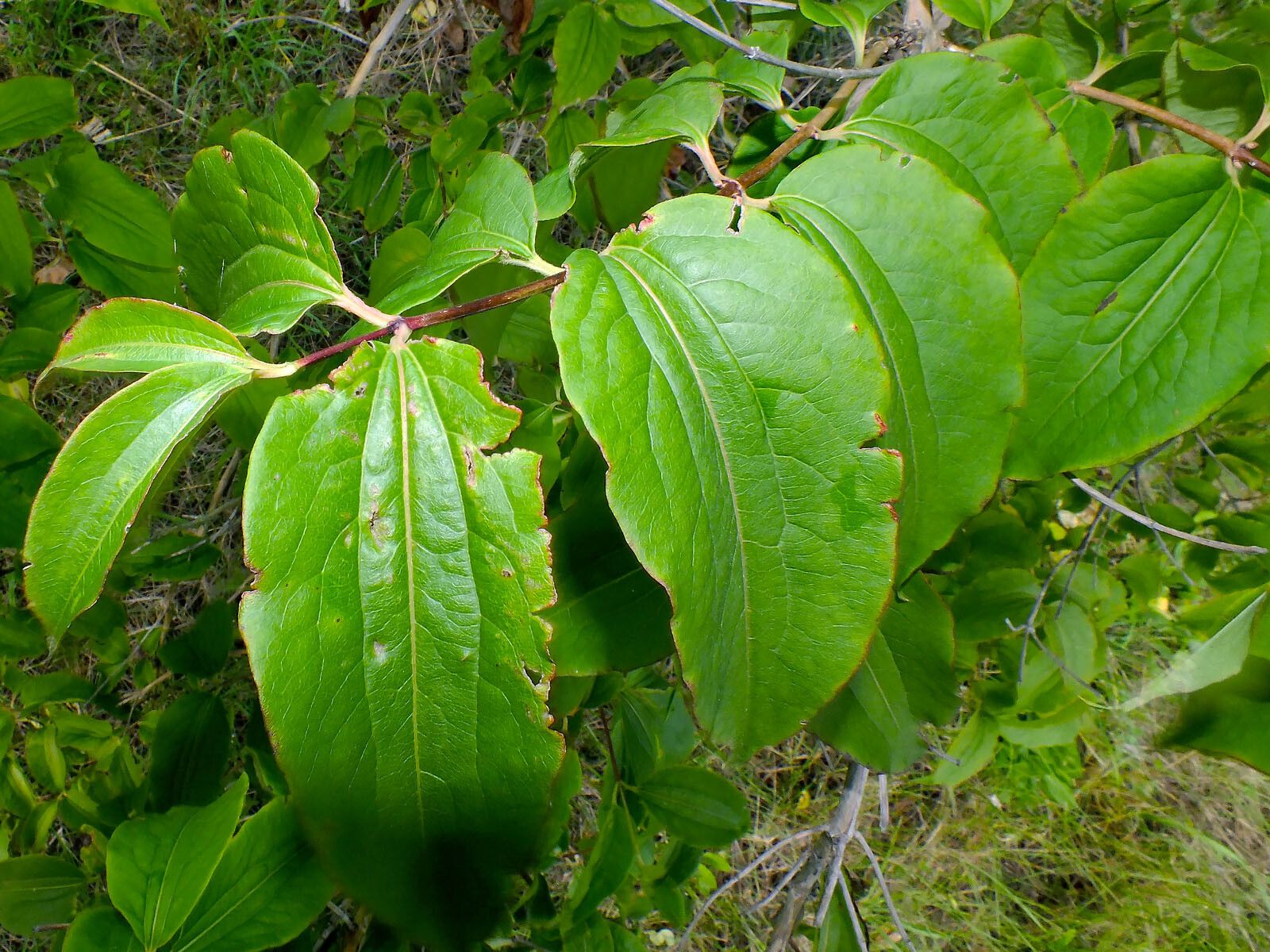
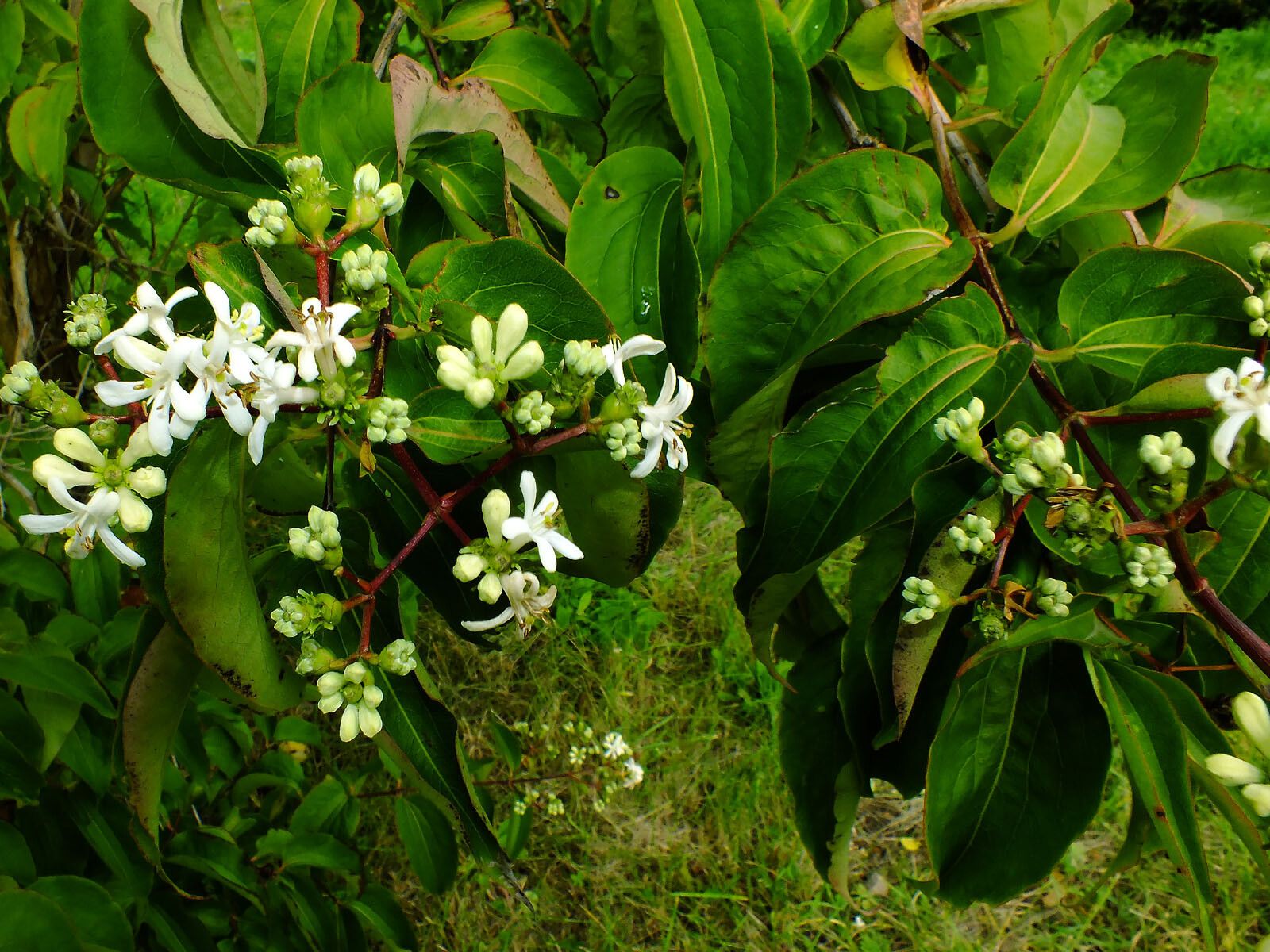
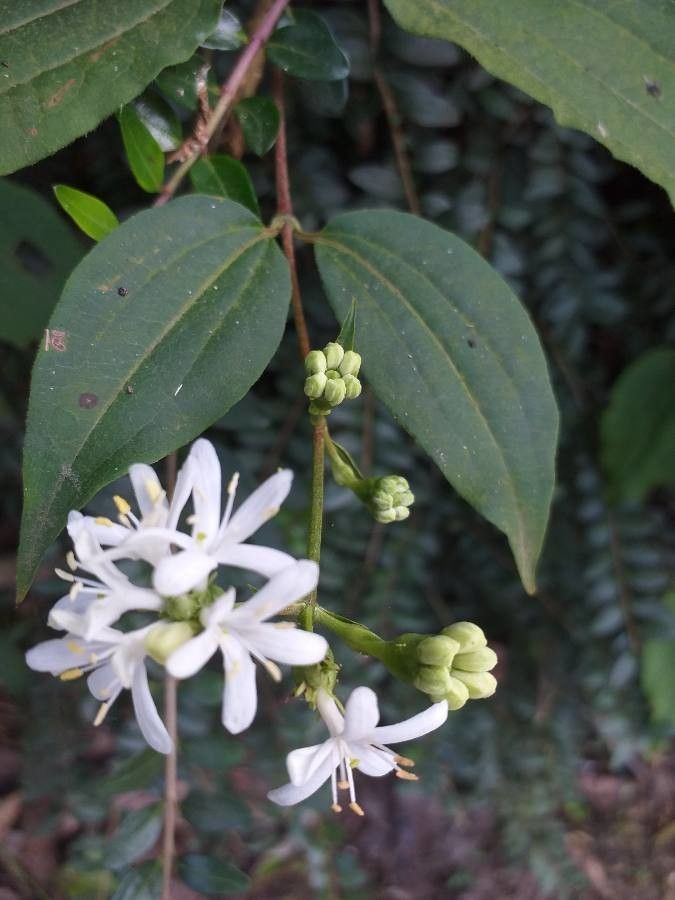
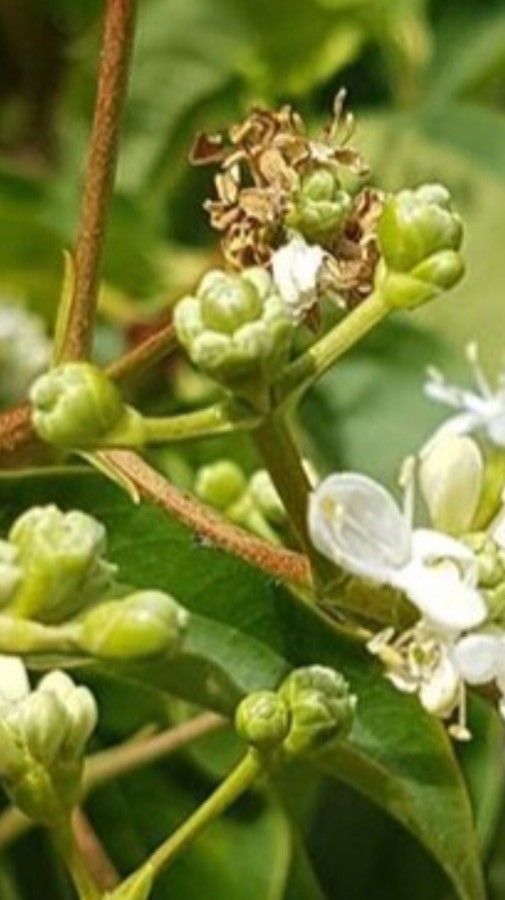
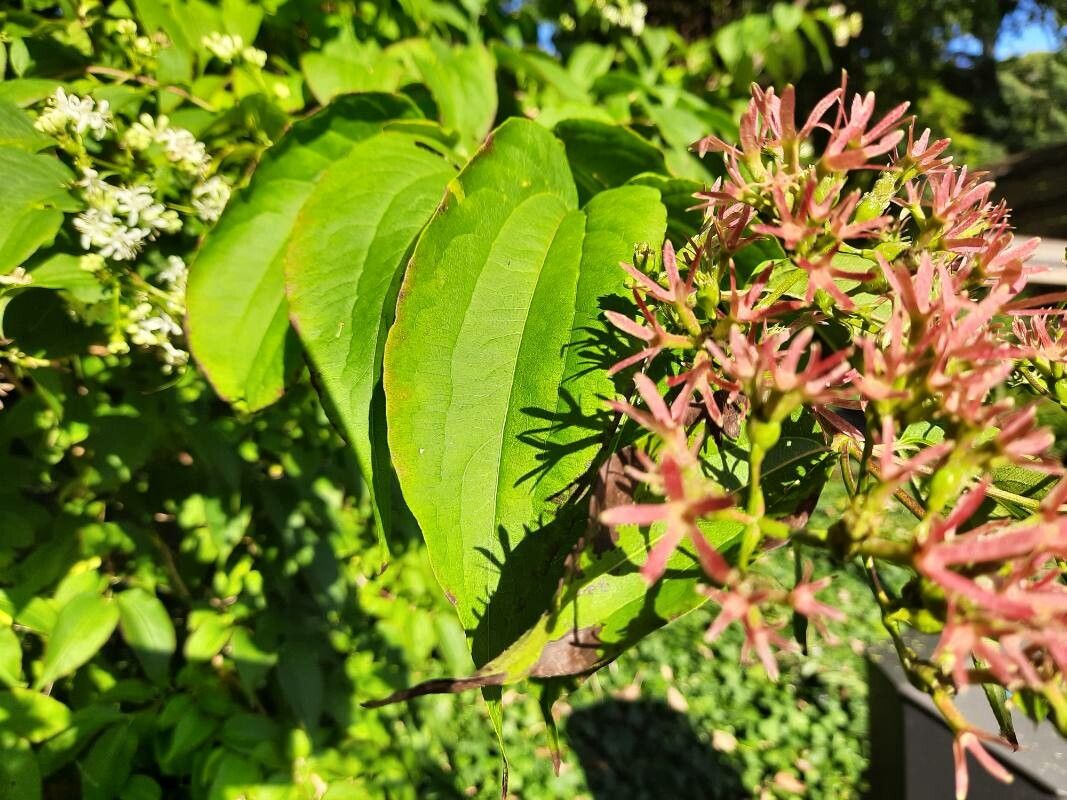
Heptacodium miconioides, commonly known as the Seven-Son Flower, is a deciduous shrub or small tree native to China. Belonging to the honeysuckle family, it can reach up to 20 feet in height and 15 feet in width. This plant is notable for its unique blooming pattern: it produces clusters of fragrant white flowers in late summer, followed by small red fruits in the fall. One of its most striking features is the exfoliating bark, which peels away in strips to reveal a beautiful cinnamon-brown color underneath.
Heptacodium miconioides thrives in full sun or partial shade and well-drained soil. While it can tolerate drought once established, regular watering during dry periods is beneficial. This plant is relatively low-maintenance and requires pruning only for shaping or removing damaged branches.
Beyond its ornamental appeal, Heptacodium miconioides attracts pollinators such as bees and butterflies with its nectar-rich flowers. Additionally, its fruit serves as a food source for birds during the winter months.
In summary, Heptacodium miconioides makes an attractive addition to any garden due to its unique blooming pattern, eye-catching exfoliating bark, low maintenance needs, and ecological benefits as a pollinator attractor and bird food source.
The Seven sons tree resists disease well and is generally not prone to illnesses. In terms of care, this plant is fairly low-maintenance. When planted outdoors it needs minimal watering, and larger plants usually do not require pruning. Smaller plants, however, should be pruned after they have finished blooming. The Seven sons tree is suitable for anyone with outdoor space, such as a garden or a deck, and does not demand much experience in plant care.
How to keep Heptacodium Miconioides.
Light
Seven sons tree naturally does best in places that receive sunlight for most of the day. It can, however, tolerate sites with a modest amount of shade. Too much sun can cause leaf burn, while too little light may impede its growth and flowering.
Water
The seven sons tree comes from the humid regions of China and thrives with consistent moisture. However, it is also resilient enough to withstand occasional dry spells. To keep it well-hydrated, it is recommended to water it weekly. Additionally, adjusting soil moisture based on seasonal rainfall patterns can enhance its ornamental value as an outdoor plant.
Temperature
Seven sons tree is native to regions where temperatures range from 41 to 95 °F (5 to 35 ℃), indicating it tolerates a fairly wide span of temperatures. In colder seasons, consider placing it in a sheltered location or applying protective insulation to improve its chances of survival.
Fertilizer
Timing is important when fertilizing the Seven sons tree. Apply fertilizer in early spring and continue monthly until early summer. Fertilizer encourages attractive blooms and supplies energy during both dormant and active growth phases.
Pruning
The Seven Sons Tree is known for its striking white flowers and distinctive peeling bark. To maintain its health and beauty, it's recommended to prune the tree in early spring. This helps remove any damaged branches and improves air circulation. By making thinning cuts, you can encourage new growth. Additionally, performing rejuvenation pruning every few years supports the tree's overall health and promotes profuse flowering. This not only enhances the tree's longevity but also its aesthetic appeal.
Botanical profile.
- Plant Type
- Tree, Shrub
- Life Cycle
- Perennial
- Genus
- Heptacodium
- Family
- Caprifoliaceae
- Hardiness Zone
- 5-9
- Mature Height
- 3.05 m to 6.1 m
- Mature Spread
- 2.44 m to 3.05 m
- Leaf Color
- Green
- Leaf Type
- Deciduous
- Flower Color
- White
- Flower Size
- 2.54 cm
- Bloom Time
- Mid summer
- Planting Time
- Spring, Autumn
- Harvest Time
- Late summer, Early fall
Other names.
Reader questions.
How should I water my Seven sons tree in the best way?
To promote excellent root development, it is recommended to place a garden hose at the base of the plant. When watering, avoid directly spraying the leaves. If the plant is outdoors and exposed to direct sunlight, the leaves may require more water. Moistening the roots can be achieved by using bubblers or soaker hoses for each plant. For adding or removing plants, using soaker hoses that cover the entire garden or bed will help push the roots deeply. Make sure to drain any excess water and allow the soil to dry before watering again. Watering at ground level is advised to prevent diseases. On sunny days, it may be beneficial to spray the entire bush with water. Regardless of whether the plant is in a pot or in the ground, remember that the Seven sons tree prefers deep watering rather than light sprinkling.
Why should I put fertilizer on my Seven sons tree?
Fertilizing a Seven sons tree is important for several reasons. Firstly, it helps the tree produce beautiful blooms. To ensure the best flowers, it is recommended to fertilize in early spring. Additionally, fertilizer provides the tree with extra energy to store in the ground during its dormant phases. By giving it nutrients during fall planting or late spring, the tree can conserve more energy to use when it starts growing again.
What are the sunlight requirements for a Seven Sons Tree?
The Seven Sons Tree, or Heptacodium miconioides, thrives best under conditions of full sun, meaning it requires more than 6 hours of sunlight daily. However, it can also tolerate partial sun, which refers to about 3-6 hours of sunlight each day. It's important to observe how sunlight moves through your garden to ensure the spots chosen for your plant provide a harmonious balance of light and shade, guaranteeing the plant's well-being.
What is the native temperature range for the Seven sons tree?
The Seven sons tree, also known by its botanical name Heptacodium miconioides, thrives in areas where the temperature ranges from 41 to 95 °F (5 to 35 °C). This range suggests that the tree has a considerable tolerance for thermal variability. It can endure both the heat and the cold, making it adaptable to a variety of climate conditions.
What should I do if I give the Seven sons tree too much or too little water?
An overwatered Seven sons tree can exhibit yellowing, dropping, and wilting leaves, as well as a dull and unhealthy appearance with mushy stems. When these signs appear, it's best to adjust your watering schedule. Wilting can also be a symptom of under watering, which causes crispy and dry leaves instead of soft and wilted ones. In this case, check the soil moisture and provide a thorough watering when it is dry. However, even with sufficient water, the Seven sons tree may still have dry and yellow leaves due to root damage. Once the tree returns to normal, the yellowing of leaves will cease. When having a Seven sons tree indoors, always check for moisture levels and avoid overwatering. If there are signs of black spots, let the soil dry by withholding watering for a few days. Overwatering can lead to root rot, indicated by discolored and slimy roots. To prevent root rot, avoid overly soggy soil and consider transferring the tree to a different pot if necessary. When planting the Seven sons tree outdoors, ensure proper moisture by checking the soil's dryness. In case of underwatering, give adequate water to facilitate recovery.
When should I fertilize my Seven sons tree?
When fertilizing a Seven sons tree, timing is crucial. If fertilizer is applied too early, when the tree is still dormant, it will not be effective and will be washed away by rainwater, causing waste and pollution. To ensure effective fertilization, the first application should be made in early spring and then continue to fertilize once a month until early summer.
What essentials should be considered for growing a Seven Sons Tree?
The Seven Sons Tree naturally prospers in regions bathed in sunlight for most of the day but can also survive in areas with a moderate amount of shade. Leaf burn might occur from overexposure to sunlight, whereas insufficient light can impede the tree's growth and flowering. When natural sunlight is not enough, especially during winter or in less sunny areas, artificial lighting becomes crucial. LED lights are recommended due to their ability to provide specific light wavelengths needed by plants. Full sun plants require 30-50W per square foot of artificial light, partial sun plants need 20-30W per square foot, and full shade plants require 10-20W per square foot. The light should be placed 12-36 inches above the plant to mimic natural sunlight, and most plants will need 8-12 hours of light per day.
How should the Seven sons tree be protected in colder seasons?
During colder seasons, the Seven sons tree shows strong cold resistance and special frost protection measures are usually not necessary. However, if temperatures are expected to drop below -25°C, it is important to protect the tree from the cold. This can be done by wrapping the trunk and branches with non-woven fabric or cloth. Additionally, before the first freeze in autumn, watering the plant abundantly to ensure the soil remains moist and enters a frozen state can help prevent drought and water scarcity during winter and early spring.
How often do I need to water my Seven sons tree?
The Seven Sons tree prefers deep watering with longer intervals. To ensure proper hydration, soak the tree with a gallon of water each time, especially if it is planted in a pot. Potted plants have limited water storage, causing the soil to dry out quickly. In cold regions, watering should be done every 3 to 5 days. The best time to water is in the morning when the soil is dry, both indoors and outdoors. You can also check the soil moisture by examining the top 2-3 inches. If it is dry, the plant needs a full watering. On hot days, monitor the moisture levels daily as heat can rapidly dry the soil. If you have a garden, irrigate the soil accordingly. In a hot climate, watering once a week is sufficient. Only water when the top 2 to 3 inches of soil are too dry, preventing root rot. Consider rainfall when deciding whether to water the plants. If there is already ample rain, additional watering may not be necessary. Seven Sons trees mostly grow in spring and fall. Outdoors, apply a 3 to 4-inch layer of mulch to conserve water. Sandy soil requires more frequent watering due to its fast drainage, while clay soil requires less frequent watering, typically every 2-3 days. Keep track of watering dates to avoid missing a day. Drooping leaves indicate the need for immediate watering.
When should I not put fertilizer on my Seven sons tree?
To ensure proper growth and blooming, avoid giving the Seven sons tree excessive nitrogen-rich fertilizer. It is recommended to choose a fertilizer with a lower nitrogen content compared to other nutrients. Additionally, refrain from fertilizing the tree after early autumn, as this can promote excessive growth just before winter. Likewise, it is not advisable to fertilize the tree during hot and dry periods, as dry soil is less effective in delivering fertilizer and the subsequent growth will demand more water that may not be available. It is best to apply fertilizer earlier in the season when temperatures are cooler. Lastly, it is important to be aware that the Seven sons tree can absorb fertilizer from nearby plants or lawns, so be cautious to avoid inadvertently providing the tree with a double-dose of fertilizer.
What are the symptoms of light deficiency in a Seven Sons Tree?
When a Seven Sons Tree is not getting enough light, it may exhibit a range of symptoms. New leaves might grow smaller in size; the plant could display a leggy or sparse growth pattern, with increased spaces between leaves or stems leading to a thin appearance. The plant may shed older leaves sooner than normal to conserve energy for new growth, resulting in faster leaf drop. Furthermore, growth may become stunted or altogether halt, and new leaves could appear lighter in color or even develop chlorosis, a condition where leaves lose their green pigmentation and turn yellow because of excessive light or nutrient deficiencies. Symptoms like sunscald, leaf curling, wilting, and leaf scorching can also occur due to overexposure to intense sunlight.
What symptoms indicate that the Seven sons tree is experiencing low temperature stress?
If the Seven sons tree is exposed to temperatures below -25°C, there may not be immediate noticeable changes during the winter. However, come spring, the branches might become brittle and dry, and no new shoots will emerge. To combat this, any dead branches that have failed to produce new leaves should be pruned away in the spring to promote healthy growth.