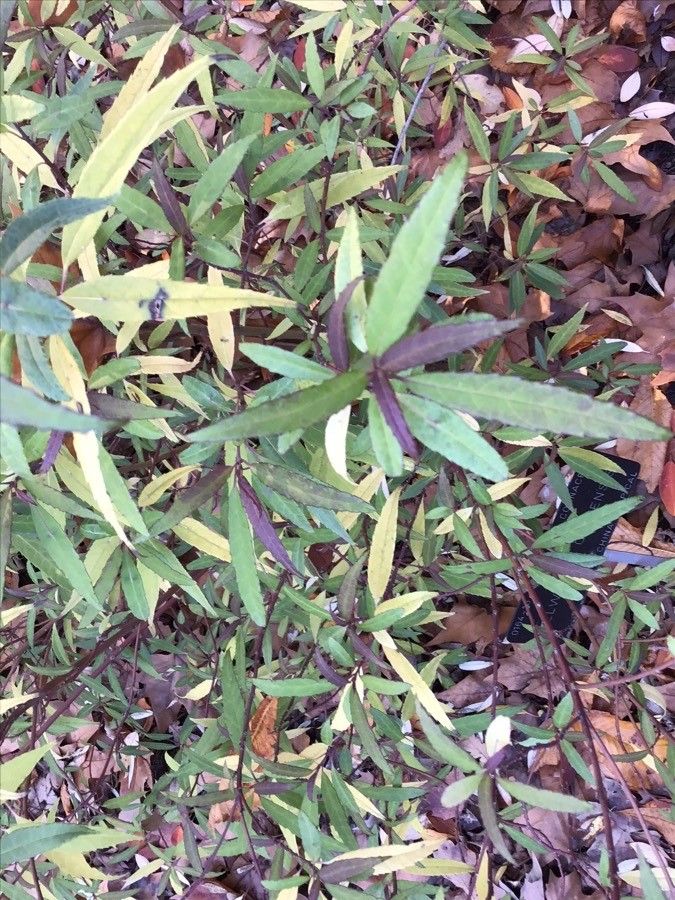
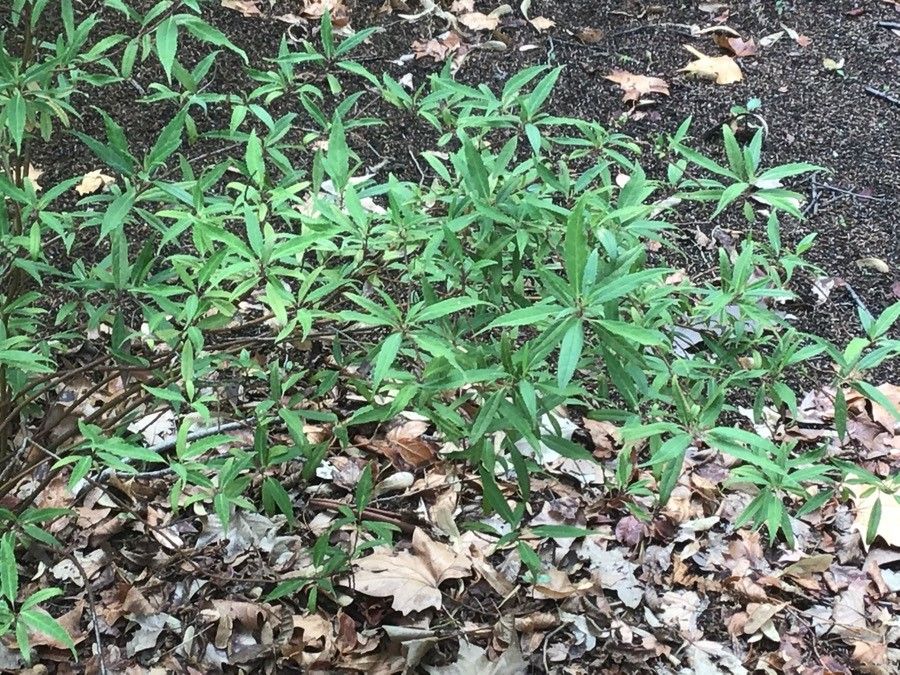
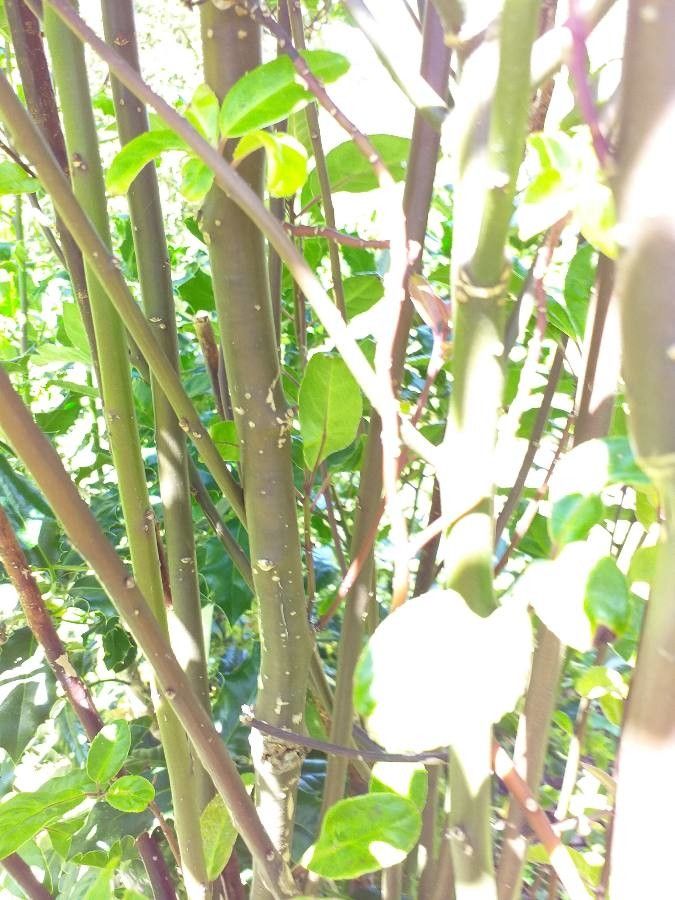
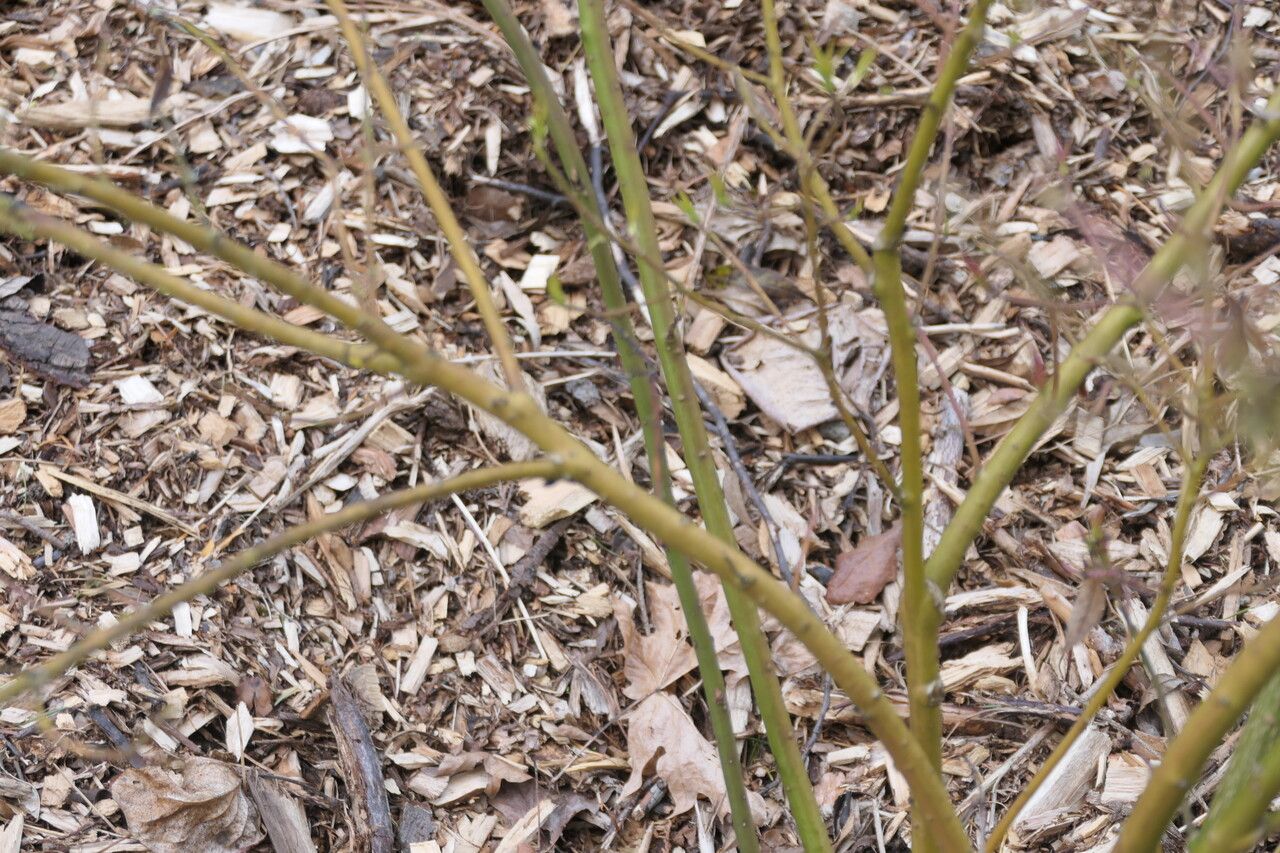
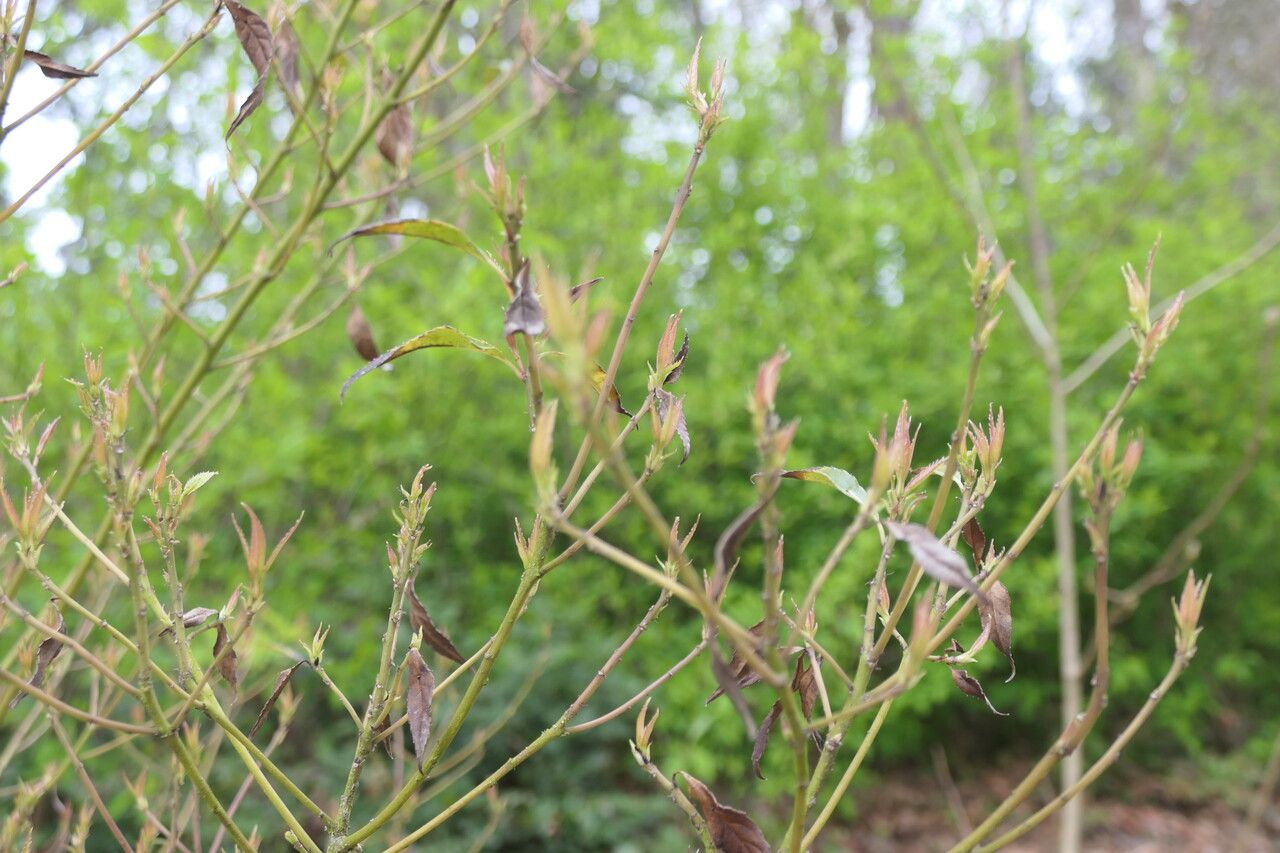
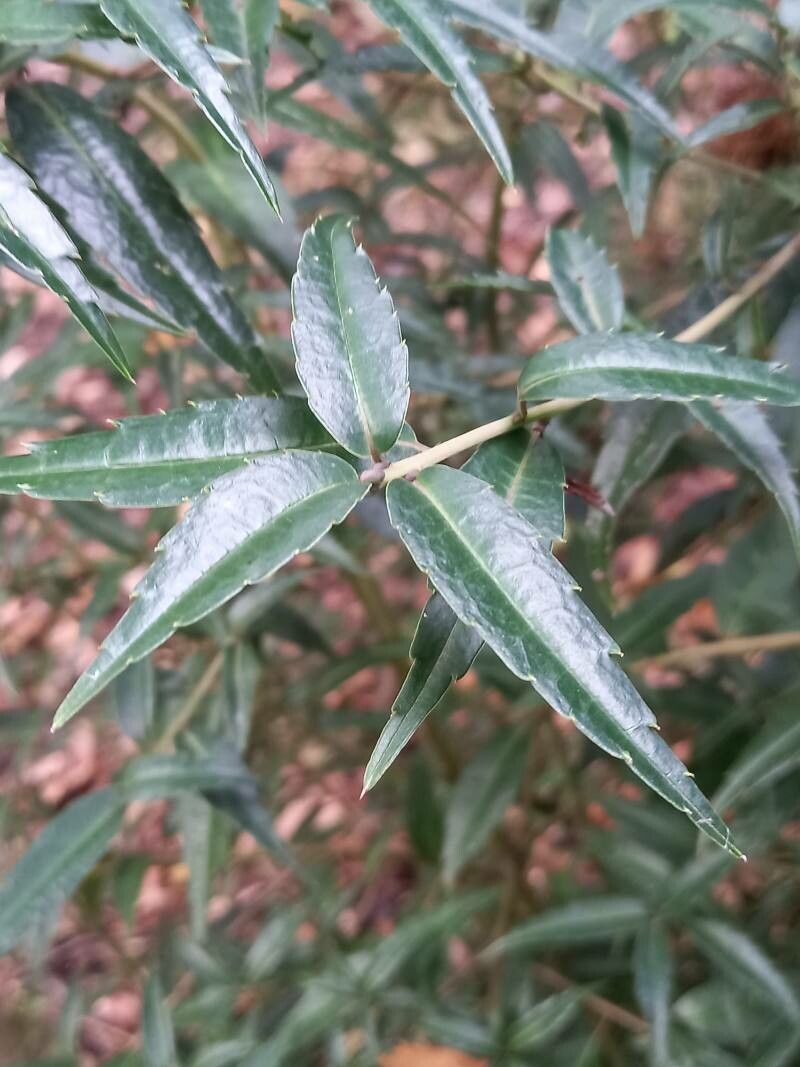
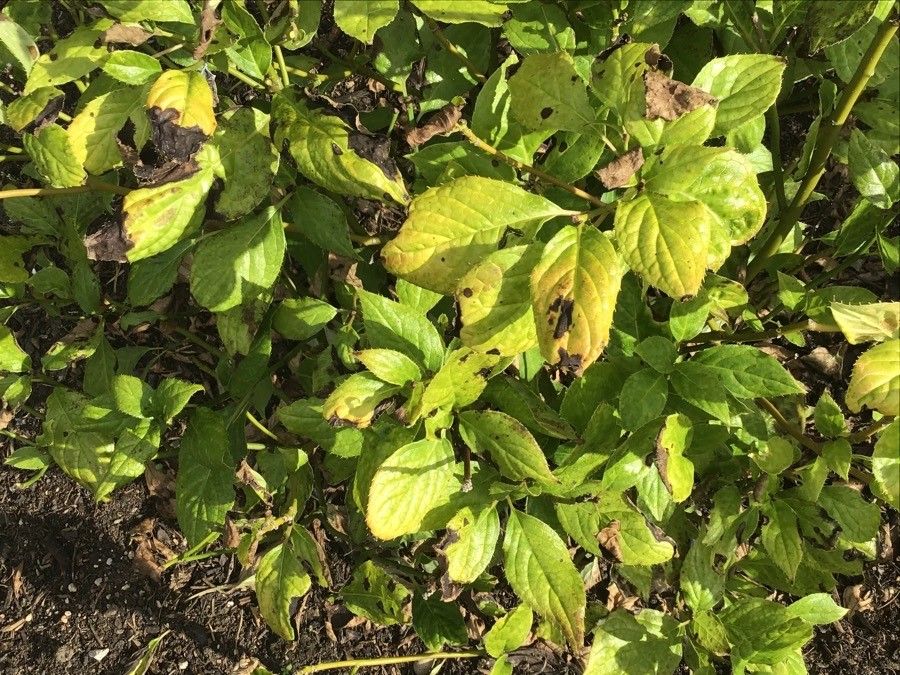
Helwingia chinensis is a small evergreen shrub belonging to the Helwingiaceae family. It is native to China, Japan, and Korea and can grow up to 2 meters tall. The plant features glossy, dark green, oval-shaped leaves with serrated edges. Although its flowers are small and inconspicuous, Helwingia chinensis produces bright red berries in autumn that often persist through the winter.
The shrub thrives in partial to full shade and prefers well-drained soil with a slightly acidic pH. It is a slow-growing plant but can be propagated through stem cuttings or seeds.
In traditional Chinese medicine, Helwingia chinensis has been valued for its anti-inflammatory properties and has been used to treat conditions such as rheumatism, arthritis, fever, coughs, and colds.
Overall, this attractive shrub makes an excellent addition to any garden. Its glossy foliage provides year-round interest, while its bright red berries add a splash of color during the winter months when many other plants have shed their leaves.
Chinese helwingia is disease-resistant and, overall, not likely to develop illnesses. Regarding care, this plant is fairly low-maintenance. Planted outdoors, it needs only minimal watering, and larger specimens usually do not require pruning. Smaller plants, however, should be trimmed after they finish blooming. Chinese helwingiat is suitable for anyone with an outdoor area, such as a garden or deck, and does not demand much care experience.
How to keep Helwingia Chinensis.
Light
Chinese helwingia does best in locations that receive filtered or moderate light throughout the day. Although it prefers that, it can also tolerate areas with lower light. In the wild it commonly grows in places with varying light conditions. Inconsistent light exposure can cause weaker growth and fading of color.
Water
The Chinese Helwingia thrives in humid environments and has a moderate tolerance for drought. It typically requires watering every 2 to 3 weeks. When grown outdoors in temperate regions, it benefits from rainwater and grows robustly when the seasonal rainfall matches its watering needs.
Temperature
Chinese helwingia does best in temperatures between 59 and 95 °F (15 to 35 ℃). Originating from regions with moderate climates, it can be harmed by extreme heat or cold. To achieve optimal growth, adjustments should be made for seasonal temperature changes.
Fertilizer
Fertilize your Chinese helwingia in early spring to encourage healthy growth. Regular feeding boosts its overall health, producing vigorous growth, increased tolerance of harsh conditions, and improved resistance to diseases and pests. Stick to a consistent fertilization schedule for your Chinese helwingia to maintain vibrant, deeply colored, and lush foliage.
Pruning
The Chinese helwingia is notable for its unique secondary flowers that grow directly on its leaves. To encourage healthy growth and improve light penetration, prune this plant from early to late winter, targeting dead or overcrowded branches. Always use clean tools to prevent the spread of disease, and keep an eye on the plant's response to ensure it remains aesthetically pleasing and well-structured.
Botanical profile.
- Plant Type
- Shrub
- Life Cycle
- Perennial
- Genus
- Helwingia
- Family
- Helwingiaceae
- Hardiness Zone
- 7-10
- Mature Height
- 2.44 m
- Mature Spread
- 1.52 m
- Leaf Color
- Green, Red
- Leaf Type
- Evergreen
- Flower Color
- Green
- Flower Size
- 0.25 cm to 0.51 cm
- Bloom Time
- Mid spring, Late spring
- Planting Time
- Spring, Summer, Autumn
- Harvest Time
- Late summer, Early fall, Mid fall
- Native Area
- Myanmar, Thailand, China
Reader questions.
How should I water my Chinese helwingia plant to keep it healthy?
Your Chinese helwingia is not picky about how you water it. You can use any common watering tool like cans, hoses, or even cups. Just make sure to water the soil directly and evenly to reach all parts of the root system. Filtered water is preferred over tap water to avoid harmful particles. It's also best to use water at or slightly above room temperature to prevent shocking the plant. However, the Chinese helwingia generally does well with any kind of water.
Why should I use fertilizer on my Chinese helwingia plant?
To ensure your Chinese helwingia thrives, it's important to regularly fertilize regardless of the specific type you have. By providing the right nutrients, you can promote strong growth, enhance resilience against tough conditions, and improve its ability to combat diseases and pests. The beautiful foliage of your Chinese helwingia is a standout feature, so it's crucial to maintain it. This involves following a consistent fertilization schedule tailored to your plant, which will result in vibrant leaves and an overall lush appearance.
How much sunlight does Chinese helwingia need to grow?
Chinese helwingia thrives with 3-6 hours of direct sunlight each day. It also needs shade during the hottest parts of the day to avoid sun damage. Ideally, it should receive morning sunlight, but it can handle some afternoon sun if it's not too hot. To create the perfect environment, consider planting Chinese helwingia in a partially sunny area, like under a tree or on the east side of a building.
What temperature is best for Chinese helwingia?
The ideal temperature for Chinese helwingia to thrive is between 65 and 80 degrees Fahrenheit (18 to 27 degrees Celsius). During the main growing phase, it can tolerate temperatures as high as 95 degrees Fahrenheit (35 degrees Celsius) and as low as 15 degrees Fahrenheit (-10 degrees Celsius). This species can withstand freezing winters due to its tolerance for low temperatures. The recommended temperature range is as follows: - Ideal: 65-80℉ (18-27℃) - Highest tolerable: 85-95℉ (30-35℃) - Lowest tolerable: -5 to 15℉ (-20 to -10℃) or lower.
What should I do if I give my Chinese helwingia too much water or too little water?
Outdoor plants, especially newly planted ones or seedlings, are prone to lacking water. It's important to remember to water them enough for a few months while they are small or recently planted. Once the roots are established, Chinese helwingia can usually rely on rain. When Chinese helwingia is planted in pots, overwatering is more likely. If you accidentally overwater your Chinese helwingia, there are steps you can take to remedy the situation. First, stop watering the plant immediately to minimize the effect of overwatering. Then, remove the Chinese helwingia from its pot to inspect the roots. If there is no root rot, you can return the plant to its container. If you find signs of root rot, trim away the affected roots and consider applying a fungicide to prevent further damage. Finally, repot the Chinese helwingia in well-draining soil. On the other hand, if your Chinese helwingia is underwatered, simply water it more frequently. Recognize that underwatering is easy to fix - if the leaves droop, dry out, or fall off, they will quickly bounce back after sufficient watering. So adjust your watering frequency promptly when underwatering occurs.
When should I fertilize my Chinese helwingia for the best results?
To properly fertilize your Chinese helwingia, the first feeding should be done in late winter or early spring. This will provide the necessary nutrients for the plant to grow healthily when the weather becomes warmer. If you live in a warm climate region, it is advisable to provide an extra fertilization in early fall. This will supply additional nutrients for the upcoming growing season and help the plant become more resilient to winter cold. By fertilizing earlier, the new branches will have ample time to develop and withstand the harsh winter conditions without any damage to the foliage.
What will happen if Chinese helwingia doesn't get enough sunlight?
Chinese helwingia can experience negative effects if it receives excessive direct sunlight. In such cases, the plant's leaves might become yellow, dry out, or suffer from burns. Additionally, the plant could appear wilted or growth may be stunted. To prevent this sun-related damage, it is important to provide some shade for the Chinese helwingia during the hottest times of the day. This can be achieved by using a shade cloth or planting the Chinese helwingia near taller plants that can offer natural shade.
Should I change the temperature for Chinese helwingia at different stages of growth?
According to research, Chinese helwingia may experience stunted growth if exposed to prolonged periods of higher temperatures, particularly during the development of axillary buds and main shoots. To promote healthy growth, it is recommended to maintain consistently cooler temperatures around 65℉(18℃) after germination or transplanting.
How frequently should I water my Chinese helwingia plant?
Most plants growing outdoors can rely on rainfall. However, if your area lacks rainfall, you should water them adequately every 2 weeks in the spring and fall, and more frequently in the summer. In the winter, when growth slows down and plants require less water, you should water them sparingly or not at all. If your Chinese helwingia is young or newly planted, it needs more frequent watering to help it establish and grow into a drought-tolerant plant. For potted plants, there are two main methods to determine watering frequency for your Chinese helwingia. The first is to follow a predetermined schedule, such as watering once a week or once every other week. However, this approach may not always account for the specific conditions of your plant's environment. Watering frequency can also vary depending on the season. For example, during the summer when water needs are high, a predetermined schedule may not be sufficient. An alternative approach is to water based on soil moisture. It is generally best to wait until the top two to four inches of soil (about ⅓ to ½ depth of the pots) have completely dried out before giving more water.
When is the best time to not add fertilizer to my Chinese helwingia plant?
There are a few specific times throughout the year when you should avoid fertilizing your Chinese helwingia. The first instance is in the early and mid-winter months when the plant is dormant and does not require any nutrients. Additionally, it is not recommended to fertilize the plant during the late spring and summer. During this period, the weather tends to be hotter and drier, which can cause your Chinese helwingia to react negatively to fertilizer. To prevent any problems, it is best to stick to a fertilization schedule that involves feeding only in early spring and early fall.
What will happen if Chinese helwingia gets too much sunlight? What happens if a Chinese helwingia plant gets too much sunlight?
If Chinese helwingia is lacking sunlight, it may become tall and thin with not enough leaves. The leaves may turn yellow or pale green, which shows that there is not enough chlorophyll being produced due to lack of sunlight. To fix this issue, you can move the Chinese helwingia to a location with more sunlight or trim nearby leaves to let more light reach the plant.
How can I make sure Chinese helwingia stays warm during cold seasons?
Chinese helwingia can tolerate freezing temperatures if planted in the ground in areas that never drop below 15℉(-10℃) during winter. However, if grown in pots or containers, the roots need to be shielded from the cold. This can be done by wrapping the container in a blanket or moving it indoors for complete protection.