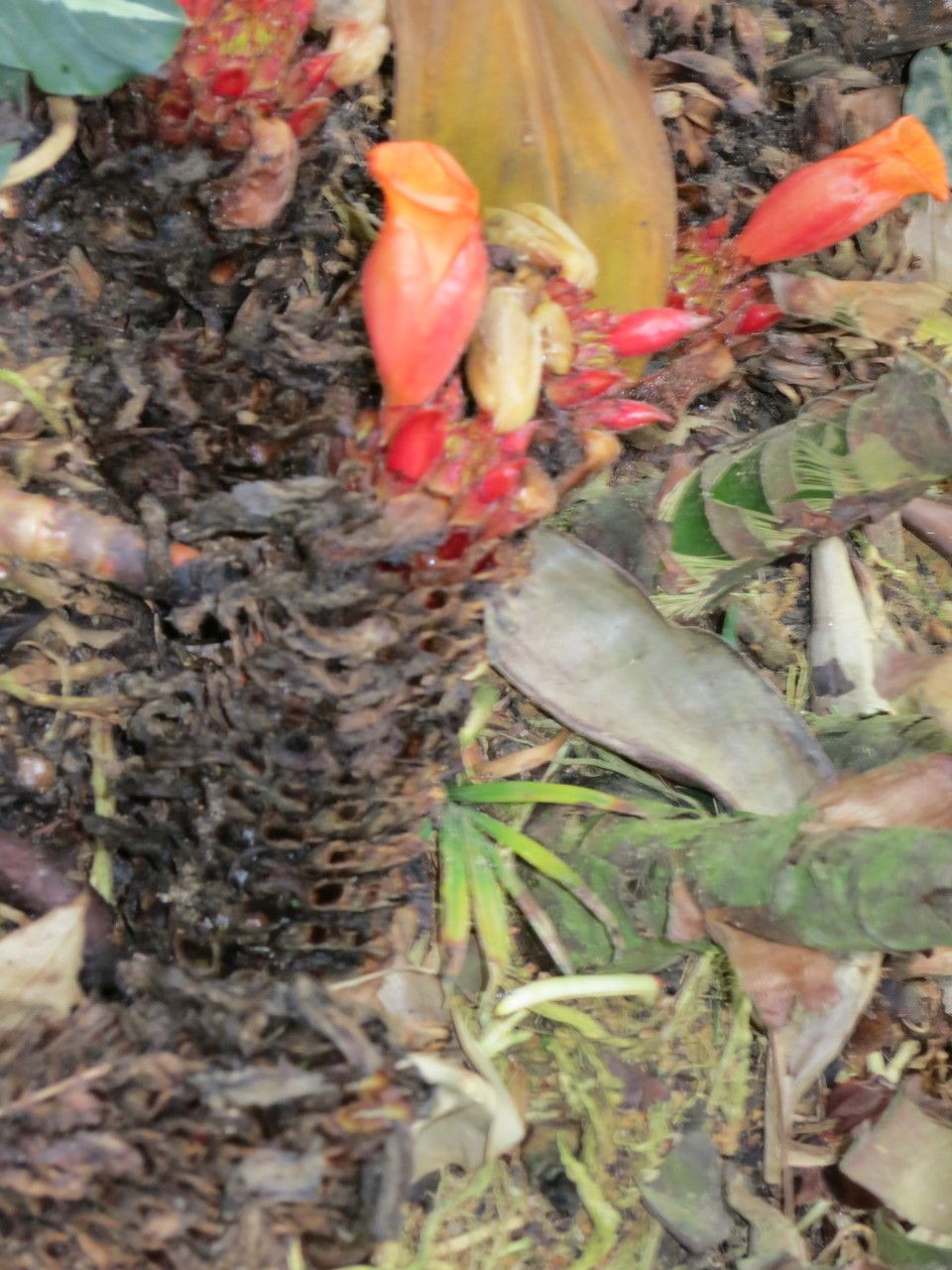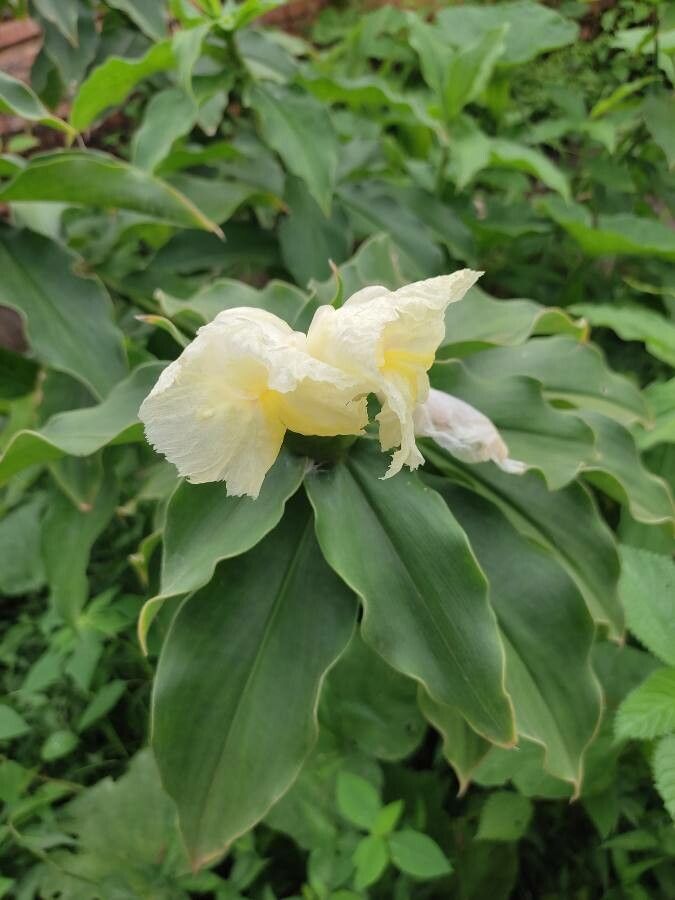
Cheilocostus speciosus, or crêpe ginger, is a species of flowering plant in the family Costaceae. Some botanists have now revived the synonym Hellenia speciosa for this species.It is native to southeast Asia and surrounding regions, from India to China to Queensland, It is especially common on the Greater Sunda Islands in Indonesia. It is also reportedly naturalized in Puerto Rico, Mauritius, Réunion, Fiji, Hawaii, Costa Rica, Belize, Melanesia, Micronesia, and the West Indies. It is widely cultivated as an ornamental.
Crepe ginger is fairly disease-resistant and usually does not suffer from many illnesses. However, it can be vulnerable to pests and diseases present in its environment, and these problems are typically not serious. As for care, the plant needs moderate maintenance. It should be pruned regularly to preserve a tidy appearance and healthy growth. Fertilizing can also aid in encouraging flowering. Crepe ginger is well suited for anyone with outdoor space, such as a garden or patio, and does not demand extensive care experience. It may require more attention when grown indoors.
How to keep Hellenia Speciosa.
Light
Crepe ginger favors settings with dappled light but can also tolerate areas of full sun or deep shade. The intensity of sunlight directly affects the plant’s growth and health. Its native habitat illustrates this adaptable light tolerance. Excessive exposure can scorch the leaves, while too little light may result in stunted growth.
Water
Crepe ginger flourishes in high humidity and does best with a balanced watering schedule, ideally once a week. This evergreen plant needs consistent moisture throughout the year, even during cooler months, to maintain its lush appearance. Typically grown outdoors, it thrives in conditions similar to its tropical rainforest origins.
Temperature
The crepe ginger is native to tropical regions and requires warm temperatures between 20 to 35 ℃ (68 to 95 ℉) to flourish. During the winter or in cooler climates, it is advisable to keep the plant in a warm spot indoors or in a greenhouse to maintain those optimal temperatures.
Fertilizer
The best time to fertilize Crepe ginger is in early spring, as it emerges from dormancy and starts active growth. Fertilization supplies essential nutrients for healthy development. Although Crepe ginger needs relatively little fertilizer, an annual application can improve its survival and encourage better, longer-lasting blooms.
Pruning
To keep your crepe ginger healthy, prune it in late winter or early spring. This helps remove dead stems and encourages robust new growth. Regular trimming promotes new shoots, enhances flowering, and improves air circulation, which reduces the risk of pests. Always use clean, sharp tools to prevent disease and ensure the plant remains vigorous.
Pot & Repot
When repotting Crepe ginger, select a pot 1-2 inches (2.5–5.1 cm) larger with ample drainage. Use a well-draining potting mix. Repot in spring or fall, ensuring the root ball is positioned slightly below the rim of the flower pot. Water thoroughly after repotting and place in a warm spot with indirect sunlight.
Botanical profile.
- Plant Type
- Herb
- Life Cycle
- Perennial
- Genus
- Hellenia
- Family
- Costaceae
- Hardiness Zone
- 9-10
- Mature Height
- 1.83 m to 2.44 m
- Mature Spread
- 61 cm to 91 cm
- Leaf Color
- Green
- Leaf Type
- Evergreen
- Flower Color
- White, Pink
- Flower Size
- 5.08 cm to 7.62 cm
- Bloom Time
- Mid summer, Late summer
- Planting Time
- Spring
- Harvest Time
- Mid summer, Late summer, Early fall
Other names.
Reader questions.
How should I water my Crepe ginger plant?
To properly water the Crepe ginger plant, it is best to use filtered water at room temperature. Tap water may contain harmful particles that can adversely affect the health of the plant. Since the Crepe ginger plant originates from a warm environment, it is advisable to use water that is neither too cold nor too hot, as extreme temperatures can shock the plant. Moreover, it is recommended to refrain from watering the plant from above as it may lead to foliage problems. Instead, pour the filtered room temperature water directly onto the soil until it is completely soaked. This method is beneficial as it not only provides moisture to the roots but also aids in their spread and nutrient absorption through the soil.
Why should I put plant food on my Crepe ginger?
Fertilization is important for the Crepe ginger and other plants because it provides essential nutrients for growth. However, Crepe ginger's fertilization needs are relatively low. While it can survive without fertilization, annual fertilization is highly beneficial for the plant's overall health and can lead to improved flower quality and longevity. Therefore, those wanting their Crepe ginger to thrive should prioritize annual fertilization.
What are the sunlight requirements for Crepe Ginger?
Crepe Ginger thrives in various lighting conditions, reflecting its versatile nature. It can grow in filtered sunlight, endure full sunshine, and even adapt to complete shade. However, its health and growth significantly depend on the exposure to the sun's rays. It's essential to watch the movement of sunlight through your garden to select optimal spots that balance light and shade, as overexposure or insufficient light can either lead to leaf scorch or stunted growth, respectively.
What is the native habitat and ideal temperature range for Crepe Ginger?
Crepe ginger is native to tropical regions and flourishes in warm temperatures, ideally between 20°C to 35°C (68°F to 95°F). It is essential to keep the plant in a warm location during the winter or in cooler climates, such as indoors or in a greenhouse, to ensure it remains within optimal temperature ranges. Although crepe ginger possesses some cold tolerance and usually does not need extra care if temperatures are above 0°C, measures should be taken to protect it if temperatures are forecasted to fall below freezing.
What do I do if I give my Crepe ginger too much or too little water?
Overwatering is a common issue for Crepe ginger plants and can cause wilting, yellowing leaves, and diseases like root rot, mold, and mildew. Underwatering is less common but can result in brittle and brown leaves. It is important to recognize the signs of overwatering early to prevent irreversible damage, and if detected, reduce watering and use well-draining soil. If underwatering is suspected, simply increase watering until the plant recovers.
What is the ideal time to fertilize my Crepe ginger?
The best time to fertilize a Crepe ginger is in late winter to early spring when the plant is transitioning from dormancy to active growth. Fertilizing during this time promotes healthy growth and sets the plant up for a successful season. Although early spring is generally the most favorable time to fertilize, it is also acceptable to fertilize in the fall. However, it is not recommended to feed a Crepe ginger during summer or winter.
How does artificial lighting benefit indoor plants of Crepe Ginger?
Artificial lighting is crucial for the growth of Crepe Ginger when natural sunlight is not enough, especially during winter or in less sunny spaces. LED lights are preferred for their ability to be customized to provide specific wavelengths needed by plants. The requirements vary with the type of plant - full sun plants need 30-50W/sq ft, partial sun plants require 20-30W/sq ft, and full shade plants need 10-20W/sq ft of artificial light. It's important to position the light source 12-36 inches above the plant and mimic natural daylight hours, typically 8-12 hours per day, for optimal growth.
How does low temperature affect Crepe Ginger and what are the solutions?
Crepe ginger shows a moderate tolerance to low temperatures, thriving best when the temperature remains above 20°C. It should be kept above 0°C during winter to prevent damage. Exposure to temperatures below -5°C may cause the leaves to droop; they might recover in mild conditions but will wilt and eventually fall off in severe cases. The solution to protect crepe ginger from frost damage includes trimming off frost-damaged parts and wrapping the plant with non-woven fabric or cloth, as well as constructing a wind barrier to shield it from cold winds.
How often do I need to water my Crepe ginger?
If your Crepe ginger plant is in a pot, the most precise way to determine if it needs water is by checking the soil with your finger. If the top two to three inches of soil are dry, it's time to water it. It's a similar process if you have your Crepe ginger planted outside in the ground. When the first few inches of soil are dry, it's time to water it. Typically, during spring and early fall, watering once a week is sufficient. However, in extremely hot weather, you may need to water it twice or more per week. That being said, mature and well-established Crepe ginger plants have a remarkable ability to withstand drought.
When is it not a good idea to add fertilizer to my Crepe ginger plant?
To ensure optimal growth, it is recommended to only fertilize your Crepe ginger during late winter and early spring. This plant has low fertilization needs, so a single annual feeding is sufficient. Fertilizing during spring, summer, and fall can lead to overfertilization and its associated problems, unless you missed fertilizing in spring, then it is acceptable to fertilize in fall. Additionally, there is no need to fertilize during winter as the Crepe ginger is in a dormant phase and does not experience new growth.
What symptoms indicate insufficient light exposure in Crepe Ginger?
When Crepe Ginger gets inadequate light, several symptoms can manifest. New leaves may appear smaller than previous ones, indicating a decrease in growth. The plant can become leggy or sparse, with increased distances between leaves or stems, leading to a weakened structure. Premature leaf drop is another symptom, as the plant tries to conserve resources. Growth can stall, with newer leaves displaying lighter colors or irregular patterns due to a lack of chlorophyll. Excessive sunlight, on the other hand, can cause chlorosis, sunscald, leaf curling, wilting, and leaf scorching.
How does high temperature affect Crepe Ginger and what are the solutions?
During summer, it is important to ensure that the temperature surrounding crepe ginger does not exceed 35°C. Exposure to temperatures above 41°C can result in lighter leaf color, dry and withered leaf tips, curled leaves, and increased susceptibility to sunburn. To mitigate these effects, sunburned and dried parts should be trimmed away. Additionally, moving the plant to a shaded location during the midday and afternoon sun, or using a shade cloth for protection, along with watering the plant in the morning and evening to maintain soil moisture, are effective solutions.