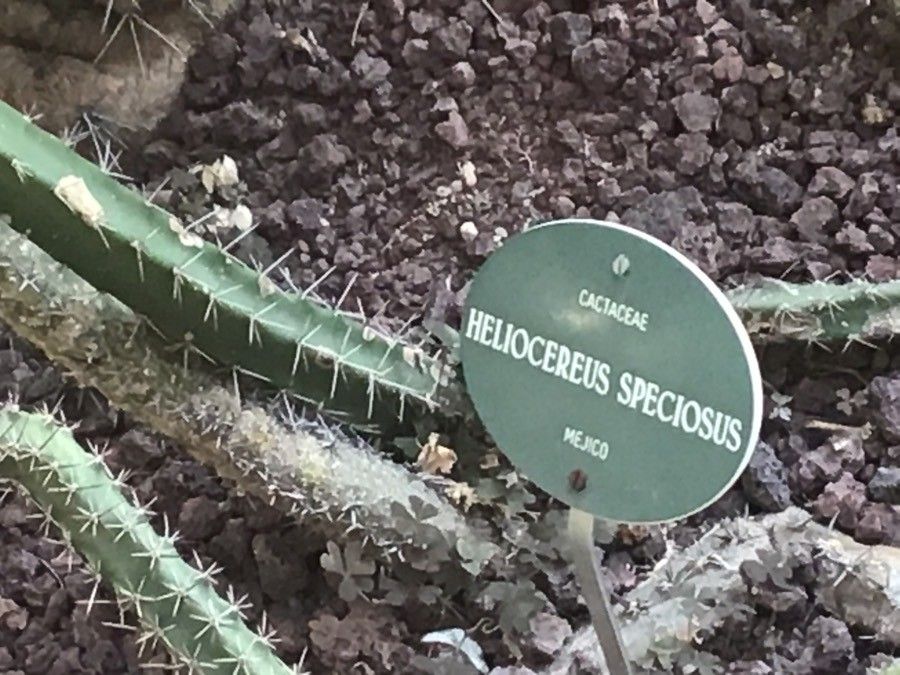
Disocactus speciosus, the sun cactus, is a species of flowering plant in the family Cactaceae. It is native to Mexico, Honduras and Guatemala, and has been introduced to the Canary Islands. As its synonym Heliocereus speciosus it has gained the Royal Horticultural Society's Award of Garden Merit.
sun cactus displays strong disease resistance and generally endures normal care without becoming ill easily. Still, it can be vulnerable to mealybugs; these pests may cause some harm but are usually not a major danger. Regarding care, sun cactus tolerates drought and does not require frequent watering. It can go for extended periods without water and needs little fertilizer. However, if kept in poor light and given too much water, it is very prone to root rot. In general, sun cactus is a good choice for people who prefer spending less time on plant care, though it's important to know and meet its basic requirements. It is especially appropriate for those who are often away for long stretches and might forget to water regularly.
How to keep Heliocereus Speciosus.
Light
Sun cactus comes from habitats with intermittent light, like the lower layers of forests or stony regions that offer natural shade. It favors semi-sunlight conditions but can also withstand full sunlight.
Temperature
Sun cactus flourishes in hot climates and needs elevated temperatures during its growth period to boost its development and metabolism. It prefers abundant sunshine, suitable humidity levels, and favorable ventilation. Nonetheless, it is vulnerable to harm from too low temperatures and an excess of watering. It's crucial to find a balance and prevent extremely high temperatures and overly arid conditions as well.
Fertilizer
Sun cactus requires minimal fertilizer, just 1-2 applications per year throughout the growth period is enough. It's recommended to not fertilize during the dormant periods in winter and summer. For plants that have been repotted, thequantity of fertilizer should be decreased and you should wait a few months post-repotting before applying fertilizer. Fertilization fosters robust growth and promotes flowering.
Pot & Repot
Replant the sun cactus during the spring or summer season, selecting a container that is a bit larger than the existing one and has adequate drainage. Opt for a cactus blend that drains well and is either sandy or gritty. Be cautious while handling to evade thorns. Permit the cactus to become dry prior to replanting in order to stop roots from rotting. After the replanting process, postpone watering for about a week to let the roots recover.
Botanical profile.
- Plant Type
- Succulent, Herb
- Life Cycle
- Perennial
- Genus
- Heliocereus
- Family
- Cactaceae
- Hardiness Zone
- 10-11
- Mature Height
- 30 cm to 61 cm
- Mature Spread
- 49 cm to 91 cm
- Leaf Color
- Green
- Leaf Type
- Evergreen
- Flower Size
- 10.16 cm to 15.24 cm
- Bloom Time
- Mid spring, Late spring, Early summer
- Planting Time
- Spring, Autumn
- Harvest Time
- Mid summer, Late summer, Early fall
- Native Area
- Mexico