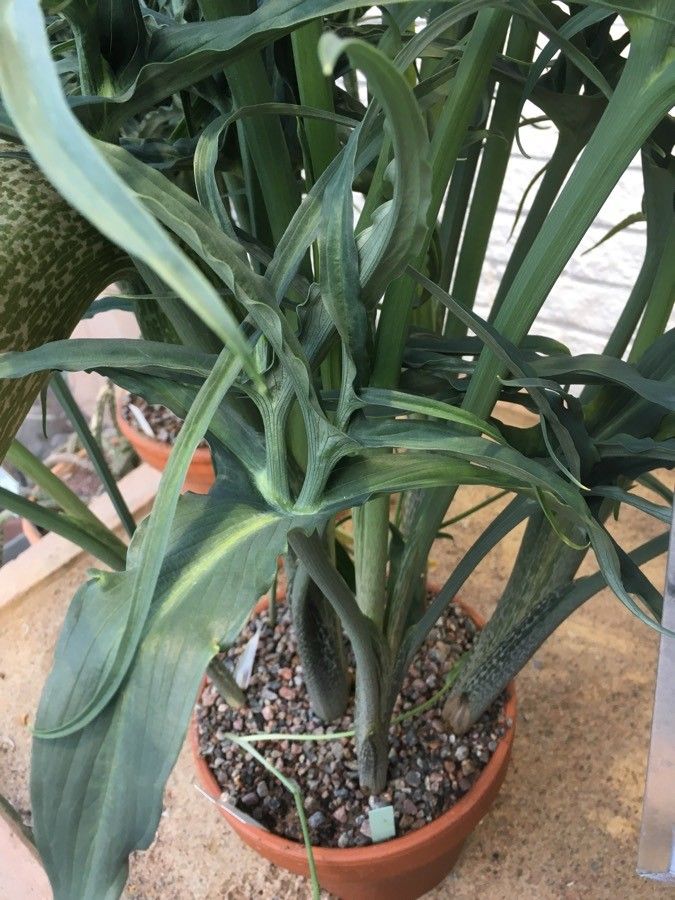
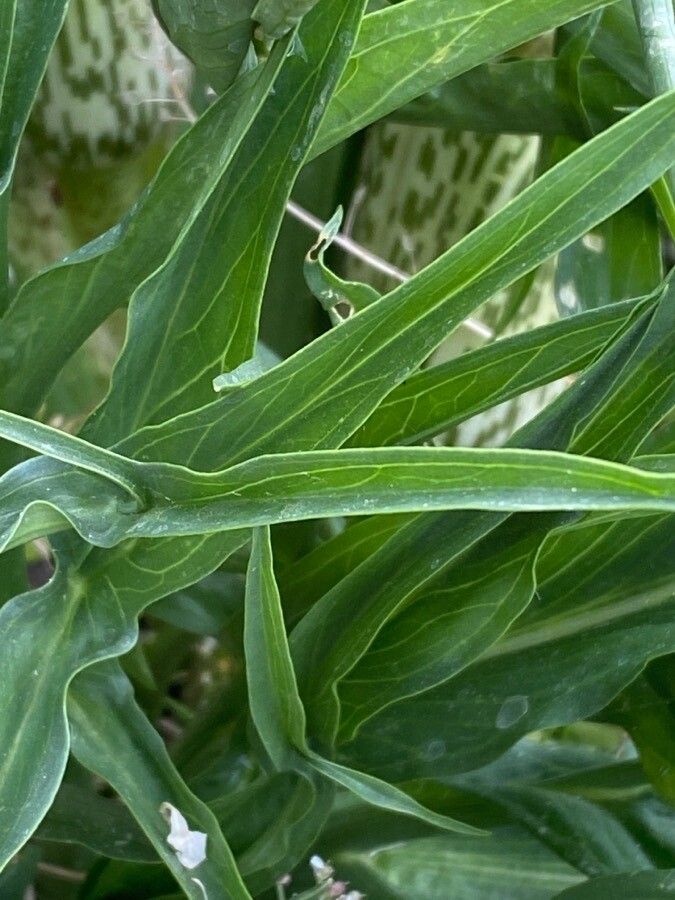
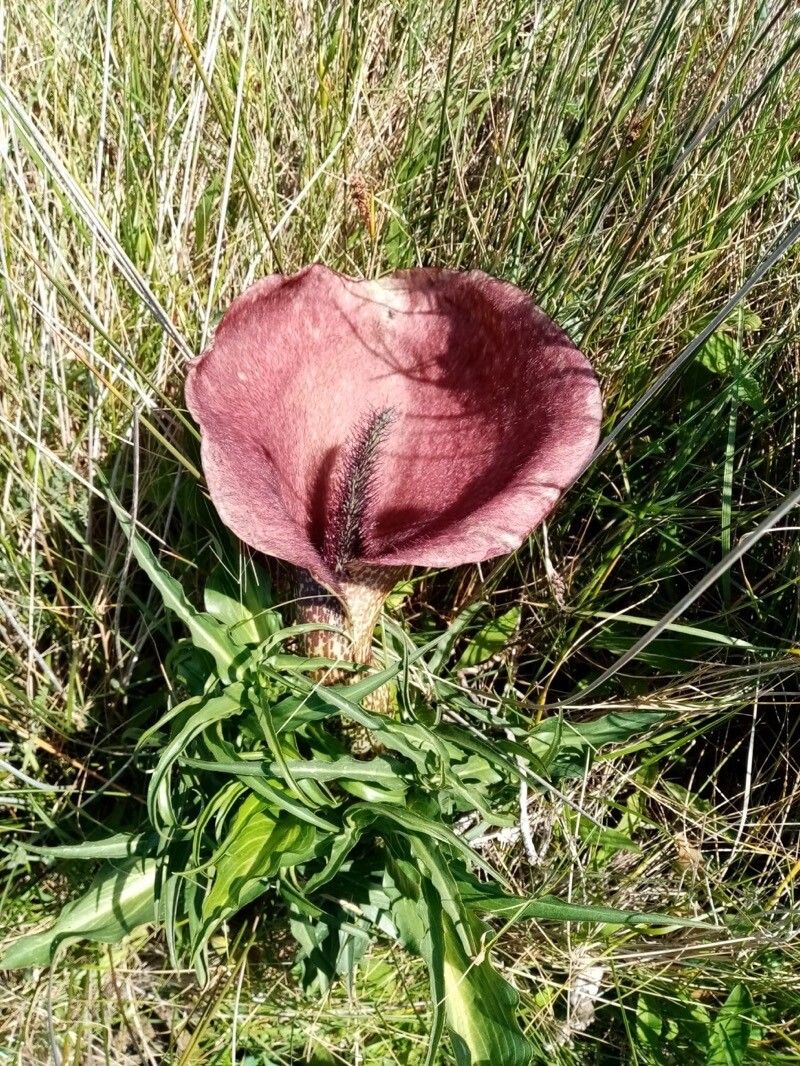
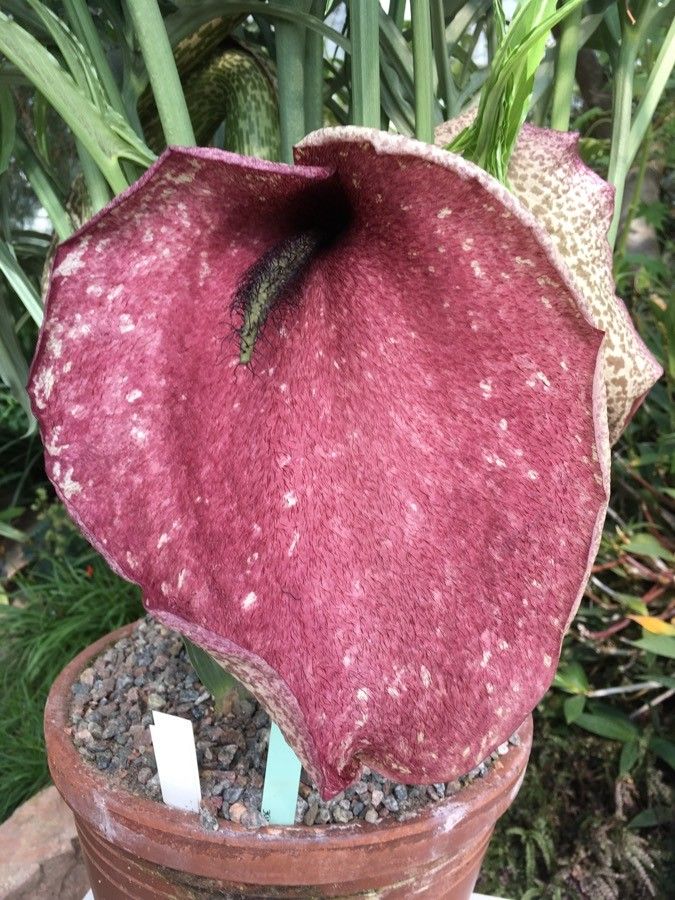
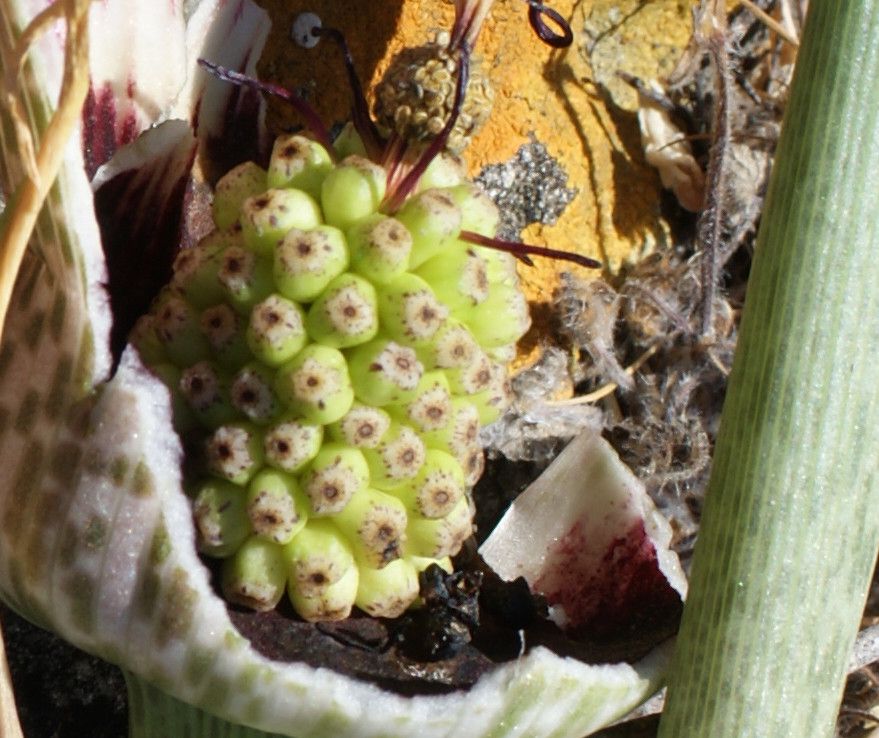
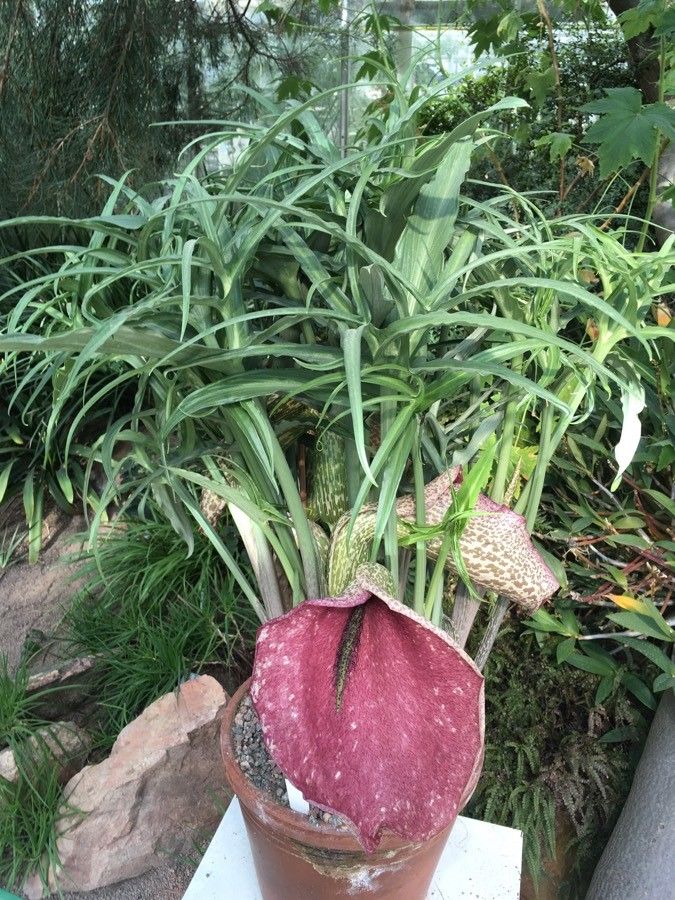
Helicodiceros muscivorus, commonly known as the Dead Horse Arum or the Corpse Flower, is a unique and fascinating plant native to the Mediterranean region. Belonging to the family Araceae, it is renowned for its large, foul-smelling inflorescence that closely resembles a rotting animal carcass. This plant features a single leaf that can grow up to one meter in height and has an unusual spiral shape.
The Dead Horse Arum is pollinated primarily by flies attracted to its putrid odor. Its inflorescence emits heat that mimics the temperature of decomposing flesh, further luring flies for pollination.
The plant thrives in shady areas with moist soil and is often found in rocky regions or near streams. It is considered rare due to habitat loss driven by human activities such as urbanization and agriculture.
Despite its unpleasant odor, Helicodiceros muscivorus has been used for medicinal purposes, including the treatment of respiratory issues like asthma and bronchitis. Its leaves have also been traditionally used for wrapping food, owing to their antibacterial properties.
Overall, Helicodiceros muscivorus stands out for its unique appearance and fascinating adaptations, making it an interesting subject of study for botanists around the world.
Dragon's mouth is fairly resistant to disease and generally does not commonly get sick. Nevertheless, it can be affected by pests and diseases present in its surroundings. Such infections are typically mild. For care, the plant requires a moderate amount of maintenance. It should be pruned regularly to keep a pleasing appearance and support healthy growth. Fertilizing can also help encourage flowering. Dragon's mouth is well suited for someone with outdoor space, like a garden or patio, and does not demand extensive care experience. It may need more attention when grown indoors.
How to keep Helicodiceros Muscivorus.
Light
Dragon's mouth is native to environments like forest understories or rocky areas, where it receives natural shade. Its preferred light condition is partial sun, but it can adapt to full sun or full shade, demonstrating its versatile and hardy nature.
Water
Native to the Mediterranean region, the dragon's mouth plant thrives in environments with seasonal changes in moisture. During its growing season, it enjoys consistent watering and benefits from being watered weekly. Adapted to rocky terrains, this plant features a bulbous root system that stores water, which helps it withstand drought and fluctuating rainfall.
Temperature
Dragon's mouth adapts well to temperature, tolerating high heat and wide temperature fluctuations. When temperatures are high, pay attention to watering and provide suitable shade to prevent sunburn. However, Dragon's mouth is relatively sensitive to low temperatures. Although it can endure some cold, excessively low temperatures can cause frost damage.
Fertilizer
For Dragon's mouth, the primary time to fertilize is in early spring while the flowers are developing. The proper fertilizer promotes better blooms and helps Dragon's mouth produce attractive flowers. Fertilizing in early spring ensures excellent flowers during the season and supplies energy for dormant growth phases.
Pruning
The dragon's mouth plant has a distinctive musky odor and unique flowers. To maintain its health, it's best to prune it from early to late spring. This helps remove dead leaves and improve air circulation. Be careful not to over-prune, though. Regular inspections are also important, as they help you quickly address any issues and keep the plant vigorous and healthy.
Pot & Repot
Repot Dragon's mouth in spring or summer when temperatures are sufficiently warm, choosing a slightly larger pot with good drainage. Water it thoroughly after repotting and place it in bright, indirect light. You can add a moss pole for support as the plant grows.
Botanical profile.
- Plant Type
- Herb
- Life Cycle
- Perennial
- Genus
- Helicodiceros
- Family
- Araceae
- Hardiness Zone
- 8-11
- Mature Height
- 30 cm to 46 cm
- Mature Spread
- 30 cm to 40 cm
- Leaf Color
- Dark Green
- Leaf Type
- Deciduous
- Flower Color
- Purple
- Flower Size
- 30.48 cm to 39.62 cm
- Bloom Time
- Mid spring, Late spring
- Planting Time
- Spring, Summer
- Harvest Time
- Early summer, Mid summer
- Native Area
- Italy, France
Other names.
Reader questions.
How should I water my Dragon's mouth effectively?
There are various ways to water your Dragon's mouth plant. If you have it in an indoor pot, you can easily take it to the kitchen sink and use the faucet to add water to the pot. Hold the pot in your hands and stop watering when the water begins to flow through the drainage holes. Be cautious about doing this in winter or cold climates as it can harm the plant's root system. In most cases, using tap water is sufficient, but if your local tap water has high levels of fluorine, chlorine, or salts, consider using rainwater or lake water. Additionally, watering the Dragon's mouth plant from above or directly into the soil is also effective, so you can use a watering can, hose, or any preferred tool for watering.
How much sunlight does Dragon's mouth need to grow?
Dragon's mouth is a plant that thrives with 3-6 hours of direct sunlight every day. However, it also needs some shade during the hottest parts of the day to avoid sun damage. The best time for sunlight is in the morning, but Dragon's mouth can handle some afternoon sun if it's not too hot. To achieve the right amount of sunlight, it's recommended to plant Dragon's mouth in a spot with partial sun, like under a tree or on the east side of a building.
What should I do if I give my Dragon too much or too little water to drink?
To remedy an underwatered Dragon's mouth plant, the first step is to give it a thorough watering until excess water runs out of the drainage hole. If the plant is grown outside, water until the soil is completely moist. On the other hand, if the plant is receiving too much water, start by reducing the watering schedule. It is also important to consider the soil and container. If the soil or container hampers efficient drainage, the plant may become overwatered again. Solve this problem by using looser soils and a container with larger drainage holes or a more porous material. Additionally, check the location of the plant. If it is in a poorly ventilated area like a corner, it is advisable to move it near a window or a door to improve ventilation. Ensuring that the plants are in a well-ventilated location can help minimize the risk of overwatering.
What will happen if the Dragon's mouth doesn't get enough sunlight?
To avoid sun damage, it is important to protect Dragon's mouth plant from excessive sunlight. Overexposure to direct sunlight can cause its leaves to turn yellow, become dry, or even burn. Additionally, you might observe that the plant wilts or stops growing. To prevent these issues, provide shade for Dragon's mouth during the hottest times of the day. You can achieve this by using a shade cloth or planting it near taller plants that can offer natural shade.
How often should I give water to my Dragon's mouth?
The Dragon's mouth plant does not need constant moisture in its soil. It is actually better to let the soil dry out between waterings. If you have the Dragon's mouth plant in a container, you can determine when to water it by checking how dry the soil is. If the top half of the soil in the container is dry, it's time to water. You can check by sticking your fingers or a stick into the soil, or by using a soil moisture meter. If you have the Dragon's mouth plant outdoors, you can aim to water it every other week, unless it has rained recently.
What will happen if the Dragon's mouth gets too much sunlight? What happens if the Dragon's mouth gets too much sunlight?
If Dragon's mouth doesn't receive sufficient sunlight, it can become tall and thin, with only a few leaves. These leaves might become yellow or pale green, which suggests that the plant isn't producing enough chlorophyll due to the lack of sunlight. To fix this issue, you can either relocate Dragon's mouth to a sunnier location or trim nearby foliage to enable more light to reach the plant.
How much water does my Dragon need for its mouth?
To properly water your Dragon's mouth plant, wait for the top half of the soil surrounding its root to dry out. Then, add enough water to make the soil moist again. The amount of water needed depends on the size of the container and the plant itself. For a small Dragon's mouth in a small to medium-sized container, one to two cups of water should be enough. Increase the amount of water for larger plants. You can check if the soil is moist enough by sticking your finger or a trowel into it. Alternatively, water until you see excess water draining from the holes at the bottom of the container.
How can I know if I am giving enough water to my Dragon?
Both overwatering and underwatering are not good for your Dragon's mouth. However, they show different signs when they occur. If your Dragon's mouth doesn't receive enough water, its leaves may turn yellow. Underwatering can also cause brown and brittle leaf margins. On the other hand, if you overwater your Dragon's mouth, you may notice both yellow and brown marks on the leaves. Overwatering can also result in diseases like root rot, which may be visible on your plant. Nevertheless, knowing the signs of overwatering and underwatering increases your chances of fixing both problems.
How should I keep my Dragon's mouth hydrated all year round?
The watering schedule for the Dragon's mouth plant remains consistent during spring and fall, with watering once per week. In the summer, the plant may require more water due to the hot weather and ample sunlight. However, in winter, when finding warm places for the plant is challenging, it enters a dormant phase and needs less water. At this time, you can even choose not to water the plant at all. If you do decide to water during winter, it should be done no more than once every two to three weeks.
How should I give my Dragon water as it grows?
If you have recently planted a young Dragon's mouth or transplanted an older one, it's important to give it extra water. Young plants need consistent soil moisture in their early growth stages to adjust to their new environment, and transplants need additional water to recover from the shock of being moved. You may need to water multiple times per week until the plant shows continuous healthy growth. However, be mindful not to overwater the plant - moderate watering is sufficient in most cases.
What's the difference between watering Dragon's mouth inside and outside?
There are a few reasons why watering an indoor Dragon's mouth plant may be necessary more frequently than an outdoor one. Firstly, indoor environments tend to be drier due to the presence of air conditioning units. The size of the pot and the type of soil also affect how much water can be retained. Additionally, when you have an indoor plant, you are solely responsible for providing it with water, whereas outdoor plants can benefit from rainfall. If you live in an area with ample rainfall, you may not need to water the outdoor plant as often. However, if there is not enough rain, it is important to ensure that the soil does not completely dry out by watering it additionally.