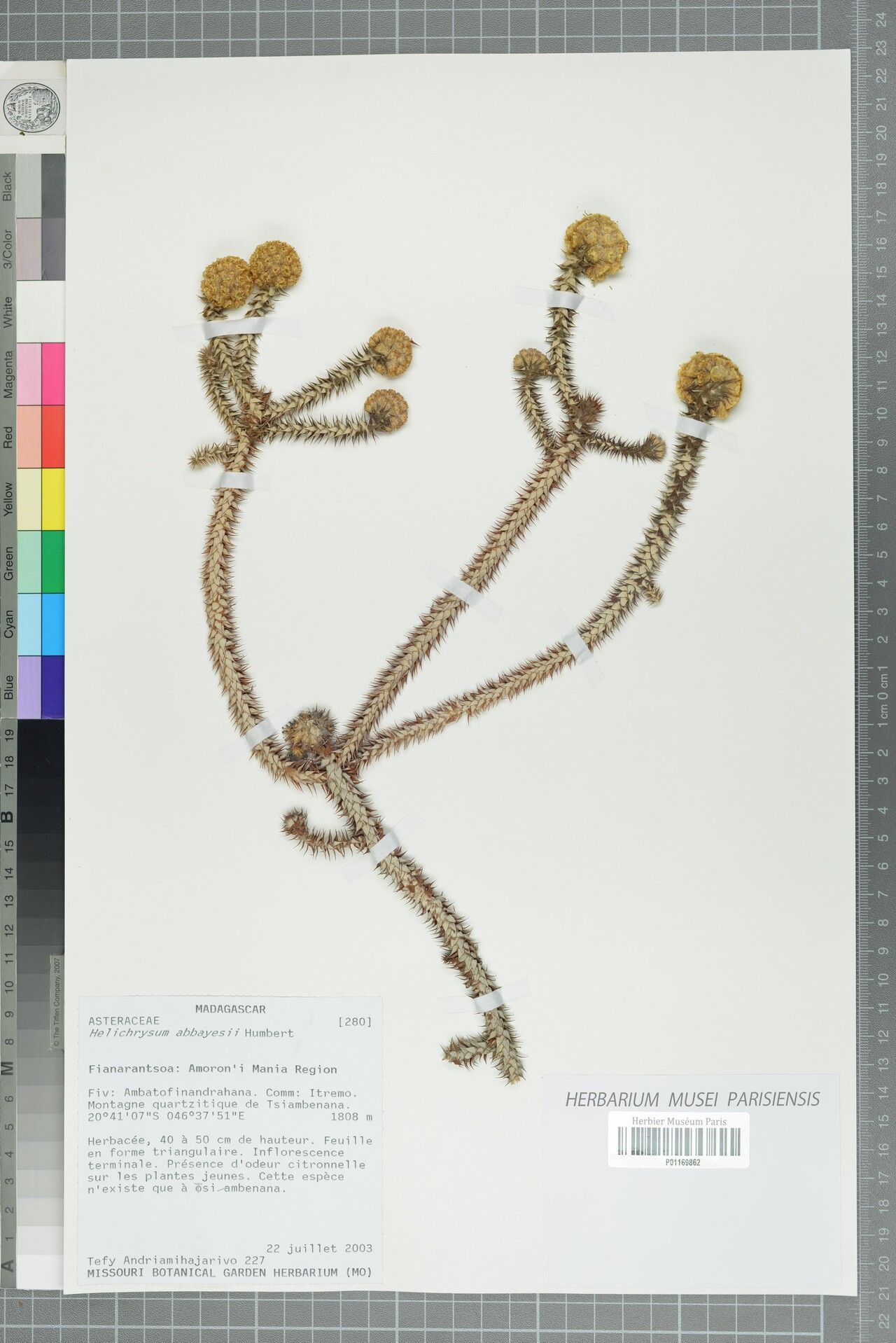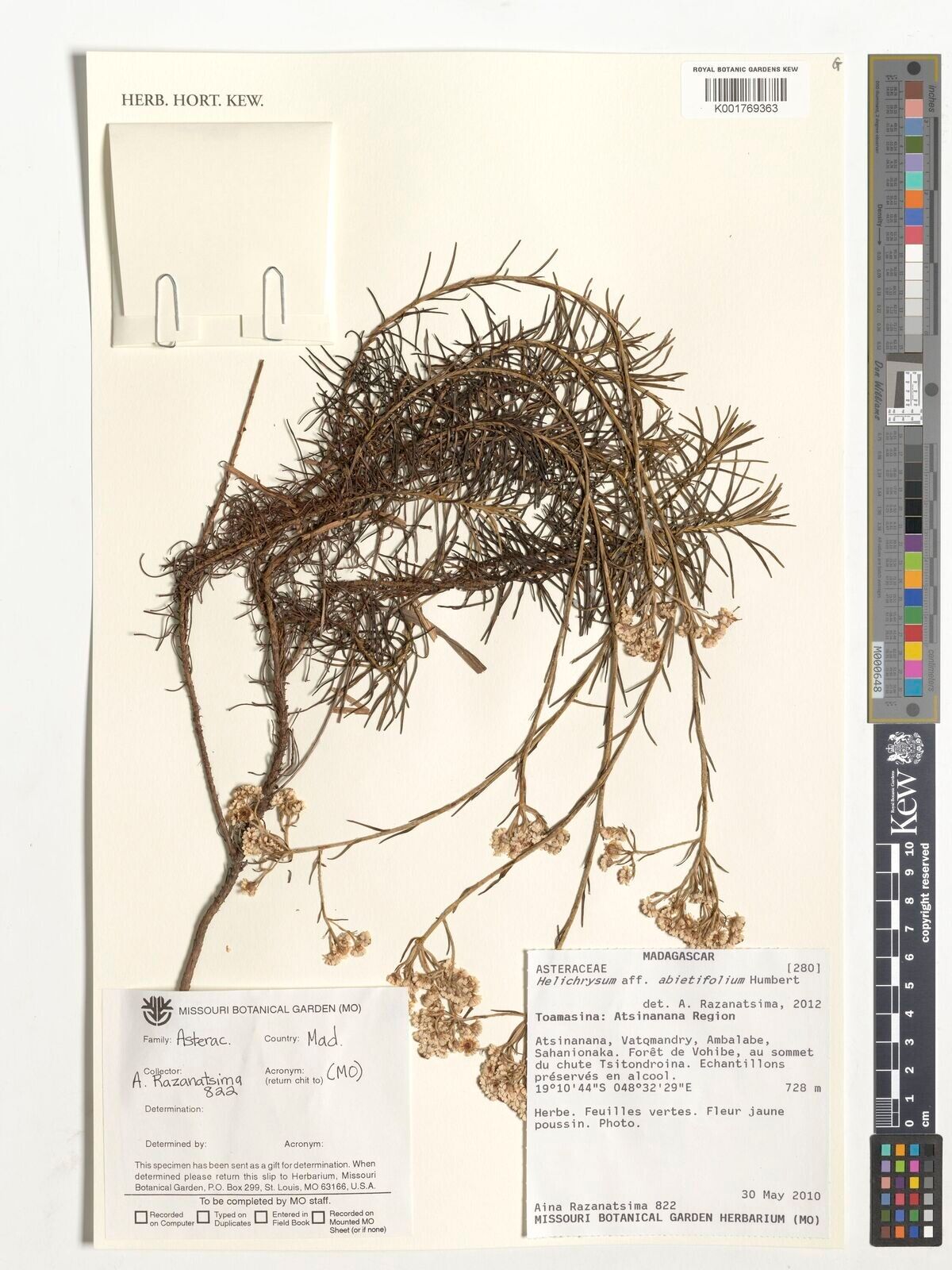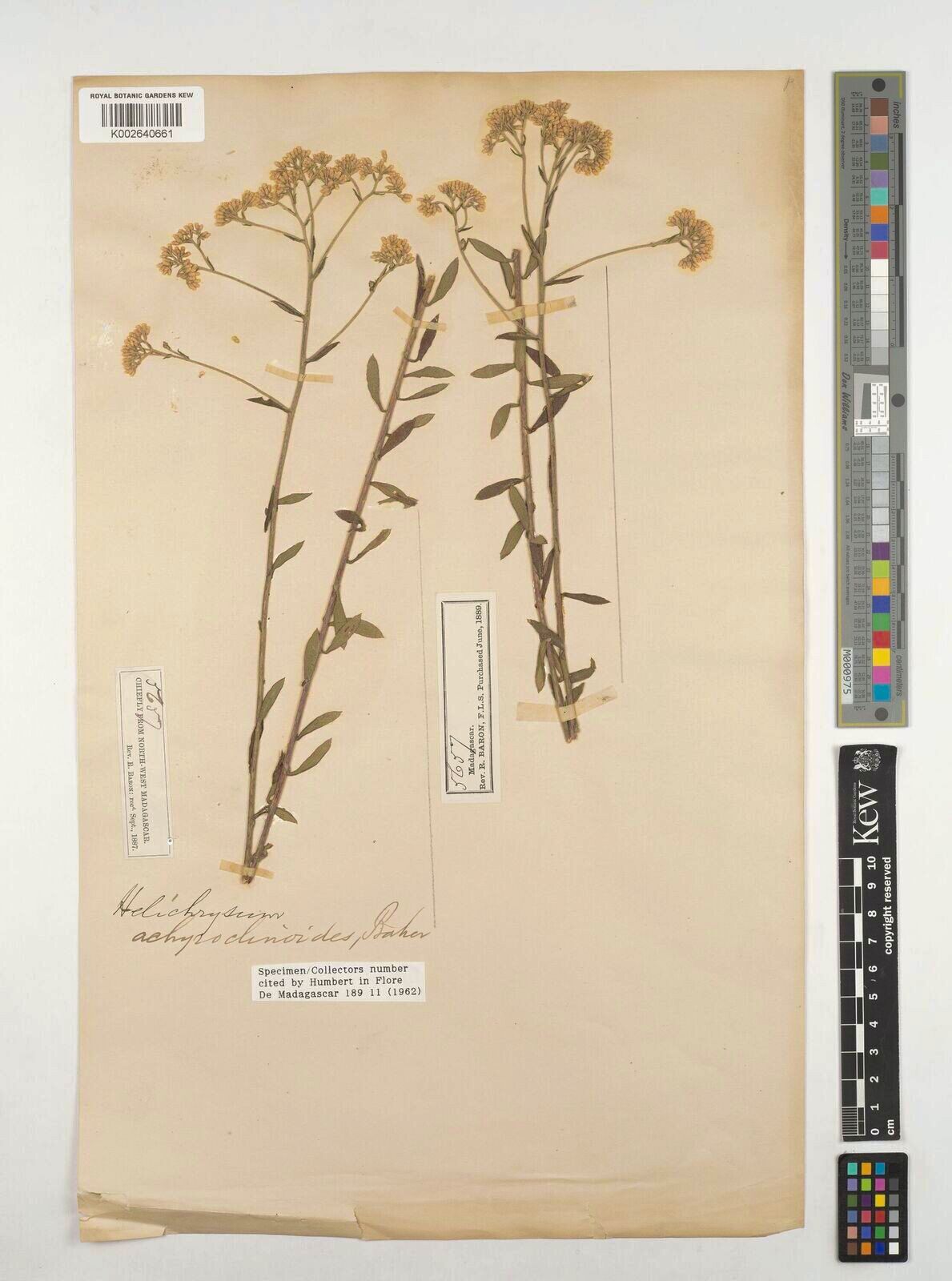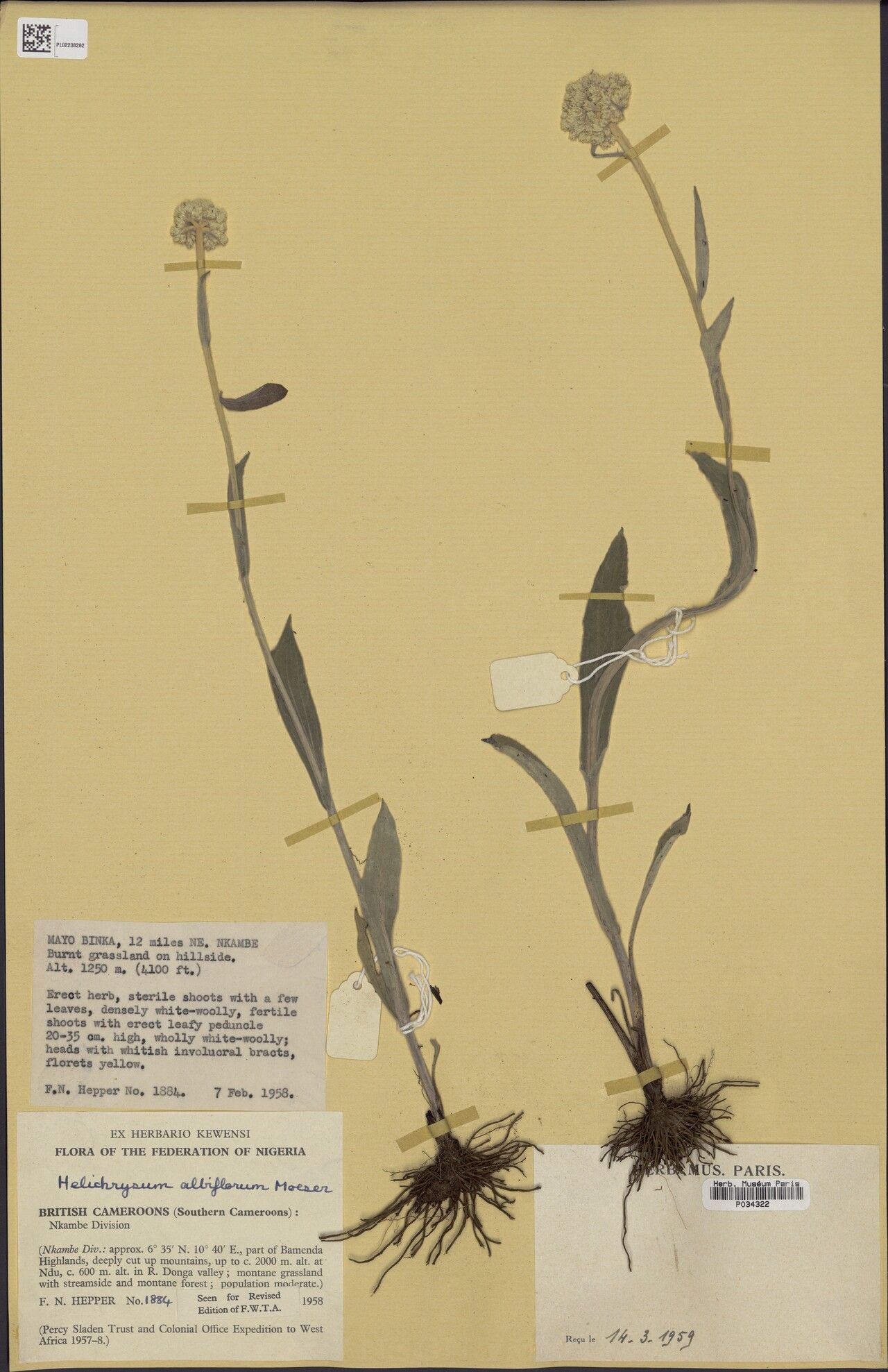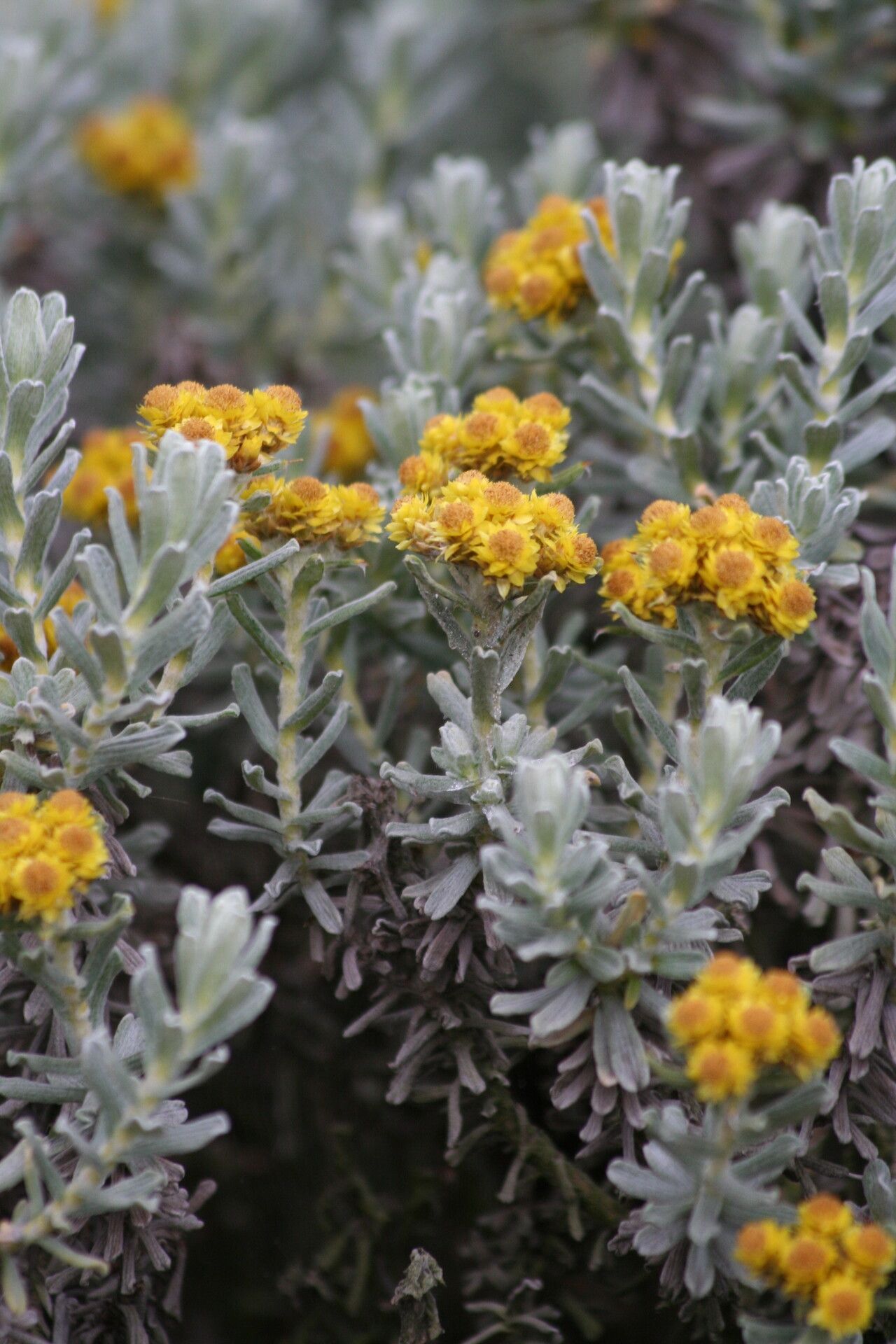
Helichrysum splendidum is a species of flowering plant in the family Asteraceae, found in Africa and Yemen A hardy evergreen perennial, it occurs from the Southern Cape to Ethiopia along the eastern escarpment mountains, favouring rocky places in fynbos, grassland and savanna biomes. It forms mound-shaped aggregations 1–2 meters high, sometimes covering entire hillsides. The species is found in South Africa, Eswatini, Lesotho, Tanzania, Ethiopia, South Sudan, Malawi, Zimbabwe, Zambia and Yemen. The distribution of this species is clearly anthropogenic, that is, closely linked to the movements of man through the ages. The leaves are10–30 (–40) x 1–2 (–6) mm, linear, linear-oblong or linear-lanceolate, with revolute margins. Leaves have a blue-grey colour and are softly woolly on the under surface, as are the young stems. The upper surface is markedly parallel-veined and grooved, the veins protruding on the under side.
Virgate shrub up to 1.5 m tall, or rarely sprawling, branches thinly grey-woolly, closely leafy, older parts glabrescent, rough with leaf scars. Leaves 10–30 (–40) x 1–2 (–6) mm, linear, linear-oblong or linear-lanceolate, apex acute or subacute, mucronate, base broad, half-clasping, margins commonly revolute, upper surface thickly or thinly greyish-white woolly or glabrous or nearly so, lower surface greyish-white woolly. Heads heterogamous, hemispherical, 4–5 mm long, 5–8 mm across the radiating bracts, bases woolly, many in congested or open corymbose panicles terminating long leafy branches. Involucral bracts in c. 5 series, graded, loosely imbricate, inner about equaling or slightly exceeding flowers, tips minutely radiating, bright canary-yellow, rarely orange, glossy. Receptacle very shortly honeycombed. Flowers 47–105, 8–14 female, 39–84 homogamous, yellow. Achenes 0.75 mm long, with duplex hairs. Pappus bristles many, equaling corolla, scabrid, bases cohering by patent cilia. This species is known in cultivation, and has gained the Royal Horticultural Society's Award of Garden Merit.Helichrysums are a rich source of traditional medicines in South Africa. This species has pleasantly aromatic leaves from which an essential oil used in aromatherapy can be derived. The oil's main components are β-pinene, β-phellandrene, δ-cadinene, germacrene D, and 1,8-cineole.
Helichrysum splendidum shows strong resistance to disease and is generally not susceptible to illnesses. Regarding care, this plant is fairly low-maintenance. When grown outdoors it needs little watering, and larger specimens typically do not require pruning. Smaller plants, however, should be pruned after they have finished blooming. Helichrysum splendidumt is suitable for anyone who has an outdoor area, such as a garden or deck, and does not demand much gardening experience.
How to keep Helichrysum Splendidum.
Light
Helichrysum splendidum is native to open habitats, such as sunny meadows and the edges of forests, which offer abundant light. It performs best in Full Sun but can also endure Partial Sun, adapting well to a variety of light levels.
Temperature
Helichrysum splendidum is highly adaptable to a range of climatic conditions, from blazing summers to frosty winters. However, it does have a preferred temperature range for growth. When temperatures become excessively high, the plant is vulnerable to heat and humidity stress, which can cause it to die. In areas where temperatures approach the lower limit of its cold tolerance, it is important to use insulation measures to protect the plant.
Fertilizer
The timing of fertilizing Helichrysum splendidum is important. Apply fertilizer in early spring and continue monthly until early summer. Fertilizer encourages attractive blooms and supplies energy during both dormant and active growth phases.
Pruning
Pruning Helichrysum splendidum in early spring helps improve its shape and vitality. By removing dead stems and thinning the plant, you can enhance air circulation. This process also promotes bushier growth, increases flower production, and helps prevent disease. Always use clean, sharp tools to minimize damage to the plant.
Botanical profile.
- Plant Type
- Shrub
- Life Cycle
- Perennial
- Genus
- Helichrysum
- Family
- Asteraceae
- Hardiness Zone
- 8-11
- Mature Height
- 91 cm
- Mature Spread
- 91 cm
- Leaf Color
- Silver, Gray
- Leaf Type
- Evergreen
- Flower Color
- Gold, Yellow
- Flower Size
- 1.02 cm to 2.03 cm
- Bloom Time
- Summer
- Planting Time
- Spring, Summer, Autumn
- Harvest Time
- Late summer, Early fall, Mid fall
- Native Area
- Malawi, Lesotho, Angola, South Africa, Zambia, Eswatini, Sudan, Ethiopia, Yemen, Tanzania, Zimbabwe
Other names.
Reader questions.
What are the sunlight requirements for Helichrysum splendidum?
Helichrysum splendidum, also known by its botanical name Helichrysum splendidum, thrives best when it receives the right amount of sunlight. For optimal growth, this plant requires full sun, defined as more than 6 hours of direct sunlight per day. However, it can also tolerate partial sun, which means about 3-6 hours of sunlight daily. It's crucial to observe the movement of sunlight through your garden to find spots that offer a harmonious balance of light and shade, ensuring your Helichrysum splendidum remains healthy and happy.