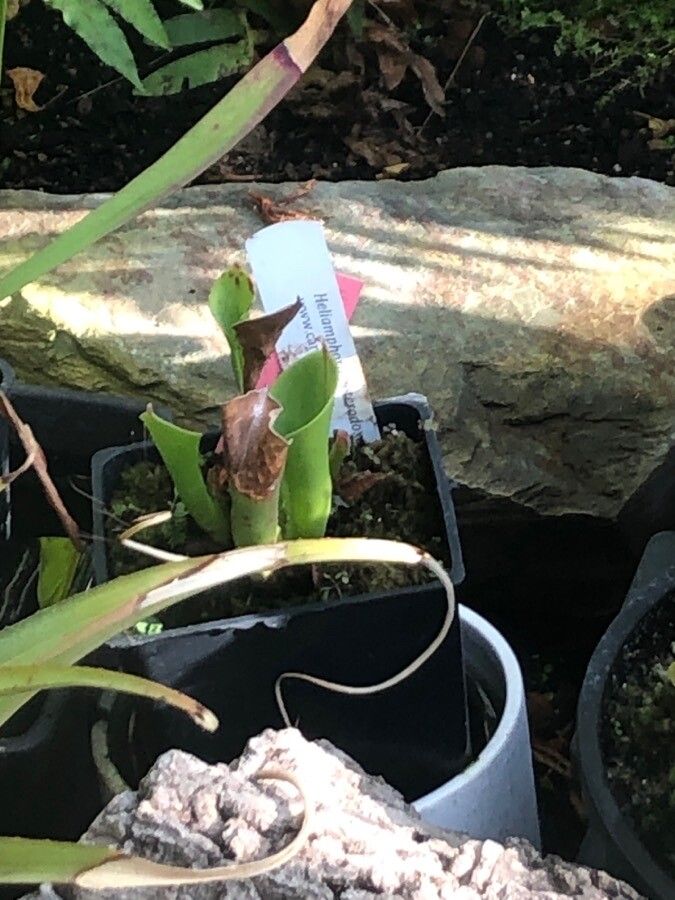
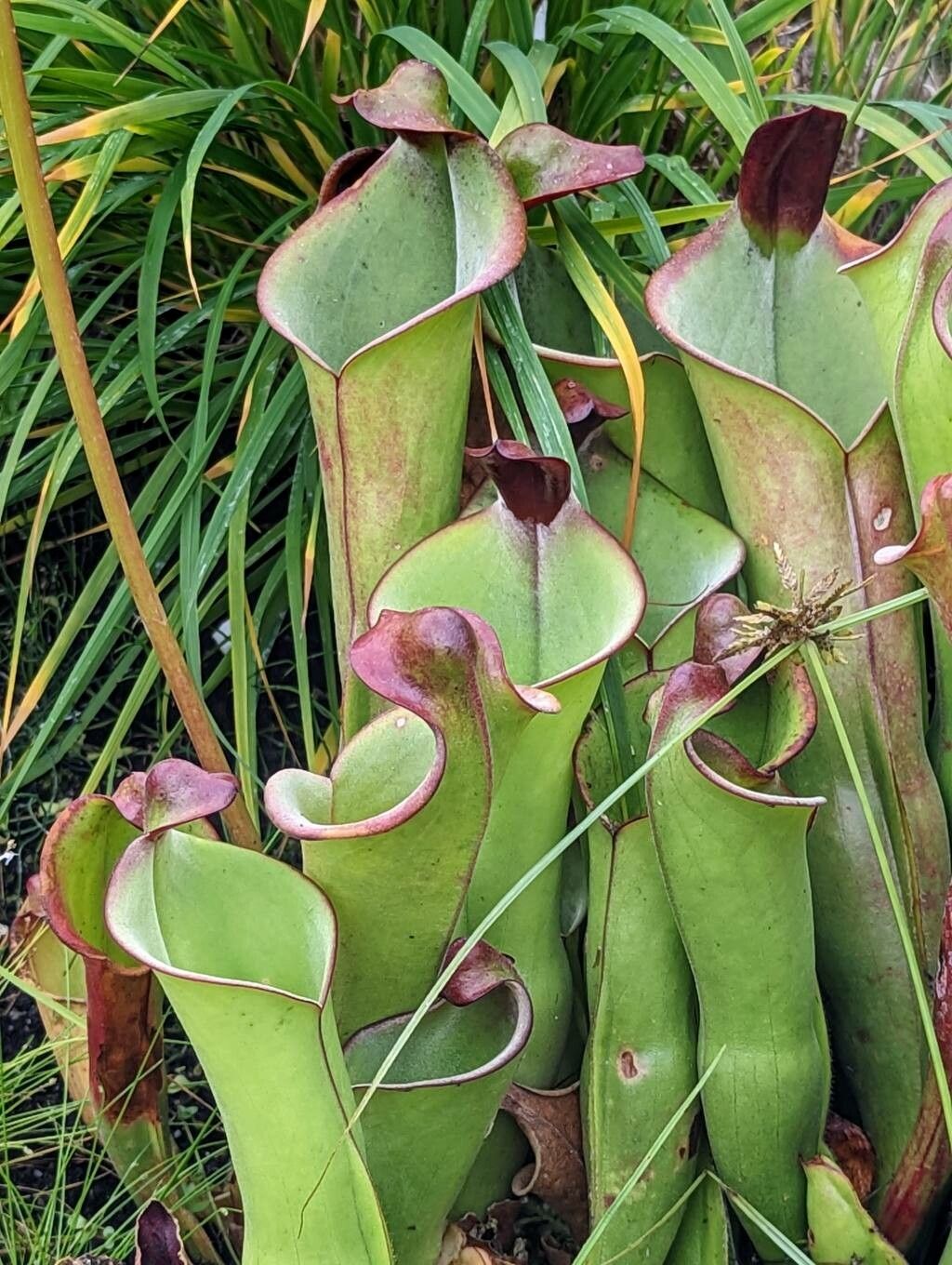
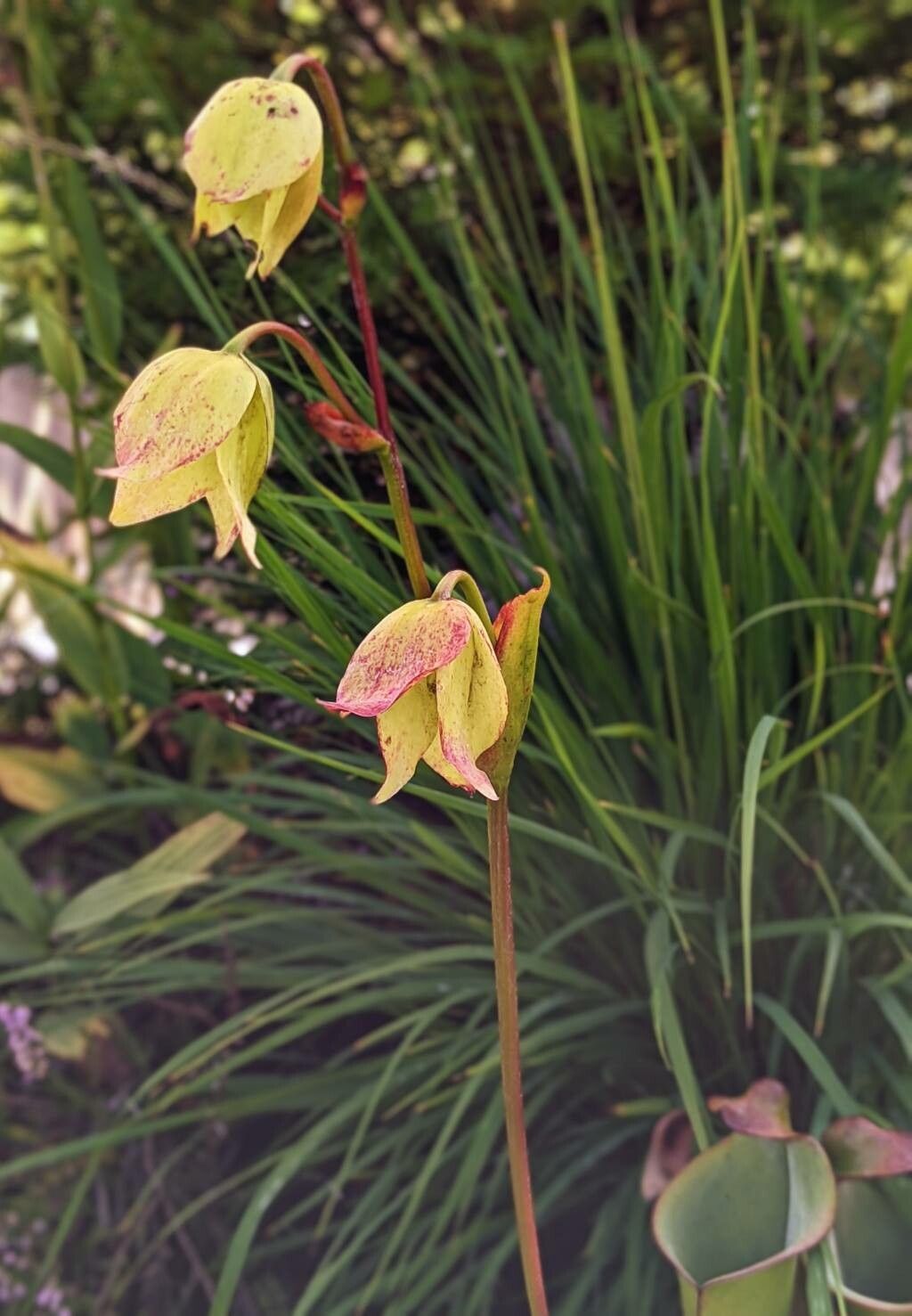
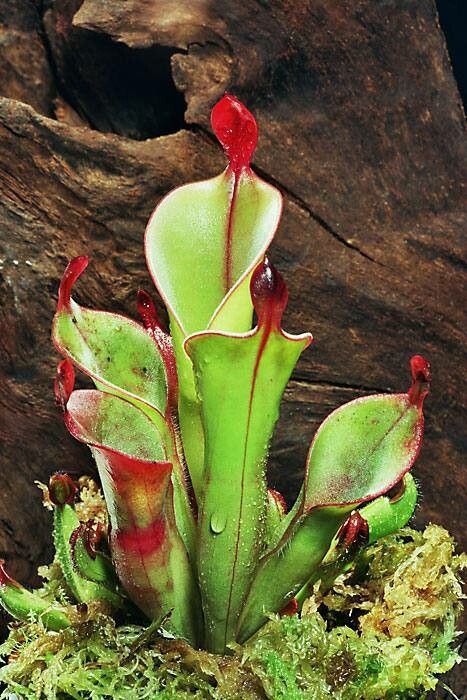
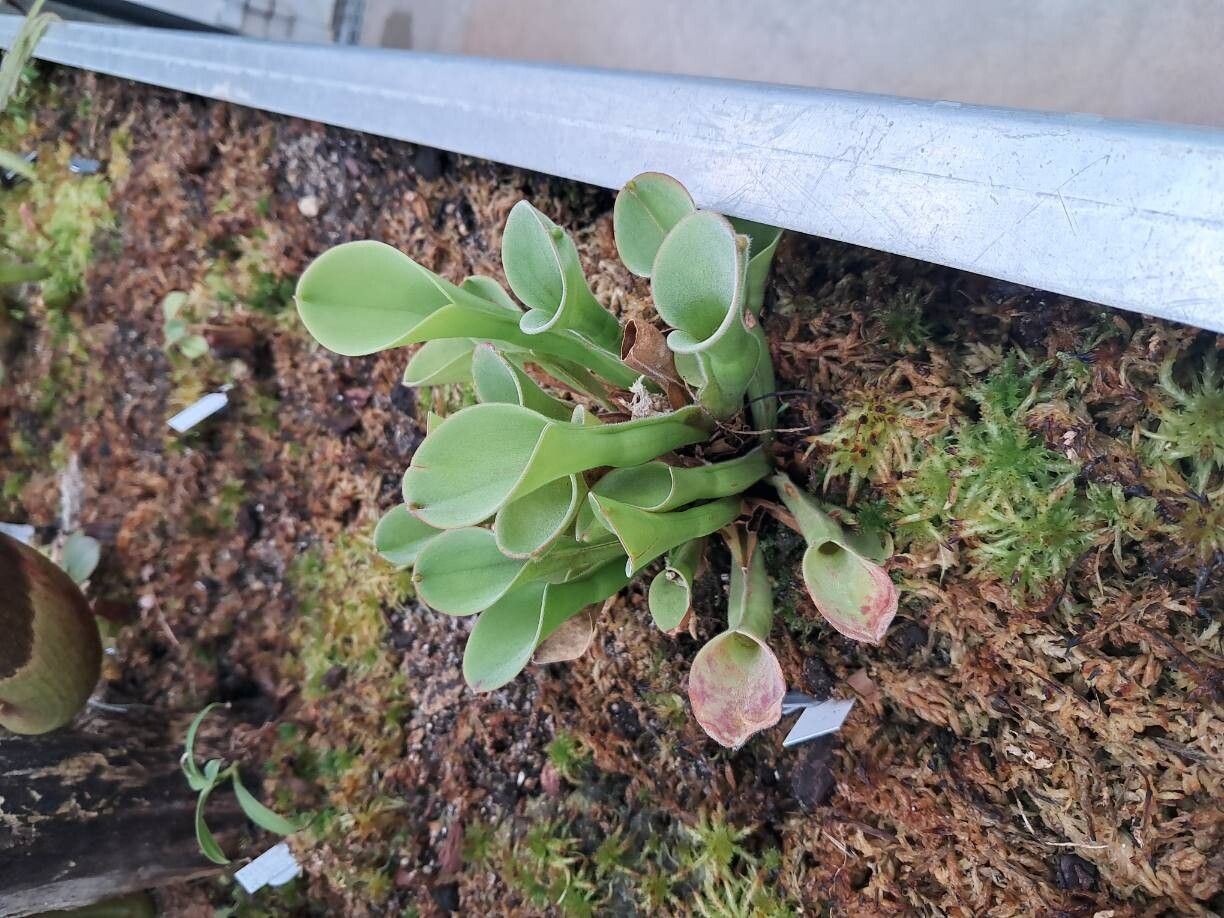
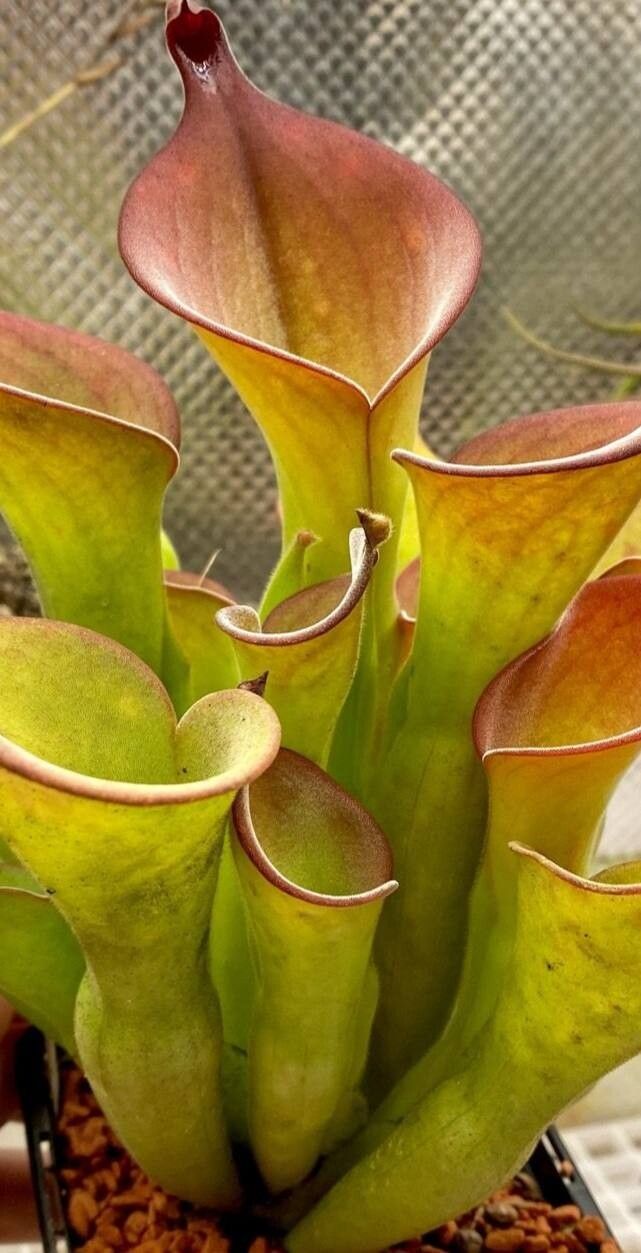
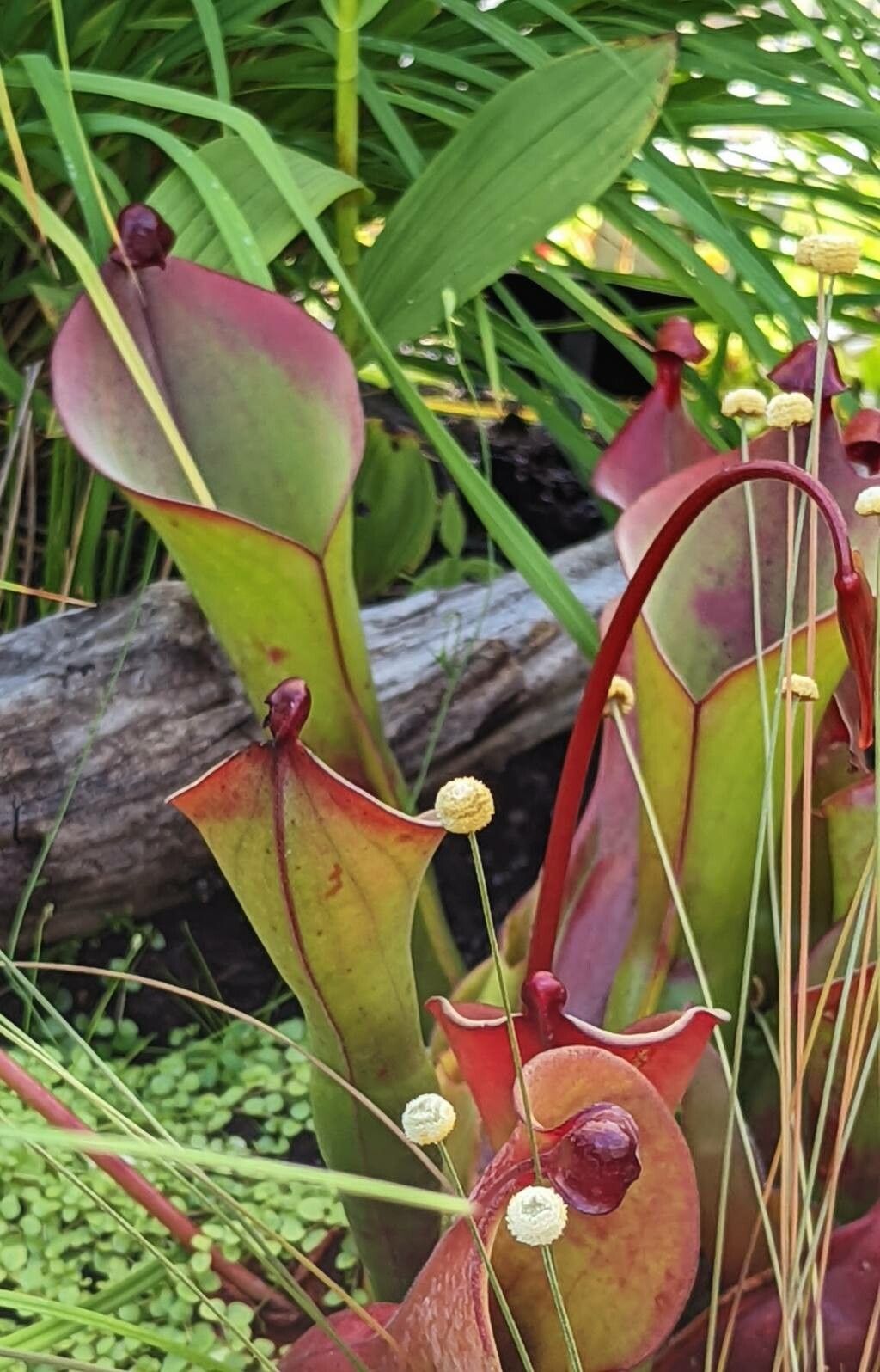
Heliamphora heterodoxa (Greek: heteros = other, doxa = opinion, belief) is a species of marsh pitcher plant native to Venezuela and adjacent Guyana. It was first discovered in 1944 on the slopes interlinking Ptari-tepui and Sororopan-tepui and formally described in 1951.This Heliamphora is closely related to H. glabra and the latter was for a long time considered a form of H. heterodoxa. It is one of four Heliamphora taxa formally described by Julian A. Steyermark.Heliamphora heterodoxa is known to tolerate slightly higher temperatures compared to other Heliamphora species, due to its habitats being located in upland wetlands and lower elevation Pantepui habitats (approx. 1200m - 1500m a.s.l.). The plant grows vigorously and exhibits a large, overhanging nectar spoon.
How to keep Heliamphora Heterodoxa.
Water
Sun Pitcher Plants do well in a moist and not soggy climate. It's crucial that the plant soil should never dry, it's important to never let the soil dry out since it might greatly affect the pitcher's
Temperature
All Heliamphora come from high plateaus where it's cold and misty and thus they require the temperature to remain in the 70s during the day and temperature between 40 and 50 during the night. This plant require high humidity
Fertilizer
Heliamphora plants can be applied fertilizer called Maxsea fertilizer once in a month to its pitcher or leaves to enhance health and outstanding growth of the plant
Pruning
Sun pitcher plants does not require much pruning though you may prune the dead stem and old leaves
Toxicity
Sun pitcher plant is not toxic to either humans or pets, so it's safe to have it around either indoors or exterior
Further reading →
The toxicity and danger assessments provided are for reference only. We do not assure their accuracy, so it's crucial not to depend on them. Seek professional advice when necessary for accurate guidance.
Botanical profile.
- Genus
- Heliamphora
- Family
- Sarraceniaceae
- Hardiness Zone
- Varies by species