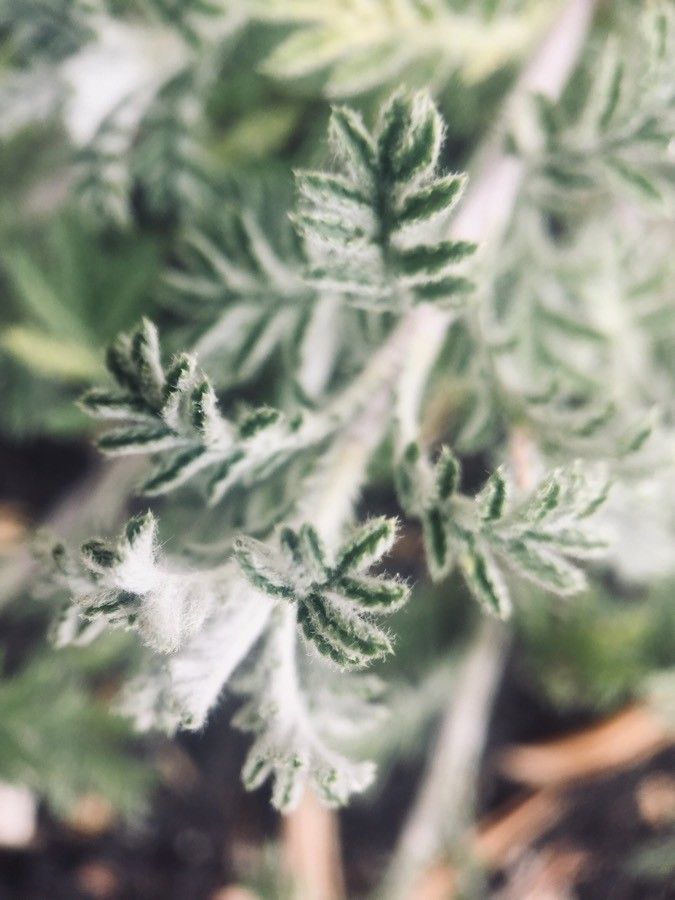
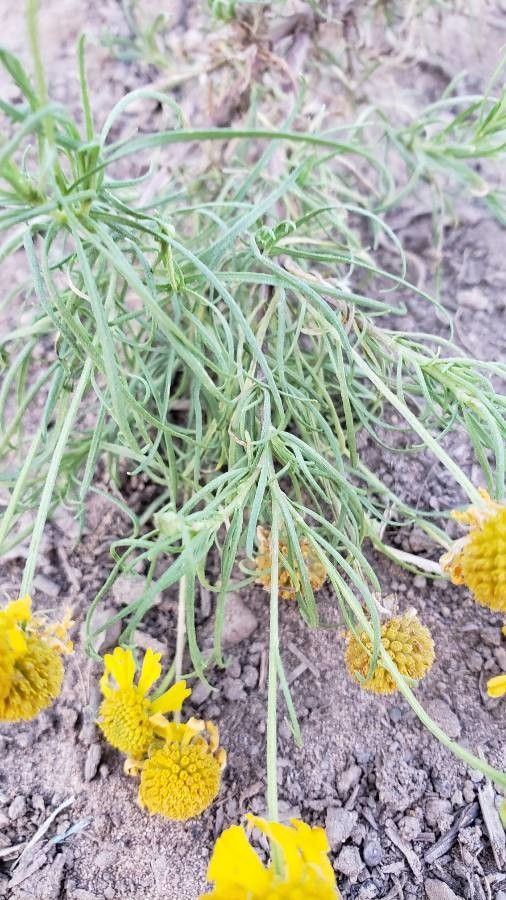
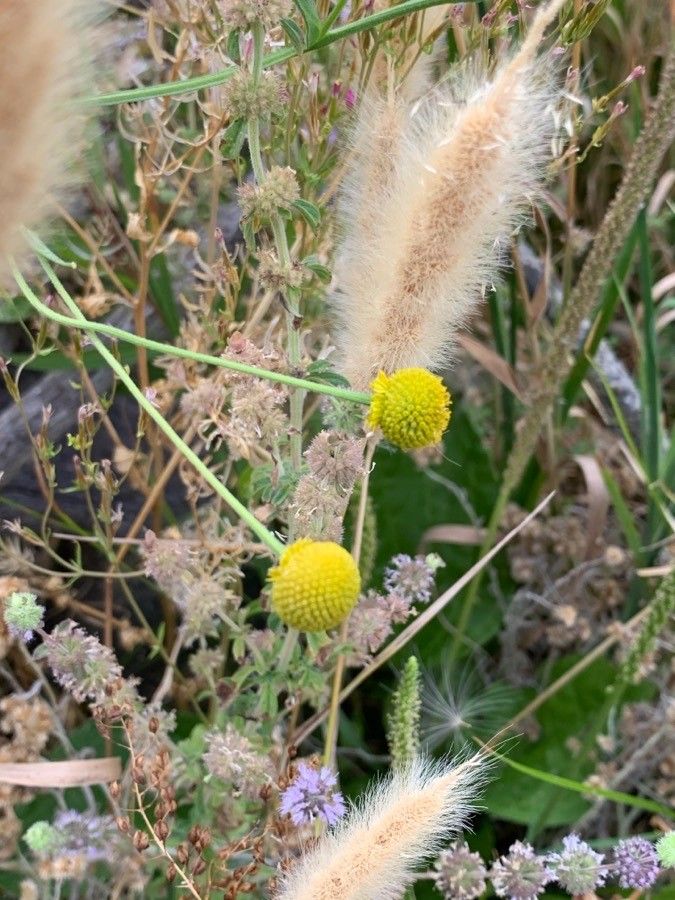
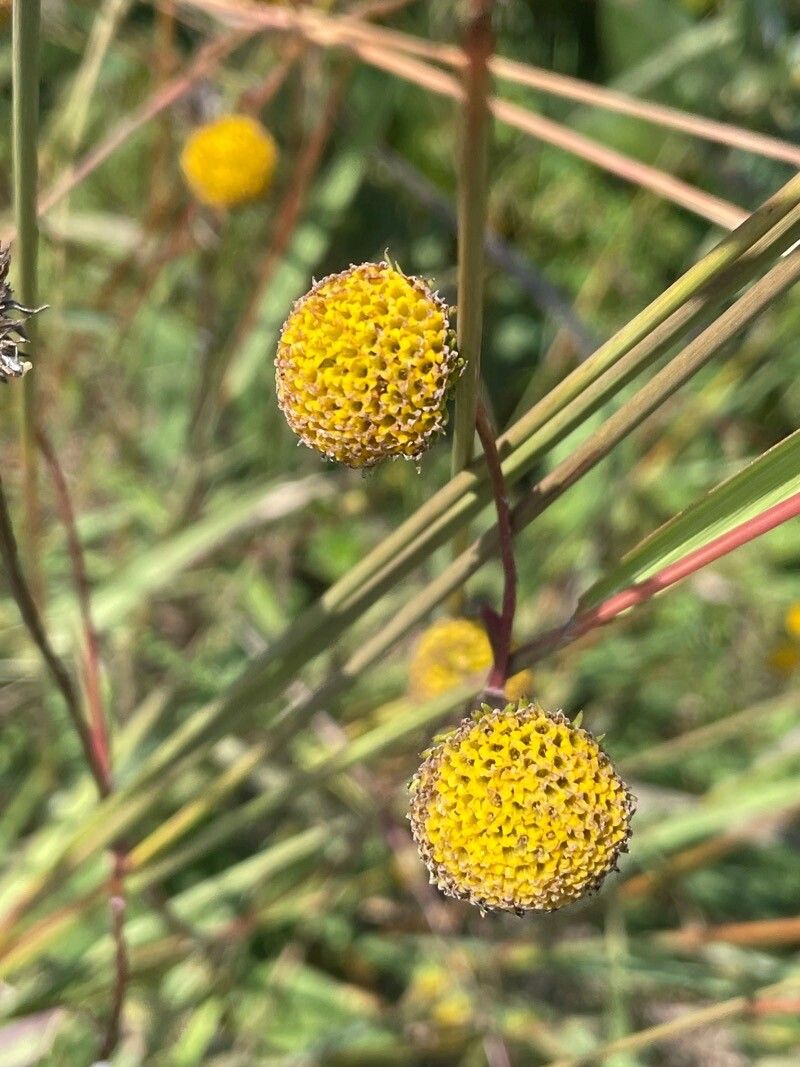
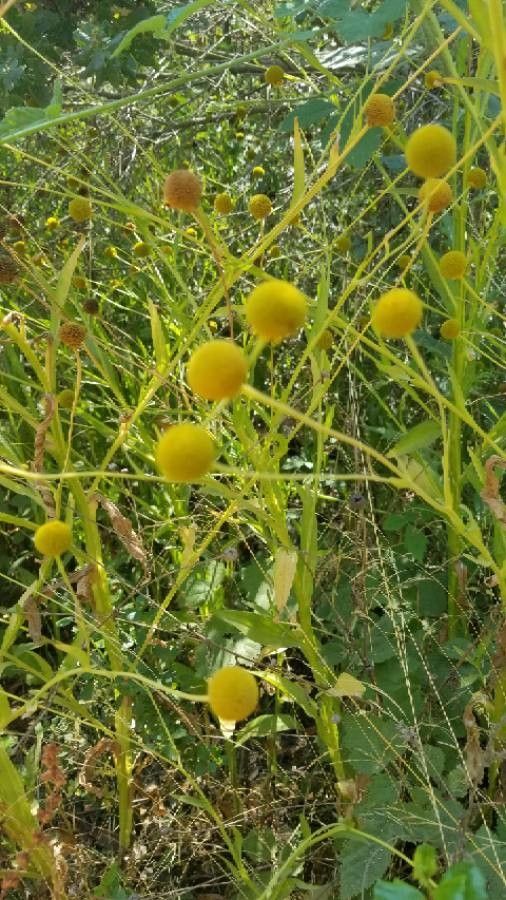
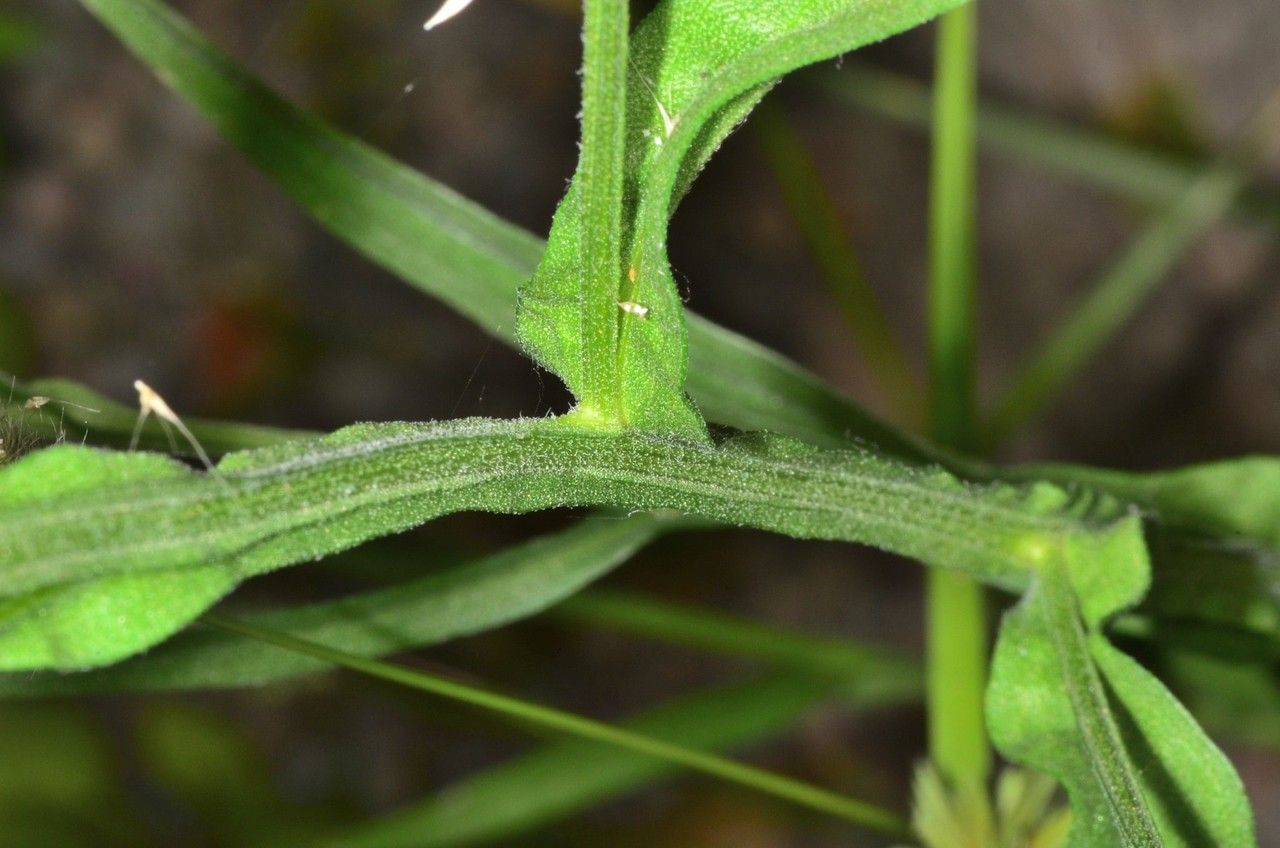
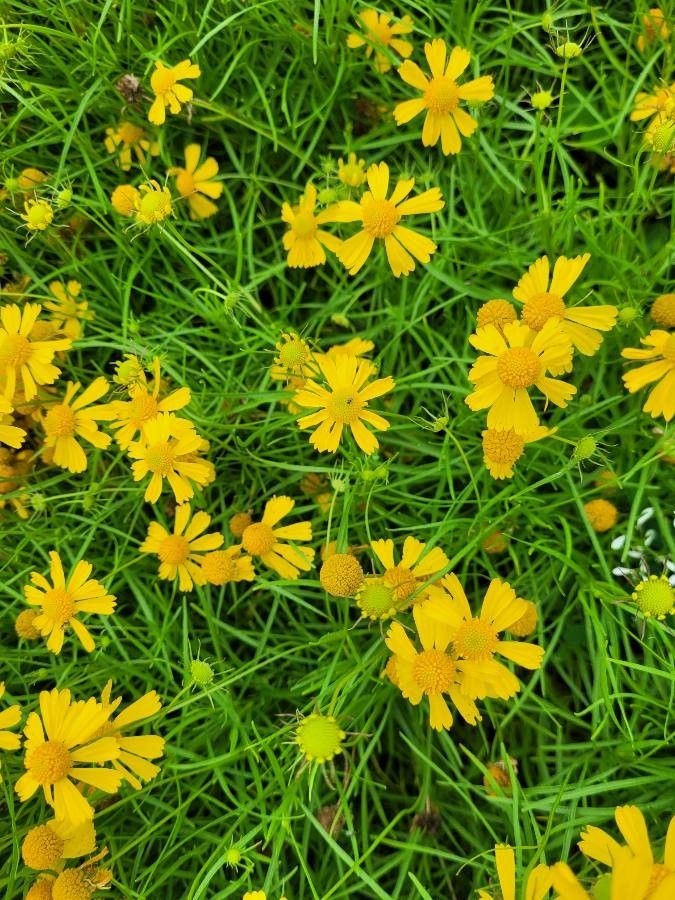
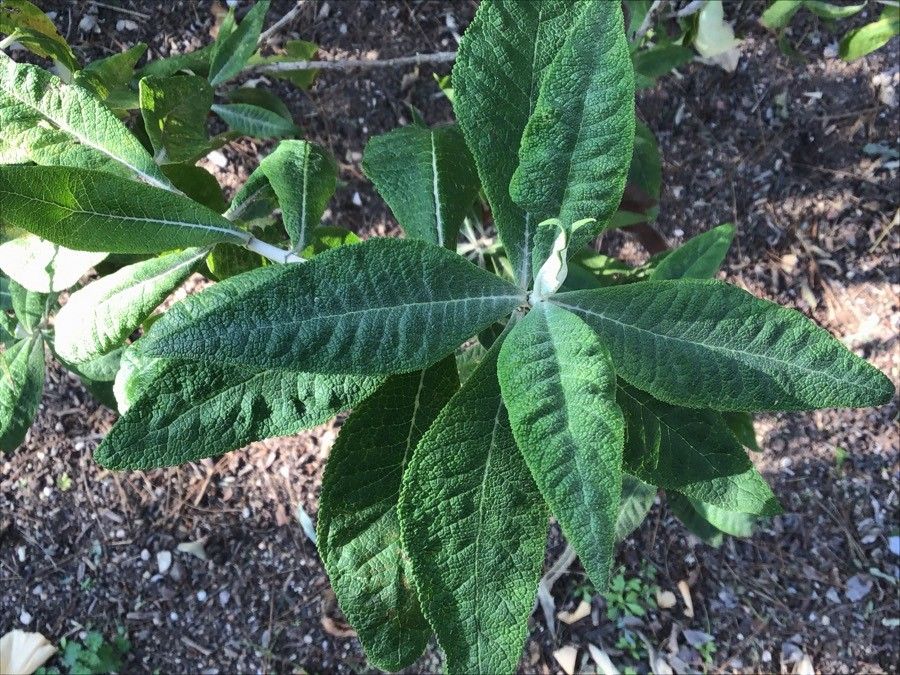
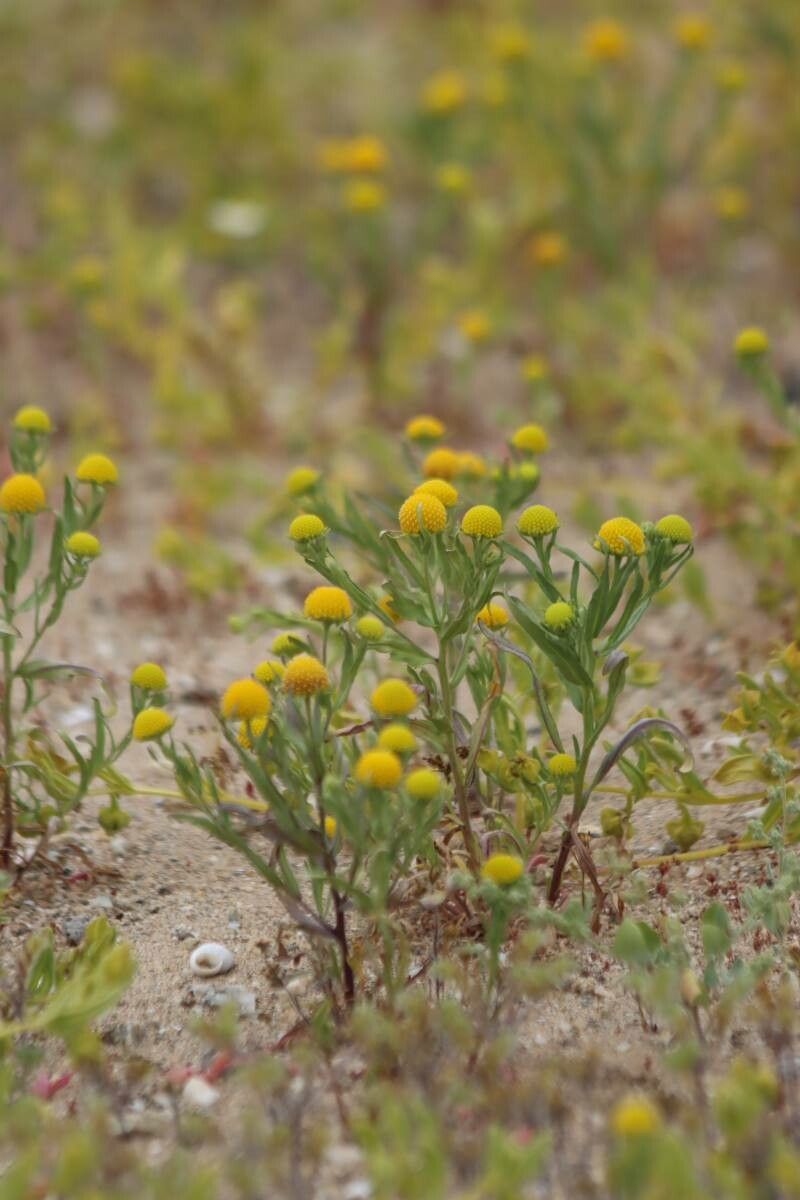
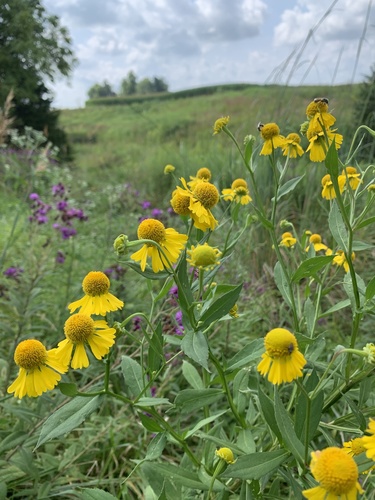
Helenium puberulum is a North American species of flowering plants in the daisy family known by the common name rosilla. It is native to California and Baja California, where it can be found in moist habitats such as riverbanks and meadows. It has also been found in Oregon, although these might possibly be naturalized populations.Helenium puberulum is an annual or perennial herb sometimes as much as 160 cm tall though other times much smaller. Most of the leaves are on the lower part of the plant. Stems are winged, meaning that they have flaps of tissue running down the sides. One plant can produce as many as 30 flower heads in a branched array. The head is unusual in that the part covered by the disc florets is almost completely spherical rather than conical as in most other species of the genus. There can sometimes be over 1000 small disc florets in the head, each yellow at the bottom but brown or purple toward the tip. The 13-17 yellow ray florets are small and inconspicuous, pointing backwards down the flower stalk. Sometimes the ray florets are completely absent. The fruit is a hairy achene one to two millimeters long.
Rosilla has good resistance to disease and typically does not get sick easily. However, it can be affected by pests and diseases present in its environment. These infections are usually mild. Regarding care, this plant requires moderate maintenance. It should be pruned regularly to preserve a tidy appearance and encourage healthy growth. Fertilizing can also help stimulate flowering. Rosilla is suitable for anyone with an outdoor area, such as a garden or patio, and does not need extensive care experience. It may demand more attention when grown indoors.
How to keep Helenium Puberulum.
Light
Rosilla does best in places where it gets plenty of sunlight during the day, although it can also tolerate locations with moderate light. Its native environment often provides ample sun, helping it stay healthy through every stage of growth. Both too much and too little light can hinder its development.
Water
Rosilla thrives in moist environments and needs consistently hydrated, evenly moist soil. To maintain its vigor, especially during periods of active growth, it should be watered weekly. As an herbaceous perennial adapted to regions with regular rainfall, proper irrigation is crucial for its health.
Temperature
Rosilla naturally occurs in habitats where temperatures commonly range from 68 to 95°F (20 to 35°C). It performs best within that range. Making appropriate temperature adjustments to account for seasonal changes is essential for its growth.
Fertilizer
When most of Rosilla’s blooms have fully opened, resume fertilizing. At the height of bloom production, apply fertilizer every three to four weeks, weather permitting. Then, once Rosilla begins producing fewer new blooms, stop fertilizing; there’s no point in feeding the plant when it can no longer produce additional blooms.
Pruning
Rosilla is known for its vibrant, daisy-like flowers. To keep it thriving, proper pruning is essential. Prune the plant between early and late spring to remove any damaged parts and enhance its blooms. After the flowers have bloomed, cut the plant back to encourage bushier growth. Regularly deadheading spent flowers will also extend the bloom period. Be sure to use clean, sharp tools during pruning to maintain the plant's health.
Botanical profile.
- Plant Type
- Herb
- Life Cycle
- Annual, Perennial
- Genus
- Helenium
- Family
- Asteraceae
- Hardiness Zone
- 7-10
- Mature Height
- 1.52 m
- Mature Spread
- 61 cm
- Leaf Color
- Green, Dark Green
- Leaf Type
- Deciduous
- Flower Color
- Yellow, Orange
- Flower Size
- 1.02 cm to 1.78 cm
- Bloom Time
- Mid summer, Late summer, Early fall
- Planting Time
- Spring, Summer, Autumn
- Harvest Time
- Early fall, Mid fall
- Native Area
- Mexico
Other names.
Reader questions.
How should I water my Rosilla plant?
There are a few different ways to water Rosilla. You can use a garden hose with a spray nozzle, a watering can, or any common watering tool. Rosilla isn't too picky about the type of water it receives, whether it's rainwater, tap water, or filtered water. It's generally best to avoid watering this plant from overhead because it can damage the leaves and flowers and increase the risk of disease. A drip irrigation system is often the most effective way to water Rosilla, as it provides even and direct water to the soil. If you have a container-grown Rosilla, you can use a cup, watering can, or tap water to directly water the soil.
What are the sunlight requirements for Rosilla?
Rosilla requires full sun exposure, which entails more than 6 hours of direct sunlight daily, for optimal growth. However, it can also thrive in partial sun conditions, receiving about 3-6 hours of sunlight. It's important to understand how sunlight moves through your garden to identify the best spots that offer a balance of light and shade, ensuring your Rosilla's growth and happiness.
What is the optimal temperature range for Rosilla?
Rosilla thrives in environments where temperatures routinely fall within the range of 68 to 95°F (20 to 35°C). This range is considered optimal for its growth, and proper temperature adjustments should be made considering seasonal changes to ensure the plant's health and vitality.
What should I do if I give my Rosilla too much or too little water?
The solution for underwatering your Rosilla is simple: water it more regularly when you notice it is lacking moisture. On the other hand, overwatering can be a serious problem. If you don't catch it early, your Rosilla may develop diseases that can lead to its decline and death. To avoid this, it's important to choose a suitable location for your plant. This means finding a spot with plenty of sunlight to dry the soil and good drainage to prevent excess water from pooling. If you've overwatered your potted Rosilla, you may need to consider repotting it. The original container may not have had proper drainage or enough holes. When repotting, be sure to use loose soils and a pot that drains efficiently.
What are the essential conditions for growing Rosilla?
Rosilla thrives in locations with ample sunlight throughout the day but can also tolerate moderate light exposure. Originating from conditions that provide generous sunlight, Rosilla benefits significantly through all its growth phases from such environments. Both excessive and inadequate light exposure can impede its development. For indoor plants lacking natural sunlight, especially in winter or less sunny spaces, artificial lighting, such as LED lights, becomes crucial. These lights should provide 30-50W/sq ft for full sun plants, 20-30W/sq ft for partial sun plants, and 10-20W/sq ft for full shade plants. It's vital to position the light source about 12-36 inches above the plant and ensure it receives 8-12 hours of light per day to mimic natural sunlight conditions.
How does Rosilla cope with cold temperatures and what measures should be taken in winter?
Rosilla possesses strong cold resistance and typically does not require special frost protection measures during winter. However, if winter temperatures are expected to drop below -15°C, it is important to provide cold protection by covering the plant with materials such as soil or straw. Additionally, watering the plant abundantly before the first freeze in autumn to keep the soil moist can help prevent drought and water scarcity for the plant during winter and early spring.
How often do I need to water my Rosilla plant?
To keep your Rosilla plant healthy, it's important to consistently water it during the growing season. In the spring, watering once a week is sufficient. However, as the weather gets hotter, you may need to water two to three times a week. Be careful not to overwater, as this can harm the plant. Regardless of how often you water, make sure the soil is damp but not overly wet. If your Rosilla is in a pot, it will need more frequent watering compared to a plant in the ground. In most cases, watering a potted Rosilla a few times per week is recommended, whereas an in-ground plant typically only needs watering once a week.
What symptoms indicate insufficient light for indoor Rosilla plants?
Rosilla plants exposed to insufficient light may exhibit symptoms like smaller new leaves, leggy or sparse growth, faster leaf drop, slowed or ceased new growth, lighter-colored new leaves, and symptoms of stress from excessive sunlight like chlorosis, sunscald, leaf curling, wilting, and leaf scorching. These symptoms signal the plant's struggle with inadequate or excessive light, affecting its ability to photosynthesize effectively and maintain healthy growth.
What are the symptoms of Rosilla when exposed to low temperatures, and what solutions are recommended?
When exposed to temperatures below -15°C, there might not be noticeable changes during winter, but Rosilla may experience a decrease in sprouting or may not sprout at all during springtime. The recommended solution for this issue is to remove any parts of the plant that have failed to sprout in the spring.
How much water does my Rosilla bird need?
Determining how much water to give to your Rosilla can be approached in a few different ways. Some gardeners rely on their senses, feeling the soil to gauge moisture and watering until the top six inches are moist. Others prefer a set measurement, suggesting two gallons per week, considering factors like heat and soil dryness. However, following strict guidelines can risk overwatering if your plant needs less. When growing Rosilla in a container, a different method is needed. Moistening all dry soil layers is recommended, which can be checked by feeling the soil or observing excess water draining from pot holes.
What solutions can address light issues for Rosilla plants?
For indoor Rosilla plants, gradually increasing their exposure to sunlight by moving them to a sunnier spot each week until they receive at least 6 hours of sunlight daily is beneficial. Using a south-facing window or providing artificial light, like professional grow lights, for at least 8 hours daily can help. For outdoor plants, moving them gradually to sunnier locations can prevent sunburn. Reducing obstructions to sunlight, like pruning trees, or transplanting smaller plants to sunnier locations with good drainage during their dormant period, are effective solutions. It's important to note that parts of the plant damaged by insufficient sunlight may not recover, but new growth should be healthy with improved light conditions.
How does Rosilla react to high temperatures, and how can these issues be addressed?
During summer, it is crucial to keep Rosilla's temperature below 35°C. Exceeding 41°C can cause leaves to become lighter in color, prone to curling, susceptible to sunburn, and in severe cases, the entire plant may wilt and become dry. To mitigate these issues, trim away the sunburned and dried-up parts, move the plant to a location that provides shade during the midday and afternoon sun, or use a shade cloth. Additionally, watering the plant in the morning and evening to keep the soil moist can help manage the impact of high temperatures.