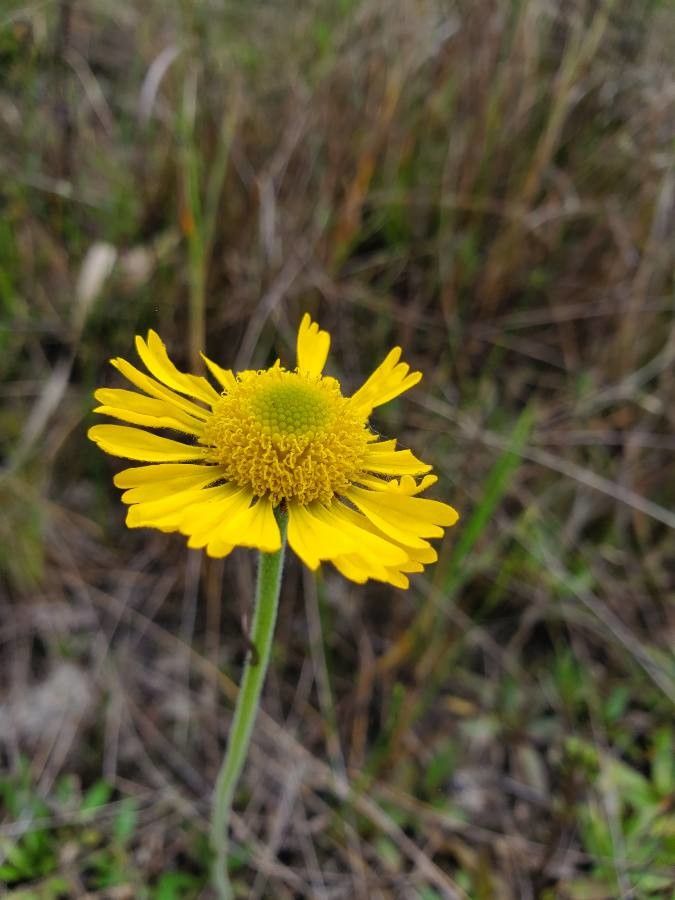
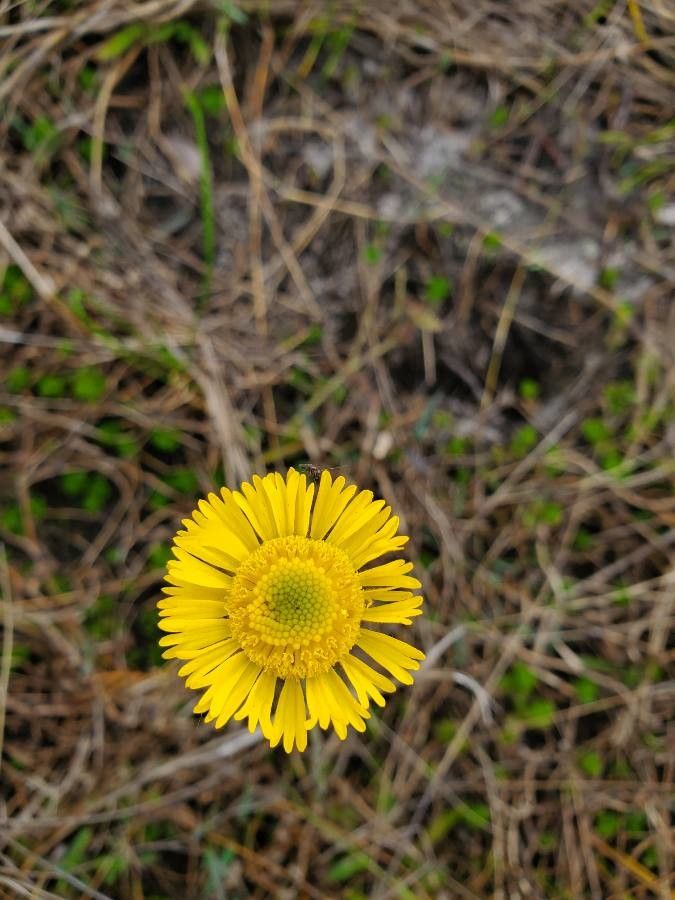
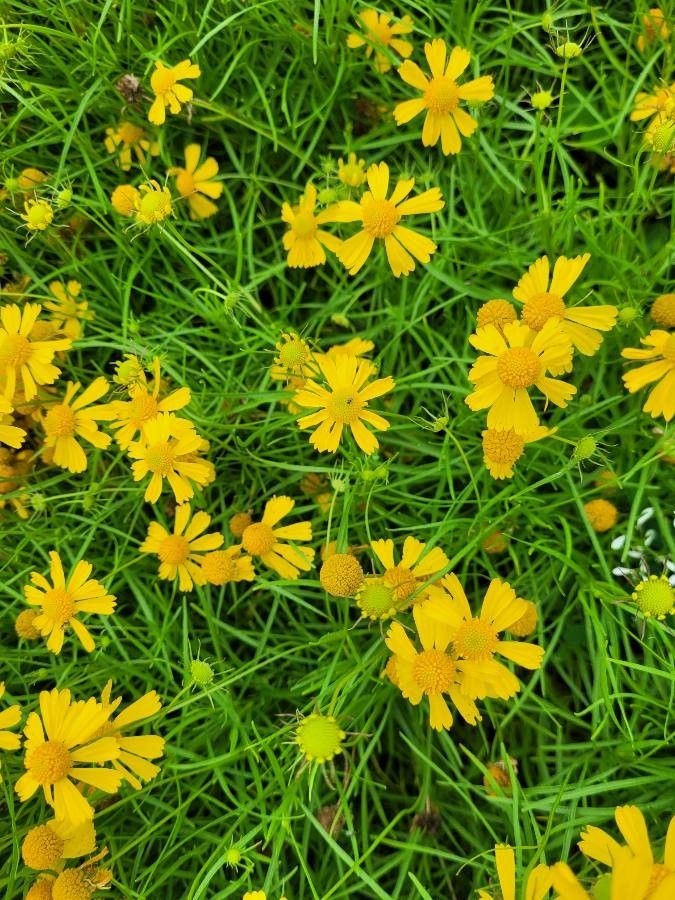
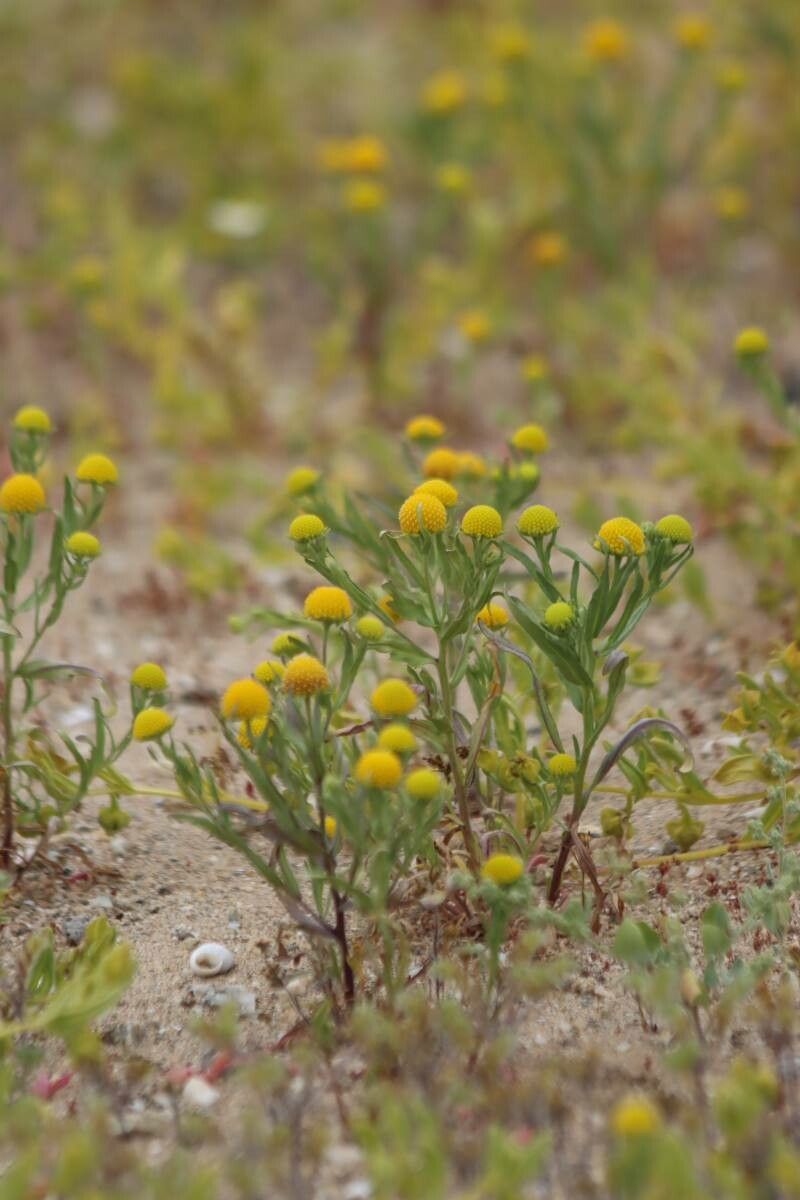
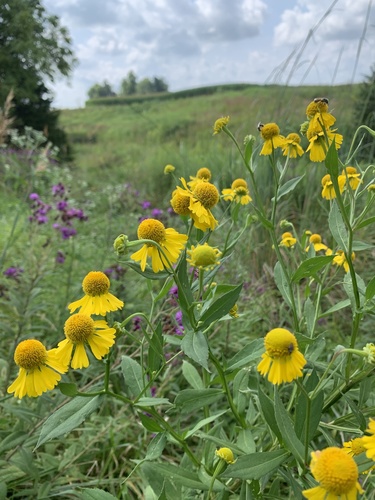
Helenium pinnatifidum is a North American perennial plant in the sunflower family, commonly known as southeastern sneezeweed. It is found in the southeaster United States (Alabama, Georgia, Florida, and the Carolinas).Helenium pinnatifidum is an perennial herb up to 80 cm (31.5 in) tall, with small wings running down the sides of the stems. Leaves are pinnatifid, meaning deeply divided into many small parts. One plant generally produces only 1-3 hemispherical flower heads, about 2 cm (1 in) across. Each head can have 800 or more minuscule disc flowers 4.0–5.5 mm (0.16–0.22 in) across, each yellow toward the bottom but yellow-brown toward the tip. There are also 13-34 yellow ray flowers, each with three prominent lobes at the tip.
Southeastern sneezeweed has strong resistance to disease and typically does not suffer from illnesses. Still, it can be vulnerable to pests and diseases found in its environment. Such outbreaks are generally mild. Regarding maintenance, this plant is of medium care level. It should be trimmed regularly to preserve a neat appearance and encourage healthy growth. Applying fertilizer can also aid in boosting blooms. Southeastern sneezeweed is appropriate for anyone with outdoor areas like a garden or patio and does not demand extensive gardening experience. It may need extra attention if cultivated indoors.
How to keep Helenium Pinnatifidum.
Light
Southeastern sneezeweed is a sun-loving, perennial herbaceous plant native to open habitats and often found thriving in meadows and grasslands. It prefers full sun but can also tolerate partial sun.
Water
Southeastern sneezeweed is native to moist meadows and thrives in consistently damp environments. To maintain its health and vigor, it needs to be watered weekly, although it can tolerate short periods of drought. Using rainwater for irrigation can improve its nutrient uptake, which is especially beneficial for this herbaceous perennial that is typically grown outdoors.
Fertilizer
One spring application of fertilizer is generally enough for Southeastern sneezeweed, although repeated feedings can maximize growth. Apply fertilizer approximately every one to one-and-a-half months. Fertilization improves the leaves’ appearance and function, helping maintain uniform color and a healthy texture. It also encourages root development and nutrient uptake, supporting long-term plant health.
Pruning
Southeastern sneezeweed has bright yellow flowers and serrated leaves. To care for the plant, prune it in early to late spring by trimming dead stems and pinching new growth. This encourages the plant to become bushier, resulting in more vibrant blooms. These practices also help prevent the plant from becoming leggy and reduce the risk of disease, enhancing its overall appearance.
Botanical profile.
- Plant Type
- Herb
- Life Cycle
- Perennial
- Genus
- Helenium
- Family
- Asteraceae
- Hardiness Zone
- 3-8
- Mature Height
- 30 cm to 91 cm
- Leaf Type
- Semi-evergreen
Other names.