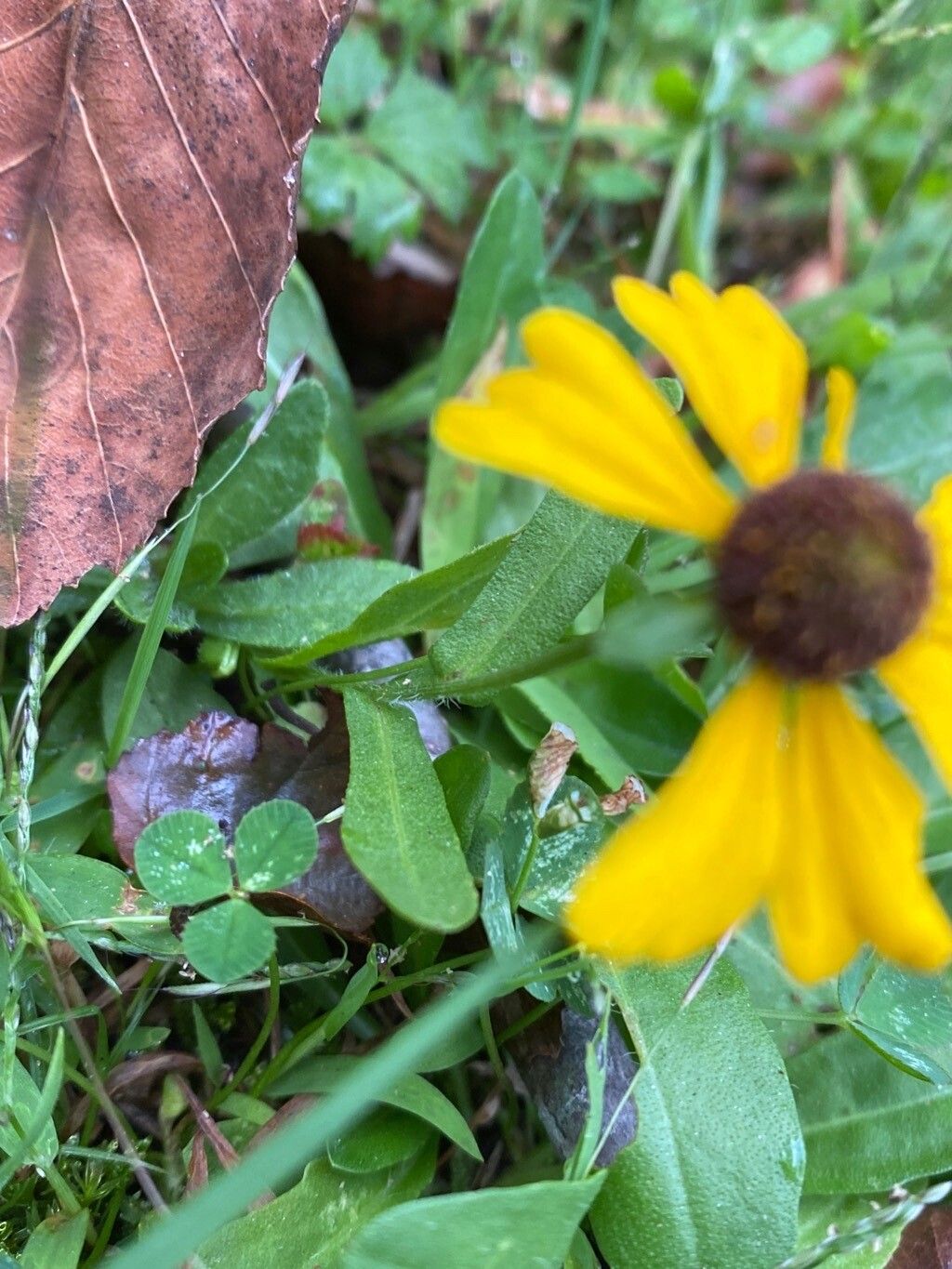
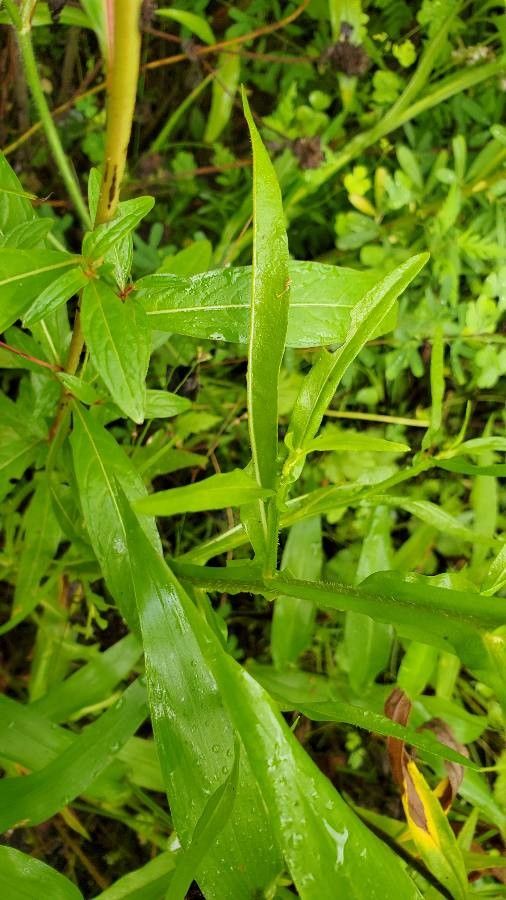
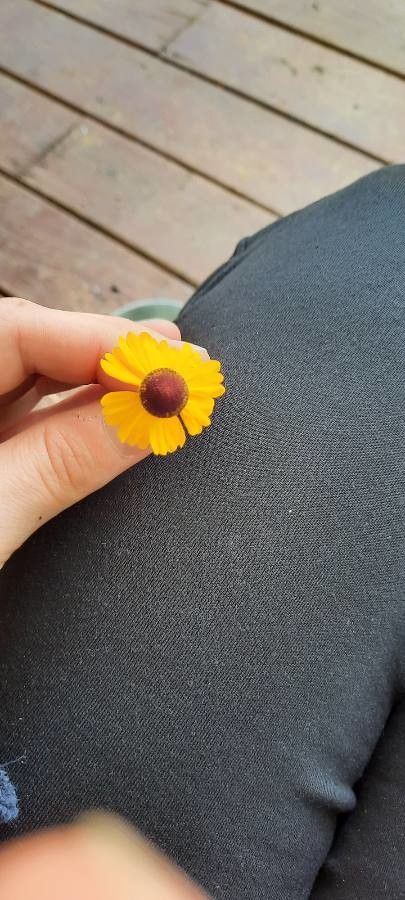
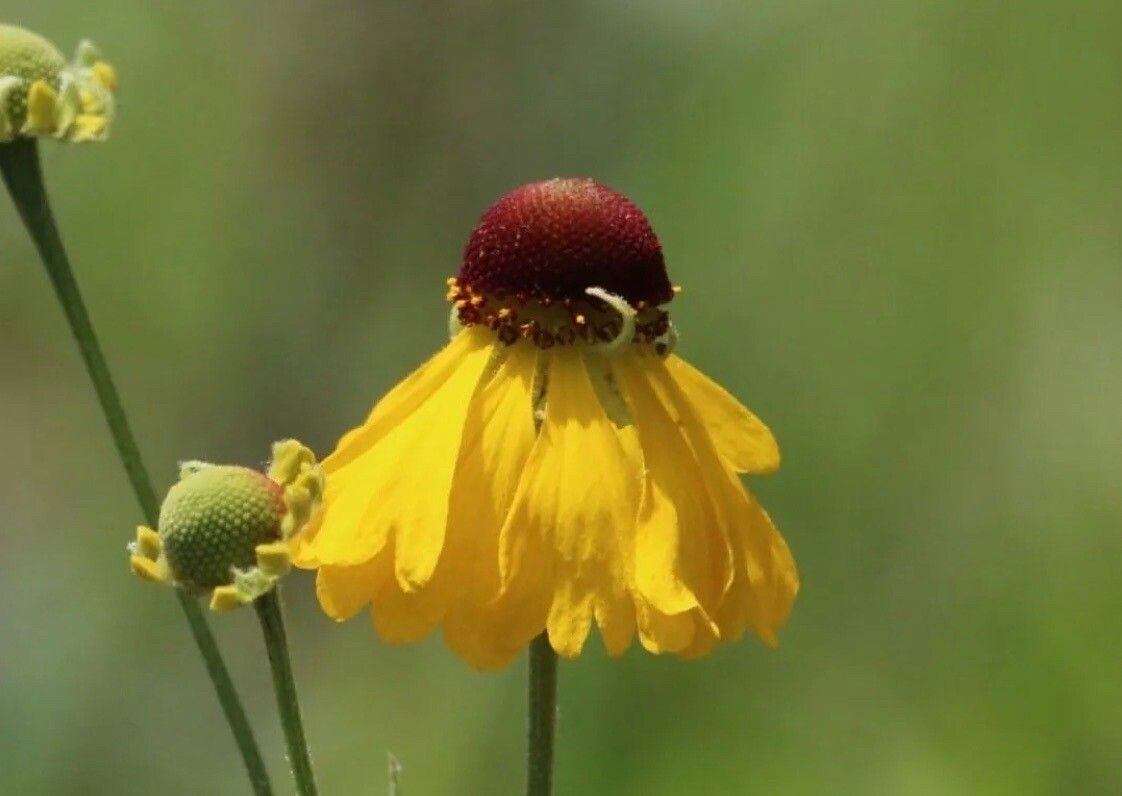
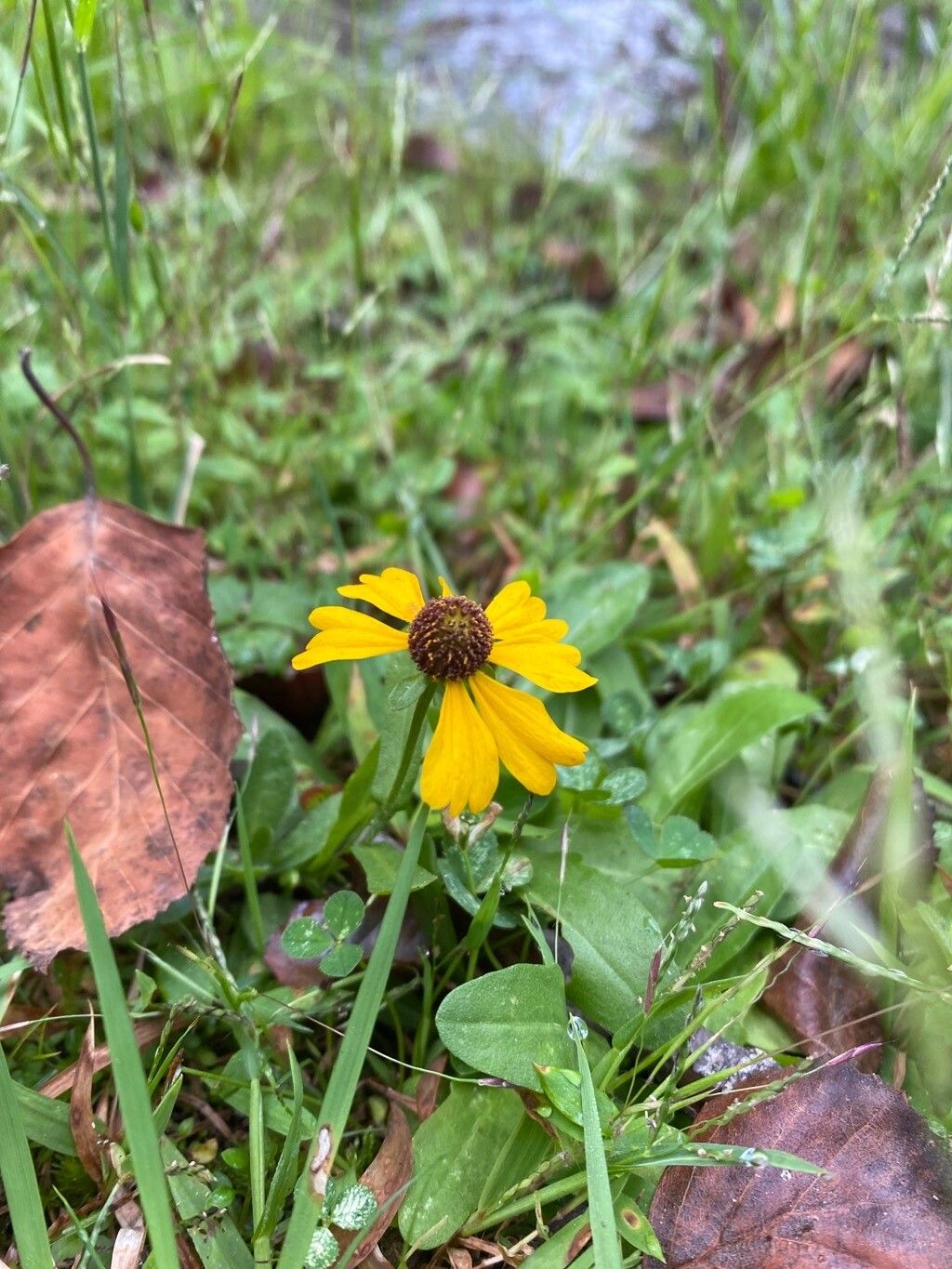
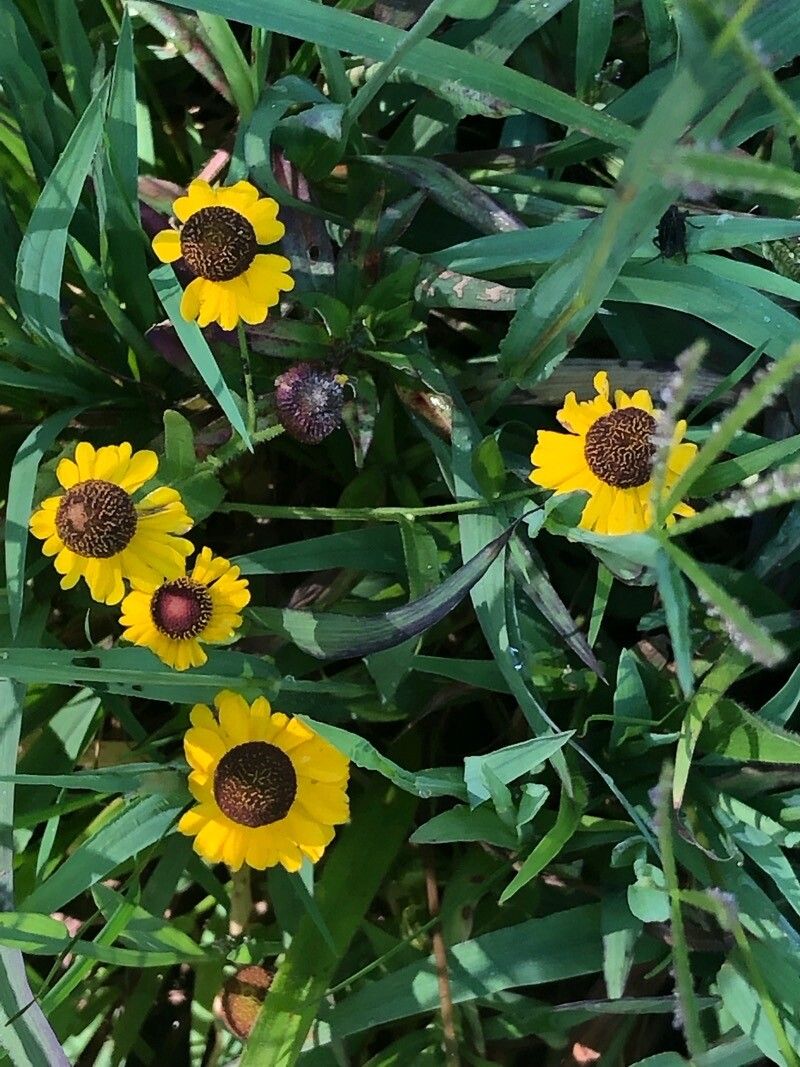
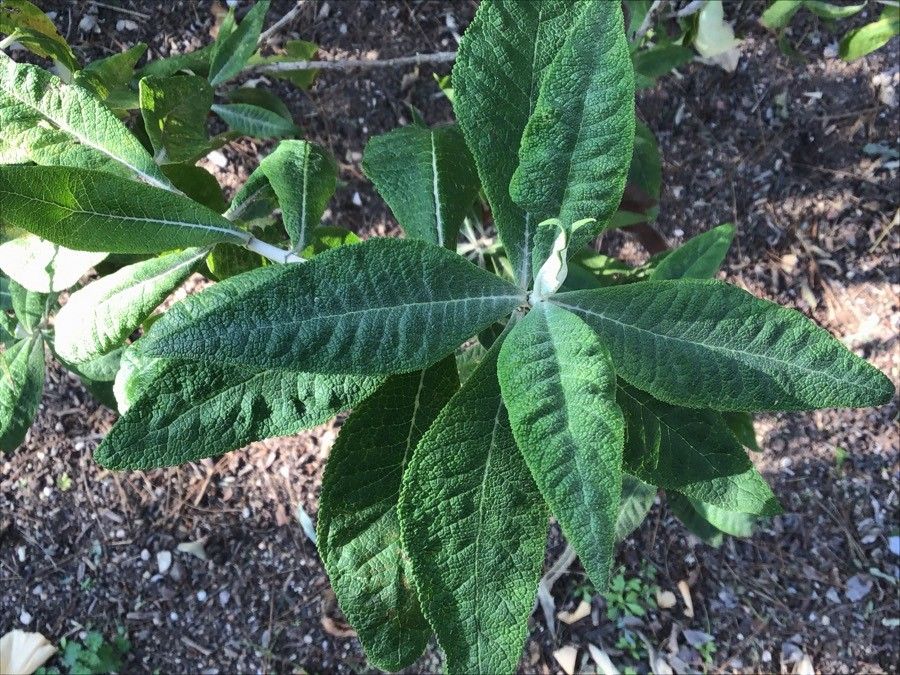
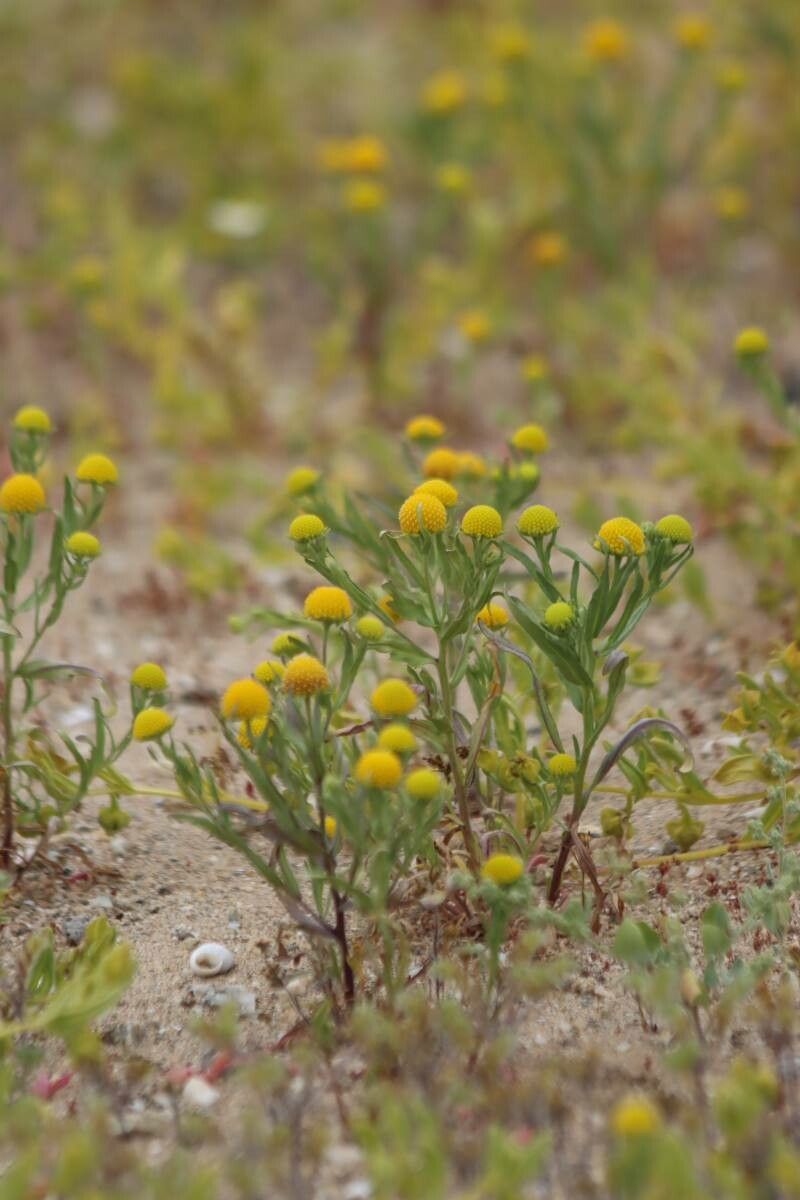
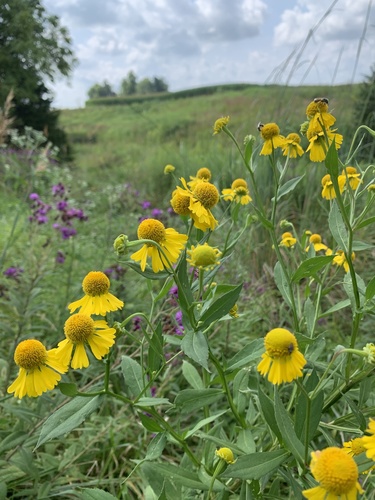
Helenium flexuosum, commonly known as Purple-headed Sneezeweed, is a perennial plant belonging to the Asteraceae family. Native to North America, it thrives in wetlands, meadows, and along stream banks. The plant can grow up to 3 feet tall, showcasing a bushy appearance with lance-shaped, dark green leaves.
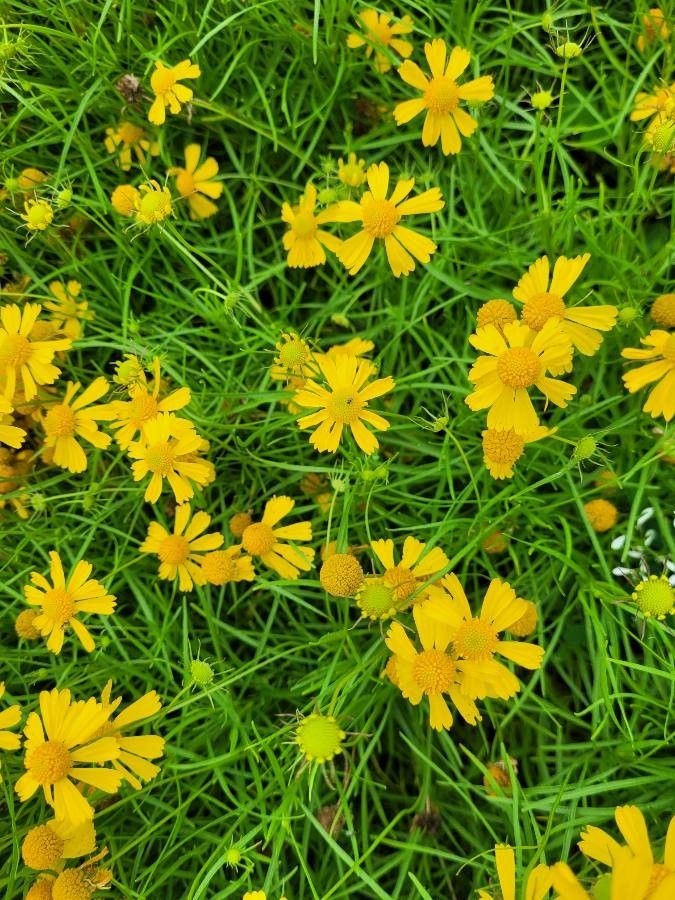
This plant produces bright yellow flowers with distinctive purple-brown centers, blooming from mid-summer through early fall. These flowers attract bees and butterflies but can cause allergic reactions in some people due to their pollen.
Purple-headed Sneezeweed prefers moist soil conditions but can tolerate some drought once established. It is easy to grow from seed or by dividing mature plants in early spring or fall.
Historically, Native Americans used Helenium flexuosum for medicinal purposes to treat ailments such as fever, coughs, colds, and headaches. However, scientific evidence supporting these uses is limited.
Overall, Helenium flexuosum is an attractive addition to any garden or natural area, providing a vibrant pop of color in late summer when many other plants have finished blooming.
Purplehead sneezeweed is fairly disease-resistant and generally not prone to illnesses. However, it can be affected by pests and diseases present in its surroundings, and these problems are usually not severe. In terms of care, this plant requires moderate maintenance. It needs regular pruning to keep a good appearance and support healthy growth. Fertilizing can also help encourage flowering. Purplehead sneezeweed is well suited for anyone with outdoor space, such as a garden or patio, and does not demand extensive gardening experience. It may require more attention when grown indoors.
How to keep Helenium Flexuosum.
Light
Purplehead sneezeweed does best in full, intense sunlight, which promotes strong growth and healthy development. Avoid shaded spots, since overcast skies and low light levels can impede its growth. In its native habitat it receives unfiltered sunlight, and reproducing those conditions is beneficial. Incorrect or uneven light exposure can negatively affect its ability to thrive.
Water
Purplehead sneezeweed thrives in moist environments and benefits from regular watering while also tolerating brief dry periods. To keep the soil evenly damp, you should water it weekly. Although it is best grown outdoors, maintaining consistent moisture is crucial for purplehead sneezeweed, especially during its active growing season, to ensure vibrant flowering.
Temperature
Purplehead sneezeweed naturally occurs in habitats with temperatures between 32 and 90 °F (0 and 32 °C). The plant prefers these moderate conditions and may need climate-control measures during extreme seasons to reproduce its native environment.
Fertilizer
The best time to fertilize a Purplehead sneezeweed is in early spring, when it is coming out of dormancy and beginning active growth. Fertilizing supplies essential nutrients for healthy growth. Although Purplehead sneezeweed has relatively low fertilizer requirements, applying fertilizer annually can improve its survival and encourage better, longer-lasting flowers.
Pruning
Purplehead sneezeweed features vibrant purple flower heads and flourishes in moist, well-drained soil. Important pruning tasks include deadheading spent blooms and cutting back stems in early spring. This encourages bushier growth, manages plant height, prevents legginess, and reduces the risk of disease. Always use clean, sharp tools for the best results.
Botanical profile.
- Plant Type
- Herb
- Life Cycle
- Perennial
- Genus
- Helenium
- Family
- Asteraceae
- Hardiness Zone
- 3-8
- Mature Height
- 30 cm to 91 cm
- Mature Spread
- 30 cm to 61 cm
- Leaf Color
- Green
- Leaf Type
- Deciduous
- Flower Color
- Yellow, Orange, Brown
- Flower Size
- 2.54 cm to 7.62 cm
- Bloom Time
- Summer
- Planting Time
- Spring, Summer
- Harvest Time
- Late summer, Early fall, Mid fall
Other names.
Reader questions.
How should I water my Purplehead sneezeweed?
To properly water the Purplehead sneezeweed, it is recommended to use filtered water that is at room temperature. Tap water may have harmful particles, so filtered water is preferable. The water should be at room temperature or slightly warmer because the Purplehead sneezeweed is native to warm environments and cold water may be a shock. In addition, it's best to avoid watering from above as it can cause issues with the leaves. Instead, slowly pour the filtered room temperature water onto the soil until it is completely soaked. This method is beneficial as it ensures the roots are sufficiently moist and allows them to continue spreading through the soil and absorbing nutrients.
Why should I add fertilizer to my Purplehead sneezeweed?
Fertilization is important for the Purplehead sneezeweed and other plants because it provides essential nutrients for growth both above and below ground. However, the Purplehead sneezeweed has relatively low fertilization needs and can sometimes survive without it. Still, annual fertilization can greatly benefit the plant by keeping it alive and promoting the production of longer-lasting flowers. Therefore, those wishing to enhance the appearance of their Purplehead sneezeweed should maintain regular annual fertilization.
What are the sunlight requirements for Purplehead sneezeweed?
Purplehead sneezeweed requires more than 6 hours of sunlight daily to thrive. It's important to observe how sunlight moves through your garden and select locations that offer a balance of light and shade suitable for the plant, ensuring its optimal growth. The native environment of Purplehead sneezeweed is characterized by unfiltered sunlight, making it essential to replicate these conditions as closely as possible to promote its health and vigor. Avoid placing the plant in overly shady areas, as insufficient sunlight can hinder its growth.
What is the indigenous temperature range for Purplehead sneezeweed?
Purplehead sneezeweed is indigenous to environments with temperature ranges of 32 to 90°F (0 to 32°C). This plant thrives in these moderate temperatures, though it may require climate control strategies in regions with extreme seasonal conditions to maintain its natural habitat's climate.
What should I do if I give my Purplehead sneezeweed too much water or too little water?
Overwatering is a common issue for Purplehead sneezeweed and can cause wilting, yellowing leaves, and diseases like root rot. Underwatering is less common but can make the leaves brittle and brown. It's important to notice signs of overwatering early and reduce watering immediately. If the soil drains poorly, replace it with a well-draining mix. If underwatering is detected, water more regularly until signs subside.
What is the ideal time to put fertilizer on my Purplehead sneezeweed?
The best time to fertilize a Purplehead sneezeweed is in the late winter to early spring when the plant is transitioning from dormancy to active growth. Fertilizing during this period promotes healthy growth and sets the plant up for a successful season. It is also possible to fertilize in the fall, but it is not recommended to do so in summer or winter.
How can artificial lighting be used for indoor plants?
When natural sunlight is insufficient, especially during winter or in areas that receive minimal sunlight, artificial lighting becomes crucial for the growth of indoor plants. LED lights are a popular choice because they can provide specific wavelengths needed by the plants. For full sun plants, 30-50W/sq ft of artificial light is recommended; partial sun plants require 20-30W/sq ft, and full shade plants need 10-20W/sq ft. The light source should be placed 12-36 inches above the plant, mimicking natural sunlight, and plants most commonly need 8-12 hours of light per day.
Does Purplehead sneezeweed require special frost protection measures?
Purplehead sneezeweed has strong cold resistance, and special frost protection measures are usually not necessary. However, when winter temperatures are expected to drop below -35°C, cold protection is important. Protecting the plant with soil or straw and watering it abundantly before the first freeze in autumn helps ensure the soil remains moist and protective against drought and water scarcity during the winter and early spring.
How many times a week should I water my Purplehead sneezeweed?
If your Purplehead sneezeweed is in a pot, the easiest way to tell if it needs water is to stick your finger into the soil. If the top two to three inches of soil are dry, it's time to water it. If you're growing the Purplehead sneezeweed outdoors in the ground, you can use a similar method to check the soil. Once again, if the first few inches of soil have dried out, it's time to water it. Typically, during the spring and early fall, you'll need to water this plant about once a week using this method. However, when it's extremely hot, you may need to water it twice a week or even more. However, it's worth noting that mature, well-established Purplehead sneezeweed plants are quite resistant to drought.
When is it not a good idea to use fertilizer on my Purplehead sneezeweed?
Avoid fertilizing your Purplehead sneezeweed throughout the year, except during late winter and early spring. This plant has low fertilization needs, so a single annual feeding is sufficient. Over fertilizing during spring, summer, and fall can cause complications. However, if you didn't fertilize in spring, it is acceptable to feed the plant in the fall. In addition, refrain from fertilizing during winter when the plant is in a dormant growth phase and doesn't produce new growth.
What are the symptoms of light deficiency in Purplehead sneezeweed?
Symptoms of light deficiency in Purplehead sneezeweed include small, new leaves that are smaller than older ones, leggy or sparse growth, faster leaf drop, slower or no new growth, and lighter-colored or pale new leaves. These symptoms indicate that the plant is not receiving enough sunlight, affecting its ability to produce chlorophyll and essential nutrients effectively.
What happens to Purplehead sneezeweed at temperatures below -35°C?
At temperatures below -35°C, Purplehead sneezeweed may not show noticeable changes during winter, but there can be a decrease in sprouting or even a failure to sprout in spring. It is recommended to remove any parts of the plant that have failed to sprout in spring.