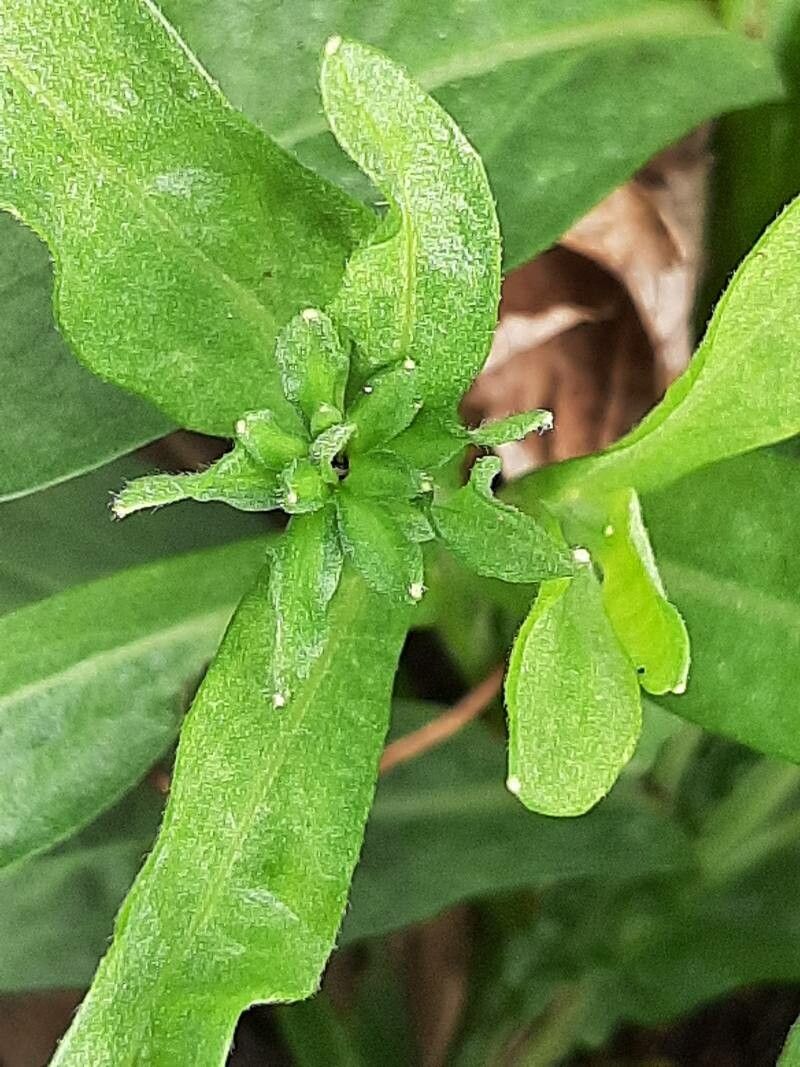
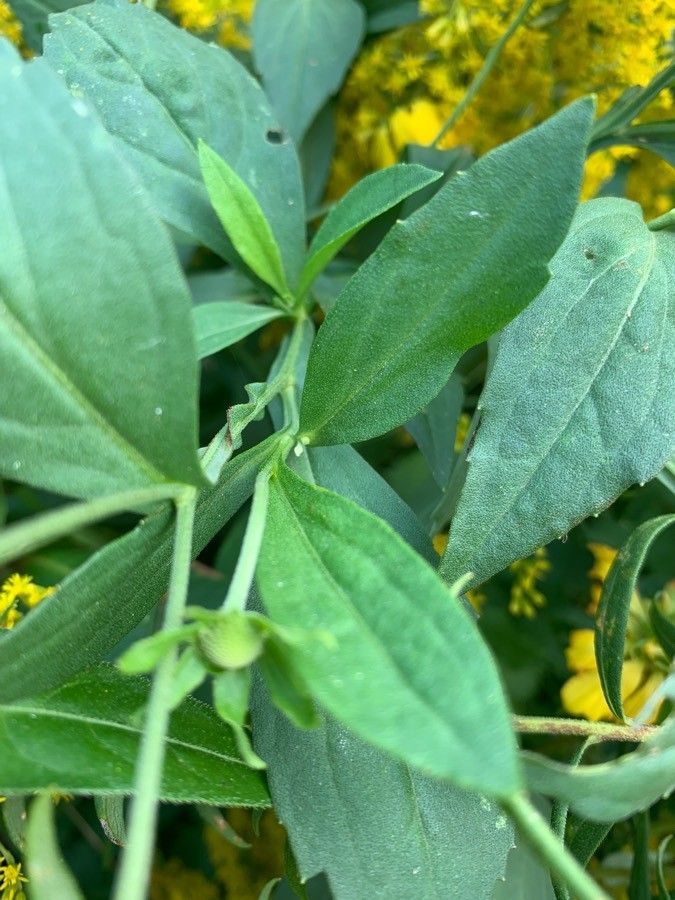
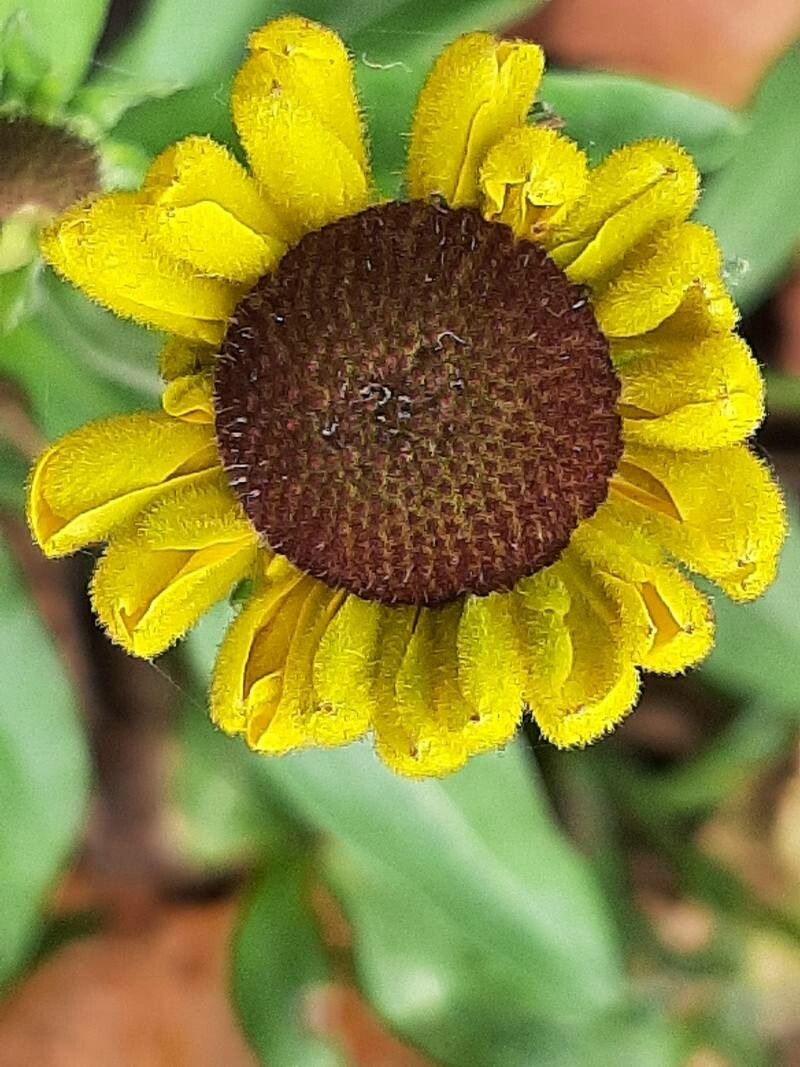
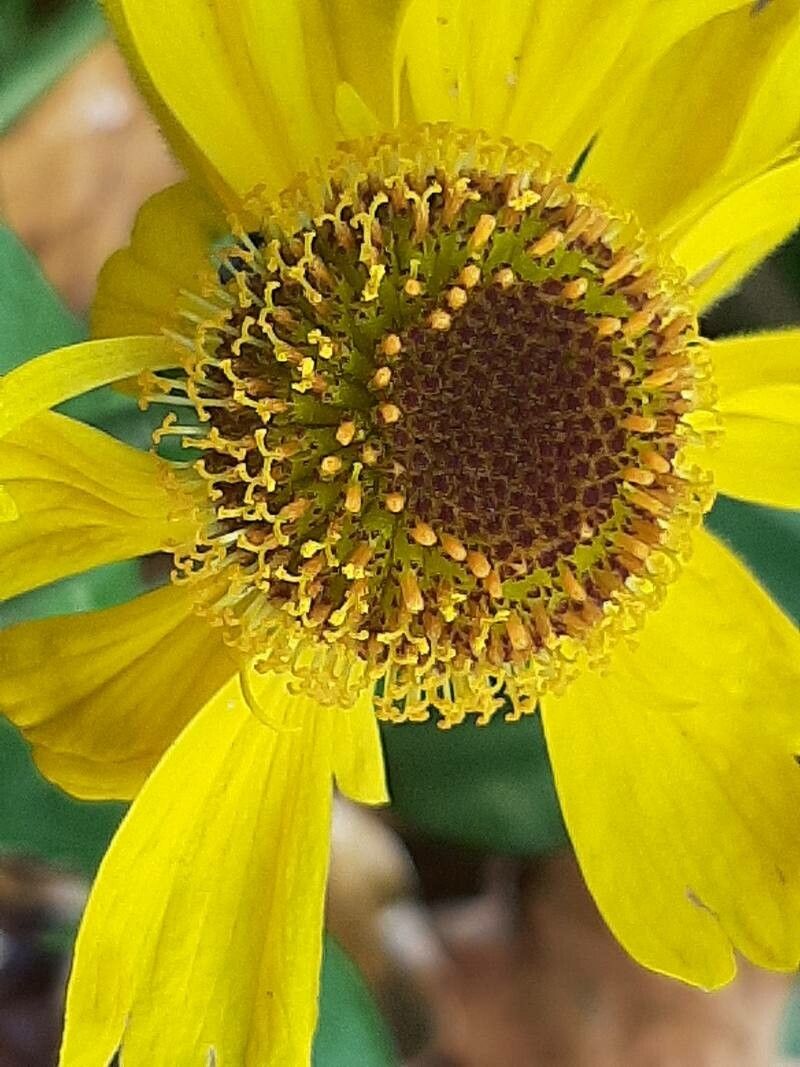
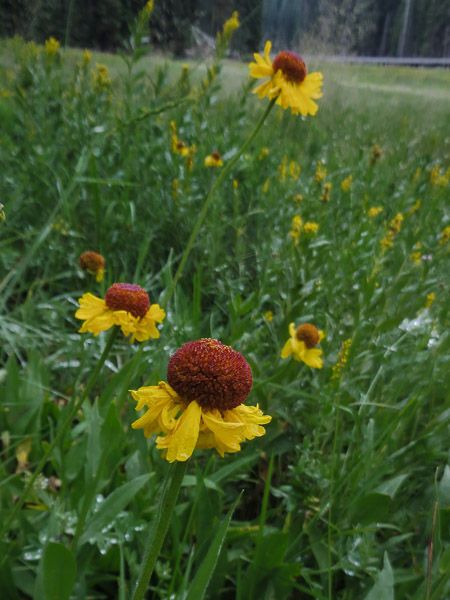
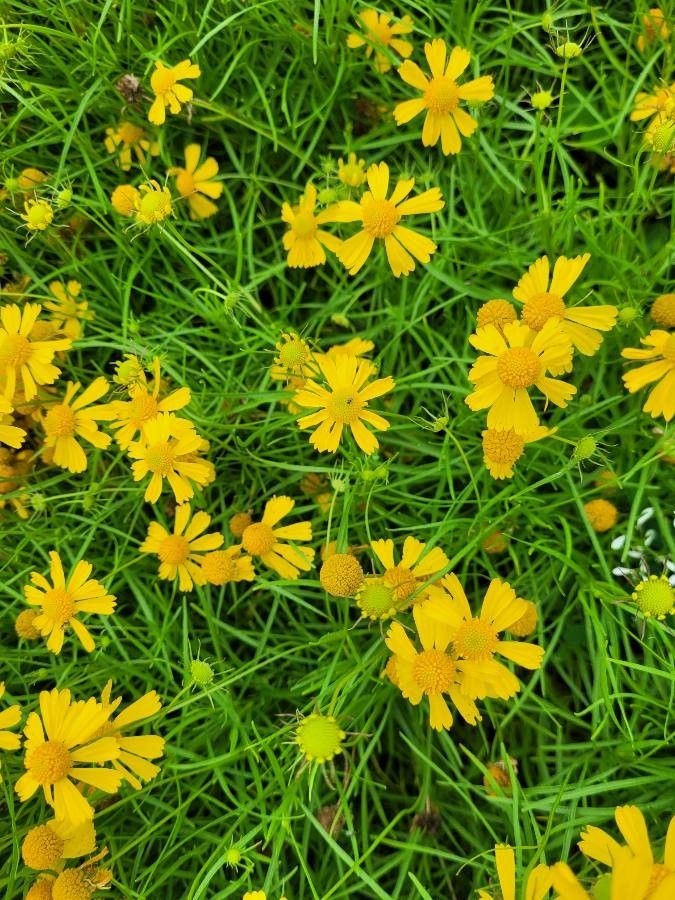
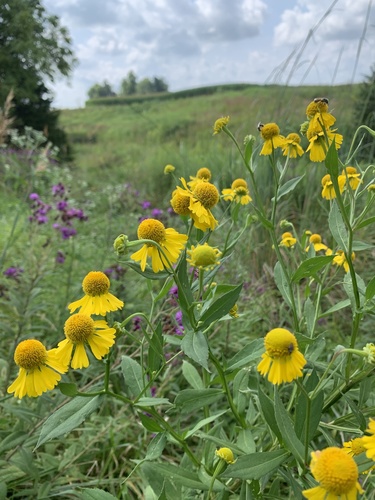
Helenium bigelovii is a North American perennial plant in the sunflower family, commonly known as Bigelow's sneezeweed. It grows in moist areas such as meadows, marshes, or streamsides. It is found at moderate and higher elevations (3000-10,000 ft) in the foothills and mountains of California and Oregon: Cascades, Coast Ranges, Klamath Mountains, Sierra Nevada, etc. Cultivars of the species are used in gardening as ornamentals. Helenium bigelovii is a perennial herb sometimes as much as 130 cm (51 in; 4.5 ft) tall. One plant can produce as many as 20 flower heads, either one per branch or in branching arrays. Each head has 14-20 yellow ray florets (bending backwards and with teeth at the tips) surrounding sometimes as many as 800 disc florets (yellow at first, turning brown as they get older).The species is named for J.M. Bigelow, a plant collector on the United States and Mexican Boundary Survey in the 1850s.
Bigelow's sneezeweed has strong disease resistance and typically isn't prone to illnesses. However, it can be affected by pests and diseases present in its surroundings. Such infections are generally minor. In terms of care, the plant needs a moderate level of attention. It should be pruned regularly to maintain an attractive appearance and healthy growth. Fertilizing can also help encourage flowering. Bigelow's sneezeweed is suitable for people with outdoor spaces like a garden or patio and doesn't require extensive care experience. It may need more attention when grown indoors.
How to keep Helenium Bigelovii.
Light
Bigelow's sneezeweed needs plenty of sunlight because it promotes the plant's strong health and development. This sunlight requirement stays the same through all stages of growth. Native to sun-rich environments, the plant can show weakened or stunted growth when light is lacking, while excessive sunlight does not cause problems.
Water
Bigelow's sneezeweed flourishes in moist meadows and requires consistent hydration to thrive. Although it has a moderate tolerance for drought, it needs to be watered weekly to maintain optimal health. As an herbaceous perennial, providing sufficient moisture ensures it produces vibrant blooms throughout its growing season.
Temperature
Bigelow's sneezeweed is native to temperate regions and performs best at temperatures from 68 to 95 °F (20 to 35 ℃). During cooler seasons, providing warmer conditions is recommended to imitate its natural habitat.
Fertilizer
The best time to fertilize Bigelow's sneezeweed is in early spring, as it is coming out of dormancy and entering a period of active growth. Fertilizing supplies essential nutrients for healthy development. Although Bigelow's sneezeweed has relatively low fertilizer requirements, applying fertilizer once a year can improve its survival and encourage better, longer-lasting flowers.
Pruning
Bigelow's sneezeweed is known for its vibrant yellow flowers and dense foliage. Pruning in the spring can boost growth, remove dead stems, and prevent legginess while improving air circulation. This practice helps the plant maintain a compact shape and ensures overall vitality. For best results, be sure to use clean, sharp tools for precise cuts.
Botanical profile.
- Plant Type
- Herb
- Life Cycle
- Perennial, Annual
- Genus
- Helenium
- Family
- Asteraceae
- Hardiness Zone
- 4-8
- Mature Height
- 0.3 m to 1.07 m
- Mature Spread
- 49 cm to 91 cm
- Leaf Color
- Dark Green
- Leaf Type
- Semi-evergreen
- Flower Color
- Yellow, Orange
- Flower Size
- 5.08 cm to 7.62 cm
- Bloom Time
- Mid summer, Late summer, Early fall
- Planting Time
- Spring, Summer, Autumn
- Harvest Time
- Early fall, Mid fall
Other names.
Reader questions.
How should I water my Bigelow's sneezeweed plant?
To properly water the Bigelow's sneezeweed, it is recommended to use filtered water at room temperature. Tap water may contain harmful particles that can affect the plant's health. It is important to use water that is at room temperature or slightly warmer because the plant originates from a warm environment and cold water can be a shock to its system. Avoid watering the plant from above as it can cause problems with the foliage. Instead, apply the filtered room temperature water directly to the soil until it is completely soaked. This method benefits the plant by keeping the roots moist and aiding in the spread and nutrient absorption.
Why should I put fertilizer on my Bigelow's sneezeweed?
Fertilization is important for the Bigelow's sneezeweed because it provides essential nutrients for growth. While the overall fertilization needs for this plant are low, annual fertilization can greatly benefit it. It helps the Bigelow's sneezeweed thrive, stay alive, and produce better and longer-lasting flowers. Therefore, for those wanting to enhance the appearance of their Bigelow's sneezeweed, regular fertilization is recommended.
What are the sunlight requirements for Bigelow's sneezeweed?
Bigelow’s sneezeweed thrives with more than 6 hours of sunlight each day to ensure its happiness and robust growth. It's crucial to observe the movement of sunlight through your garden to identify the ideal balance of light and shade for these plants. Originating from sunlight-rich habitats, the plant may exhibit weakened growth if it lacks sufficient light, though it generally tolerates excessive sun exposure without issues.
What are the ideal temperature conditions for growing Bigelow's sneezeweed?
Bigelow's sneezeweed, or Helenium bigelovii, thrives in temperate regions with optimal temperatures ranging from 68 to 95°F (20 to 35°C). To mimic its natural habitat, it is beneficial to provide warmer conditions during cooler seasons. Despite its strong cold resistance, if winter temperatures are expected to plummet below -30°C, precautions should be taken to protect the plant from cold. This can include covering it with soil or straw and ensuring the soil is moist before the first freeze in autumn. These measures help prevent drought and provide the plant with water during winter and early spring.
What do I do if I give my Bigelow's sneezeweed too much or too little water?
Overwatering and underwatering are both harmful to the health of your Bigelow's sneezeweed, but overwatering is more common. When the species gets too much water, the stems and leaves may wilt and turn yellow. Overwatering can also cause diseases like root rot, mold, and mildew, which can be deadly. Underwatering is less common because the plant can tolerate drought, but it can still happen and cause brittle, brown leaves. It's important to recognize the signs of overwatering early. Some diseases caused by overwatering, like root rot, may become irreversible if not addressed promptly. If you notice the early signs of overwatering, reduce your watering schedule and check the soil quality. Replace poorly draining soil with a loose, well-draining mix. If your Bigelow's sneezeweed shows signs of not getting enough water, simply water more regularly until the signs disappear.
When should I put fertilizer on my Bigelow's sneezeweed?
The best time to fertilize a Bigelow's sneezeweed is in late winter to early spring. This is when the plant is transitioning from dormancy to active growth, and adding fertilizer at this time promotes healthy growth for the season. Although early spring is generally the preferred time, you can also fertilize in the fall if desired. However, it's not recommended to fertilize during summer or winter.
How important is sunlight to the growth of Bigelow's sneezeweed?
Sunlight is essential for the health and development of Bigelow's sneezeweed throughout its growth stages. Adequate exposure to sunlight enhances the plant's vigor and ensures optimal growth. In conditions where natural sunlight is insufficient, especially during winter or in less sunny locations, artificial lighting can provide a significant benefit, promoting faster and healthier development. It's recommended to select the appropriate type of artificial light and adjust both the duration and distance of the light source to mimic natural conditions for the plant's benefit.
How does Bigelow's sneezeweed respond to low temperatures?
Bigelow's sneezeweed exhibits a remarkable tolerance to cold, optimally thriving when temperatures remain above 20°C. During winter, it's crucial to maintain temperatures above 0°C for the plant's well-being. However, when temperatures fall below -30°C, there may not be visible damage during winter, but the plant could exhibit a reduced capacity for sprouting in spring, or in some cases, fail to sprout at all. To address this, it's advisable to remove any parts of the plant that have not sprouted by spring.
How frequently do I need to water my Bigelow's sneezeweed?
If you have your Bigelow's sneezeweed in a pot, the best way to check if it needs water is by feeling the soil with your finger. If the top two to three inches of soil are dry, it's time to water it. If you have your Bigelow's sneezeweed planted outside in the ground, you can use the same method to test the soil. Once the top few inches of soil have dried out, it's time to water. In the spring and early fall, you'll usually need to water this plant about once a week. However, during extremely hot weather, you may need to water it twice or more per week. It's worth noting that mature, well-established Bigelow's sneezeweed have a good ability to withstand drought.
When should I not add fertilizer to my Bigelow's sneezeweed?
To properly fertilize your Bigelow's sneezeweed, only apply fertilizer during late winter and early spring. This plant has low fertilization needs, so a single feeding each year is sufficient. Avoid fertilizing during spring, summer, and fall to prevent overfertilization and its associated complications. However, if you missed fertilizing in spring, it is acceptable to fertilize in the fall. Additionally, refrain from fertilizing this plant during the winter as it enters a dormant growth phase and does not produce new growth.
What are the symptoms of insufficient or excessive sunlight exposure in Bigelow's sneezeweed?
Symptoms of inadequate sunlight include smaller new leaves, leggy or sparse growth, faster leaf drop, slower or halted growth, and lighter-colored or chlorotic leaves. Excessive sunlight can lead to conditions such as chlorosis, sunscald, leaf curling, wilting, and leaf scorching. These symptoms either indicate a struggle to conserve energy or damage from intense light exposure, affecting the plant's overall health and its ability to process nutrients effectively.
How does Bigelow's sneezeweed react to high temperatures?
Bigelow's sneezeweed prefers temperatures to stay below 35°C during the summer months. Exposure to temperatures above 38°C can lead to a series of undesirable effects such as the leaves becoming lighter, curling, suffering from sunburn, and in severe cases, the entire plant may wilt and dry out. To mitigate these effects, sunburned and dried parts of the plant should be removed. Relocating the plant to a shadier spot or employing a shade cloth can protect it from intense midday and afternoon sun. Additionally, watering the plant in the early morning and evening helps keep the soil adequately moist and supports the health of the plant under high temperature conditions.