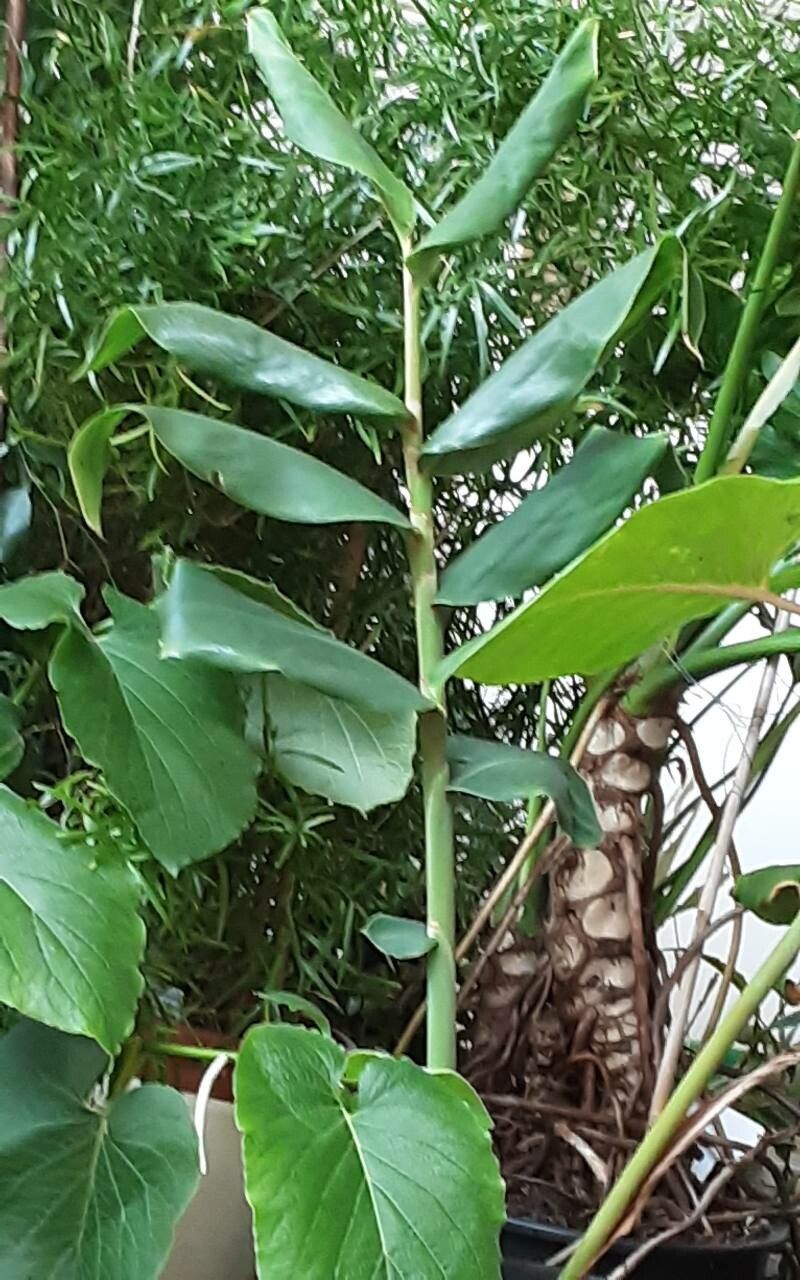
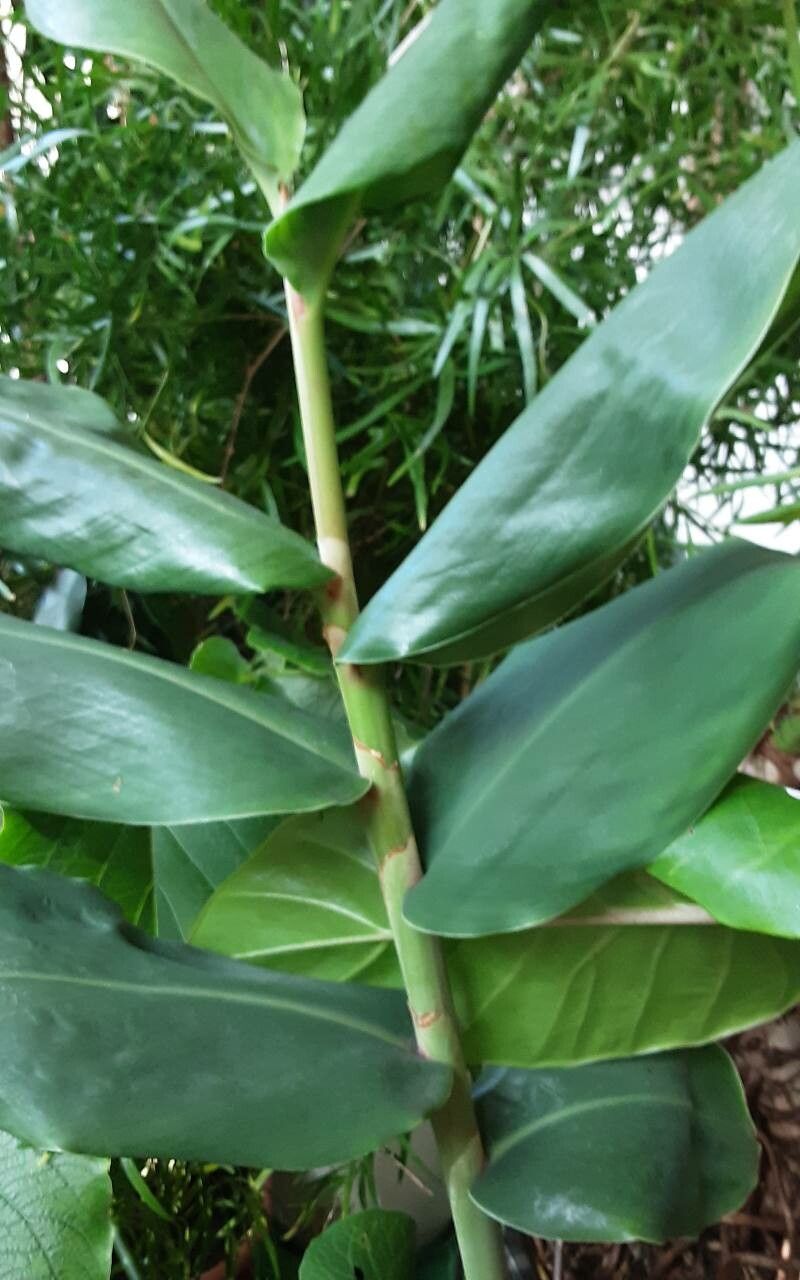
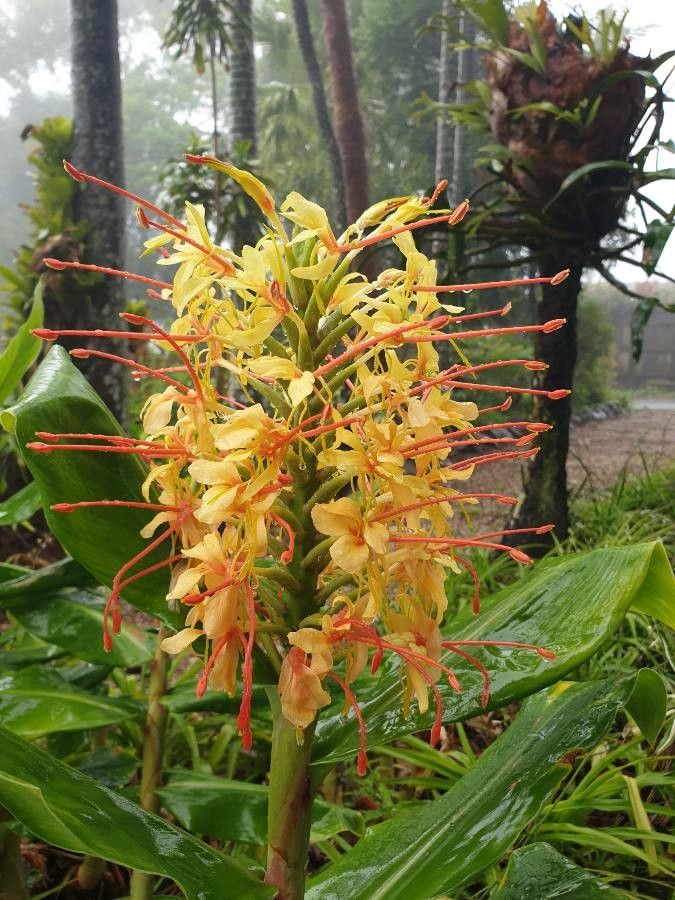
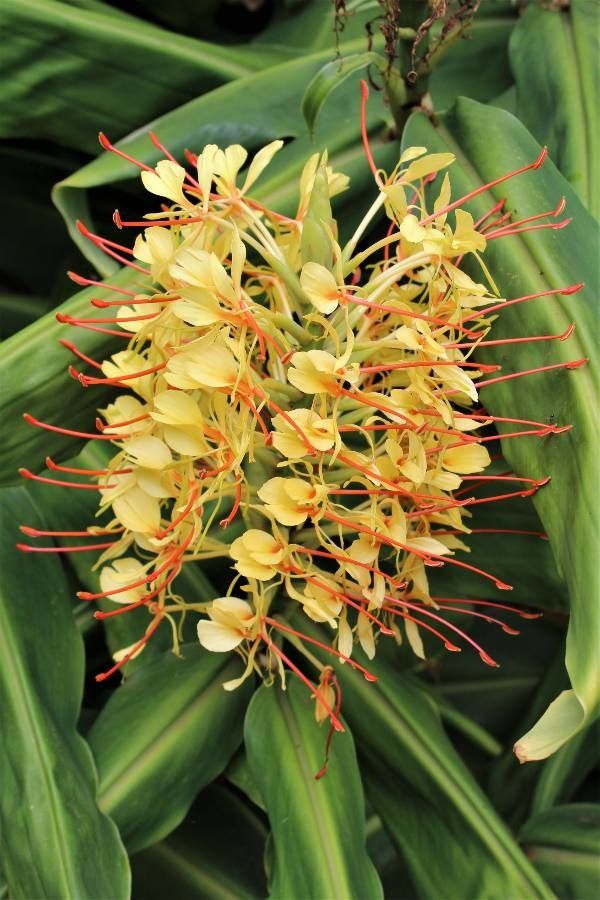
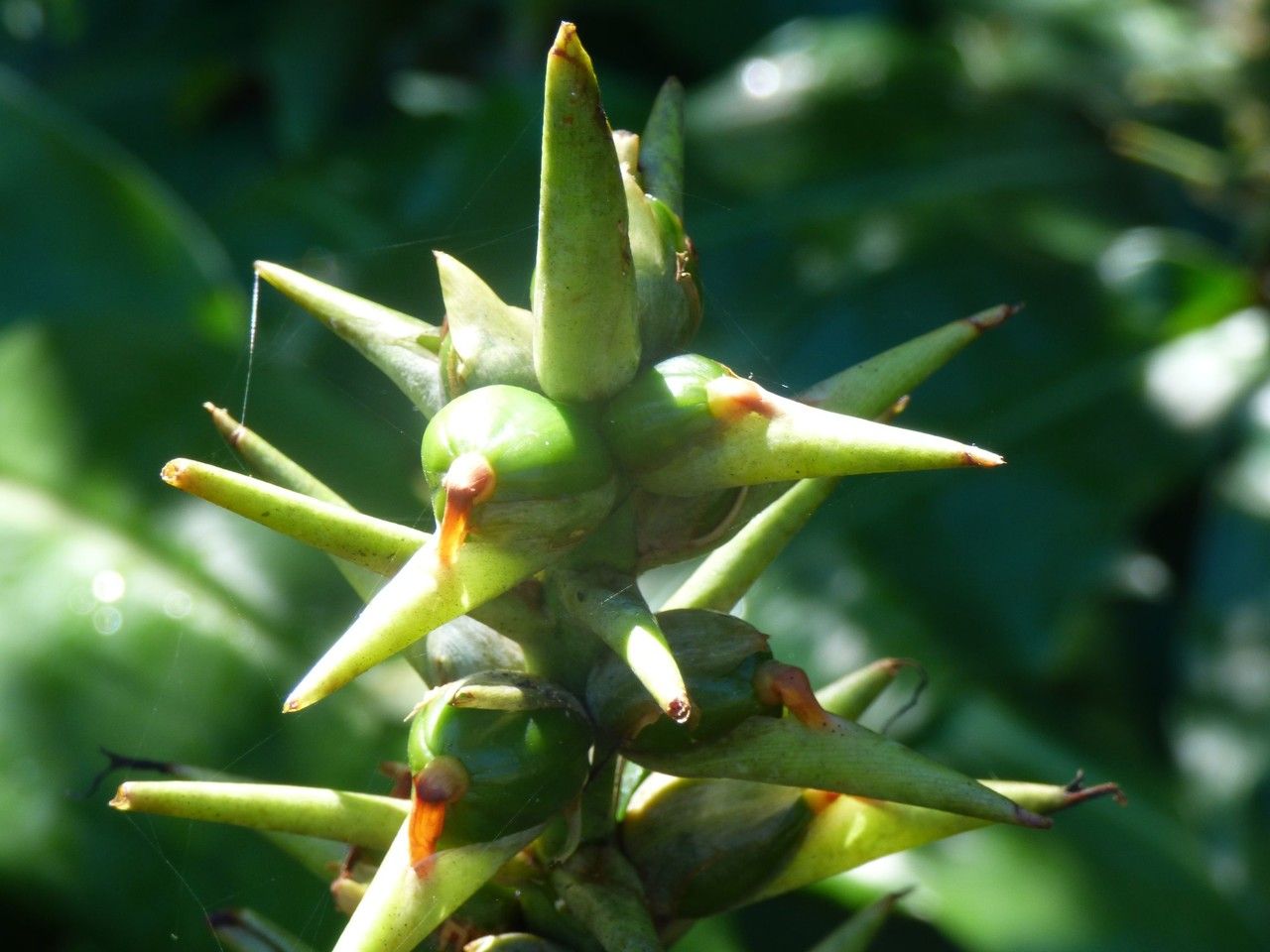
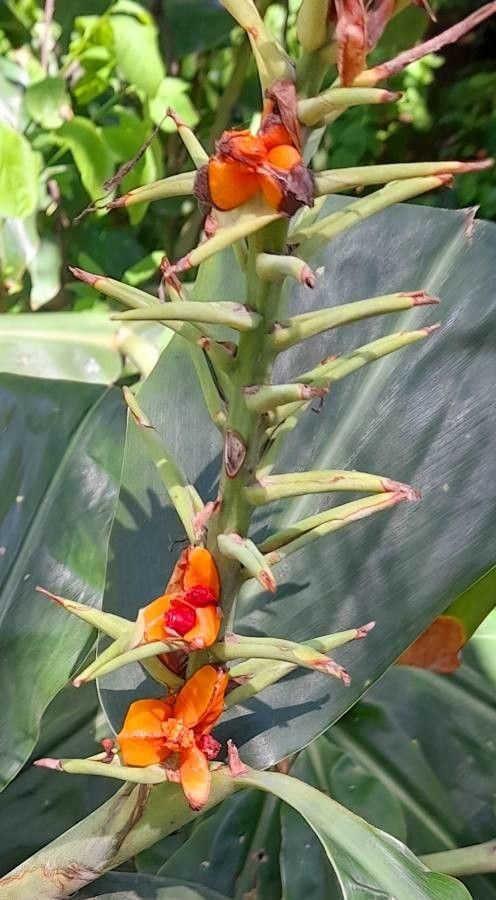
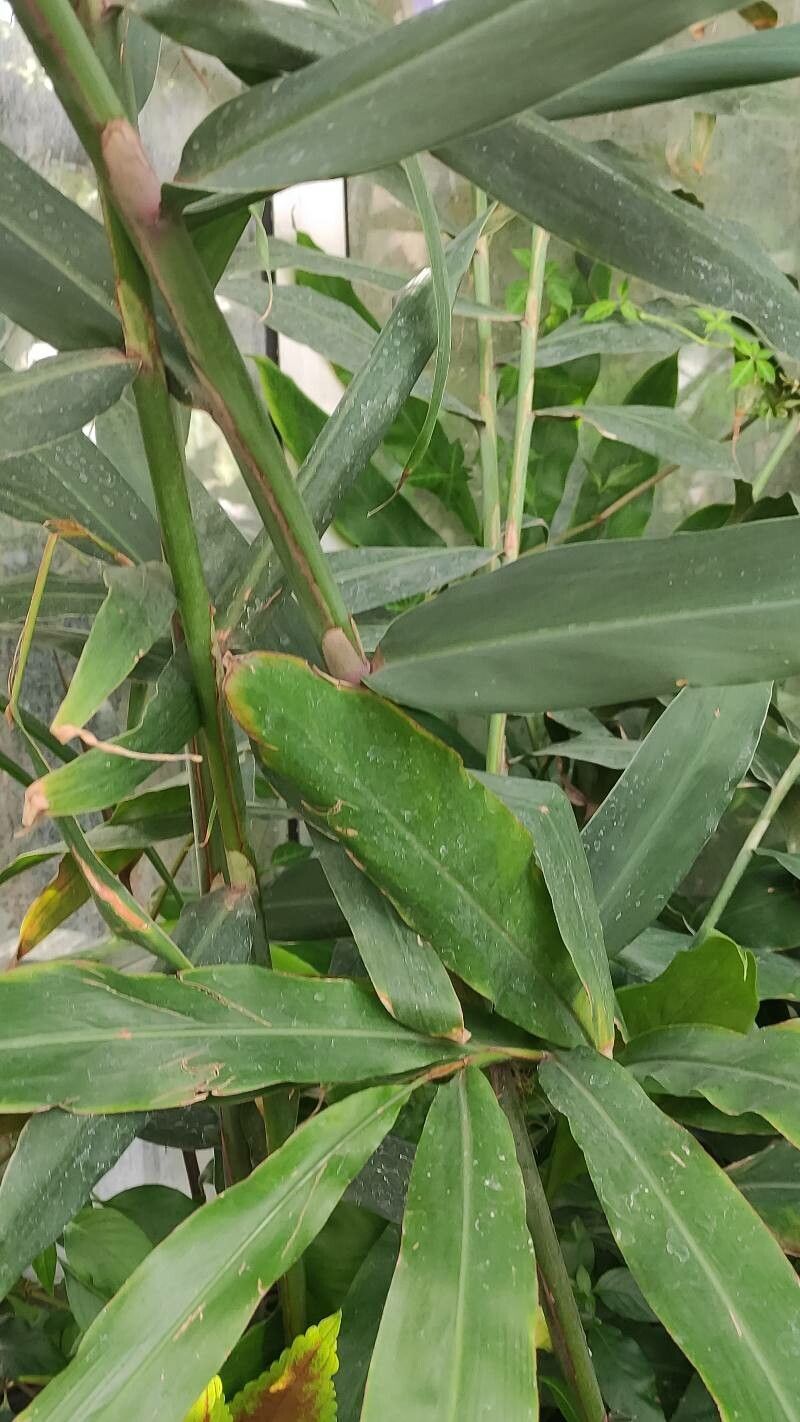
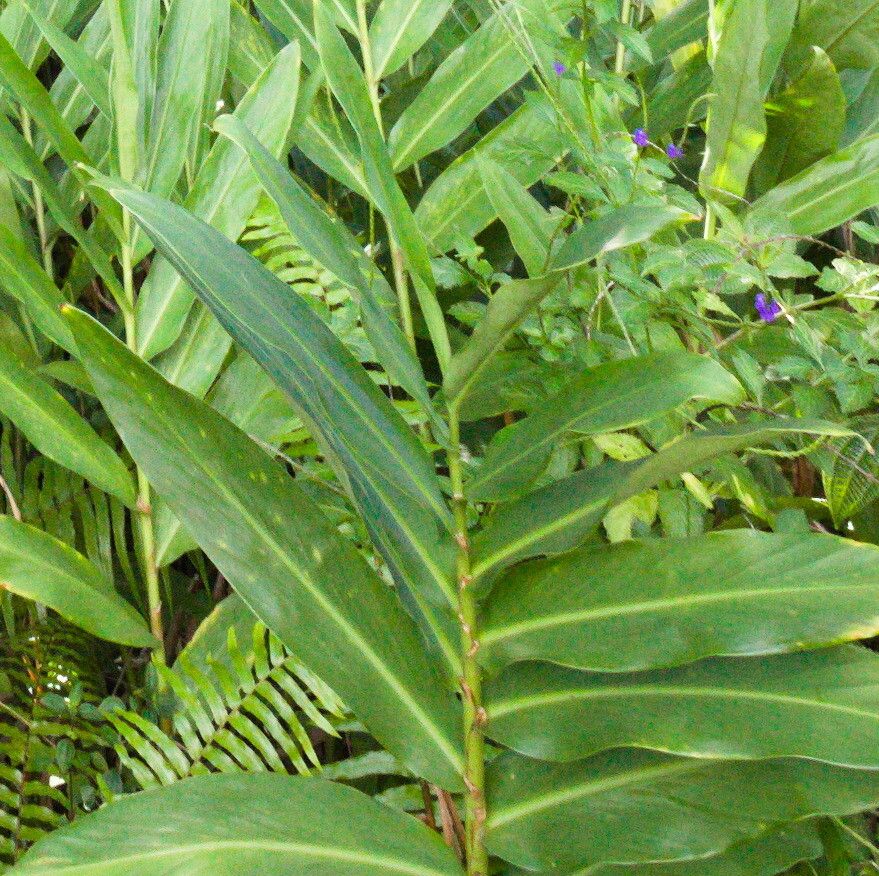
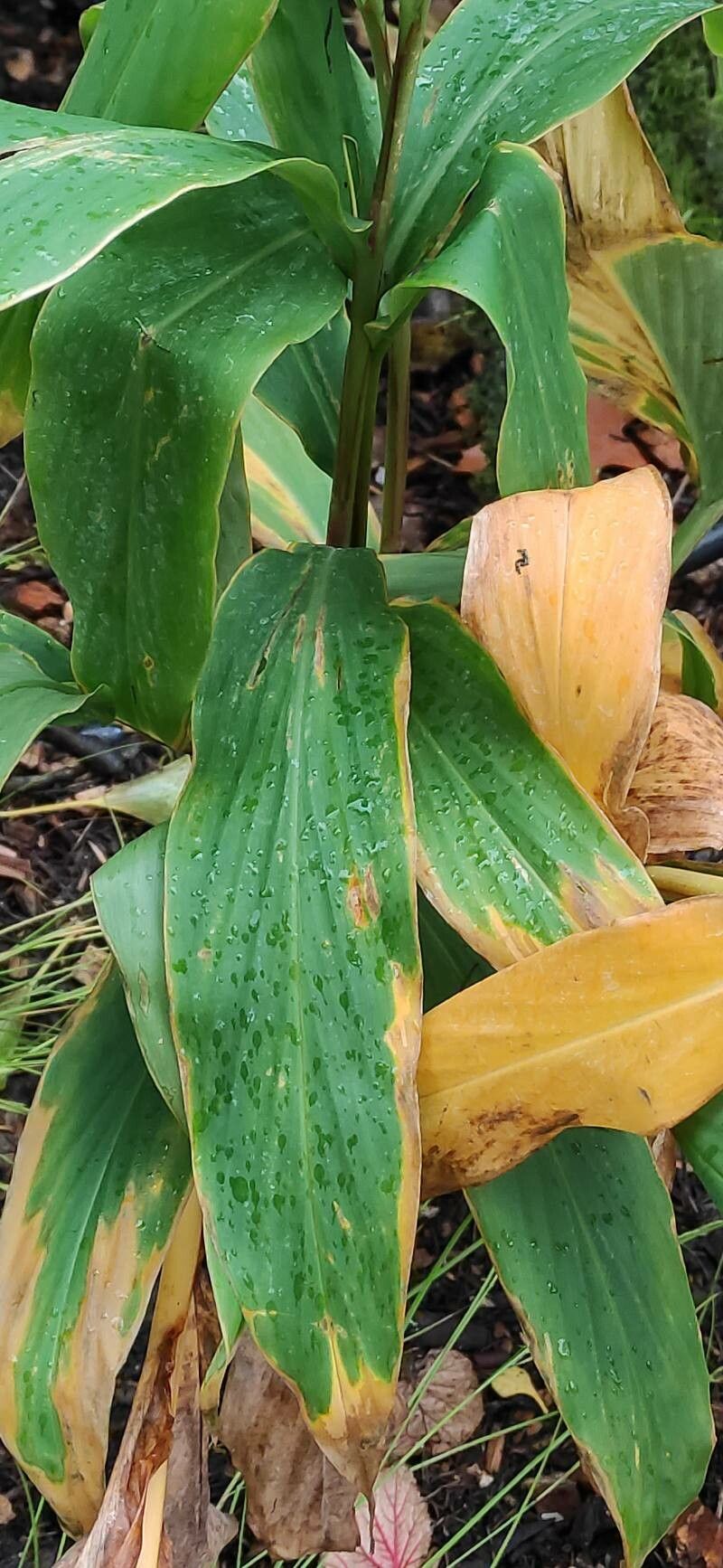
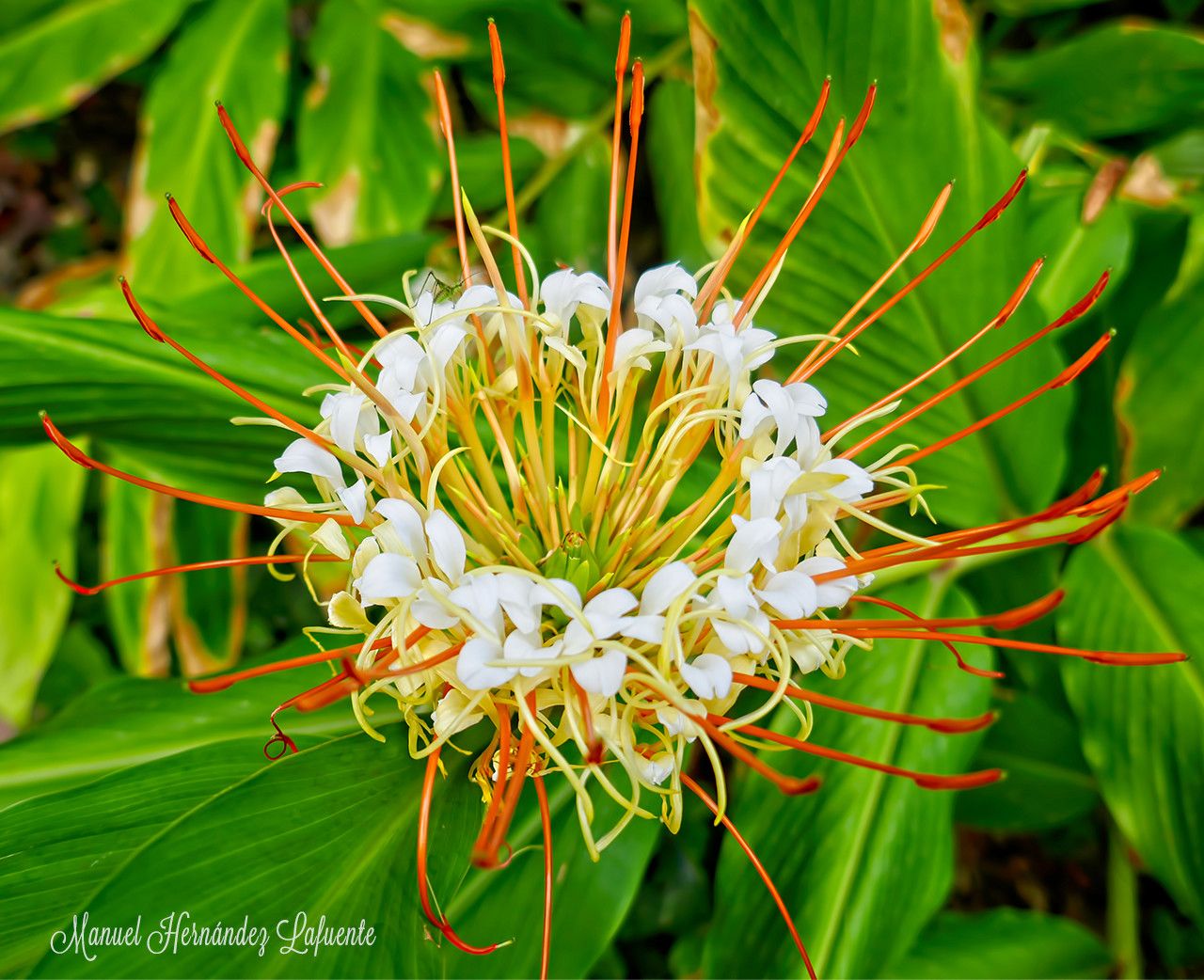
Hedychium gardnerianum, commonly known as Kahili ginger or ginger lily, is a perennial plant native to the Himalayas and India. As a member of the Zingiberaceae family, it is renowned for its large, showy flowers that bloom from late summer to early fall. The plant can reach a height of up to 8 feet and features long green leaves that can extend up to 2 feet in length.
The fragrant flowers of Hedychium gardnerianum resemble orange-yellow feathers or plumes. These flowers are borne on tall stems above the foliage, attracting pollinators such as bees, butterflies, and hummingbirds.
Kahili ginger thrives in moist soil with good drainage and can be grown in either partial shade or full sun. It is often cultivated as an ornamental plant in gardens or containers, but it requires protection from frost during the winter months.
Traditionally, indigenous people have used the plant for its anti-inflammatory properties in medicinal applications. Additionally, its rhizomes have been used as a spice in cooking.
However, it is important to note that Hedychium gardnerianum is considered an invasive species in some areas, such as Hawaii. There, it has spread rapidly into natural habitats, causing ecological damage by outcompeting native plants.
In summary, Hedychium gardnerianum is a beautiful ornamental plant with cultural significance. However, it requires careful management when grown outside of its native range to prevent ecological harm.
Kahili ginger is largely disease-resistant and typically not susceptible to illnesses. Nevertheless, it can be affected by pests and diseases present in its environment. These problems are generally minor. As for care, the plant requires moderate maintenance. It should be pruned regularly to preserve a neat appearance and support healthy growth. Fertilizing can also encourage flowering. Kahili ginger is well suited to anyone with outdoor space, such as a garden or patio, and does not need extensive gardening experience. It may demand additional attention if kept indoors.
How to keep Hedychium Gardnerianum.
Light
Kahili ginger generally does best with moderate sunlight, though it can tolerate brighter conditions. Native to woodland environments, it naturally receives filtered rather than intense sun. Excessive sunlight can scorch the leaves, while too little light restricts its growth and flowering.
Water
Kahili ginger, a tropical plant, thrives in humid environments and requires consistent moisture to grow well. It does best when the soil is kept evenly moist, needing watering about once a week. Dew and rainfall greatly contribute to its hydration needs, which is especially beneficial for this evergreen plant when it is grown outdoors.
Temperature
Kahili ginger comes from regions where temperatures range between 68 and 100°F (20 to 38 ℃). The plant prefers these warmer conditions. In colder seasons, try to recreate that environment by keeping the plant warm.
Fertilizer
Proper fertilization is essential for the health and appearance of Kahili ginger. Fertilize Kahili ginger in the summer, applying it monthly throughout the season. The nutrients supply energy for growth and help maintain the plant's parts. Fertilizing improves the plant's flower display, ensuring the best blooms.
Pruning
To keep your kahili ginger's foliage vibrant and its blooms healthy, it’s important to prune the plant from early to late spring. Remove any dead stalks and spent flowers during this time. This practice encourages healthy growth, enhances flowering, and helps control the plant's invasiveness. Always use sanitized tools to prevent the spread of disease. Pruning also improves airflow and light penetration, which are essential for the plant's optimal health.
Pot & Repot
To ensure the healthy growth of kahili ginger and enhance its vibrant flowers and foliage, re-pot the plant every 2-3 years during the spring. Use a spacious container with good drainage to allow the roots to develop properly. After re-potting, keep the soil consistently moist and provide partial shade to help the plant recover.
Botanical profile.
- Plant Type
- Herb
- Life Cycle
- Perennial, Annual
- Genus
- Hedychium
- Family
- Zingiberaceae
- Hardiness Zone
- 10-12
- Mature Height
- 2.44 m
- Mature Spread
- 61 cm to 91 cm
- Leaf Color
- Green, Gray, Silver
- Leaf Type
- Deciduous
- Flower Color
- Yellow
- Flower Size
- 15.24 cm
- Bloom Time
- Mid summer, Late summer
- Planting Time
- Spring
- Harvest Time
- Mid summer, Late summer, Early fall
- Native Area
- Nepal, Bhutan, Bangladesh, India
Other names.
Reader questions.
How should I water my Kahili ginger plant?
To ensure the health of your Kahili ginger plant while watering, it is important to use filtered water and maintain a room temperature or slightly warmer environment. Tap water may contain harmful particles, making filtered water the better choice. Avoid using cold water, as the Kahili ginger prefers warmer conditions and cold water can be a shock to its system. Additionally, overhead watering should be avoided to prevent complications with the foliage. Instead, focus on thoroughly soaking the soil with the filtered room temperature water. This helps to moisturize the roots and promote their spread through the soil, enabling them to absorb the necessary nutrients.
Why is it necessary to put fertilizer on my Kahili ginger plant?
Fertilizer and soil nutrients are like fuel for your Kahili ginger plant, helping it grow and stay healthy. Plants in general need nutrients from the soil to make new plants and take care of their existing parts. Specifically for the Kahili ginger, fertilizing is important to make its flowers look beautiful. Since the flowers are the main attraction of this plant, most gardeners want to do everything they can to make sure the flowers are at their best. Fertilizing is one of the most effective ways to help your Kahili ginger produce the most beautiful blooms.
What are the sunlight requirements for Kahili ginger?
Kahili ginger thrives under moderate sunlight exposure, typical of its native woodland habitat, where it is exposed to filtered sunlight rather than direct, extreme sunlight. It requires about 3-6 hours of sunlight daily, classified as partial sun, but can tolerate more intense levels of sunlight or full sun, which is above 6 hours of sunlight per day. However, excessive sunlight could lead to leaf scorch, while insufficient light might hinder growth and blooming. Watching how sunlight moves through your garden to choose the perfect balance of light and shade ensures the plants' wellbeing.
What is the ideal temperature range for Kahili ginger?
Kahili ginger thrives in warmer temperatures, specifically in a range from 68 to 100°F (20 to 38°C). To ensure healthy growth, it is crucial to maintain this temperature range, especially during the colder seasons. Mimicking its natural warm environment indoors by keeping the plant in a bright spot and away from heaters can help it survive the winter. It is particularly heat-loving and sensitive to cold, so temperatures above 20°C are beneficial, while those approaching 5°C can be harmful.
What should I do if I give my Kahili ginger plant too much or too little water?
Overwatering is a common issue for Kahili ginger, while underwatering is less common. Overwatering can cause wilting, yellowing of leaves, and potentially lead to diseases like root rot, mold, and mildew. Underwatering can make the leaves brittle and brown. It's important to notice the signs of overwatering early to prevent irreversible damage like root rot. If you see these signs, reduce your watering schedule and make sure the soil drains well. If your Kahili ginger is not getting enough water, simply increase your watering frequency until the signs improve.
When should I fertilize my Kahili ginger to get the best results?
The Kahili ginger plant goes through two main phases each year. The first phase, called the dormant phase, occurs during winter. During this time, the plant experiences minimal new growth. The second phase, called the active growth phase, occurs during spring and fall. This is when the plant requires the most fertilization. It is recommended to start fertilizing your Kahili ginger in the spring and continue every month until the end of summer. As fall approaches, you can gradually decrease the frequency of fertilization.
How can artificial lighting be used for Kahili ginger indoors?
Indoor plants, including Kahili ginger, require adequate lighting for optimal growth, especially when natural sunlight is inadequate, such as during winter or in less sunny spaces. Artificial lights provide a valuable solution, with LED lights being a popular choice because they can be customized to supply specific wavelengths needed by plants. For full sun plants, 30-50W/sq ft of artificial light is needed; partial sun plants require 20-30W/sq ft, and full shade plants require 10-20W/sq ft. The light source should be placed 12-36 inches above the plant, mimicking natural sunlight. Most plants need 8-12 hours of light per day to mimic natural daylight hours.
How should I care for Kahili ginger in low temperatures?
In the event of low temperatures, Kahili ginger requires special care to thrive. It's important to keep the plant in environments above 20°C and crucially above 5°C during winter to prevent cold damage. Should the temperature fall below 1°C, the leaves may change color, showing signs of frost damage such as browning or blackening, wilting, and drooping. To mitigate this, affected parts should be trimmed off, and the plant should be moved indoors to a warm, well-lit area away from direct heat sources like heaters or air conditioning vents to avoid excessive dryness.
How frequently do I need to water my Kahili ginger plant?
If your Kahili ginger plant is in a pot, the most precise way to determine if it needs water is by checking the soil with your finger. If the top two to three inches of soil feel dry, it's time to water it. If you have planted your Kahili ginger outdoors, the same method can be used. Once the top few inches of soil have dried out, it's time to water. Usually, during the spring and early fall, watering once a week is sufficient. However, during extremely hot weather, watering twice or more per week may be necessary. It's worth noting that mature and well-established Kahili ginger plants have a remarkable ability to tolerate drought.
When is it best not to put fertilizer on my Kahili ginger?
If you want to encourage Kahili ginger growth without risking root burn, it is important to provide additional nutrients during the spring and summer when the plant is actively growing. However, in the fall and winter when the plant enters its dormancy stage, it is necessary to stop fertilizing.
What symptoms indicate inadequate lighting for Kahili ginger?
Symptoms of inadequate lighting for Kahili ginger include small, newly matured leaves that are smaller in size than previous ones, leggy or sparse growth with longer spaces between leaves or stems, faster leaf drop, slower or halted growth, and lighter-colored or pale new leaves indicating a lack of chlorophyll. Additionally, chlorosis or yellowing of leaves, sunscald, leaf curling, wilting, and leaf scorching are signs of exposure to excess sunlight, affecting the plant's ability to photosynthesize and maintain healthy growth.
What should I do if my Kahili ginger experiences high temperatures?
During hotter periods, particularly in summer when temperatures soar above the optimum range, Kahili ginger should not be exposed to temperatures above 38°C to prevent heat stress. If temperatures exceed 43°C, the plant may suffer leaf discoloration and risk sunburn. In such cases, remove any sunburned or dried-up parts and relocate the plant to a shaded area, particularly during peak sun hours. Ensuring the plant is adequately watered in the morning and evening can also help keep it hydrated and cool.