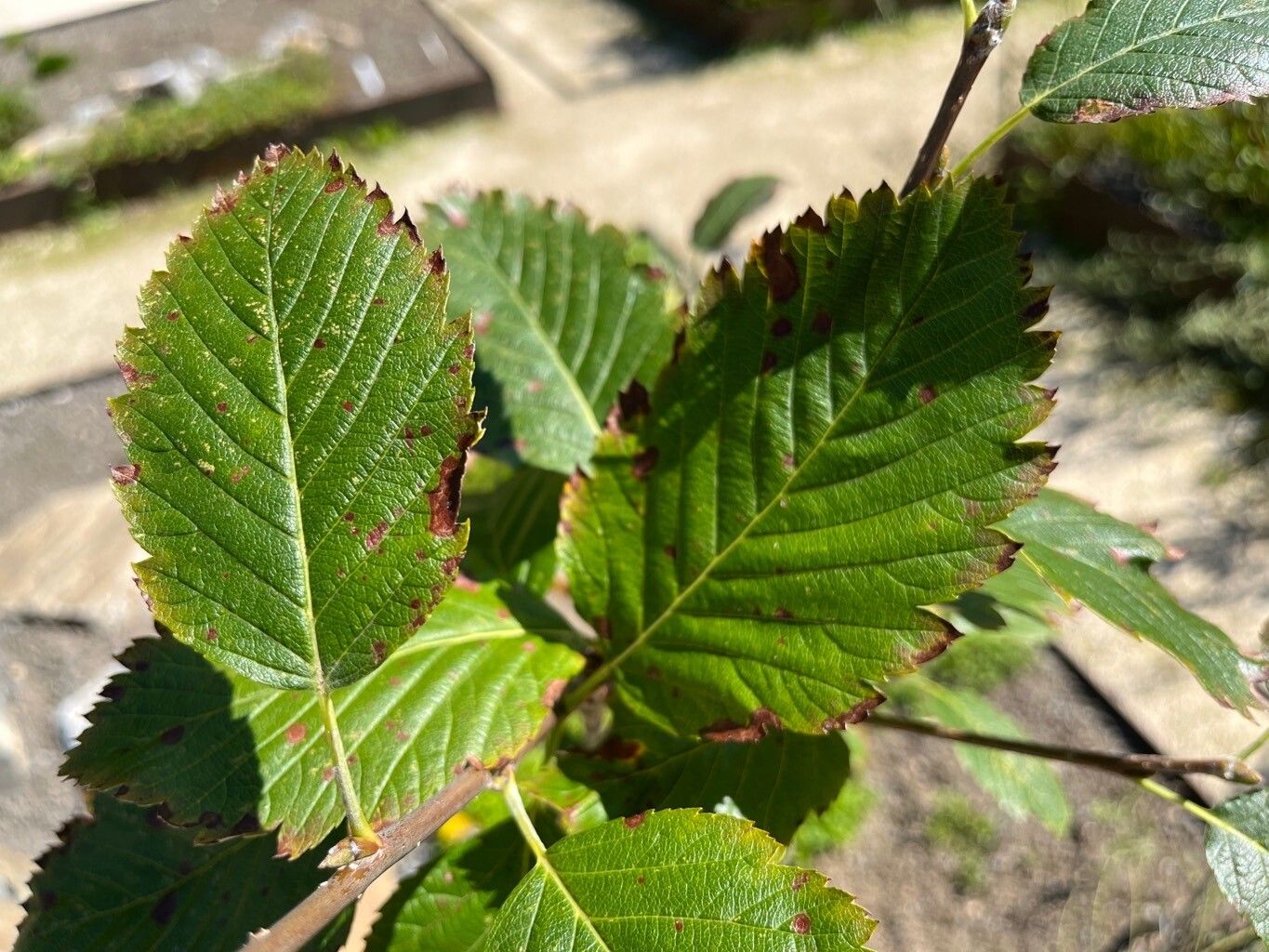
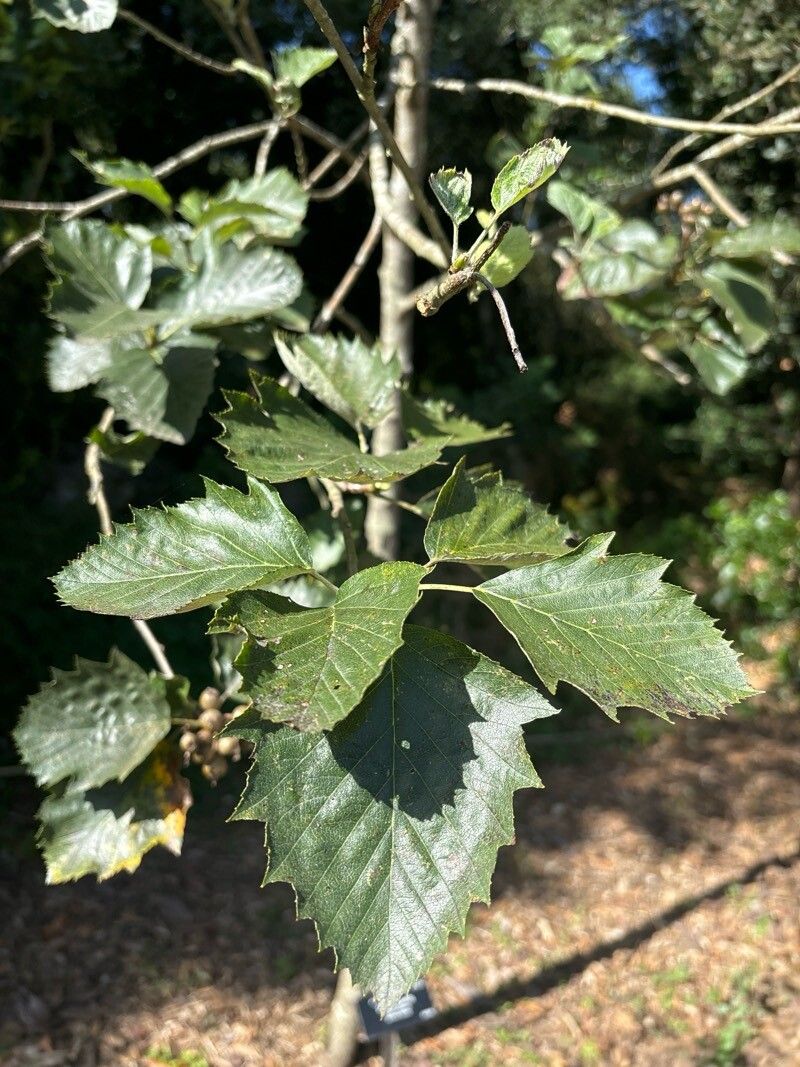
Sorbus mougeotii, the Vosges whitebeam or Mougeot's whitebeam, is a species of whitebeam native to the mountains of central and western Europe from the Pyrenees east through the Alps to Austria, and north to the Vosges Mountains.
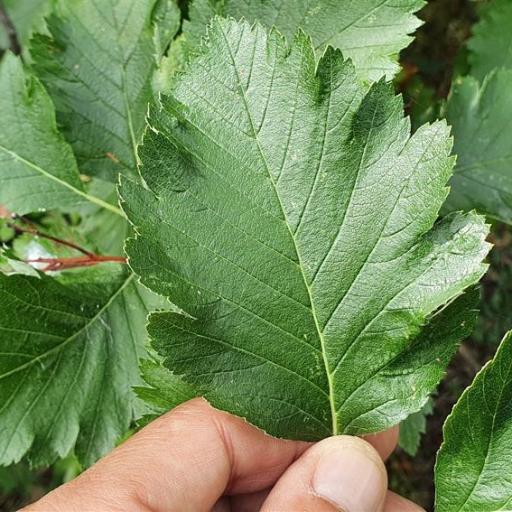
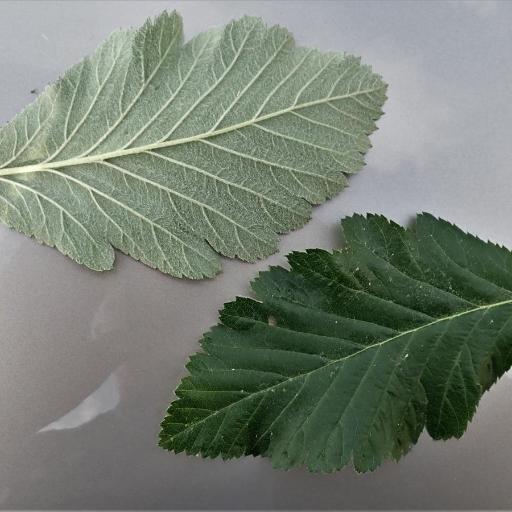
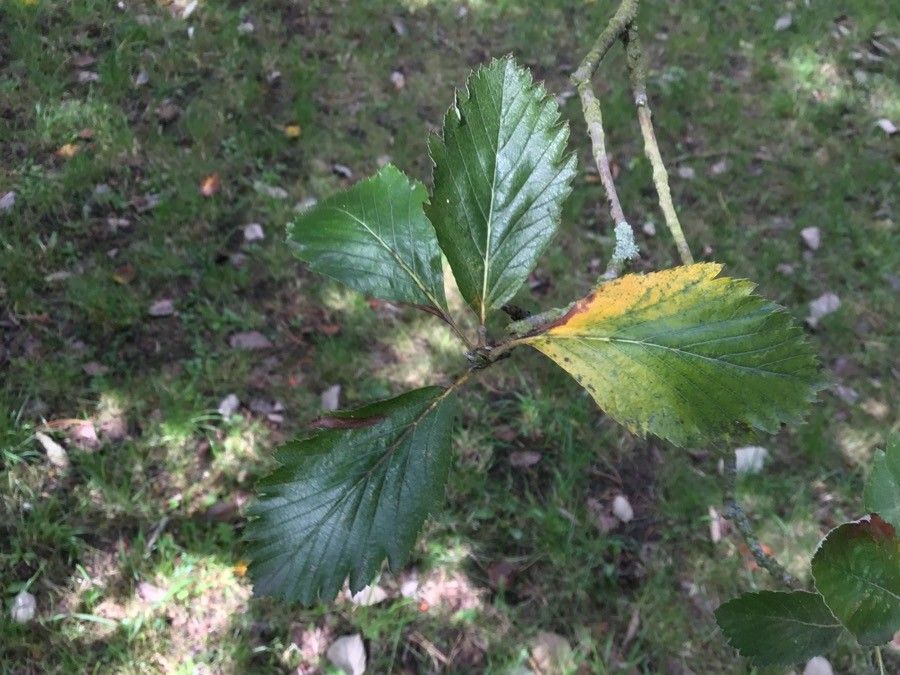
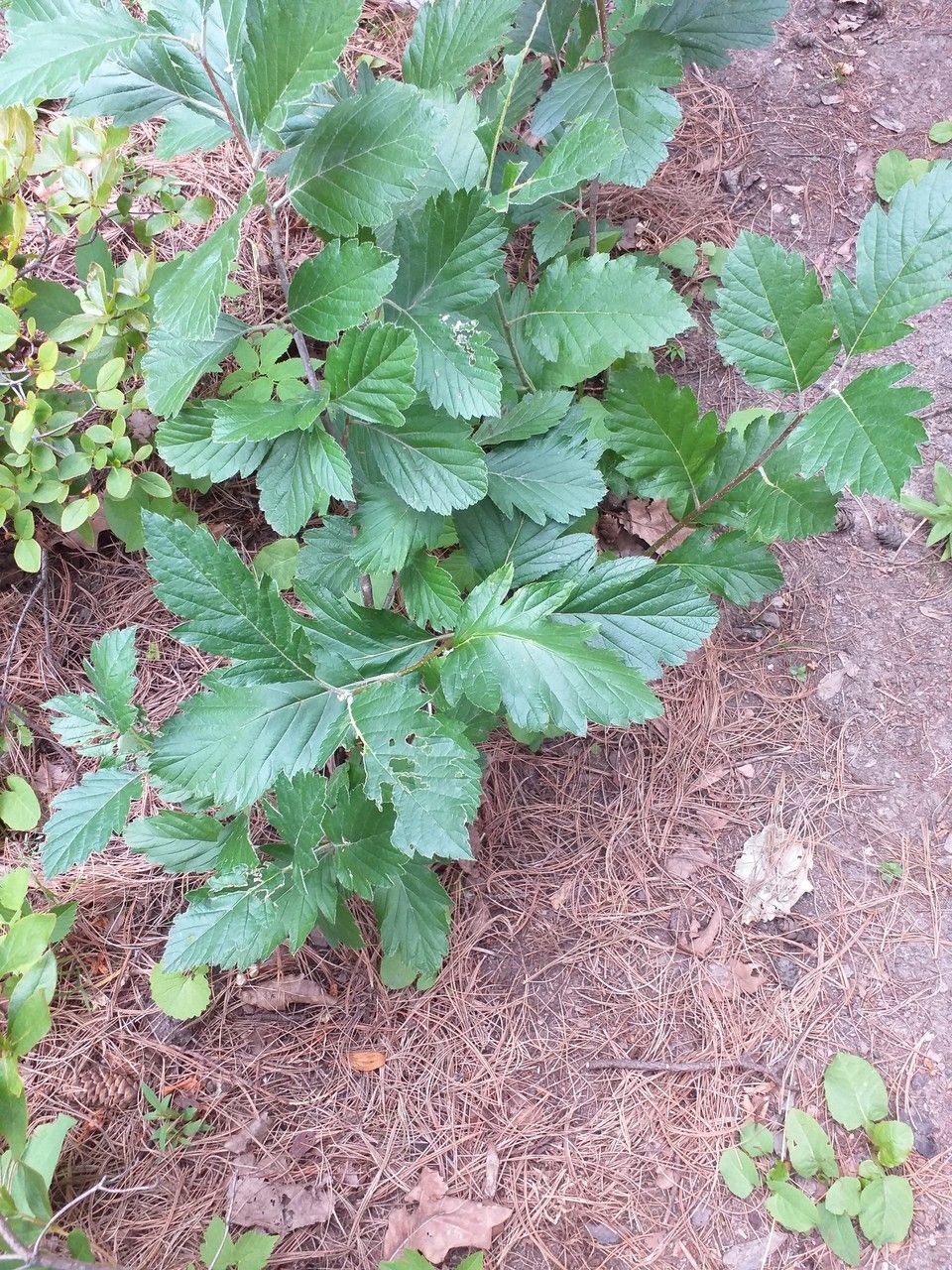
It is a deciduous shrub or small tree growing to 8–10 m (rarely 20 m) tall, often multi-stemmed, with trunks up to 30 cm (rarely 50 cm) diameter and grey bark; the crown is dense, broad ovoid, with numerous erect branches. The leaves are glossy dark green above, and densely hairy with white hairs beneath, 6–10 cm long and 3–5 cm broad, broadest near the middle, shallowly lobed with seven to twelve forward-pointing lobes on each side of the leaf, bluntly pointed at the apex, and serrated margins. The autumn colour is dull grey-brown. The flowers are 10 mm diameter, with five white petals and 20 yellowish-white stamens; they are produced in corymbs 5–10 cm diameter in late spring. The fruit is a globose pome 10–12 mm diameter, bright red, maturing in mid autumn. The fruit is dryish, and eaten by thrushes and waxwings, which disperse the seeds.Its closest relatives are some of the endemic British whitebeams, notably Sorbus anglica, which differs only in slightly broader leaves. It is also closely related to Sorbus intermedia (Swedish whitebeam), which differs in having the leaves grey-white below and more deeply lobed, with the lobes spreading rather than forward-pointing, the fruit oval and less bright red, and in forming a stouter tree with a single trunk and more horizontal branching. All are tetraploid apomictic species which breed true without pollination, and ultimately of hybrid origin between Sorbus aria and Sorbus aucuparia.
Mougeot's whitebeam demonstrates strong resistance to disease and is generally not susceptible to illnesses. As for care, the plant is fairly low-maintenance. When grown outdoors it needs minimal watering, and larger specimens typically do not require pruning. Smaller plants, however, should be pruned after they finish blooming. Mougeot's whitebeam is suitable for anyone with an outdoor area, such as a garden or deck, and does not demand much care experience.
How to keep Hedlundia Mougeotii.
Light
Mougeot's whitebeam comes from open habitats, like sunny meadows and forest edges, which offer plentiful light. It does best in Full Sun but can also tolerate Partial Sun, adapting well to a variety of sunlight conditions.
Temperature
Mougeot's whitebeam is highly adaptable to a variety of climate conditions, whether in scorching summers or cold winters. Nevertheless, it has an optimal temperature range for growth. If temperatures become too high, the plant is vulnerable to heat and humidity stress, which can cause it to die. In areas where temperatures approach the lower limit of its cold tolerance, taking insulating measures to protect the plant is important.
Fertilizer
Timing is essential for feeding Mougeot's whitebeam. Apply fertilizer in early spring and continue monthly up to early summer. The fertilizer encourages attractive flowering and supplies energy during both dormant and active growth periods.
Botanical profile.
- Plant Type
- Tree, Shrub
- Life Cycle
- Perennial
- Genus
- Hedlundia
- Family
- Rosaceae
- Hardiness Zone
- 4-7
- Mature Height
- 2.13 m to 14.94 m
- Mature Spread
- 9.14 m
- Leaf Color
- Green, Dark Green
- Leaf Type
- Deciduous
- Flower Color
- White
- Flower Size
- 1.02 cm to 1.52 cm
- Bloom Time
- Mid spring, Late spring
- Planting Time
- Spring, Summer, Autumn
- Harvest Time
- Late summer, Early fall, Mid fall
Other names.