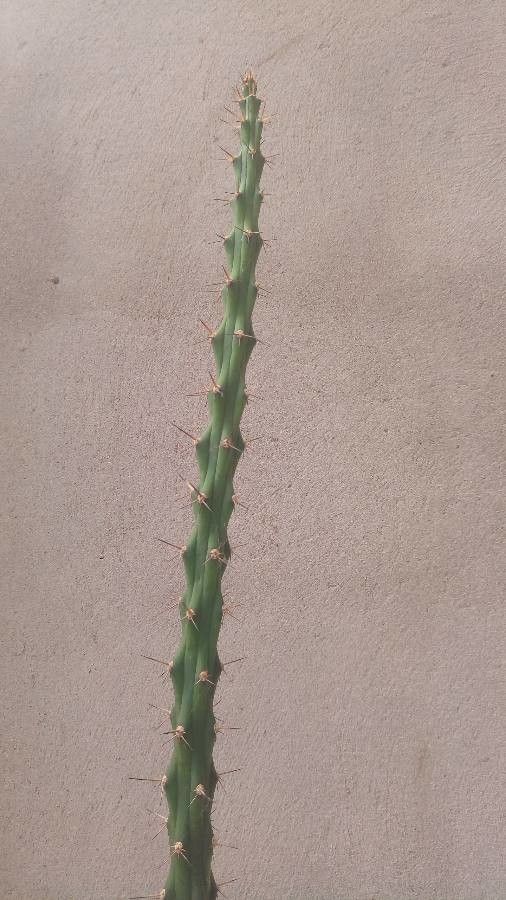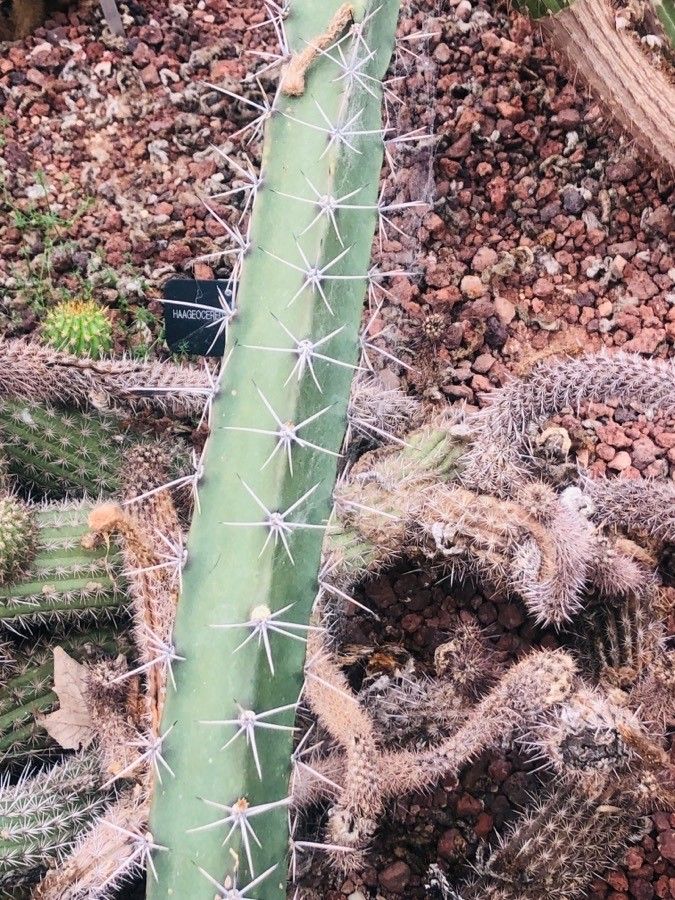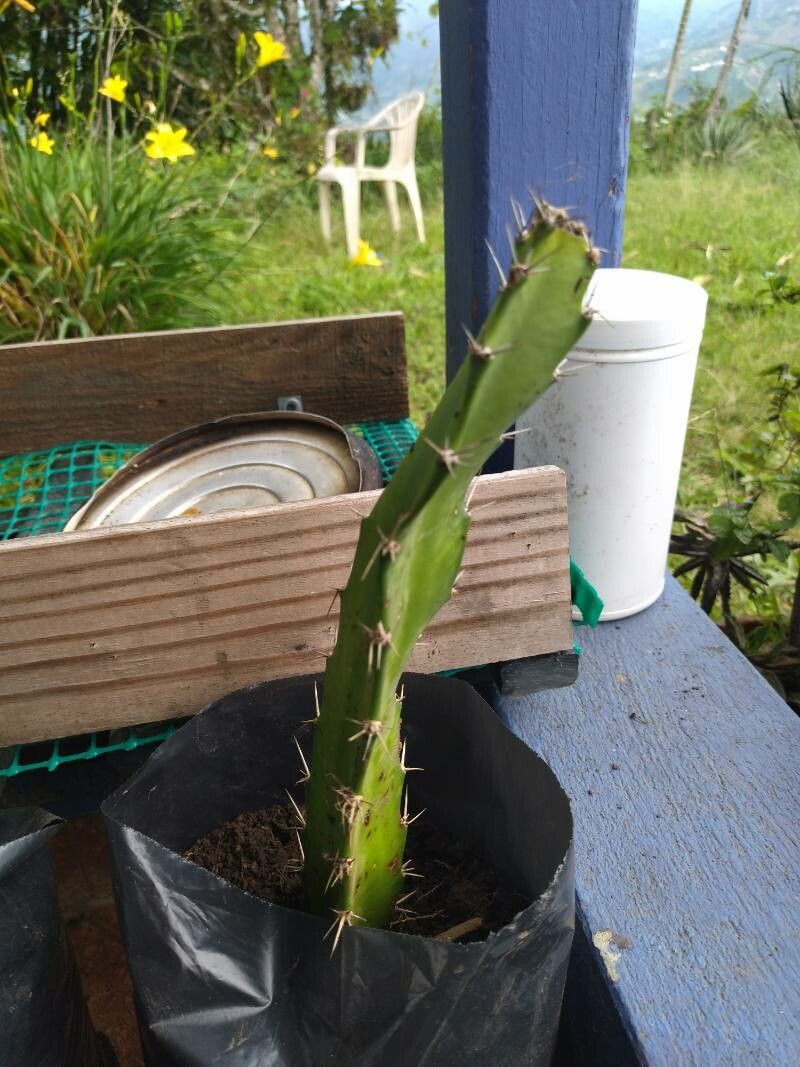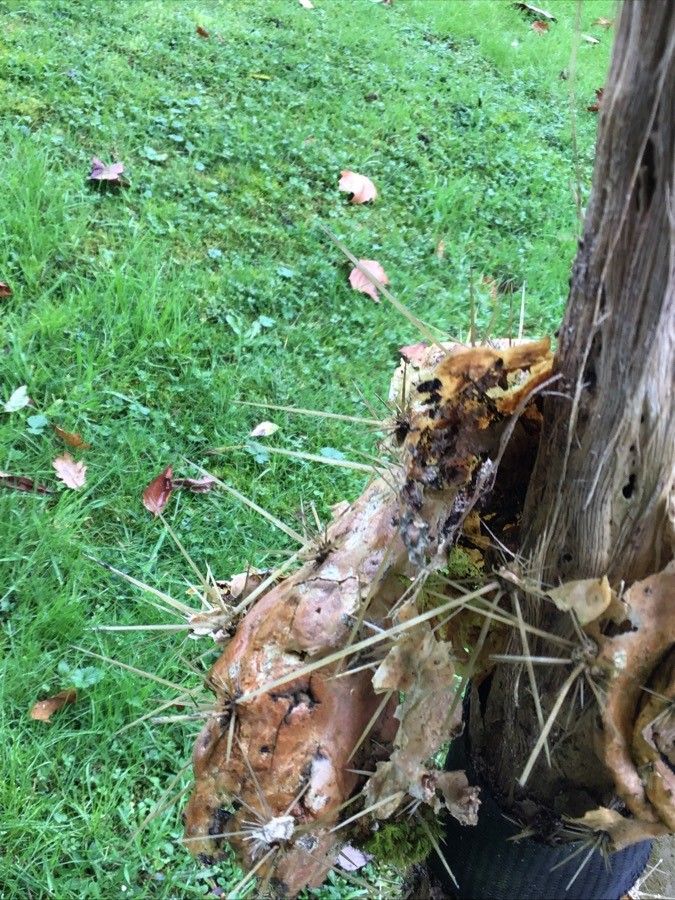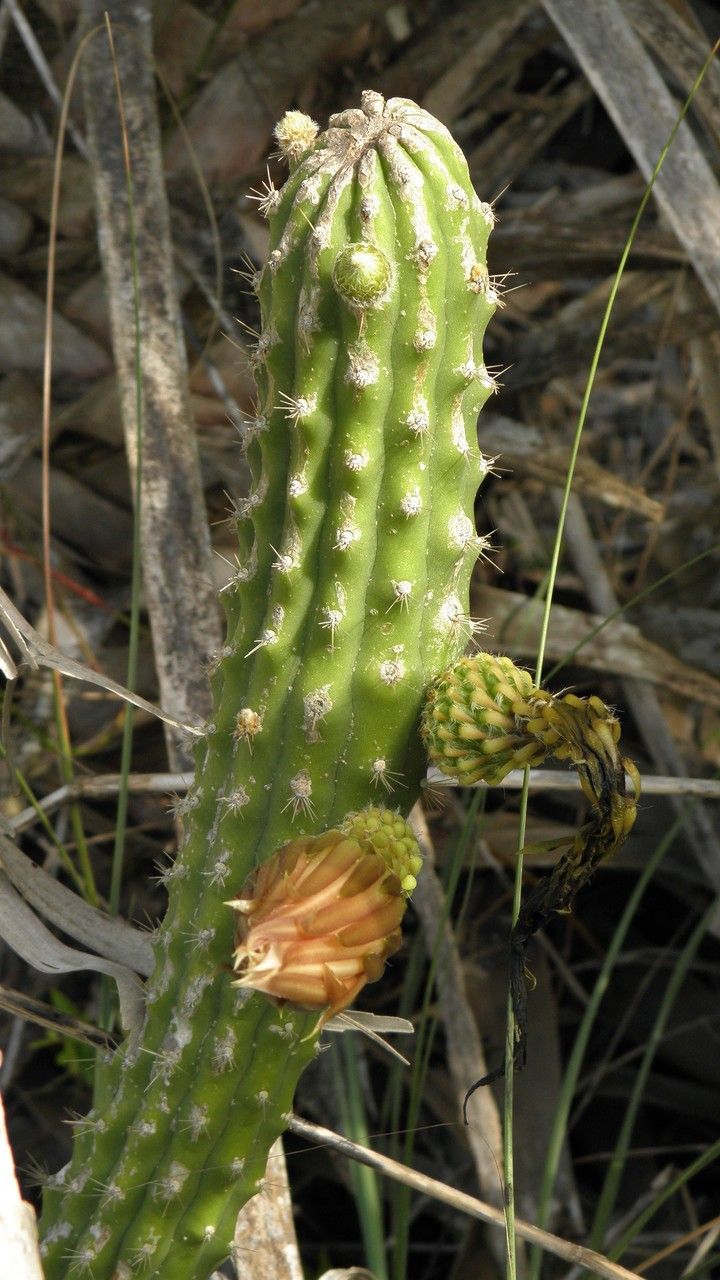
Harrisia aboriginum, the prickly applecactus, is a species of cactus endemic to peninsular Florida, on the Gulf Coast of the counties of Lee, Sarasota County, and Charlotte. Only 12 occurrences are known, and the species is threatened by horticultural collection, shading from fire suppression, competition from invasive flora, and habitat destruction.
Prickly applecactus has strong resistance to disease and can tolerate ordinary care without becoming ill easily. That said, it can be vulnerable to mealybugs; these pests may cause some harm but are usually not a major concern. Regarding care, Prickly applecactus is drought-tolerant and does not require frequent watering. It can endure extended intervals without water and needs little fertilizer. However, it is very prone to root rot if lighting is inadequate and it is overwatered. In general, Prickly applecactus is a good choice for people who prefer low-maintenance plants, but it remains important to know and satisfy its basic requirements. It is especially appropriate for those who are away for long stretches and might forget to water their plants regularly.
How to keep Harrisia Aboriginum.
Light
Originating from dry areas, Prickly applecactus prospers under full sunlight, as its original habitat is marked by intense sun exposure and very little shade. It can also tolerate partial sunlight, demonstrating some flexibility in its growth conditions.
Water
The prickly apple cactus is drought-tolerant and requires thorough watering only when the soil is dry. During the growing season, from spring to fall, water it once a week. In winter, reduce watering to approximately once every two weeks. It's best to use rainwater or distilled water to prevent soil compaction. To avoid rotting, be careful not to splash water on the stem.
Temperature
The prickly applecactus flourishes in hot climates, needing elevated temperatures during its growing phase to boost its development and metabolism. This plant benefits from plenty of sunlight, suitable humidity, and adequate aeration. Yet, it's vulnerable to harm from extremely low temperatures and too much watering. Also essential is finding equilibrium and bypassing conditions of extreme heat and overly dry situations.
Fertilizer
The Prickly applecactus sufficiently thrives with small amounts of fertilizer administered 1-2 instances annually during the growth period. It is recommended to not fertilize during its dormant seasons, specifically winter and summer. For plants that have been repotted, less fertilizer should be used and it should not be applied until a few months after the repotting. The use of fertilizer promotes vigorous growth and stimulates flower production.
Pruning
The prickly applecactus is a columnar cactus known for its spines and vibrant flowers. To maintain its shape and health, prune it in early spring with clean tools to remove any damage and control its size. Be careful not to over-prune, as this can harm the plant. Regular maintenance encourages healthy growth and enhances flower production. Always handle the cactus with care and wear protective gloves to prevent injury.
Botanical profile.
- Plant Type
- Succulent
- Life Cycle
- Perennial
- Genus
- Harrisia
- Family
- Cactaceae
- Hardiness Zone
- 9-11
- Mature Height
- 0.91 m to 3.05 m
- Mature Spread
- 49 cm to 91 cm
- Leaf Color
- Green
- Leaf Type
- Evergreen
- Flower Color
- White
- Flower Size
- 15.24 cm to 20.32 cm
- Bloom Time
- Summer
- Planting Time
- Spring, Summer, Autumn
- Harvest Time
- Late summer, Early fall, Mid fall