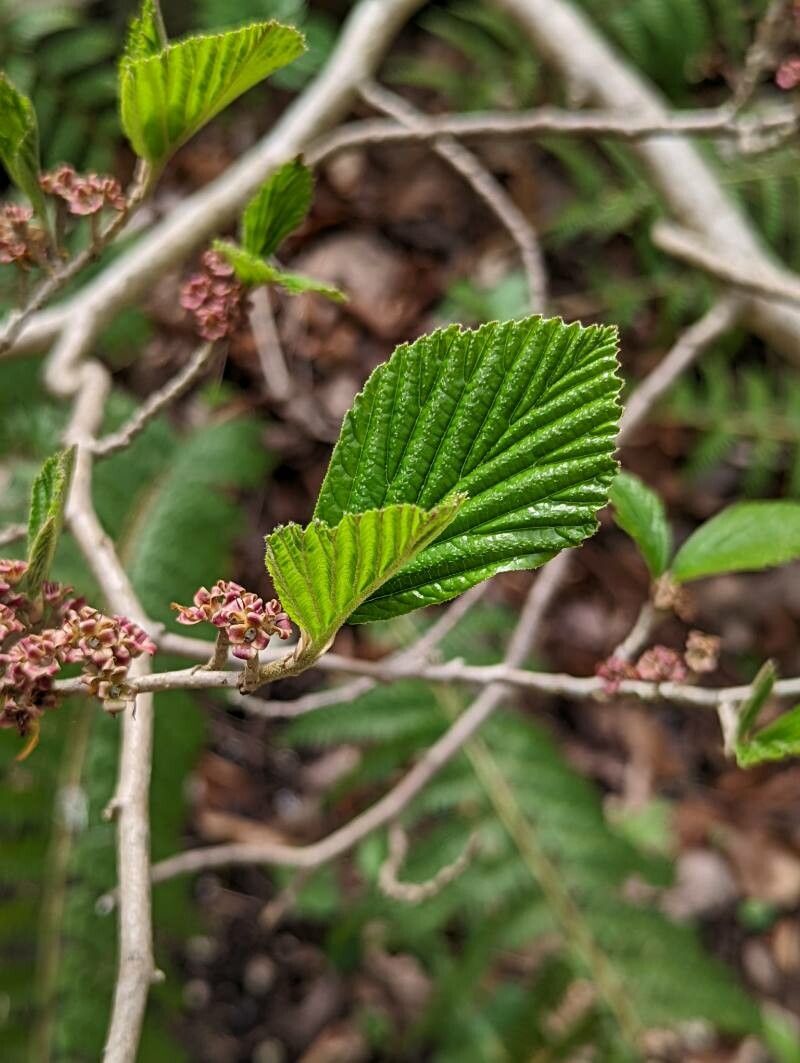
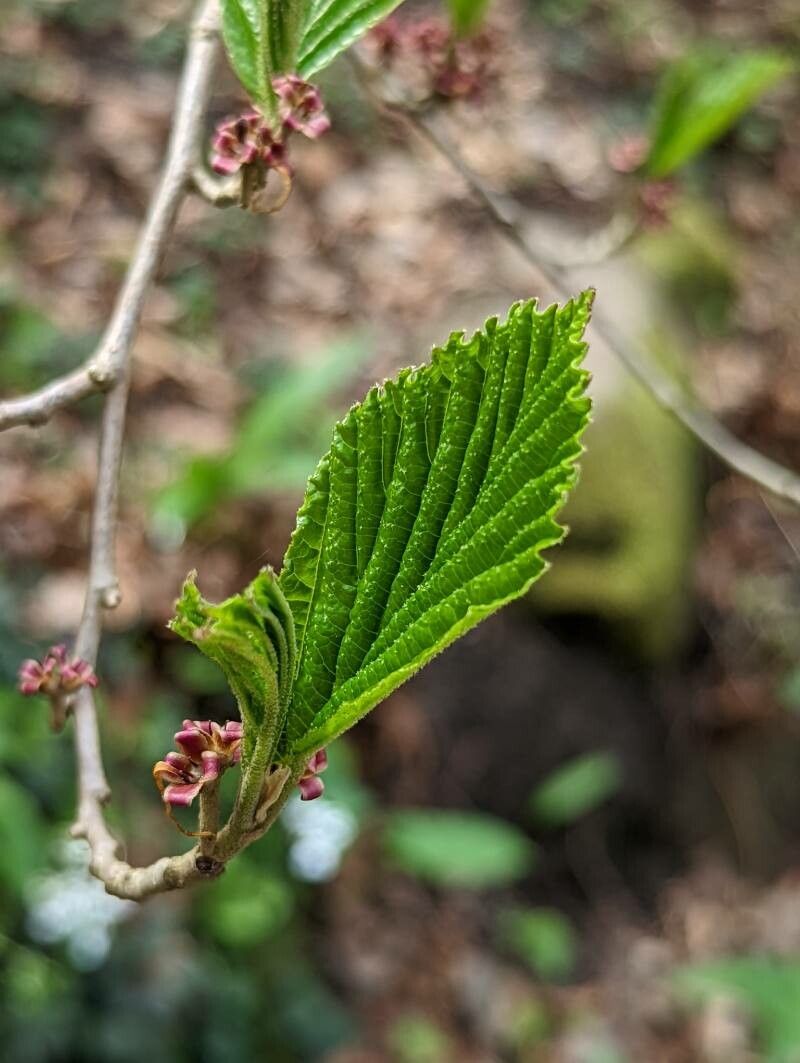
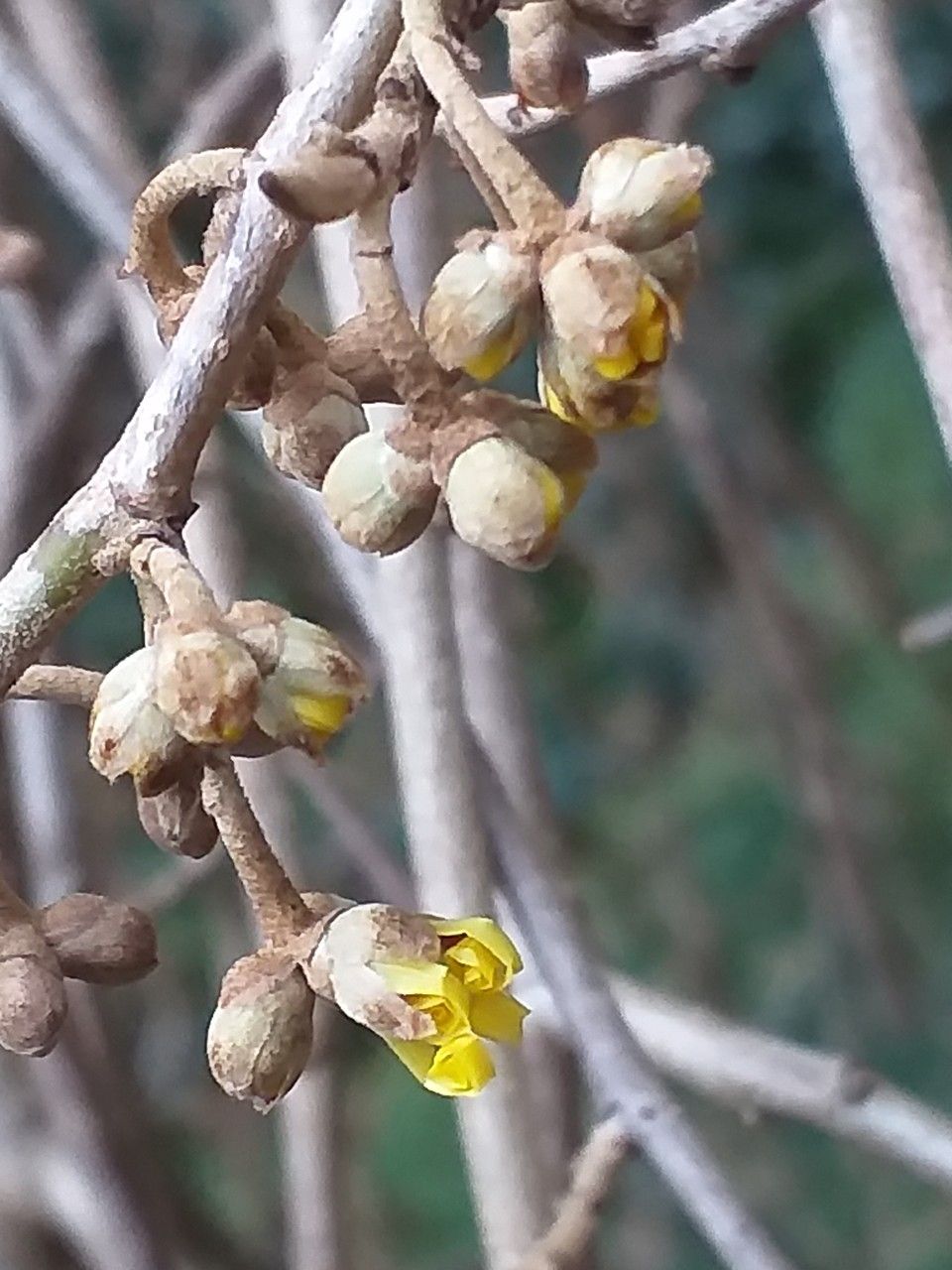
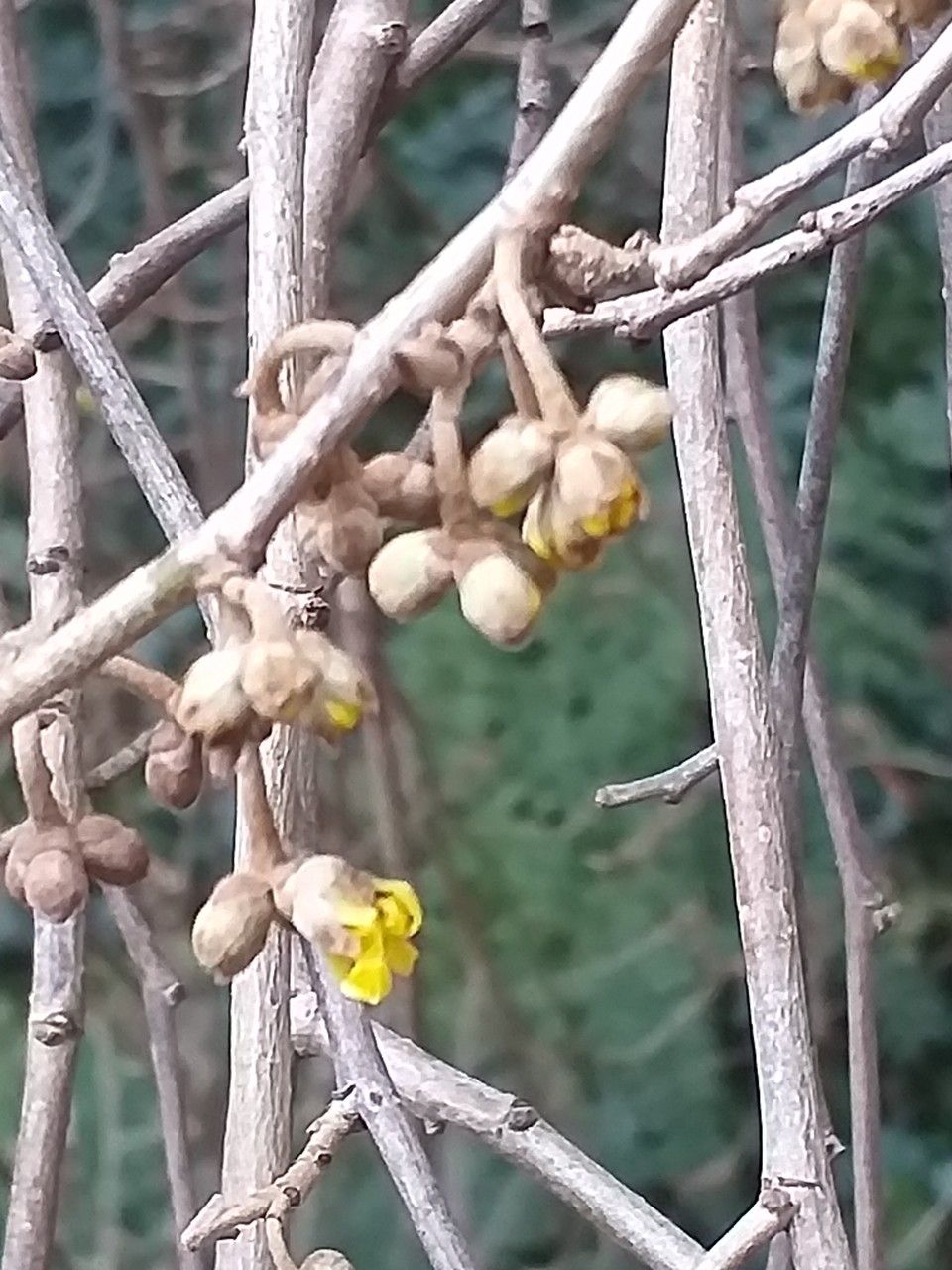
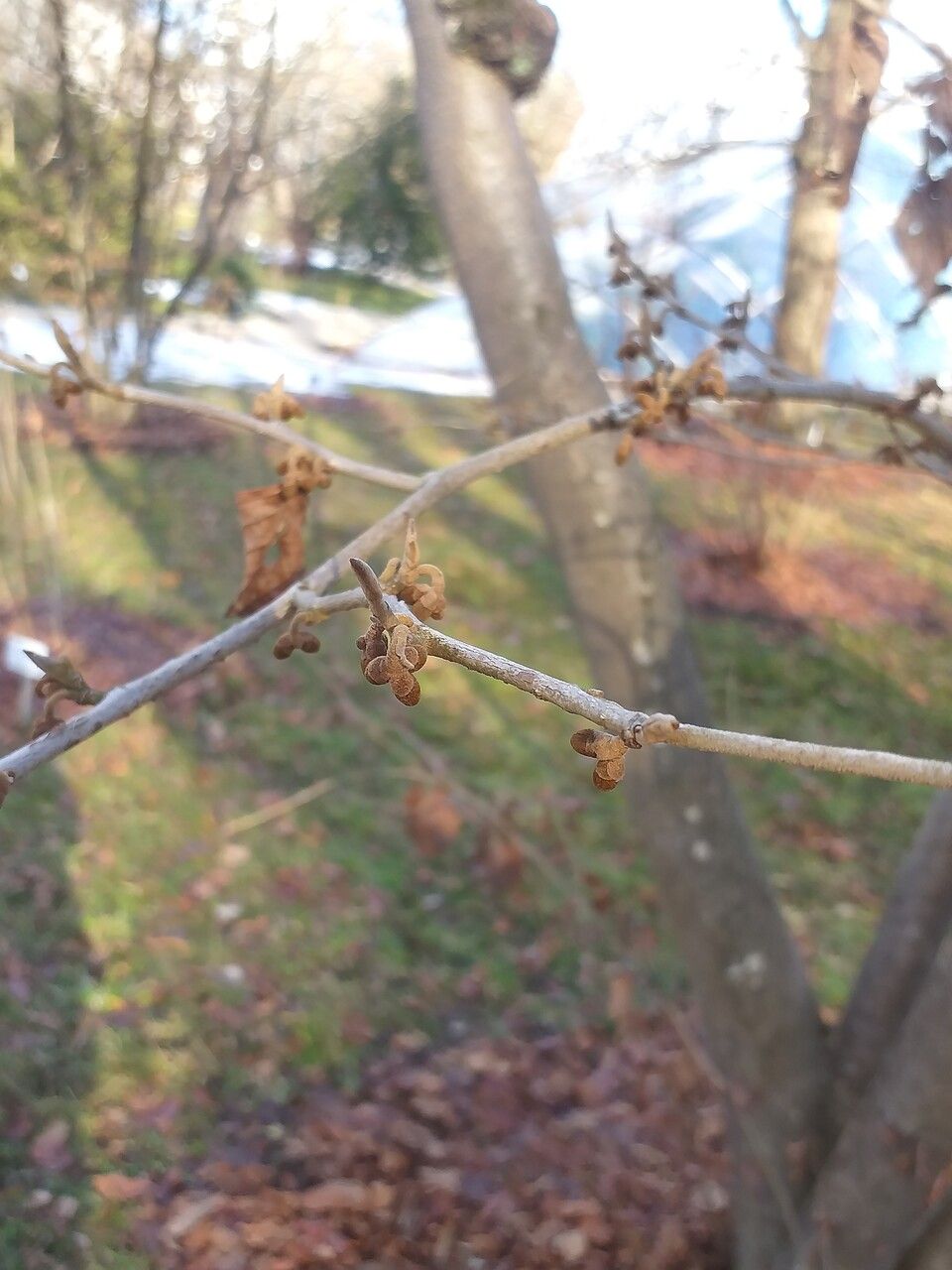
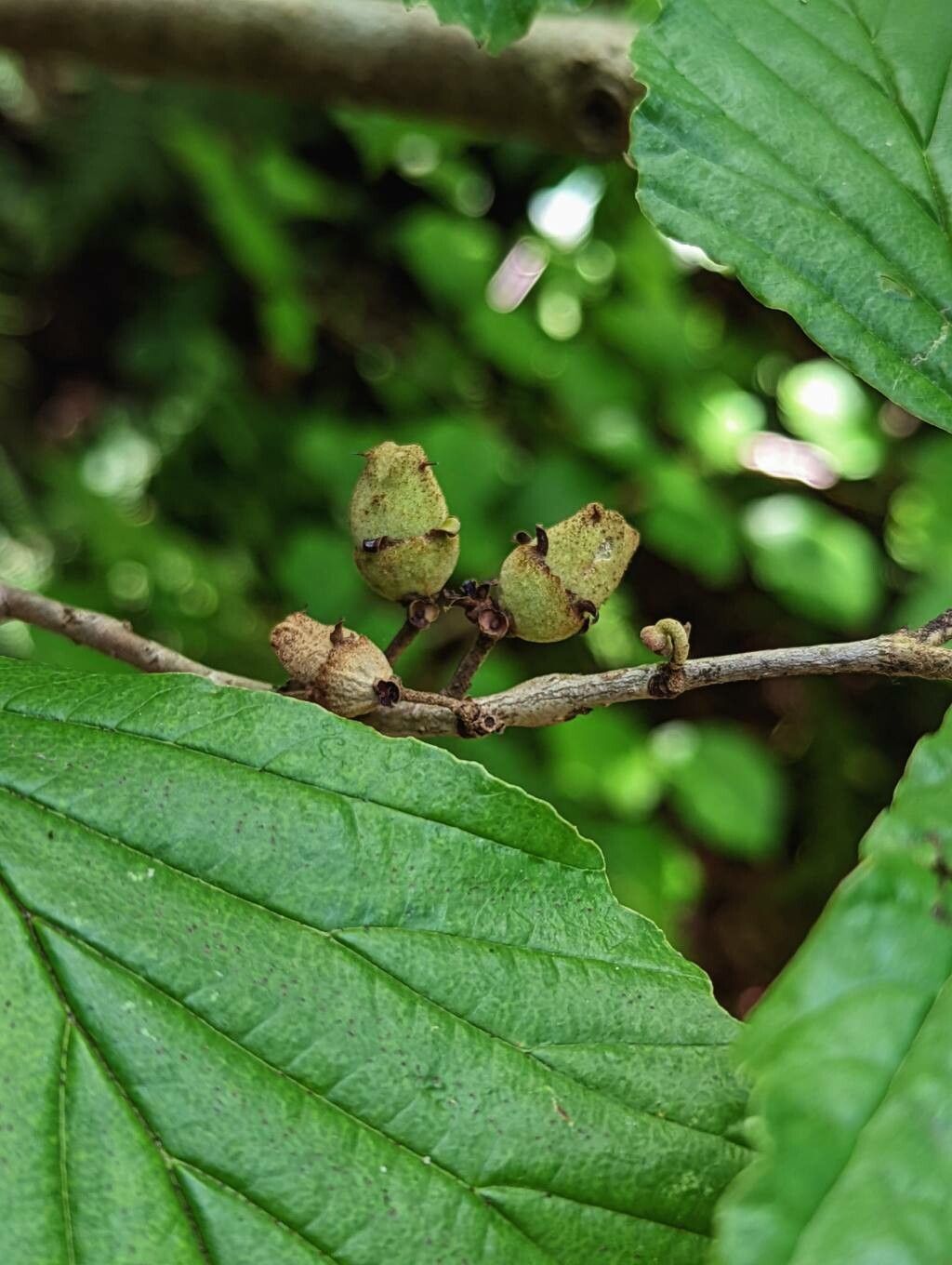
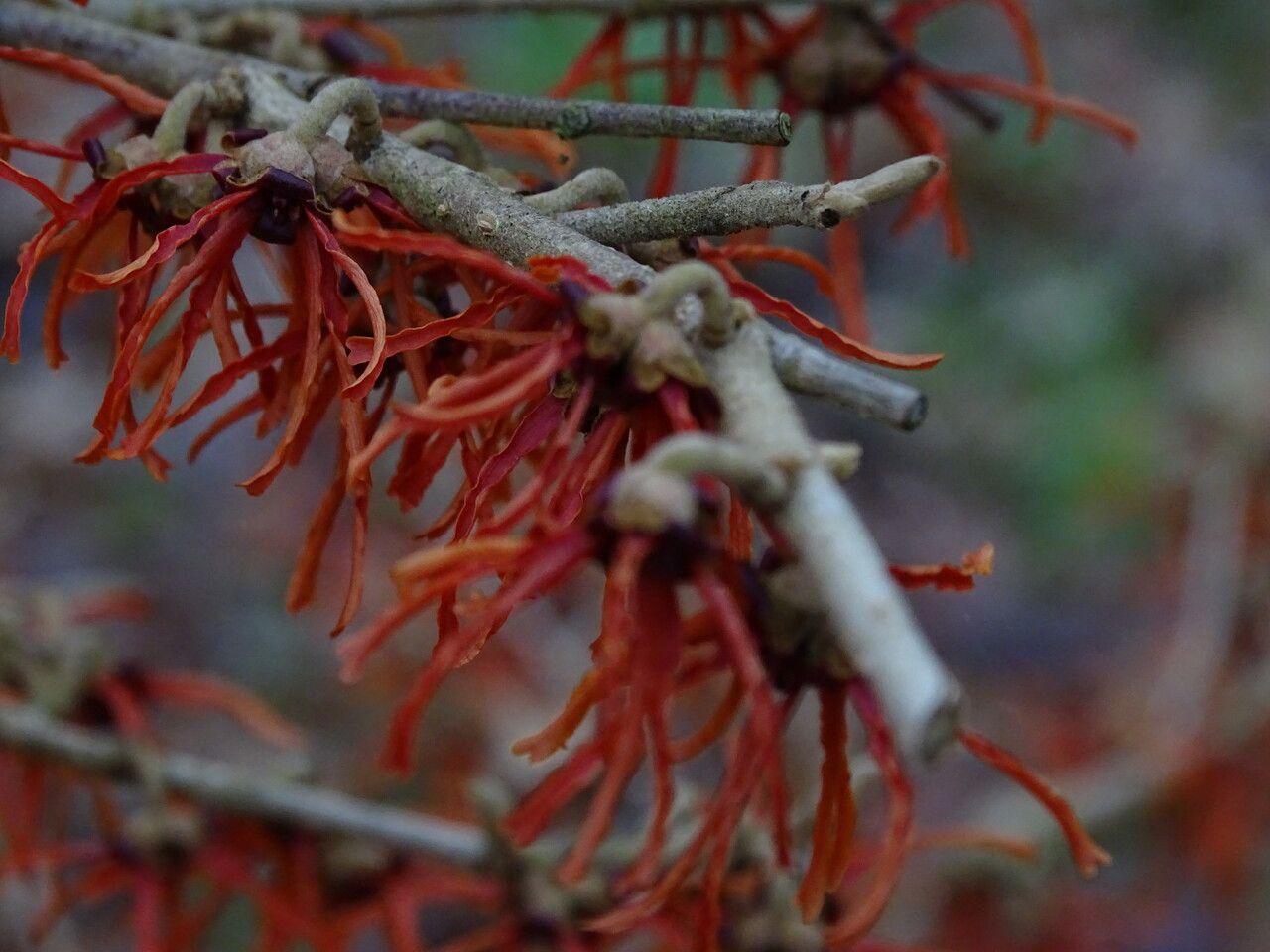
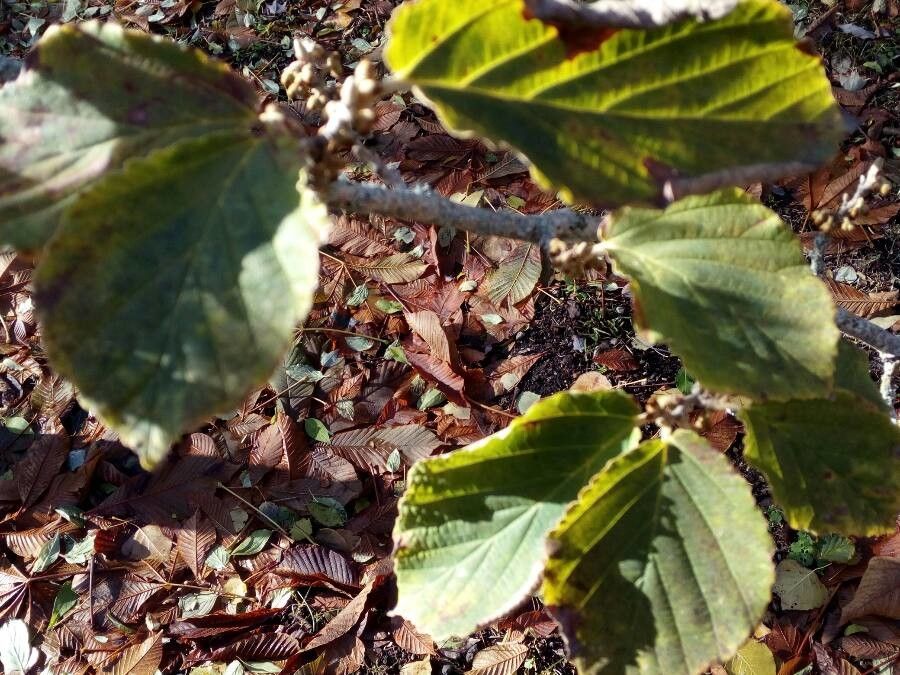
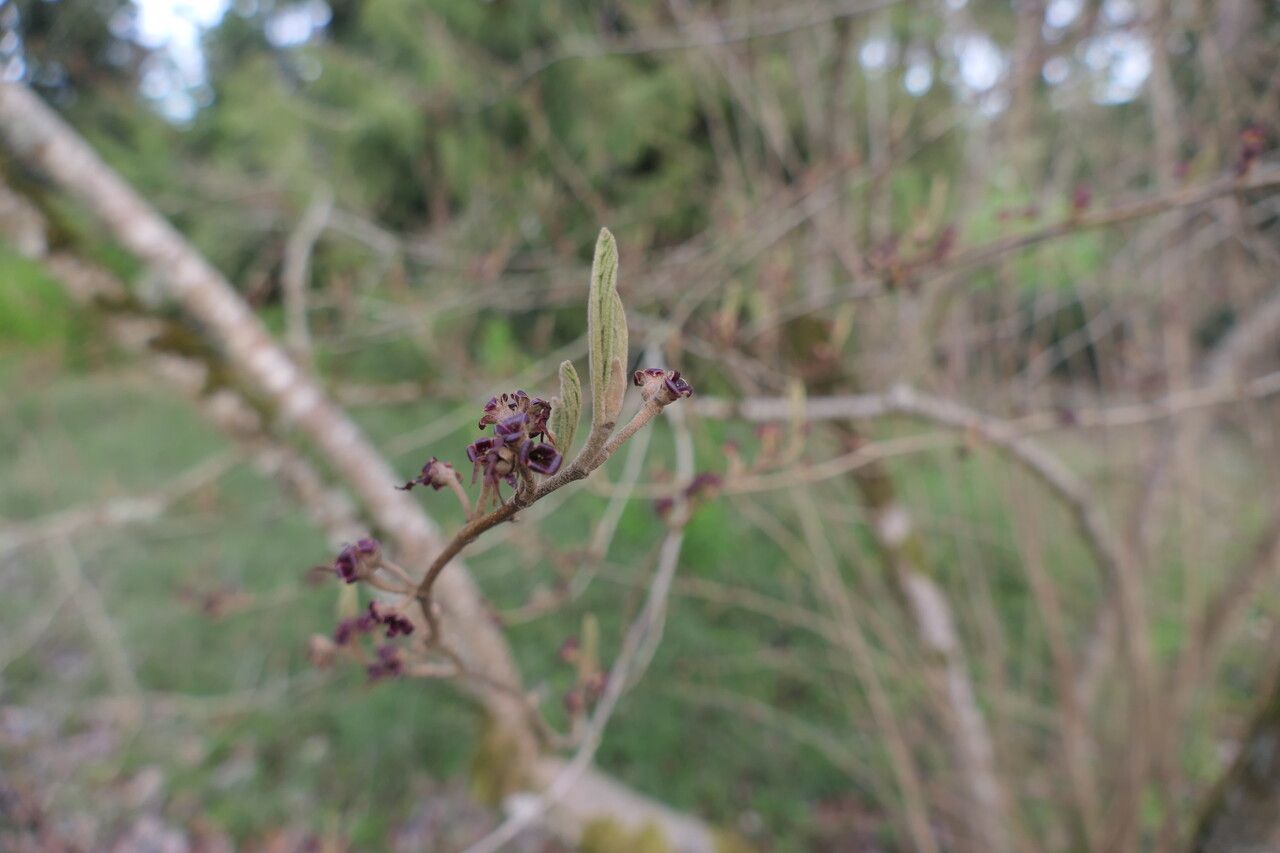
Hamamelis japonica, Japanese witch-hazel, is a species of flowering plant in the family Hamamelidaceae, native to Japan but widely cultivated in temperate situations elsewhere. A horizontally spreading, hardy deciduous shrub or small tree, it is notable for the slightly fragrant yellow blooms which clothe its naked branches in the depths of winter through to early spring (usually in January and February). The green leaves follow, and in favourable locations they turn yellow before dropping in autumn.H. japonica is one parent of the hybrid Hamamelis × intermedia, an extremely popular and widespread award-winning garden shrub, whose other parent is Hamamelis mollis.
Japanese witch-hazel resists disease well and is generally not prone to illnesses. In terms of care, the plant is fairly low maintenance. When grown outdoors it needs only minimal watering, and larger specimens usually do not require pruning. Smaller plants, however, should be pruned after they finish blooming. Japanese witch-hazel is suitable for anyone with an outdoor area, such as a garden or deck, and does not demand much gardening experience.
How to keep Hamamelis Japonica.
Light
Japanese witch-hazel is native to locations such as forest understories and rocky areas, where it grows in natural shade. It prefers partial sun but can tolerate full sun or full shade, demonstrating its versatility and hardiness.
Water
Japanese witch-hazel, native to temperate regions of Japan, thrives best with moderate moisture and occasional periods of dryness. To care for it, water the plant every 1-2 weeks, making sure the soil dries out slightly between waterings. The plant's ability to bloom beautifully depends on both proper watering and seasonal rainfall, showcasing its natural adaptation to balanced humidity in its native environment.
Temperature
Japanese witch-hazel is highly adaptable to a range of climates, from very hot summers to cold winters. Nonetheless, it has an ideal temperature range for growth. If temperatures become too high, the plant can experience heat and humidity stress that may kill it. In areas where temperatures near its lower cold-tolerance limit, applying insulation to protect the plant is important.
Fertilizer
The timing of fertilizing Japanese witch-hazel is important. Apply fertilizer in early spring and repeat every month until early summer. Fertilizer promotes attractive blooms and supplies energy during both dormant and active growth periods.
Pruning
Japanese witch-hazel is a deciduous shrub known for its fragrant, spidery yellow flowers that bloom in late winter. To keep the plant healthy, pruning should be done in early spring. Focus first on removing dead branches, then thin out the plant to improve air circulation and maintain its shape. Pruning right after the flowers have bloomed helps promote growth, increases sunlight exposure, enhances blooming, and boosts resistance to pests.
Botanical profile.
- Plant Type
- Shrub
- Life Cycle
- Perennial
- Genus
- Hamamelis
- Family
- Hamamelidaceae
- Hardiness Zone
- 5-8
- Mature Height
- 3.05 m to 4.57 m
- Mature Spread
- 3.05 m to 3.96 m
- Leaf Color
- Dark Green, Olive Drab
- Leaf Type
- Deciduous
- Flower Color
- Yellow, Gold
- Flower Size
- 1.02 cm to 2.03 cm
- Bloom Time
- Late winter, Early spring
- Planting Time
- Spring, Autumn
- Harvest Time
- Late summer, Early fall
- Native Area
- Japan
Other names.
Reader questions.
What are the sunlight requirements for Japanese witch-hazel?
Japanese witch-hazel (Hamamelis japonica) thrives under specific sunlight conditions to ensure its health and growth. The plant requires 'Full sun' conditions, which means it should receive above 6 hours of sunlight daily for optimal growth. For those areas in your garden that don't get as much light, 'Partial sun' conditions, about 3-6 hours of sunlight, can also suffice. It's important to observe the movement of sunlight through your garden over time and choose planting spots that offer a good balance of light and shade to keep your Japanese witch-hazel happy.