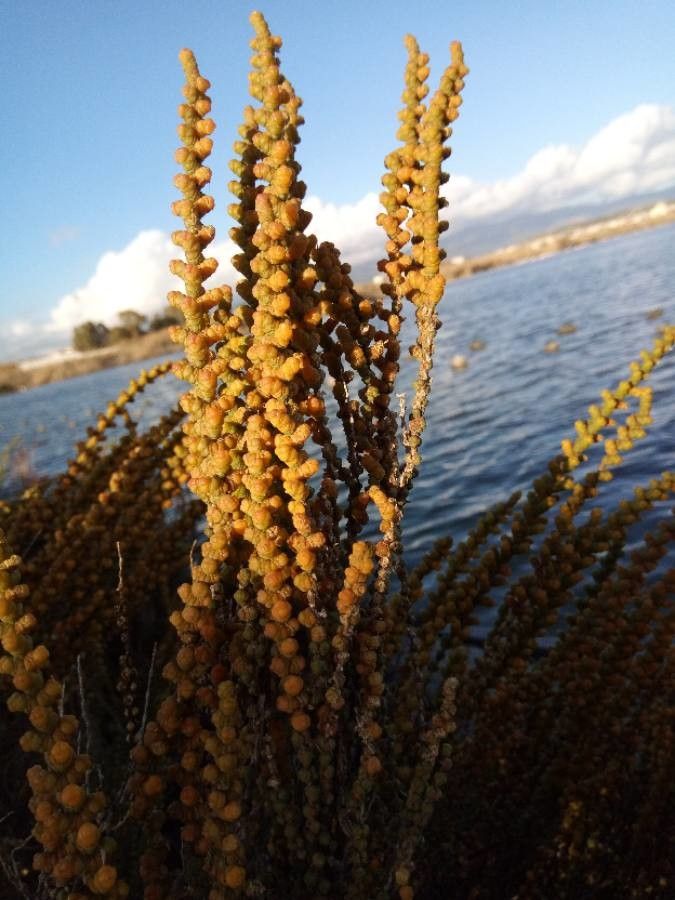
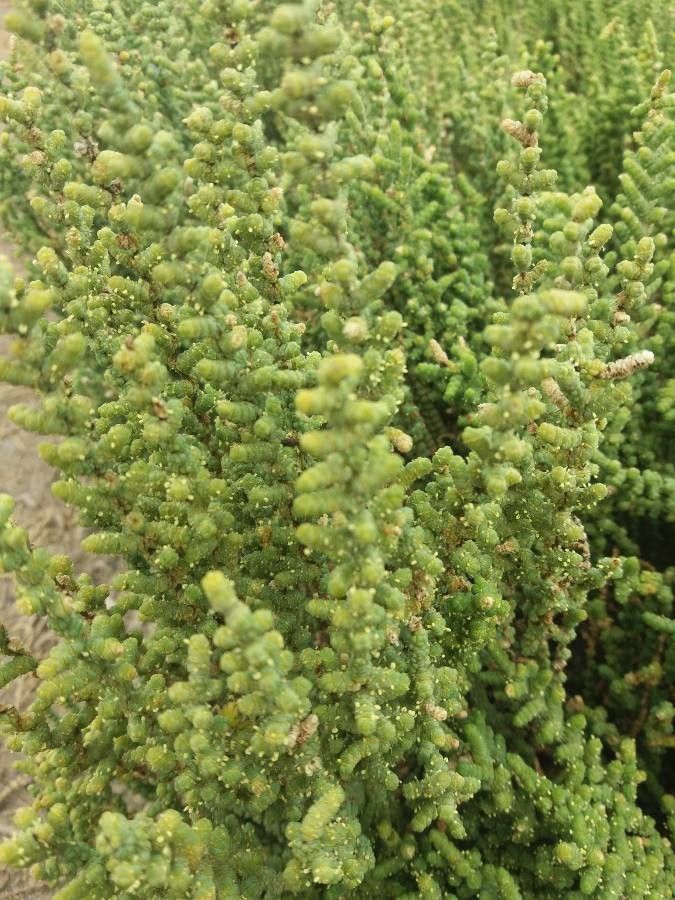
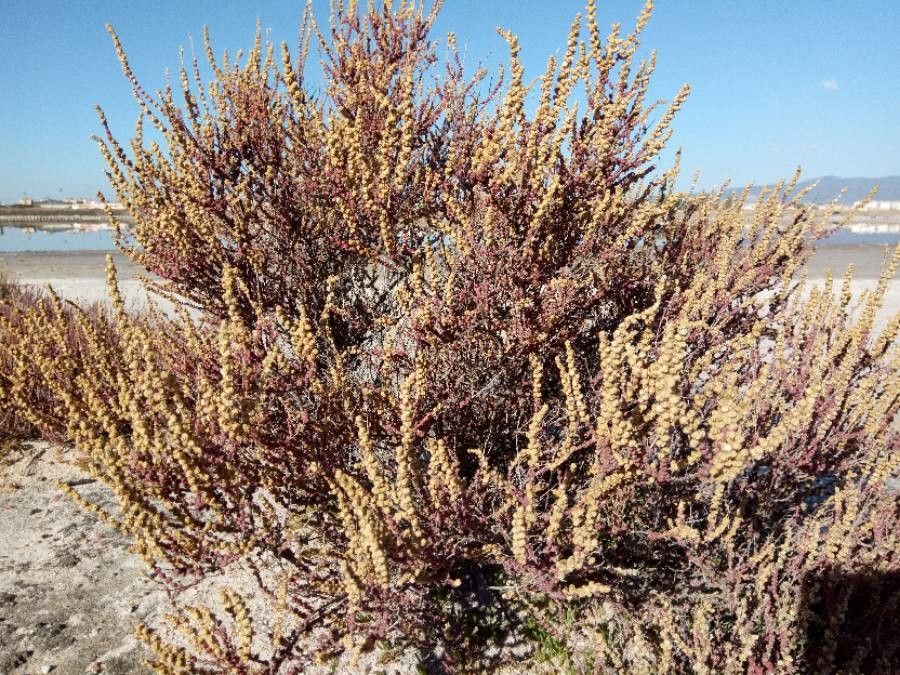
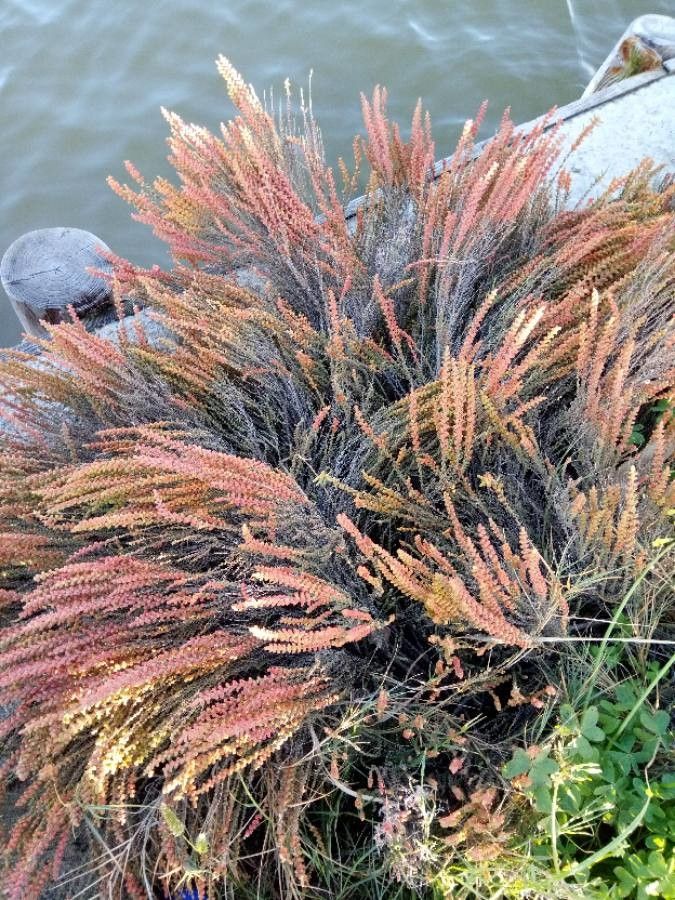
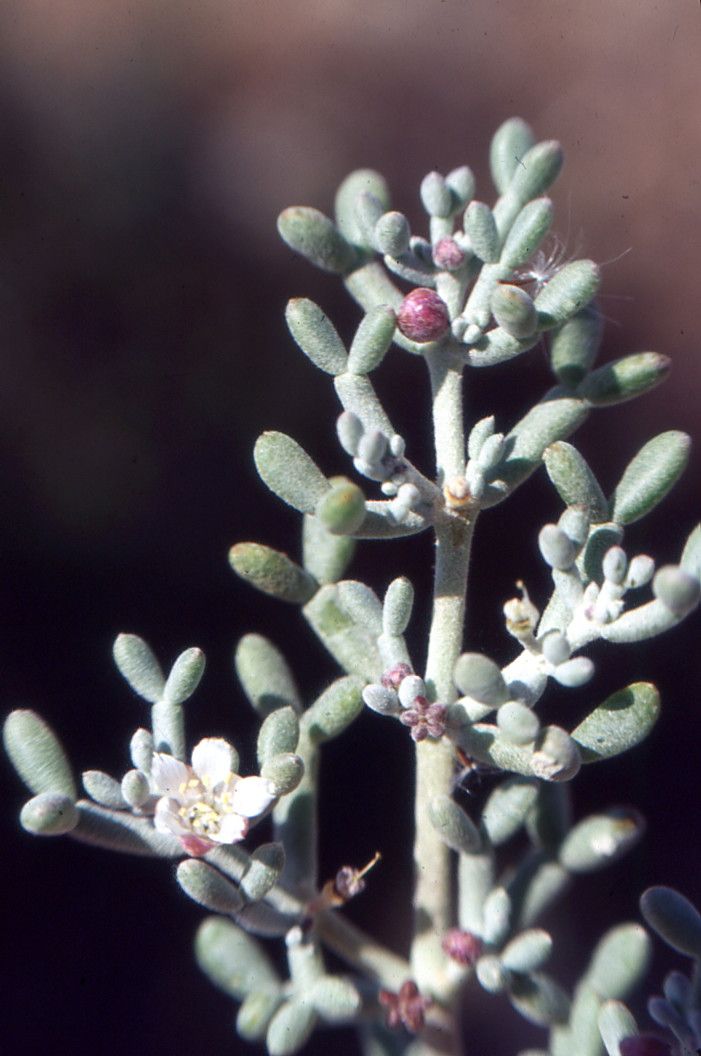
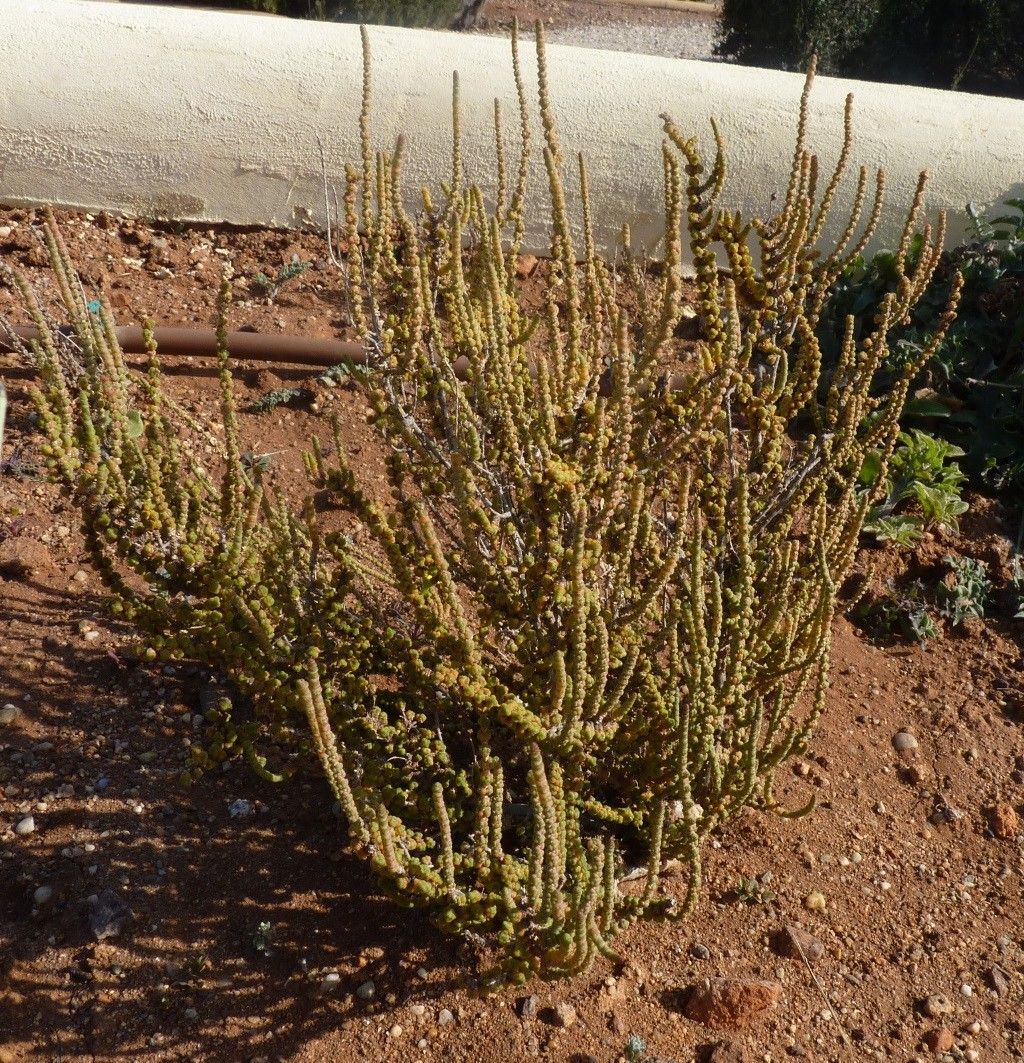
Halocnemum strobilaceum is a species of flowering plant in the subfamily Salicornioideae of the family Amaranthaceae. It is native to coastal areas of the Mediterranean Sea and the Red Sea and parts of the Middle East and central Asia, where it grows in coastal and inland salt marshes, alkali flats, and other habitats with saline soils.
Halocnemum exhibits strong resistance to disease and is typically not susceptible to illnesses. In terms of maintenance, this plant is fairly low-maintenance. Planted outdoors, it needs only minimal watering, and larger plants usually do not need pruning. Smaller plants, however, should be pruned after they finish blooming. Halocnemumt is appropriate for anyone who has an outdoor area, like a garden or a deck, and does not demand extensive plant-care experience.
How to keep Halocnemum Strobilaceum.
Light
Halocnemum comes from open habitats, such as sunny meadows and forest edges, which offer abundant light. It thrives in Full Sun but can also tolerate Partial Sun, adapting well to various sunlight conditions.
Water
Halocnemum, a plant native to saline soils in arid regions, is highly drought-tolerant and thrives with minimal moisture. It can endure long periods without water and typically needs moderate watering just once a week. Thanks to its robust root system, halocnemum can tap into deep soil moisture, allowing it to withstand fluctuating temperatures and intense sunlight.
Temperature
Halocnemum comes from tropical areas, where the climate is generally warm and humid. Consequently, it is adapted to high temperatures and moisture. It does not tolerate sudden temperature swings and prefers a steady thermal environment, so avoiding temperature fluctuations indoors is important. It normally cannot withstand cold and needs warmer conditions to develop. If the ambient temperature falls too low, the plant may stop growing or even die.
Fertilizer
Fertilization is essential for the care of Halocnemum. Regular feeding during the growing season maintains energy for its showy foliage and supports overall growth. If fertilization is neglected, leaves can become unhealthy, the plant's ornamental appeal may decline, and growth can be stunted or weak and prone to breaking.
Pruning
Halocnemum is a salt-tolerant, dense, shrub-like plant. It is best to prune it from early to late winter. Pruning at this time helps maintain its shape, removes dead branches, and improves air circulation. Make sure to make clean cuts, as this reduces damage. Pruning during Halocnemum's dormant season minimizes stress and encourages growth in the spring.
Botanical profile.
- Plant Type
- Shrub
- Life Cycle
- Perennial
- Genus
- Halocnemum
- Family
- Amaranthaceae
- Hardiness Zone
- 8-11
- Mature Height
- 91 cm
- Mature Spread
- 49 cm to 91 cm
- Leaf Color
- Blue, Green
- Leaf Type
- Evergreen
- Flower Size
- 0.20 cm to 0.25 cm
- Bloom Time
- Late summer, Early fall
- Planting Time
- Spring, Summer, Autumn
- Harvest Time
- Mid fall, Late fall
- Native Area
- Saudi Arabia, Libya, Egypt, Turkey, Tunisia, Cyprus, Pakistan, Greece, Morocco, China, Uzbekistan, Russia, Afghanistan, Iraq, Kazakhstan, Mongolia, Israel, Oman, Iran, Albania, Algeria, Kuwait, Turkmenistan
Other names.