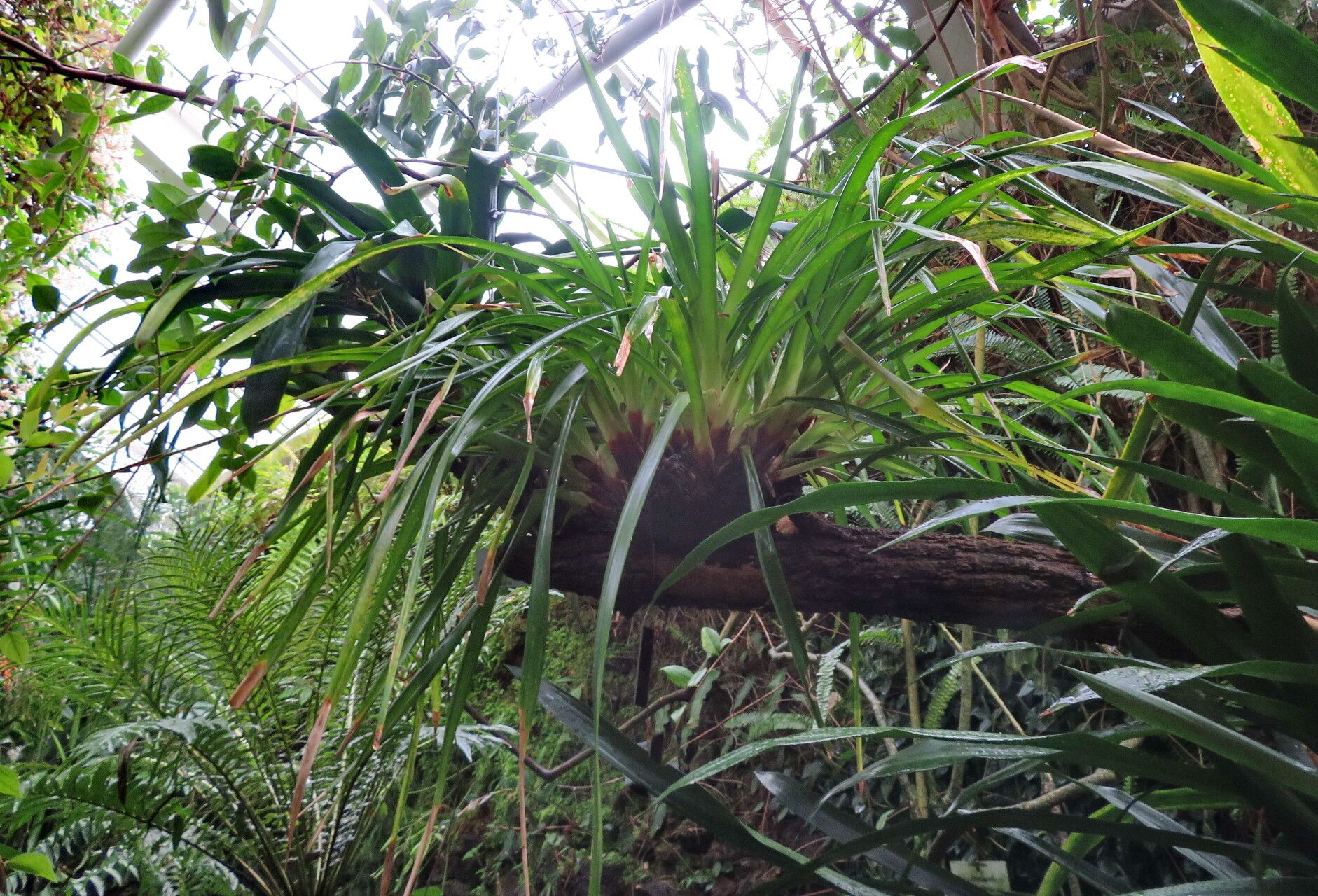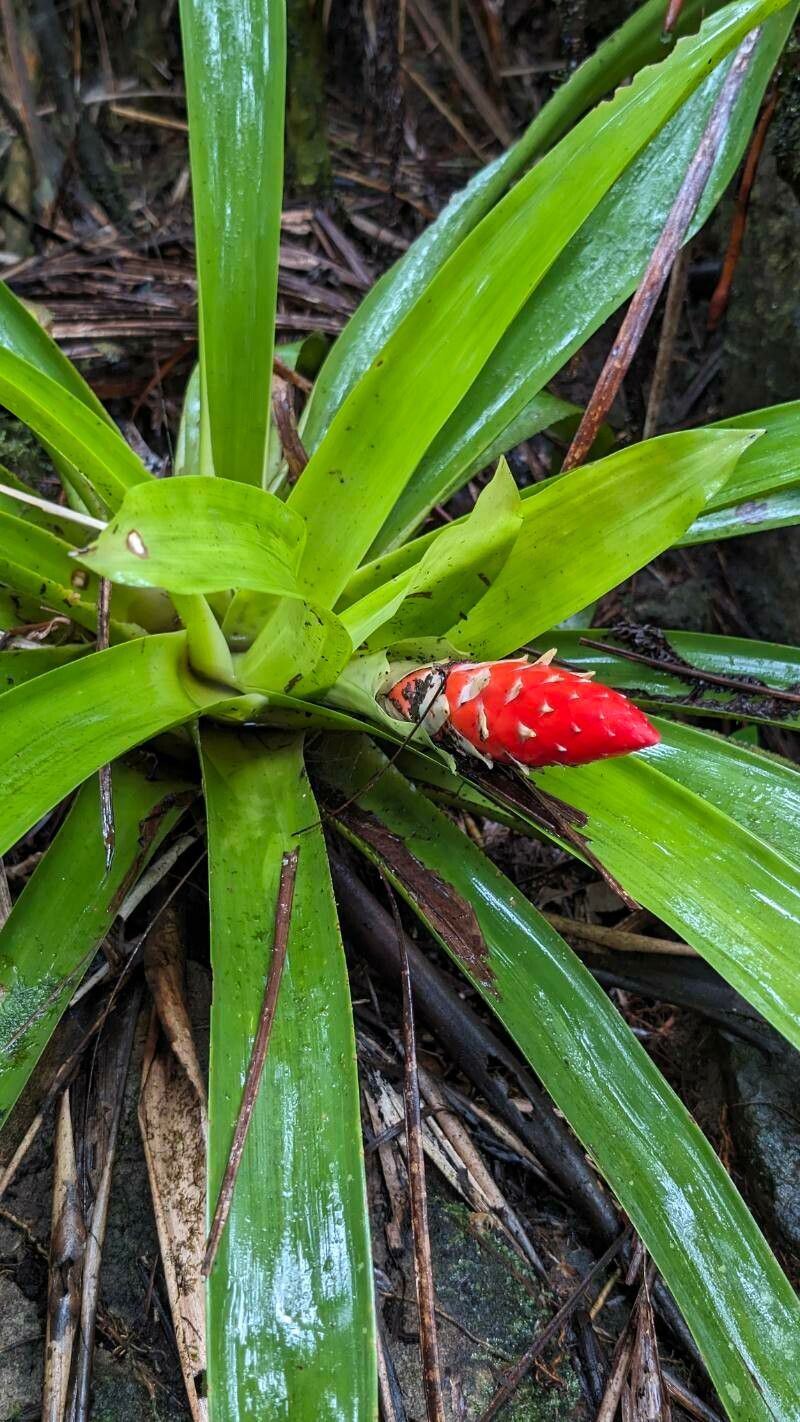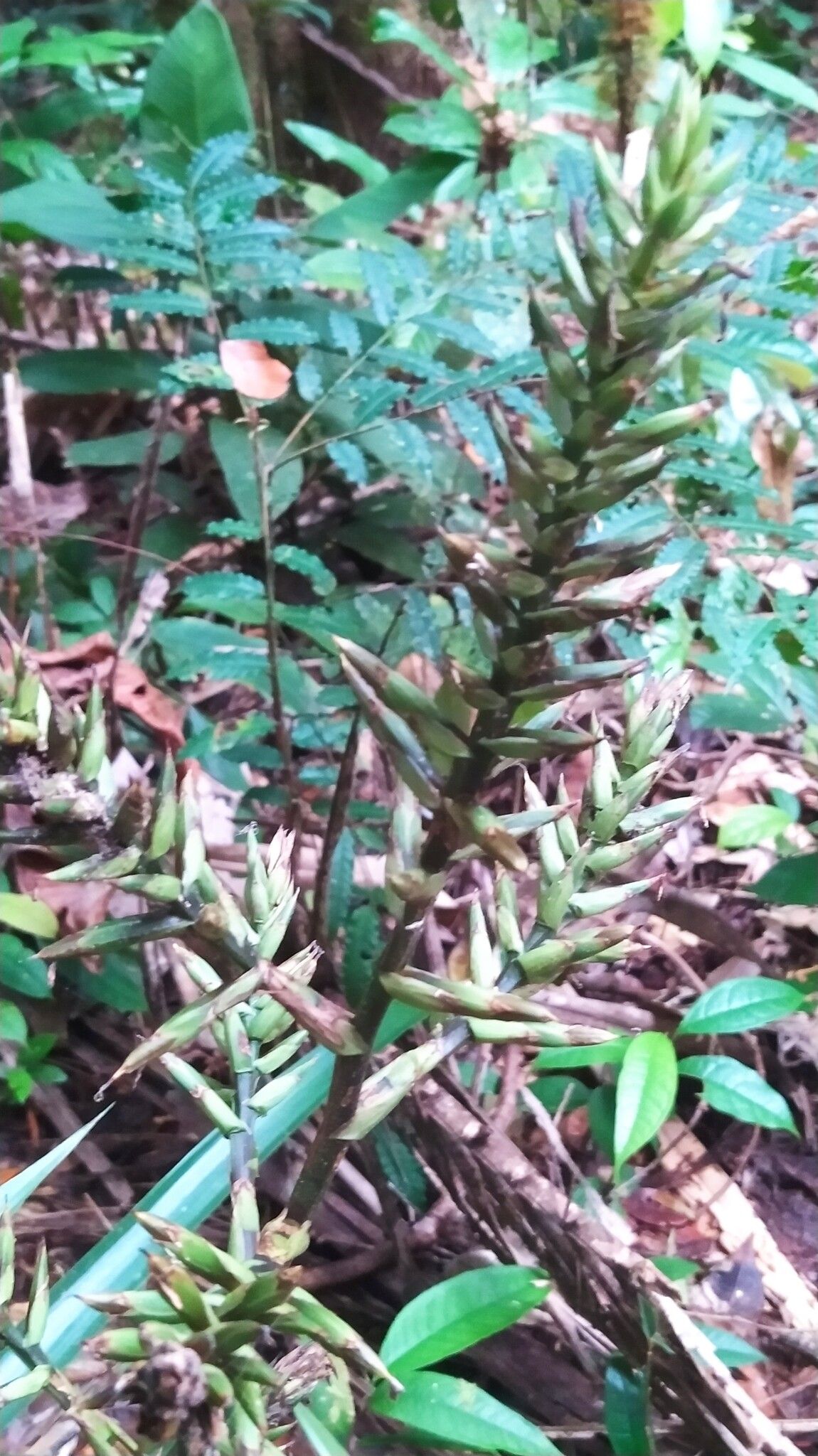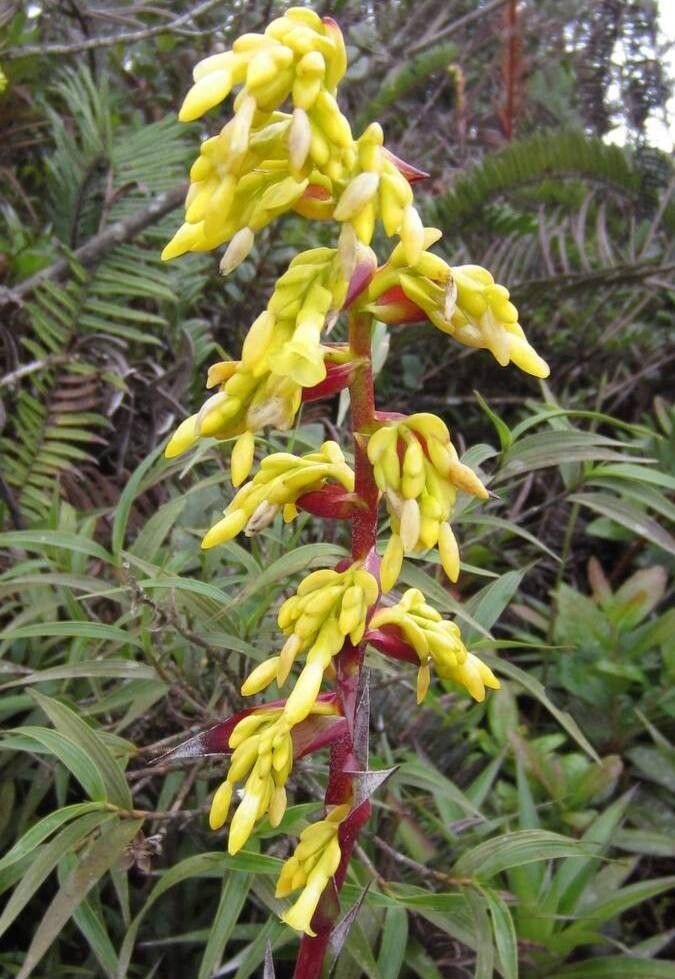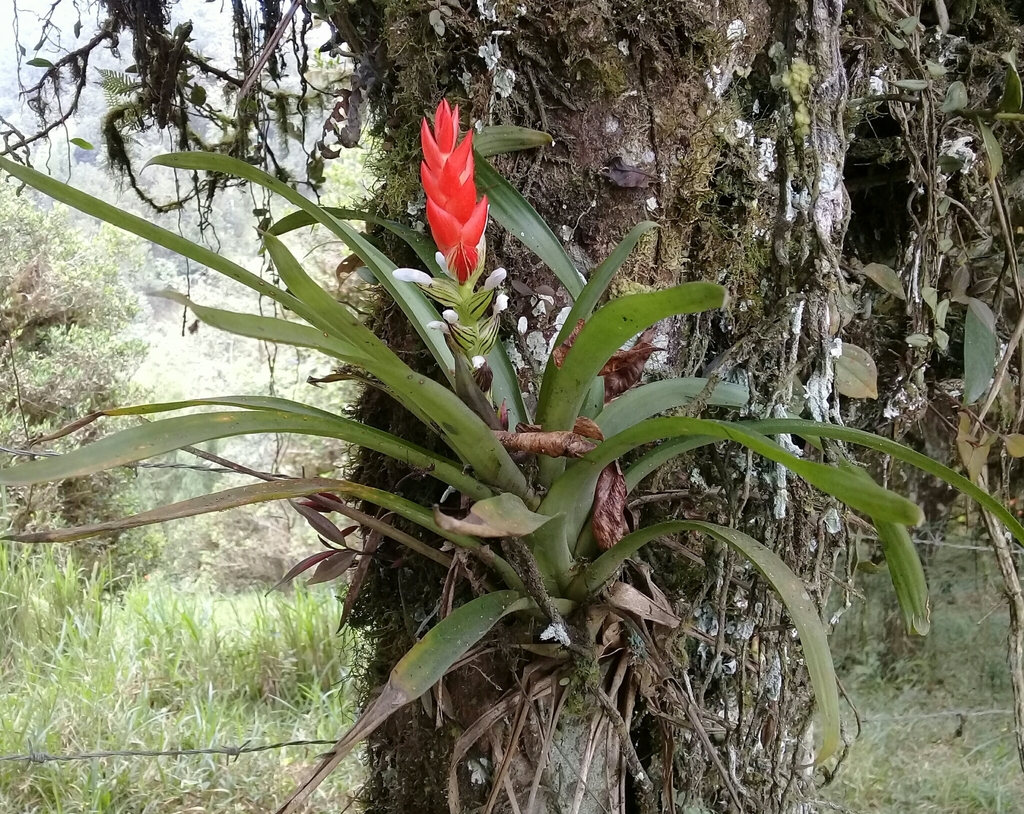
Guzmania monostachia is a tropical plant species belonging to the Bromeliaceae family. Native to Central and South America, it thrives in rainforests and other humid environments. The plant features a rosette of long, narrow, green leaves with serrated edges, which can grow up to 30 cm in length and 5 cm in width.
The most distinctive feature of Guzmania monostachia is its inflorescence—a single, spike-like stem that emerges from the center of the rosette. This stem can reach up to 30 cm in height and holds numerous small flowers arranged in dense clusters along its length. The flowers are usually red or orange, although they can also be yellow or green.
Guzmania monostachia is commonly cultivated as an ornamental plant due to its attractive foliage and striking inflorescence. It thrives in bright, indirect light and requires high humidity levels, well-draining soil, and regular watering during the growing season.
In addition to its ornamental use, Guzmania monostachia has been utilized for medicinal purposes by indigenous peoples in South America. They have used it to treat various ailments such as fever, inflammation, and wounds, though there is limited scientific evidence to support these claims.
Overall, Guzmania monostachia is an excellent addition to any indoor plant collection due to its low maintenance requirements and vibrant colors.
West indian tufted airplant is fairly disease-resistant and generally not prone to illnesses. However, it can be vulnerable to rot if it is not given good ventilation. Its care level is considered medium because it needs frequent misting to raise humidity and a small amount of fertilizer added to its water. West indian tufted airplant is best suited to growers with some experience, since improper care over time can be fatal to the plant even when problems are not immediately obvious.
How to keep Guzmania Monostachia.
Light
The West Indian tufted airplant is native to habitats like forest understories that provide natural shade. It prefers partial sun but can tolerate full sun if needed.
Humidity
This plant needs special care because it loves high humidity levels of 60-80% or more. The best way to achieve this is by placing a humidifier near the plant. Daily misting is also essential! Make sure the room has good ventilation.
Temperature
The West Indian tufted airplant does well in warm conditions. If the surrounding temperature falls too low, the plant may stop growing or incur frost damage. It is highly tolerant of heat and humidity and needs a consistent level of moisture in its environment. However, excessively high temperatures and humidity can increase its vulnerability to fungal infections. In dry surroundings, regular watering and misting are necessary to keep the air sufficiently humid. The plant is sensitive to sudden temperature shifts, so maintaining a relatively stable temperature is important.
Botanical profile.
- Plant Type
- Herb
- Life Cycle
- Perennial
- Genus
- Guzmania
- Family
- Bromeliaceae
- Hardiness Zone
- 10-12
- Mature Height
- 0 cm to 91 cm
- Mature Spread
- 40 cm to 61 cm
- Leaf Color
- Light Green, Yellow
- Leaf Type
- Evergreen
- Flower Size
- 2.03 cm to 3.05 cm
- Bloom Time
- All year round
- Planting Time
- Spring, Summer, Autumn
- Harvest Time
- All year round
- Native Area
- Colombia, Bahamas, Cuba, Bolivia, Venezuela, Brazil, Nicaragua, Ecuador, Costa Rica, Panama, Jamaica