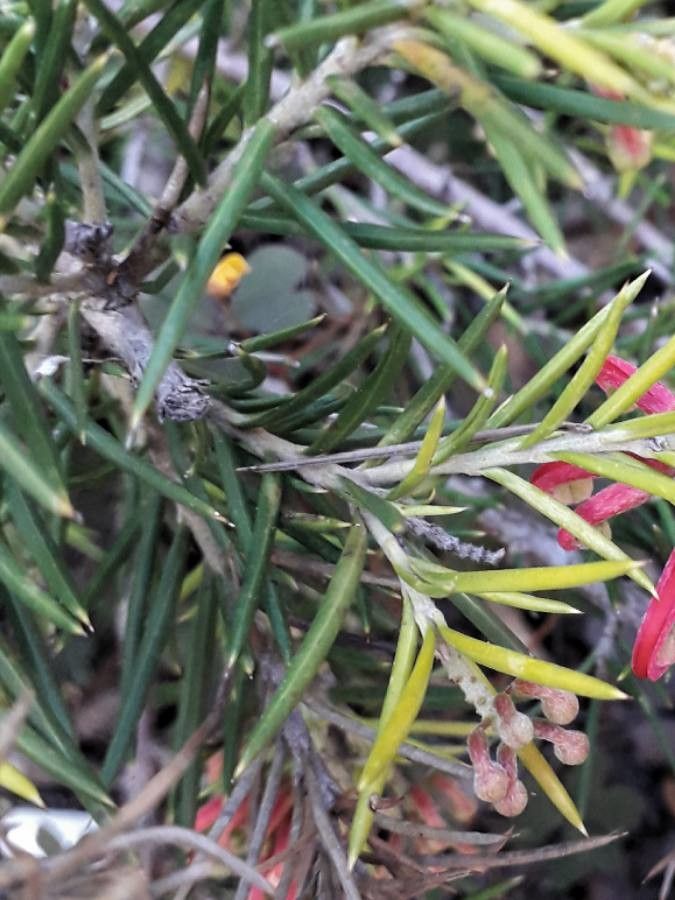
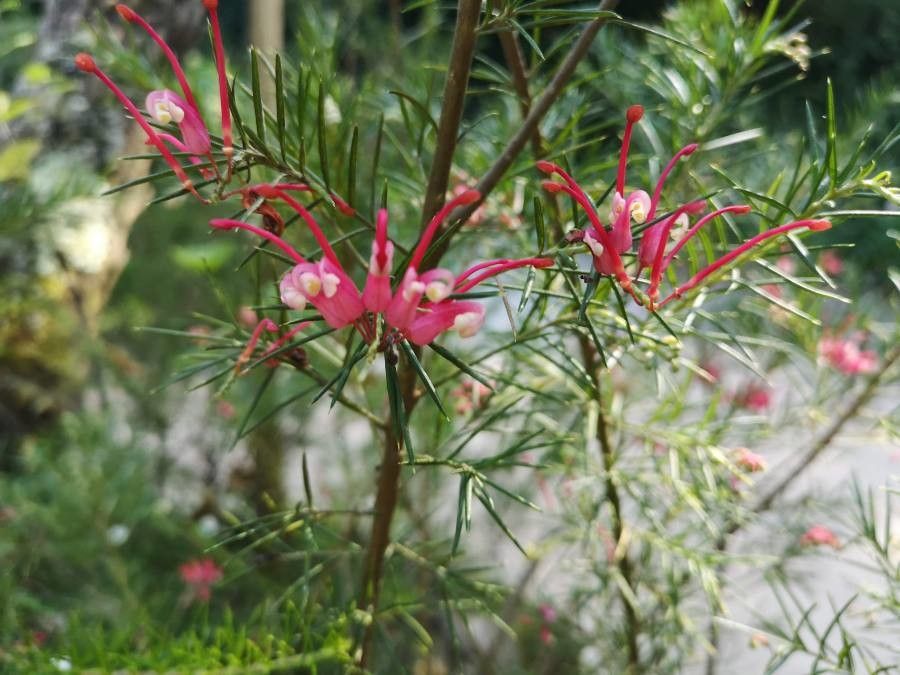
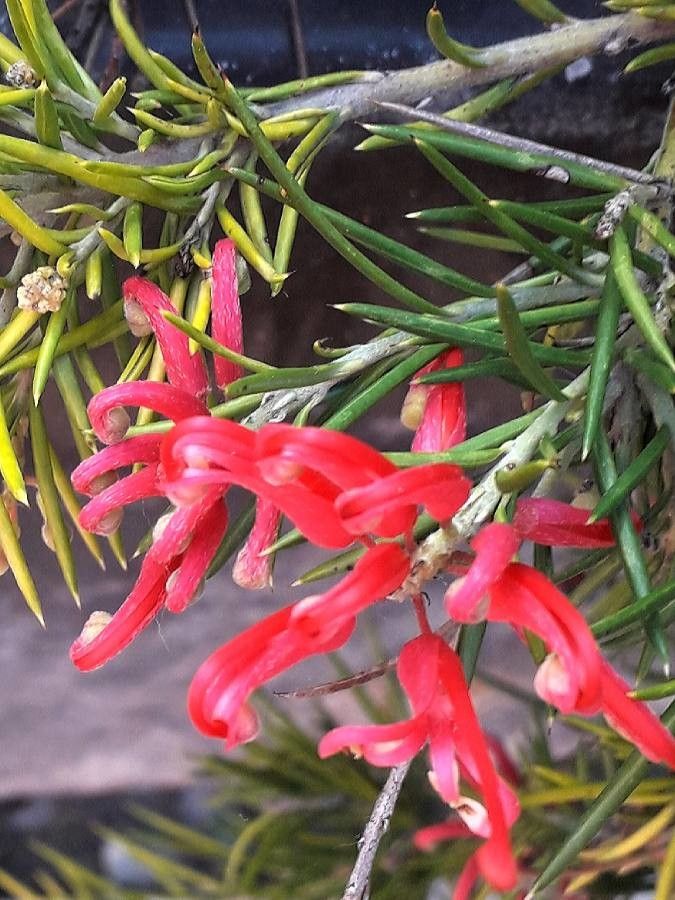
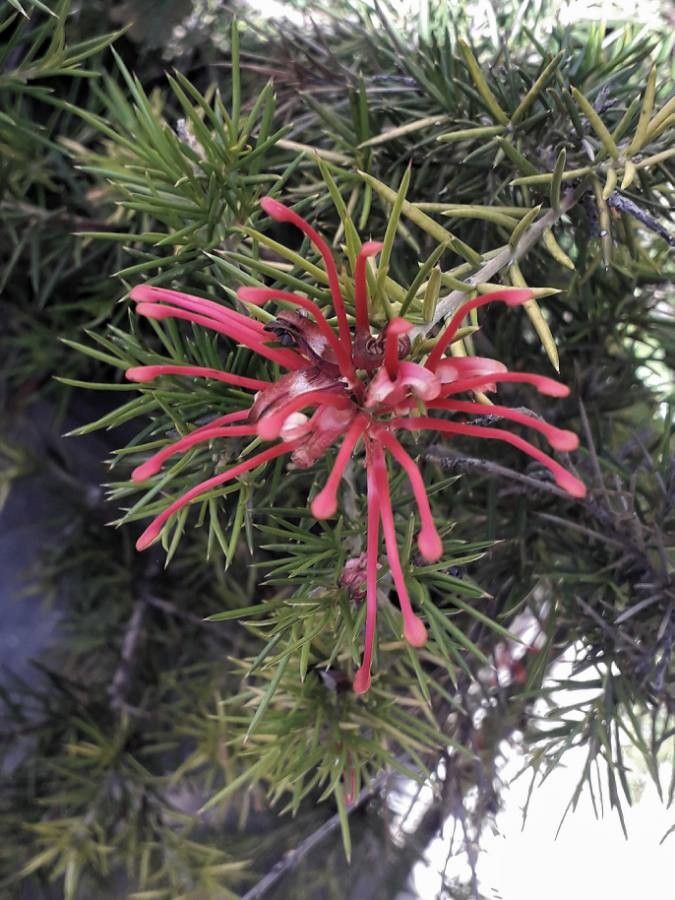
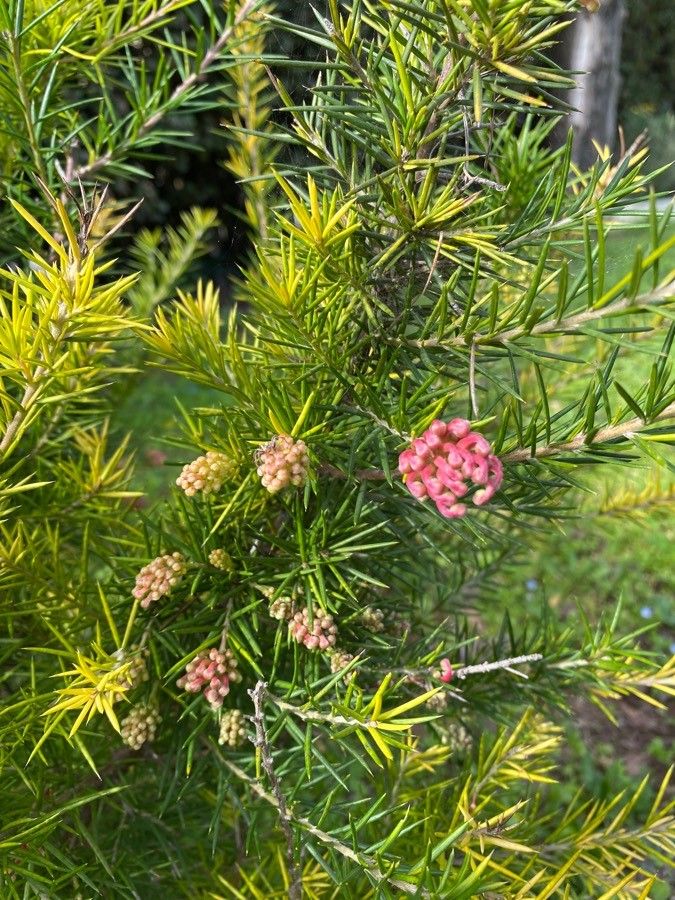
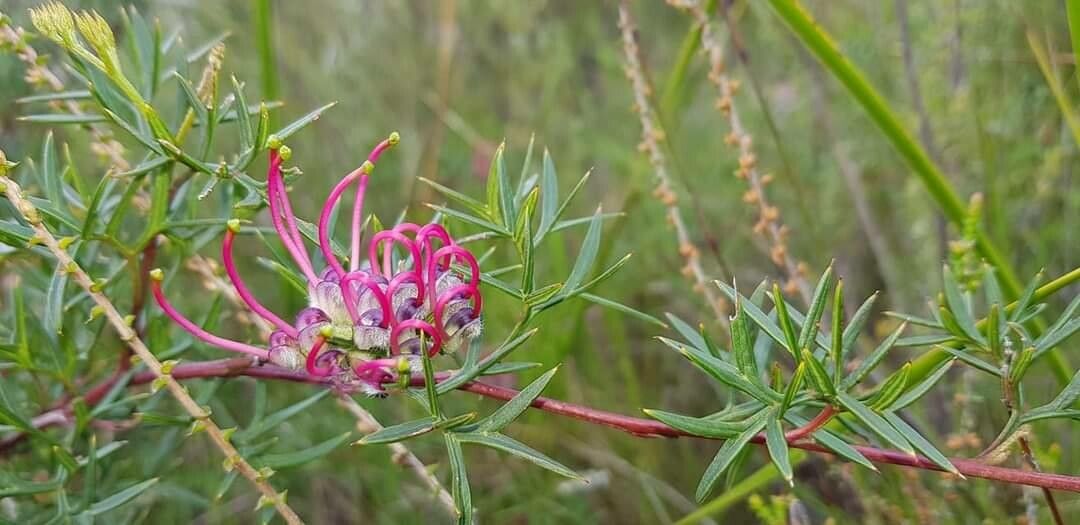
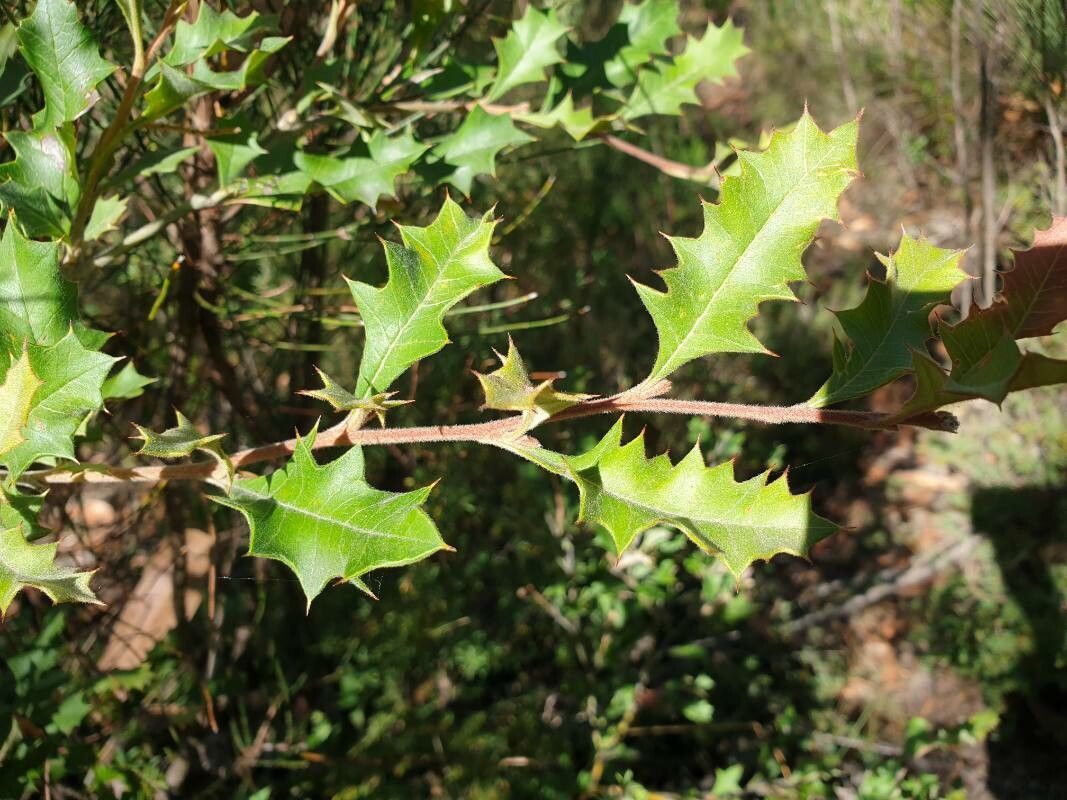
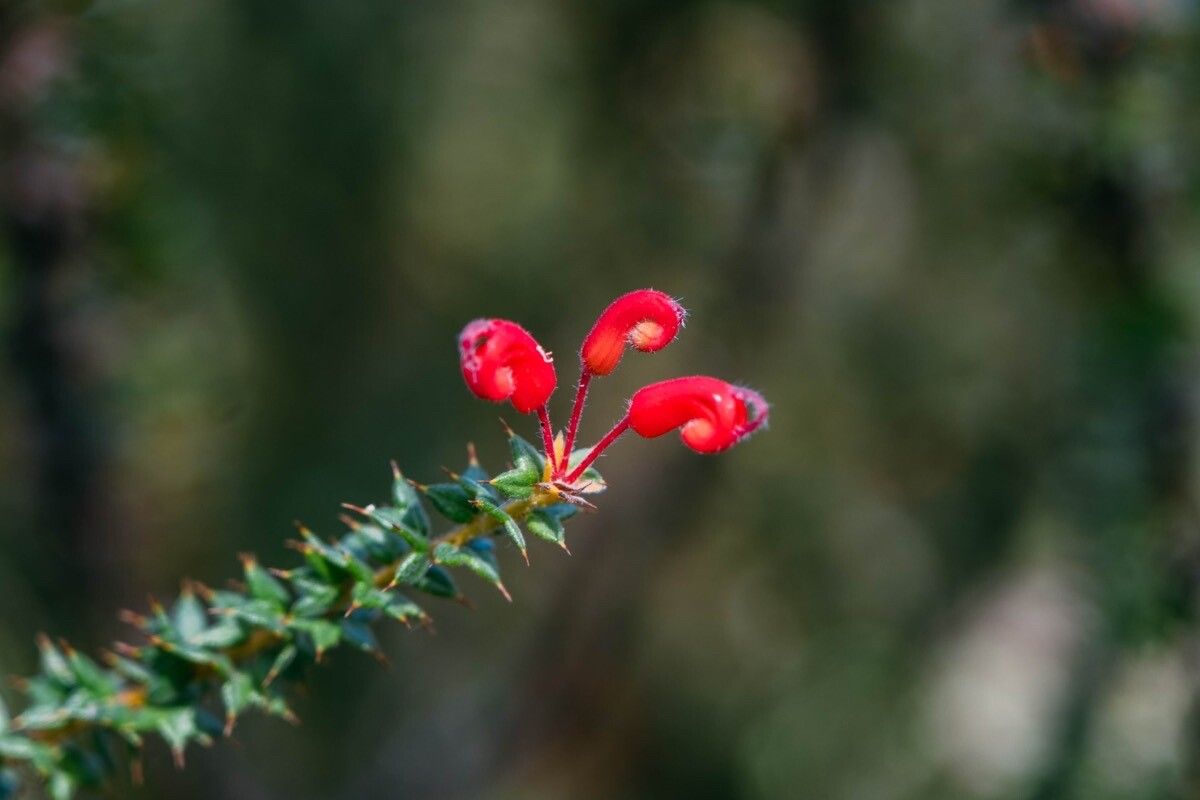
Grevillea rosmarinifolia, commonly known as Rosemary Grevillea, is a species of flowering plant native to Australia. It is a small to medium-sized shrub that can grow up to 2 meters tall and 1.5 meters wide. The plant features narrow, needle-like leaves that resemble those of rosemary and measure approximately 2-3 cm long.
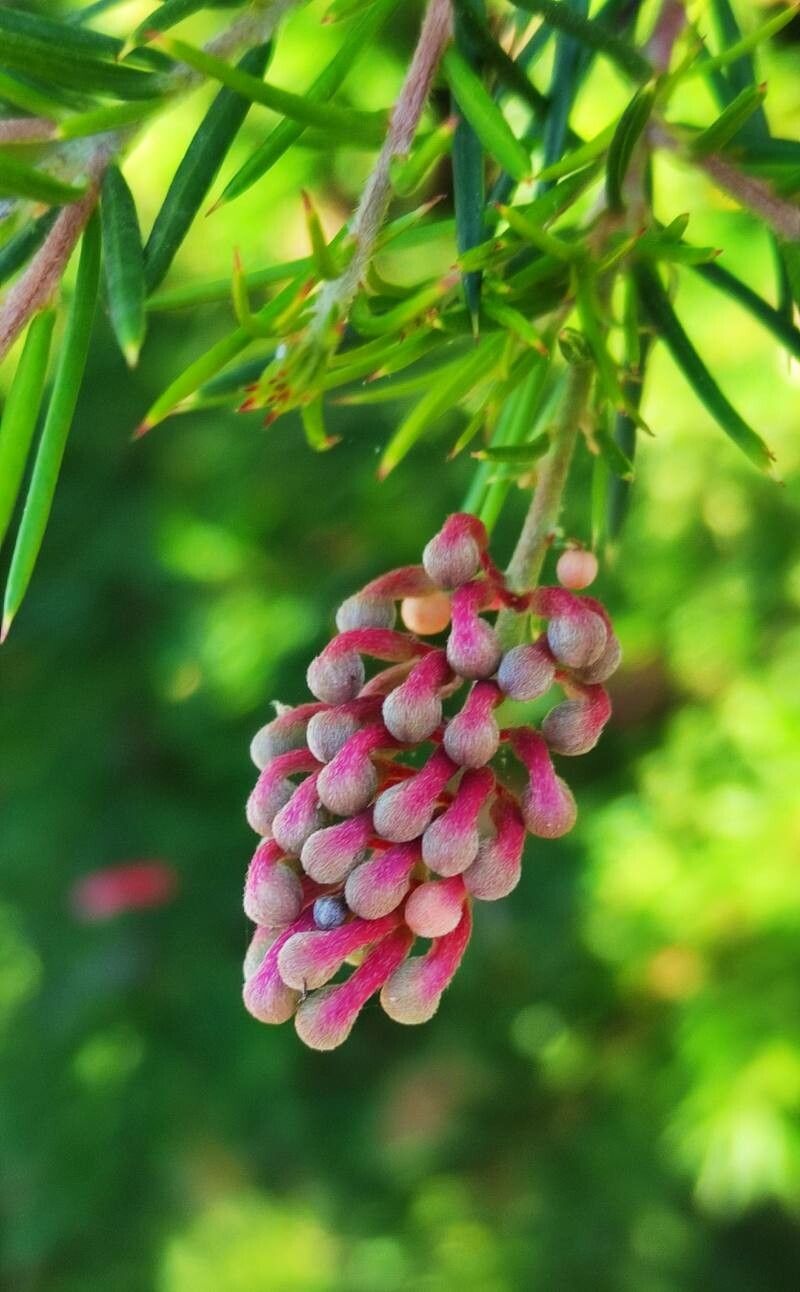
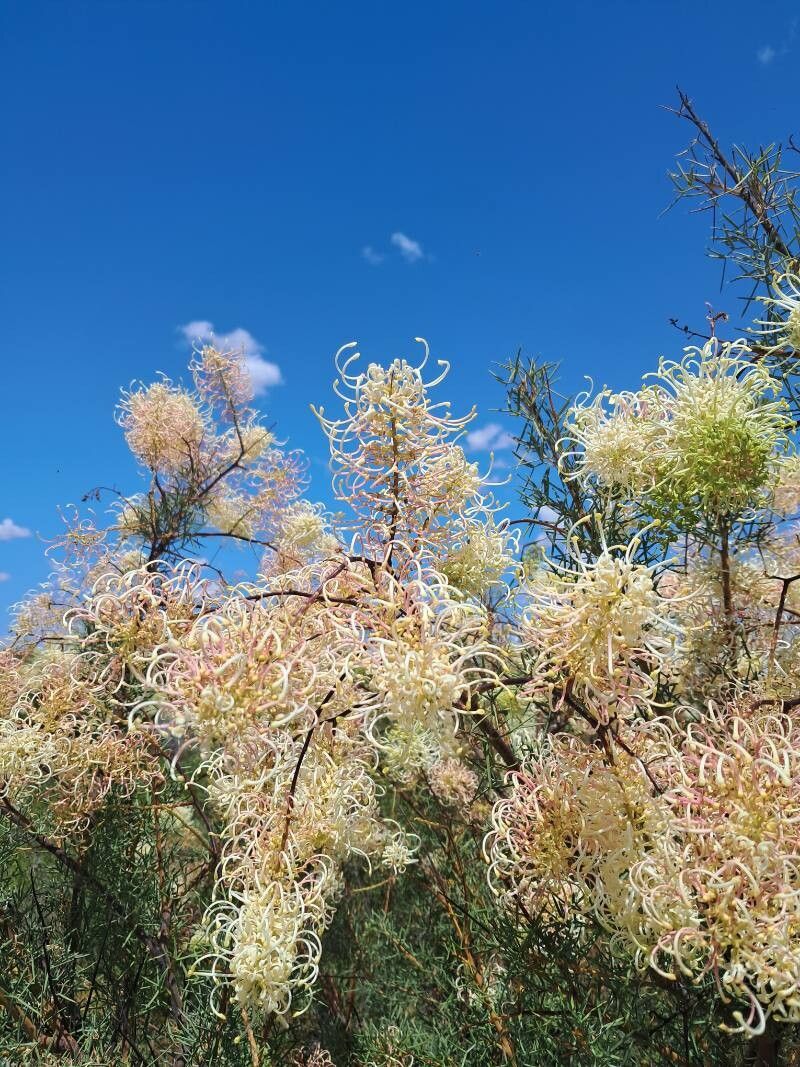
The flowers of Grevillea rosmarinifolia are small and come in shades of red or pink, with long, protruding styles that give them a distinctive appearance. They bloom in clusters from late winter through spring and attract birds such as honeyeaters.
This plant prefers well-drained soils in full sun or partial shade and can tolerate drought once established. It is commonly used in landscaping for its attractive foliage and flowers, as well as its ability to attract wildlife.
Indigenous Australians have used Grevillea rosmarinifolia for medicinal purposes, such as treating colds, coughs, sore throats, headaches, and skin irritations due to its antibacterial properties.
Overall, this species is an attractive addition to any garden with its unique foliage that provides year-round interest and the added benefit of attracting wildlife to your garden space.
Rosemary grevillea is resistant to disease and typically doesn't tend to suffer from illnesses. As for care, the plant is fairly low-maintenance. When grown outdoors it needs only minimal watering, and larger specimens usually do not require pruning. Smaller plants, however, should be pruned after they finish blooming. Rosemary grevillea is appropriate for anyone with an outdoor area, such as a garden or a deck, and does not need extensive care experience.
How to keep Grevillea Rosmarinifolia.
Light
Rosemary grevillea prefers abundant bright light, doing best in full sun but able to adjust to somewhat shaded spots. Native to areas with plentiful sunlight, it prospers in similar conditions. Too much shade can harm its growth and overall health, while excessive sun exposure is generally not harmful.
Water
The rosemary grevillea, a plant native to arid regions, is highly tolerant of drought and thrives in dry conditions. It should be watered every 2 to 3 weeks, ensuring the soil is allowed to dry out completely between waterings. This plant thrives outdoors and requires well-draining soil. During its dormancy period, it needs even less frequent watering.
Temperature
Rosemary grevillea originates from regions with temperate climates and does best in temperatures between 59 and 89.6 °F (15 to 32 ℃). Seasonal adjustments may be necessary to reproduce the temperatures of its native growing environment.
Fertilizer
The timing of fertilizing Rosemary grevillea is important. Apply fertilizer in early spring and then once a month through early summer. Fertilizer promotes attractive blooms and supplies energy during both dormant and active growth periods.
Pruning
For optimal growth, rosemary grevillea should be pruned annually in early spring. This helps remove dead wood, shape the plant, and encourage denser foliage and more flowers. Be cautious not to prune too heavily, as this can hinder growth. Regular light trimming, on the other hand, improves airflow and minimizes the risk of disease. It's also wise to consult reputable horticultural resources for specific techniques suited to your plant.
Botanical profile.
- Plant Type
- Shrub
- Life Cycle
- Perennial
- Genus
- Grevillea
- Family
- Proteaceae
- Hardiness Zone
- 8
- Mature Height
- 0.3 m to 2.13 m
- Mature Spread
- 1.52 m to 2.44 m
- Leaf Color
- Green
- Leaf Type
- Evergreen
- Flower Color
- Red, Pink
- Flower Size
- 2.54 cm to 3.05 cm
- Bloom Time
- All year round
- Planting Time
- Spring
- Harvest Time
- All year round
Other names.
Reader questions.
How should I water my Rosemary grevillea to keep it healthy?
Your Rosemary grevillea is not too particular about how you water it. You can use any common watering tool, such as a watering can, hose, or even a cup. Just make sure to water the soil directly. It's important to moisten all areas of the soil equally to ensure the entire root system gets enough water. Using filtered water is recommended, as tap water may contain harmful particles. Also, it's best to use water that is at or slightly above room temperature, as extremely cold or hot water can shock the plant. However, the Rosemary grevillea generally responds well to any type of water you give it.
Why should I add fertilizer to my Rosemary grevillea?
To help your Rosemary grevillea bloom beautifully, it's important to fertilize it for a few key reasons. One obvious reason is that fertilizing will enhance the production of lovely blooms. To ensure excellent flowers during early spring, it's recommended to fertilize. Additionally, fertilizer provides ample energy for the Rosemary grevillea to store in the ground during dormant growth phases. By giving it extra nutrients during fall planting or late spring, you can help the plant store more energy to use once active growth starts again.
What are the sunlight requirements for Rosemary grevillea?
Rosemary grevillea thrives best under strong light exposure, requiring more than 6 hours of direct sunlight, which classifies it as a full sun plant. However, it can also acclimate to conditions with about 3-6 hours of sunlight, known as partial sun. Watch the movement of sunlight through your garden to find spots that offer the ideal mix of light and shade, ensuring your plant's well-being. This plant originates from environments with ample sunlight and performs best under similar conditions. Too much shade may hinder its growth and health, whereas overexposure to sunlight isn't typically harmful.
What is the optimal temperature range for Rosemary grevillea?
Rosemary grevillea thrives best in temperate climate conditions, with optimal temperatures ranging between 59 to 89.6 °F (15 to 32 °C). To ensure healthy growth, it might be necessary to make adjustments to the plant's environment to mimic these temperature conditions, especially through the changing seasons.
What should I do if I give my Rosemary grevillea too much water or too little water?
For outdoor plants, especially newly planted ones or seedlings, the lack of watering can be a problem. It's important to consistently water them for a few months while they are small or newly planted. Once the roots are established, Rosemary grevillea can rely on rain most of the time. Overwatering is more likely to happen when Rosemary grevillea is planted in pots. If you accidentally overwater your plant, you should take immediate action to fix the situation. First, stop watering the plant to minimize the impact of overwatering. Then, remove the plant from its pot to check the roots. If there is no sign of root rot, you can return the plant to its container. But if there is root rot, trim the affected roots and apply a fungicide to prevent further damage. Finally, repot the Rosemary grevillea in well-draining soil. On the other hand, underwatering is a simpler problem to fix. If you underwater, the leaves will droop, dry out, and fall off, but they will quickly regain their fullness after sufficient watering. Adjust your watering frequency as soon as you notice underwatering.
When should I fertilize my Rosemary grevillea for best results?
Fertilizing Rosemary grevillea requires careful timing. If fertilizer is applied too early while the plant is still dormant, it won't be effective and will be washed away by rainwater, resulting in waste and pollution. To start, apply the first dose of fertilizer in early spring, and then continue with monthly applications until early summer.
How can artificial lighting support Rosemary grevillea's growth indoors?
Indoor Rosemary grevillea plants require sufficient lighting to grow optimally. When natural sunlight is insufficient, especially in less sunny spaces or during winter, artificial lighting becomes crucial. For full sun plants like Rosemary grevillea, 30-50W/sq ft of artificial light is recommended. LED lights are often preferred because they can be tailored to provide specific light wavelengths needed by plants. The artificial light source should be placed 12-36 inches above the plant, mimicking natural sunlight's intensity and duration. Most plants benefit from 8-12 hours of light per day, depending on the species.
Is Rosemary grevillea resistant to cold?
Yes, Rosemary grevillea has strong resistance to cold and generally does not require special frost protection measures during winter. However, in areas where winter temperatures are expected to drop below -10°C, it's important to take precautions by wrapping the plant's trunk and branches with protective materials such as non-woven fabric or cloth. Additionally, watering the plant abundantly before the first freeze in autumn will help keep the soil moist and prevent drought and water scarcity during winter and early spring.
How frequently should I water my Rosemary grevillea plant?
Most outdoor plants can rely on rainfall for their water needs. However, if your area doesn't get much rain, you'll need to water your plants every 2 weeks in the spring and fall, and more frequently in the summer. In the winter, plants need less water, so you can water them less often or not at all. For young or newly planted Rosemary grevillea, it's important to water more frequently to help them establish and grow. When it comes to potted plants, there are two main approaches for determining watering frequency. The first option is to follow a set schedule, such as watering once a week or every other week. However, this may not suit the specific conditions of your Rosemary grevillea's growing environment. Another approach is to water based on soil moisture. It's usually best to wait until the top two to four inches of soil have dried out completely before giving more water. Keep in mind that during the summer, when the plant's water needs are highest, a predetermined schedule may not be enough.
When is it best to not add fertilizer to my Rosemary grevillea?
To ensure optimal growth and blooming of Rosemary grevillea, it is important to be mindful of fertilizer usage. Avoid fertilizers high in nitrogen, as they promote leaf development at the expense of blooms. Instead, choose fertilizers with lower nitrogen content compared to other nutrients. As autumn approaches, refrain from fertilizing the plant to prevent excessive growth before winter. Additionally, avoid fertilizing during hot and dry periods as dry soil hampers effective fertilizer absorption and can stimulate growth that requires more water. It is advisable to fertilize during cooler temperatures in earlier seasons. Lastly, be cautious of inadvertently providing the tree/shrub with excess fertilizer, as Rosemary grevillea can absorb fertilizers from neighboring plants or lawns.
What are common symptoms of inadequate sunlight in Rosemary grevillea?
When Rosemary grevillea receives insufficient sunlight, it may exhibit several symptoms indicating light deficiency. These include reduced growth; small, new leaves; leggy or sparse growth; premature leaf drop; paler new leaves; and halted growth as the plant enters survival mode. Extreme sunlight exposure can lead to chlorosis, sunscald, leaf curling, wilting, and leaf scorching, impacting the plant's ability to photosynthesize and overall health.
How does low temperature affect Rosemary grevillea, and what are the solutions?
Rosemary grevillea is cold-tolerant and survives best at temperatures above 15°C. If kept above -5°C during the winter, the plant should remain healthy. However, when temperatures fall below -10°C, you might not notice immediate changes, but in spring, the branches can become brittle and dry, failing to produce new shoots. To remedy this, prune away any dead branches that haven't produced new leaves in the spring.