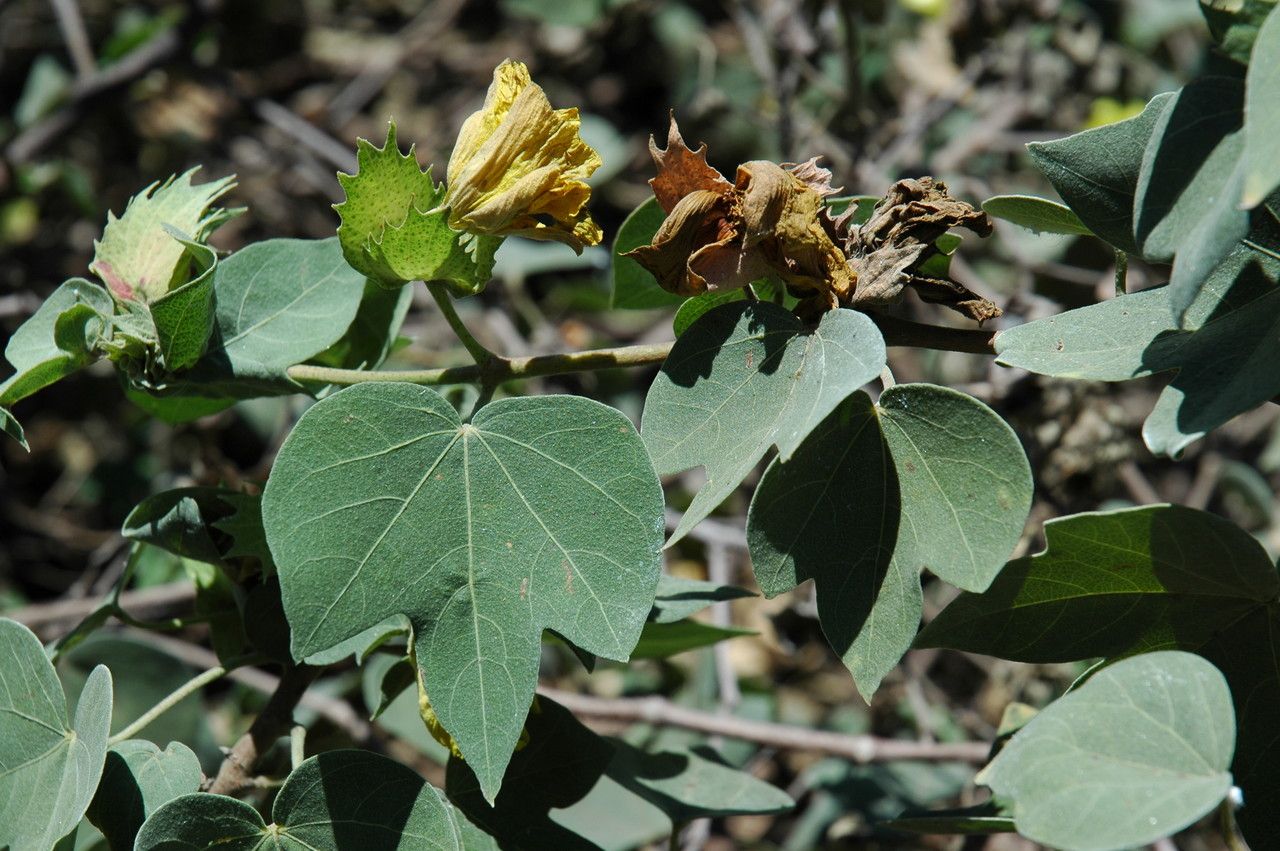
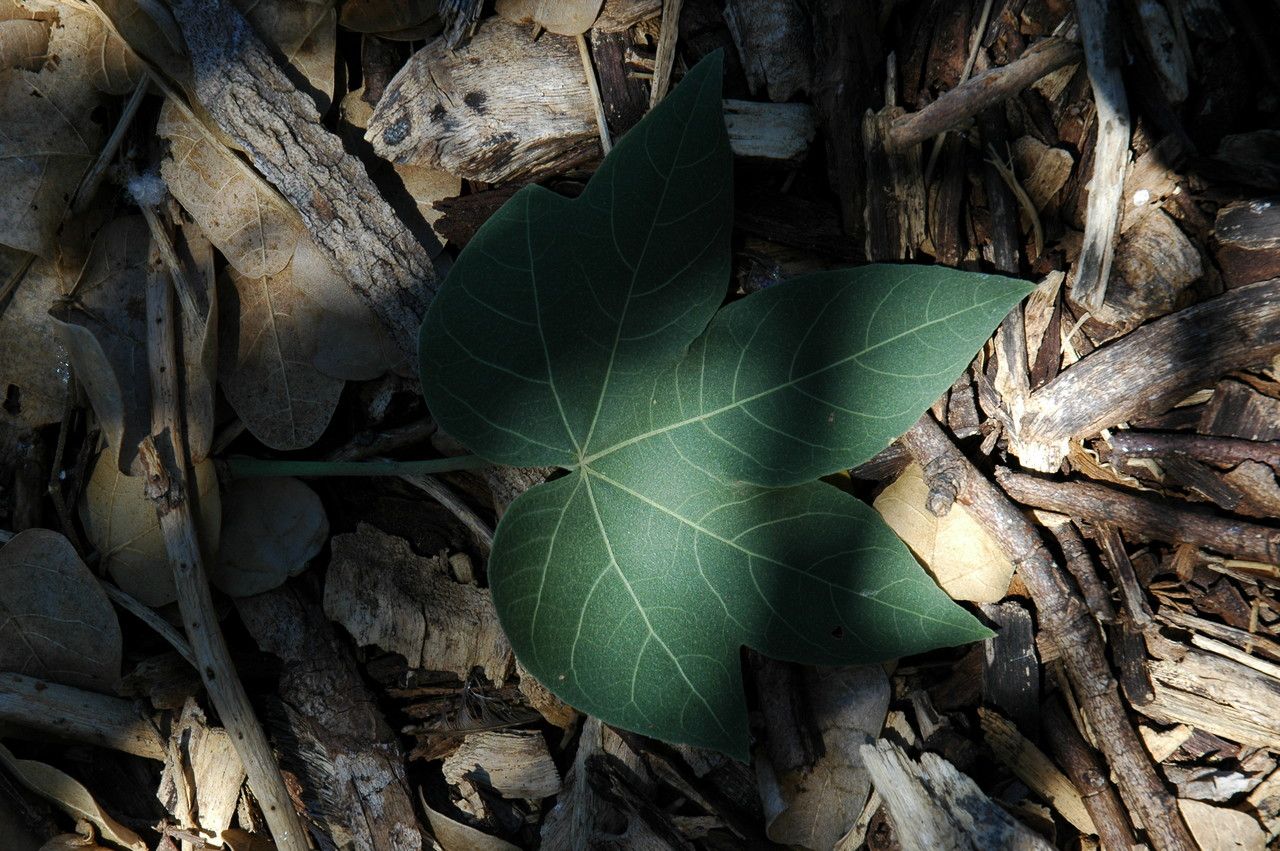
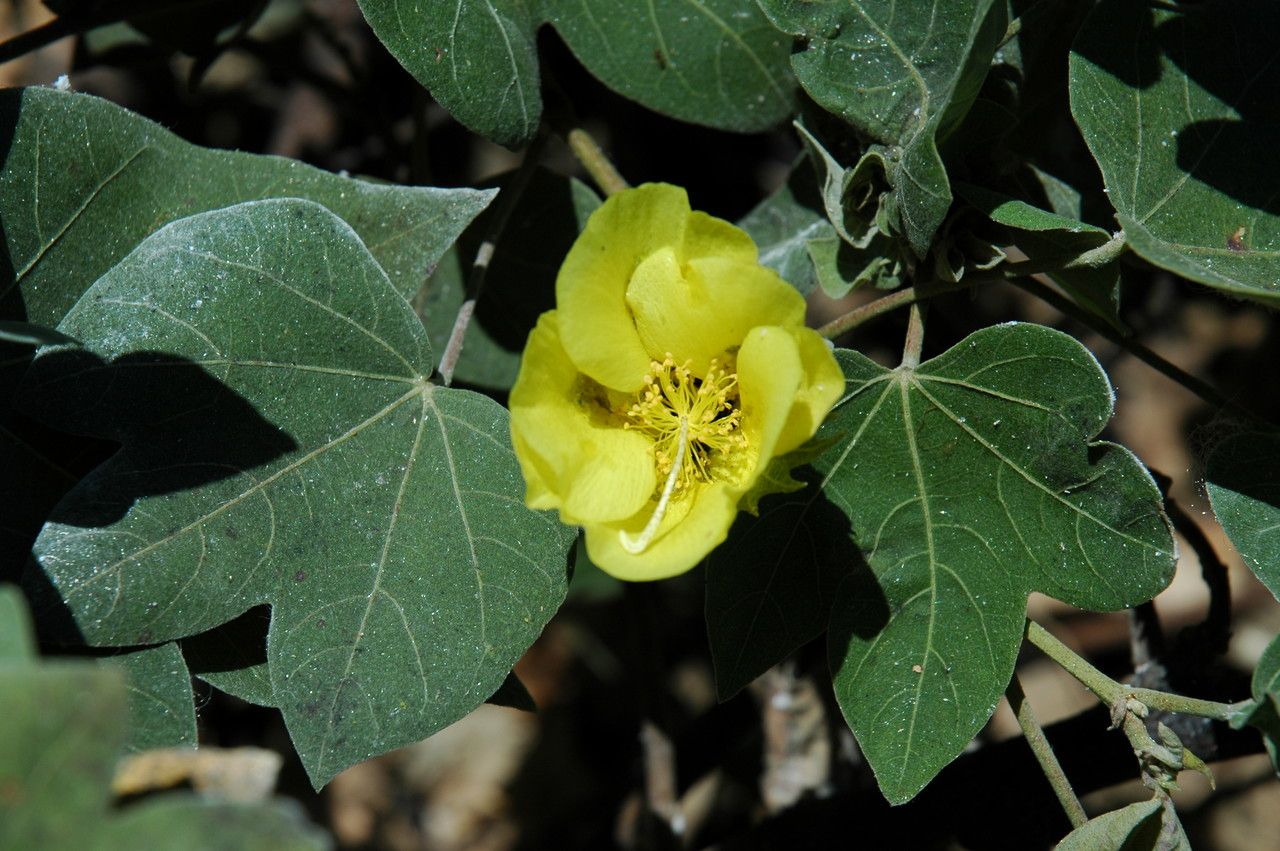
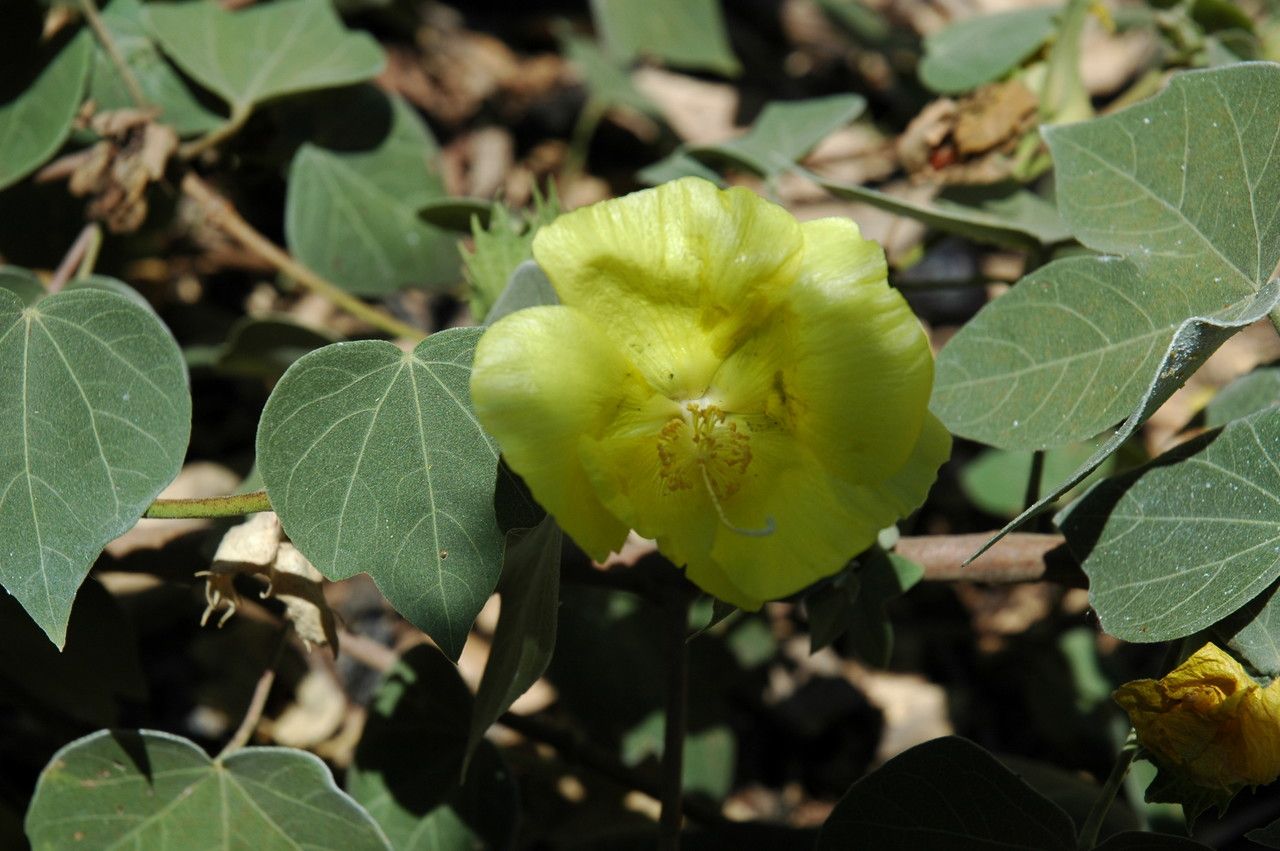
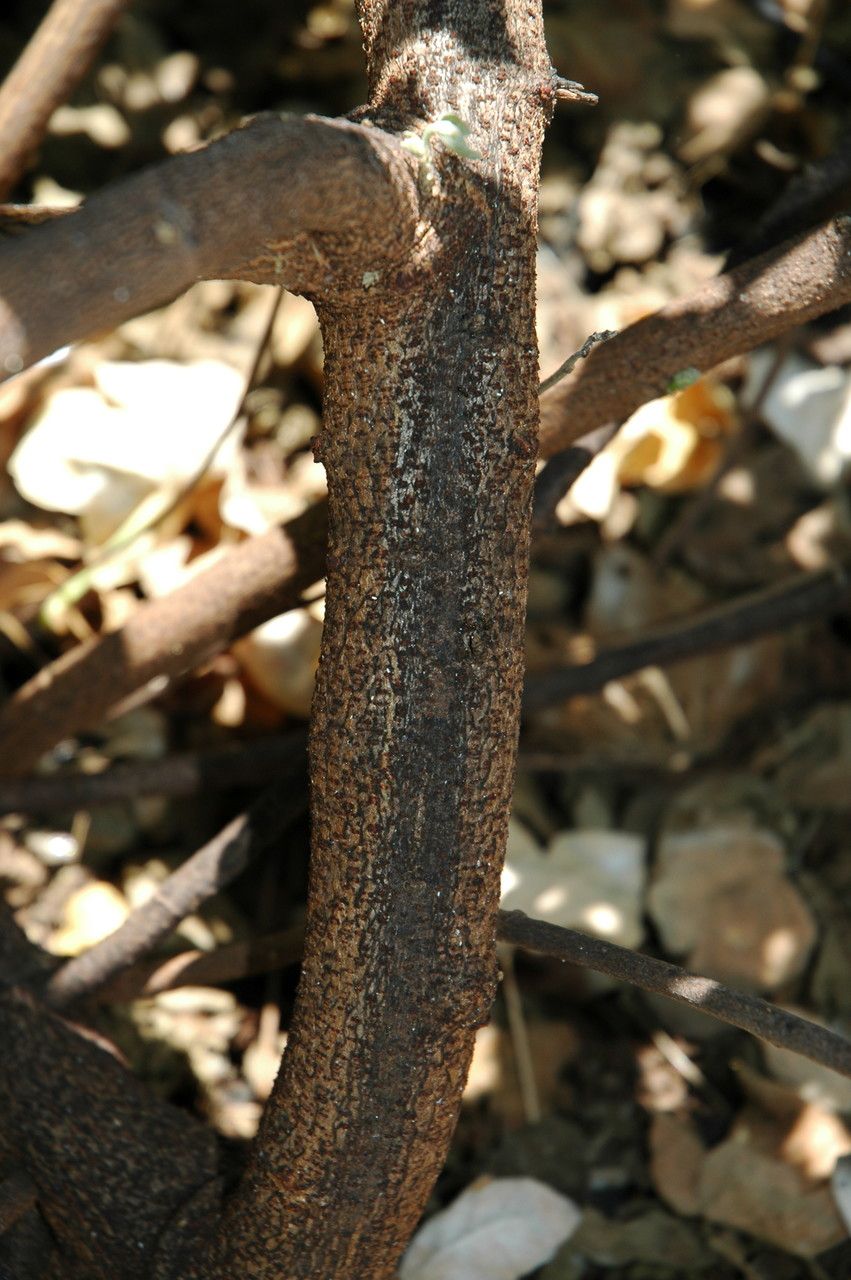
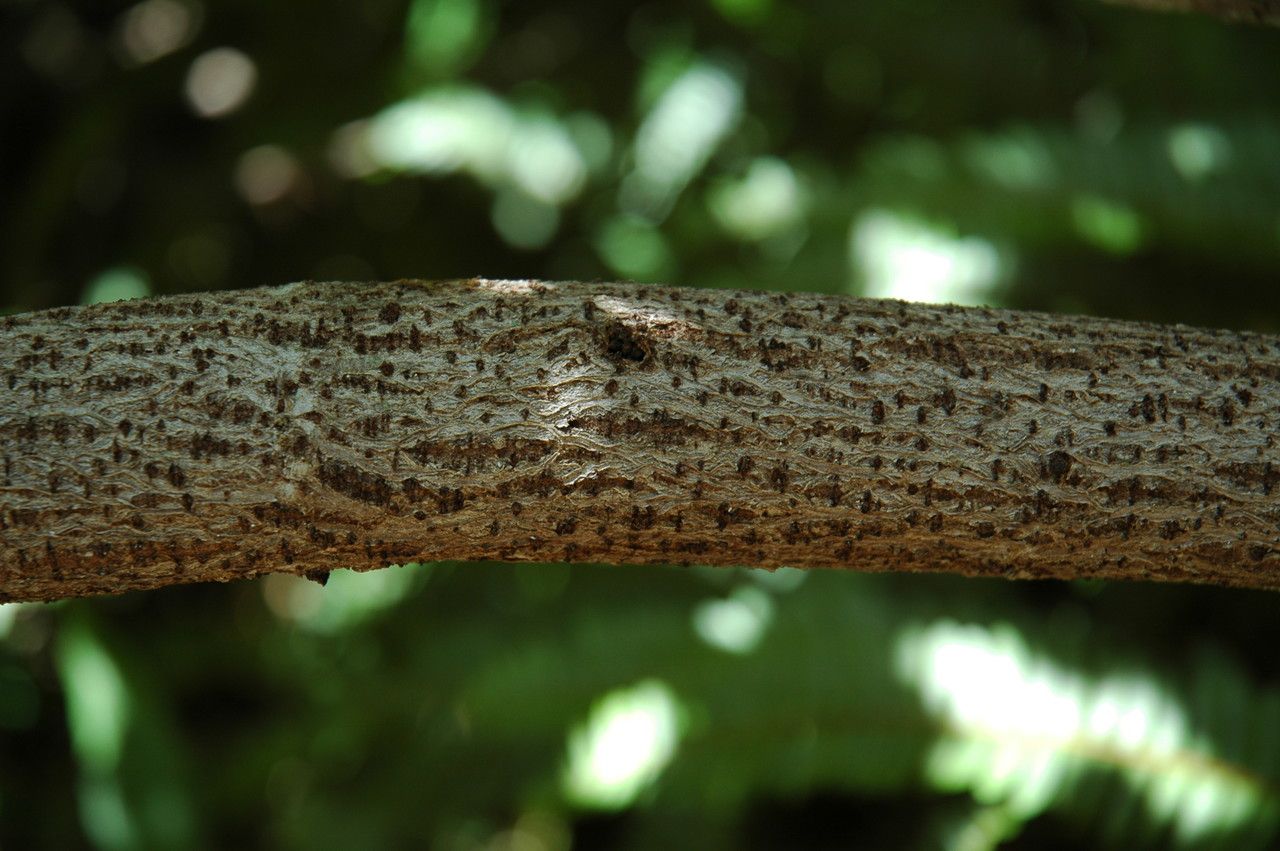
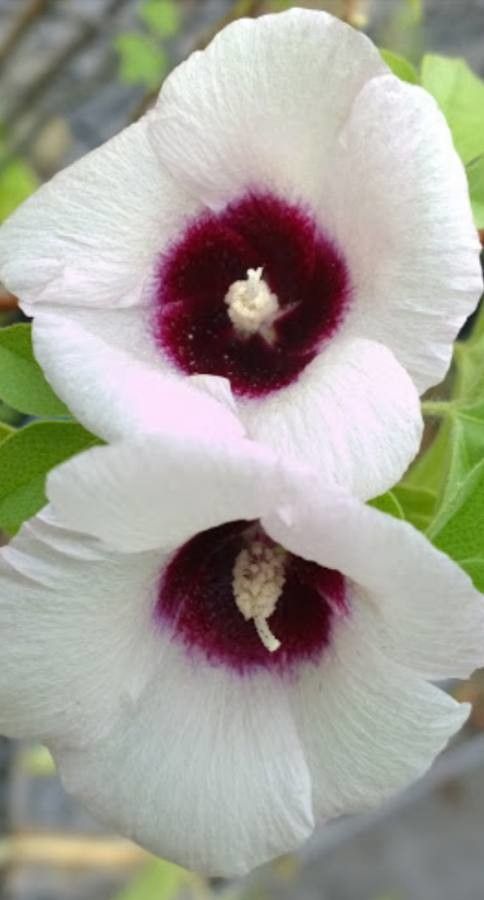
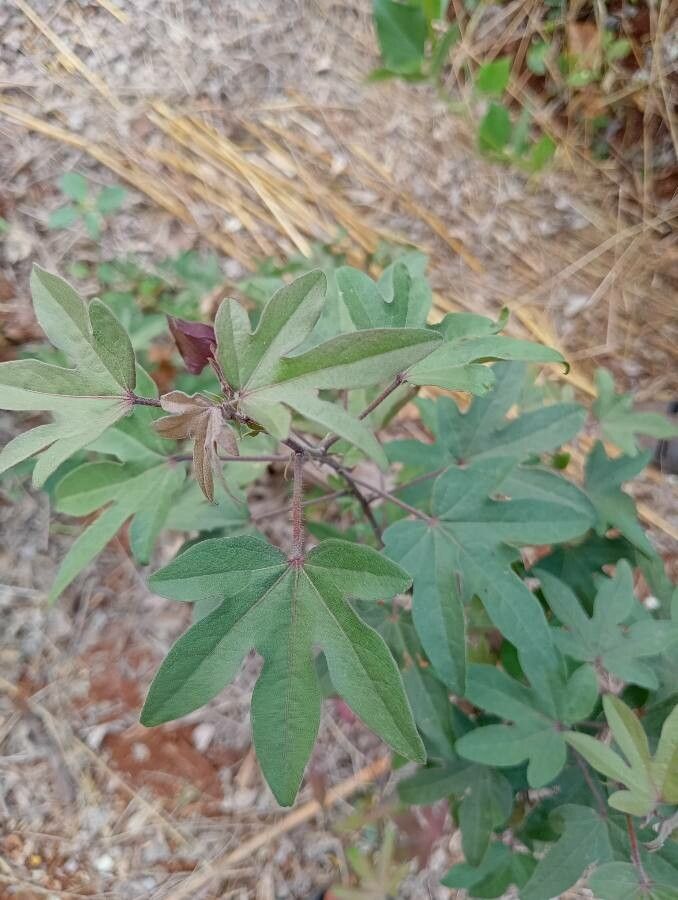
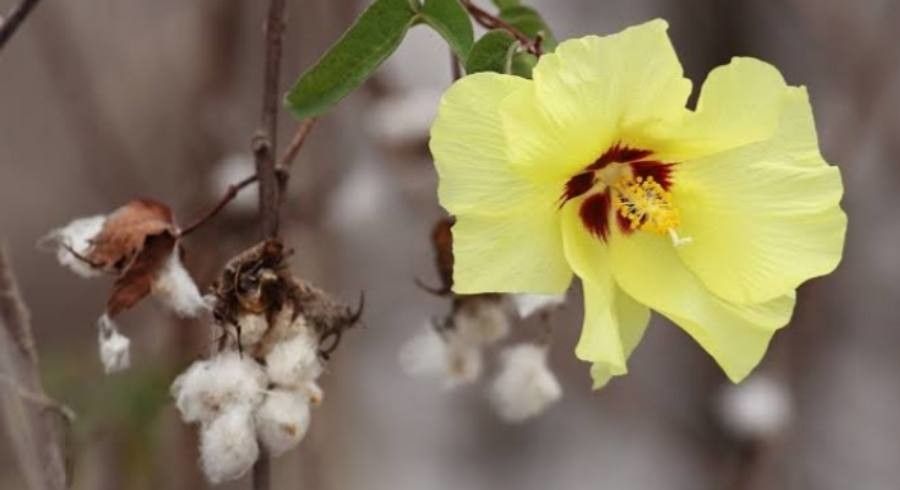
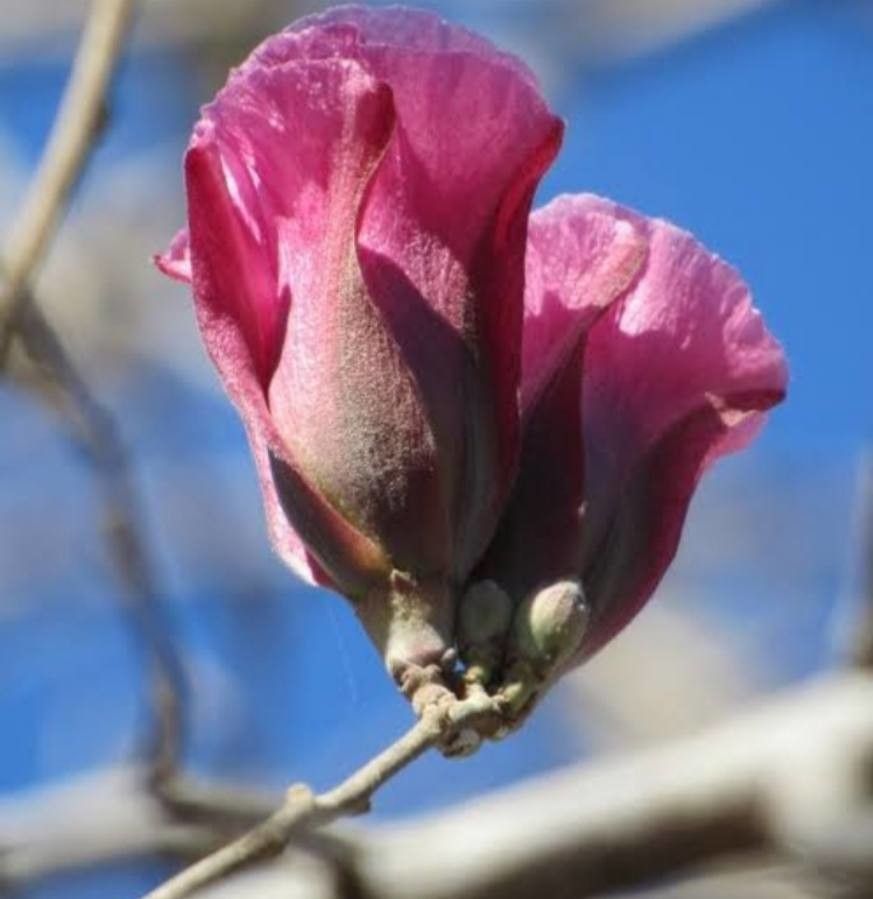
Gossypium tomentosum, commonly known as maʻo, huluhulu or Hawaiian cotton, is a species of cotton plant that is endemic to the Hawaiian Islands. It inhabits low shrublands at elevations from sea level to 120 m (390 ft). Maʻo is a shrub that reaches a height of 1.5–5 ft (0.46–1.52 m) and a diameter of 5–10 ft (1.5–3.0 m). The seed hairs (lint) are short and reddish brown, unsuitable for spinning or twisting into thread. Genetic studies indicate that Hawaiian cotton is related to American species of Gossypium, with its closest relative Gossypium hirsutum. Its ancestor may have come to the islands from the Americas as a seed on the wind or in the droppings of a bird, or as part of floating debris.
Native Hawaiians use maʻo flowers to make a yellow dye.
Hawai'ian cotton displays strong resistance to disease and is generally not easily affected by illnesses. In terms of upkeep, this plant is fairly low-maintenance. When grown outdoors it needs only minimal watering, and larger plants usually do not require pruning. Smaller plants, however, should be pruned after they have finished blooming. Hawai'ian cottont is a suitable choice for anyone with an outdoor area, such as a garden or deck, and does not demand a lot of care experience.
How to keep Gossypium Tomentosum.
Light
Hawai'ian cotton comes from open habitats, like sunny meadows and forest edges, where light is abundant. It does best in Full Sun but can also tolerate Partial Sun, adapting well to different sunlight conditions.
Temperature
Hawai'ian cotton comes from tropical areas, where the weather is generally warm and humid. Consequently, it is adapted to high temperatures and moisture. It does not tolerate sudden temperature shifts and prefers a steady thermal environment, so indoor temperature fluctuations should be avoided. It normally cannot withstand cold and needs warmer conditions to grow. If the surrounding temperature falls too low, the plant may stop growing or even die.
Fertilizer
Fertilization is essential for the care of Hawai'ian cotton. Regular feeding during the growing season helps maintain energy for its showy leaves and supports general growth. Failing to fertilize can lead to unhealthy foliage, reduced ornamental appeal, and stunted or weak growth that is more likely to break.
Pruning
Hawaiian cotton is a bushy plant known for its drought tolerance, hairy leaves, and yellow flowers. To keep it healthy, prune the plant in early spring. This helps remove dead branches, improve airflow, and encourage robust growth. Light trimming throughout the season can maintain its shape and enhance flowering. Regular pruning is essential to boost the plant's vigor, making it more resilient against pests and diseases.
Botanical profile.
- Plant Type
- Shrub
- Life Cycle
- Perennial
- Genus
- Gossypium
- Family
- Malvaceae
- Hardiness Zone
- 10-12
- Mature Height
- 0.91 m to 1.83 m
- Mature Spread
- 61 cm to 91 cm
- Leaf Color
- Dark Green
- Leaf Type
- Deciduous
- Flower Color
- Yellow
- Flower Size
- 5.08 cm to 6.35 cm
- Bloom Time
- Summer, Early fall, Mid fall
- Planting Time
- Spring, Autumn
- Harvest Time
- Late summer, Fall, Early winter
Other names.