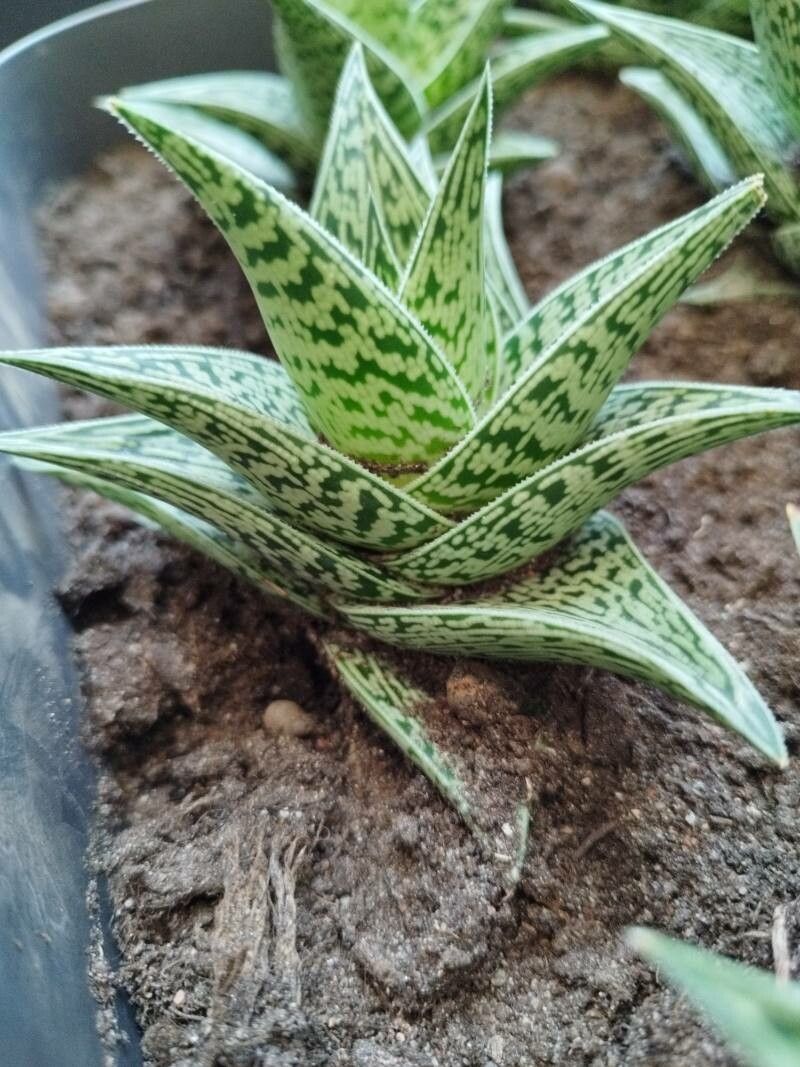
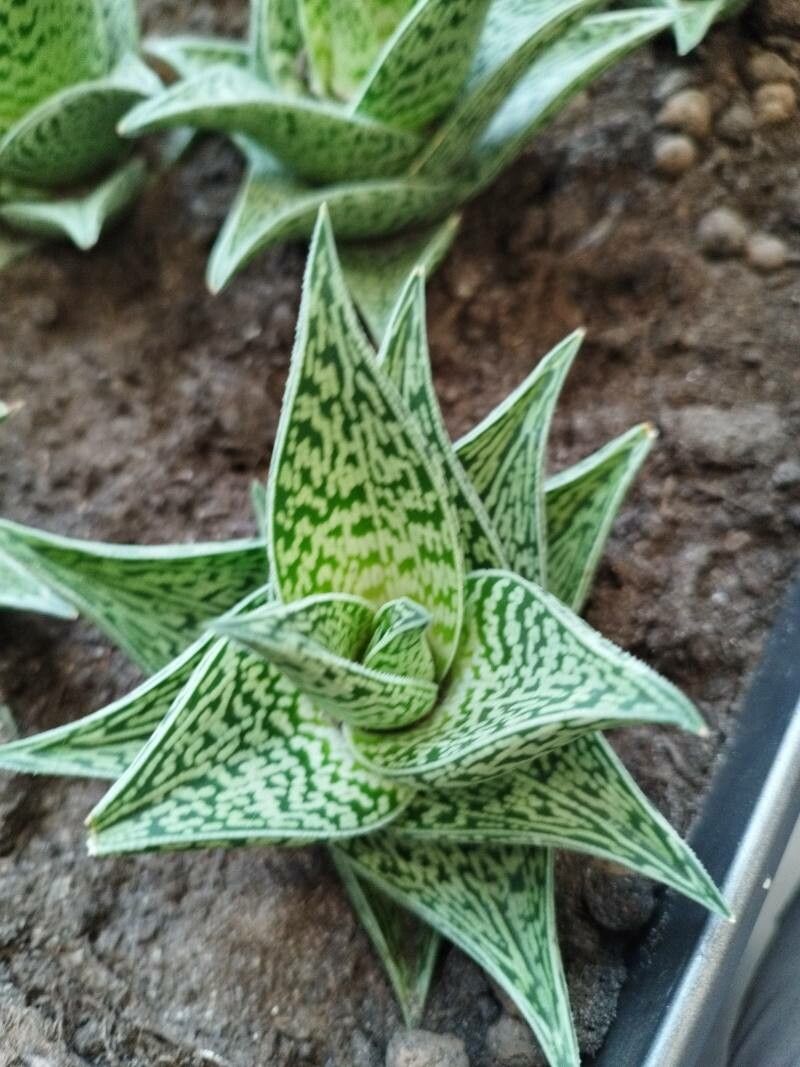
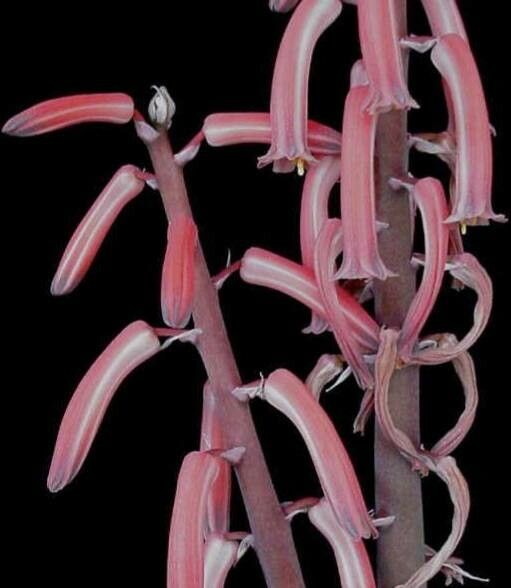
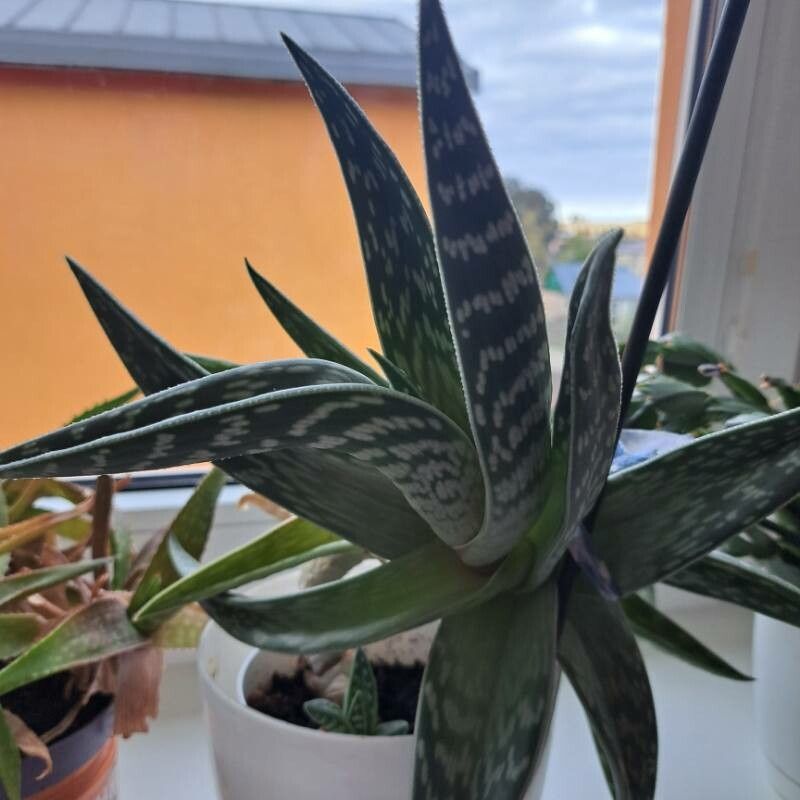
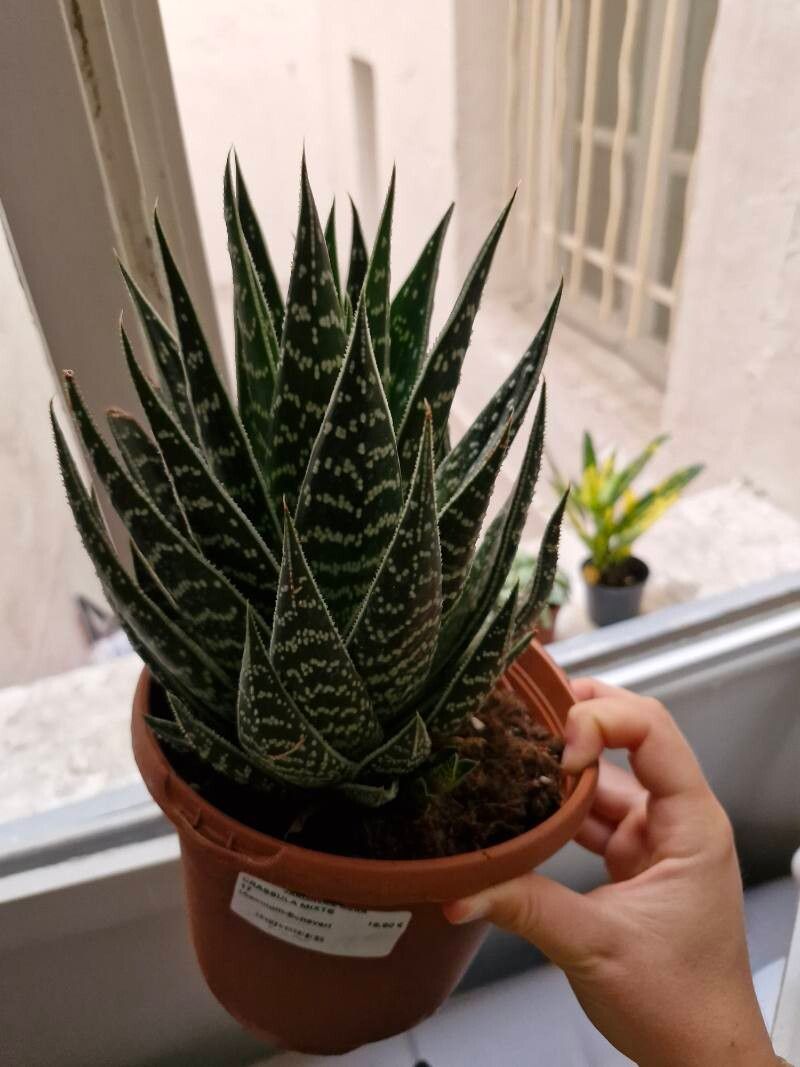
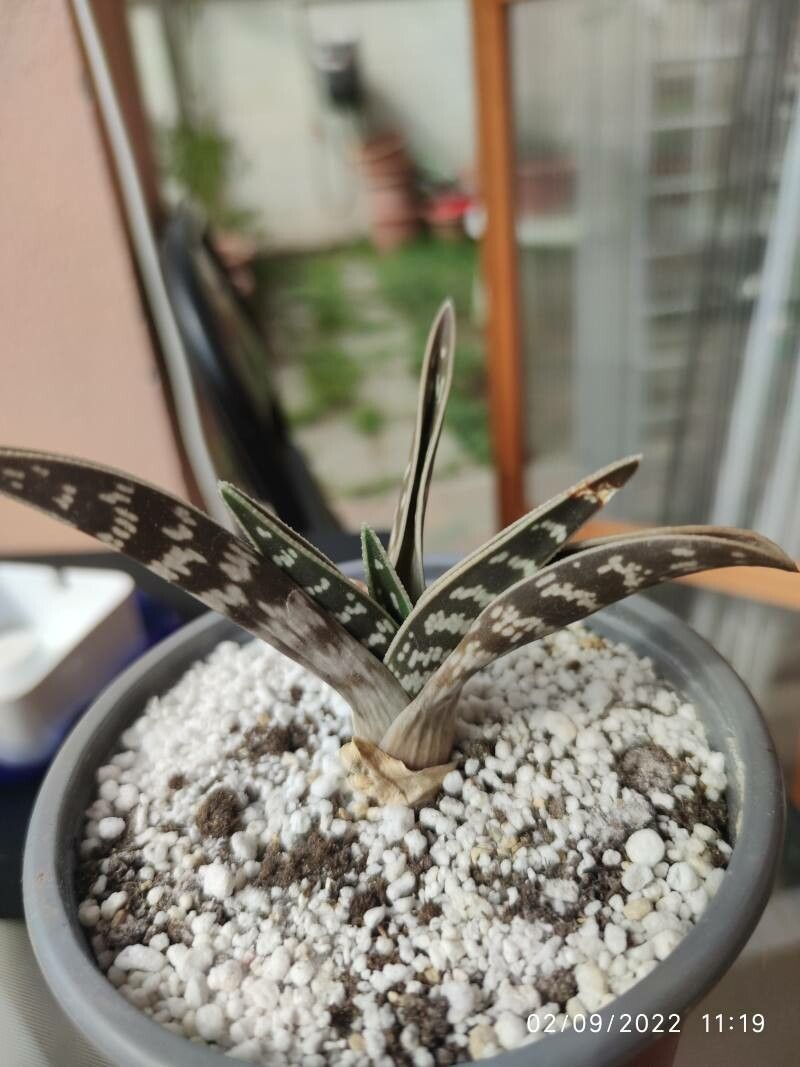
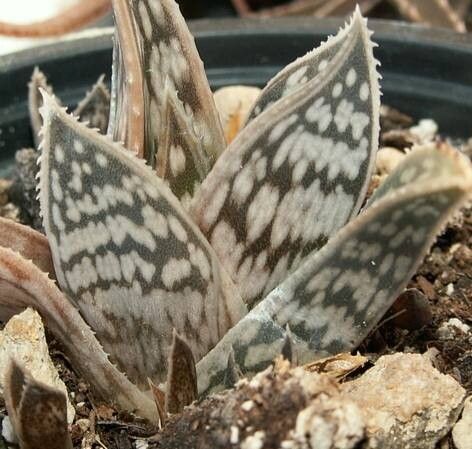
The Gonialoe variegata (formerly Aloe variegata) is a perennial succulent known as Tiger Aloe or Partridge Breast Aloe. The Tiger Aloe can grow up to 2 feet tall, sprouting thick, blade-like, variegated leaves with rough edges from a rosette-like base. In the summer, it blooms with showy drooping, bell-shaped, orange or pink flowers on fleshy racemes. The Tiger Aloe is quite easy-to-care-for, making it an excellent indoor or outdoor potted houseplant.
Tiger Aloe: The name "tiger aloe" comes from the distinctive striped pattern on the plant's leaves. Interestingly, referring to it as "aloe" is somewhat misleading, as it was later discovered to belong to a separate genus called Gonialoe, along with two other related species.
Tiger aloe is resistant to many diseases and is unlikely to become ill with normal care. It is also not highly prone to most pests and ailments. Regarding care, Tiger aloe tolerates drought and can endure long stretches without watering. It needs little fertilizer and typically does not require pruning. As a result, it is an appropriate plant for people at any experience level, especially those who prefer to spend less time maintaining their plants. It is well suited for people who are frequently away for extended periods and might forget to water regularly.
How to keep Gonialoe Variegata.
Light
Thriving with ample light exposure, tiger aloe likes to spend its days in generous brightness. It can endure lower light levels, though its growth may be hindered. Native to areas with abundant daylight, it fares poorly when light is scarce or excessively extreme.
Water
Tiger aloe is a drought-tolerant succulent that thrives in arid conditions. It only needs to be watered once every three weeks. Favoring warm climates, it grows best in well-draining soil to prevent root rot and maintain its water balance.
Humidity
This plant prefers dry conditions, so don't mist it. However, watering it less often can also thrive in higher humidity.
Temperature
Tiger aloe is native to environments with temperatures between 68 and 100 °F (20 to 38 ℃). The plants prefer warmer conditions, so adjustments should be made to maintain this temperature range, especially during colder seasons.
Fertilizer
For Tiger aloe, small amounts of fertilizer applied one to two times per year during the growing season are adequate. Do not fertilize in winter or summer when it is dormant. Cut back on fertilizer for repotted plants and wait a couple of months after repotting before applying fertilizer. Fertilizing supports healthy growth and promotes blooming.
Pruning
Remove any fallen, shriveled, or damaged leaves after your Tiger Aloe’s growing season.
Pot & Repot
When repotting Tiger aloe, choose a pot just slightly larger than the current one that has good drainage. Use a gritty, well-draining mix made for succulents or cacti. Gently remove the plant from its old container, brush off excess soil, and place it at the same planting depth. Wait a few days before watering so any root injury can heal. Repot in spring or fall and keep it in a brightly lit spot.
Toxicity
In recent years aloe has been added to many nutritional products, but it's not recommended that you directly ingest this sap, and your pets shouldn't consume it either as it is toxic for them.
Further reading →
The toxicity and danger assessments provided are for reference only. We do not assure their accuracy, so it's crucial not to depend on them. Seek professional advice when necessary for accurate guidance.
Botanical profile.
- Plant Type
- Succulent
- Life Cycle
- Perennial
- Genus
- Gonialoe
- Family
- Asphodelaceae
- Hardiness Zone
- 9-11
- Mature Height
- 20 cm to 30 cm
- Mature Spread
- 23 cm
- Leaf Color
- Green
- Leaf Type
- Evergreen
- Flower Color
- Pink
- Flower Size
- 20.32 cm to 30.48 cm
- Bloom Time
- Mid spring, Late spring
- Planting Time
- Spring, Summer, Autumn, Winter
- Harvest Time
- Early summer, Mid summer
- Native Area
- South Africa, Namibia
Other names.