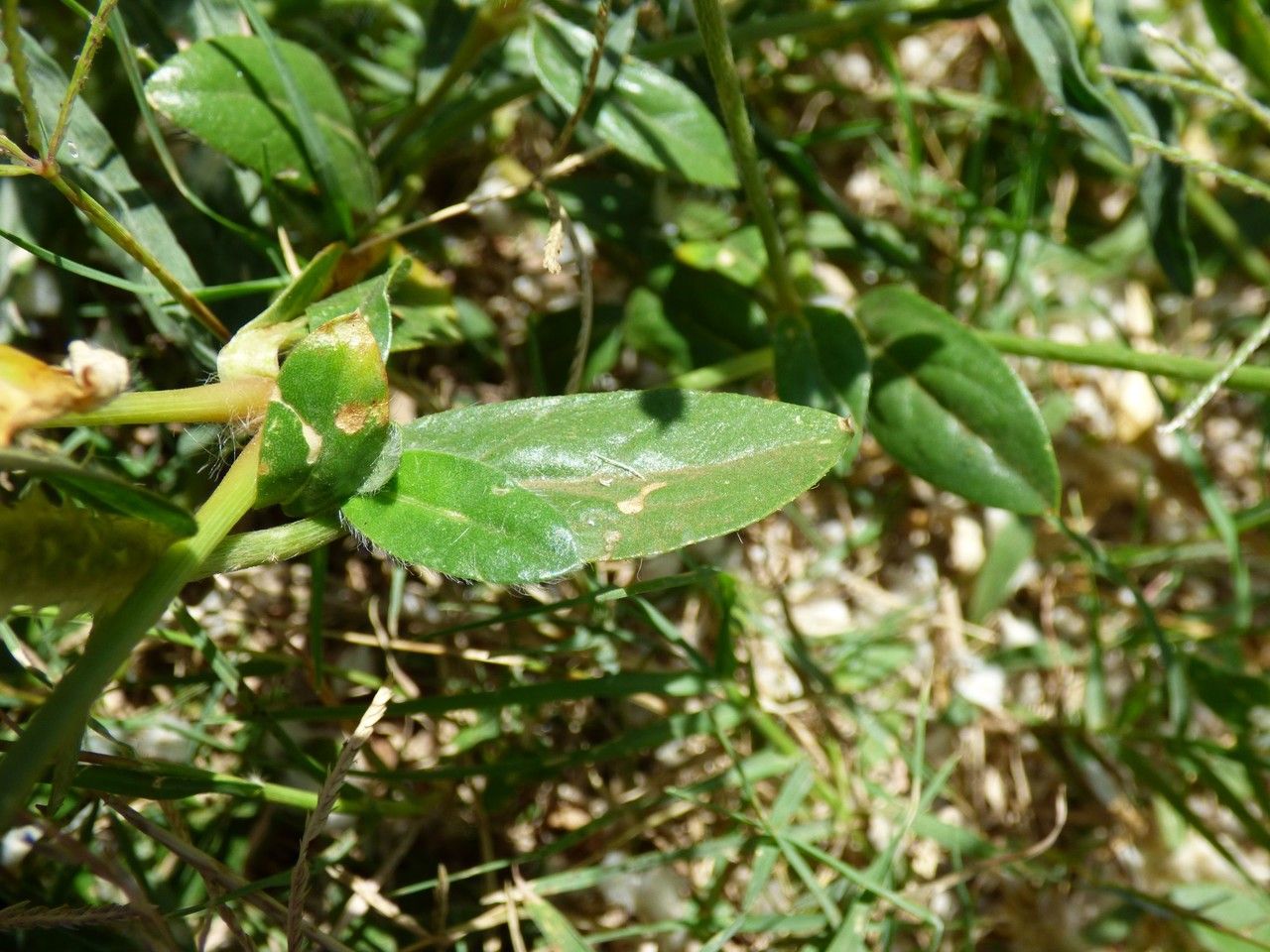
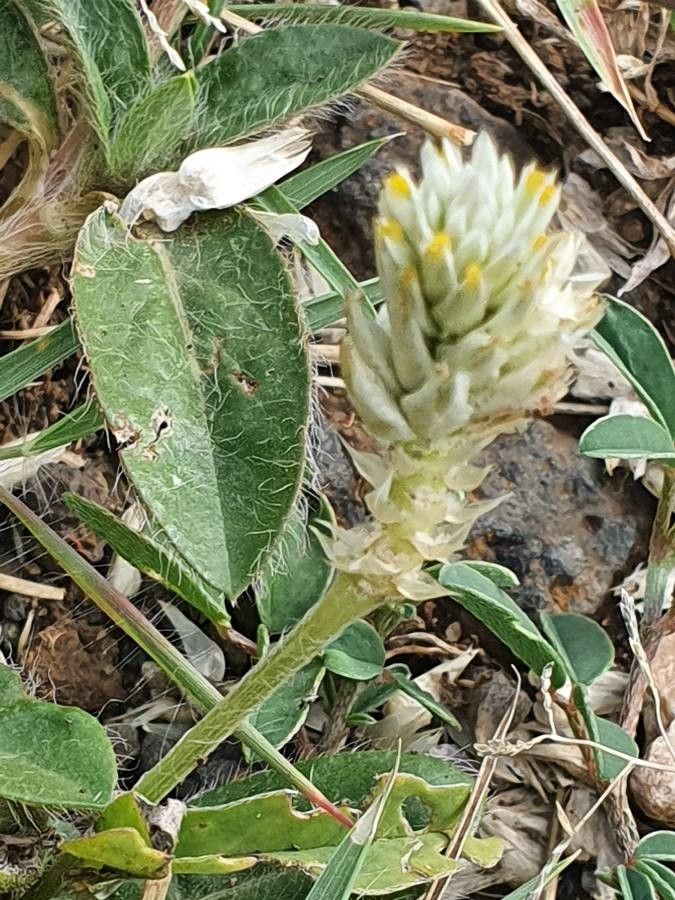
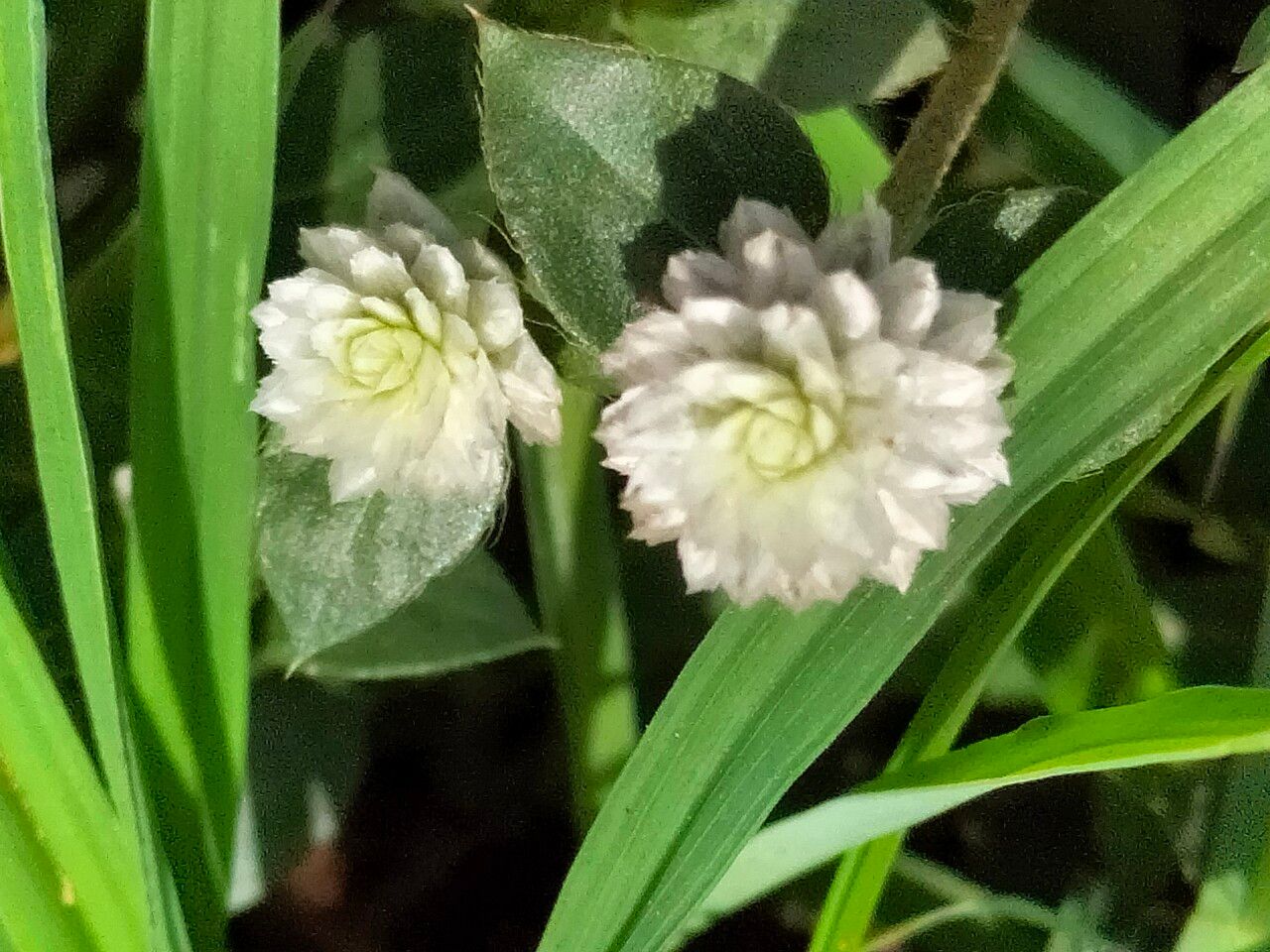
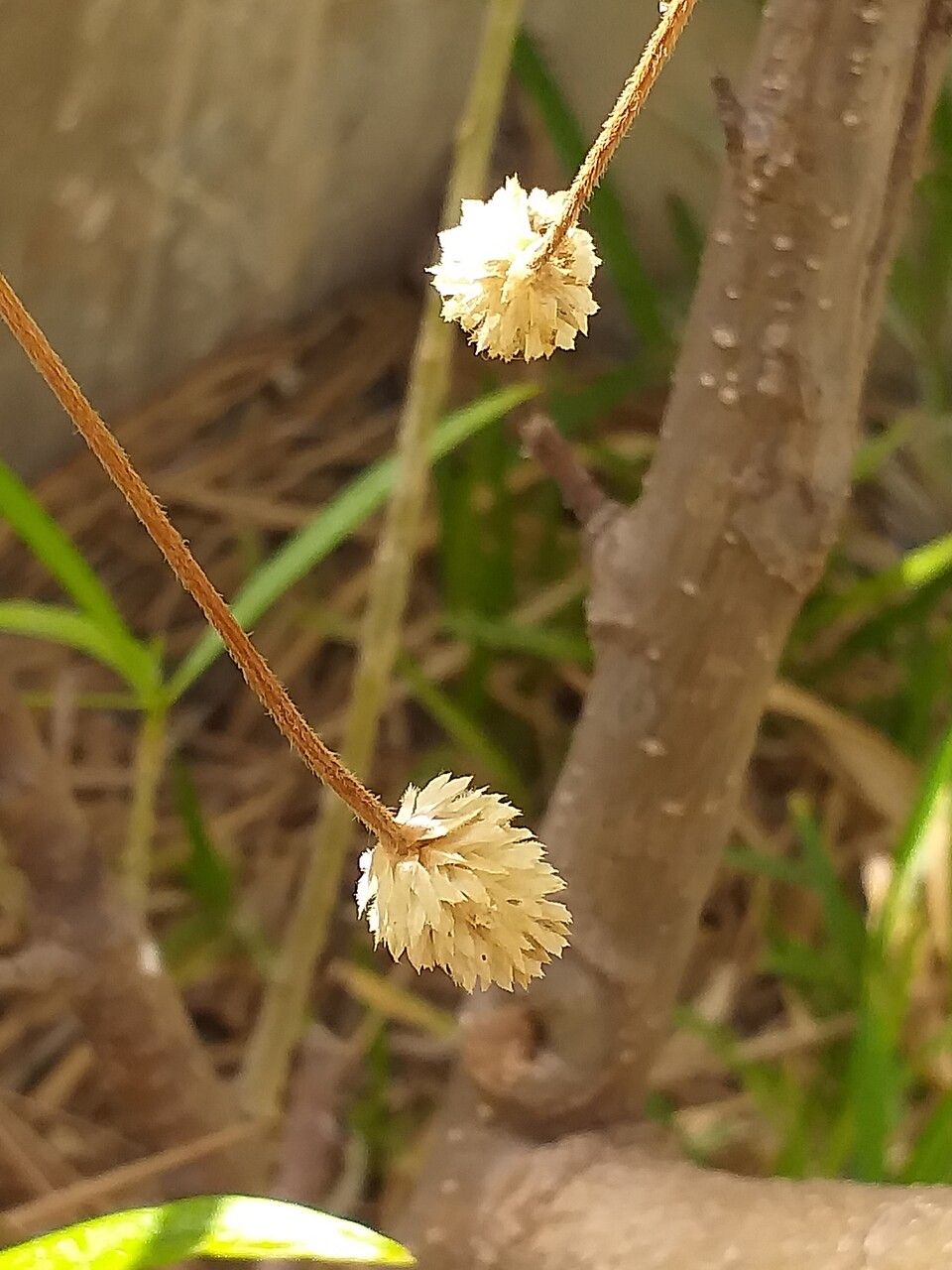
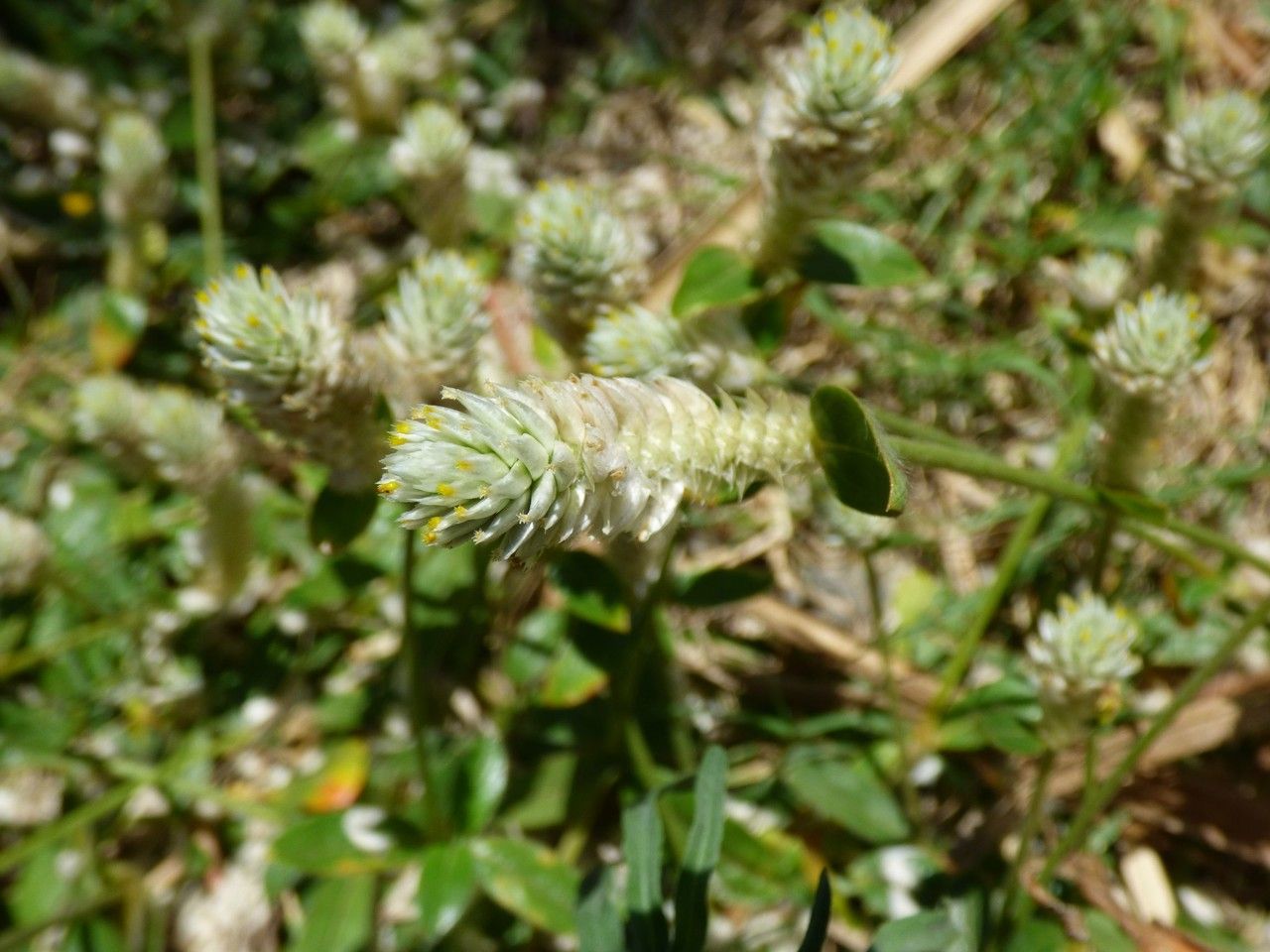
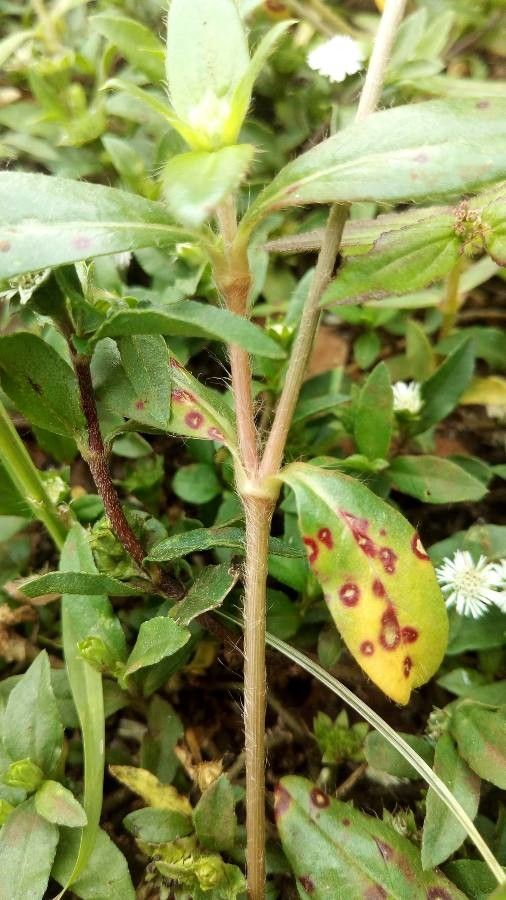
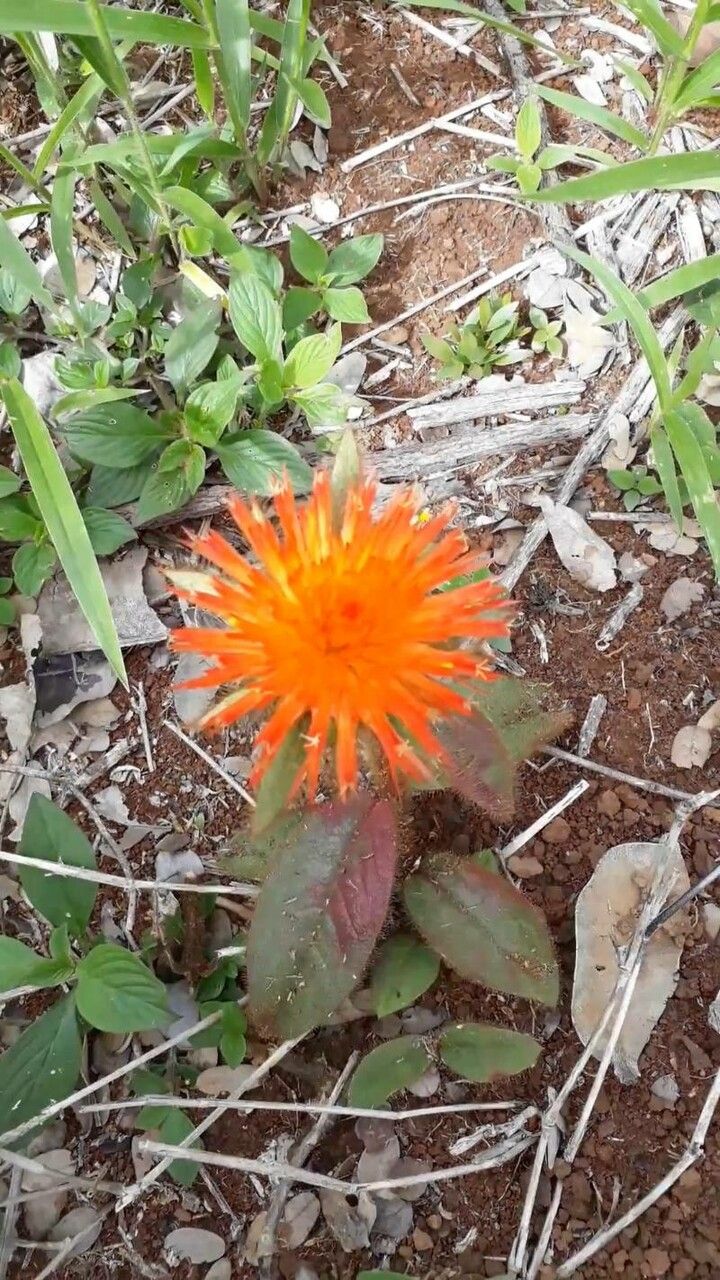
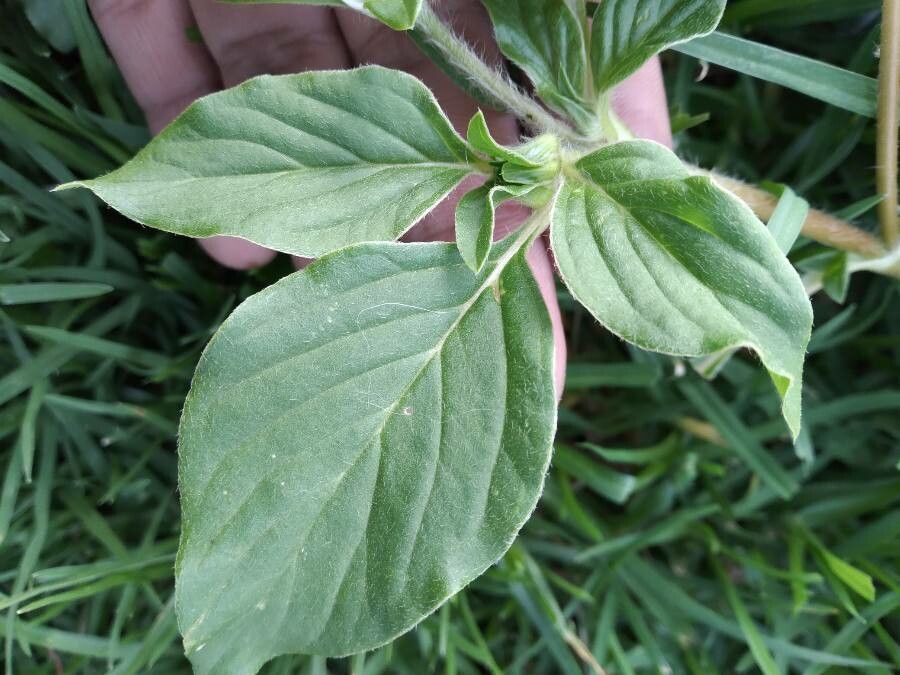
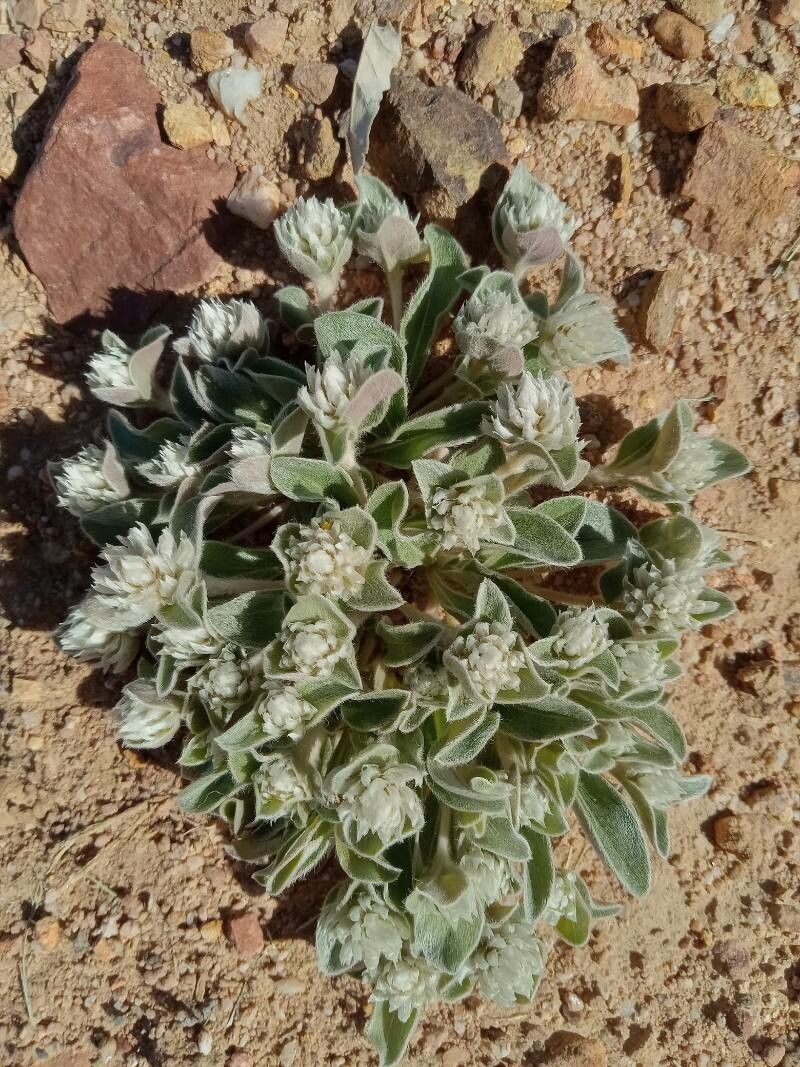
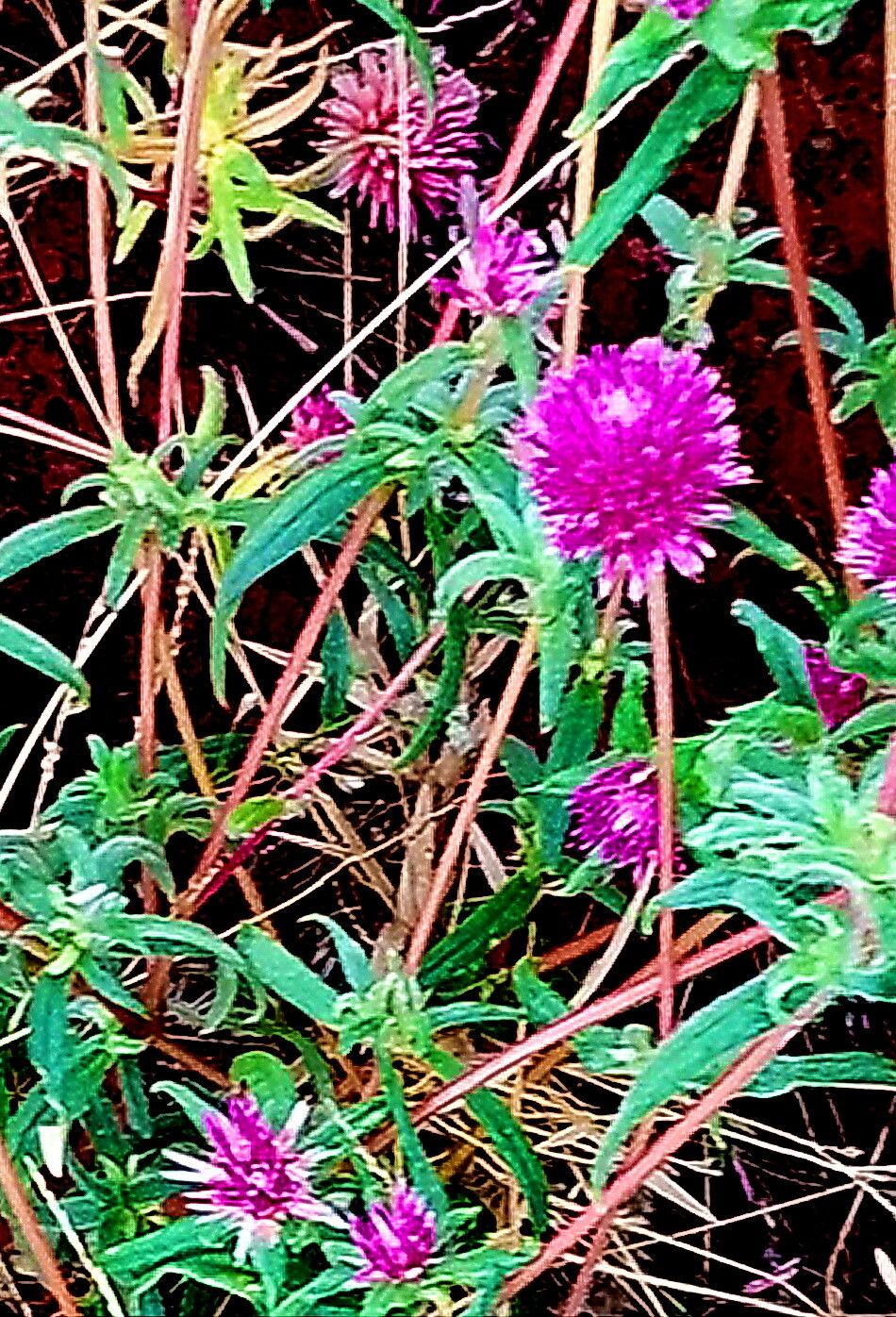
Gomphrena celosioides Mart. ('gomphos'=club, 'celosioides'=resembling Celosia) is a herbaceous perennial belonging to the family Amaranthaceae and a cosmopolitan pioneer plant of disturbed areas, and one of 51 species in the genus.This much-branched, prostrate plant is an annual or short-lived perennial, with a deep taproot and is often mat-forming. The opposite, elliptical leaves have short, hairy petioles, are pubescent and some 3–4 cm long. The flowers are in dense terminal spikes and grow on a woolly receptacle; perianth segments are papery, 4–6 mm long, shining, and whitish to pink in colour. It has 2 stigmas and 5 stamens inserted opposite the sepals and joined into a 5-toothed staminal tube. The ovary is superior, developing into a single-seeded fruit. The seed is some 1.5 mm in length, lentil-shaped, brown and glossy, and is routinely distributed by ants. Originally from the Americas where it is native to Argentina, Bolivia, Brazil, Ecuador, Paraguay and Uruguay, it has become naturalised in Asia in Bhutan, China, Indonesia, Japan, New Caledonia, Philippines, Singapore, Sri Lanka, Papua New Guinea, Taiwan, Thailand, Vietnam, New Zealand, Christmas Island and Australia, and Hawaii in the Pacific region, while in the Africa region it is found in Botswana, Cameroon, Egypt, Eritrea, Eswatini, Ethiopia, Ghana, Guinea, Kenya, Lesotho, Madeira Islands, Malawi, Mauritius, Mozambique, Namibia, Réunion, Rwanda, Socotra, South Africa, Tanzania, Uganda, Zaire, Zambia and Zimbabwe.
Arrasa con todo is well resistant to diseases and generally does not tend to get them. However, it can be vulnerable to pests and illnesses present in its surroundings. These infections are usually mild. In terms of care, this plant needs moderate maintenance. Regular pruning is required to keep a good appearance and healthy growth. Fertilizing can also help encourage flowering. Arrasa con todo is suitable for anyone with outdoor space, such as a garden or patio, and does not demand much care experience. It may need more attention when grown indoors.
How to keep Gomphrena Celosioides.
Light
Arrasa con todo prospers with plenty of sunlight, similar to its original habitat—not confined to any single region—which is usually subjected to continuous solar radiation. Too little light can impede its growth, while excessive exposure may scorch the leaves.
Temperature
Arrasa con todo is native to habitats where temperatures commonly range from 68 to 100 °F (20 to 38 °C). The plant favors warm climates and is able to adapt well to variations within that temperature range.
Fertilizer
The best time to fertilize an Arrasa con todo is in early spring, when it is coming out of dormancy and starting active growth. Fertilization supplies essential nutrients needed for healthy growth. Although Arrasa con todo has fairly low fertilizer requirements, feeding it once a year can improve its survival and encourage better, longer-lasting flowers.
Botanical profile.
- Plant Type
- Herb
- Life Cycle
- Perennial, Annual
- Genus
- Gomphrena
- Family
- Amaranthaceae
- Hardiness Zone
- 8-11
- Mature Height
- 76 cm
- Mature Spread
- 91 cm
- Leaf Color
- Green
- Leaf Type
- Deciduous
- Flower Color
- Purple, White
- Flower Size
- 2.54 cm
- Bloom Time
- Summer
- Planting Time
- Spring
- Harvest Time
- Mid summer, Late summer, Early fall
- Native Area
- Belize, Honduras, Mexico, Guatemala, Georgia, Panama, Uruguay, Colombia, Paraguay, Argentina, Haiti, Bolivia, Venezuela, Brazil, El Salvador, Nicaragua, Ecuador, Costa Rica
Other names.