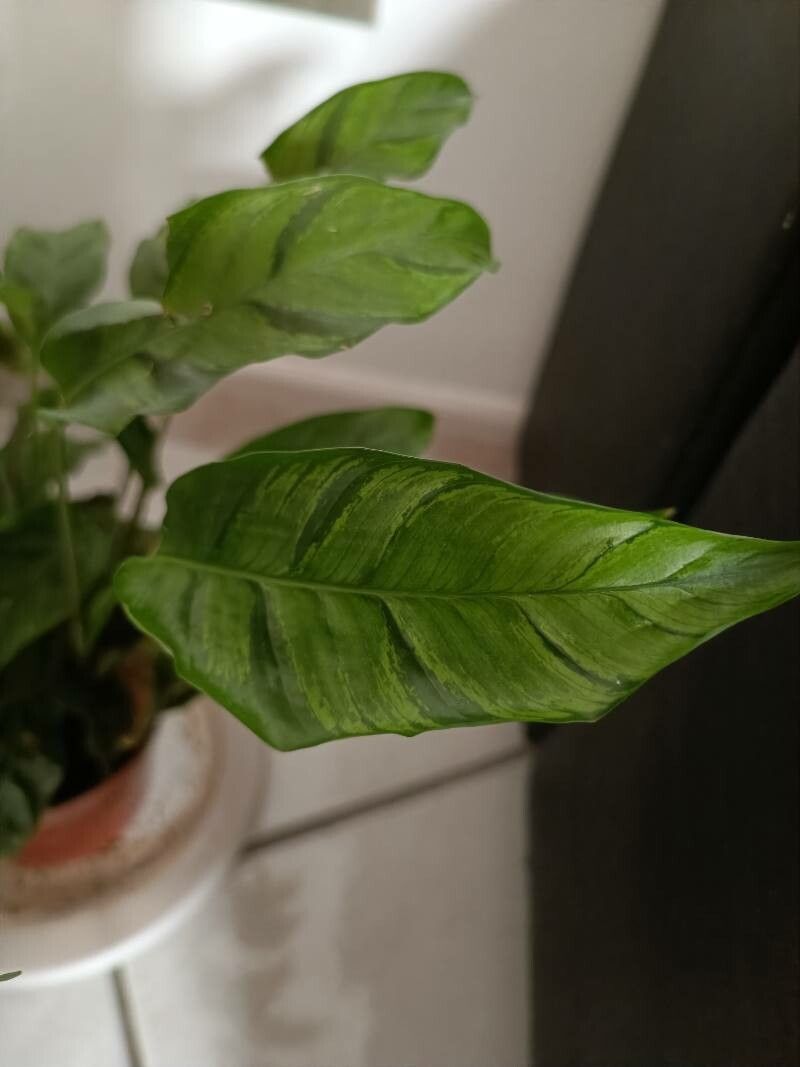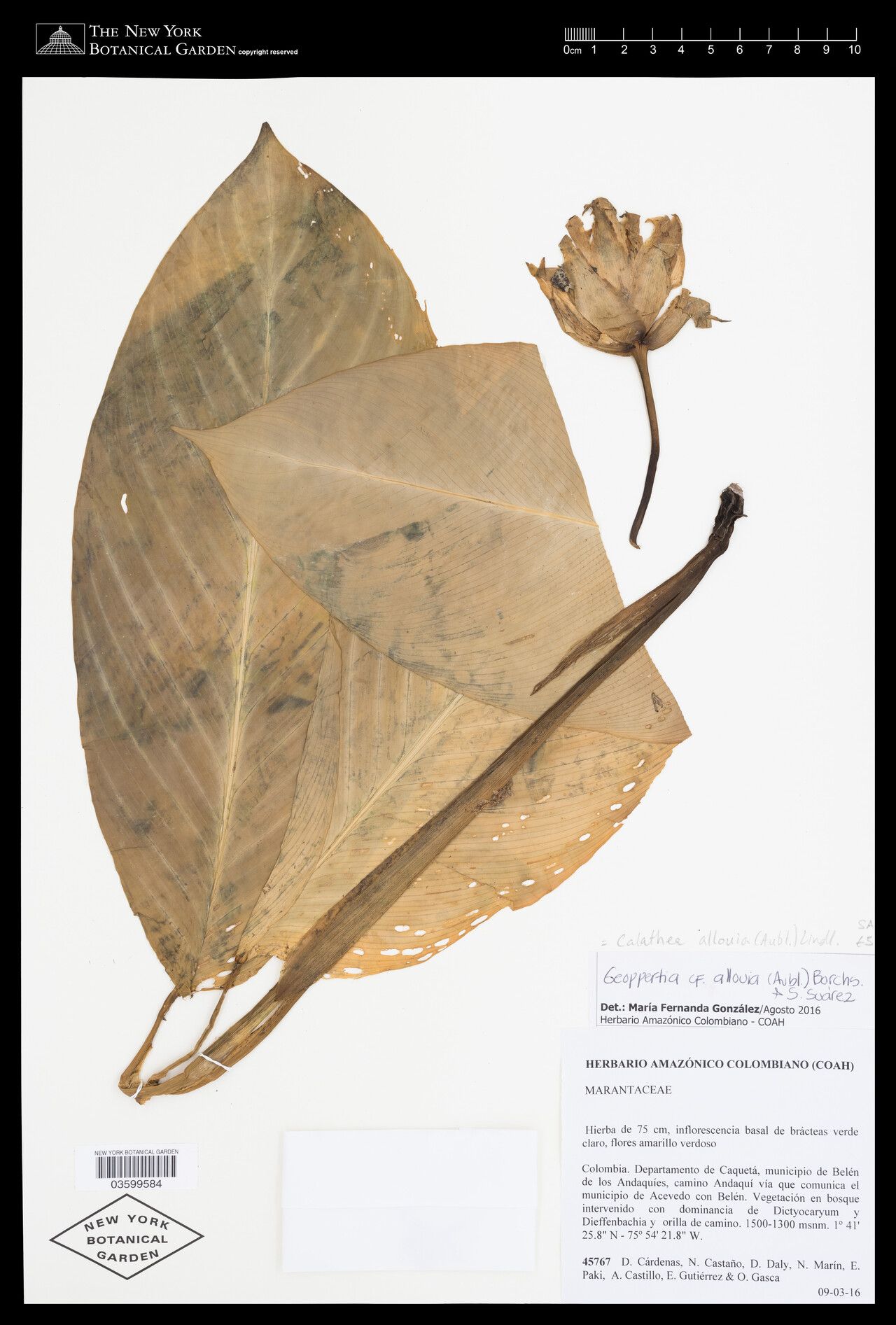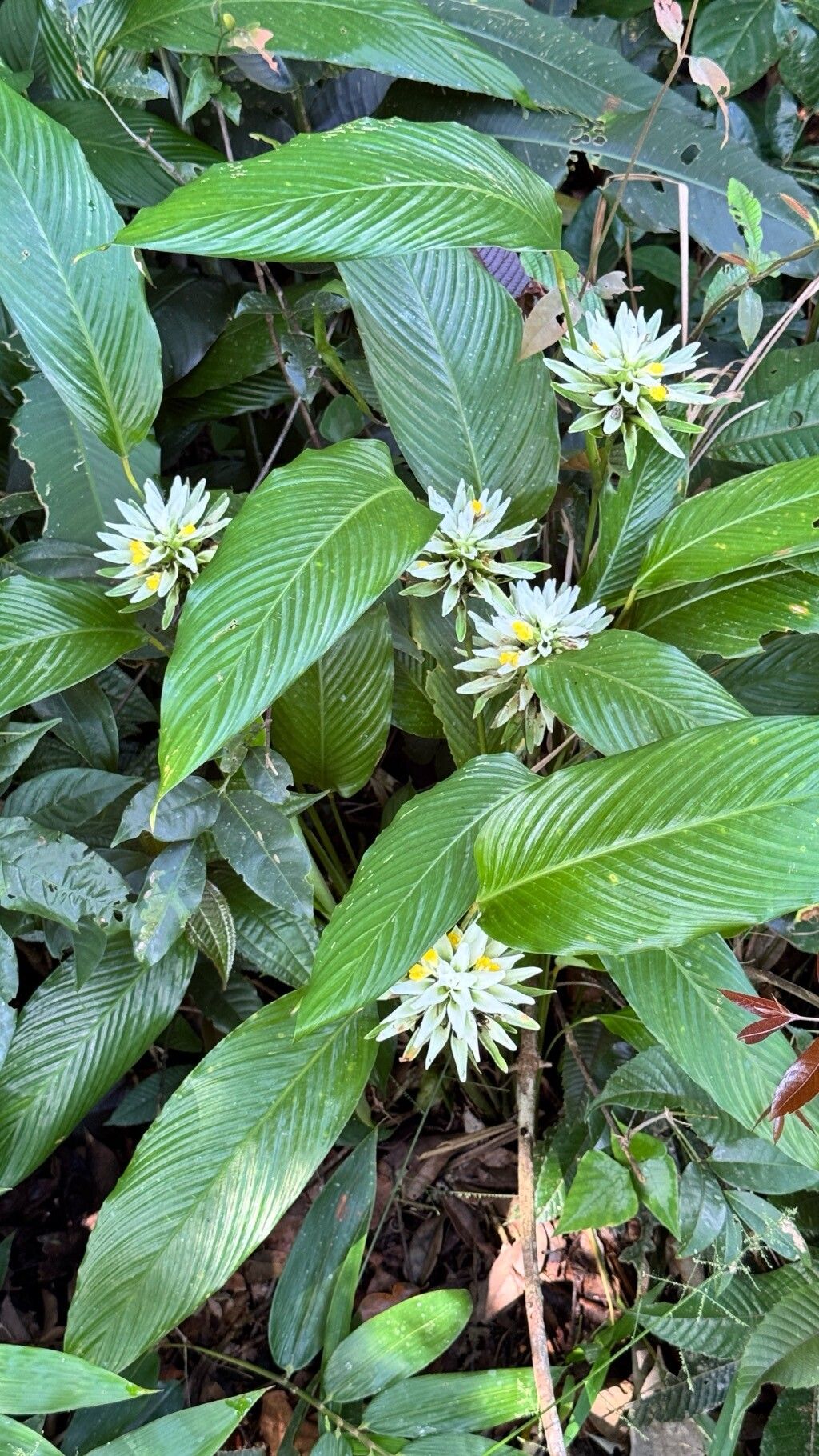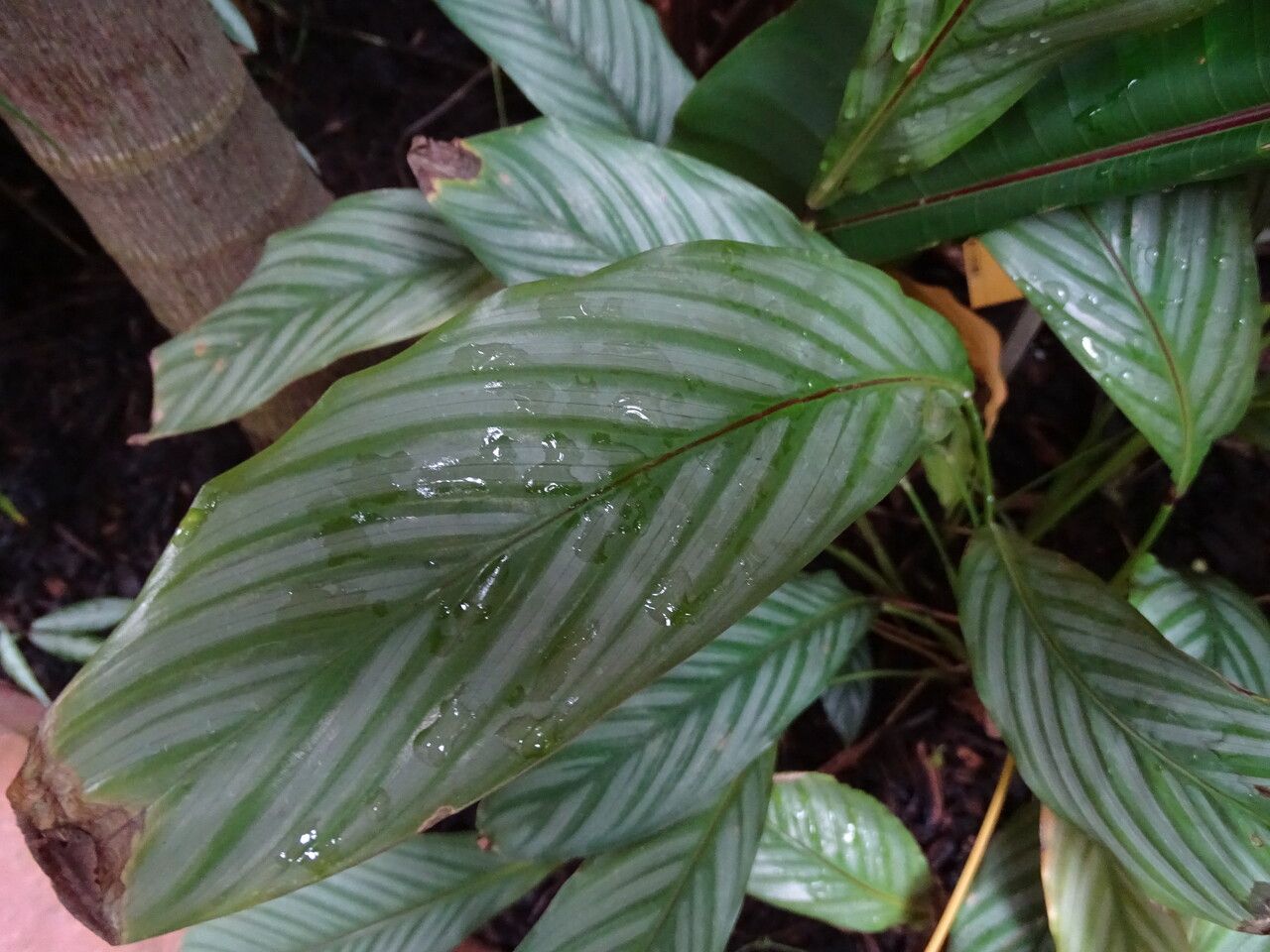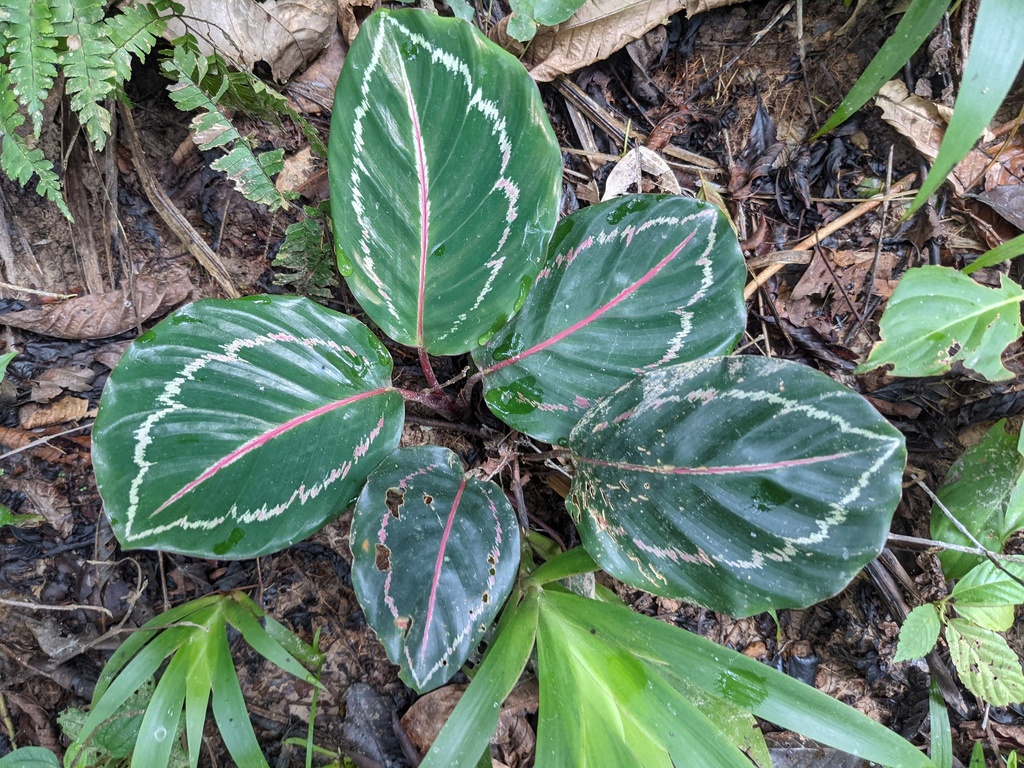
Goeppertia roseopicta is an evergreen perennial in the Marantaceae family. It is also known as the Rose Painted Calathea for its long, rounded, glossy, dark green leaves with attractive rose-colored midribs and feathering that appears as if someone painted it. As it matures, the feathered margins turn white. In the summer, it blooms purple and white flowers, though these are small and non-showy compared to the distinctive foliage.
Rose-Painted Calathea has moderate resistance to disease but can be vulnerable to leaf spot. When humidity is low, its leaves can curl and become dry. The plant is regarded as difficult to care for because it needs high humidity and good ventilation to grow properly, requirements that can be hard to fulfill in typical indoor environments. This Calathea is appropriate for people who can maintain the high humidity it requires, yet even experienced growers may find it challenging to get it to thrive. Beginners may be able to keep it alive, but it might not perform well.
How to keep Goeppertia Roseopicta.
Light
Rose-Painted Calathea does best with lower light levels and tolerates reduced sun well. Regular exposure to moderate sunlight can be detrimental to its growth and health, possibly causing discoloration or wilting. Its native habitat, typically the canopy understory, provides the reason for this sunlight tolerance. Both too much and too little sunlight can adversely affect the plant's vibrant colors and overall wellness.
Water
The Rose-Painted Calathea thrives in high humidity and needs soil that stays evenly moist. It prefers to be watered once a week. Regular misting helps keep the leaves hydrated, simulating the plant's natural tropical rainforest environment. During the cooler months, when the plant enters dormancy, its water needs may decrease, demonstrating its adaptability to different conditions.
Humidity
This plant needs special care because it loves high humidity levels of 60-80% or more. The best way to achieve this is by placing a humidifier near the plant. Daily misting is also essential! Make sure the room has good ventilation.
Temperature
The rose-Painted Calathea plant thrives in a warm, humid setting with temperatures between 20 and 38 ℃ (68 to 100.4 ℉). It can tolerate cooler conditions in winter, but should be protected from frost. In summer, keep it out of direct sunlight and prevent temperatures from exceeding 38 ℃ (100.4 ℉).
Fertilizer
The Rose-Painted Calathea needs the most fertilizer during its active growth period, primarily in spring, summer, and early fall. Fertilizing supplies essential nutrients that the soil may be lacking, supporting healthy root and stem growth as well as the attractive foliage, which is a key characteristic of this plant.
Pruning
The Rose-Painted Calathea is a stunning tropical plant known for its beautifully patterned leaves. To keep the plant healthy, it's best to prune it in early spring. Remove any yellow or damaged leaves at their base, making sure not to cut into the healthy parts of the plant. Proper pruning helps maintain the plant's shape, improves air circulation, and deters pests, ensuring vibrant growth throughout the year.
Pot & Repot
When repotting Rose-Painted Calathea, pick a pot slightly larger than the current one that has good drainage. Repot in spring or fall and use a well-draining potting mix. Place the plant at the same depth as before. Water thoroughly after repotting and set it in a warm spot with bright, indirect light. Avoid overwatering to prevent root rot.
Botanical profile.
- Plant Type
- Herb
- Life Cycle
- Perennial
- Genus
- Goeppertia
- Family
- Marantaceae
- Hardiness Zone
- 10-12
- Mature Height
- 30 cm to 61 cm
- Mature Spread
- 61 cm
- Leaf Color
- Green, Variegated
- Leaf Type
- Evergreen
- Flower Color
- White
- Flower Size
- 2.54 cm
- Bloom Time
- Summer, Early fall
- Planting Time
- Spring, Summer, Autumn, Winter
- Harvest Time
- Late summer, Fall
- Native Area
- Colombia, Venezuela, Peru, Brazil, Ecuador