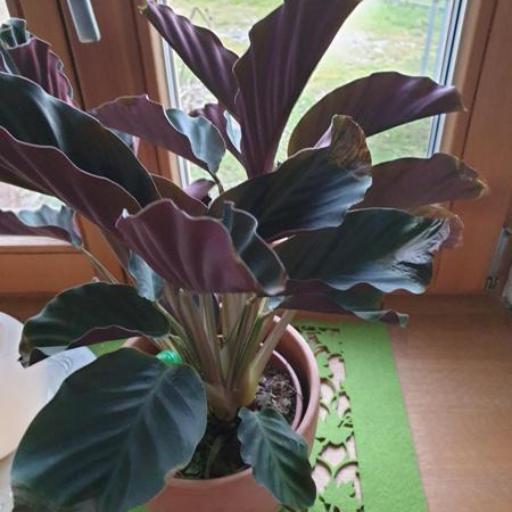
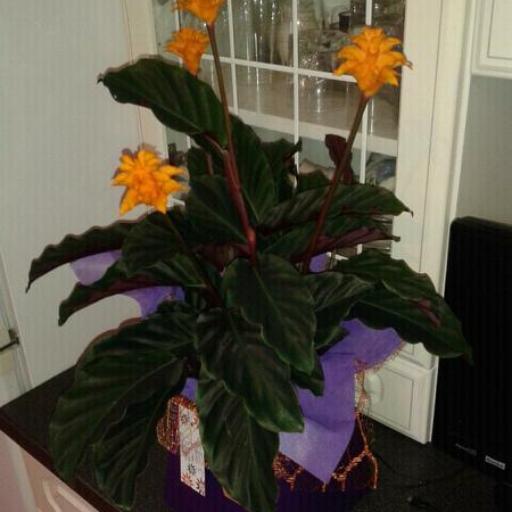
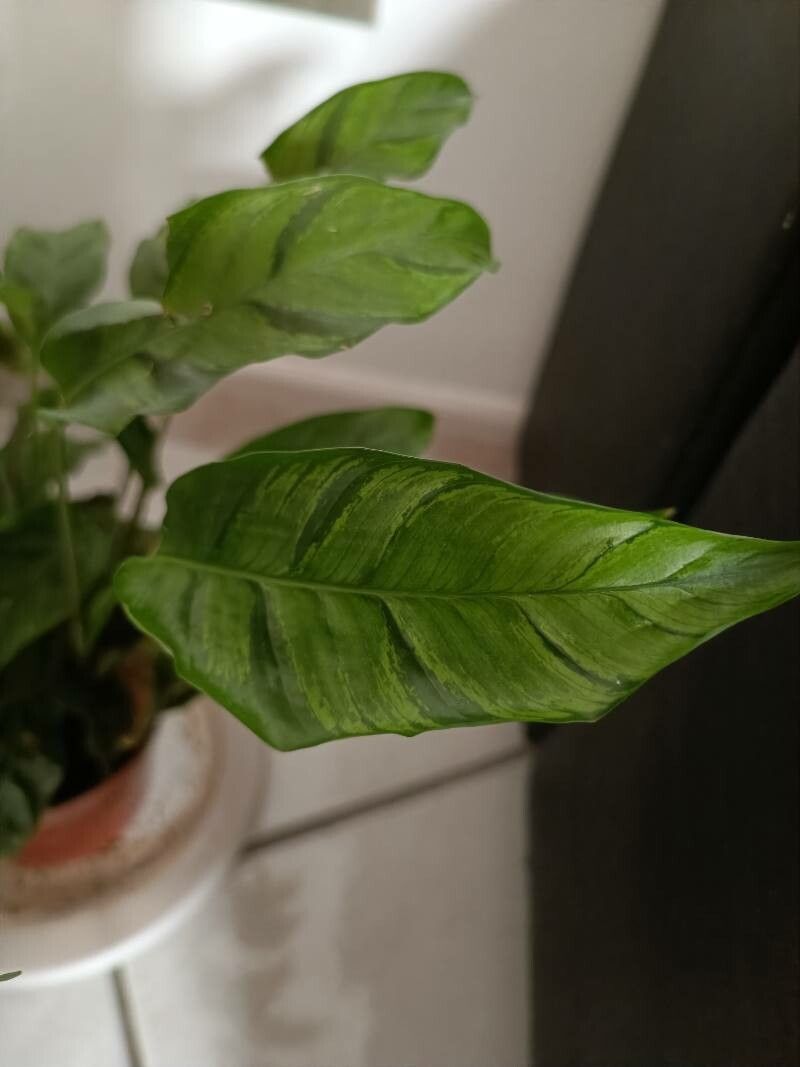
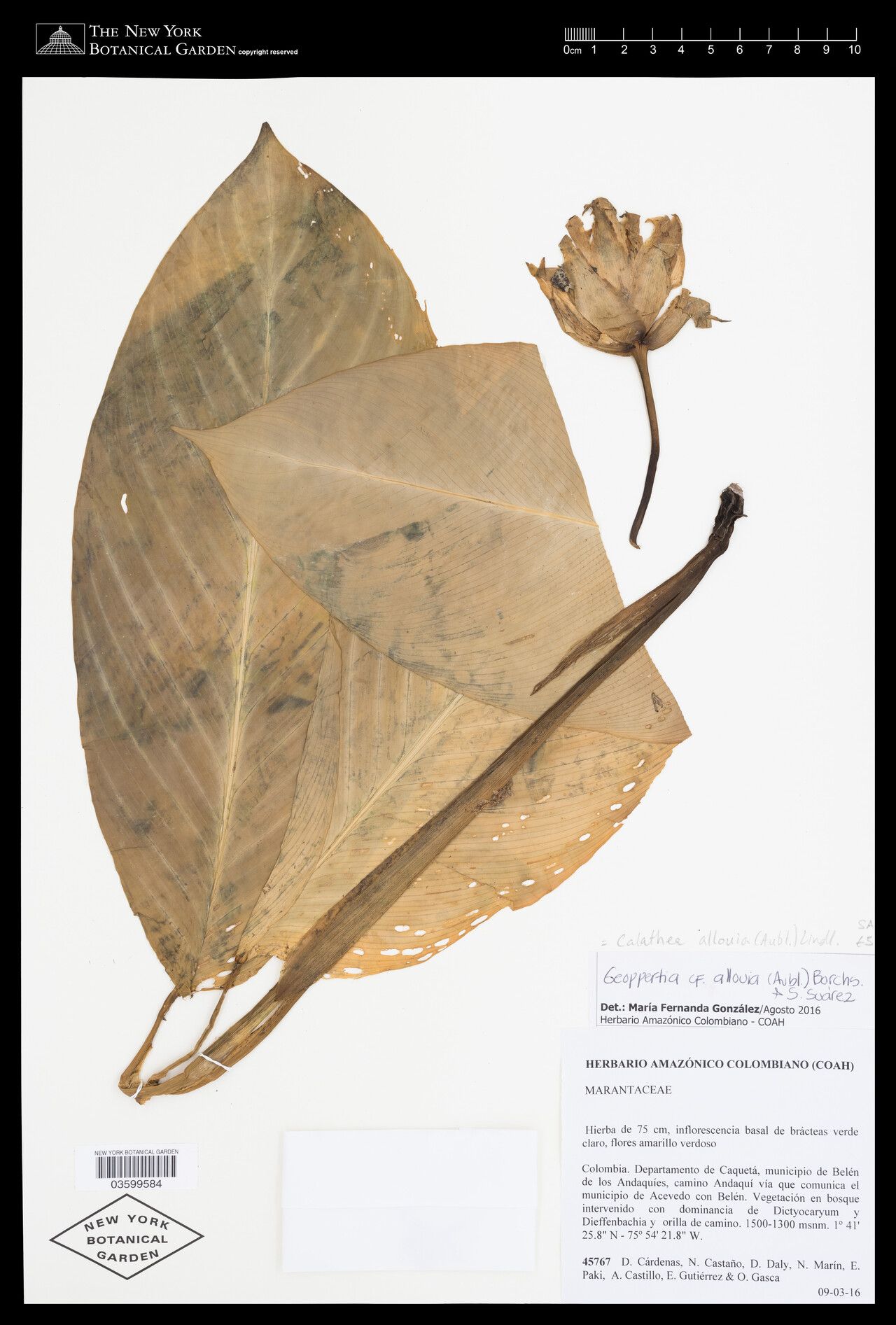
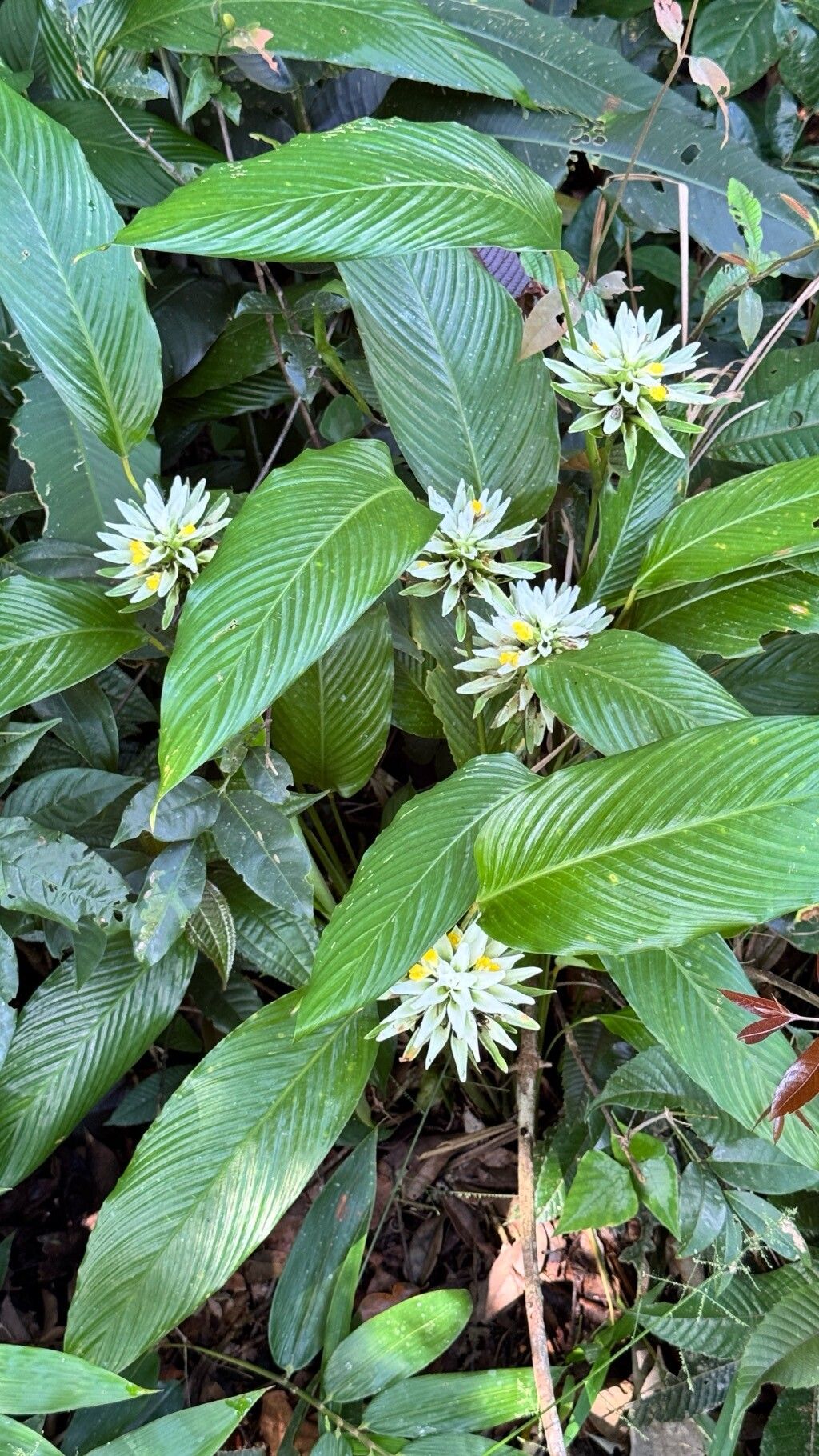
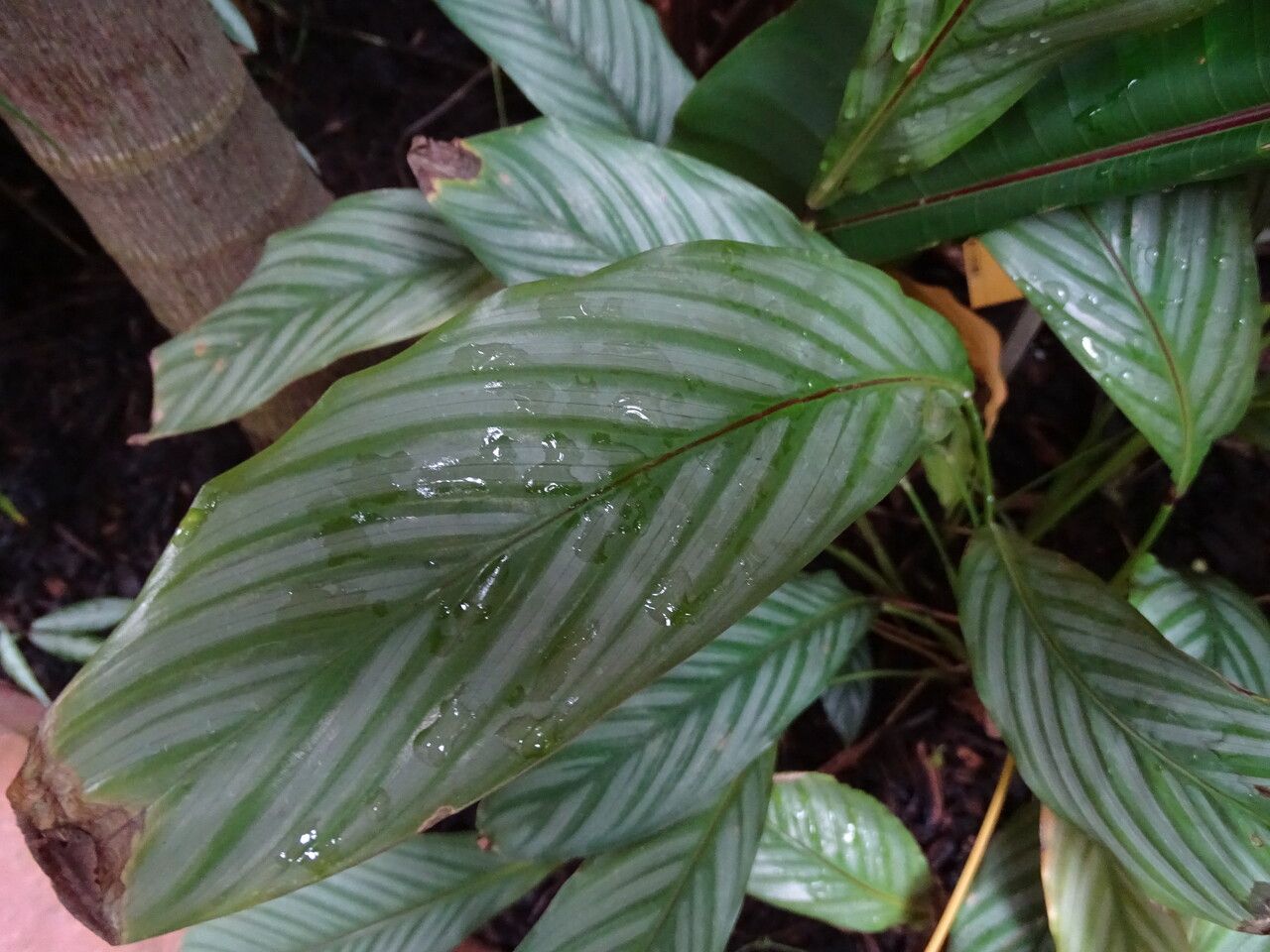
Goeppertia crocata, the saffron-coloured calathea or eternal flame plant, is a species of flowering plant in the family Marantaceae, native to Bahia and Espírito Santo states of eastern Brazil. It has gained the Royal Horticultural Society's Award of Garden Merit as a hothouse ornamental.
Eternal flame has moderate resistance to disease but can be vulnerable to leaf spot. Its leaves can curl and dry out if humidity is low. The plant is considered difficult to care for because it needs high humidity and good ventilation to develop properly. These requirements can be hard to fulfill in typical indoor environments. Eternal flame is appropriate for people who can maintain high humidity for it, yet even experienced growers may find it challenging to get it to thrive. Beginners might be able to keep it alive, but it may not perform well.
How to keep Goeppertia Crocata.
Light
Eternal flame does best in environments with moderate light, similar to the dappled sunlight of its natural habitat. Its growth stages do not significantly change this light requirement. Excessive light can harm eternal flame, while too little light can hinder its proper growth and development.
Water
The eternal flame plant flourishes in humid environments, needing consistent moisture. It should be watered twice a week. Indoors, regular misting helps mimic its natural habitat, promoting vibrant foliage and ensuring it remains an evergreen beauty all year round.
Temperature
Eternal flame is native to subtropical regions and requires an optimal temperature range of 68 to 105.8 °F (20 to 41 ℃). It prefers warmer climates but can adapt its growth in cooler temperatures. However, indoor adjustments are necessary during winter to keep it above its minimum temperature threshold.
Fertilizer
Correct feeding is essential for the Eternal flame's health and appearance. Fertilize the Eternal flame in summer, repeating the application monthly throughout the season. Nutrients drive growth and sustain the plant's structures. Fertilization improves the Eternal flame's floral display, ensuring the best blooms.
Pruning
To maintain the health and beauty of the eternal flame plant, it’s important to prune it from early spring to late winter. Remove any dead leaves to improve air circulation, and trim away spent flowers to encourage new growth. Make sure to clean your pruning tools to prevent infections. Gardening experts recommend these practices to boost the plant's vigor and promote blooming.
Pot & Repot
When repotting Eternal flame, pick a pot slightly larger than the old one that has good drainage. Do the repotting in spring or fall and use a well-draining potting mix. Plant it at the same depth as before. Water thoroughly after repotting and place the pot in a warm spot with bright, indirect light. Avoid overwatering to prevent root rot.
Botanical profile.
- Plant Type
- Herb
- Life Cycle
- Perennial
- Genus
- Goeppertia
- Family
- Marantaceae
- Hardiness Zone
- 13
- Mature Height
- 25 cm
- Mature Spread
- 49 cm
- Leaf Color
- Green, Red, Silver, Gray, Orange
- Leaf Type
- Evergreen
- Flower Color
- Orange, Yellow
- Flower Size
- 2.54 cm to 5.08 cm
- Bloom Time
- All year round
- Planting Time
- Spring, Autumn
- Harvest Time
- All year round
- Native Area
- Brazil
Other names.