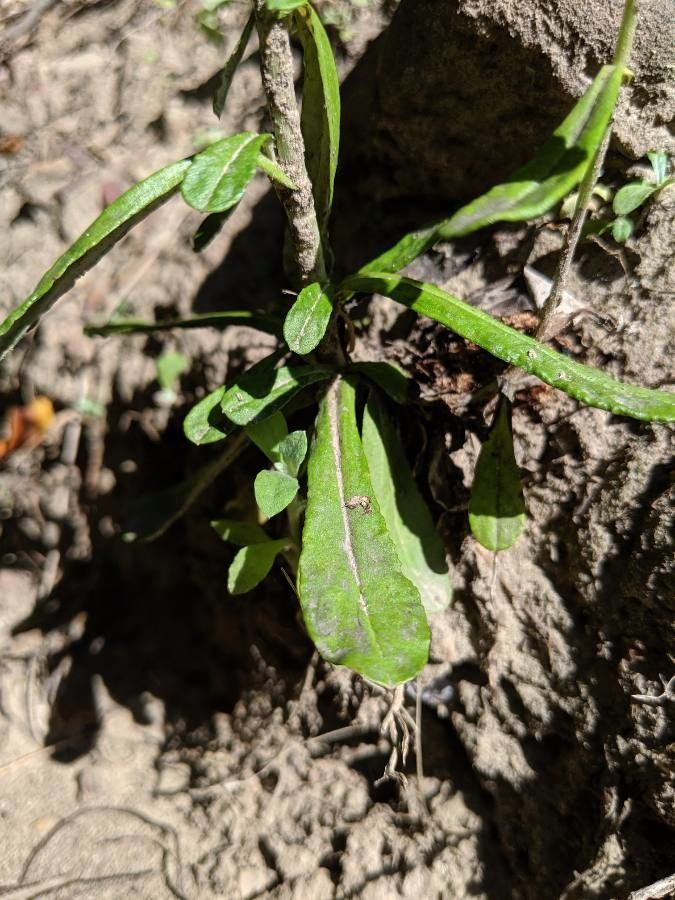
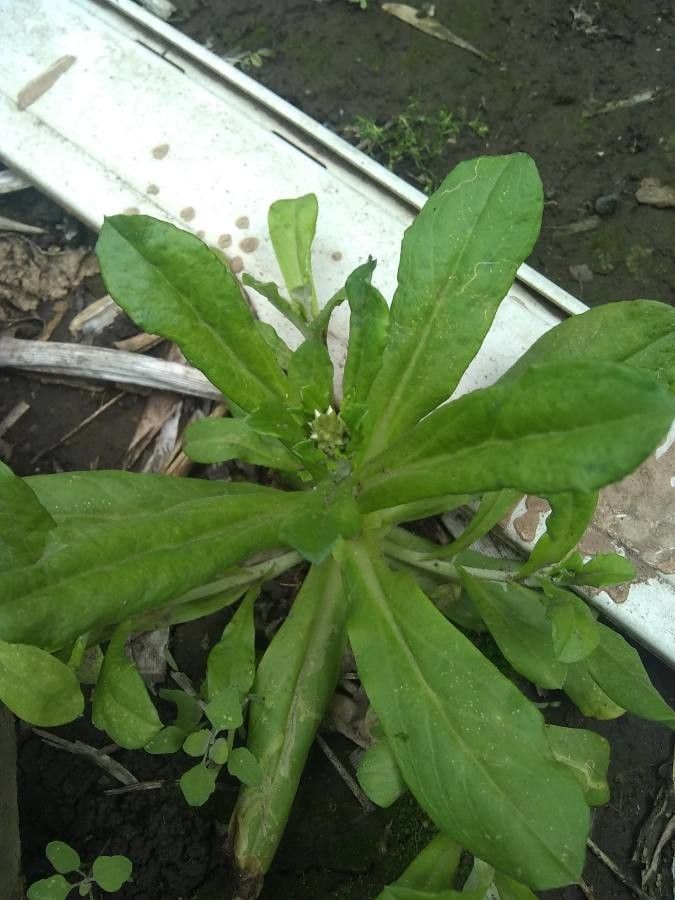
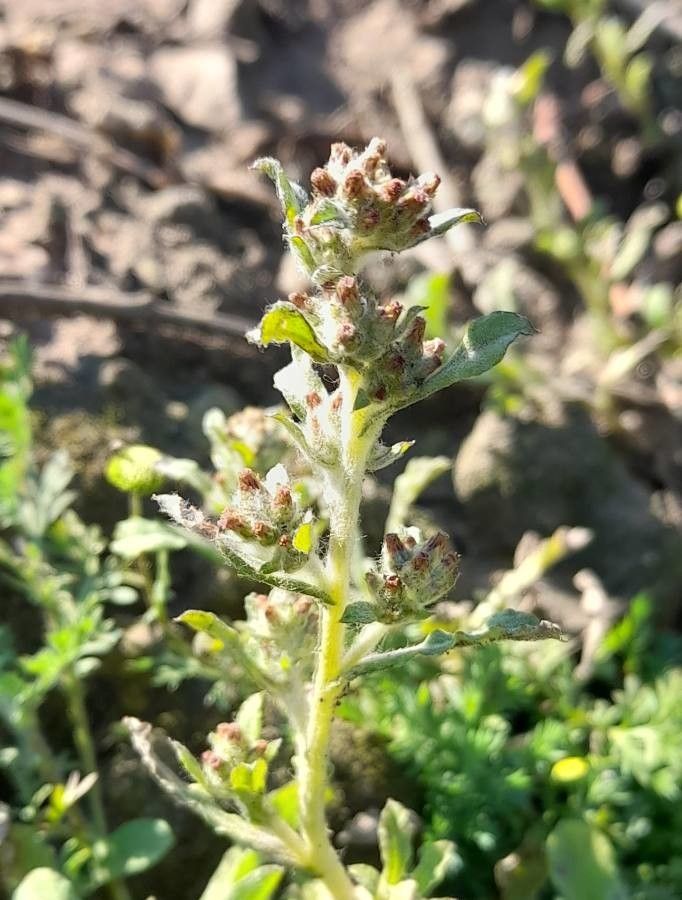
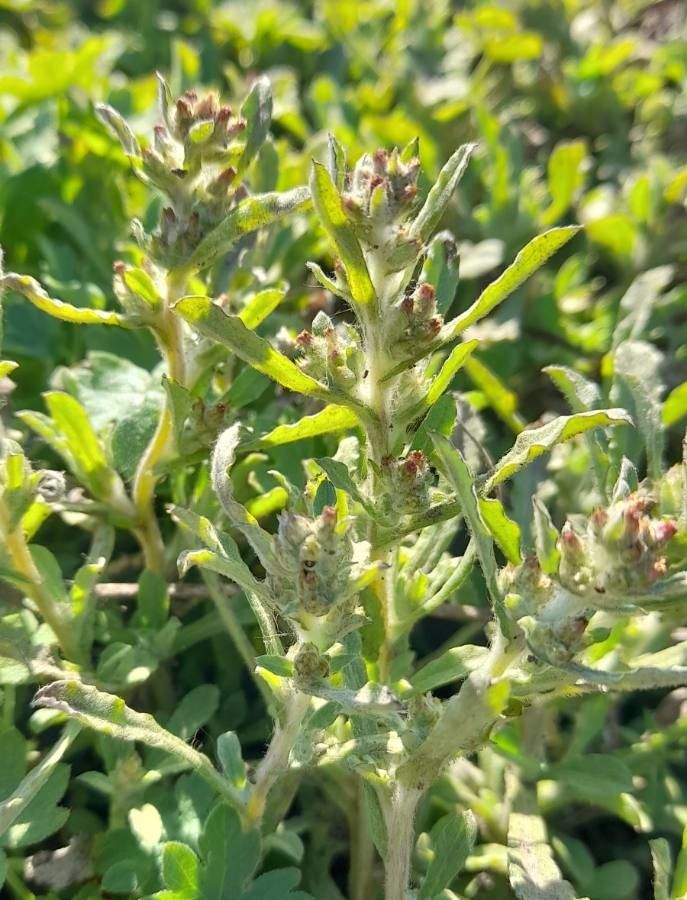
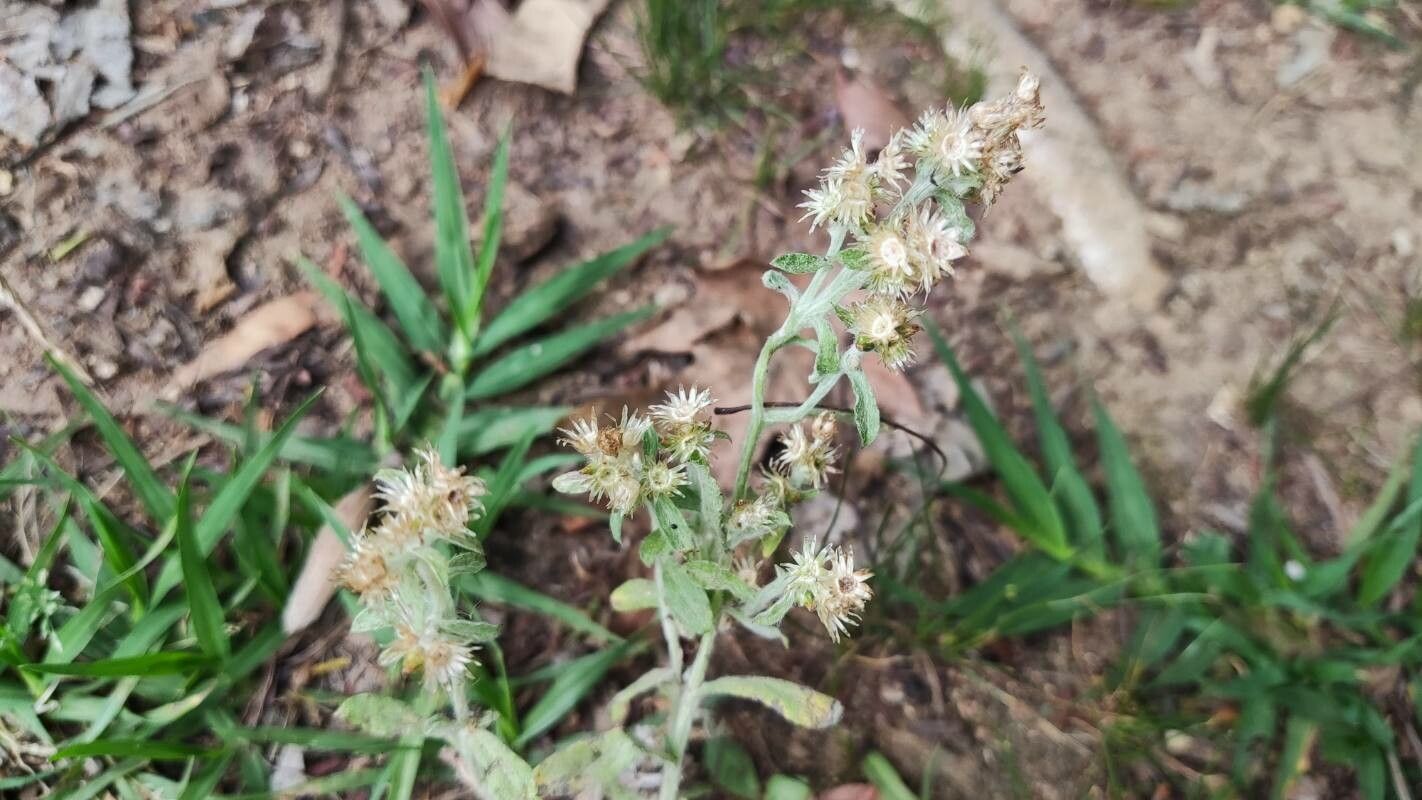
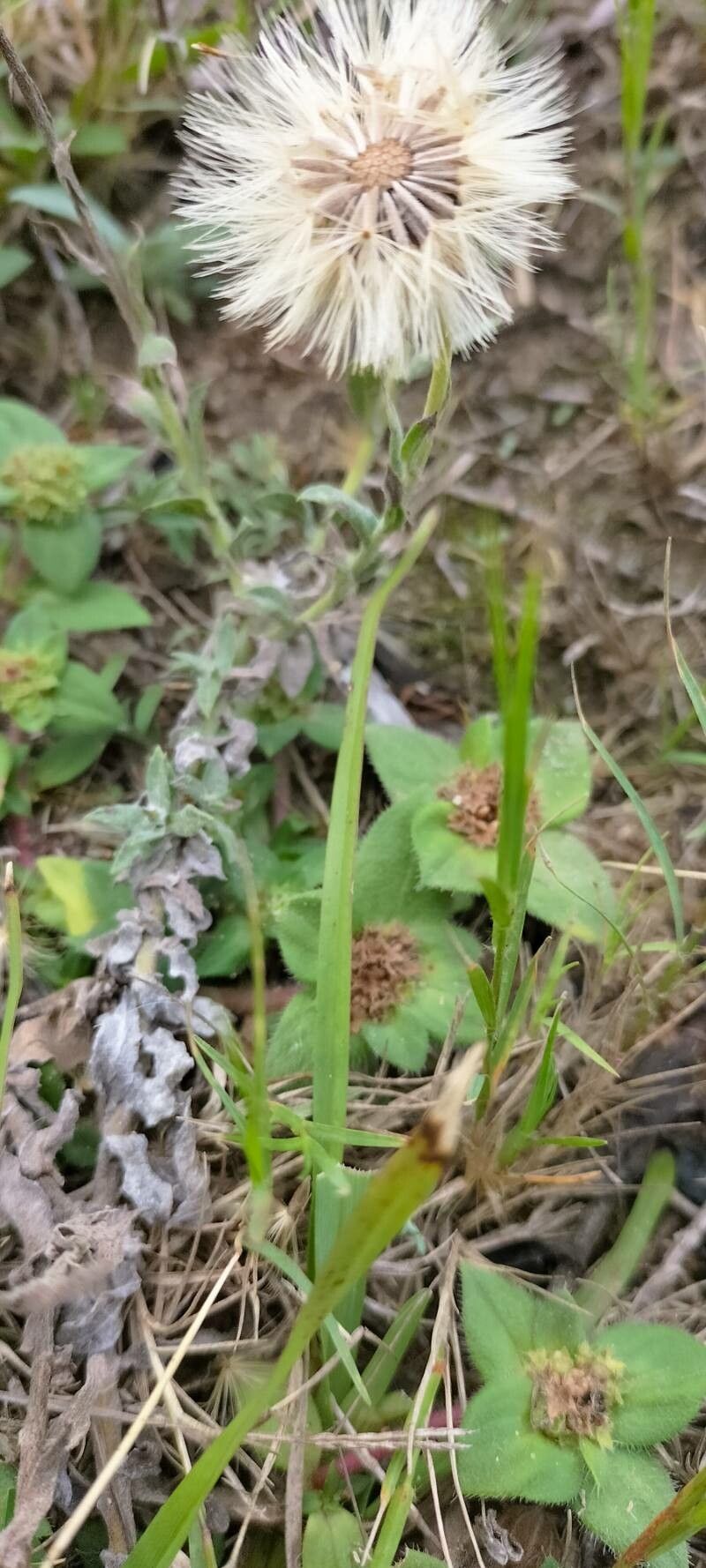
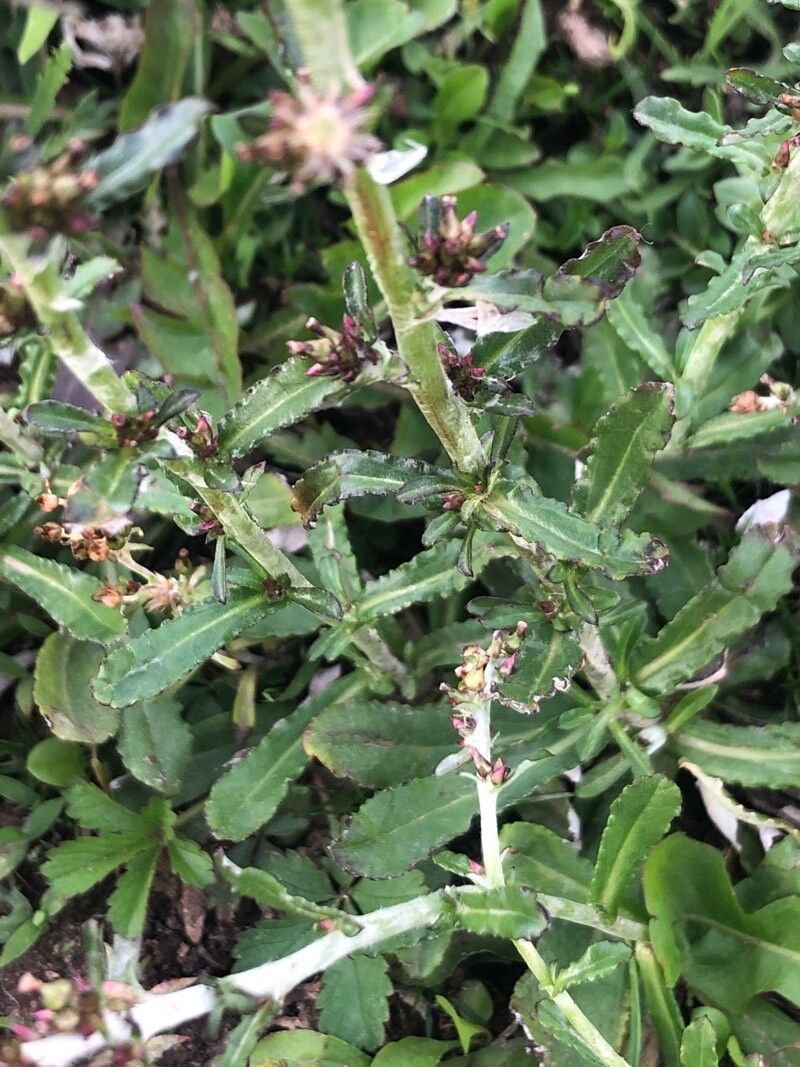
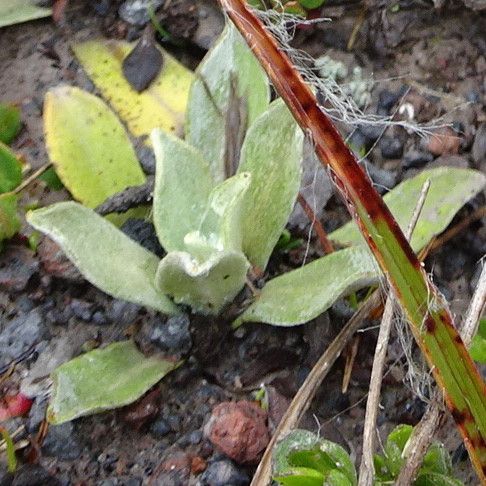
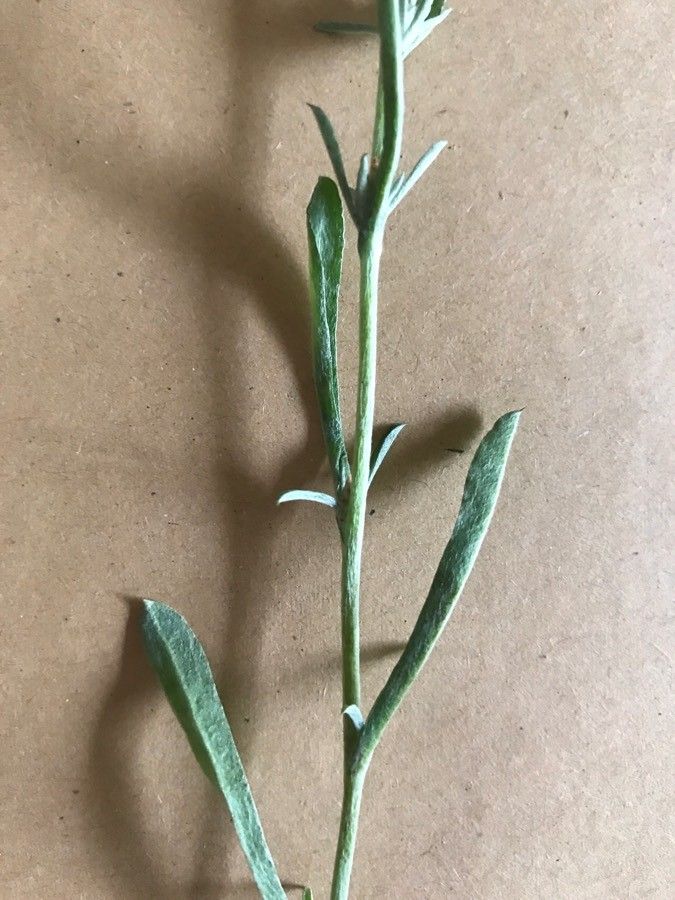
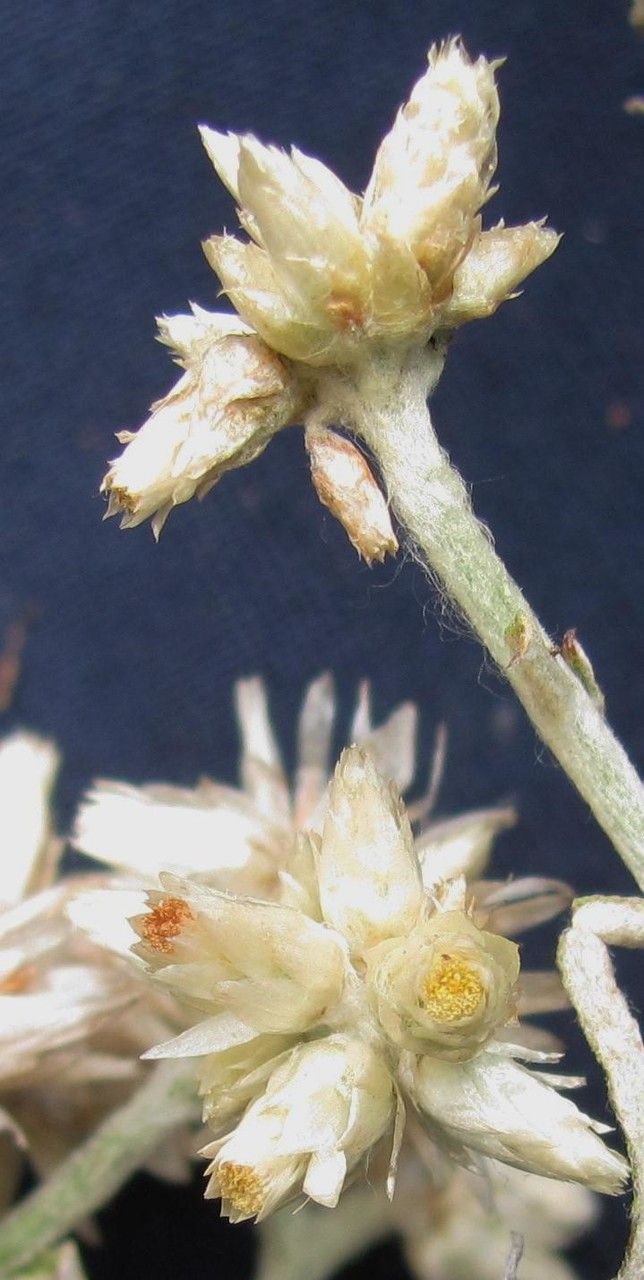
Gamochaeta pensylvanica, the Pennsylvania cudweed or Pennsylvania everlasting, is a widespread species of flowering plant in the family Asteraceae. It is native to South America and introduced into Eurasia, Africa, Australia, and North America. The pensylvanica epithet is a misnomer, as the plant is not native to Pennsylvania and only marginally naturalized there.Gamochaeta pensylvanica is an annual herb up to 50 cm (20 in) tall. Leaves are up to 7 cm (2.8 in) long, light green because of woolly hairs on the surfaces (though not as dense as in some related species). The plant forms many small flower heads in elongated arrays. Each head contains 3–4 purple disc flowers but no ray flowers.
Pennsylvania everlasting has good resistance to disease and typically is not susceptible to illnesses. However, it can be vulnerable to pests and diseases present in its environment. These outbreaks are generally not serious. Regarding care, this plant needs moderate maintenance. It should be pruned regularly to preserve an attractive appearance and healthy growth. Applying fertilizer can also help encourage flowering. Pennsylvania everlasting is appropriate for anyone with an outdoor area, such as a garden or patio, and does not demand extensive care experience. It may need extra attention when kept indoors.
How to keep Gnaphalium Pensylvanicum.
Light
The pennsylvania everlasting does best with abundant light, which is vital for its healthy growth. It can tolerate a slight drop in light levels, as is typical in its main habitat. Severe light shortage can impair its growth, and overly intense exposure can also cause stress.
Temperature
Pennsylvania everlasting is native to regions with moderate climates and prefers temperatures of 68 to 95 °F (20 to 35 °C). As a plant that persists year-round, it may need slight adjustments when temperatures shift significantly between seasons.
Fertilizer
Pennsylvania everlasting are regarded as heavy nutrient feeders. They require frequent, small applications of nitrogen and potassium fertilizers and occasional treatments of phosphorus, micronutrients, sulfur, and magnesium to sustain good growth and bright coloration. Continuous fertilization during the growing season is needed to prevent deficiency symptoms and maintain optimal growth.
Botanical profile.
- Plant Type
- Herb
- Life Cycle
- Biennial, Annual
- Genus
- Gnaphalium
- Family
- Compositae
- Hardiness Zone
- 3-10
- Mature Height
- 49 cm
- Mature Spread
- 5 cm to 15 cm
- Leaf Color
- Green
- Leaf Type
- Deciduous
- Flower Color
- White, Yellow, Purple, Brown
- Flower Size
- 0.25 cm
- Bloom Time
- Mid spring, Late spring, Early summer
- Planting Time
- Spring, Summer
- Harvest Time
- Early summer, Mid summer
- Native Area
- Bahamas, Cuba, Honduras, Mexico, Guatemala, Bolivia, El Salvador, Nicaragua, Costa Rica, Panama
Other names.