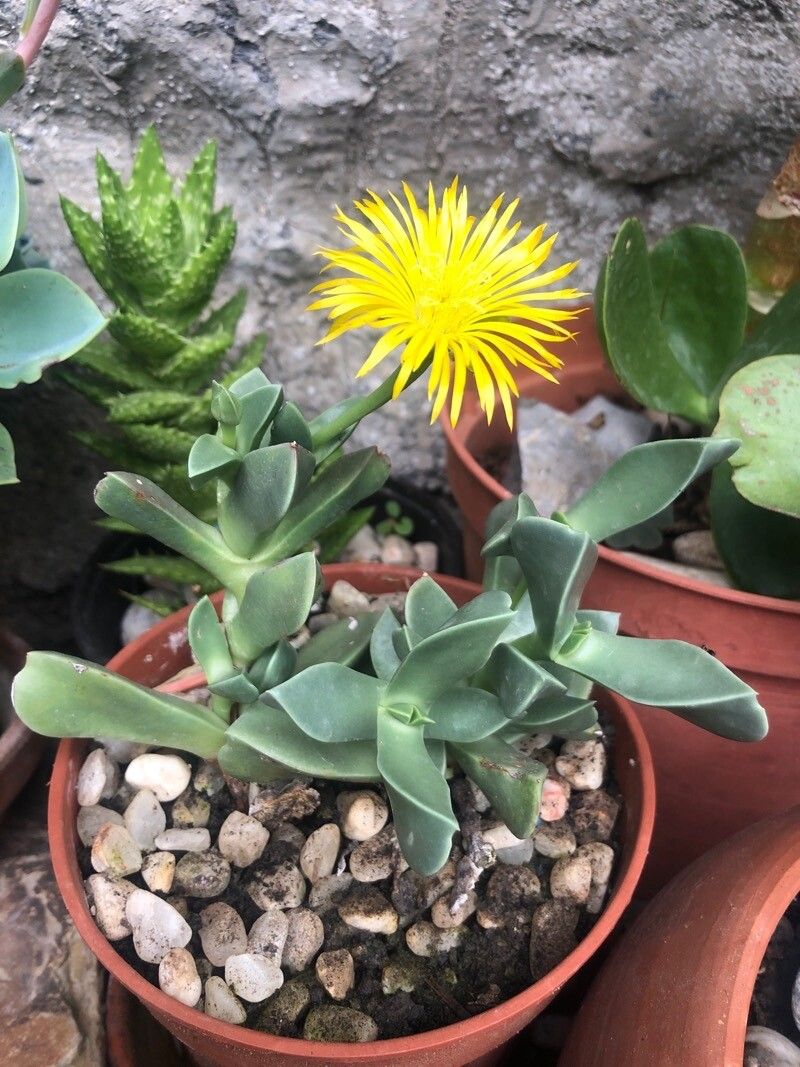
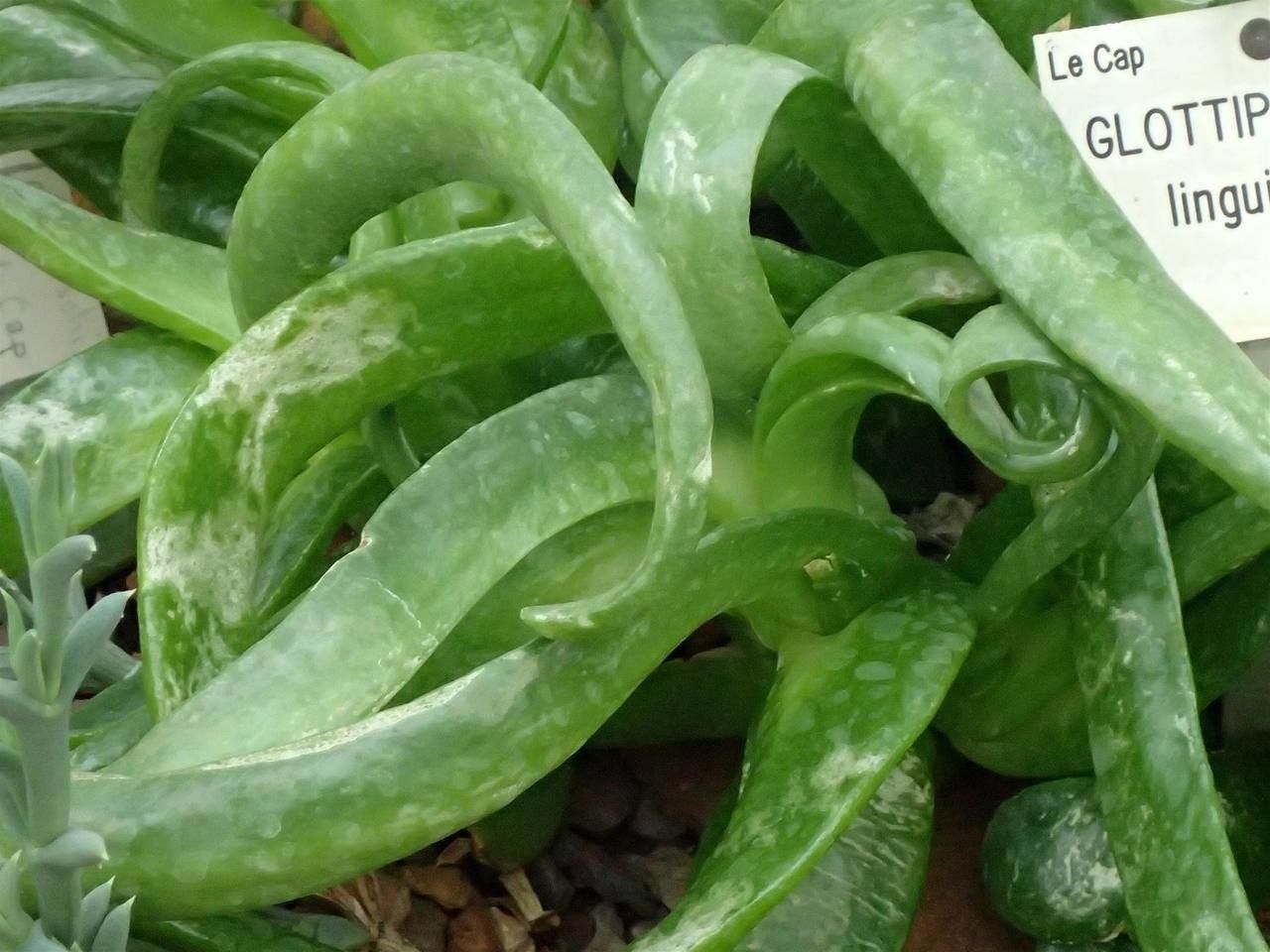
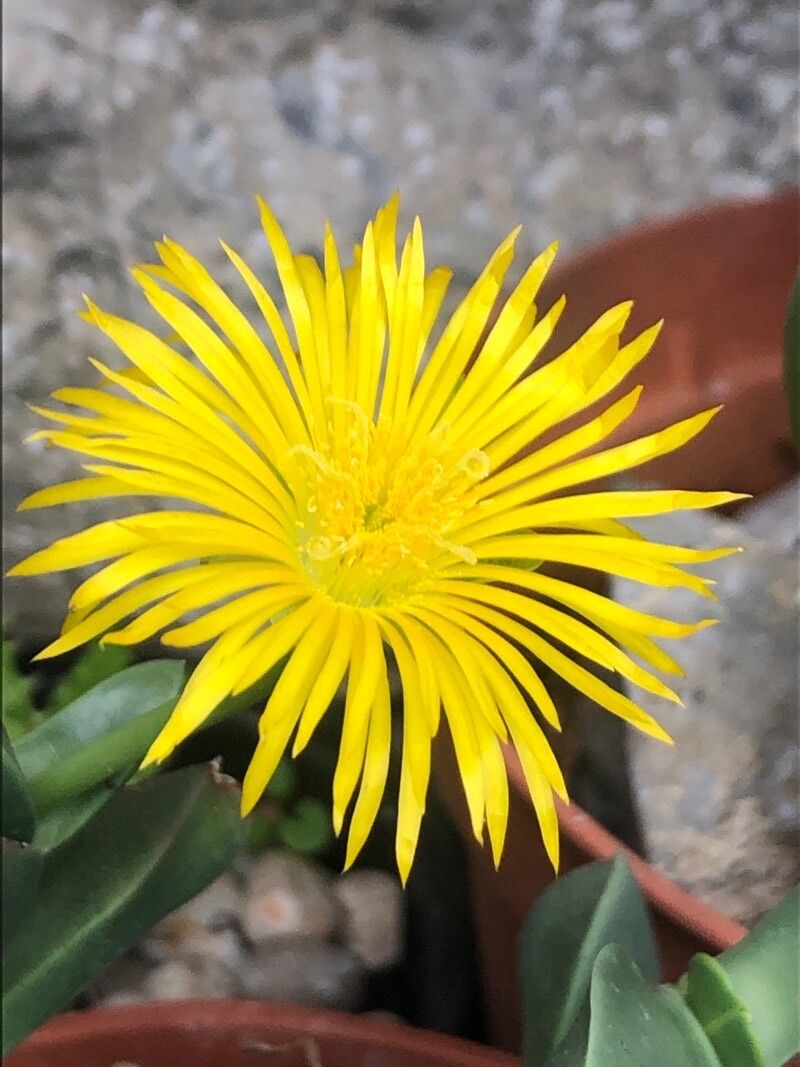
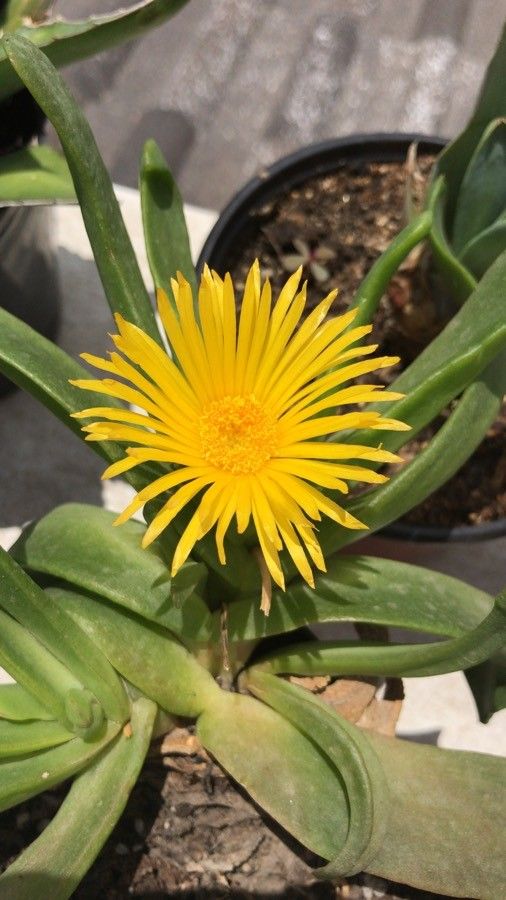
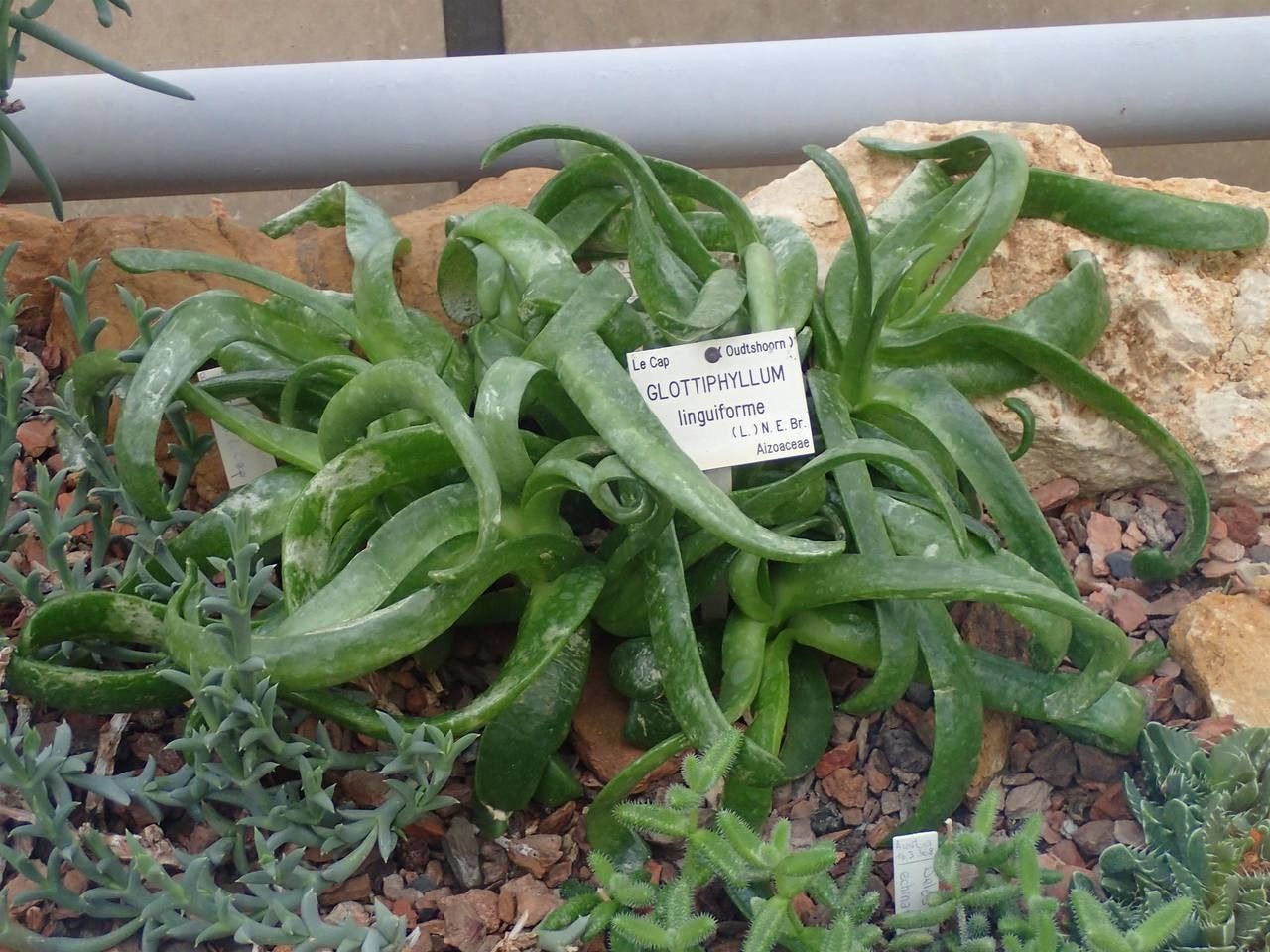
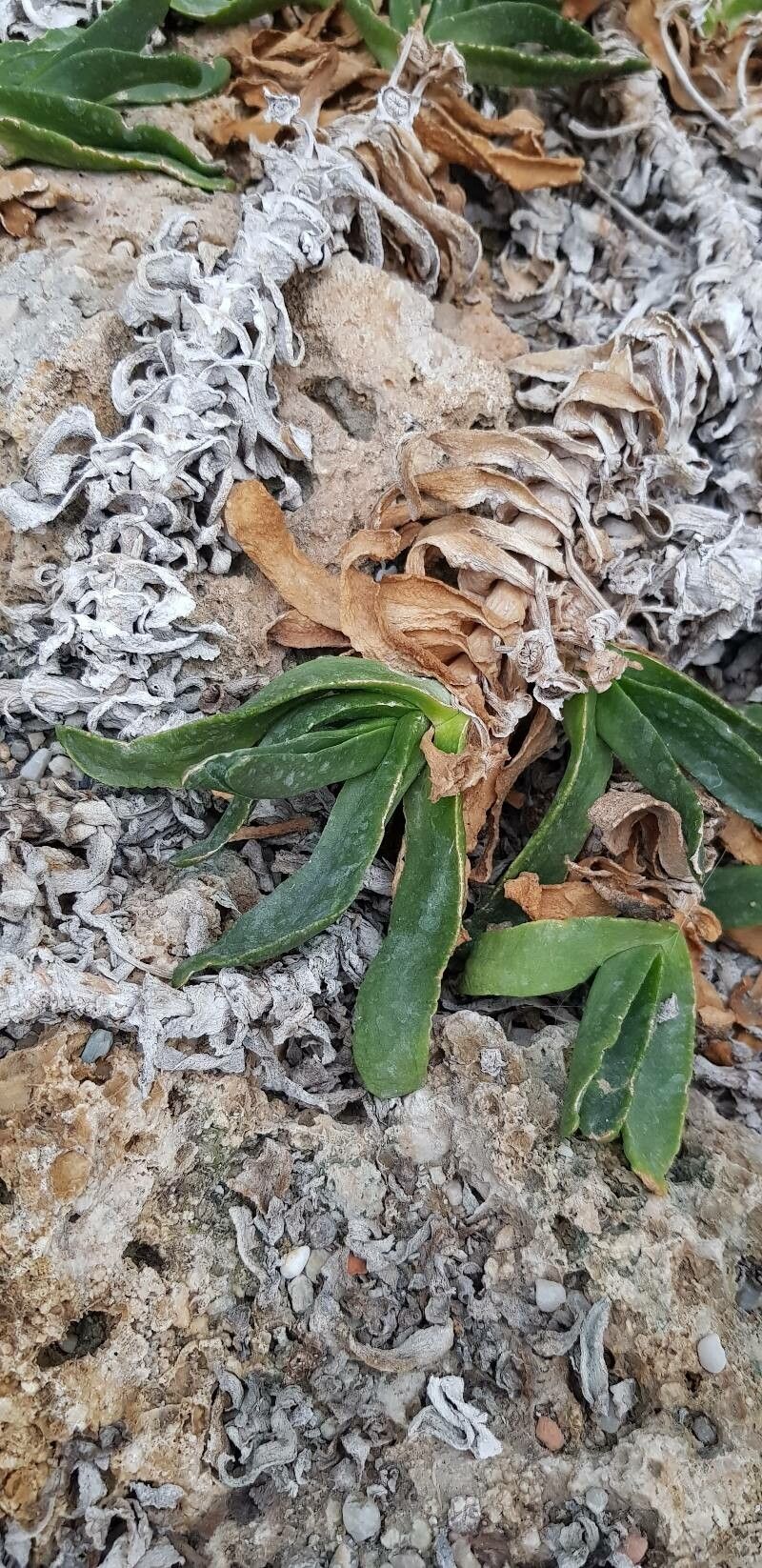
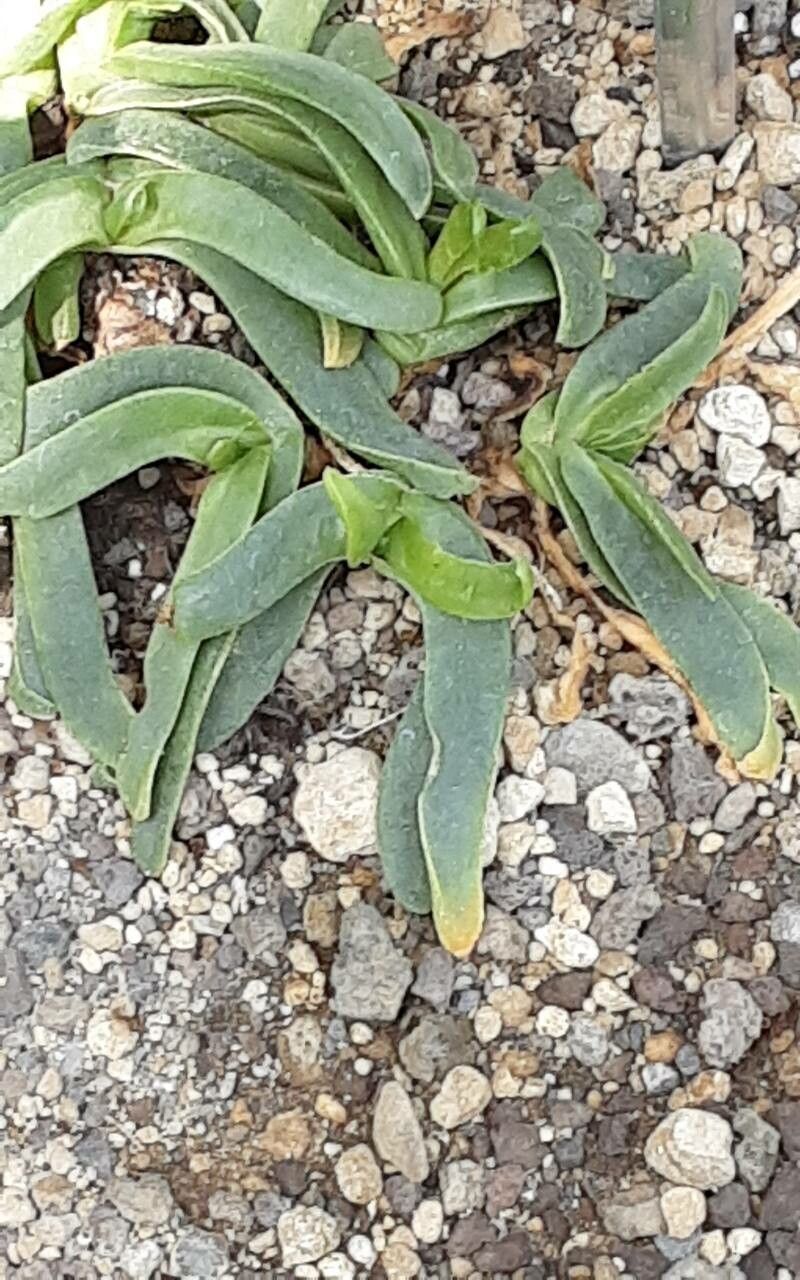
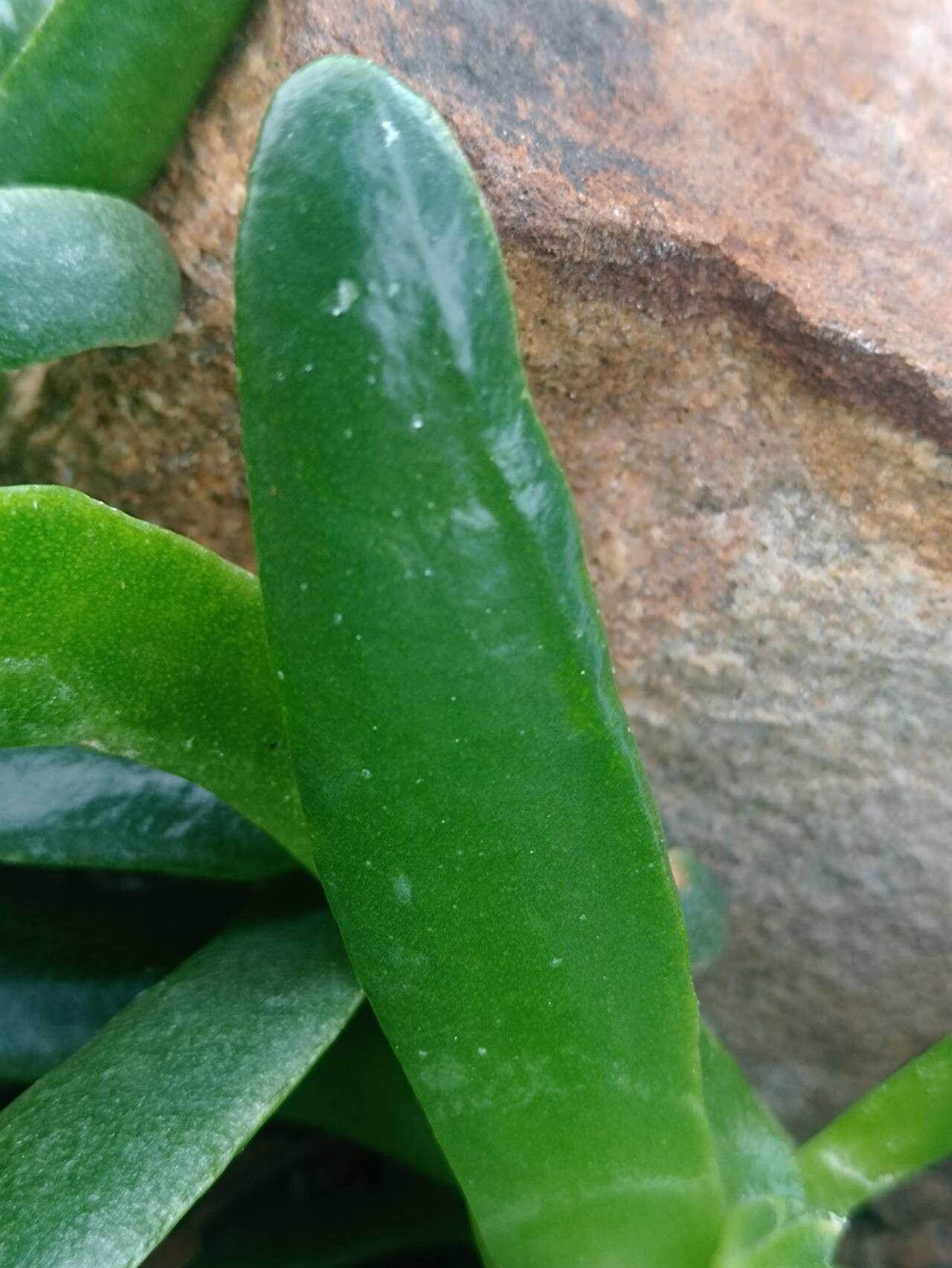
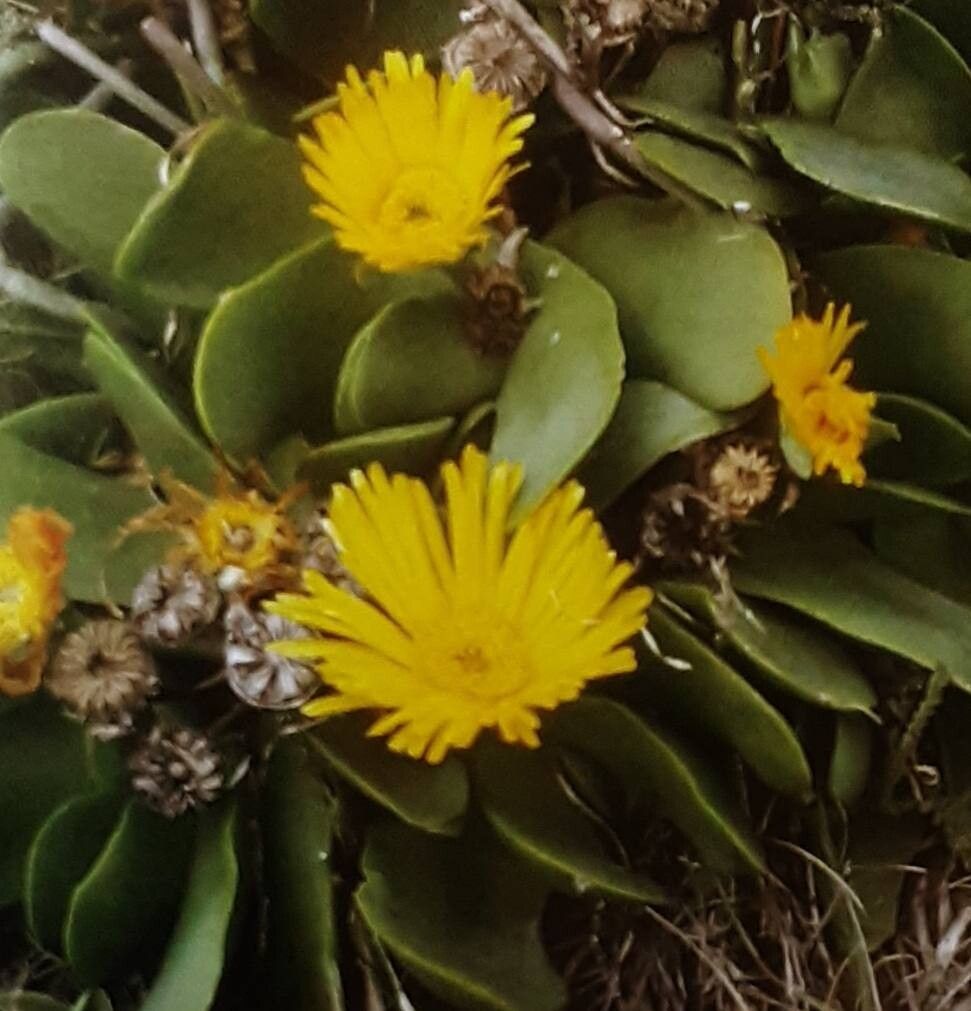
Glottiphyllum linguiforme is a widespread species of succulent plant, of the family Aizoaceae, native to South Africa. It is the type species of the genus Glottiphyllum.
Tongue plant has moderate disease resistance but is relatively sensitive to humidity. It becomes vulnerable to disease in high-humidity conditions and is prone to root rot during dormancy. Regarding care, Tongue plant tolerates drought but requires increased watering in the growing season. Watering should be greatly reduced or stopped entirely during the dormant period. Tongue plant is best for growers with some experience, as it can be challenging to maintain, particularly while dormant. It is especially suitable for people who can dedicate time to its care over the winter months.
How to keep Glottiphyllum Linguiforme.
Light
The tongue plant needs abundant sunlight, the fuel for its vigorous growth. In its native habitat it thrives under strong overhead light. While it can tolerate lower light levels, its development may be stunted. Young plants particularly prefer a very sunny environment. However, excessive light can cause leaf scald.
Water
The tongue plant is well-suited for arid climates, as it conserves water in its thick leaves. It requires only minimal watering, about once every three weeks, and is usually grown indoors. Being an evergreen, the tongue plant retains its lush, moisture-rich foliage throughout the year, making it a hardy and reliable choice for indoor gardening.
Temperature
The tongue plant comes from areas with temperate climates. It favors temperatures ranging from 59 to 95 °F (15 to 35 ℃). Seasonal temperature adjustments might be required to replicate the conditions of its natural habitat.
Fertilizer
For the Tongue plant, light doses of fertilizer once or twice a year during the growing season are sufficient. Avoid fertilizing in winter or in summer when it is dormant. Cut back on fertilizer for plants that have been repotted and wait a couple of months after repotting before feeding. Fertilizing helps maintain healthy growth and promotes blooms.
Pruning
To keep your tongue plant in shape, prune any excess or dense branches in the spring and autumn using a knife or scissors. For propagation, choose robust stems with 5-6 leaves. Apply sulfur powder to the cut wounds, and plant them once they have healed. Make sure to lightly moisten the soil for cuttings beforehand.
Pot & Repot
When repotting the Tongue plant, choose a pot slightly larger than the current one that has good drainage. Use a gritty, well-draining succulent or cactus mix. Gently remove the plant from its old pot, brush off excess soil, and replant it at the same depth. Wait several days before watering so any root damage can heal. Repot in spring or fall and place it in a brightly lit location.
Botanical profile.
- Plant Type
- Succulent
- Life Cycle
- Perennial
- Genus
- Glottiphyllum
- Family
- Aizoaceae
- Hardiness Zone
- 8-10
- Mature Height
- 5 cm to 13 cm
- Mature Spread
- 20 cm to 37 cm
- Leaf Color
- Light Green, Medium Sea Green
- Leaf Type
- Evergreen
- Flower Color
- Yellow
- Flower Size
- 5.08 cm
- Bloom Time
- Mid summer, Late summer, Early fall
- Planting Time
- Spring, Summer, Autumn
- Harvest Time
- Mid fall, Late fall, Early winter
- Native Area
- South Africa
Other names.
Reader questions.
What are the sunlight requirements for a Tongue plant?
The Tongue plant requires above 6 hours of sunlight to ensure its lush growth. In its native habitat, it flourishes under ample sunlight although it is capable of surviving in lesser light conditions, albeit with potential stunted growth. The youthful stages of the plant particularly thrive in a sun-saturated environment. However, an excessive amount of sunlight can cause leaf scald. It's beneficial to observe the movement of sunlight through your garden to find spots that provide an ideal balance of light and shade, ensuring the plant's well-being.
What is the ideal temperature range for the Tongue plant?
The Tongue plant, scientifically known as Glottiphyllum linguiforme, thrives in temperatures ranging from 59 to 95 °F (15 to 35 °C). Its origin from temperate regions means it prefers warm conditions but will require seasonal adjustments to mimic its natural habitat. During winter, when temperatures drop, the plant enters a dormant state and should be kept above -5°C to avoid damage. It's crucial to move the plant indoors or provide insulation if temperatures fall below this threshold. In conditions below 15°C, reduce or stop watering to prevent root rot.
How does artificial lighting benefit indoor Tongue plants?
For indoor Tongue plants, artificial lighting can play a crucial role in promoting faster, healthier growth, especially when natural sunlight is insufficient. LED lights are recommended because they can be tailored to provide specific wavelengths needed by plants. Full sun plants require 30-50W/sq ft, partial sun plants need 20-30W/sq ft, and full shade plants should have 10-20W/sq ft of artificial light. The light source should be placed 12-36 inches above the plant to mimic natural sunlight, and most plants benefit from 8-12 hours of light per day. This setup is essential during winter or in less sunny spaces to ensure optimal growth.
How should I care for my Tongue plant during low temperatures?
During low temperatures, especially in winter, the Tongue plant should be kept above -5°C to ensure it remains healthy. If temperatures drop below -10°C, the plant may become weak and prone to root rot. In case of mild frost damage, trim off the frostbitten areas and check the roots for rot. If you find rotted roots, they should be cut off, and the plant can be propagated through cuttings. Move the plant to a warm indoor environment, preferably near a south-facing window, to provide ample sunlight. Supplemental lighting can be used if natural light is insufficient.
What symptoms indicate insufficient light for a Tongue plant?
Tongue plants showing symptoms of light deficiency may exhibit small leaves, leggy or sparse growth, faster leaf drop, slower or no new growth, and lighter-colored or yellowing leaves (chlorosis). Additional symptoms like sunscald, leaf curling, wilting, and leaf scorching can also occur due to adverse lighting conditions, indicating either inadequate light or excessive direct sunlight. These symptoms highlight the importance of providing your Tongue plant with the right balance of light to maintain its health.
What should I do if my Tongue plant is exposed to high temperatures?
The Tongue plant should ideally be kept below 35°C during the summer months. Exposure to temperatures above 41°C can halt its growth, causing water loss, wilting, and increased susceptibility to sunburn. To aid a heat-stressed Tongue plant, first remove any sunburned or rotten parts. Then, protect the plant from direct afternoon sunlight until it shows signs of recovery and resumes growth. If the plant has experienced root rot, cease watering until new roots form.
What solutions can help a Tongue plant with insufficient light?
To address insufficient light for a Tongue plant, gradually moving the plant to a location with at least 6 hours of direct sunlight daily is recommended. This can be achieved by using a south-facing window and keeping curtains open during the day for maximum sunlight exposure. For plants that are large or difficult to move, consider using artificial lighting such as desk or ceiling lamps for at least 8 hours daily or invest in professional plant grow lights. For outdoor plants, it's crucial to avoid sudden changes in light intensity to prevent sunburn. Minimizing obstructions by pruning branches or transplanting smaller plants to sunnier locations can also improve sunlight exposure. Remember, while parts of the plant that suffered from poor lighting might not recover, new growth will be healthy with improved light conditions.