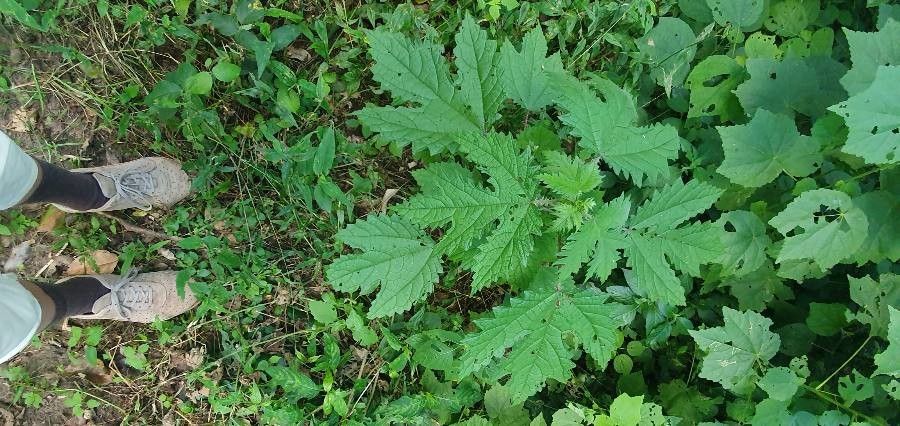
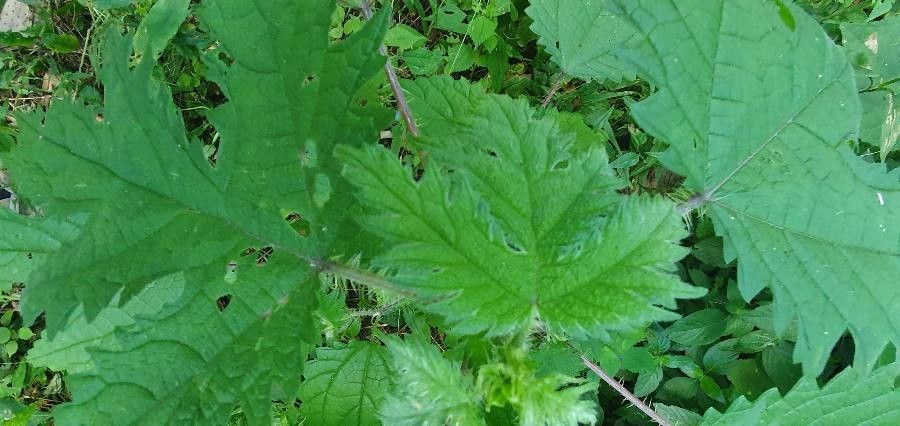
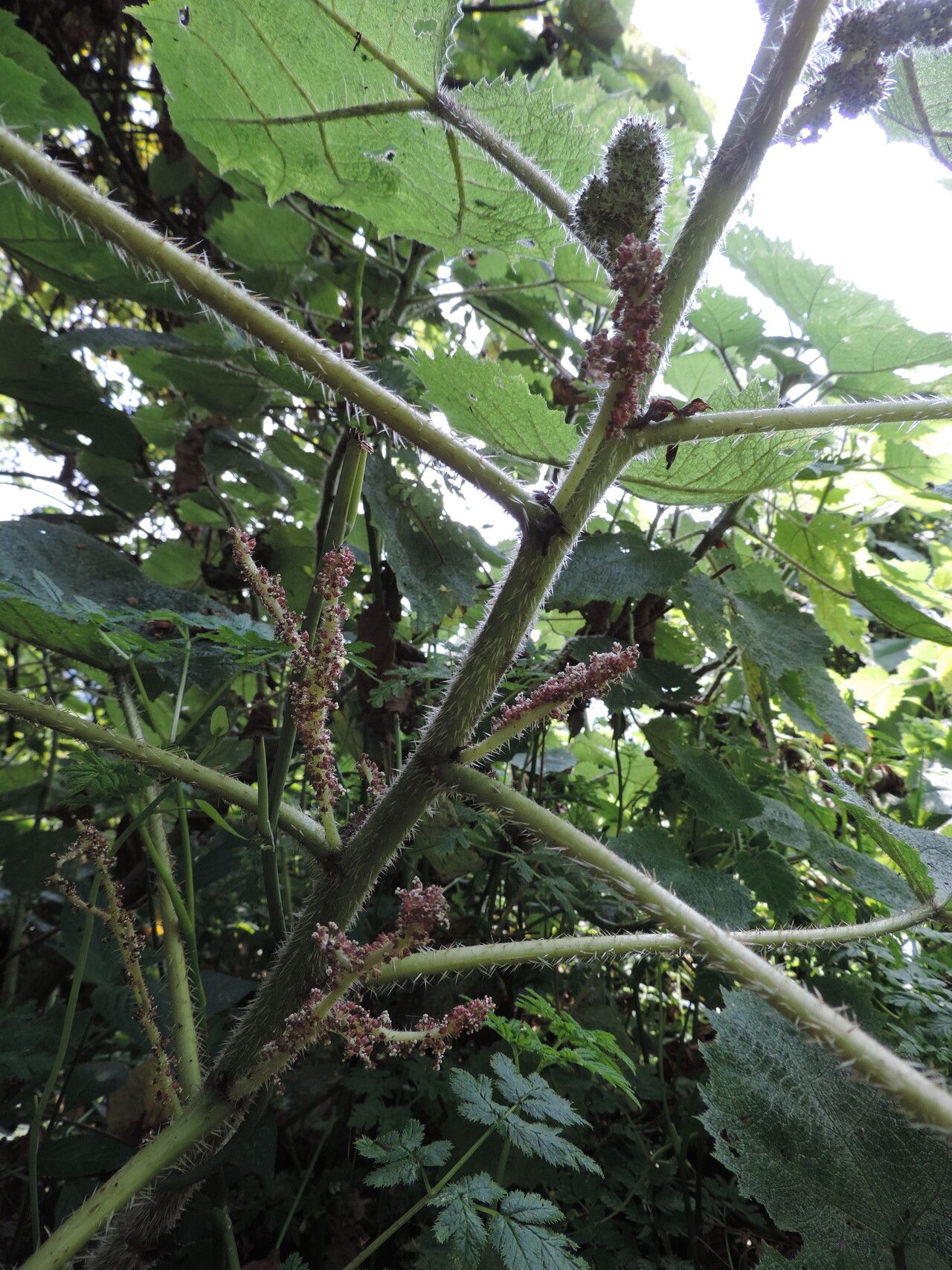
Girardinia diversifolia, commonly known as the Himalayan nettle or Nilghiri nettle, is found abundantly in open forest land, river sides, and moist habitat in Nepal and in Himalayan parts of India such as Uttarakhand, Himachal Pradesh and Jammu and Kashmir and in vast parts of China. It grows naturally at elevations between 1,200 to 3,000 metres (3,900 to 9,800 feet). It is a shade tolerant, tall, stout and erect herb growing up to 3m height with perennial rootstock. The plant grows as a clump, and each clump has many stems. The stem contains bast fiber of unique quality which is strong, smooth and light.Allo is a 1.5 to 3 metres tall perennial herbaceous shrub that grows without cultivation all over Nepal. It most frequently occurs in the hilly and mountainous regions at altitudes up to 3000 m.
The Nilghiri nettle has strong disease resistance and generally does not tend to develop illnesses. Still, it can be affected by pests and diseases present in its environment. Such infections are generally mild. For care, this plant requires moderate maintenance. It should be pruned regularly to preserve its appearance and support healthy growth. Fertilizing can also encourage more flowering. The Nilghiri nettle is suitable for anyone with outdoor space, like a garden or patio, and does not need extensive care experience. It may need more attention when grown indoors.
How to keep Girardinia Diversifolia.
Light
Nilghiri nettle grows best in full sun but can tolerate limited sunlight as occurs in its native dense-forest habitat. Too little light can stunt its growth, while too much can scorch the leaves.
Temperature
Nilghiri nettle has good temperature adaptability, able to withstand higher heat and wide temperature fluctuations. In hot conditions, care should be taken with watering and suitable shade provided to avoid sunburn. However, Nilghiri nettle is not very tolerant of low temperatures; although it can endure some cold, very low temperatures can cause frost damage.
Fertilizer
Nilghiri nettle benefits from regular, light applications of fertilizer to encourage healthy leaf growth. You should fertilize Nilghiri nettle about once a month during the summer. Nitrogen is essential for foliage, and adding nitrogen-rich sources helps Nilghiri nettle thrive.
Pruning
To manage the size of Nilghiri nettle and encourage new growth, prune it from early to late spring. Begin by removing dead stems and thinning the center to improve airflow. Pruning at this time aligns with the plant's growth cycle, boosting its health and reducing the risk of pests. Always wear protective gloves to avoid skin irritation from the plant's stinging hairs.
Botanical profile.
- Plant Type
- Herb
- Life Cycle
- Annual, Perennial
- Genus
- Girardinia
- Family
- Urticaceae
- Hardiness Zone
- 7-11
- Mature Height
- 0.91 m to 1.22 m
- Mature Spread
- 49 cm to 91 cm
- Leaf Color
- Dark Green
- Leaf Type
- Deciduous
- Flower Color
- Yellow, Green
- Flower Size
- 10.16 cm
- Bloom Time
- Late summer, Early fall, Mid fall
- Planting Time
- Spring, Summer, Autumn
- Harvest Time
- Mid fall, Late fall, Early winter
Other names.
Reader questions.
What are the sunlight requirements for Nilghiri nettle?
Nilghiri nettle requires full sun, defined as over 6 hours of sunlight daily, to thrive optimally. However, it can also tolerate partial sun conditions, where it gets about 3-6 hours of sunlight per day. Ensuring the right balance of sunlight is crucial, as the amount of exposure significantly impacts the plant's health and growth. The plant is quite adaptable, as it can grow in unobstructed exposure to the sun and handle limited sun exposure, typical of its native dense forest habitats. Insufficient sunlight can stunt the plant's growth, while too much direct sun might cause leaf scorching.
What is the Nilghiri nettle?
The Nilghiri nettle, known botanically as Girardinia diversifolia, is a plant species without further detailed information provided in this context.
What are the symptoms of improper sunlight exposure in Nilghiri nettle?
Nilghiri nettle shows various symptoms when it doesn't receive adequate sunlight, including small leaves, leggy or sparse growth, faster leaf drop, slower or no new growth, and lighter-colored new leaves. Excessive sunlight can lead to chlorosis (leaves turning yellow), sunscald (leaf damage), leaf curling, wilting, and leaf scorching. These symptoms are crucial indicators of the plant's need for either more or less sunlight to maintain its health.
How can artificial lighting be used for Nilghiri nettle?
Artificial lighting can be essential for Nilghiri nettle's growth, especially when natural sunlight is insufficient. Indoor plants may require 30-50W/sq ft for full sun plants, 20-30W/sq ft for partial sun plants, and 10-20W/sq ft for full shade plants. LED lights are recommended due to their ability to provide specific wavelengths needed by the plant. The light source should be placed 12-36 inches above the plant to imitate natural sunlight, and the duration should mimic natural daylight hours, with most plants needing 8-12 hours of light per day.
What solutions exist for sunlight-related issues with Nilghiri nettle?
To address sunlight-related problems, gradually adjusting the plant's exposure to sunlight is key. For indoor plants, it's advisable to move them to sunnier spots weekly until they get at least 6 hours of direct sunlight daily, or use artificial light sources for at least 8 hours daily if the plant is large or immovable. Outdoors, plants should be moved to better-lit areas cautiously to preclude sunburn. Pruning obstructions like tree branches can help increase sunlight penetration. Transplanting smaller plants to sunnier locations during their dormant period can also improve light access.