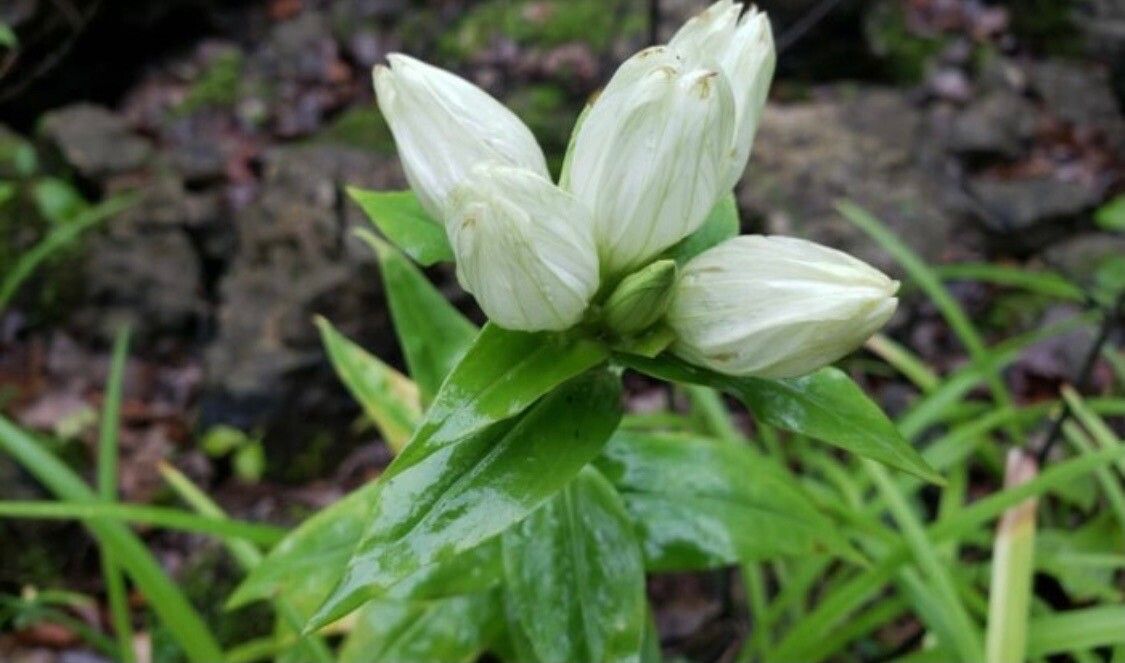
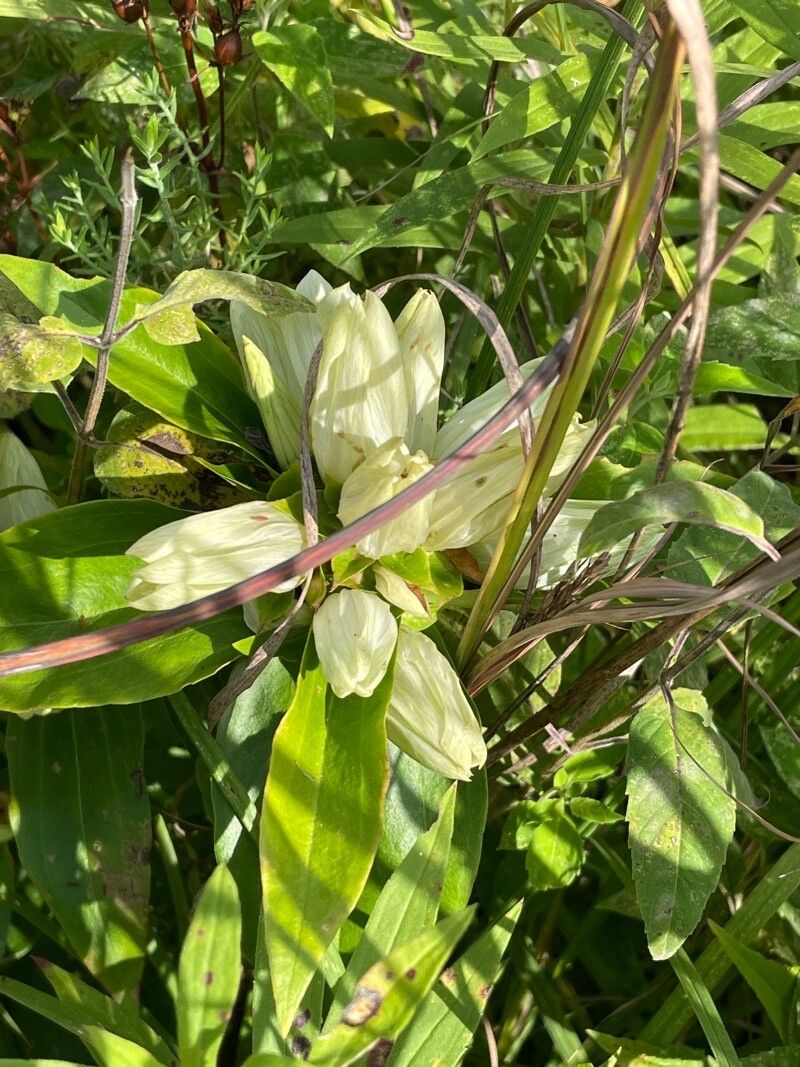
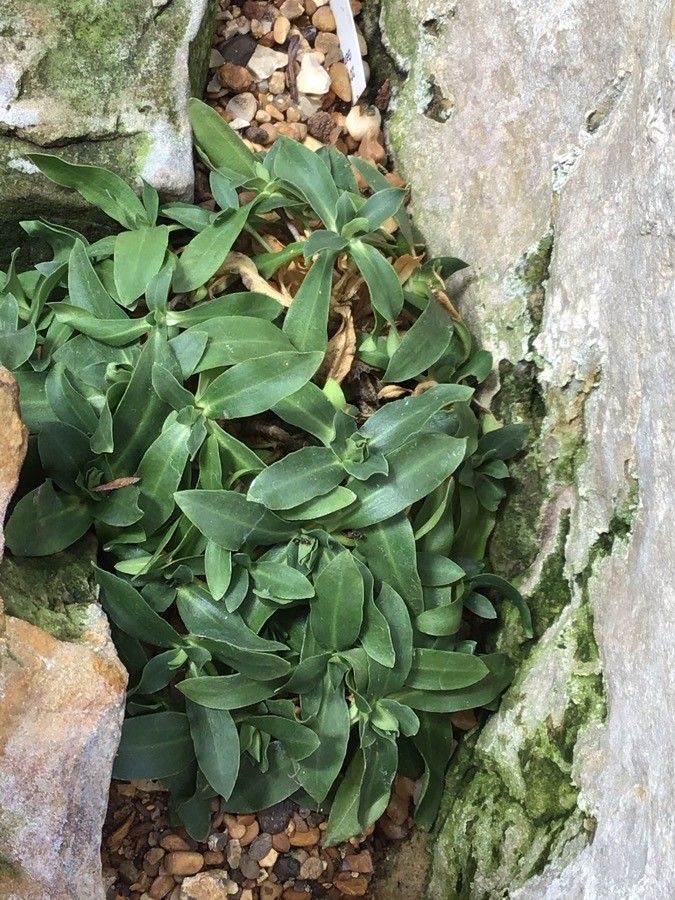
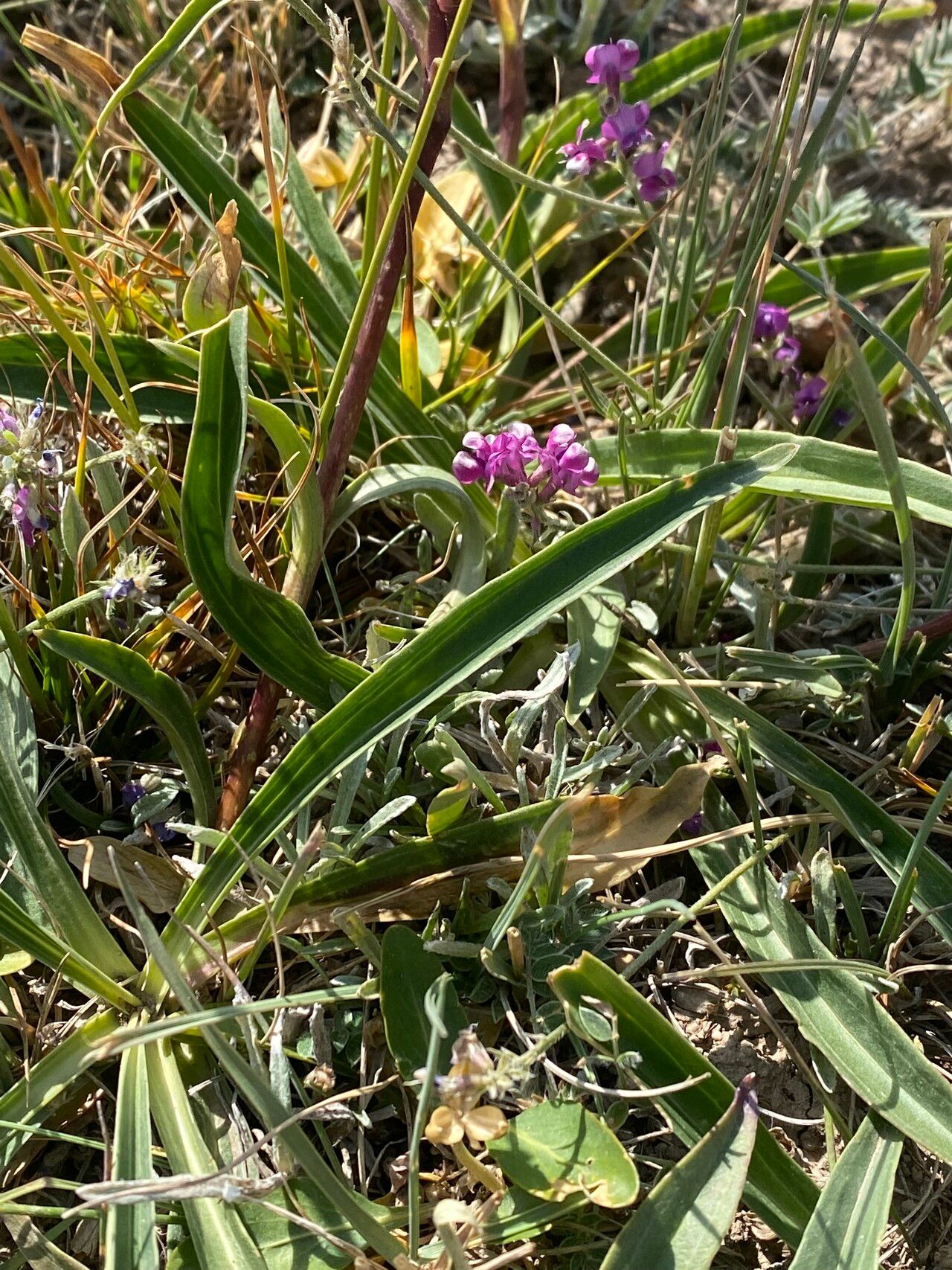
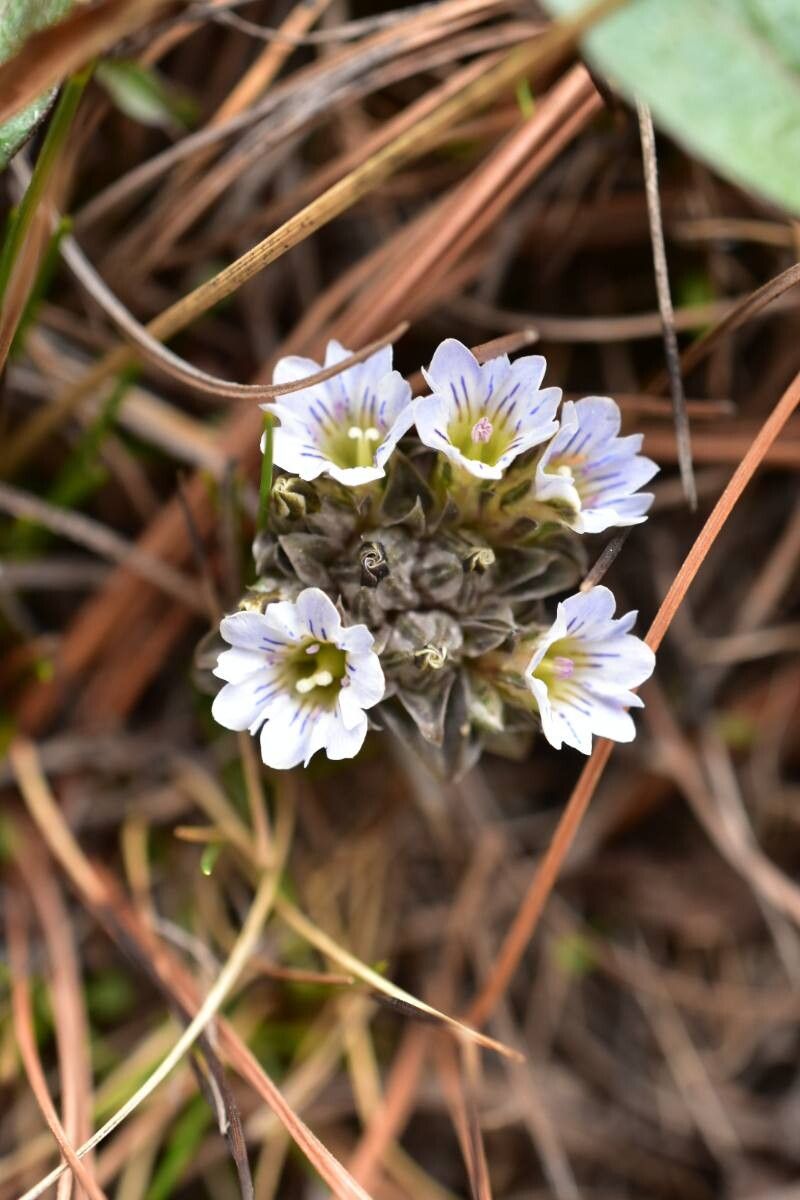
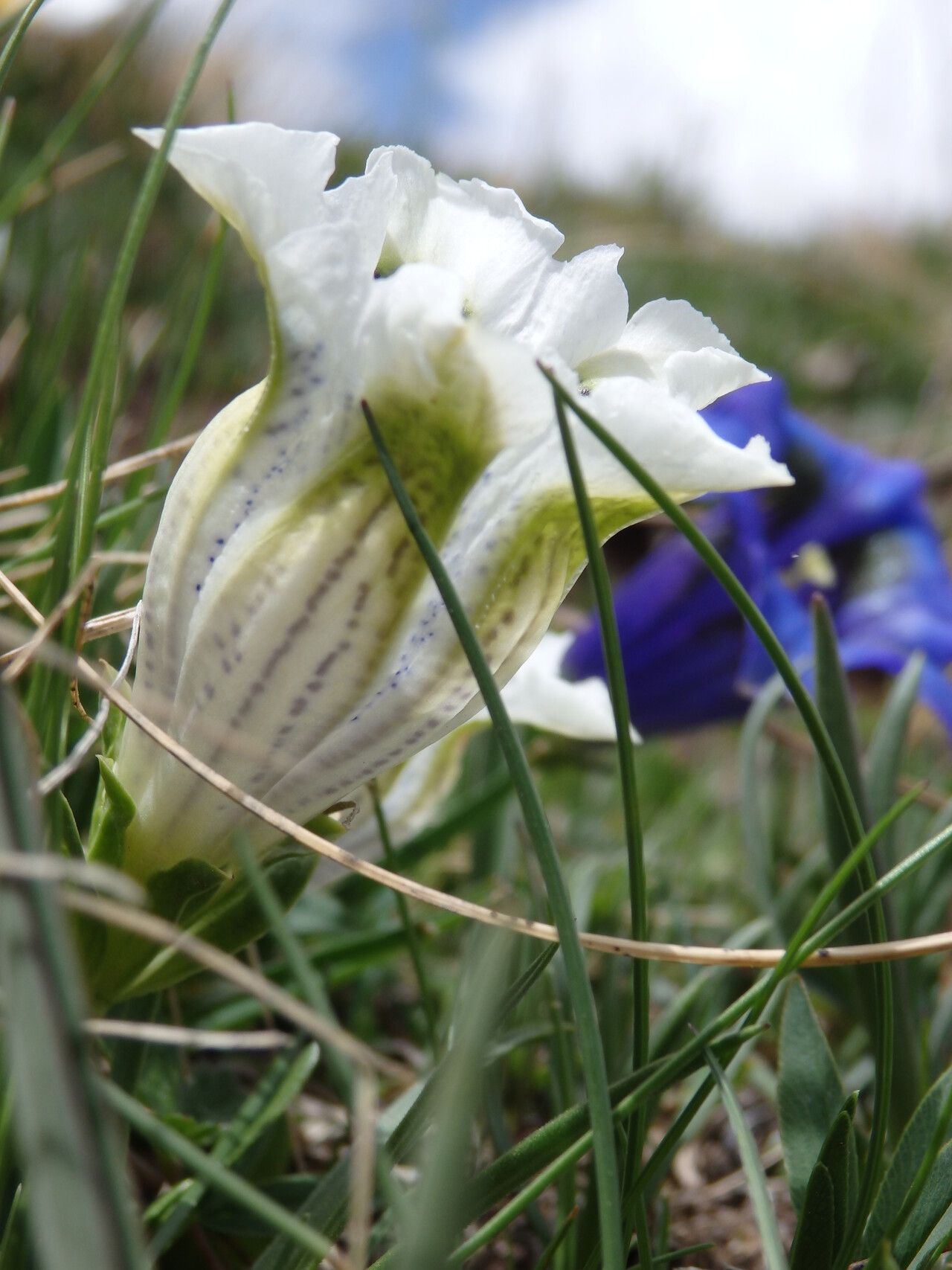
Gentiana alba (called plain, pale, white, cream, or yellow gentian) is a herbaceous species of flowering plant in the Gentian family Gentianaceae, producing yellowish-white colored flowers from thick white taproots. It is native to North America from Manitoba through Ontario in the north, south to Oklahoma, Arkansas and North Carolina, and it is listed as rare, endangered, threatened or extirpated in parts of this range.This species resembles bottle gentian (Gentiana andrewsii), which has blue flowers and a less upright habit, and shares much of the same range. Gentiana alba starts to bloom a few weeks earlier than bottle gentian and the flowers are more open at the tops. Gentiana alba can also hybridize with Gentiana andrewsii, producing upright growing plants having white flowers with blue edges. Synonyms include Gentiana flavida A. Gray
Plain gentian has strong resistance to disease and is generally not prone to illness. However, it can be vulnerable to pests and diseases present in its environment, and such infections are usually mild. In terms of care, this plant requires moderate maintenance. It should be pruned regularly to preserve a neat appearance and support healthy growth. Fertilizing can also help encourage flowering. Plain gentian is appropriate for anyone with outdoor space, such as a garden or patio, and does not demand extensive care experience. It may need more attention when kept indoors.
How to keep Gentiana Alba.
Light
Plain gentian prefers to receive as much light as possible during the day but can tolerate moderate light levels. Its origin in exposed, wide-open habitats has shaped its development. Insufficient light can slow its growth, while excessive exposure may cause leaf burn.
Water
Plain gentian flourishes in alpine environments, favoring well-drained soils and requiring only occasional moisture. This plant has a moderate tolerance for drought, needing watering only every one to two weeks. As an herbaceous perennial, plain gentian thrives best when grown outdoors, where it can benefit from natural rainfall and experience the changes in seasonal temperatures.
Temperature
Plain gentian originates from temperate zones and favors temperatures from 32 to 90 °F (0 to 32 ℃). It tolerates low winter temperatures well but may require shading during hot summers. Adjust conditions accordingly for healthy growth.
Fertilizer
The best time to fertilize a Plain gentian is in early spring, as it comes out of dormancy and starts active growth. Fertilization supplies essential nutrients needed for healthy development. Even though Plain gentian has fairly low fertilizer requirements, an annual application can improve its survival and encourage healthier, longer-lasting flowers.
Pruning
Plain gentian thrives with regular pruning to ensure healthy growth and vibrant flowering. Essential techniques include cutting back the stems in early spring and doing a light trim after the plant has bloomed. Pruning offers several benefits, such as improved air circulation, disease prevention, enhanced appearance, and a longer lifespan for the plant. It's important to time your pruning correctly, ideally doing it in late winter to early spring.
Botanical profile.
- Plant Type
- Herb
- Life Cycle
- Perennial
- Genus
- Gentiana
- Family
- Gentianaceae
- Hardiness Zone
- 3-7
- Mature Height
- 61 cm to 91 cm
- Mature Spread
- 30 cm to 61 cm
- Leaf Color
- Green
- Leaf Type
- Evergreen
- Flower Color
- White
- Flower Size
- 3.05 cm to 4.57 cm
- Bloom Time
- Early summer, Mid summer
- Planting Time
- Spring, Summer
- Harvest Time
- Late summer, Early fall
Reader questions.
What are the sunlight requirements for Plain gentian?
Plain gentian thrives in conditions that simulate its natural habitat of wide, open spaces with ample daylight exposure. It requires full sun, which is above 6 hours of sunlight per day, but can also tolerate partial sun, about 3-6 hours of sunlight per day. However, it's crucial to watch how sunlight moves through your garden to ensure plants get the right balance of light and shade, as insufficient exposure may hinder growth, and too much direct sun can result in leaf burn.
What is the native temperature range for plain gentian and how does it handle different weather conditions?
Plain gentian, botanically known as Gentiana alba, is native to temperate zones and prefers a temperature range of 32 to 90 °F (0 to 32 °C). It tolerates low winter temperatures well and is highly cold-tolerant, not requiring additional frost protection measures. However, it may require shading during hot summers to ensure healthy growth. Before the first freeze in autumn, it's recommended to water the plant generously so the soil stays moist and freezes, helping prevent drought and water scarcity during winter and early spring.
How important is light for the growth of Plain gentian?
Light is essential for the growth and development of Plain gentian. This plant prefers maximum light exposure throughout the day but can adapt to moderate light conditions. Originating from exposed environments, Plain gentian's growth could be stunted by insufficient light, whereas excessive exposure can cause leaf burn. For indoor plants where natural sunlight is limited, especially during winter or in less sunny locations, artificial lighting such as LED lights can be used to stimulate growth. Depending on the type of plant and its light requirements, the amount of artificial light, its distance from the plant, and the duration of exposure should be adjusted accordingly.
What should I do if the temperature falls below -35\u00b0C or exceeds 32\u00b0C for plain gentian?
For temperatures below -35°C, plain gentian is extremely cold-tolerant, but such low temperatures can lead to a decrease in sprouting or even no sprouting in spring. In this case, remove any parts that have failed to sprout come spring. In contrast, when temperatures exceed 32°C, plain gentian's growth will stop, and it becomes more susceptible to rot. To manage this, trim away sunburned and dried-up parts, move the plant to a shaded area or use shade cloth to protect it from midday and afternoon sun, and ensure the soil is kept moist by watering in the morning and evening.
What symptoms indicate light deficiency or excessive light in Plain gentian?
Symptoms of light deficiency in Plain gentian include smaller new leaves, leggy or sparse growth, faster leaf drop, halted growth or no new growth, and lighter-colored or pale new leaves. Excessive sunlight exposure can cause chlorosis (yellowing of leaves), sunscald, leaf curling, wilting, and leaf scorching. These symptoms highlight the importance of providing Plain gentian with the right amount of sunlight to maintain its health and vigor, as both insufficient and excessive light can negatively affect the plant.
How can I improve the lighting conditions for my Plain gentian?
To optimize growth for Plain gentian, gradually increase its sunlight exposure to at least 6 hours daily for indoor plants, utilizing a south-facing window or artificial lights like desk lamps or professional grow lights for 8 hours a day. For outdoor plants, slowly transition them to sunnier spots while avoiding abrupt exposure changes to prevent sunburn. If the plant is in the ground and sunlight is obstructed, consider pruning to increase light penetration or transplant smaller plants during their dormant period to sunnier locations with good drainage. Note that parts of the plant damaged by insufficient light may not recover, but new growth should be healthy once light conditions improve.