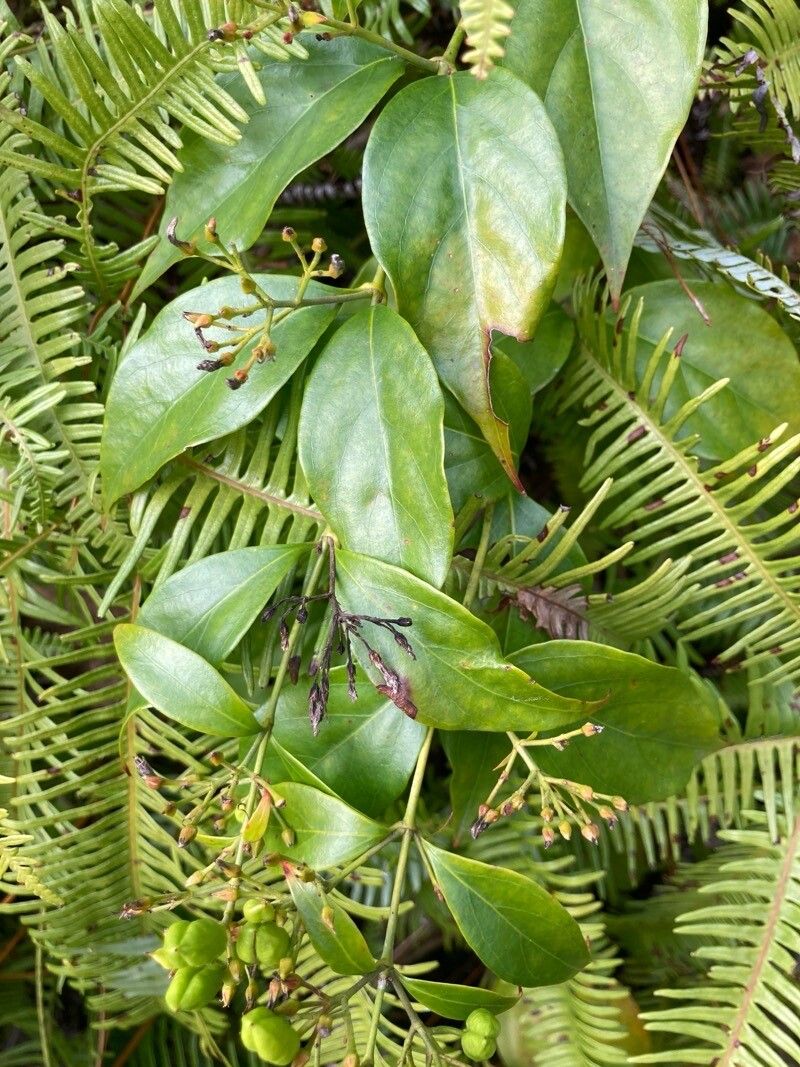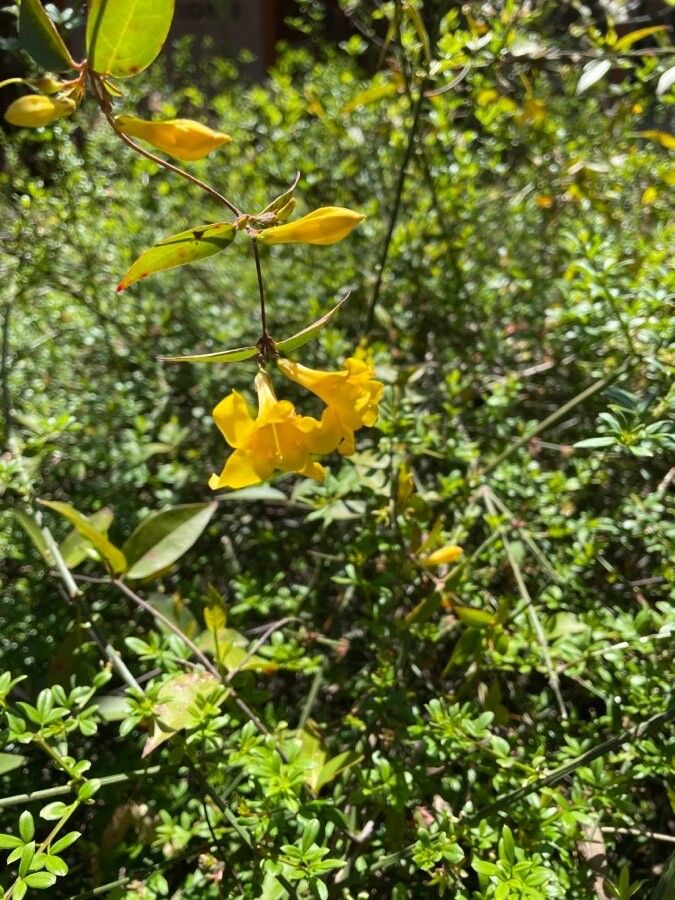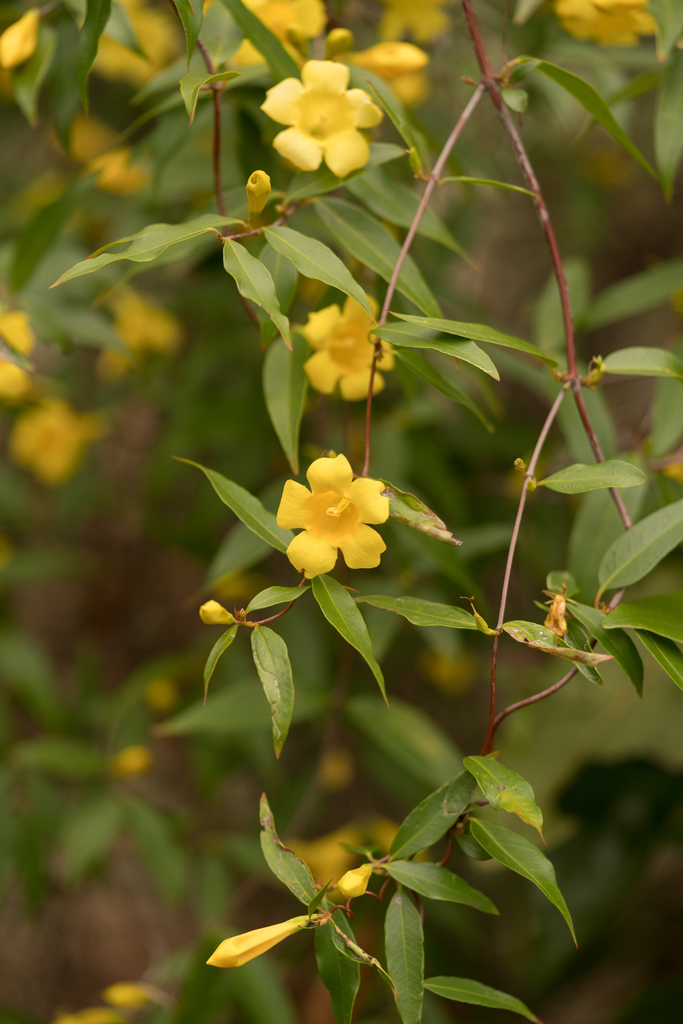
Gelsemium sempervirens, commonly known as yellow jessamine or Carolina jasmine, is a species of flowering plant in the Gelsemiaceae family. This woody vine can reach up to 20 feet in length and produces fragrant yellow flowers that bloom from late winter to early spring. Native to the southeastern United States, it thrives in forests, along roadsides, and near waterways. The leaves of Gelsemium sempervirens are evergreen, glossy, and dark green in color. Its trumpet-shaped flowers, featuring five bright yellow petals, grow on long stalks emanating from the leaf axils. For centuries, Gelsemium sempervirens has been utilized in medicinal practices by Native Americans and traditional Chinese medicine practitioners. It contains alkaloids like gelsemine, which are known for their analgesic properties. However, it is important to note that all parts of this plant contain toxic compounds that can cause serious health problems if ingested or even touched by humans or animals. As such, it must be handled with care. Overall, Gelsemium sempervirens is an attractive ornamental vine with fragrant blooms, but it should only be cultivated by experienced gardeners who are aware of its potential dangers.
Carolina jasmine is a plant primarily native to Asia. Varieties with fragrant white or yellow flowers are commonly referred to as jasmine. These blossoms have a rich aroma that attracts many pollinators. Since this plant is also native to the Carolina region, it is called Carolina jasmine.
Botanical profile.
- Plant Type
- Vine
- Life Cycle
- Perennial
- Genus
- Gelsemium
- Family
- Gelsemiaceae
- Hardiness Zone
- 7-11
- Mature Height
- 3.05 m to 6.1 m
- Mature Spread
- 0.91 m to 1.83 m
- Leaf Color
- Green, Yellow, Red, Gold, Purple
- Leaf Type
- Evergreen
- Flower Color
- Yellow
- Flower Size
- 2.54 cm to 3.05 cm
- Bloom Time
- Spring
- Planting Time
- Spring, Autumn
- Harvest Time
- Late spring, Early summer, Mid summer
- Native Area
- Mexico, Guatemala