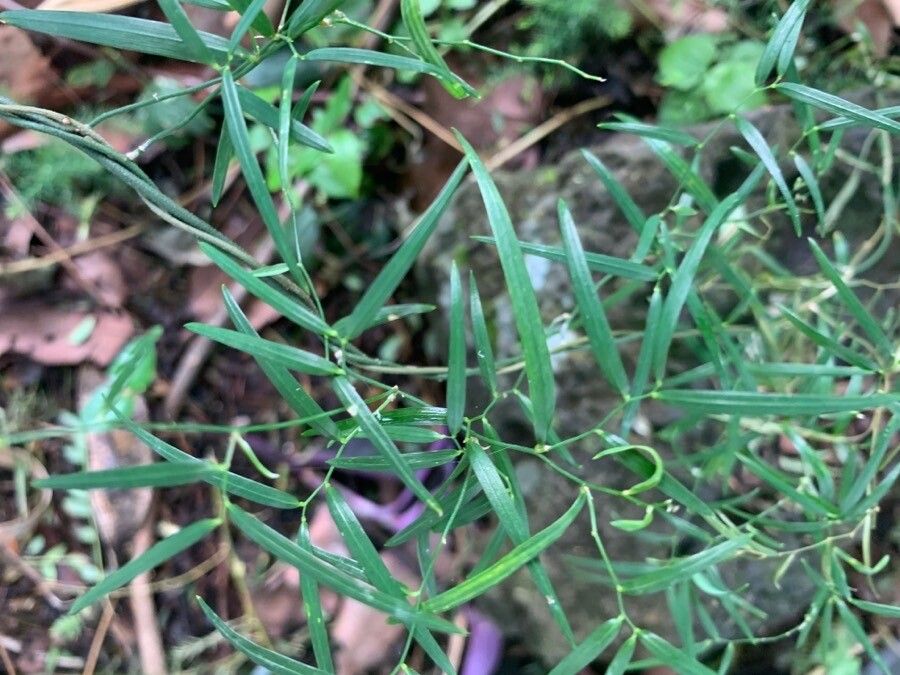
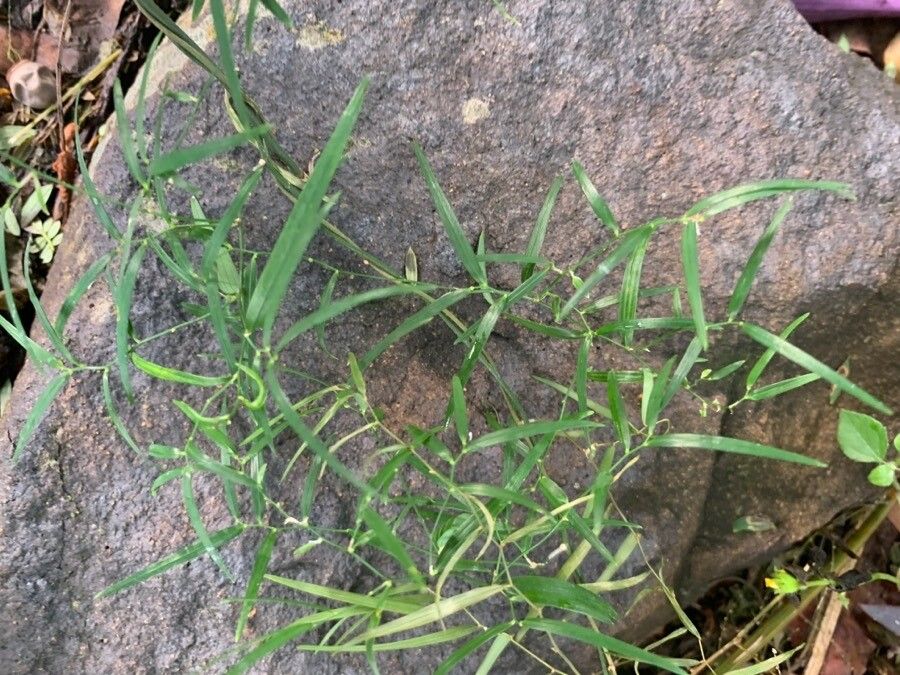
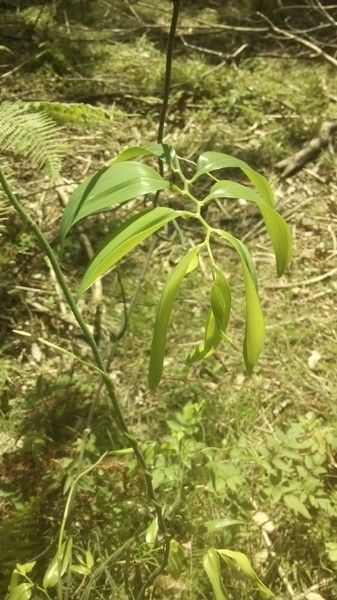
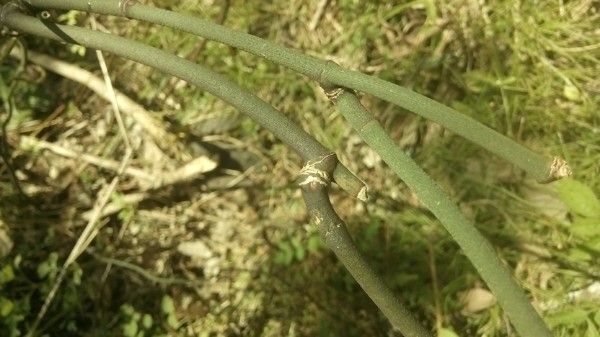
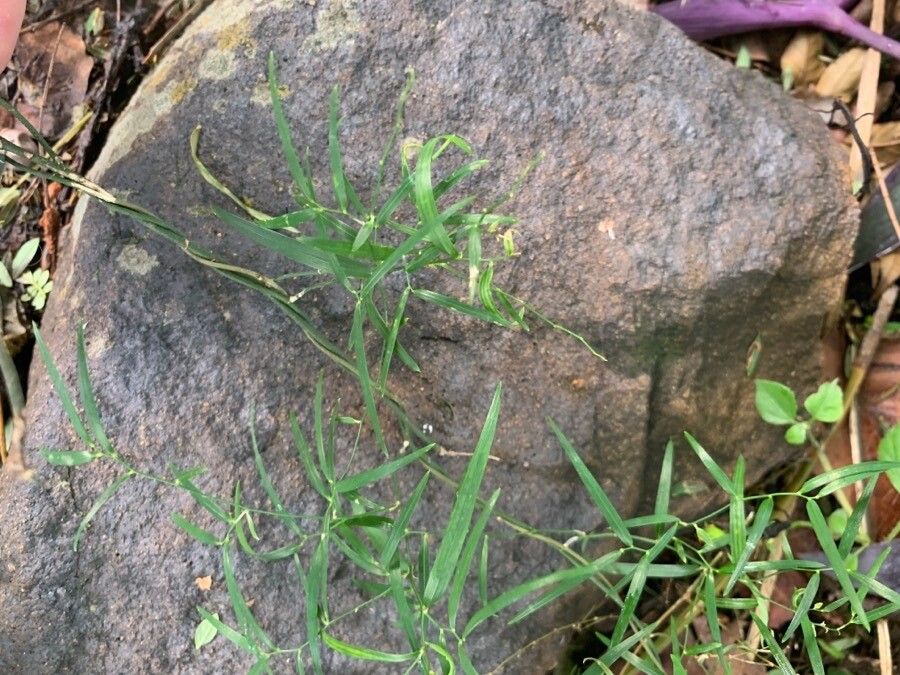
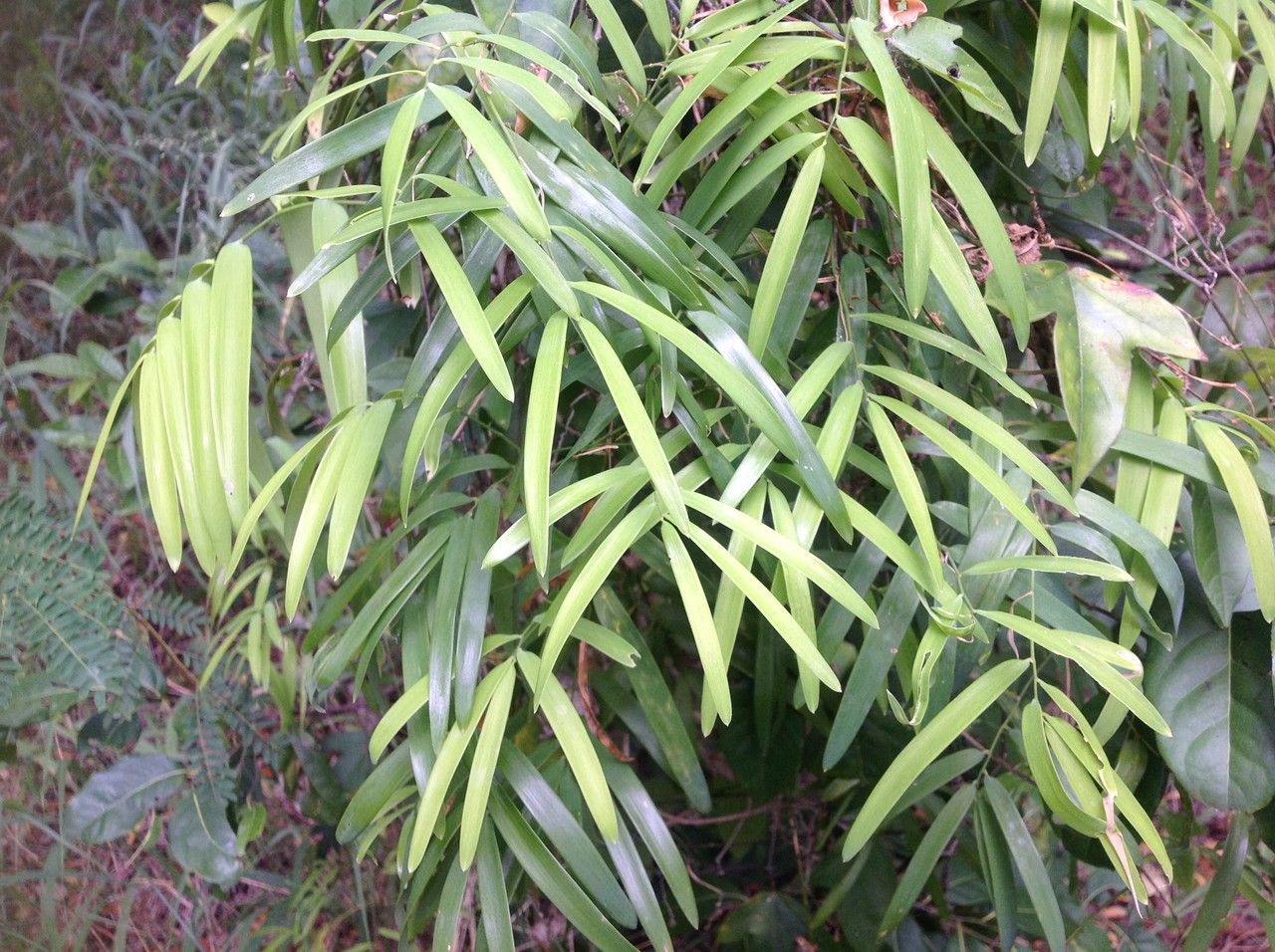
Geitonoplesium is a monotypic genus in the family Asphodelaceae, containing the sole species Geitonoplesium cymosum, commonly known as scrambling lily. The species is a perennial evergreen scrambling vine found in rainforests, sclerophyll forests and woodlands of eastern Australia, and parts of Malesia and Melanesia.The leaves are variable, usually narrow-lanceolate to linear, 2–10 cm (0.8–3.9 in) long and 3–25 mm (0.1–1.0 in) wide. Both surfaces of the leaves are glossy, with the midvein prominent and raised on upper surface. The flowers are mauve to white. The globular berries are 5–11 mm (0.2–0.4 in) in diameter and contain one or two more or less globular black seeds. There is a high degree of variation in the shape of the leaves, which has resulted in the establishment of numerous infraspecific taxa over the years, however none of these are recognised by leading present-day authorities.
The climbing lily is fairly resistant to disease and usually does not become ill. Nonetheless, it can be affected by pests and diseases present in its environment. These problems are typically minor. In terms of care, this plant needs moderate maintenance. It should be pruned regularly to preserve a neat appearance and support healthy growth. Fertilizing can also encourage flowering. The climbing lily is well suited for anyone with outdoor space, such as a garden or patio, and does not demand extensive experience in plant care. It may need extra attention when grown indoors.
How to keep Geitonoplesium Cymosum.
Light
Climbing lily is native to habitats such as forest understories and rocky areas, where it occurs in natural shade. It prefers partial sun but can tolerate full sun or full shade, illustrating its versatile and hardy nature.
Temperature
Climbing lily shows good adaptability to temperature, tolerating high heat and wide temperature fluctuations. In hot conditions, care should be taken with watering and providing appropriate shade to prevent sunburn. However, climbing lily is relatively intolerant of low temperatures; while it can endure some cold, excessively low temperatures may cause frost damage.
Fertilizer
The best time to fertilize a Climbing lily is in early spring, when it is coming out of dormancy and starting active growth. Fertilization supplies essential nutrients needed for healthy growth. Although Climbing lily has relatively low fertilizer requirements, applying fertilizer annually can improve its survival and encourage better, longer-lasting blooms.
Pruning
Climbing lilies benefit greatly from pruning in early spring, which encourages vigorous new growth. To maintain a healthy plant, focus on a few key practices: remove any dead stems, thin out overcrowded areas, and manage the plant's size. Using clean tools is crucial, as they reduce the risk of damage and disease. This careful maintenance helps improve the plant's growth, flowering, structural integrity, and overall appearance.
Botanical profile.
- Plant Type
- Vine, Herb
- Life Cycle
- Perennial
- Genus
- Geitonoplesium
- Family
- Asphodelaceae
- Hardiness Zone
- 9-11
- Mature Height
- 2.13 m to 4.88 m
- Mature Spread
- 0.91 m to 2.13 m
- Leaf Color
- Dark Green
- Leaf Type
- Evergreen
- Flower Size
- 1.02 cm to 1.52 cm
- Bloom Time
- Late spring, Early summer, Mid summer
- Planting Time
- Spring, Summer, Autumn
- Harvest Time
- Late summer, Early fall, Mid fall
- Native Area
- Vanuatu, Fiji, Thailand
Other names.