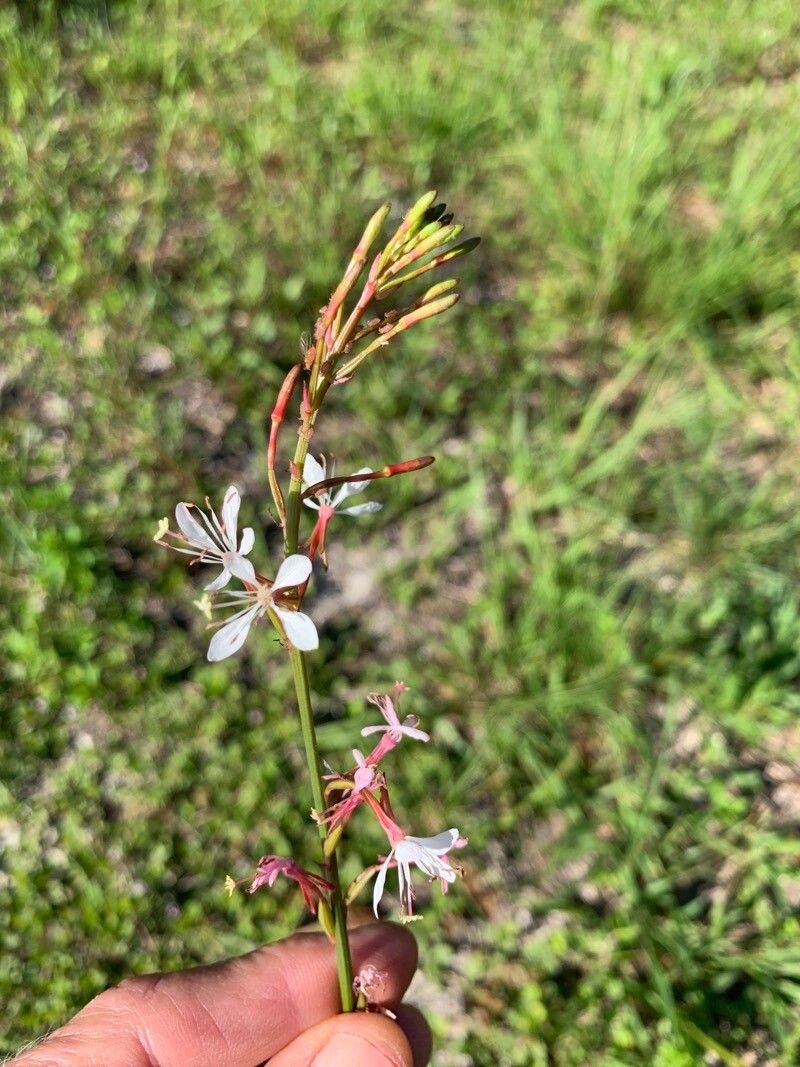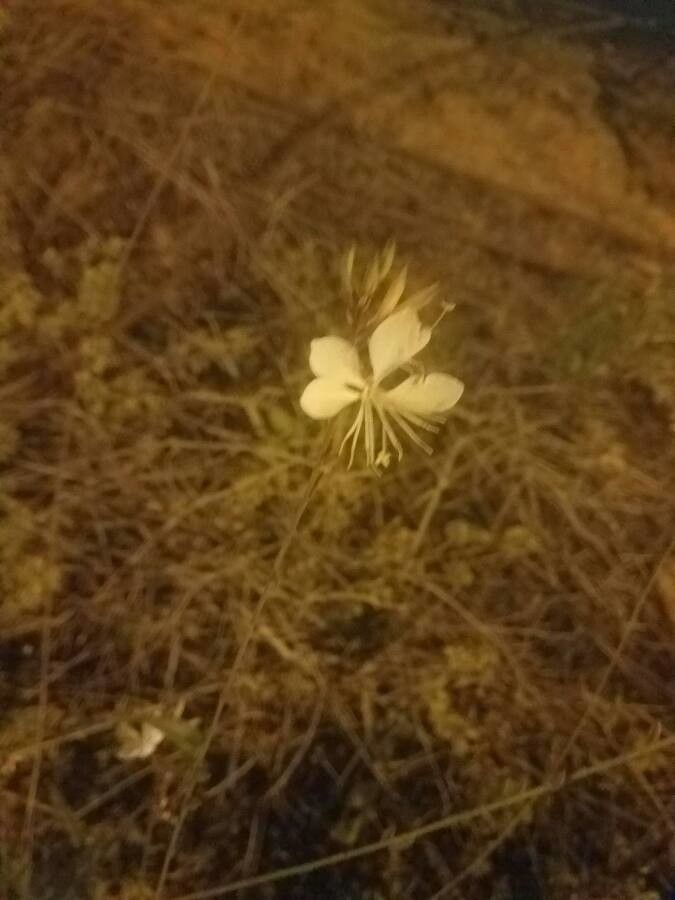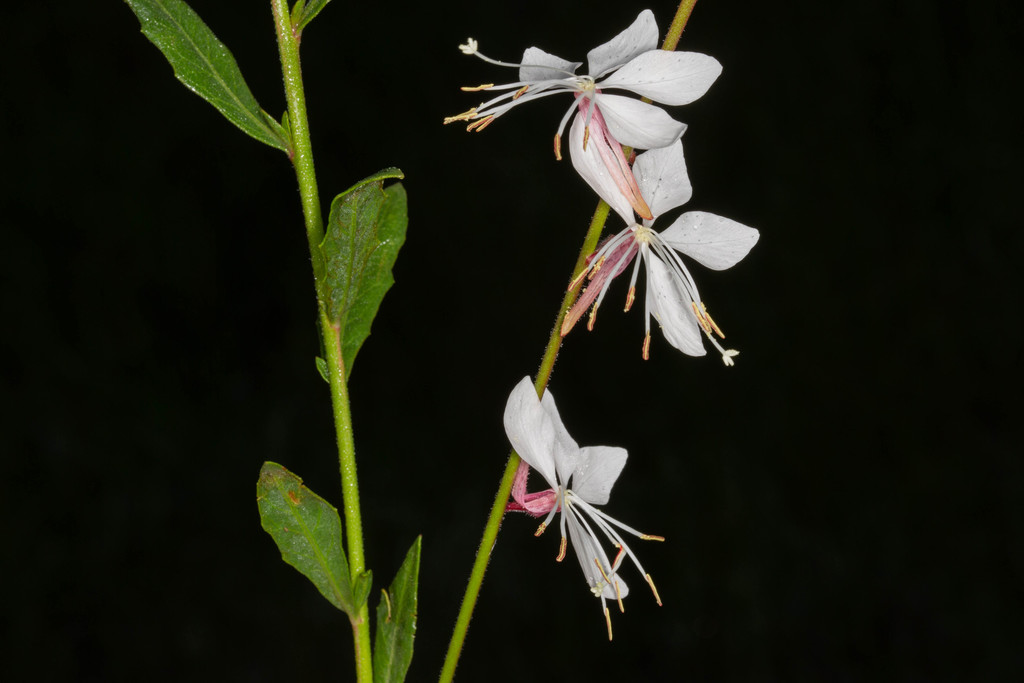
Gaura lindheimeri, commonly known as the wandflower or bee blossom, is a perennial flowering plant native to North America. It belongs to the Onagraceae family and is celebrated for its delicate and airy appearance. Typically, this plant reaches up to 3 feet in height and features slender stems with lance-shaped, green or reddish leaves.
The wandflower produces clusters of small, four-petaled flowers that bloom from late spring through fall. These flowers are generally white or pink and emit a subtle fragrance that attracts bees and butterflies, aiding in pollination.
Gaura lindheimeri is a hardy plant that thrives in full sun but can also tolerate partial shade. It prefers well-drained soil but is capable of adapting to various soil types, provided they are not overly wet.
This plant has become popular among gardeners due to its low maintenance requirements, drought tolerance, and extended blooming period. It also adds a graceful touch to mixed borders or rock gardens.
Overall, Gaura lindheimeri is a visually appealing perennial with delicate blooms that enhance the beauty of any garden.
Lindheimer's beeblossom is fairly disease-resistant and generally not prone to illness. Nevertheless, it can be vulnerable to pests and diseases present in its environment. These problems are typically mild. In terms of upkeep, the plant requires a moderate amount of maintenance. It should be pruned regularly to preserve a neat appearance and support healthy growth. Fertilizing can also encourage more flowering. Lindheimer's beeblossom is well-suited for people with outdoor areas like a garden or patio and does not demand extensive care experience. It may need increased attention if grown indoors.
How to keep Gaura Lindheimeri.
Light
Lindheimer's beeblossom grows best when it receives abundant sunlight. This preference reflects its native habitat, which is characterized by plentiful sun. The plant can tolerate mixed-sun conditions but flourishes most under generous light. Excessive shade or insufficient light can impede strong growth, producing less vigorous plants.
Water
Water your gaura plant when the top few inches of soil feel dry. They prefer infrequent but deep watering. Gaura's taproot is deep-rooted into the ground, so you want to water thoroughly for the soil to be evenly saturated.
Temperature
The lindheimer's beeblossom plant is native to warm climates and prefers a temperature range of 41 to 95 ℉ (5 to 35 ℃). In summer, the plant will do well at higher temperatures but may need some shade during the hottest part of the day to avoid heat exhaustion. In cooler months, it will continue to thrive provided temperatures stay above freezing, though it may require protection during frosts.
Fertilizer
The best time to fertilize a Lindheimer's beeblossom is in early spring, as it comes out of dormancy and begins active growth. Fertilizing supplies essential nutrients needed for healthy development. While Lindheimer's beeblossom has fairly low fertilizer requirements, applying fertilizer annually can improve its survival and encourage better, longer-lasting flowers.
Pruning
Trim and pinch the tips of your plant's limbs to encourage bushier growth. Deadheading is usually unnecessary, but removing spent flowers can encourage profuse blooming. When its flowers start fading, cut the flower stalk at the base. This will promote a second round of flowering in the fall.
Pot & Repot
When repotting Lindheimer's beeblossom, select a pot 1-2 inches (2.5–5.1 cm) larger that has ample drainage. Use a well-draining potting mix. Repot in spring or fall, making sure the root ball sits slightly lower than the rim of the flower pot. Water thoroughly after repotting and place it in a warm location with indirect sunlight.
Toxicity
Gaura has no reported toxic traits to humans or animals.
Further reading →
The toxicity and danger assessments provided are for reference only. We do not assure their accuracy, so it's crucial not to depend on them. Seek professional advice when necessary for accurate guidance.
Botanical profile.
- Plant Type
- Herb
- Life Cycle
- Perennial
- Genus
- Gaura
- Family
- Onagraceae
- Hardiness Zone
- 5-10
- Mature Height
- 0.49 m to 1.52 m
- Mature Spread
- 61 cm to 91 cm
- Leaf Color
- Green, Yellow, Gold
- Leaf Type
- Deciduous
- Flower Color
- Pink, White
- Flower Size
- 2.03 cm to 3.05 cm
- Bloom Time
- Late spring, Summer
- Planting Time
- Spring
- Harvest Time
- Summer, Early fall
- Native Area
- North America