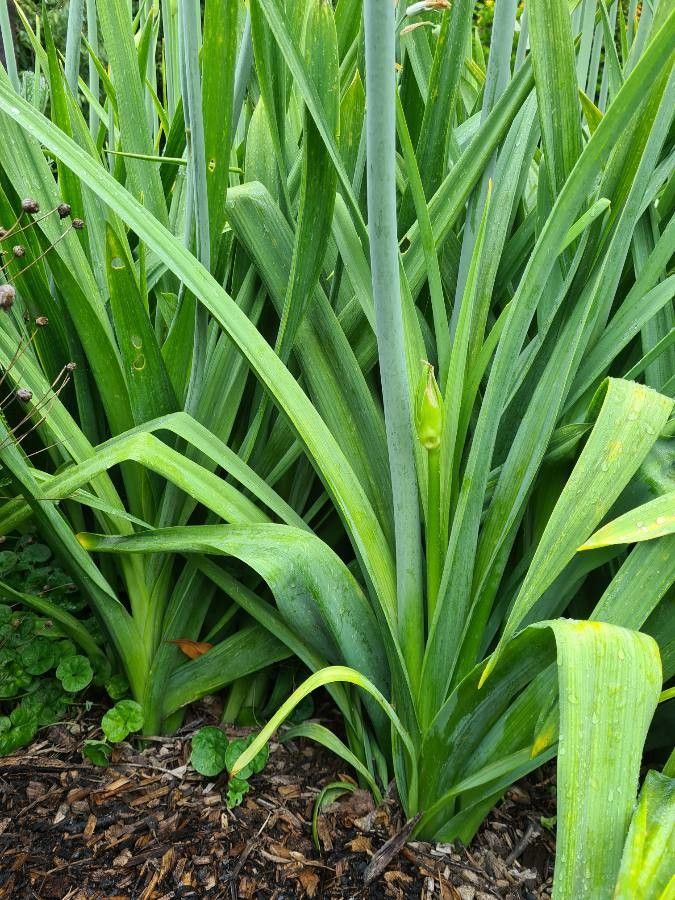
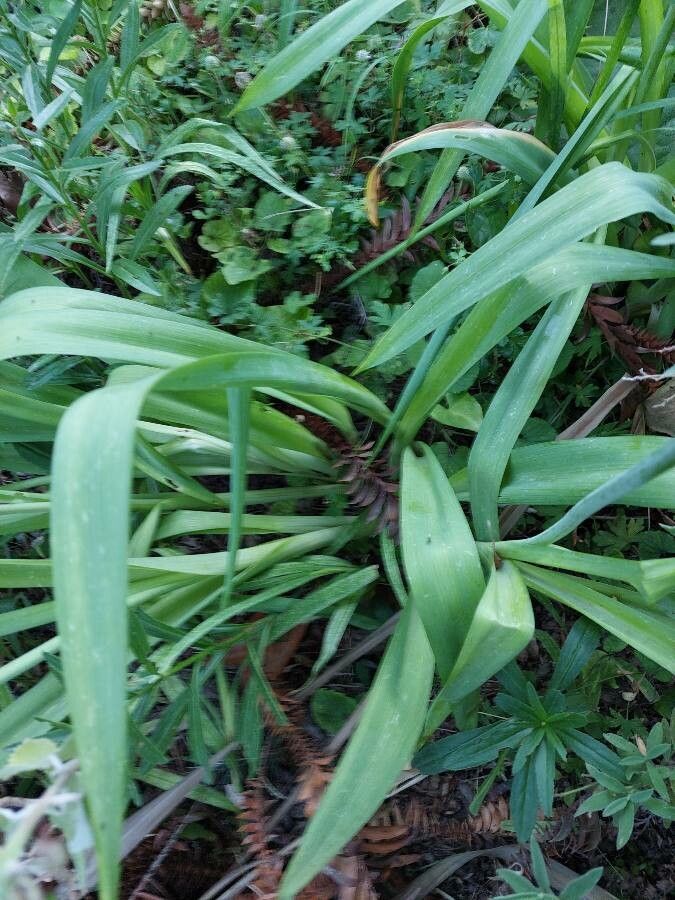
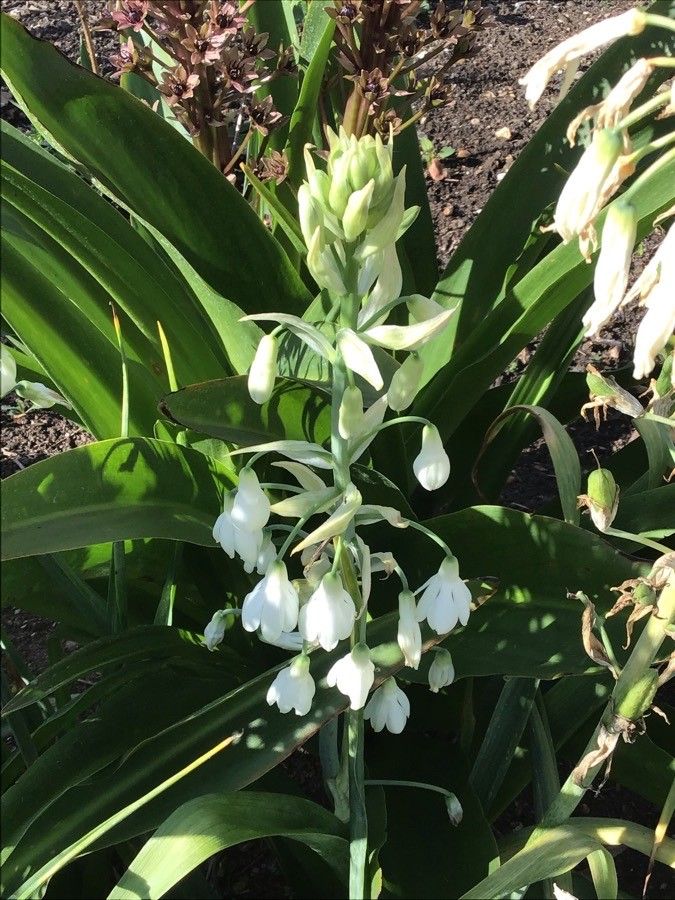
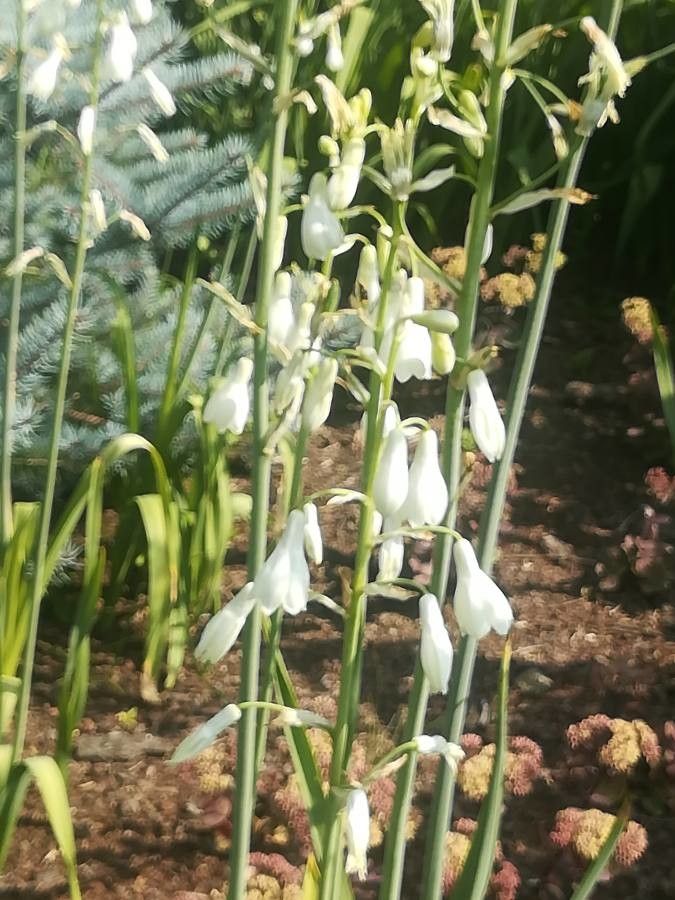
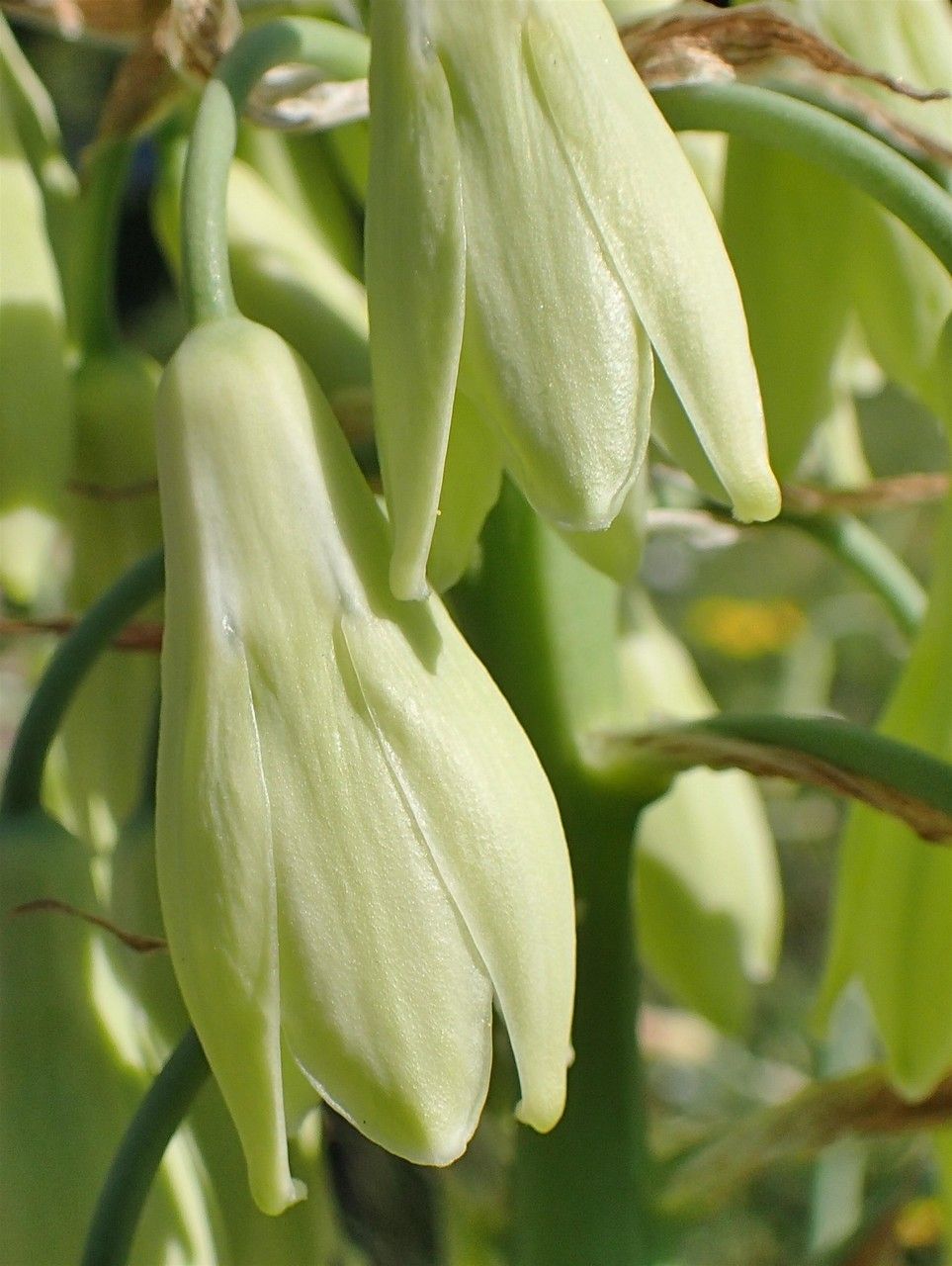
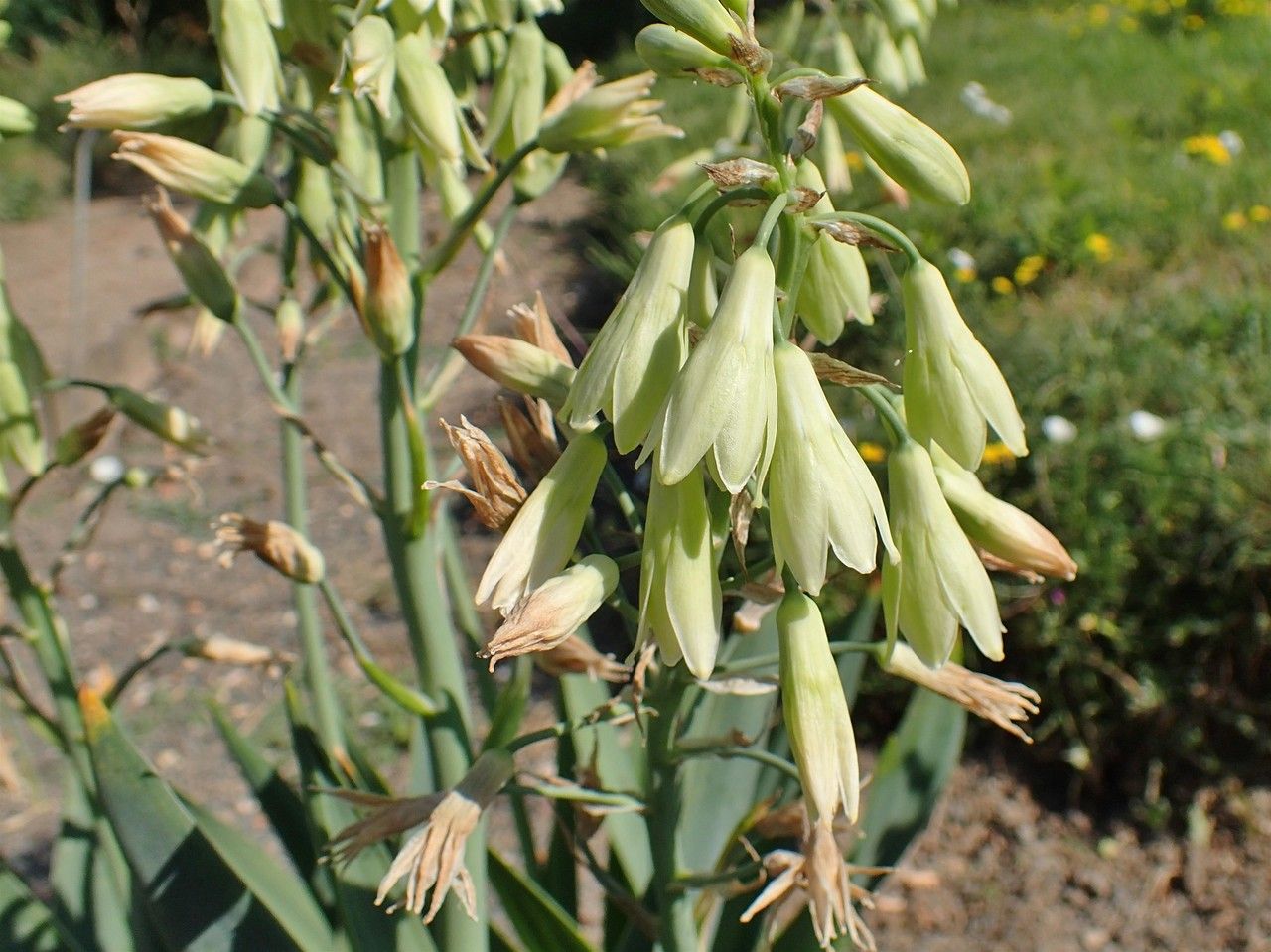
Ornithogalum candicans, known as the summer hyacinth, is a species of flowering plant in the family Asparagaceae, native to moist grassland in South Africa (Limpopo, Mpumalanga, Free State, Kwazulu/Natal, Eastern Cape). It is a bulbous perennial growing to 100–120 cm (39–47 in), with strap-shaped leaves and white snowdrop-like flowers in late summer. It is still widely referenced under its synonym Galtonia candicans. Originally it had been designated as Hyacinthus candicans, by Baker in 1870.This plant has gained the Royal Horticultural Society's Award of Garden Merit.
Summer hyacinth is fairly disease-resistant and usually does not develop illnesses. Still, it can be affected by pests and diseases present nearby. These issues are generally mild. Regarding care, this plant needs moderate maintenance. It should be pruned regularly to preserve a neat appearance and healthy growth. Fertilizing can also help encourage flowering. Summer hyacinth is appropriate for anyone with an outdoor area, like a garden or patio, and does not demand extensive care experience. It may need more attention when cultivated indoors.
How to keep Galtonia Candicans.
Light
The summer hyacinth is a sun-loving perennial herbaceous plant native to open habitats, commonly found in meadows and grasslands. It prefers full sun but can also tolerate partial sun.
Temperature
Summer hyacinth demonstrates good temperature adaptability, able to withstand higher heat and broad temperature fluctuations. In hot weather, you should take care with watering and offer proper shade to prevent sunburn. Conversely, Summer hyacinth has relatively low tolerance for cold; while it can tolerate a certain amount of chill, overly cold conditions can result in frost damage.
Fertilizer
The best time to fertilize a Summer hyacinth is in early spring, as it breaks dormancy and begins active growth. Fertilizing supplies essential nutrients needed for healthy development. While Summer hyacinth has fairly low fertilizer requirements, applying fertilizer annually can improve its survival and encourage stronger, longer-lasting flowers.
Botanical profile.
- Plant Type
- Herb
- Life Cycle
- Perennial
- Genus
- Galtonia
- Family
- Asparagaceae
- Hardiness Zone
- 7-10
- Mature Height
- 1.22 m
- Mature Spread
- 37 cm
- Leaf Color
- Green
- Leaf Type
- Deciduous
- Flower Color
- White
- Flower Size
- 3.05 cm to 5.08 cm
- Bloom Time
- Early summer, Mid summer
- Planting Time
- Spring, Summer, Autumn
- Harvest Time
- Late summer, Early fall
Other names.