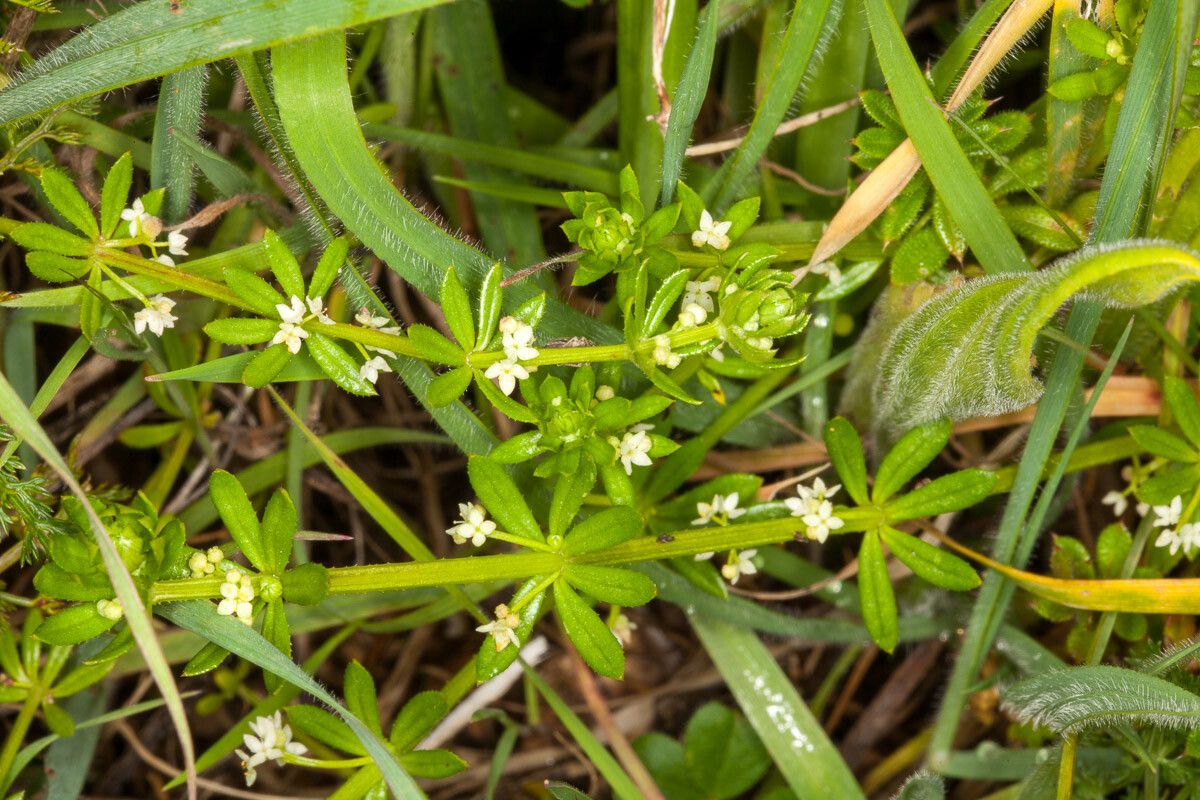
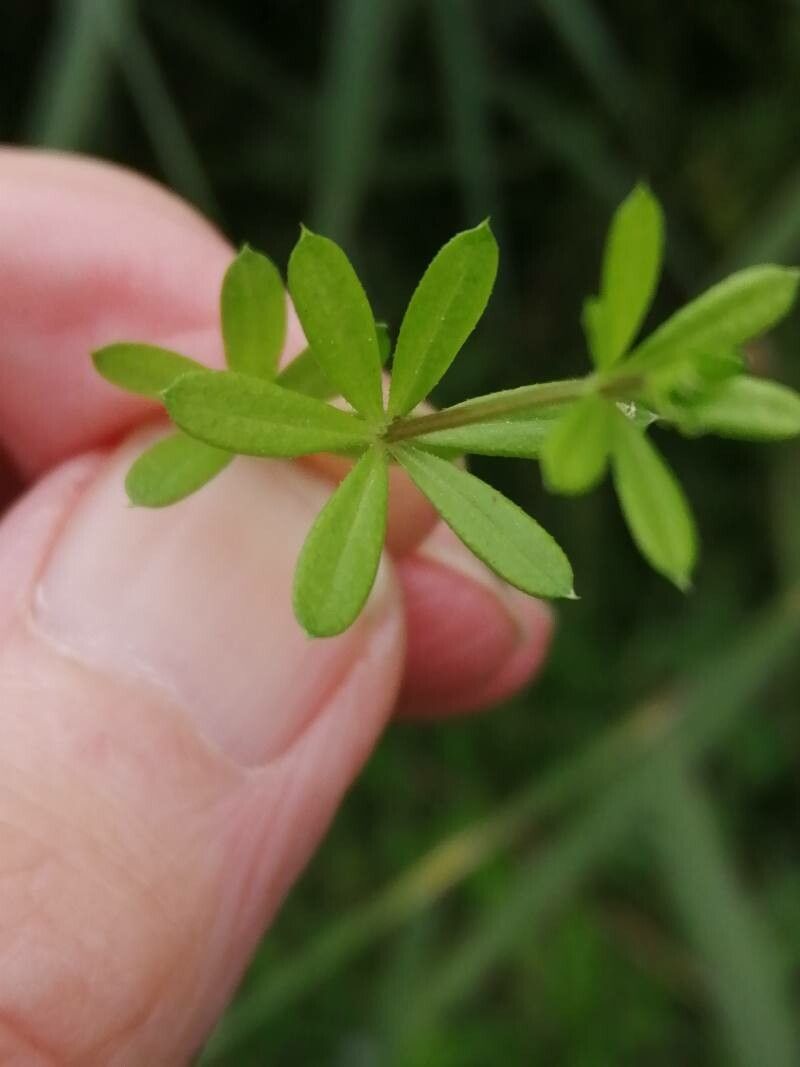
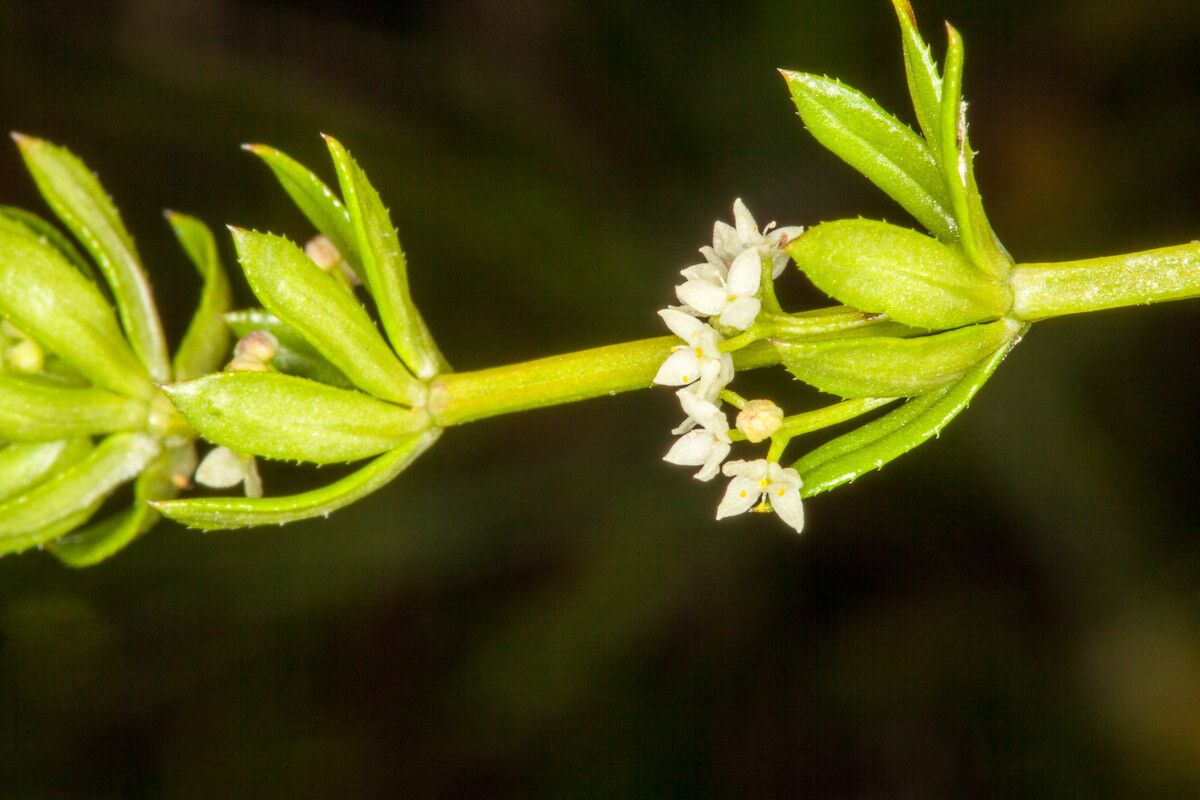
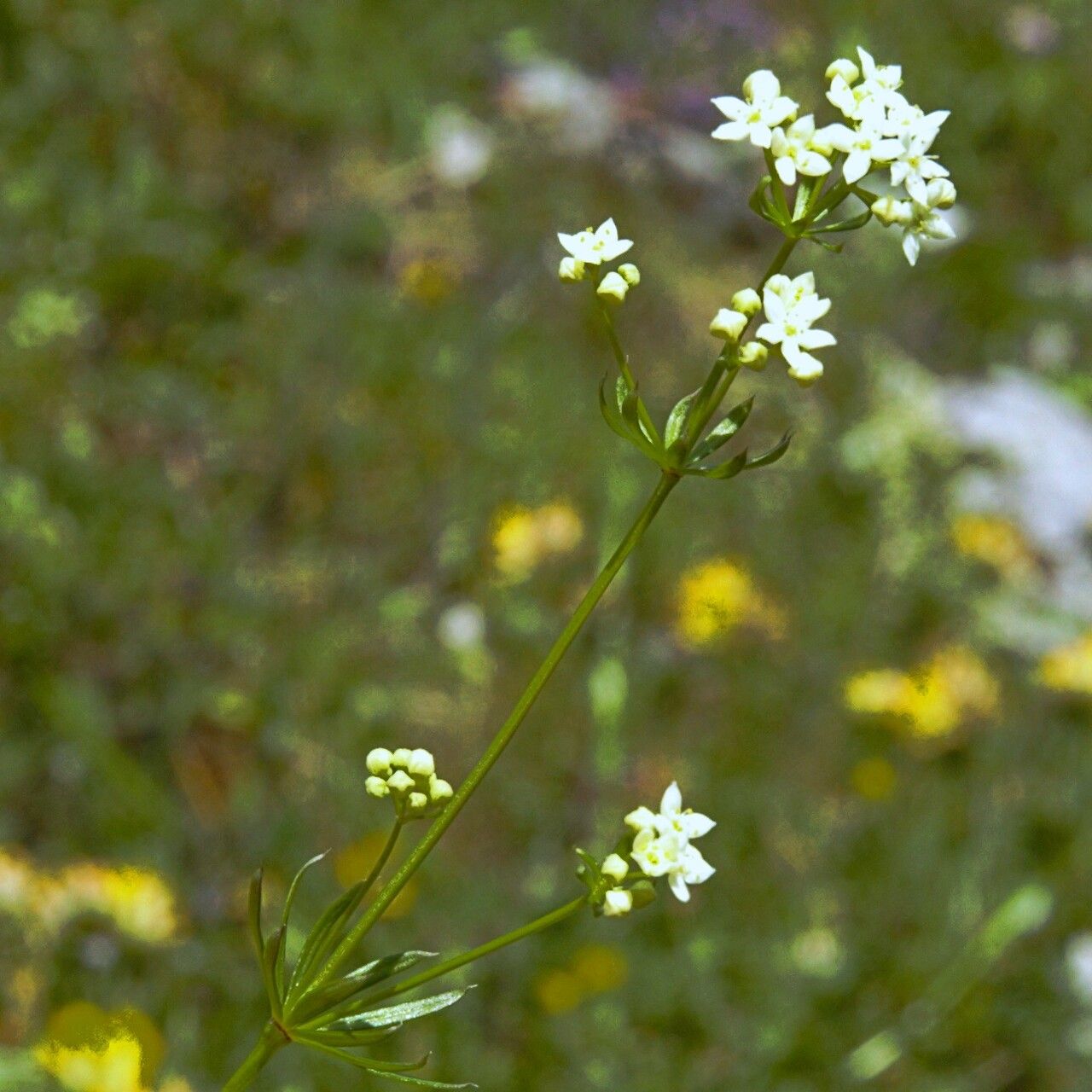
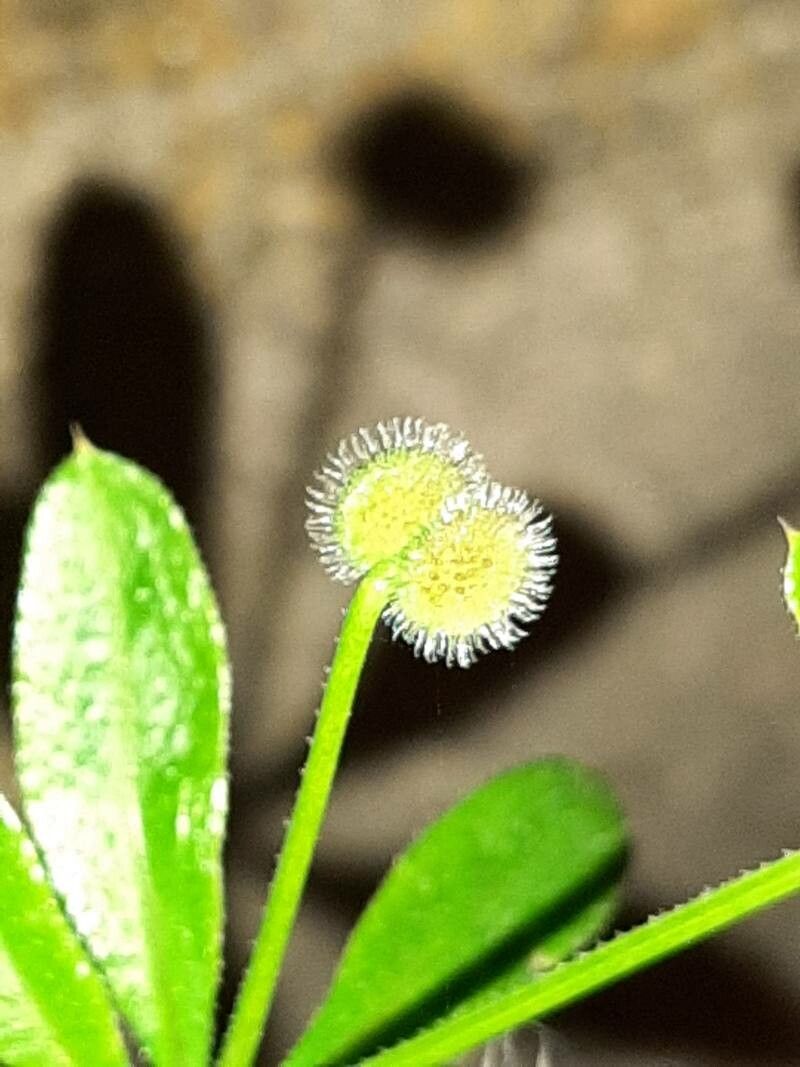
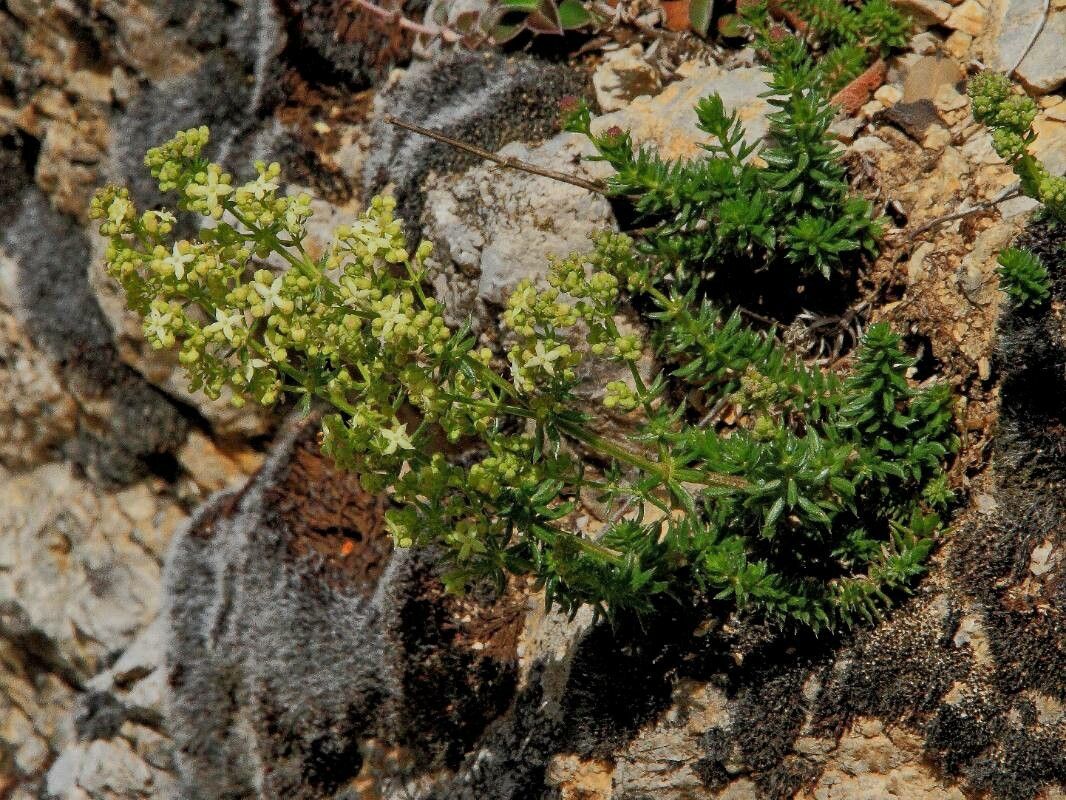
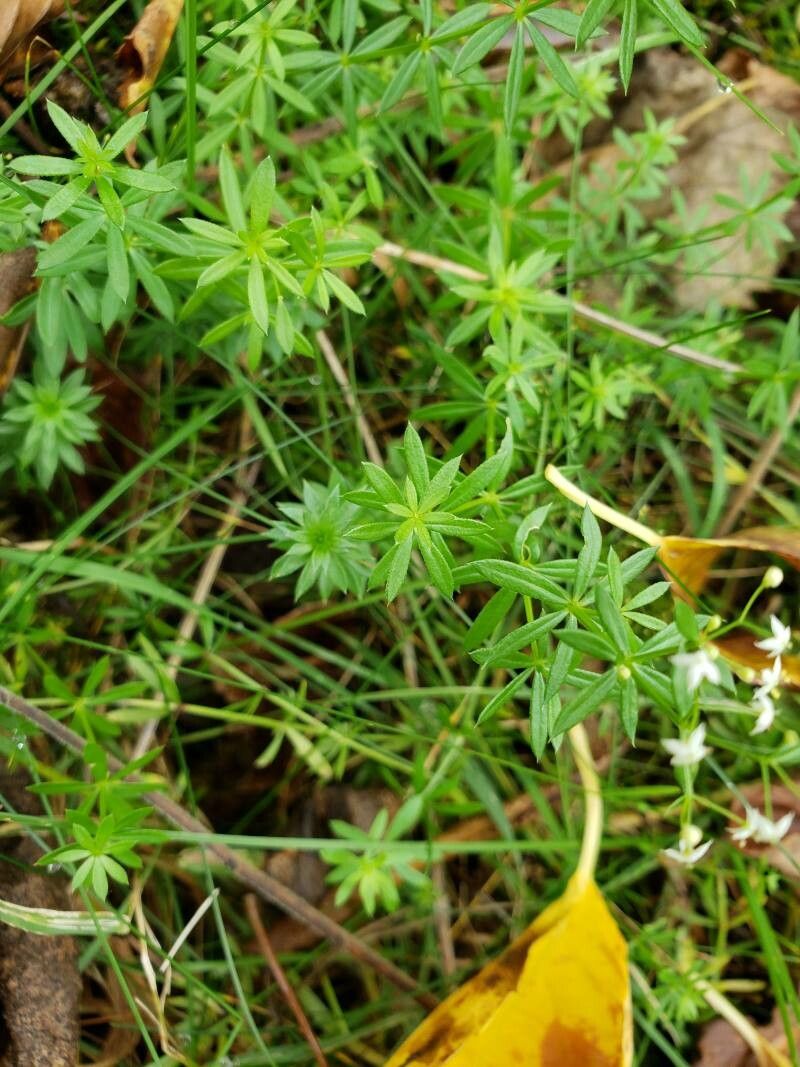
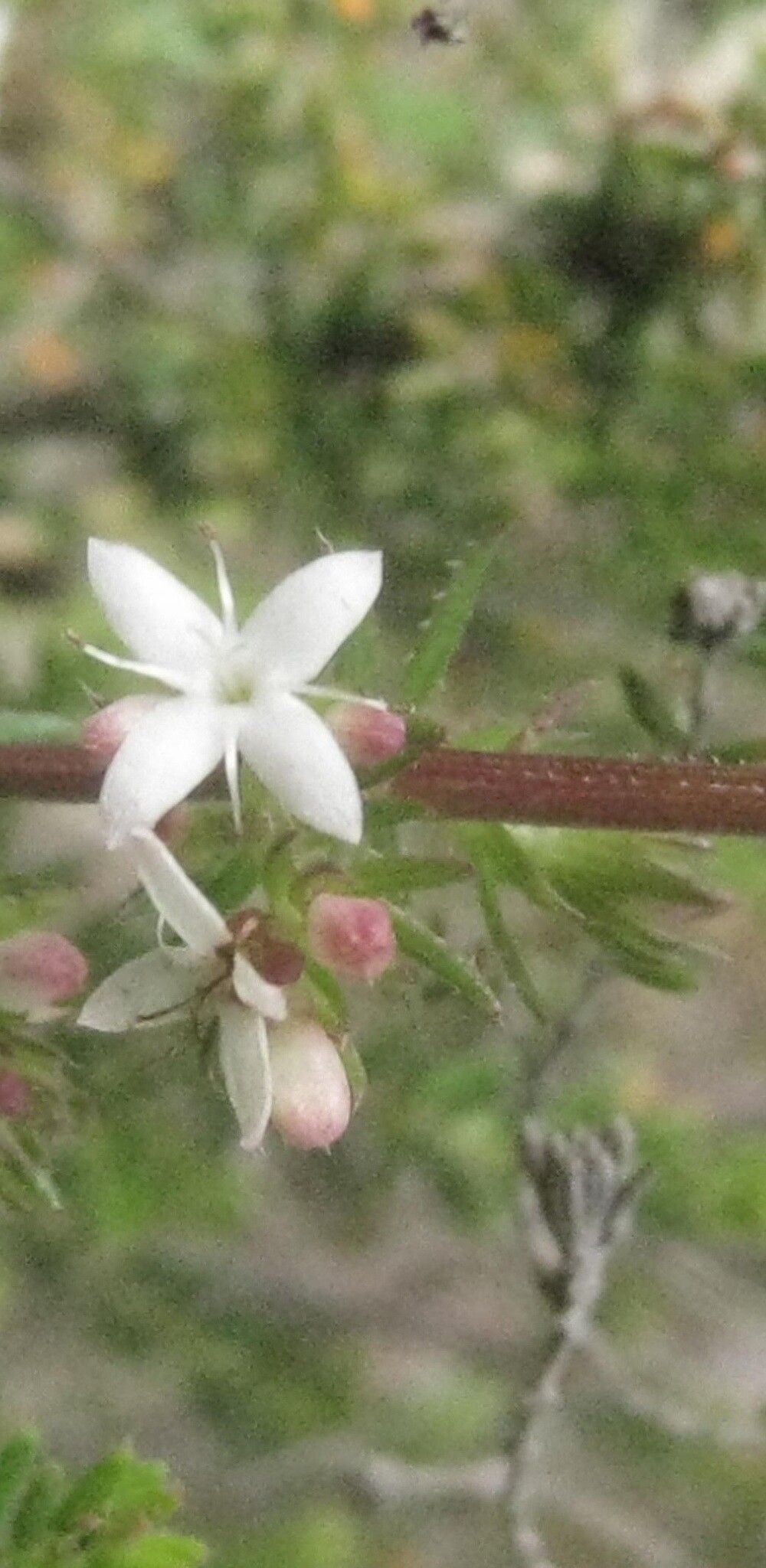
Galium uliginosum or fen bedstraw is a plant species of the genus Galium. It is widespread across most of Europe as well as Morocco, Western Siberia, Turkey, Kazakhstan and Xinjiang. It is reportedly naturalized in New Zealand, Greenland and the Crozet Islands.Galium uliginosum is a component of purple moor grass and rush pastures – a type of Biodiversity Action Plan habitat in the UK. It occurs on poorly drained neutral and acidic soils of the lowlands and upland fringe. It is found in the South West of England, especially in Devon.Galium uliginosum is easily confused with marsh bedstraw, Galium palustre, but is distinguished from this species by having bristly edges on its leaves, and not turning black when it dries out. The leaves are arranged in whorls of 6 to 10 around the stem, which is a characteristic feature of the bedstraw genus Galium.
Cleavers has strong disease resistance and is generally not susceptible to diseases. However, it may be vulnerable to pests and diseases present in its surroundings. These infections are usually not severe. Regarding care, this plant requires moderate maintenance. It should be pruned regularly to maintain a good appearance and healthy growth. Fertilization can also help promote flowering. Cleavers is suitable for anyone with an outdoor space, such as a garden or patio, and does not require a lot of care experience. It may require more attention when grown indoors.
How to keep Galium Uliginosum.
Light
Cleavers tends to prefer locations where sunlight is plentiful throughout the day, though it can also tolerate moderate light. In its natural habitats it does well with abundant light, which supports healthy growth. Both too much and too little light can negatively affect its development.
Water
Fen bedstraw flourishes in moist environments and needs weekly watering to maintain its growth, taking care not to cause waterlogging. It is ideally grown outdoors, where it can benefit from natural rainfall that supplies consistent moisture during its active growing season.
Temperature
Cleavers is native to temperate regions and is well-suited to temperatures of 68 to 95 °F (20 to 35 °C). During colder seasons, gradually acclimate it to lower temperatures. Take care not to expose it to freezing temperatures.
Fertilizer
Cleavers respond well to regular, dilute fertilizer applications to encourage healthy leaf development. You should feed cleavers roughly once a month during the summer. Nitrogen is important for foliage, and adding nitrogen-rich fertilizers helps cleavers do well.
Pruning
Fen bedstraw has delicate stems and small white flowers. To keep the plant healthy, prune it from early to late spring by removing dead stems and thinning overcrowded areas to improve airflow. This careful pruning promotes healthy growth and flowering, enhancing the plant's resilience and aesthetic appeal.
Botanical profile.
- Plant Type
- Herb
- Life Cycle
- Annual, Biennial
- Genus
- Galium
- Family
- Rubiaceae
- Hardiness Zone
- 3-8
- Mature Height
- 0.2 m to 2.13 m
- Mature Spread
- 91 cm
- Leaf Color
- Green
- Leaf Type
- Deciduous
- Flower Color
- White
- Flower Size
- 0.15 cm to 0.20 cm
- Bloom Time
- Mid spring, Late spring, Early summer
- Planting Time
- Spring
- Harvest Time
- Early summer, Mid summer
- Native Area
- Libya, Turkey, Sweden, India, Austria, Slovakia, Montenegro, Pakistan, Slovenia, Morocco, Croatia, Belarus, Uzbekistan, Russia, Iraq, Germany, Estonia, Romania, Latvia, Belgium, Portugal, Nepal, Saudi Arabia, Netherlands, France, Tajikistan, Tunisia, Czech Republic, Cyprus, Bulgaria, Poland, Greece, Ukraine, Serbia, Lebanon, Lithuania, Norway, Afghanistan, Syria, Kyrgyzstan, Kazakhstan, Italy, Spain, Switzerland, Denmark, Finland, Iran, Albania, Ireland, United Kingdom, Hungary, Algeria, Turkmenistan
Other names.
Reader questions.
How should I water my Fen bedstraw to keep it healthy?
To properly water the Fen bedstraw, it's best to use filtered water at room temperature. Tap water may contain harmful particles, so filtered water is preferred. The plant is accustomed to a warm environment, so it's important not to use cold water, as it could shock the plant. Additionally, avoid watering the plant from above, as this can cause issues with the foliage. Instead, pour the filtered room temperature water directly onto the soil until it is completely soaked. This helps the roots stay moist and allows them to spread and absorb the necessary nutrients.
What are the sunlight requirements for Fen bedstraw?
Fen bedstraw (Galium uliginosum) is a versatile perennial herb that thrives in environments with partial sun, requiring about 3-6 hours of sunlight daily. It is native to forest understories or rocky areas, indicating its preference for natural shade. However, it can also adapt to full shade conditions, where it receives less than 3 hours of sunlight. When selecting a spot for your Fen bedstraw, consider the movement of sunlight through your garden to ensure a balance of light and shade that matches the plant's needs.
What should I do if I give too much or too little water to my Fen bedstraw plant?
Overwatering and underwatering can harm your Fen bedstraw, but overwatering is more common. If the plant gets too much water, its stems and leaves may wilt and turn yellow. Overwatering for a long time can also cause diseases like root rot, mold, and mildew, which can kill the plant. Underwatering is less likely as Fen bedstraw can tolerate drought to some extent. However, underwatering can still occur, causing the leaves to become dry and brown. It's important to recognize the signs of overwatering early when taking care of your Fen bedstraw. Some of the diseases caused by overwatering, like root rot, may not be fixable if you wait too long. If you notice early signs of overwatering, reduce your watering schedule immediately. Also, check the soil drainage. If it drains poorly, replace it with loose, well-draining potting mix. If you see signs of underwatering, simply water more regularly until the signs disappear.
How can artificial lighting be used for Fen bedstraw?
When natural sunlight is insufficient, especially for indoor Fen bedstraw plants or during less sunny seasons, artificial lighting can be a crucial supplement. LED lights are often recommended because they can be tailored to provide specific wavelengths of light needed for plant growth. The intensity of artificial light required varies depending on the plant's natural sunlight needs: 30-50W/sq ft for full sun plants, 20-30W/sq ft for partial sun plants, and 10-20W/sq ft for full shade plants. The artificial light source should be placed 12-36 inches above the plant, mimicking the natural sunlight's distance, and provided for 8-12 hours per day to replicate natural daylight hours.
How often should I water Fen bedstraw?
If your Fen bedstraw plant is in a pot, the best way to check if it needs water is by sticking your finger into the soil. If the top two to three inches of soil feel dry, it's time to water it. For Fen bedstraw grown outdoors in the ground, you can use the same method. When the top few inches of soil are dry, it's time to water. Usually, during spring and early fall, watering once a week is sufficient. However, during extremely hot weather, you may need to water twice or even more often per week. It's worth noting that mature, well-established Fen bedstraw plants have the ability to withstand drought.
What are the symptoms of insufficient light for Fen bedstraw?
Fen bedstraw may exhibit various symptoms when it doesn't receive enough light, including smaller new leaves, leggy or sparse growth due to elongated spaces between leaves or stems, quicker leaf drop as the plant tries to conserve resources, halted growth indicating a survival mode due to poor light conditions, lighter-colored or pale new leaves lacking in chlorophyll, and symptoms of overexposure like chlorosis (leaf yellowing), sunscald, leaf curling, wilting, and leaf scorching. These symptoms reflect the plant's struggle with inadequate light, affecting its overall health and development.
How much water does my Fen bedstraw plant require?
To appropriately water your Fen bedstraw, be generous with the amount of water you provide. Make sure the top few inches of soil are dry before watering, and then give the plant a thorough watering that saturates the entire soil. You should aim for enough water that it flows out through the drainage holes at the bottom of the pot. If you don't see excess water draining, it means you haven't watered enough. However, be cautious not to let water accumulate in the soil, as this can harm the plant. On the other hand, if water doesn't drain out, it may indicate poorly draining soil, which is harmful to the plant's health. If the plant is situated outdoors, about 1 inch of rain per week should be sufficient.
How can you improve light conditions for Fen bedstraw?
To enhance light conditions for Fen bedstraw, you can gradually acclimate the plant to more sunlight by relocating it to sunnier spots each week until it gets 3-6 hours of direct sunlight daily. For large or immobile plants, consider providing additional light using desk or ceiling lamps for at least 8 hours a day or invest in professional grow lights. Outdoors, move the plants gradually to prevent sunburn. It's also beneficial to clear obstructions like overhanging branches and, for smaller plants, consider transplanting during their dormant period to a location with better sunlight and drainage. Note that parts of the plant that have already been negatively affected by poor light may not recover, but new growth should be healthy after adjustments.
How should I water my Fen bedstraw at different times when it is growing?
The water needs of the Fen bedstraw can change depending on its growth stages. When it is young or recently transplanted, it requires more water than usual. During these stages, the plant focuses on growing new roots to support future growth, which requires additional moisture. Once the plant matures, it will require less water. Another stage in which it may need more water is during the bloom period, as flower development utilizes a significant amount of moisture.
How do I water my Fen bedstraw throughout the year?
The Fen bedstraw has varying water needs throughout the year. During the hottest months of summer, you may need to water it more than once a week, depending on how quickly the soil dries out. In contrast, during winter, the plant goes into a dormant phase and requires much less water. In fact, you may not need to water it at all during winter. If you choose to water during winter, do so no more than once a month to avoid the risk of disease.
How is watering my Fen bedstraw plant different when done inside versus outside?
To grow Fen bedstraw indoors, especially for gardeners in non-temperate and non-tropical regions, you should be aware that soil in containers tends to dry out faster than ground soil. Additionally, the presence of drying elements like air conditioning units may increase the watering needs of your Fen bedstraw compared to if it were planted outside. In outdoor settings, there may be little need to water the plant, especially if it receives regular rainfall. However, when growing this plant indoors, you will need to water it more frequently since relying on rainwater for moistening the soil is not possible.