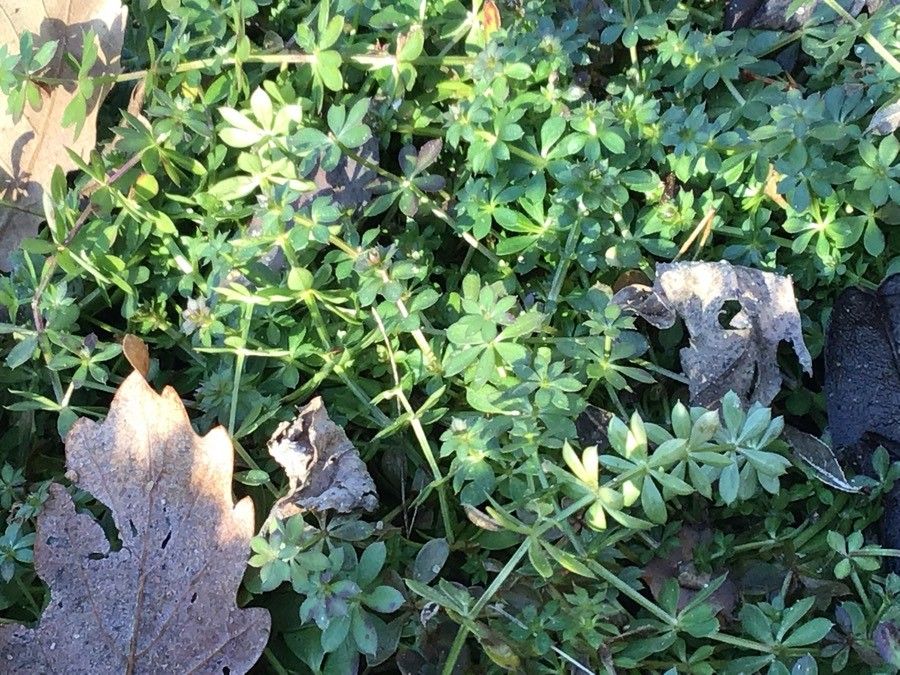
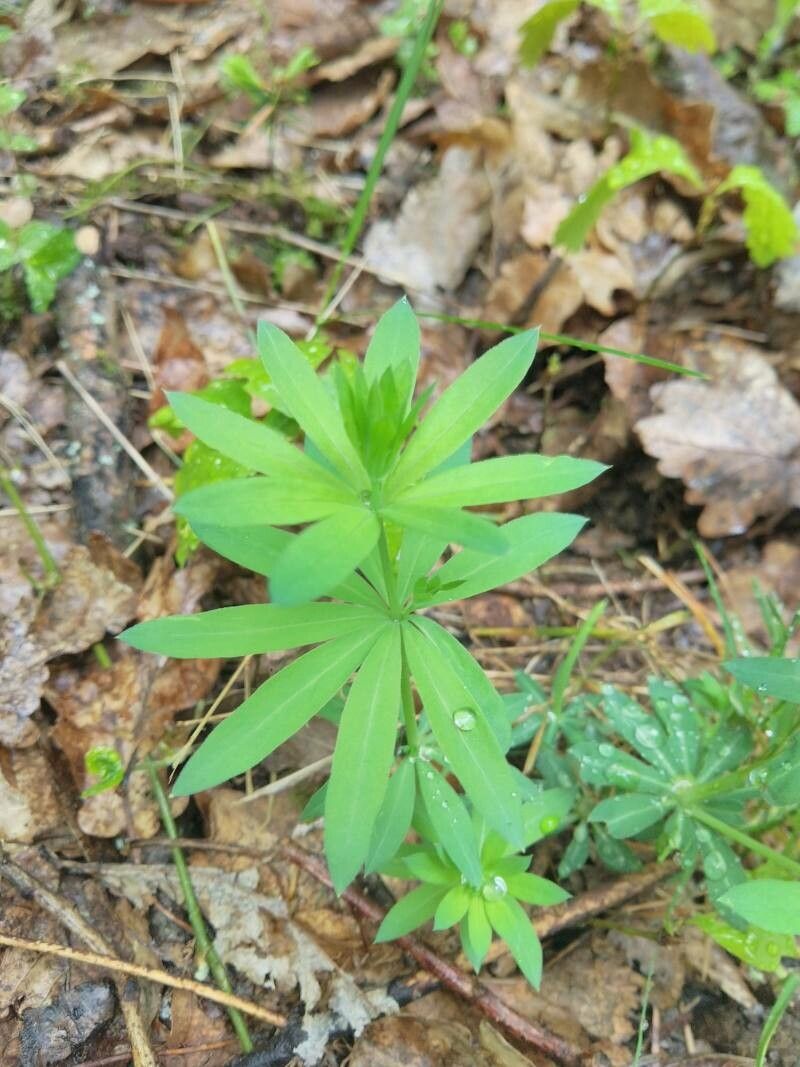
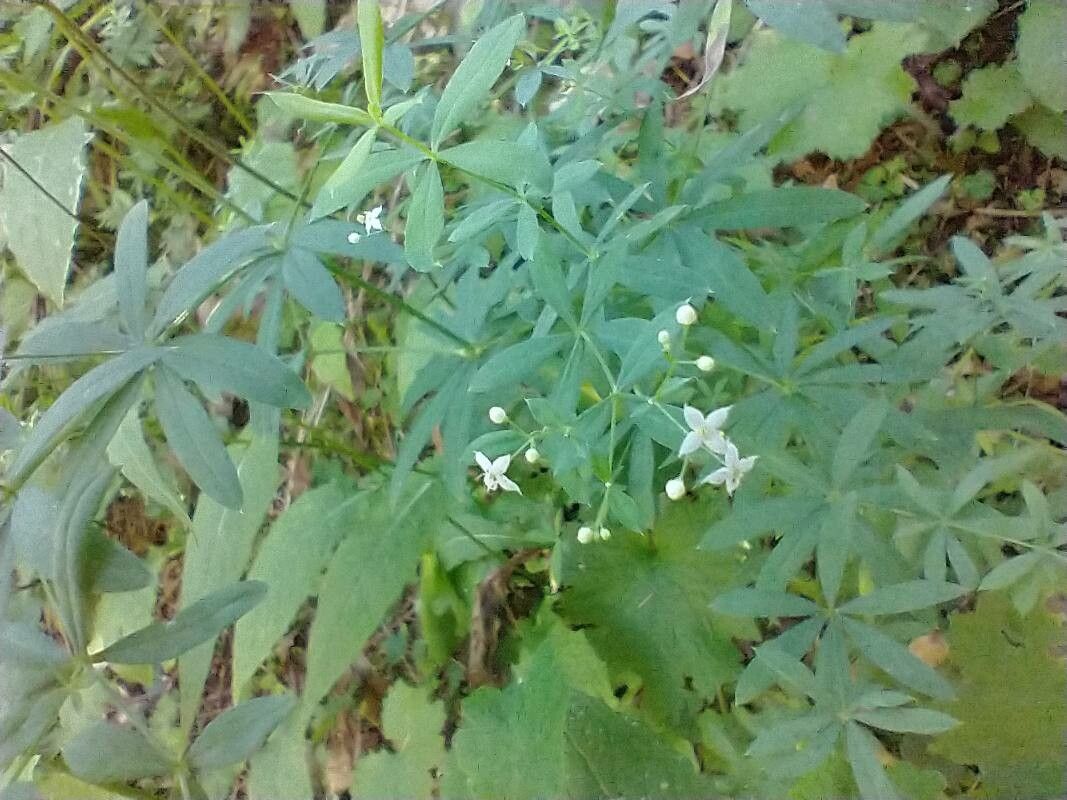
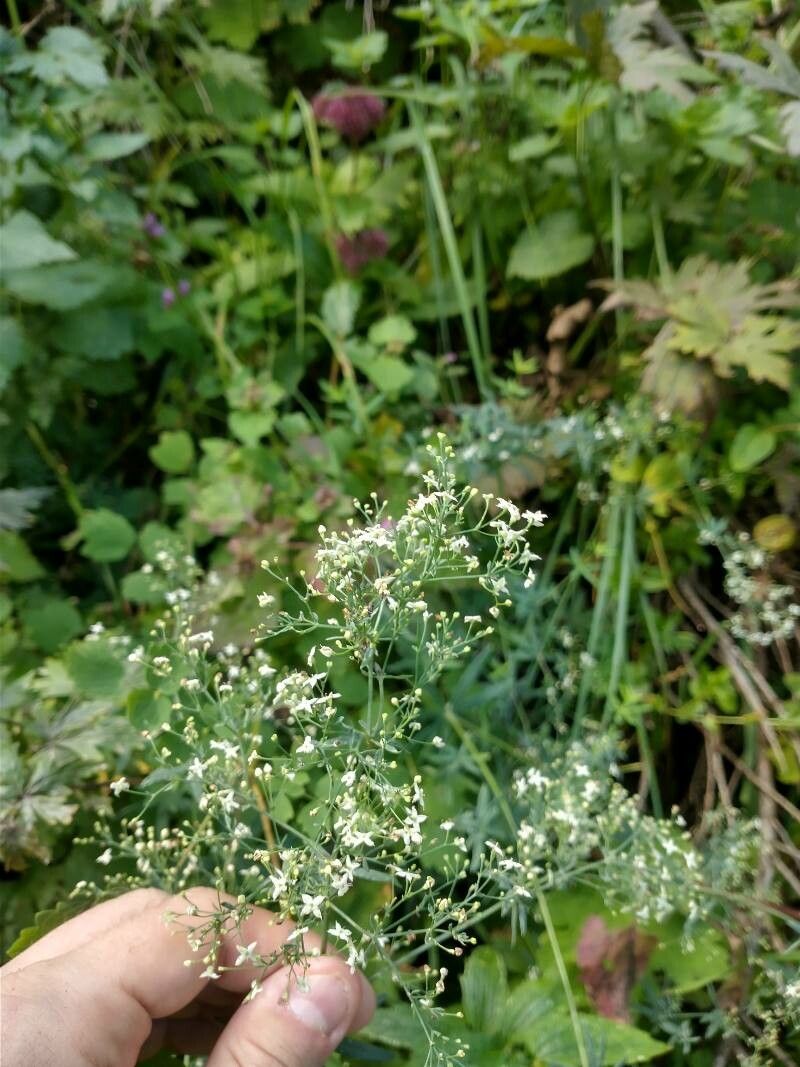
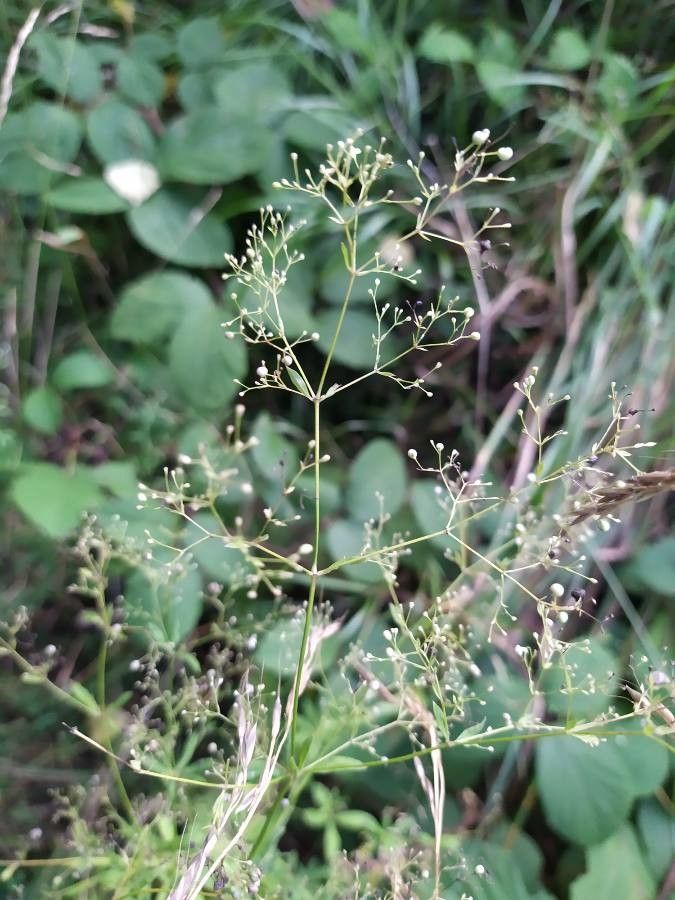
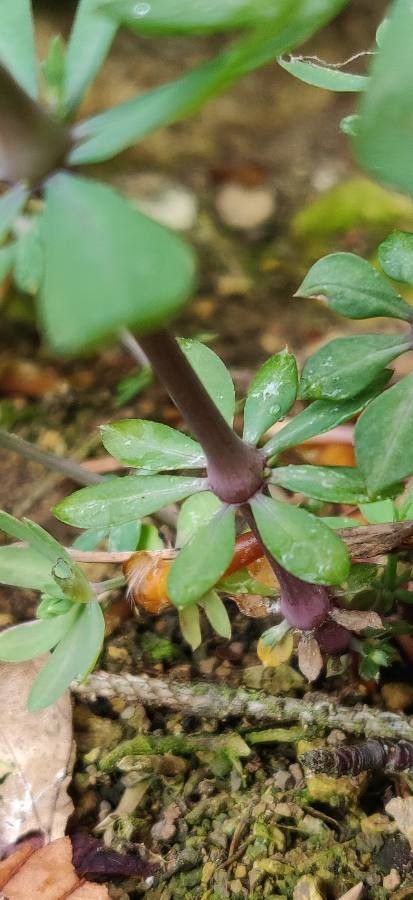
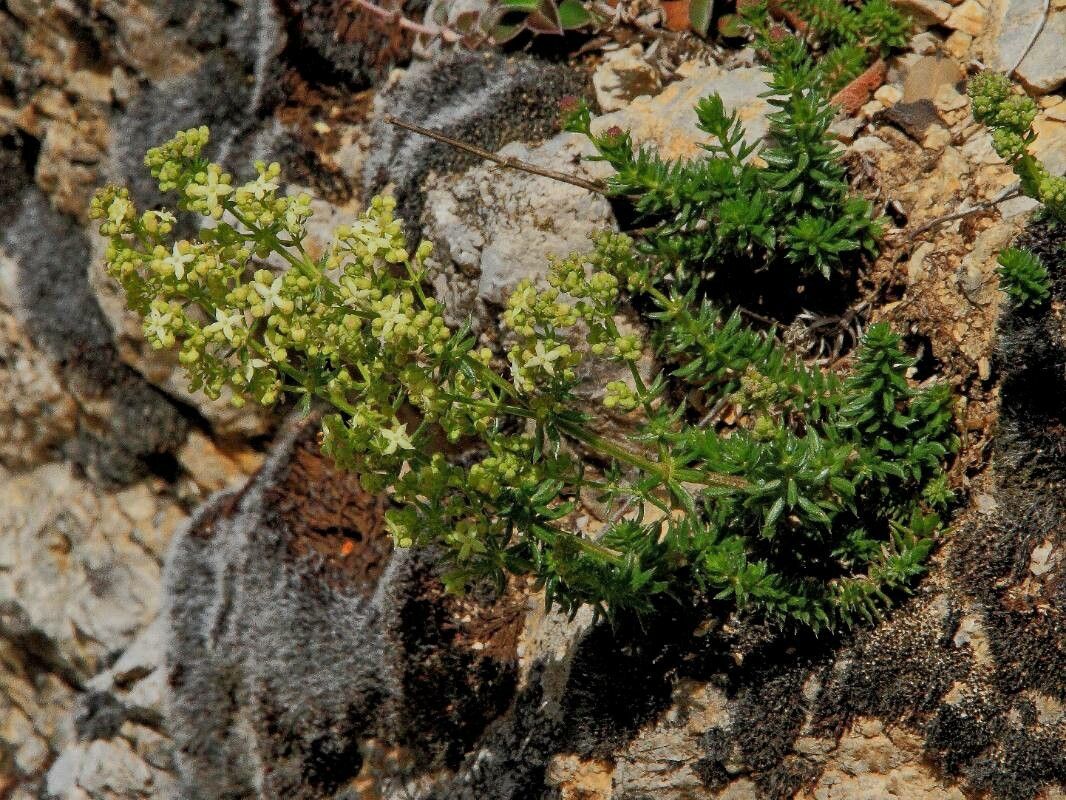
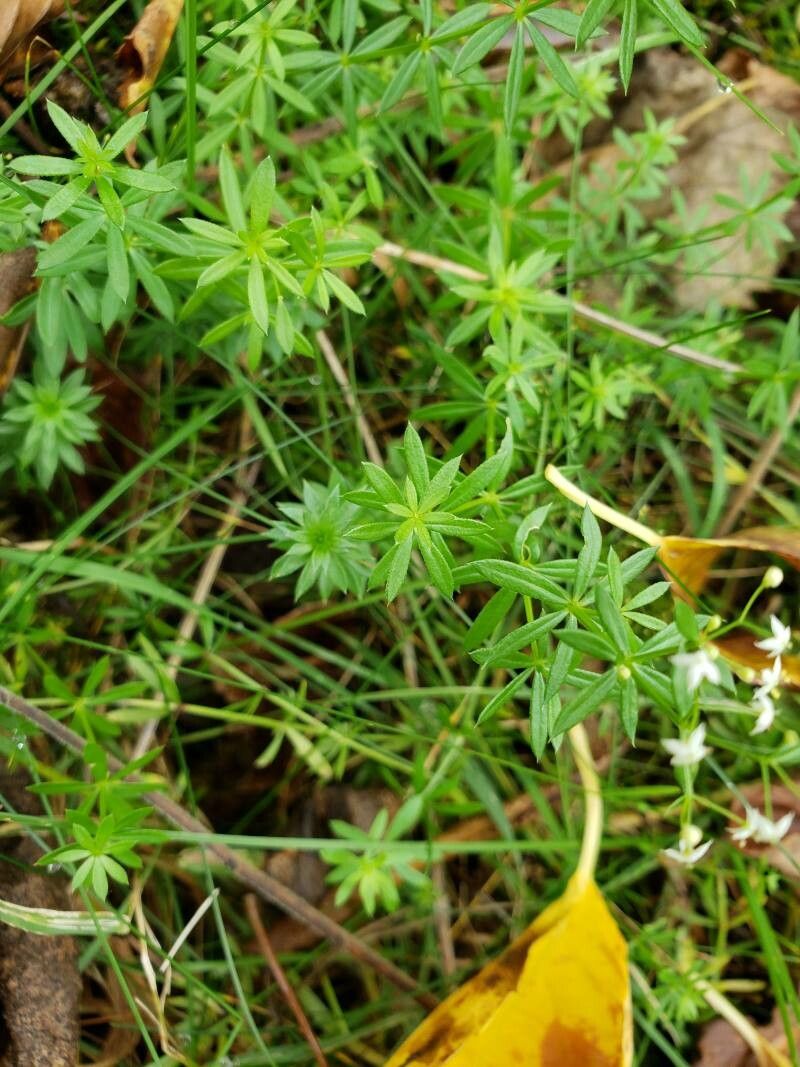
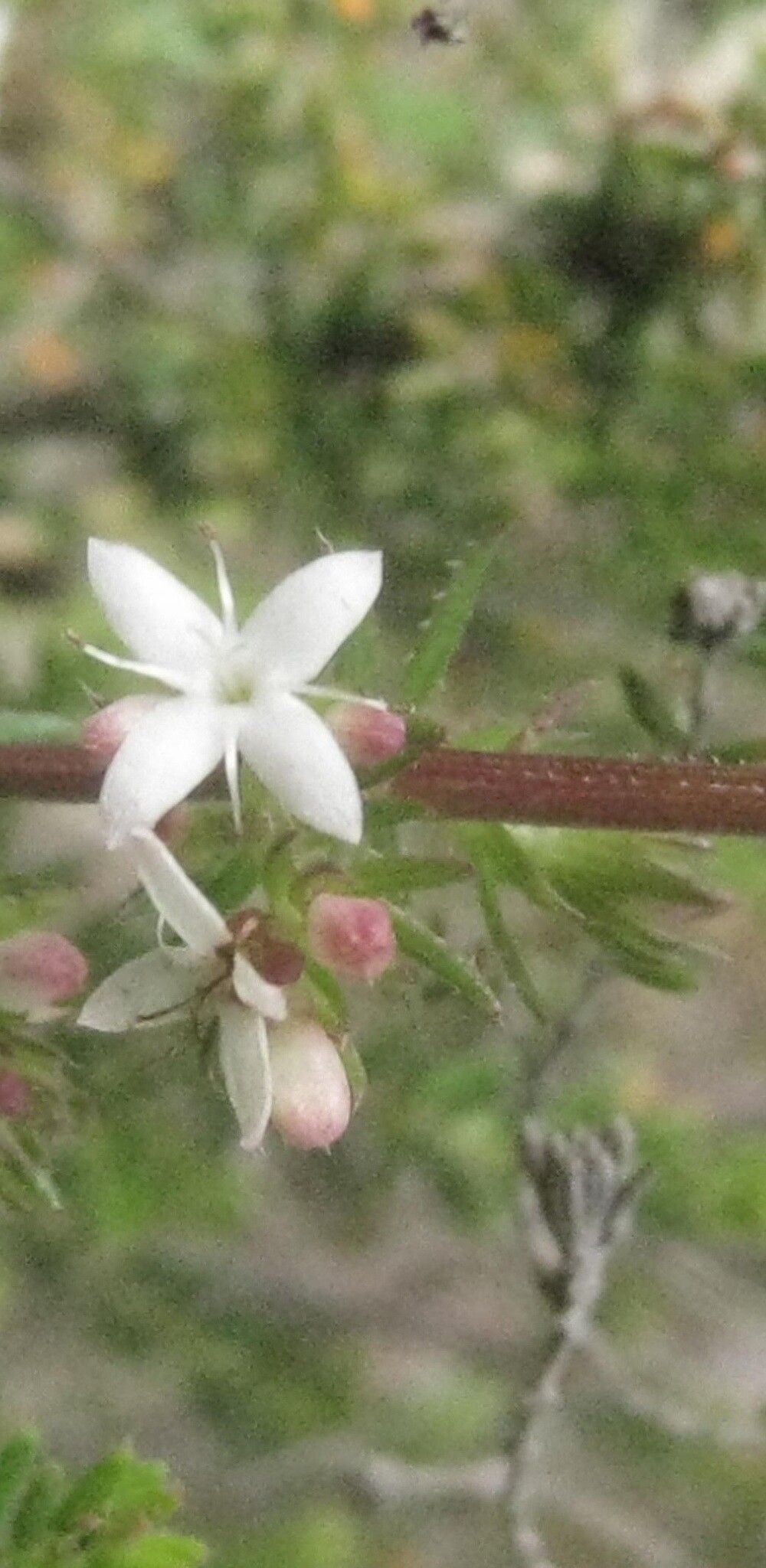
Galium sylvaticum, commonly known as Scotch mist or wood bedstraw, is a plant species of the genus Rubiaceae. Its genus name, Galium, is derived from the Greek word for "milk," apparently because some species have been used to curdle milk.It is native to central Europe: France, Italy, Germany, Poland, Hungary, the former Yugoslavia and smaller countries in between. It is also naturalized in scattered locations in North America (Maine, Vermont, Massachusetts, Connecticut, New York, Ontario, Michigan, Illinois, Wisconsin, Washington and Oregon). It is often found in anthropogenic (man-made or disturbed) habitats, forest edges, meadows and fields.It is a perennial, branching herb with thin stems. Its leaves are in whorls of six, each narrowly linear. Flowers are in open terminal panicles, white and four-petaled.
Scotch mist generally shows strong resistance to disease and is not usually vulnerable to illnesses. Still, it can be affected by pests and diseases present in its environment. Such infections are typically mild. Care-wise, this plant needs a moderate level of attention. It should be pruned regularly to preserve an attractive appearance and healthy growth. Applying fertilizer can also encourage flowering. Scotch mist is well suited for anyone with an outdoor area, like a garden or patio, and does not demand extensive care experience. When kept indoors, it may need more attentive care.
How to keep Galium Sylvaticum.
Light
Scotch mist is native to habitats such as forest understories and rocky areas, where it occurs in natural shade. It favors partial sun but can adjust to full sun or full shade, reflecting its hardy and adaptable nature.
Water
Scotch mist thrives in temperate regions where the soil consistently retains moisture and shows moderate tolerance to drought. For optimal health, it requires weekly watering. As an outdoor plant, its growth cycle is aligned with the seasonal rainfall, which affects its periods of active growth and dormancy.
Temperature
Scotch mist can tolerate a wide range of temperatures, but its distribution may still be restricted by particular combinations of water and heat. It performs best in warm summer climates with adequate rainfall or watering. Extended periods of cloudy, rainy weather, as well as prolonged high temperatures, can raise the likelihood of Scotch mist dying. In winter, shielding the plant from cold can improve its survival rate.
Fertilizer
A single fertilizer application in spring is generally enough for Scotch mist, although repeated feedings can maximize growth. Feed every one to one-and-a-half months. Fertilizing improves leaf appearance and function, supporting even color and a healthy texture. It also encourages root development and nutrient uptake for the plant's long-term health.
Pruning
Pruning Scotch mist from early to late spring is beneficial for its growth. Remove dead stems to promote healthier growth, and trim any overgrown areas to maintain the plant's shape. This practice encourages vigorous blooming and reduces the risk of disease, ensuring the plant stays well-shaped and healthy.
Botanical profile.
- Plant Type
- Herb
- Life Cycle
- Perennial
- Genus
- Galium
- Family
- Rubiaceae
- Hardiness Zone
- 4-8
- Mature Height
- 30 cm to 91 cm
- Mature Spread
- 20 cm to 40 cm
- Leaf Color
- Green, Dark Green
- Leaf Type
- Deciduous
- Flower Color
- White
- Flower Size
- 0.20 cm to 0.25 cm
- Bloom Time
- Early summer, Mid summer
- Planting Time
- Spring, Autumn
- Harvest Time
- Late summer, Early fall
- Native Area
- Germany, Austria, Italy, Switzerland, Czech Republic, Denmark, Slovakia, Serbia, France, Poland, Hungary, Croatia, Slovenia, Belgium, Netherlands
Other names.