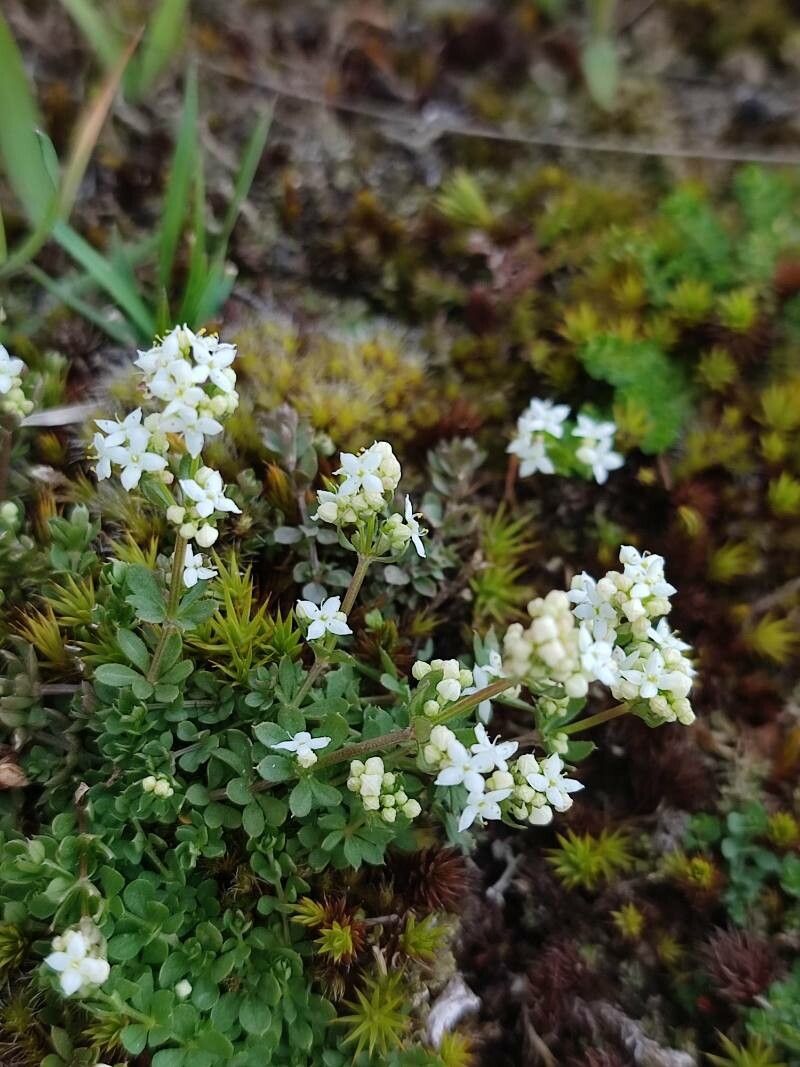
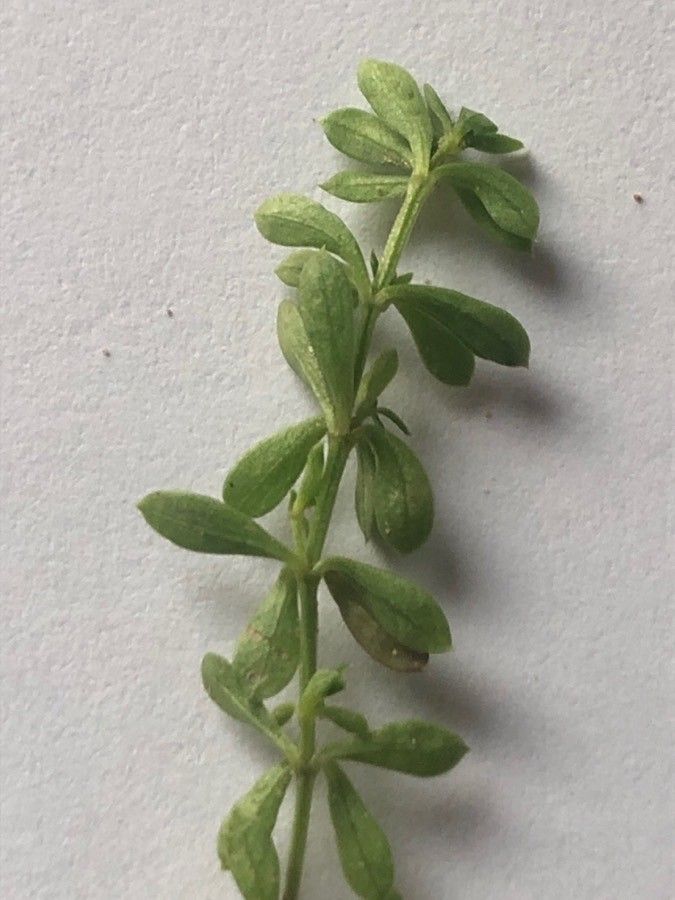
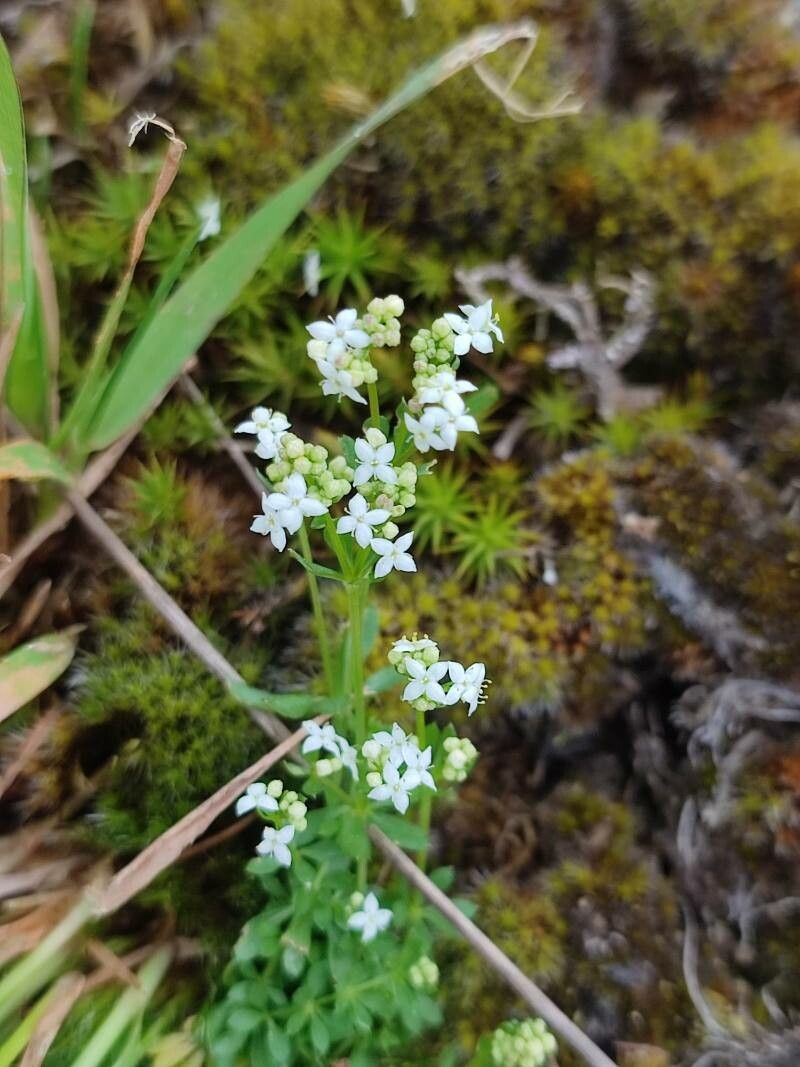
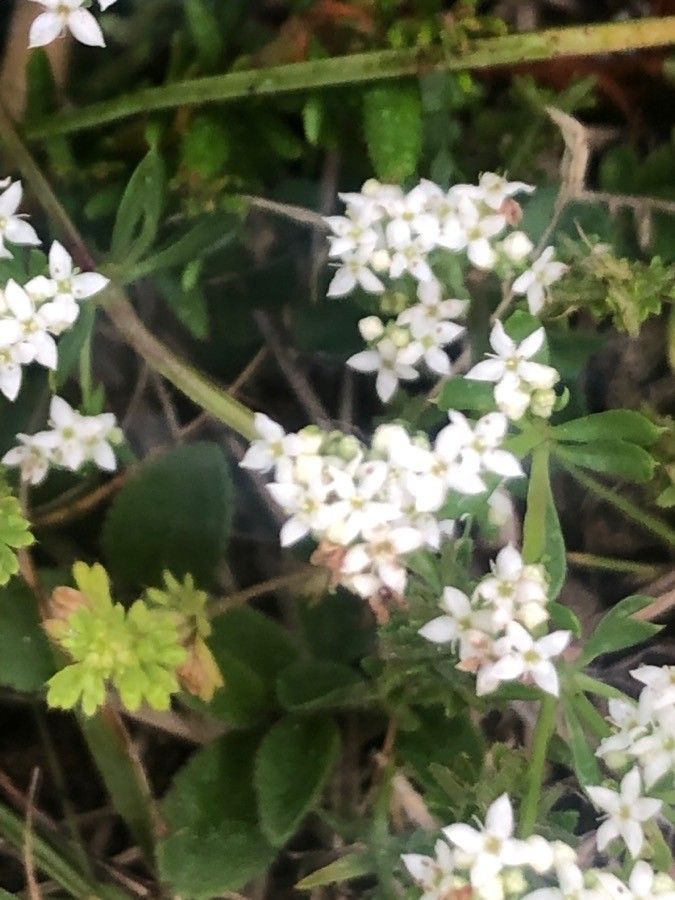
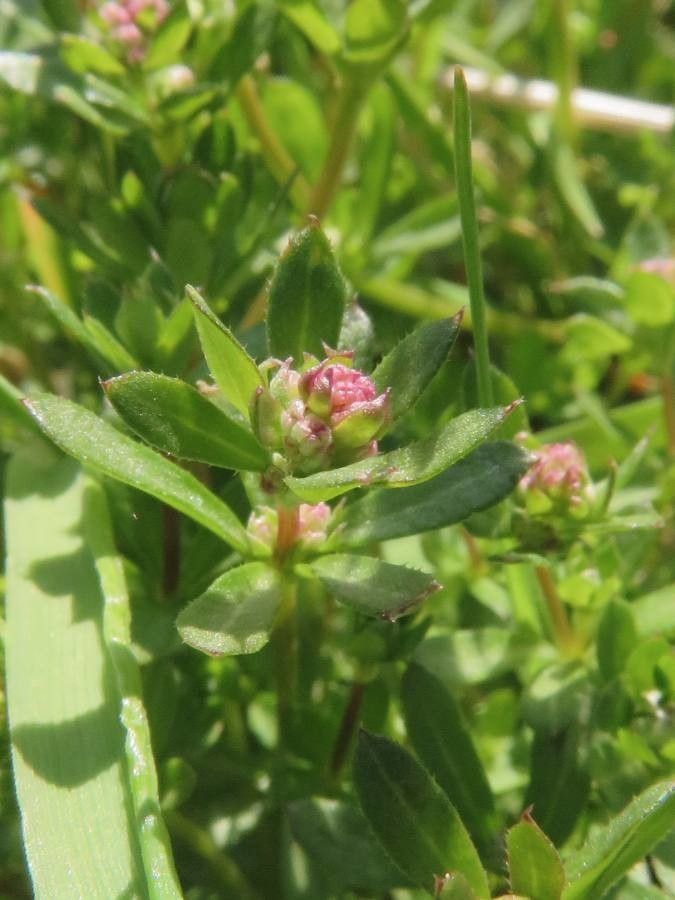
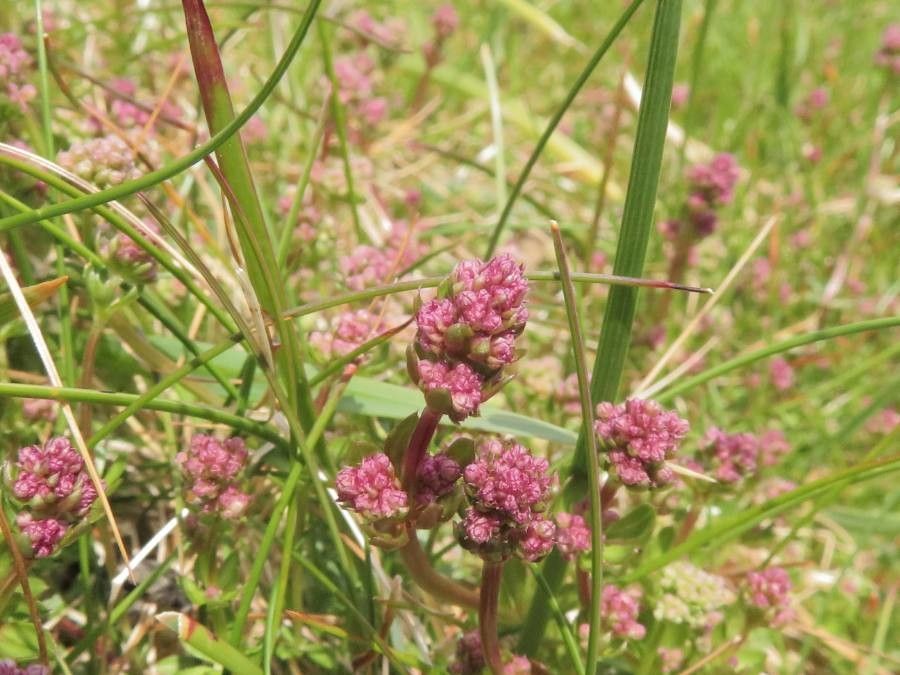
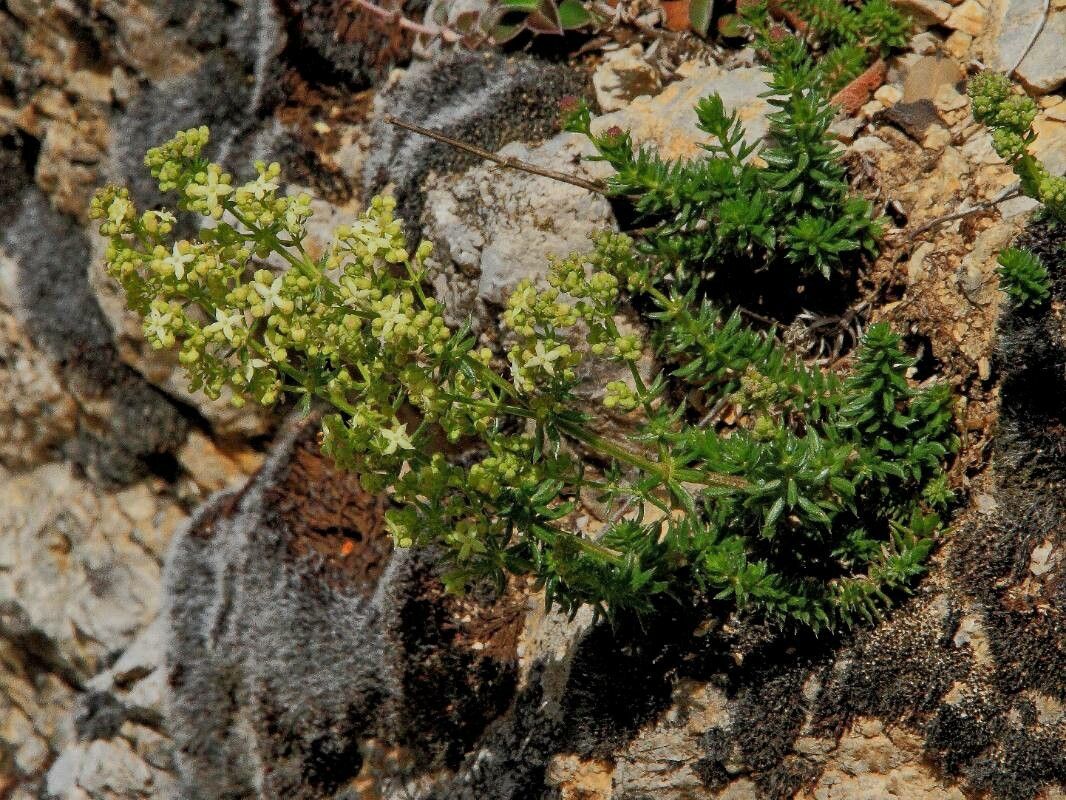
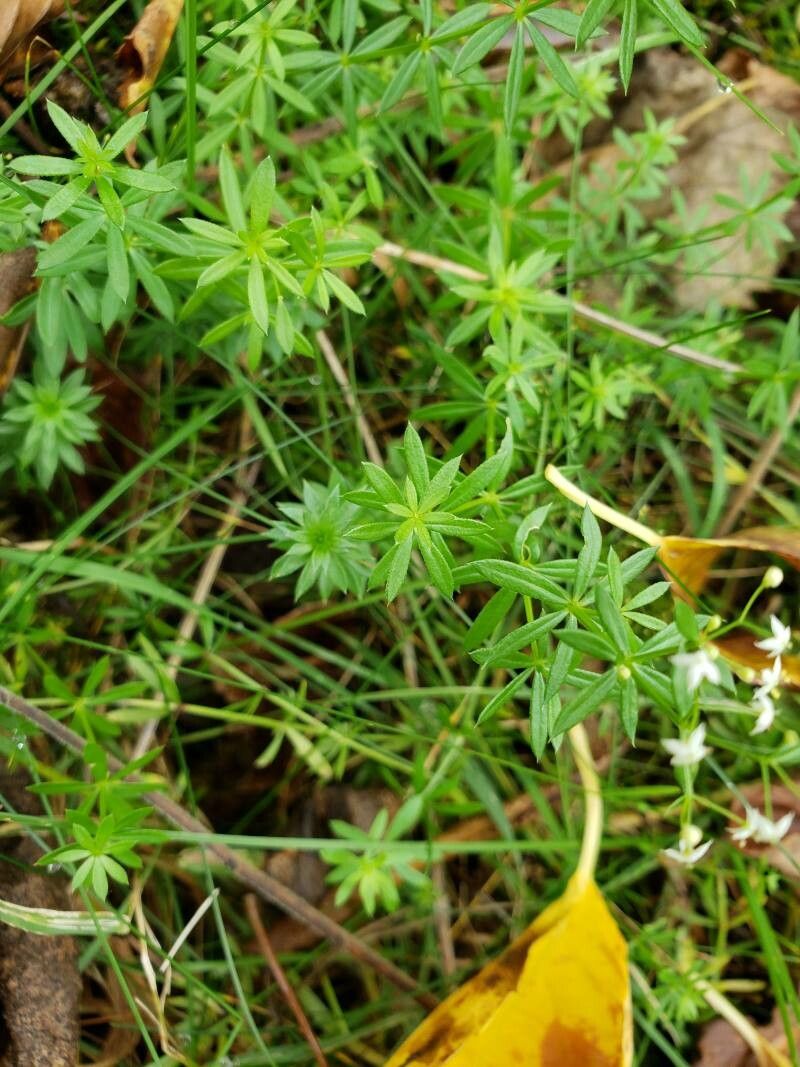
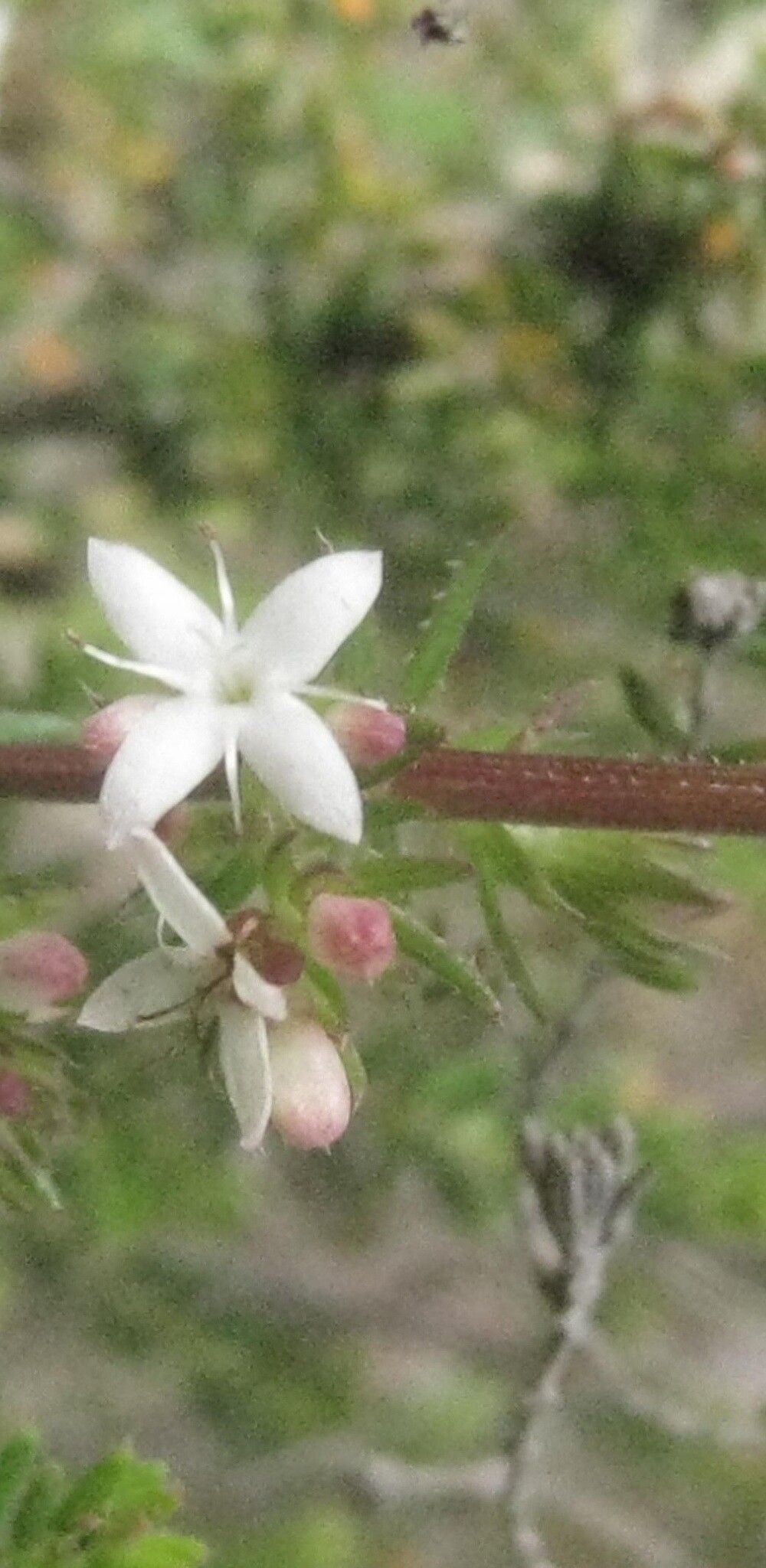
Galium saxatile or heath bedstraw is a plant species of the genus Galium. It is related to cleavers. Galium saxatile is a perennial mat-forming herb, found on grassland, moors, heaths and woods. It can reach a height of 20 centimetres (7.9 in), and flowers in the UK from May to August. The stems are hairless and four sided. Its leaves are 8–25 millimetres (0.31–0.98 in) long, with 6–8 per whorl, and are lanceolate or obovate in shape. The mountain ringlet butterfly uses the plant for nectar.Galium saxatile is widespread across much of northern and central Europe from Portugal and Ireland to Scandinavia, France, Germany, Poland, Ukraine and Russia. It is also reportedly sparingly naturalized in Quebec, California and the Falkland Islands.
Heath bedstraw is fairly disease-resistant and, overall, not highly prone to illness. However, it can be vulnerable to pests and diseases present in its environment. These infections are typically not severe. For care, this plant needs moderate maintenance. It should be pruned regularly to keep a neat appearance and support healthy growth. Fertilizing can also aid in encouraging flowering. Heath bedstraw is appropriate for anyone with outdoor space, such as a garden or patio, and does not demand extensive care experience. It may need extra attention if grown indoors.
How to keep Galium Saxatile.
Light
For healthy growth, heath bedstraw needs plenty of sunlight, deriving most of its energy from sun exposure. It naturally occurs in areas that receive sun for much of the day. Still, it can tolerate places with less light. Too much or too little light can stress the plant and impair its growth and vitality.
Water
Heath bedstraw flourishes in well-drained soils within temperate regions, often found in forest understories where moisture is consistent. Although it has moderate drought tolerance, the plant favors stable humidity and requires weekly watering. As an evergreen, it needs careful soil moisture management to prevent root rot and to maintain healthy foliage throughout the year.
Temperature
Heath bedstraw naturally occurs in areas with temperatures generally between 41 and 77 °F (5 to 25 °C). It favors moderately temperate conditions. In colder or hotter periods, consider adaptation measures to ensure heath bedstraw's survival and vigorous growth.
Fertilizer
One fertilizer application in spring is generally enough for Heath bedstraw, though repeated feedings will maximize growth. Feed about every month to six weeks. Fertilization improves the leaves' appearance and function, helping maintain even color and a healthy texture. It also encourages root development and better nutrient uptake for the plant's long-term health.
Pruning
Heath bedstraw is a perennial herb known for its mat-forming growth and white star-shaped flowers. To manage its spread and encourage healthy growth, prune the plant from early to late spring. This will help remove dead growth and improve air circulation, boosting the plant's vigor. For the best results, always use clean, sharp tools and make cuts just above the leaf nodes.
Botanical profile.
- Plant Type
- Herb
- Life Cycle
- Perennial
- Genus
- Galium
- Family
- Rubiaceae
- Hardiness Zone
- 5
- Mature Height
- 30 cm
- Mature Spread
- 1.52 m
- Leaf Color
- Green
- Leaf Type
- Deciduous
- Flower Color
- White
- Flower Size
- 0.20 cm to 0.25 cm
- Bloom Time
- Late spring, Early summer, Mid summer
- Planting Time
- Spring, Autumn
- Harvest Time
- Late summer, Early fall
- Native Area
- Austria, Sweden, Slovakia, Croatia, Slovenia, Germany, Belgium, France, Portugal, Netherlands, Czech Republic, Poland, Ukraine, Lithuania, Norway, Spain, Switzerland, Denmark, Ireland, United Kingdom
Other names.
Reader questions.
How should I water my Heath bedstraw?
To properly water the Heath bedstraw, it is best to use room temperature filtered water. Tap water may contain harmful particles, so filtered water is preferred. Since the Heath bedstraw is accustomed to warmer environments, it is important to avoid using cold water, which can be a shock to the plant. Additionally, overhead watering should be avoided as it can cause problems with the foliage. Instead, simply water the soil with filtered room temperature water until it is fully soaked. This helps to ensure that the roots are moistened and can continue to spread and absorb necessary nutrients from the soil.
What are the sunlight requirements for Heath bedstraw?
Heath bedstraw thrives in environments with abundant sunlight, benefiting most from full sun conditions, which means it requires more than 6 hours of sunlight daily. It can also grow under partial sun, needing approximately 3-6 hours of sunlight. However, to ensure the plant's happiness and health, it's crucial to watch how sunlight moves through your garden, aiming to find spots that offer an ideal balance of light and shade.
What is the ideal temperature range for Heath Bedstraw?
Heath bedstraw, or Galium saxatile, thrives in environments where the temperature typically ranges from 41 to 77 °F (5 to 25 °C). This plant prefers moderate temperate climates, and for its survival and vigorous growth, it may require adaptation measures during periods that are colder or hotter than its preferred temperature range.
What should I do if I give too much or too little water to my Heath bedstraw?
Both overwatering and underwatering can harm your Heath bedstraw, but overwatering is more commonly an issue. Overwatering can cause wilting, yellowing leaves, and even diseases like root rot, mold, and mildew that can kill the plant. Underwatering is less common because the Heath bedstraw is somewhat drought tolerant, but it can still happen. Signs of underwatering include brittle, brown leaves. It's important to recognize signs of overwatering early and reduce watering immediately to avoid irreparable damage. Assess the soil drainage and replace it with a well-draining potting mix if necessary. If signs of underwatering are present, water more frequently until the signs improve.
What essentials do I need to know about growing Heath bedstraw?
A healthy growth for Heath bedstraw is largely dependent on ample sun exposure, as it naturally inhabits landscapes with significant sunlight. Although it can adapt to less sunny conditions, both an excess and a shortage of sunlight can stress the plant, impacting its growth and vitality. For indoor plants, artificial lighting can be a critical solution during periods of insufficient natural sunlight. LEDs are recommended for their ability to provide specific wavelengths needed by plants, with full sun plants requiring 30-50W per square foot, partial sun plants needing 20-30W per square foot, and full shade plants 10-20W per square foot. Lights should be positioned 12-36 inches above the plant and left on for 8-12 hours per day to mimic natural sunlight conditions.
How does Heath Bedstraw cope with cold conditions?
Heath bedstraw is exceptionally cold-tolerant and does not require any special frost protection measures during the winter. To help it through colder months, it is advisable to water the plant generously before the first freeze in autumn. This ensures the soil remains moist and enters a frozen state, which helps prevent drought and water scarcity for the plant during winter and early spring.
How often do I need to water my Heath bedstraw?
If your Heath bedstraw is in a pot, the most precise way to determine if it needs water is to stick your finger into the soil. If the top two to three inches of soil feel dry, then it's time to water it. If you're growing your Heath bedstraw outdoors in the ground, you can use a similar method to test the soil. When you find that the top few inches of soil have dried out, it's time to add water. Typically, during spring and early fall, you'll need to water this plant about once a week using this method. However, in extremely hot weather, you may need to water it twice or more per week. It's worth noting that mature and well-established Heath bedstraw plants can handle dry conditions quite well, showing an admirable ability to withstand drought.
What symptoms indicate inadequate lighting for Heath bedstraw?
Symptoms of insufficient lighting in Heath bedstraw include the growth of smaller new leaves than the mature ones, leggy or sparse growth due to longer spaces between leaves or stems, faster leaf drop as the plant conserves resources, delayed or halted growth as the plant enters survival mode, and the development of pale or irregularly colored new leaves indicating a lack of chlorophyll. Exposure to excessive sunlight can lead to chlorosis, sunscald, leaf curling, wilting, and leaf scorching, which respectively refer to loss of leaf color, damage from intense sunlight, defensive leaf twisting, drooping due to water loss, and brown, dry patches on leaves.
What should I do if Heath Bedstraw experiences extreme cold or warm temperatures?
If Heath bedstraw experiences temperatures below -25°C, it may not show immediate damage during winter, but you might notice a decrease in sprouting or a lack of sprouting in the spring. If this happens, you should remove any parts that have failed to sprout. Conversely, if the temperature exceeds 25°C, Heath bedstraw's growth will halt, and it becomes more prone to rot. In such cases, you should trim away any sunburned and dried-up parts, move the plant to a location that provides shade during the midday and afternoon sun, or use a shade cloth. Also, water the plant in the morning and evening to keep the soil moist.
How much water does my Heath bedstraw plant need?
To properly water your Heath bedstraw, make sure to give it a generous amount of water. Wait until the top two to three inches of soil are dry before watering, and then thoroughly soak the soil. Water enough so that it drains out of the bottom drainage holes in the pot. If you don't see any excess water draining, you may not have given enough water. However, be careful not to let the water accumulate in the soil as it could harm the plant. Additionally, if water is not draining well from the pot, it could mean that the soil does not have good drainage, which is bad for the plant's health. Finally, if the plant is outside, it will generally require about 1 inch of rain per week.
How can I address Heath bedstraw's lighting issues?
To address lighting issues for Heath bedstraw, gradually move the plant to sunnier locations to reach a minimum of 6 hours of direct sunlight daily, particularly using south-facing windows indoors. If moving the plant isn't feasible, consider artificial lighting, maintaining at least 8 hours of exposure daily. Outdoors, aim for gradual acclimatization to prevent sunburn. Removing obstructions, like pruning branches that shade the plant, or transplanting to sunnier spots can also help. It's important to note that while parts of the plant affected by insufficient sunlight might not recover, new growth given adequate light will be healthy.
How do I water my Heath bedstraw when it's growing at different stages?
The water needs of the Heath bedstraw can vary depending on its growth stages. In the first few years or after transplanting, extra water is necessary as the plant focuses on developing new roots for future growth. These young roots require more moisture compared to mature phases. As the plant becomes established, it will require less water. Additionally, during the bloom period, increased water may be needed to support flower development.