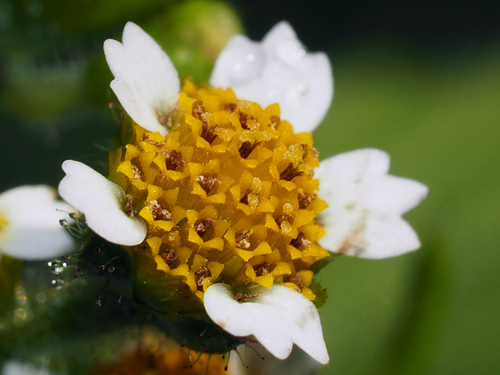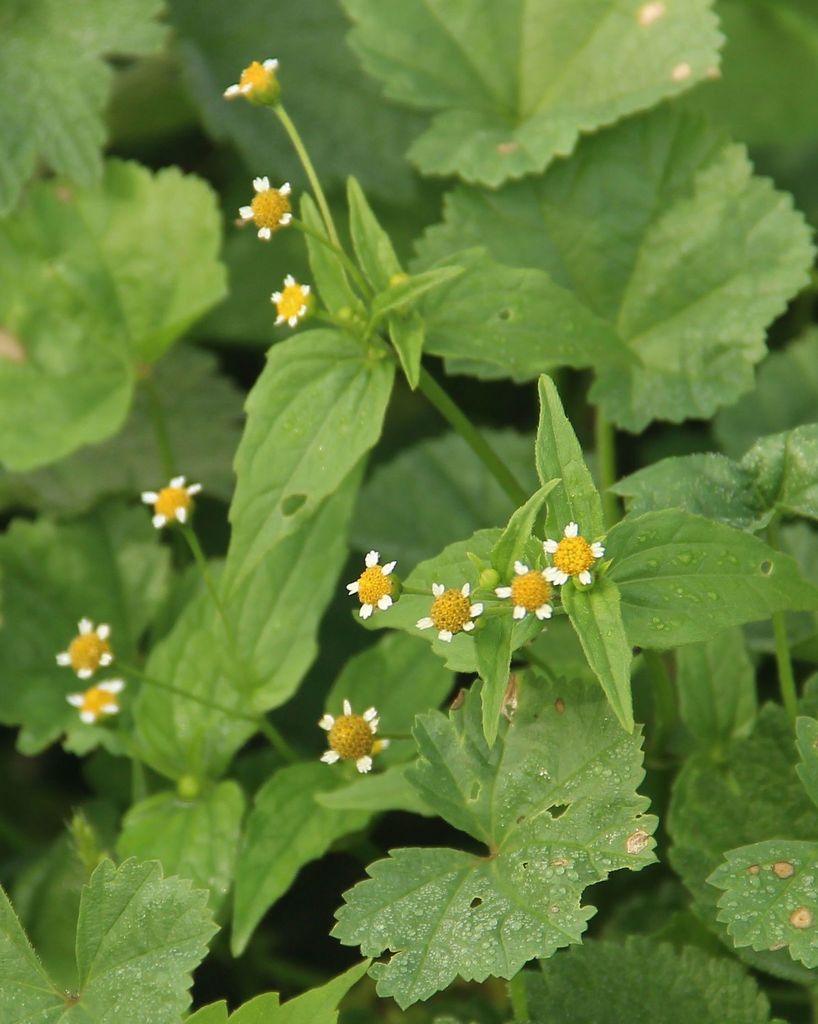
Galinsoga parviflora, commonly known as gallant soldier or quickweed, is an annual herbaceous plant in the Asteraceae family. Native to South America, it has spread worldwide as a weed. The plant can grow up to 60 cm tall and features small white flowers that bloom from June to October. Its leaves are opposite, toothed, and have a distinctive triangular shape.
Galinsoga parviflora thrives in moist soils and is commonly found in disturbed areas such as gardens, fields, roadsides, and waste places. It reproduces through seeds that can remain viable in the soil for up to three years.
Though often regarded as a weed due to its invasive nature, Galinsoga parviflora has been used medicinally by the indigenous people of South America for centuries. It contains compounds like flavonoids and sesquiterpene lactones, which possess anti-inflammatory properties.
In summary, Galinsoga parviflora is an annual herb that grows up to 60 cm tall and bears small white flowers. Despite its invasive reputation, it has long been valued for its medicinal properties by indigenous South Americans.
Gallant soldier is fairly resistant to disease and is usually not prone to illnesses. However, it can be vulnerable to pests and diseases present in its environment. These infections are generally mild. In terms of care, the plant requires moderate maintenance. It should be pruned regularly to maintain a good appearance and promote healthy growth. Fertilizing can also help encourage flowering. Gallant soldier is suitable for anyone with outdoor space, such as a garden or patio, and does not demand extensive care experience. It may need more attention when grown indoors.
How to keep Galinsoga Parviflora.
Light
Gallant soldier prospers in strong sunlight but can tolerate stretches of moderate sun exposure. Native to areas with intense sunlight, it develops well with plentiful sun. A lack of light may restrict its growth, while excessive light can cause its small flowers to wilt.
Water
The Gallant Soldier is an annual herb native to tropical regions, where it thrives in consistently moist environments. It requires weekly watering for optimal growth, though it can withstand short periods of dryness. During its active growing season, the plant benefits significantly from rainwater. It is typically cultivated outdoors.
Humidity
This plant will thrive in moderate humidity, which is probably the level in your home. However, misting it a few times a week can be very beneficial. Make sure the room has good ventilation.
Temperature
Gallant soldier is native to regions with moderate temperatures, favoring an ideal range of 68 to 95 °F (20 to 35 °C). Seasonal fluctuations should be taken into account to ensure temperatures remain within this optimal range.
Fertilizer
Gallant soldier benefits from regular, weak applications of fertilizer to encourage healthy leaf growth. You should fertilize Gallant soldier about once a month during the summer. Nitrogen is essential for foliage, and providing nitrogen-rich sources helps Gallant soldier thrive.
Botanical profile.
- Plant Type
- Herb
- Life Cycle
- Annual
- Genus
- Galinsoga
- Family
- Asteraceae
- Hardiness Zone
- 9
- Mature Height
- 10 cm to 76 cm
- Mature Spread
- 49 cm
- Leaf Color
- Green, Blue
- Leaf Type
- Deciduous
- Flower Color
- White, Yellow
- Flower Size
- 3.05 cm
- Bloom Time
- Late spring, Summer
- Planting Time
- Spring
- Harvest Time
- Summer, Early fall
- Native Area
- Colombia, Haiti, Mexico, Bolivia, Venezuela, Peru, El Salvador, Nicaragua, Ecuador, Dominican Republic, Costa Rica, Jamaica
Other names.
Reader questions.
How should I water my Gallant soldier plant to make it thrive the most?
There are several ways to water Gallant soldier. You can use a garden hose with a spray nozzle, a watering can, or any other common watering tool. This plant is not too picky about the type of water it receives, as it can thrive on rainwater, tap water, or filtered water. However, it's best to avoid watering from overhead as it can harm the leaves and flowers and potentially lead to disease. A drip irrigation system is often the most effective method for watering Gallant soldier as it evenly and directly applies water to the soil. If you have a container-grown Gallant soldier, you can use a cup, watering can, or tap to water it directly to the soil.
What are the sunlight requirements for Gallant soldier (Galinsoga parviflora)?
Gallant soldier needs an ample amount of sunlight to thrive, ideally above 6 hours of direct sunlight for full sun exposure, and about 3-6 hours for partial sun exposure. It's important to observe the movement of sunlight in your garden to find the perfect spots that provide a balance of light and shade, ensuring the optimal growth of your Gallant soldier plants.
What is the ideal temperature range for Gallant soldier?
Gallant soldier thrives in moderate temperatures, with an ideal range being between 68 to 95 °F (20 to 35 °C). It's important to consider seasonal variations to ensure the temperature remains within this optimum range for the plant to prosper.
What should I do if I give too much or too little water to my Gallant soldier plant?
To prevent underwatering Gallant soldier, water it regularly when you notice it lacks moisture. Overwatering, on the other hand, can cause severe issues, including diseases and death. To avoid this, choose a growing location with good sunlight and drainage. If you overwater a potted Gallant soldier, consider changing the pot to one with better drainage and using loose soils when repotting.
How does inadequate or excessive sunlight affect Gallant soldier?
Gallant soldier flourishes under abundant sunlight but can endure moderate sun. Originating from environments with intense solar illumination, it requires plenty of sunlight for healthy growth. Insufficient light can hinder growth, while too much can harm its delicate flowers. To supplement light, especially indoors or in less sunny areas, artificial lighting such as LED lights can be used, adjusting the type, distance, and duration of exposure according to the plant's needs.
How does Gallant soldier handle cold temperatures?
Gallant soldier has a moderate tolerance to cold and generally does not require additional measures when the temperature is above 0°C. However, if temperatures are expected to drop below freezing, temporary cold protection measures should be taken, such as covering the plant with plastic film, fabric, or other insulating materials. These protections should be removed once the temperature rises again.
How frequently should I water my Gallant soldier?
To keep your Gallant soldier plant healthy, here are some watering guidelines to follow. During the growing season, it is important to water the plant regularly. In the spring, water it once a week. As the season progresses and the weather gets warmer, you might need to water it two or three times a week. However, be careful not to overwater the plant, as that can be harmful. The soil should remain moist but not wet. If your Gallant soldier is in a pot, you'll have to water it more frequently compared to if it was planted in the ground. This is because the soil in a pot can heat up and dry out faster. In most cases, watering a potted Gallant soldier a few times a week is recommended, whereas once a week is sufficient for an in-ground plant.
What are the symptoms of light deficiency or excess in Gallant soldier?
Symptoms of light deficiency in Gallant soldier include smaller new leaves, leggy or sparse growth, faster leaf drop, slower or halted new growth, and lighter-colored or yellow leaves indicating chlorosis from insufficient sunlight. Excessive sunlight can cause symptoms like sunscald, leaf curling, wilting, leaf scorching, and overall health reduction, indicating the importance of monitoring and adjusting light exposure for healthy plant growth.
What symptoms indicate that Gallant soldier is experiencing low temperatures?
When experiencing low temperatures, especially below -5°C, Gallant soldier's leaves may start to droop. In mild cases, the plant can recover, but in severe cases, the leaves will wilt and may eventually fall off. It thrives best when the temperature is maintained above 20°C and should be kept above freezing during winter.
How much water should my soldier drink?
There are a few different ways to decide how much water to give to your Gallant soldier plant. Some gardeners prefer to feel the soil to determine if it's moist enough. This method suggests watering until the top six inches of soil are moist. Another option is to use a specific measurement, like two gallons per week, depending on the temperature and soil dryness. However, following strict guidelines can lead to overwatering if your plant needs less. When growing Gallant soldier in a container, you should water enough to moisten all layers of dry soil. To check, stick your finger in the soil or look for excess water coming out of the drainage holes.
What are some solutions for light-related issues in Gallant soldier?
For indoor Gallant soldier plants struggling with light exposure, gradually moving them to a sunnier spot or using artificial light can help. Outdoor plants benefit from a gradual transition to sunnier locations to avoid sunburn. Reducing obstructions like pruning trees can increase sunlight access. If necessary, transplanting during the plant's dormant period to a sunnier spot with good drainage can improve health. Note that parts of the plant damaged by insufficient light may not recover, but new growth will be healthy after adjusting light exposure.
How should you care for Gallant soldier after it has been exposed to low temperatures?
If Gallant soldier has been exposed to frost or temperatures below its tolerance, it's recommended to trim off the frost-damaged parts of the plant. To protect it from future low temperatures, wrap the plant with non-woven fabric or cloth and construct a wind barrier to shield it from cold winds.