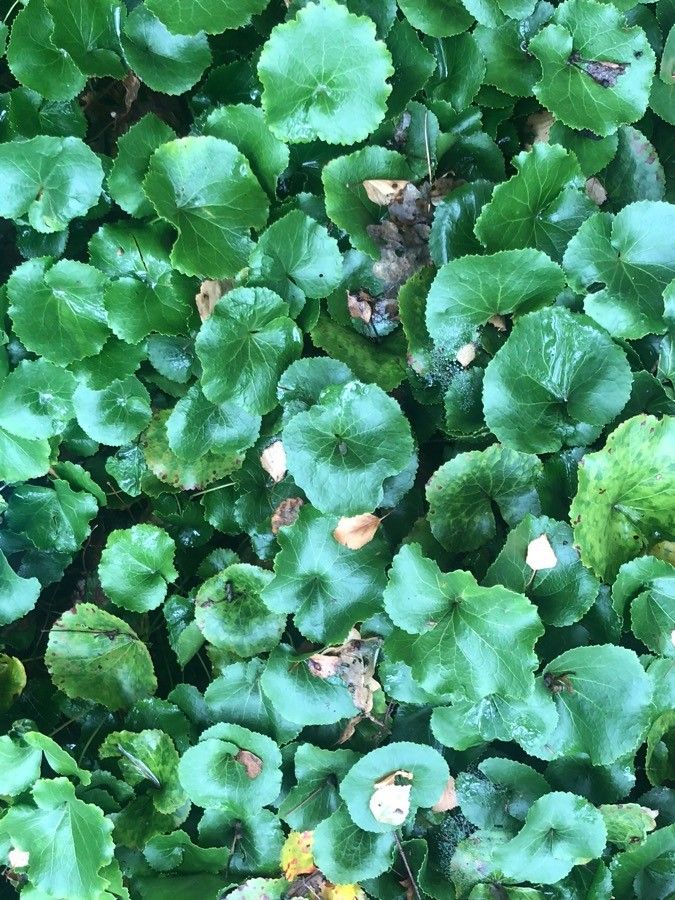
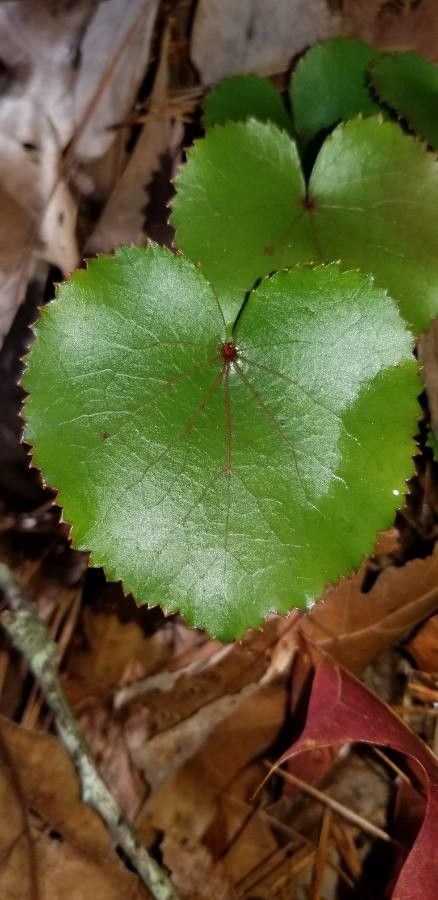
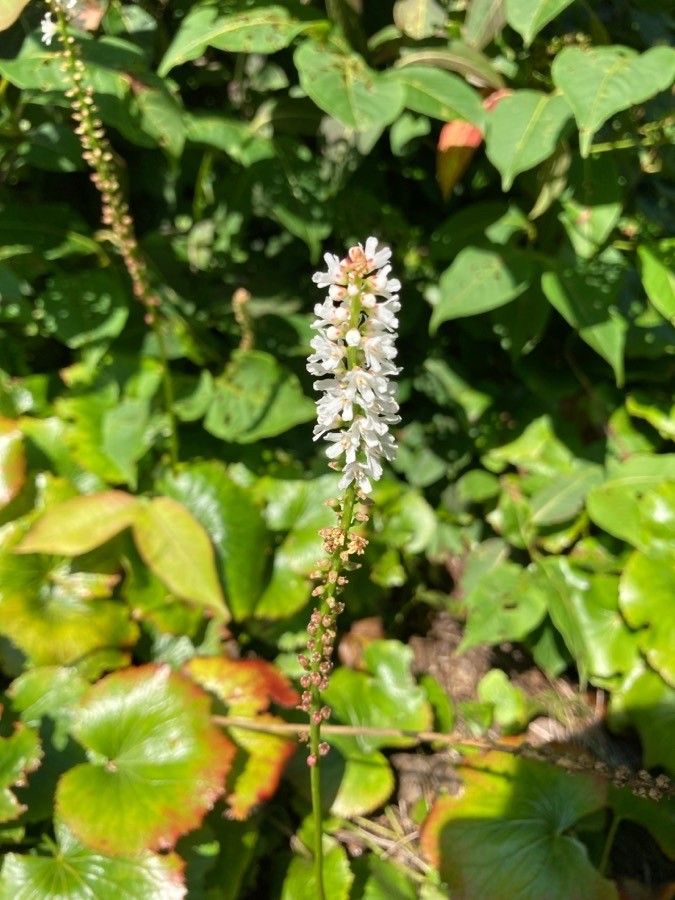
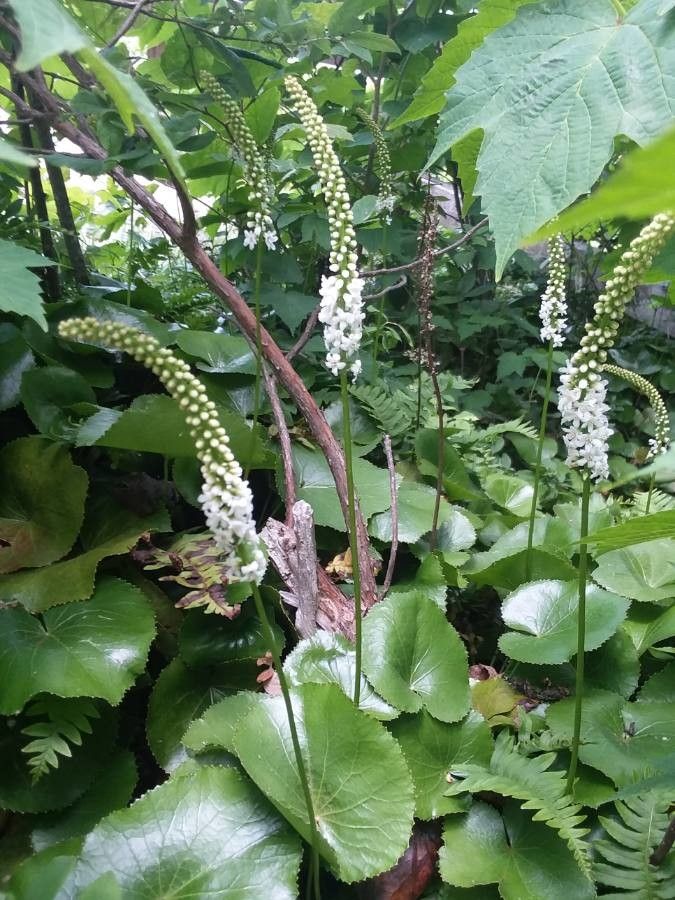
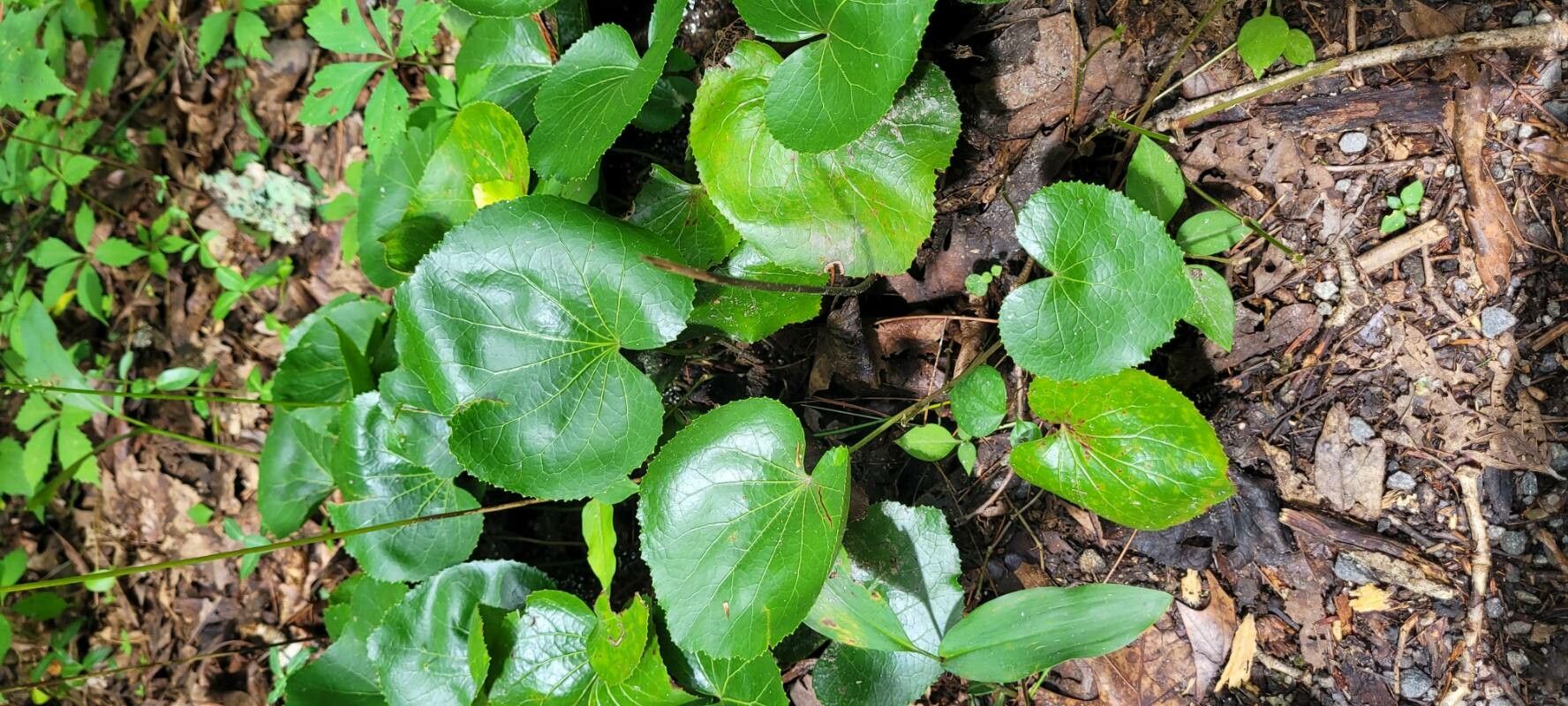
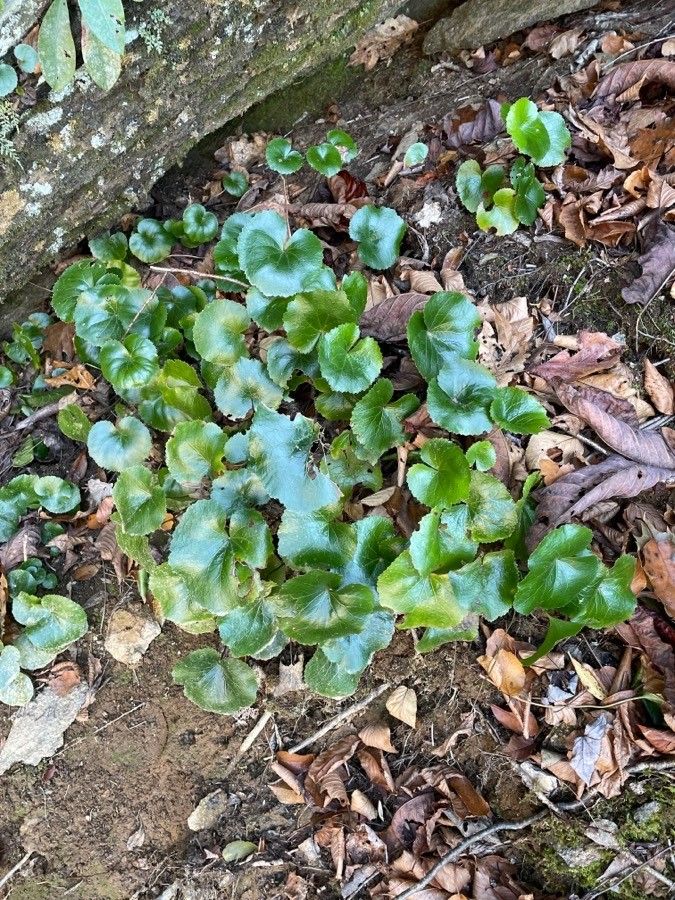
Galax urceolata, commonly known as Galax or Wandflower, is a perennial plant species belonging to the family Diapensiaceae. Native to the eastern United States, it thrives in moist woodlands and mountainous regions. This low-growing plant features glossy, dark green, leathery leaves that distinctly resemble arrowheads. The leaves are evergreen, remaining on the plant year-round. In late spring or early summer, Galax urceolata produces small white flowers on tall stalks. These flowers are clustered at the tops of the stems, each with five petals and yellow stamens at their center. After flowering, small red berries develop and persist into the winter. For centuries, Native Americans have utilized Galax urceolata for its medicinal properties. The plant contains compounds with anti-inflammatory effects, which can help alleviate pain associated with arthritis and other inflammatory conditions. Beyond its medicinal uses, Galax urceolata is valued as an ornamental plant. Its attractive foliage makes it ideal for ground cover or border planting in shady garden areas or landscapes. In summary, Galax urceolata is a versatile perennial with both ornamental appeal and medicinal benefits, making it a valuable addition to any garden or landscape design.
Beetleweed is fairly resistant to disease and generally not susceptible to many illnesses. However, it can be vulnerable to pests and diseases present in its surroundings. Such infections are usually mild. In terms of care, this plant requires moderate maintenance. Regular pruning is necessary to maintain an attractive appearance and promote healthy growth. Applying fertilizer can also help encourage flowering. Beetleweed is suitable for anyone with an outdoor area, such as a garden or patio, and does not demand extensive care experience. It may need more attention when grown indoors.
How to keep Galax Urceolata.
Light
Beetleweed favors settings with a moderate amount of sunlight, though it can do well in deeper shade. Excessive light can cause leaf scorch, while insufficient sunlight may produce slow growth. Native to places with filtered canopy cover, its ability to adjust to changing light levels supports its robust growth.
Water
Beetleweed flourishes in the shaded and moist environments of forest understories, where it prefers soil that remains consistently damp. To keep its foliage lush, it requires watering once a week. As an evergreen plant often cultivated indoors, beetleweed also benefits from regular misting to mimic the humidity of its natural habitat.
Temperature
Beetleweed is native to cooler regions and prefers temperatures from 41 to 89.6 °F (5 to 32 ℃). It may require special attention to temperature adjustments across the changing seasons to maintain optimal growth.
Fertilizer
The best time to fertilize Beetleweed is in early spring, when it is coming out of dormancy and beginning active growth. Fertilization supplies essential nutrients for healthy growth. Although Beetleweed has fairly low fertilizer requirements, applying fertilizer annually can improve its survival and encourage better, longer-lasting flowers.
Pruning
Beetleweed is known for its robust evergreen foliage and star-shaped flowers. For optimal growth and to prevent self-seeding, prune the plant from late winter to early spring. During this time, remove any dead leaves and cut back the flower stalks after they have bloomed. Use sharp, disinfected tools to ensure clean cuts and prevent disease.
Botanical profile.
- Plant Type
- Herb
- Life Cycle
- Perennial
- Genus
- Galax
- Family
- Diapensiaceae
- Hardiness Zone
- 5-8
- Mature Height
- 0.3 m to 4.57 m
- Mature Spread
- 30 cm to 91 cm
- Leaf Color
- Green, Yellow, Red, Gold, Bronze, Brown
- Leaf Type
- Evergreen
- Flower Color
- White
- Flower Size
- 2.54 cm
- Bloom Time
- Late spring, Early summer
- Planting Time
- Spring, Summer
- Harvest Time
- Late summer, Early fall
Other names.
Reader questions.
How should I water my Beetleweed?
To properly water the Beetleweed plant, it's important to follow a few guidelines. Firstly, always use filtered water that is at room temperature. Tap water may have harmful particles, so filtering it is better for the plant's health. Additionally, the water should be at room temperature or slightly warmer since the Beetleweed is accustomed to a warm environment, and cold water can be a shock to its system. Moreover, avoid overhead watering as it can cause issues with the foliage. Instead, focus on applying the filtered room temperature water directly to the soil until it is thoroughly soaked. This helps in moistening the roots and promoting their spread through the soil to collect essential nutrients for the plant's growth.
Why should I put fertilizer on my Beetleweed plant?
Fertilization is an important process for Beetleweed and other plants, as it provides essential nutrients needed for growth both above and below the ground. While Beetleweeds have relatively low fertilization requirements and can sometimes survive without it, annual fertilization can greatly benefit the plant. Not only does it help keep the Beetleweed alive, but it may also promote the development of longer-lasting, more beautiful flowers. Therefore, anyone looking to maintain a healthy and vibrant Beetleweed should prioritize annual fertilization.
What are the sunlight requirements for Beetleweed?
Beetleweed thrives in conditions that offer a moderate amount of sunlight but can also do well in deeper shade areas, needing about 3-6 hours of sunlight for partial sun conditions and less than 3 hours for full shade. It's crucial to observe the movement of sunlight through your garden to select locations that provide the ideal balance of light and shade, ensuring the plants' well-being. Excessive sunlight may cause leaf scorch, while too little can result in slow growth. Its origin in habitats with filtered canopies allows it to adapt well to varying light intensities.
What is Beetleweed and where is it indigenous to?
Beetleweed, botanically known as Galax urceolata, is indigenous to cooler regions. It thrives in environments where temperatures range from 41 to 89.6 °F (5 to 32 °C), favoring areas that do not experience extreme heat or cold. This plant is well adapted to temperatures that are common in its natural habitat, which typically do not exceed these ranges.
What should I do if I give my Beetleweed too much water or not enough water?
Overwatering is a common issue that can harm your Beetleweed. It causes wilting, yellowing of stems and leaves, and can lead to diseases like root rot, mold, and mildew that can kill the plant. Underwatering is less common but can still occur, resulting in brittle, brown leaves. It's important to detect signs of overwatering early because some diseases like root rot may not be fixable if left too long. Reduce watering if you notice signs of overwatering and check the soil's drainage. Replace poorly draining soil with a loose, well-draining potting mix. If your Beetleweed is not getting enough water, simply increase watering until the signs of watering deficiency disappear.
When should I fertilize my Beetleweed?
The best time to fertilize a Beetleweed is from late winter to early spring, when the plant is no longer dormant and is beginning to actively grow. Fertilizing during this time promotes healthy growth and gives the plant a good start for the season. Although it is generally best to fertilize in early spring, it is also okay to fertilize in the fall. However, it is not recommended to feed a Beetleweed during summer or winter.
How can artificial lighting be used for Beetleweed growth indoors?
Indoor Beetleweed plants require sufficient lighting to grow optimally. Artificial lights become essential when natural sunlight is inadequate, especially in winter or less sunny spaces. LED lights are a popular choice, providing specific wavelengths needed by plants. The required intensity varies: full sun plants need 30-50W/sq ft, partial sun plants need 20-30W/sq ft, and full shade plants need 10-20W/sq ft. The light source should be positioned 12-36 inches above the plant, emulating natural sunlight, and plants generally require 8-12 hours of light daily to thrive.
Does Beetleweed require special care during changing seasons?
Yes, Beetleweed may need special care with temperature adjustment throughout the changing seasons to maintain optimal growth. While it has strong cold resistance and usually does not require special frost protection measures, it's crucial to provide cold protection if winter temperatures are expected to drop below -25°C. This protection can be achieved by covering the plant with materials such as soil or straw. Additionally, it is recommended to water the plant abundantly before the first freeze in autumn to ensure the soil remains moist and enters a frozen state, helping prevent drought and water scarcity for the plant during winter and early spring.
How often do I need to water my Beetleweed plant?
If your Beetleweed plant is in a pot, the best way to check if it needs watering is to stick your finger into the soil. If the top two to three inches of soil are dry, it's time to water it. If you have your Beetleweed planted outdoors in the ground, you can use the same method. Once the top few inches of soil have dried out, it's time to water. Typically, during spring and early fall, watering once a week is sufficient. However, during extremely hot weather, you may need to water twice or more per week. Keep in mind that mature and well-established Beetleweed plants can withstand drought conditions.
When is it not a good idea to add fertilizer to my Beetleweed plant?
To avoid overfertilization and its complications, it is best to fertilize your Beetleweed only during late winter and early spring. This plant has low fertilization needs and a single annual feeding is sufficient. Fertilizing during spring, summer, and fall can easily lead to overfertilization, unless you didn't fertilize in spring, in which case it is okay to feed it in the fall. Furthermore, there is no need to fertilize the Beetleweed during winter since it is in a dormant growth phase and does not experience new growth during that time.
What are the symptoms of light deficiency or excess in Beetleweed?
Insufficient light leads to symptoms like smaller leaves, leggy growth, quicker leaf drop, halted growth, and lighter-colored leaves, indicating a struggle with poor lighting conditions. Conversely, too much light can cause chlorosis (leaves turning yellow), sunscald, leaf curling as a defense mechanism, wilting due to increased water loss, and leaf scorching. These symptoms highlight the importance of providing Beetleweed with its ideal light conditions to maintain health and vitality.
How does Beetleweed respond to low temperatures?
Beetleweed is cold-tolerant and thrives best when the temperature is above 5°C. It generally copes well during winter, provided it is kept above -20°C. However, when temperatures fall below -25°C, there may not be any noticeable changes during the winter, but there can be a decrease in sprouting or even no sprouting during springtime. To address this, it is recommended to remove any parts of the plant that have failed to sprout in the spring.