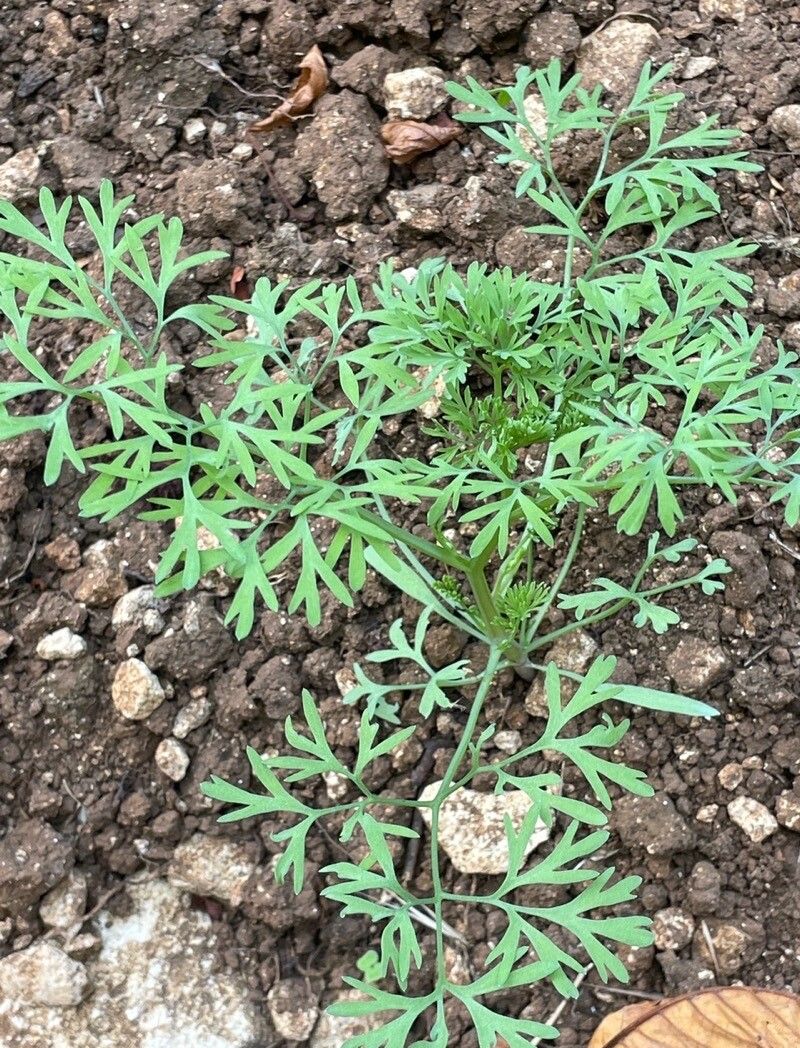
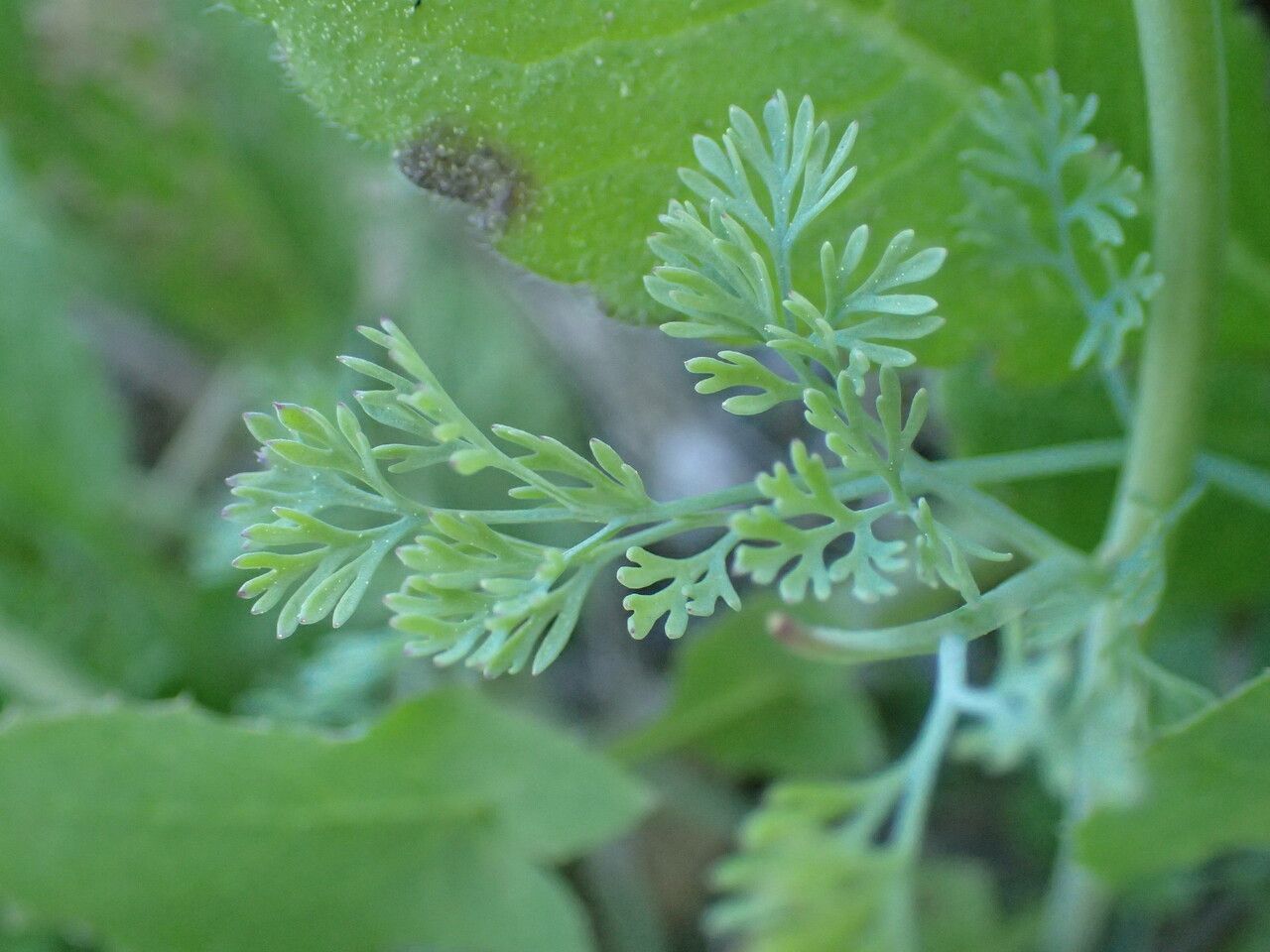
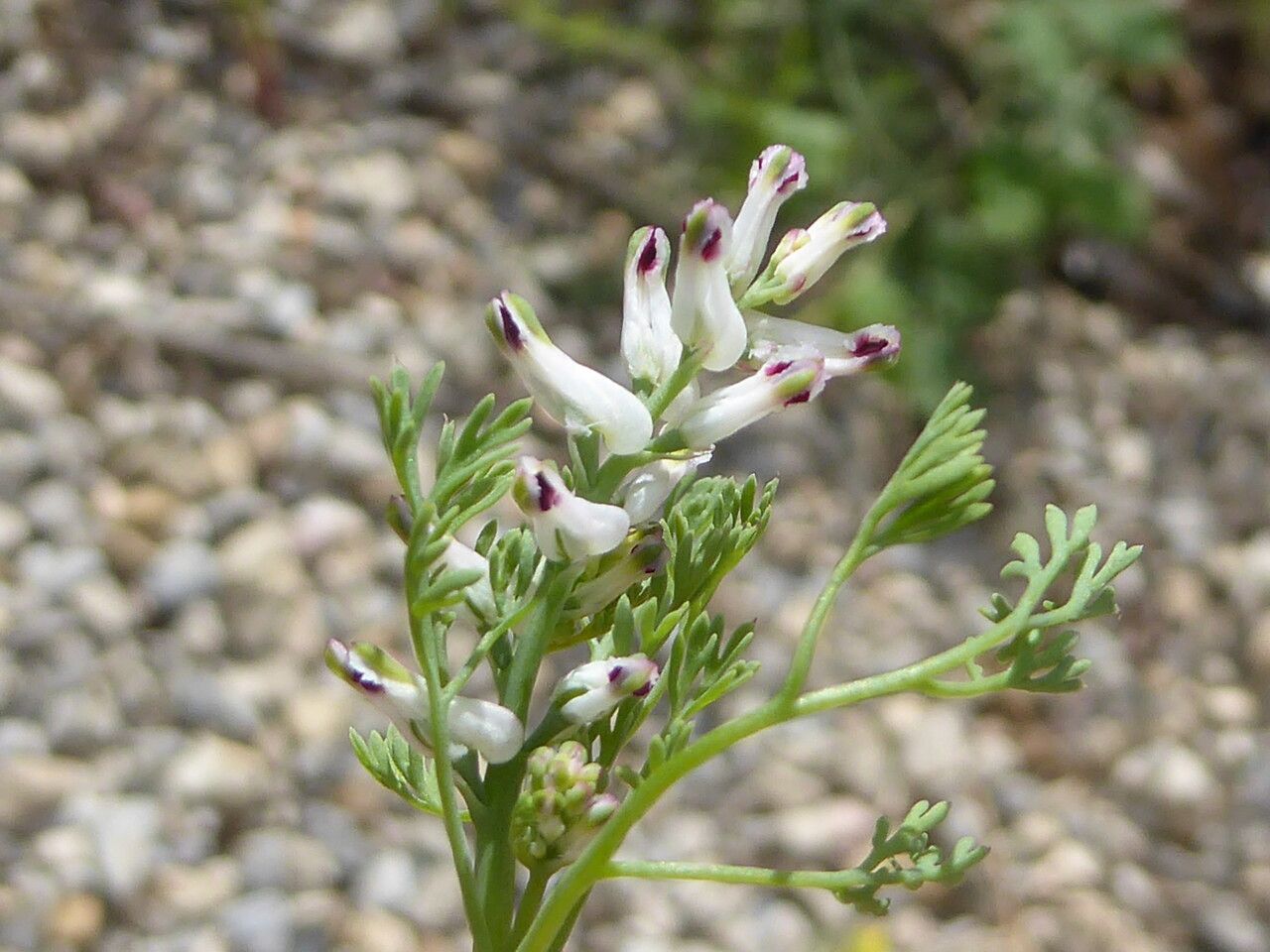
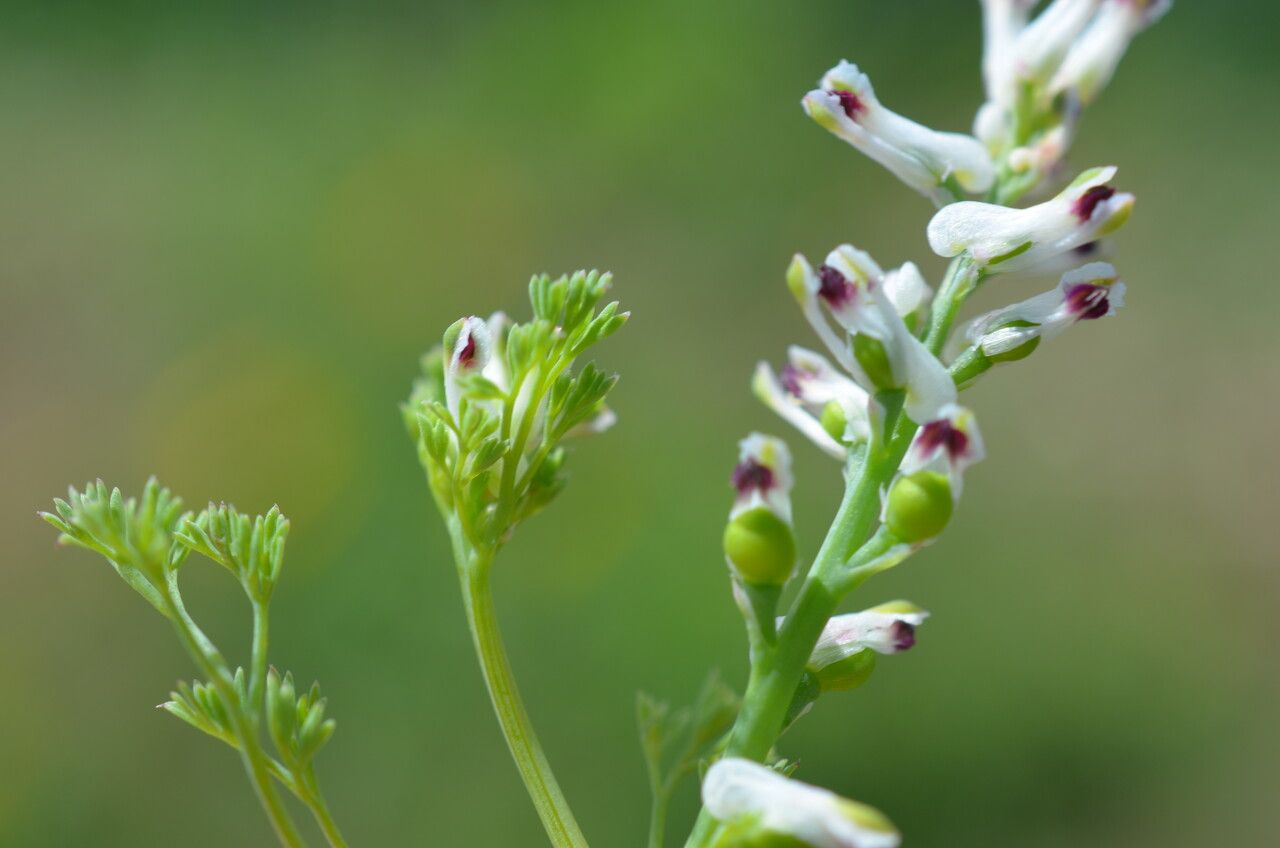
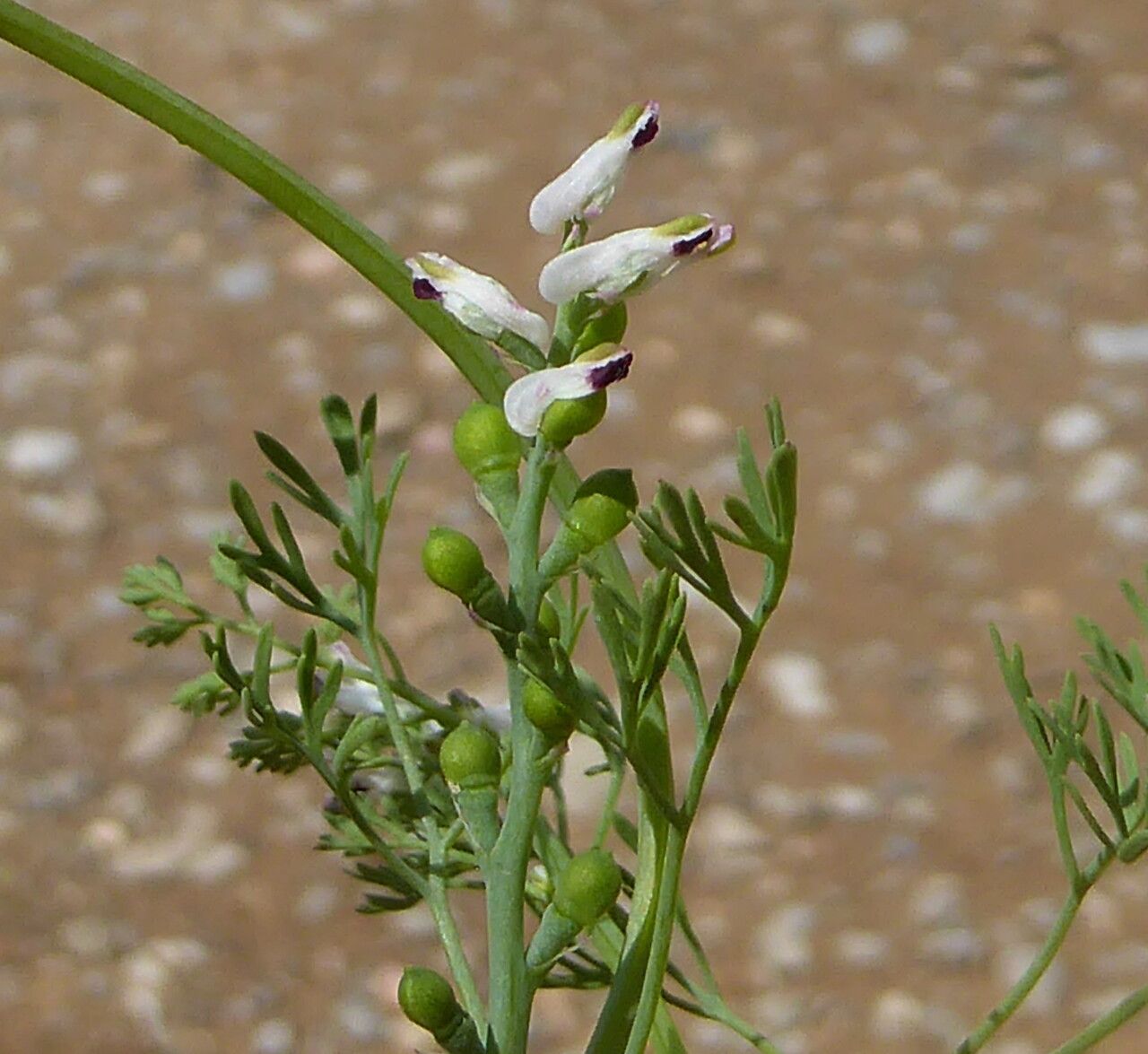
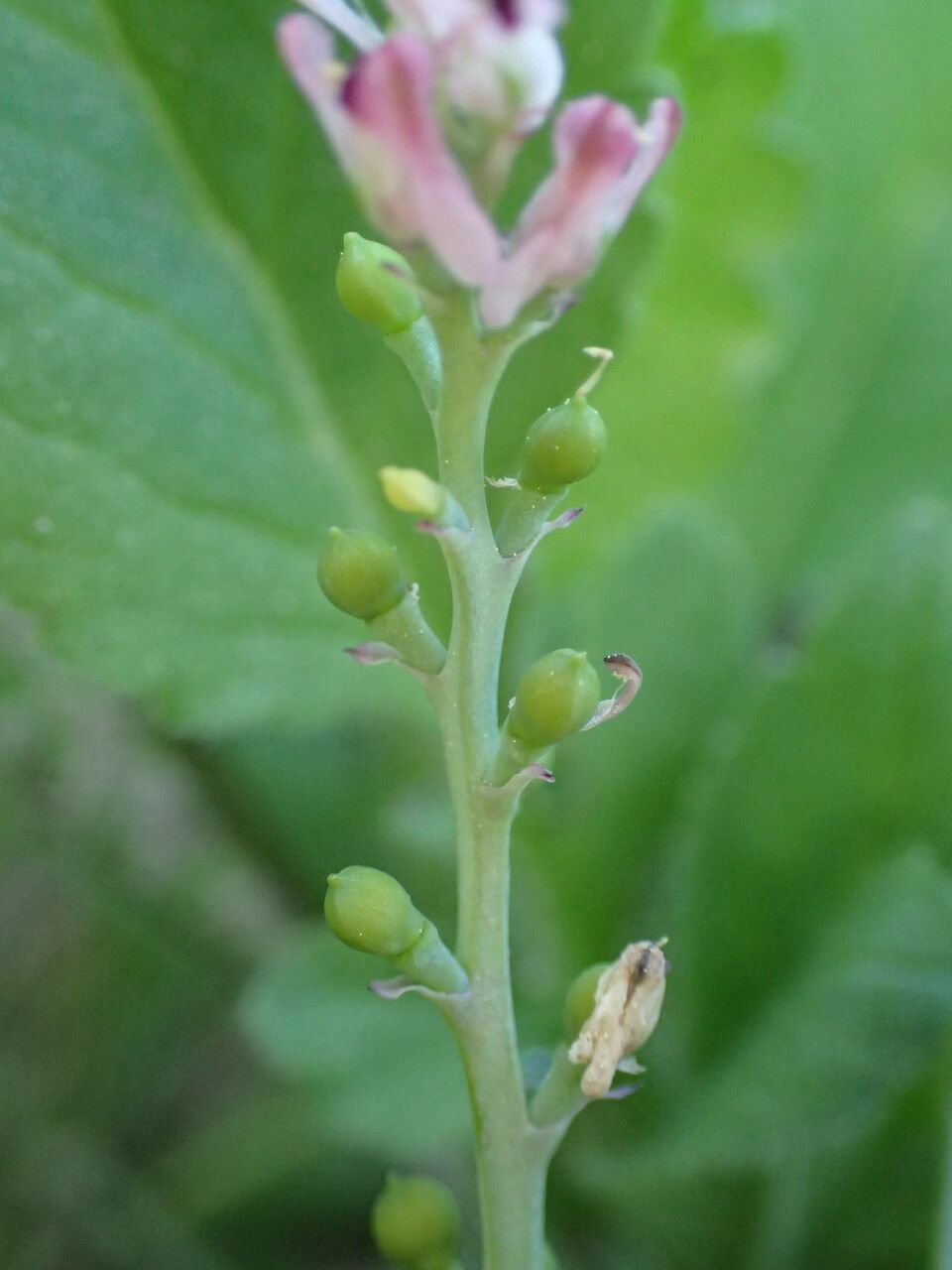
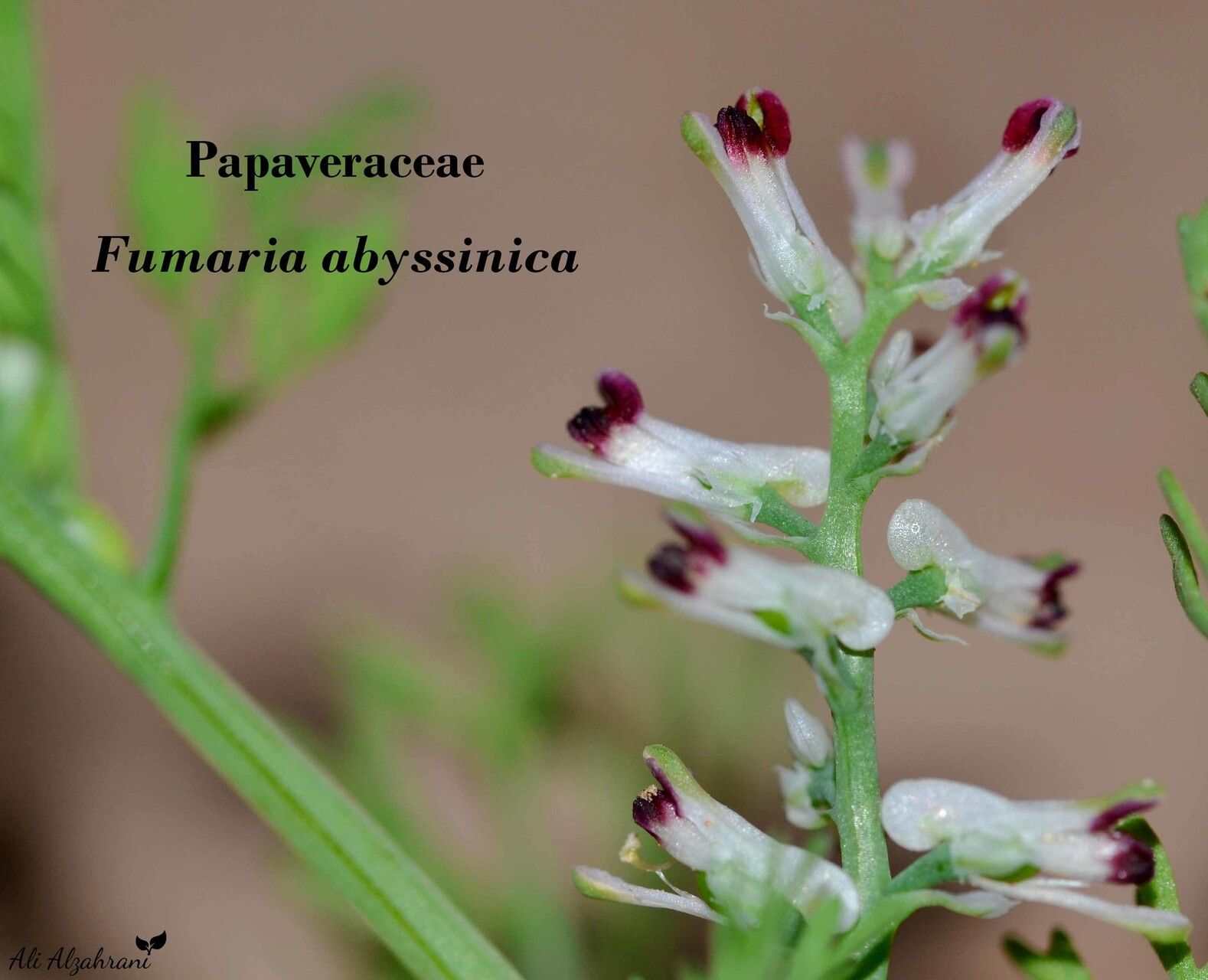
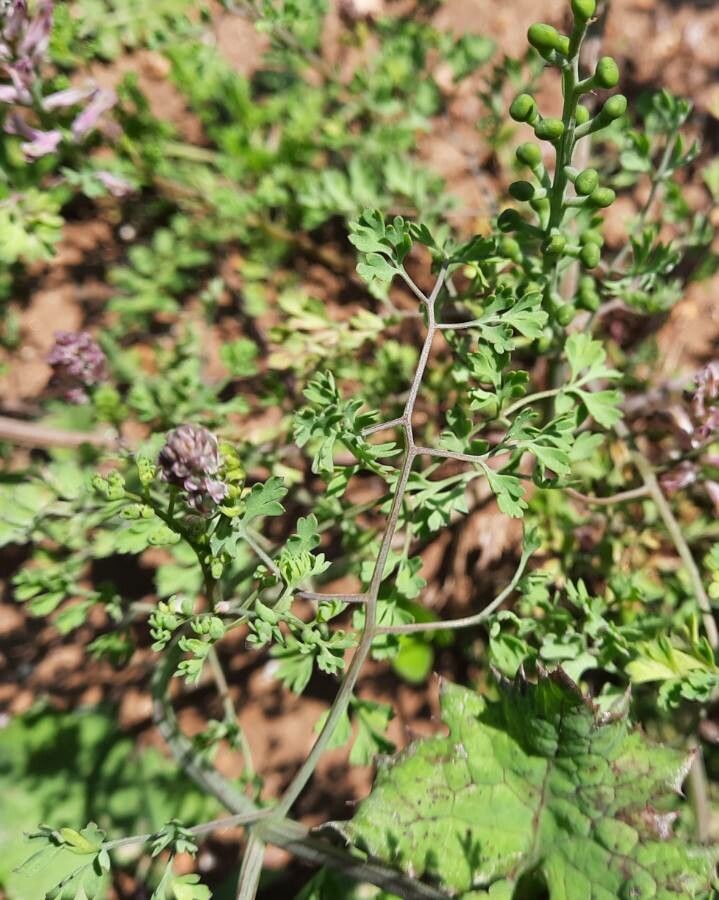
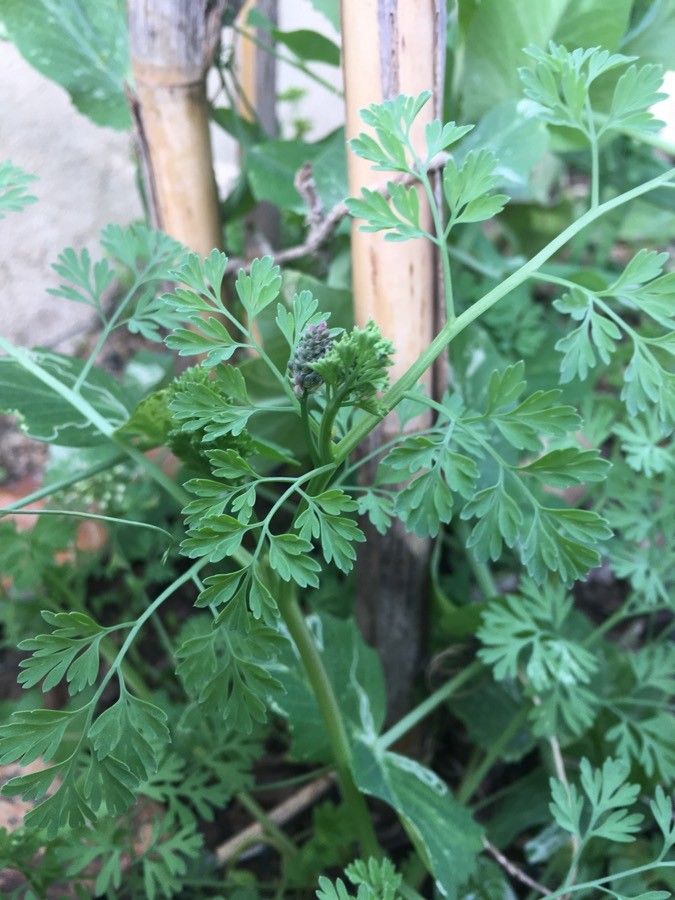
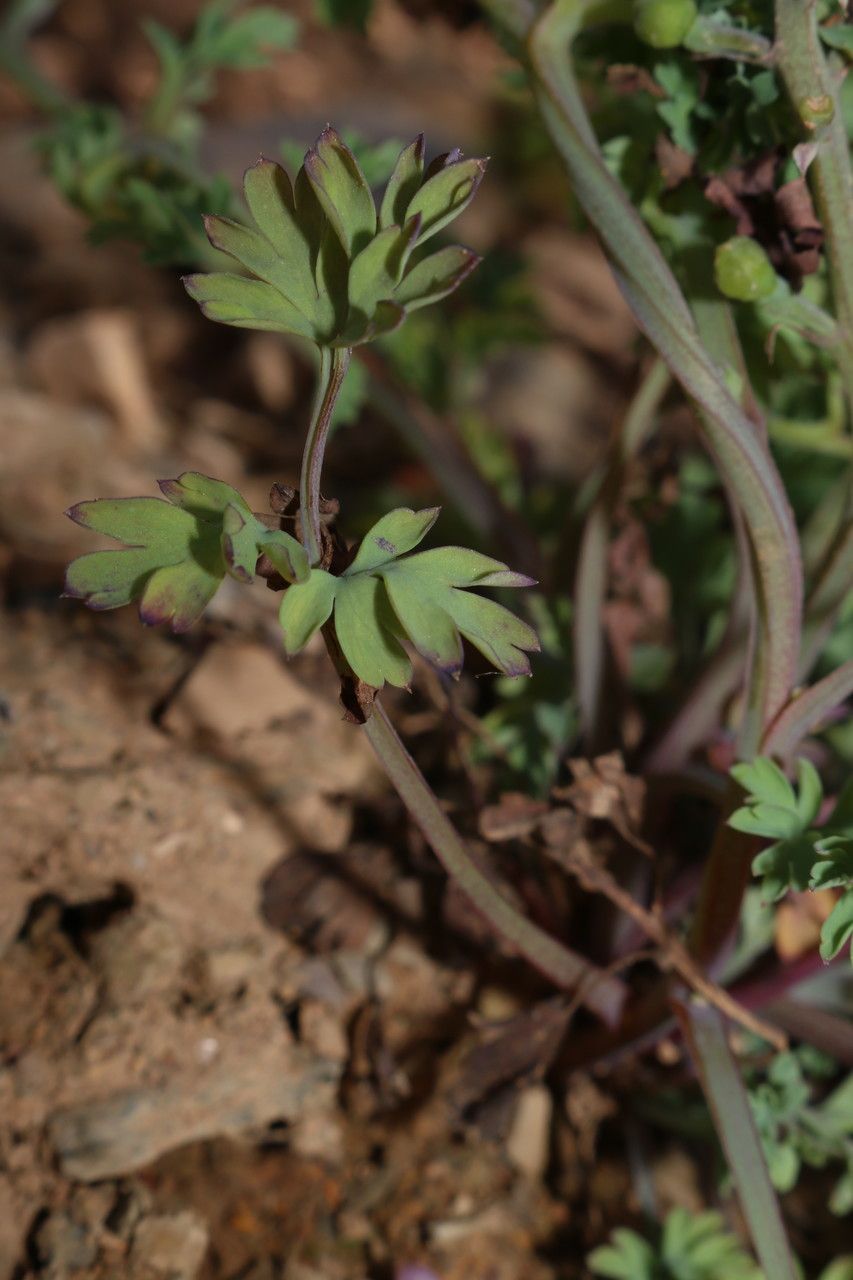
Fumaria parviflora is a species of flowering plant known by the common names fineleaf fumitory, fine-leaved fumitory and Indian fumitory. It is native to Europe, Asia, and Africa, but it is common and widely distributed in many other parts of the world. It is sometimes weedy. The small flowers are dull white with purple tips. The fruit is a rounded nutlet with a central crest. Fumaria parviflora was found to have numerous alkaloidal chemical constituents. The major alkaloids isolated from Fumaria parviflora were protopine and adlumidiceine, whereas the minor alkaloids isolated from Fumaria parviflora were parfumine, fumariline, dihydrofumariline, cryptopine, (-)-stylopine, 8-oxocoptisine, sanguinarine, and oxysanguinarine.
Fine-leaved fumitory has strong resistance to disease and is generally not easily affected by illnesses. Still, it can be vulnerable to pests and diseases occurring in its environment. Such infections are typically mild. Regarding care, this plant needs moderate maintenance. It should be pruned regularly to preserve a neat appearance and support healthy growth. Applying fertilizer can also aid in encouraging flowering. Fine-leaved fumitory is appropriate for anyone with outdoor space, like a garden or patio, and does not demand extensive care experience. It may need extra attention when cultivated indoors.
How to keep Fumaria Parviflora.
Light
Fine-leaved fumitory comes from bright, open habitats and does best in full sun. It can tolerate some shade but prefers direct sunlight for optimal growth. This plant, which may be annual or biennial, is known for its love of sunny conditions.
Water
Fine-leaved fumitory thrives in moderately moist conditions, preferring consistently hydrated soil without becoming waterlogged. To maintain optimal moisture levels, watering once a week is recommended. As an outdoor plant, fine-leaved fumitory also benefits from natural rainfall, which helps meet its hydration needs and supports its seasonal growth cycles.
Temperature
Fine-leaved fumitory originates from temperate areas where average temperatures are generally 68 to 95 °F (20 to 35 ℃). The plant favors a moderate to warm climate and may require adjusted care to cope with temperature changes between seasons.
Fertilizer
Fine-leaved fumitory benefits from regular, weak applications of fertilizer to encourage healthy leaf growth. You should fertilize Fine-leaved fumitory about once a month throughout the summer. Nitrogen is important for foliage, and providing nitrogen-rich sources helps Fine-leaved fumitory thrive.
Pruning
Fine-leaved fumitory has delicate foliage and small flowers, requiring careful pruning in the spring to promote healthy growth. Use sharp, sanitized tools to remove any damaged stems and reduce overcrowding, which will enhance the plant's appearance and lower the risk of disease. Always consult specific horticultural guidelines to achieve the best results.
Botanical profile.
- Plant Type
- Herb
- Life Cycle
- Annual
- Genus
- Fumaria
- Family
- Papaveraceae
- Hardiness Zone
- 4-8
- Mature Height
- 10 cm to 61 cm
- Mature Spread
- 20 cm to 40 cm
- Leaf Color
- Light Green
- Leaf Type
- Semi-evergreen
- Flower Color
- White, Pink
- Flower Size
- 0.76 cm
- Bloom Time
- Mid spring, Late spring, Early summer, Mid summer
- Planting Time
- Spring, Summer, Autumn
- Harvest Time
- Summer
- Native Area
- Libya, Egypt, Turkey, Slovakia, Montenegro, Slovenia, Morocco, Croatia, Yemen, Uzbekistan, Iraq, Germany, Romania, Belgium, Portugal, Nepal, Saudi Arabia, France, Tunisia, Cyprus, Bulgaria, Greece, Ukraine, Lebanon, Serbia, Afghanistan, Syria, Italy, Kazakhstan, Spain, Iran, Albania, Azerbaijan, United Kingdom, Hungary, Kuwait, Algeria, Turkmenistan
Other names.
Reader questions.
How should I water my Fine-leaved fumitory plant?
To water Fine-leaved fumitory, you have multiple options. You can use a garden hose with a spray nozzle, a watering can, or any other common watering tool. This plant is not too particular about its water source. It can thrive with rainwater, tap water, or filtered water. However, avoid watering from above as it can harm the leaves, flowers, and potentially cause disease. It is best to use a drip irrigation system to water Fine-leaved fumitory, as it provides even and direct water supply to the soil. If you have a container-grown Fine-leaved fumitory, you can modify the watering method. Instead of a hose or watering can, you can use a cup, watering can, or tap to water it directly into the soil.
What are the sunlight requirements for Fine-leaved fumitory?
Fine-leaved fumitory thrives in environments that offer full sun, necessitating more than 6 hours of direct sunlight daily for optimal growth. It can also tolerate partial sun, which means about 3-6 hours of sunlight each day. Observing how sunlight moves through your garden helps in selecting spots that ensure a balance of light and shade, contributing to the plant's health and happiness.
What is the native climate for Fine-leaved fumitory?
Fine-leaved fumitory, botanically known as Fumaria parviflora, is native to temperate regions where it thrives in a moderate to warm climate. The ideal temperature range for this plant is between 68 to 95°F (20 to 35°C). Given its preference for these conditions, it's important to adjust care practices to accommodate temperature shifts across different seasons to ensure the plant's healthy growth.
What should I do if I give my Fine-leaved fumitory plant too much or too little water?
To prevent underwatering for Fine-leaved fumitory, you simply need to water it more regularly when you notice it lacks moisture. However, overwatering can be a more serious problem. It can lead to diseases and ultimately the decline and death of the plant. To prevent this, choose a growing location with ample sunlight to help dry the soil and good drainage to avoid waterlogged soils. If your potted Fine-leaved fumitory is overwatered, consider changing it to a new pot with better soil drainage and sufficient drainage holes. When repotting, use loose soil and a pot that drains efficiently.
How does artificial lighting support Fine-leaved fumitory's growth indoors?
When natural sunlight is insufficient, especially during winter or in less sunny areas, artificial lighting becomes crucial for the growth of indoor Fine-leaved fumitory plants. LED lights are recommended because they can be customized to provide specific wavelengths needed by plants. Full sun plants need 30-50W/sq ft of artificial light, partial sun plants 20-30W/sq ft, and full shade plants 10-20W/sq ft. The light source should be placed 12-36 inches above the plant, simulating natural light conditions, and plants generally require 8-12 hours of light daily to thrive.
How does Fine-leaved fumitory handle cold temperatures?
Fine-leaved fumitory exhibits strong cold resistance, making special frost protection measures unnecessary in most cases during winter. However, in extremely cold climates where temperatures are expected to plummet below -30°C, it is crucial to provide cold protection to the plant. This can be accomplished by covering it with insulating materials such as soil or straw. Additionally, before the onset of the first freeze in autumn, watering the plant abundantly to ensure the soil remains moist and enters a frozen state can help prevent drought and water scarcity during the winter and early spring.
How frequently should I water my Fine-leaved fumitory plant?
Fine-leaved fumitory requires regular watering throughout the growing season. In the spring, watering once a week is sufficient, but as the season progresses and temperatures rise, watering may need to be increased to two to three times per week. However, excessive watering can be harmful to the plant. It is important to keep the soil relatively moist but not wet, regardless of the frequency of watering. Watering fine-leaved fumitory in a pot is slightly different. The soil in a pot tends to heat up and dry out faster than ground soil, so watering should be more frequent. Generally, watering a potted fine-leaved fumitory a few times per week is recommended, compared to just once per week for an in-ground plant.
What are common symptoms of light deficiency or overexposure in Fine-leaved fumitory?
Fine-leaved fumitory may show signs of light deficiency, such as smaller new leaves, leggy or sparse growth, faster leaf drop, slower or no new growth, lighter-colored new leaves, and symptoms of overexposure like chlorosis, sunscald, leaf curling, wilting, and leaf scorching. These symptoms indicate either a lack of sufficient sunlight or the adverse effects of too much direct sunlight, affecting the plant's ability to grow healthily.
What should be done if Fine-leaved fumitory experiences low temperatures?
Fine-leaved fumitory can endure cold temperatures but thrives best when the thermometer stays above 20°C. During winter, maintaining a temperature above 0°C is advisable. If temperatures fall below -30°C, the plant may not exhibit immediate damage; however, there could be a decrease in sprouting or the plant may not sprout at all come spring. To manage this, in spring, it is recommended to remove any parts of the plant that have failed to sprout.
How much water does my Fine-leaved fumitory plant need?
There are multiple ways to determine how much water your Fine-leaved fumitory needs. One option is to feel the soil to check for moisture. In this method, you would water the plant until the top six inches of soil feel moist. Another approach is to use a specific measurement. Generally, Fine-leaved fumitory needs about two gallons of water per week, but this can vary depending on temperature and the rate at which the soil dries out. It's important to be cautious with strict guidelines, as they can potentially result in overwatering if the plant requires less water. When growing Fine-leaved fumitory in a container, a different method is necessary. You should water the plant enough to moisten all layers of dry soil. To check for moisture, you can either insert your finger into the soil or water until you notice a small amount of excess water draining from the pot's drainage holes.
What are effective solutions for addressing light-related issues in Fine-leaved fumitory?
To mitigate light-related issues, gradually moving your plants to a sunnier location each week is advised, ensuring they receive at least 6 hours of direct sunlight daily. Using a south-facing window and keeping curtains open during the day maximizes sunlight exposure. For indoor plants, consider artificial lighting such as desk lamps or professional grow lights for at least 8 hours daily. Outdoors, avoid sudden changes in light to prevent sunburn. You may need to prune obstructions or transplant smaller plants during their dormant period to optimize sunlight exposure. Note that parts of the plant already affected may not recover, but new growth should be healthy with improved light conditions.
How should Fine-leaved fumitory be cared for in high temperatures?
During the summer, Fine-leaved fumitory should ideally be kept below 35°C. Exposure to temperatures exceeding 38°C can cause the leaves to lighten in color, curl, become susceptible to sunburn, and in severe cases, lead to the wilting and drying out of the entire plant. To mitigate these effects, trim away any sunburned or dried-up parts of the plant. Relocating the plant to a shaded area or using a shade cloth to protect it from the midday and afternoon sun can be beneficial. Additionally, watering the plant in the morning and evening will help maintain soil moisture and support the plant's health.