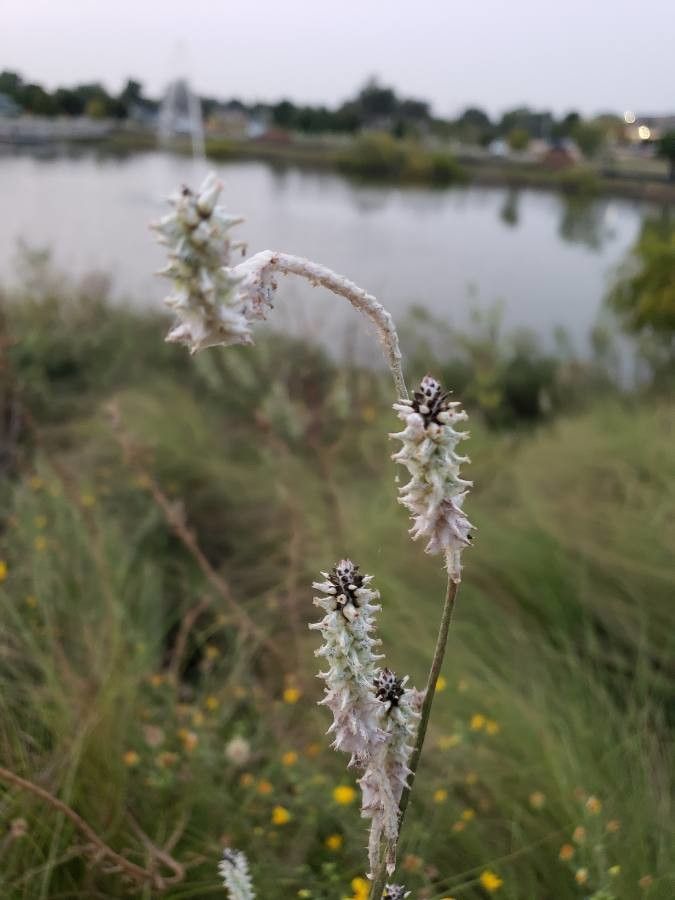
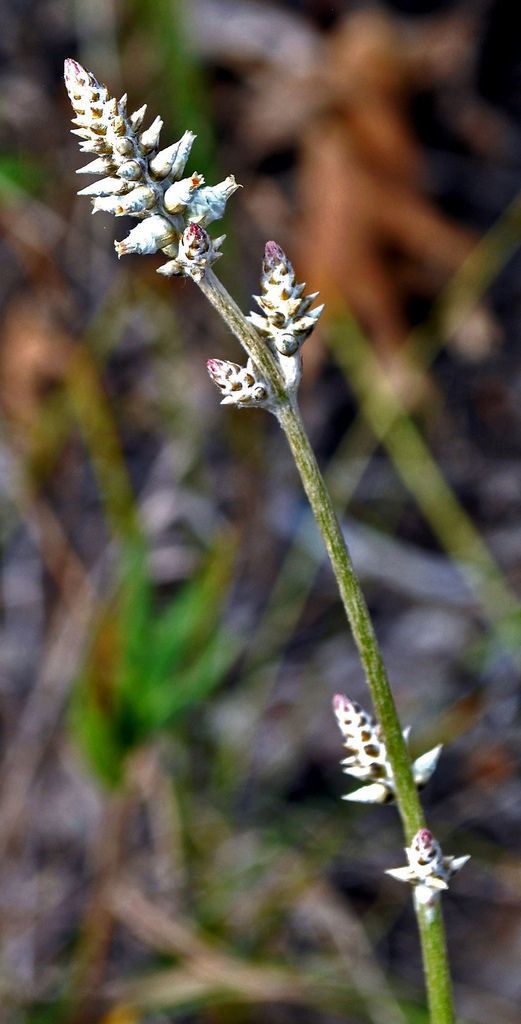
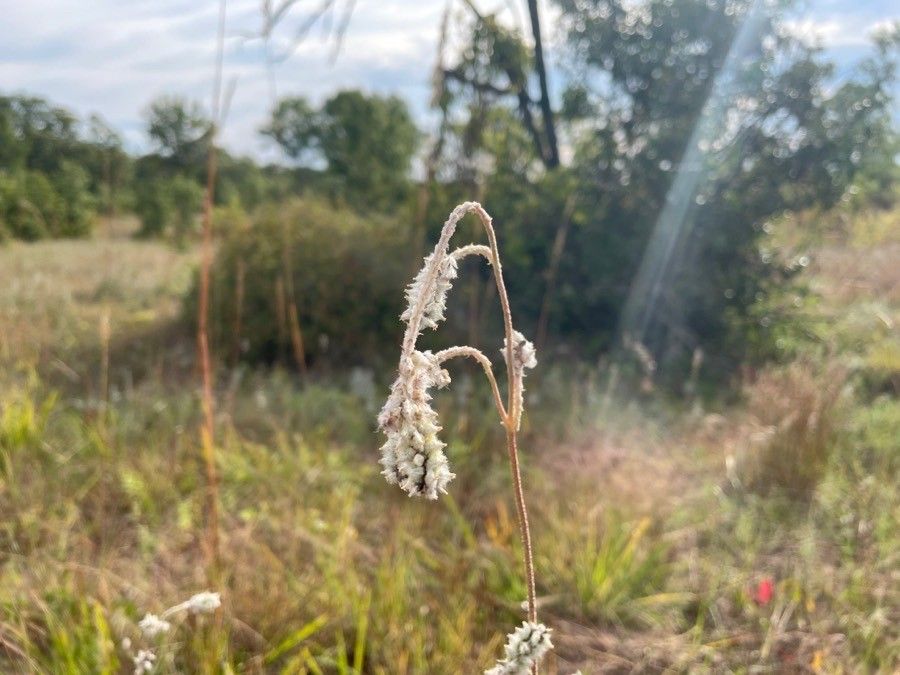
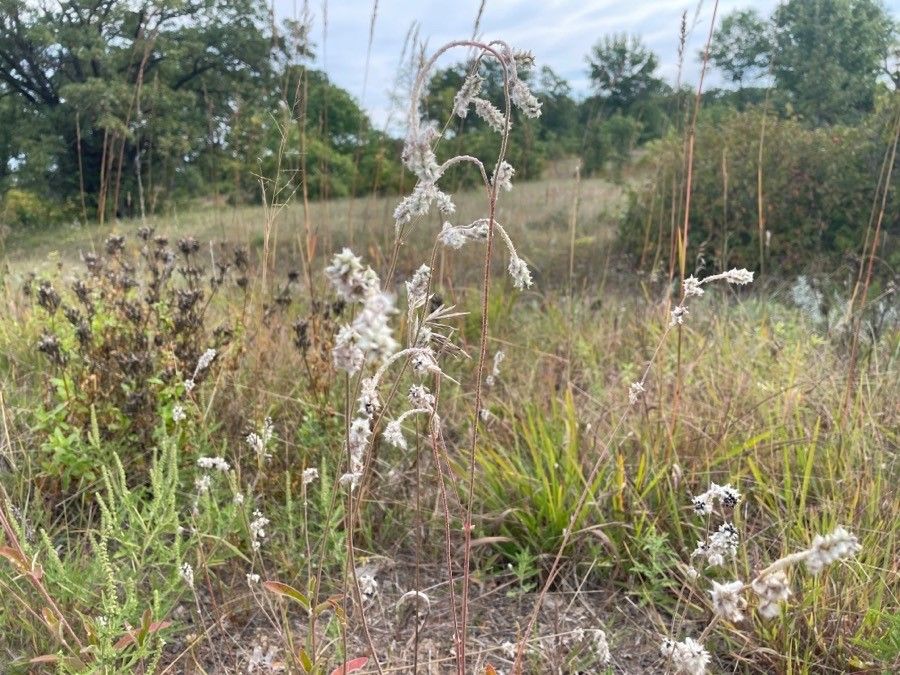
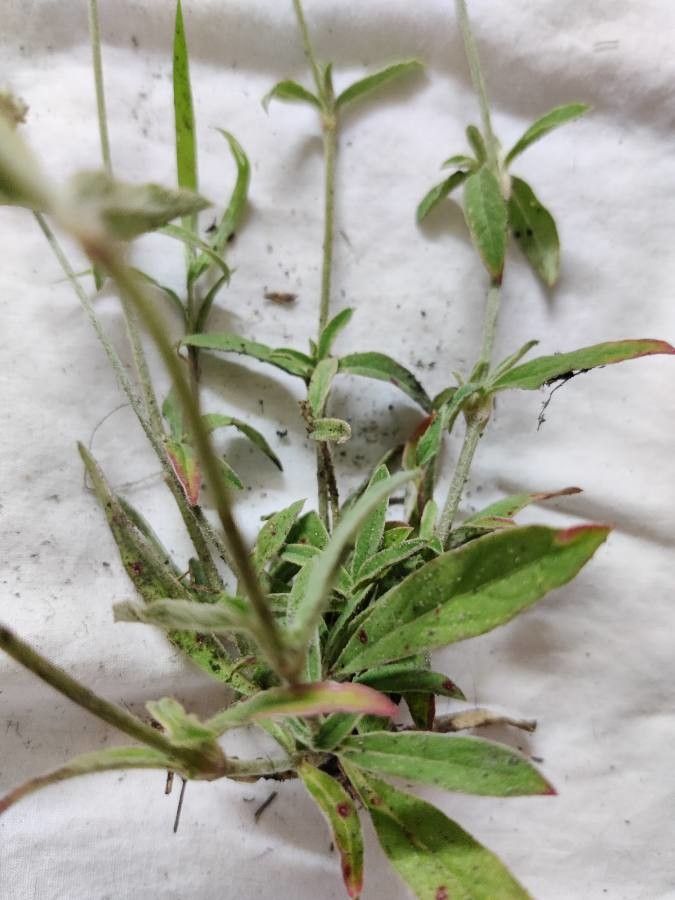
Froelichia floridana, commonly known as Florida snakecotton, is a perennial herbaceous plant in the Amaranthaceae family. Native to the southeastern United States, it thrives in the sandy soils of pine forests, savannas, and coastal plains.
This plant can grow up to 1 meter tall and features a woody base with numerous branches covered in small green leaves. Its flowers are small and inconspicuous, with greenish-white bracts that resemble cotton balls or snake tails.
Historically, Native Americans have used Froelichia floridana for medicinal purposes, treating ailments such as fever, coughs, colds, and sore throats. Additionally, it has served as a natural dye for textiles.
Froelichia floridana is ecologically significant, providing food and habitat for various insects like bees and butterflies. Birds such as quails also rely on it as an important food source.
Overall, Froelichia floridana is a fascinating native plant with cultural importance, playing a vital role in its ecosystem while enhancing its surroundings with its unique appearance.
Plains snakecotton has strong resistance to disease and is generally unlikely to suffer from illnesses. That said, it can be vulnerable to pests and diseases present in its environment. Such infections tend to be mild. Regarding maintenance, this plant is moderately demanding. It should be pruned on a regular basis to preserve an attractive look and encourage healthy growth. Applying fertilizer can also aid in boosting its flowering. Plains snakecotton is well suited for anyone with outdoor areas like a garden or patio and does not demand extensive gardening experience. It may, however, need extra attention if kept indoors.
How to keep Froelichia Floridana.
Light
Plains snakecotton needs a substantial amount of sunlight to grow well. Coming from open fields where the sun is unshaded, the plant thrives in those bright conditions. Too little light can leave it less vigorous, while too much can cause it to dry out.
Water
Plains snakecotton thrives in semi-arid environments, as it requires moderate humidity and is tolerant of drought conditions. Water this plant weekly, allowing the soil to dry slightly between waterings. When grown outdoors, plains snakecotton benefits from rainwater during the growing season, which helps enhance its flowering cycle.
Temperature
Plains snakecotton is native to regions where temperatures range from 68 to 100 °F (20 to 38 °C). It performs best in these warm conditions. In cooler months, plains snakecotton may require extra warmth to survive.
Fertilizer
Plains snakecotton does well with regular, light applications of fertilizer to encourage healthy leaf growth. You should apply fertilizer to Plains snakecotton about once a month during the summer months. Nitrogen is important for foliage, and adding nitrogen-rich sources supports Plains snakecotton's thriving.
Pruning
Plains snakecotton is a hardy plant that thrives in a variety of soil types and demonstrates excellent drought tolerance. To promote healthy growth and abundant flowering, it is best to prune the plant from early to late spring. When pruning, remove any dead or diseased stems. Clean cuts will encourage denser foliage, help reduce pests, and maintain a balanced shape, all of which contribute to the plant's overall vigor.
Botanical profile.
- Plant Type
- Herb
- Life Cycle
- Annual, Perennial
- Genus
- Froelichia
- Family
- Amaranthaceae
- Hardiness Zone
- 4-11
- Mature Height
- 0.61 m to 1.07 m
- Mature Spread
- 15 cm
- Leaf Color
- Green, Gray
- Leaf Type
- Deciduous
- Flower Color
- White
- Flower Size
- 2.54 cm
- Bloom Time
- Summer
- Planting Time
- Spring, Summer, Autumn
- Harvest Time
- Late summer, Early fall, Mid fall
- Native Area
- Georgia, Mexico
Other names.
Reader questions.
How should I water my Plains snakecotton plant in the best way?
To water Plains snakecotton, you have a few options. You can use a garden hose with a spray nozzle, a watering can, or any other common watering tool. This plant is not too particular about its water source and can survive on rainwater, tap water, or filtered water. However, it's best to avoid watering from above as this can harm the leaves and flowers and potentially cause disease. Instead, a drip irrigation system is recommended for an even and direct application of water to the soil. If you have a container-grown Plains snakecotton, the same watering method applies, but you can switch to using a cup, watering can, or tap to water directly at the soil.
What are the sunlight requirements for Plains snakecotton?
Plains snakecotton thrives in locations that receive more than 6 hours of sunlight daily. It's essential to observe your garden's light patterns, finding spots with the right balance of light and shade to ensure the plant's health. Originating from open fields, Plains snakecotton is accustomed to unobstructed sunlight, making full sun conditions ideal for its growth. Insufficient sunlight may reduce its vigor, while excessive exposure can lead to drying.
What is the native temperature range for Plains snakecotton?
Plains snakecotton is native to areas where the temperature ranges between 68 to 100 °F (20 to 38 °C). It thrives best in these warm conditions, indicating that it prefers a warmer climate to grow optimally. During the cooler months, Plains snakecotton may require additional warmth to survive, suggesting that while it is cold-resistant, excessively low temperatures are not ideal for its growth.
What should I do if I give my Plains snakecotton plant too much water or too little water?
To remedy underwatering for Plains snakecotton, simply water the plant more regularly when you notice it lacks moisture. Overwatering can be a serious issue, leading to diseases and decline. To prevent this, choose a location with ample sunlight to dry the soil and good drainage to avoid waterlogged soil. When overwatering occurs in a potted plant, consider transferring it to a new pot with well-draining soil and sufficient drainage holes.
How can artificial lighting benefit indoor Plains snakecotton plants?
Indoor Plains snakecotton plants benefit significantly from artificial lighting, especially when natural sunlight is insufficient. Artificial lights, particularly LED lights, can be customized to provide the specific wavelengths needed by the plants, simulating natural sunlight. For full sun plants like Plains snakecotton, 30-50W/sq ft of artificial light is recommended. The light source should be placed 12-36 inches above the plant, and it should mimic natural daylight hours, generally providing 8-12 hours of light per day.
Does Plains snakecotton need frost protection during winter?
Plains snakecotton has strong cold resistance and usually does not require special frost protection measures during the winter. However, if temperatures are expected to drop below -30°C, it is important to provide cold protection to ensure the plant's survival. This can be achieved by covering the plant with insulating materials such as soil or straw. Additionally, before the first freeze in the autumn, it is recommended to water the plant abundantly to keep the soil moist and entering a frozen state, which helps prevent drought and water scarcity for the plant during winter and early spring.
How frequently should I water my Plains snakecotton plant?
Plains snakecotton requires regular watering during the growing season. In the spring, water it once a week. As it gets warmer, you may need to increase watering to two or three times a week. Watering too much can harm the plant, so be careful. Regardless of how often you water, make sure the soil is moist but not wet. When watering Plains snakecotton in a pot, you'll need to water it more frequently than if it were in the ground. Containers dry out faster, so plan on watering a few times per week, instead of just once.
What are the signs of insufficient or excessive light in Plains snakecotton?
Plains snakecotton shows various symptoms when it doesn't receive the ideal light conditions. Insufficient light can lead to small leaves, leggy growth, quicker leaf drop, slower or no new growth, and lighter-colored new leaves. Excessive light can cause chlorosis, sunscald, leaf curling, wilting, and leaf scorching. These symptoms indicate that the plant's light environment needs adjustment, either by increasing or reducing light exposure.
How does Plains snakecotton react to temperatures below -30°C?
Plains snakecotton is cold-tolerant, thriving best when temperatures are above 20°C, but it should remain above 0°C during winter. When the temperature dips below -30°C, while there may not be noticeable changes during the winter, the plant may experience decreased sprouting or even fail to sprout during the spring. To manage this, in spring, any parts of the plant that have failed to sprout should be removed to promote the health and growth of Plains snakecotton.
How much water does my Plains snakecotton plant need?
To determine how much water to give your Plains snakecotton, there are a few different methods you can use. One option is to feel the soil and water until the top six inches feel moist. Another approach is to follow a set measurement and give your plant about two gallons of water per week, adjusting for temperature and soil dryness. However, be cautious as this method may cause overwatering if your plant requires less water. When growing your snakecotton in a container, you should water enough to moisten all dry soil layers. You can check by sticking your finger in the soil or allowing excess water to trickle out of the drainage holes.
What are some solutions for Plains snakecotton experiencing insufficient or excessive light?
To address insufficient light, gradually move indoor plants to sunnier locations, ensuring they receive at least 6 hours of direct sunlight. If moving the plant is not feasible, consider artificial lighting solutions, using lamps or grow lights for at least 8 hours daily. For outdoor plants, it's crucial to avoid sudden changes in light exposure to prevent sunburn. Reducing obstructions and transplanting to better-lit areas can also improve sunlight access. It's important to note that parts of the plant that have been severely affected may not recover, but new growth should be healthy with improved light conditions.
What should be done if Plains snakecotton experiences high temperatures?
During summer, it's essential to keep Plains snakecotton below 38°C to prevent heat stress. If the temperature goes above 43°C, the plant's leaves may lighten in color, curl, and become prone to sunburn, with severe cases leading to the plant wilting and drying up. To mitigate these effects, sunburned and dried-up parts of the plant should be trimmed away. Moving the plant to a location with shade during the midday and afternoon sun, or using a shade cloth, can protect it. Additionally, watering the plant in the morning and evening helps keep the soil moist and supports the plant's well-being during high temperatures.