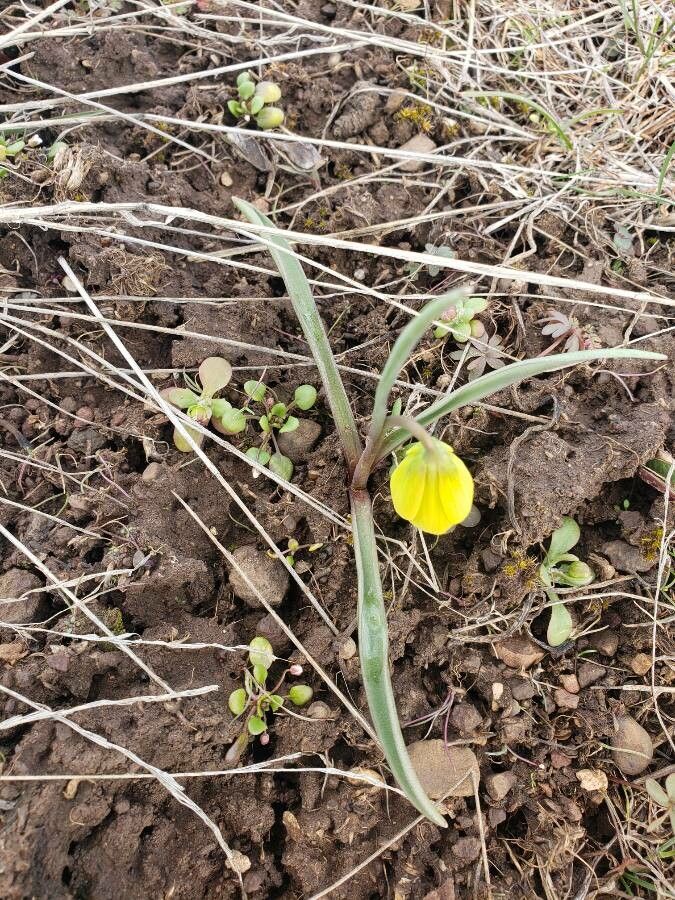
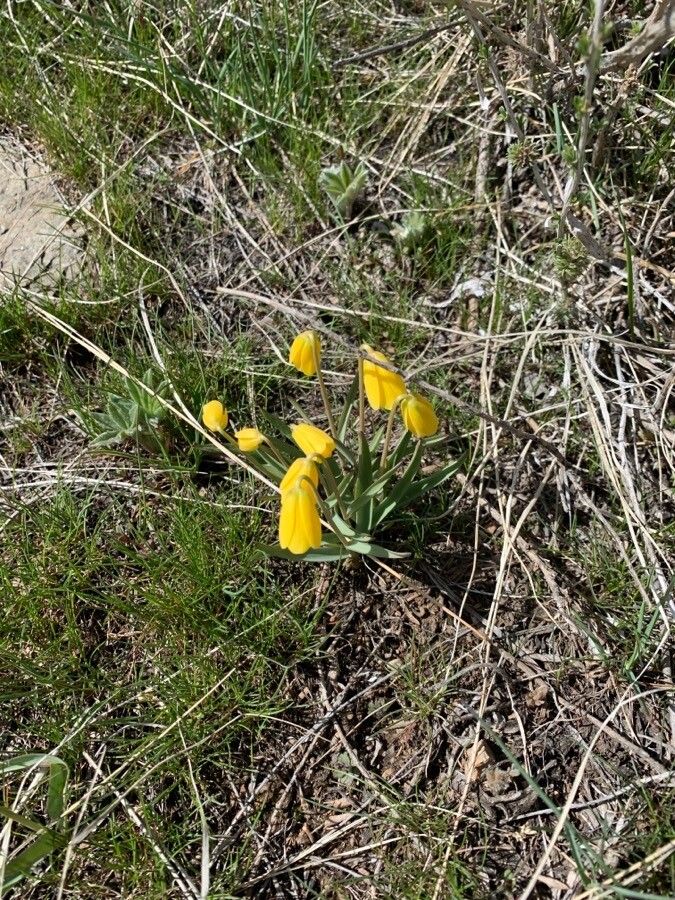
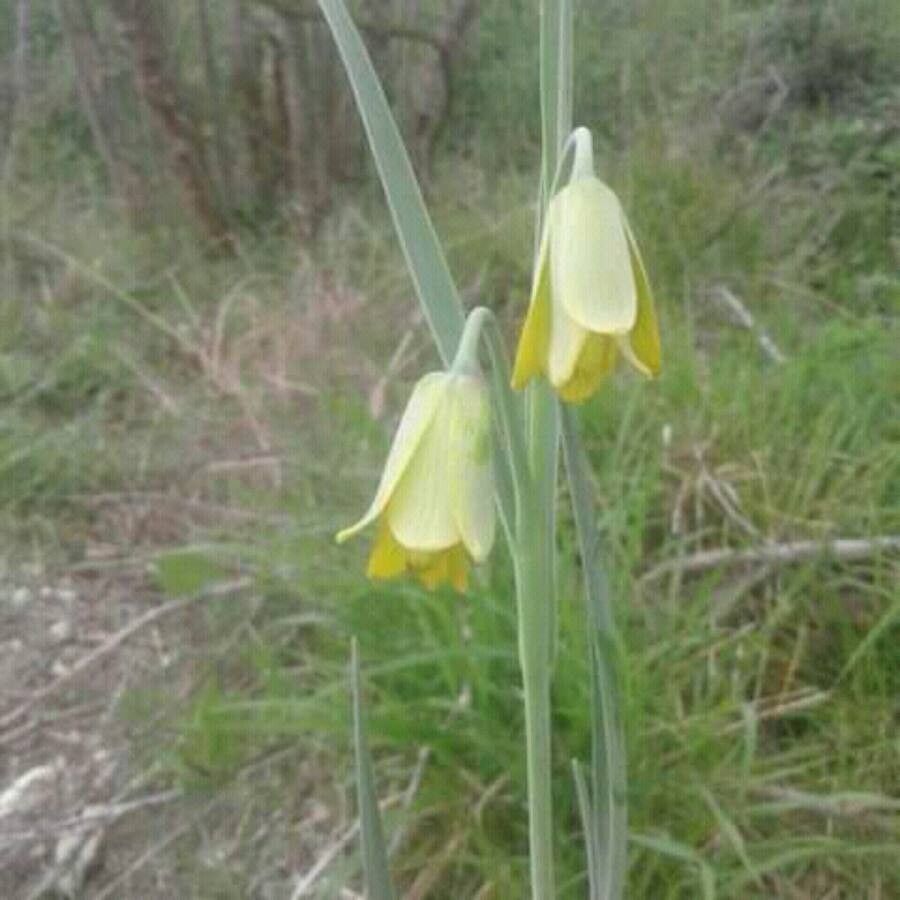
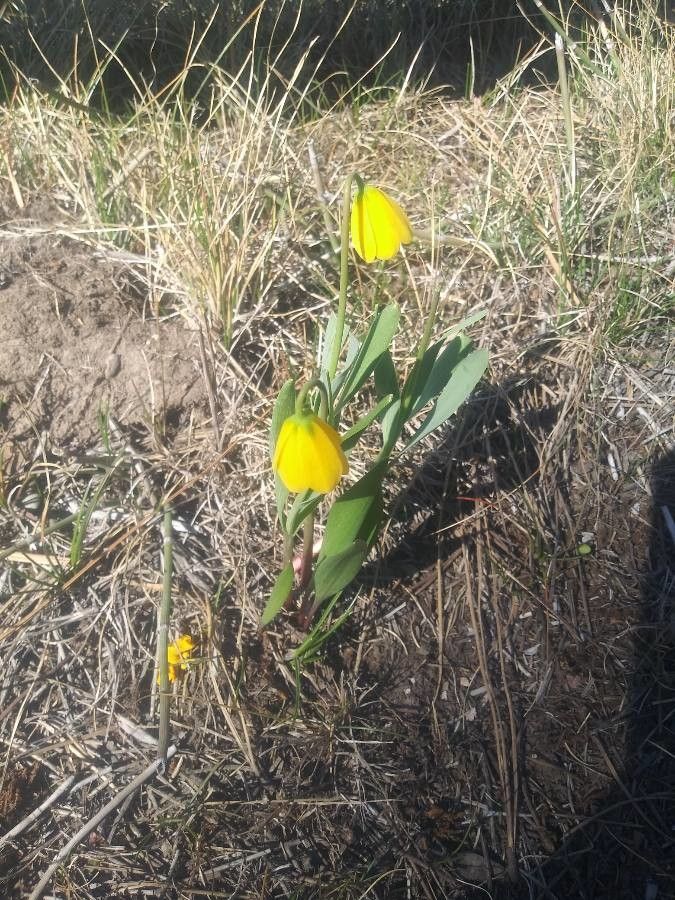
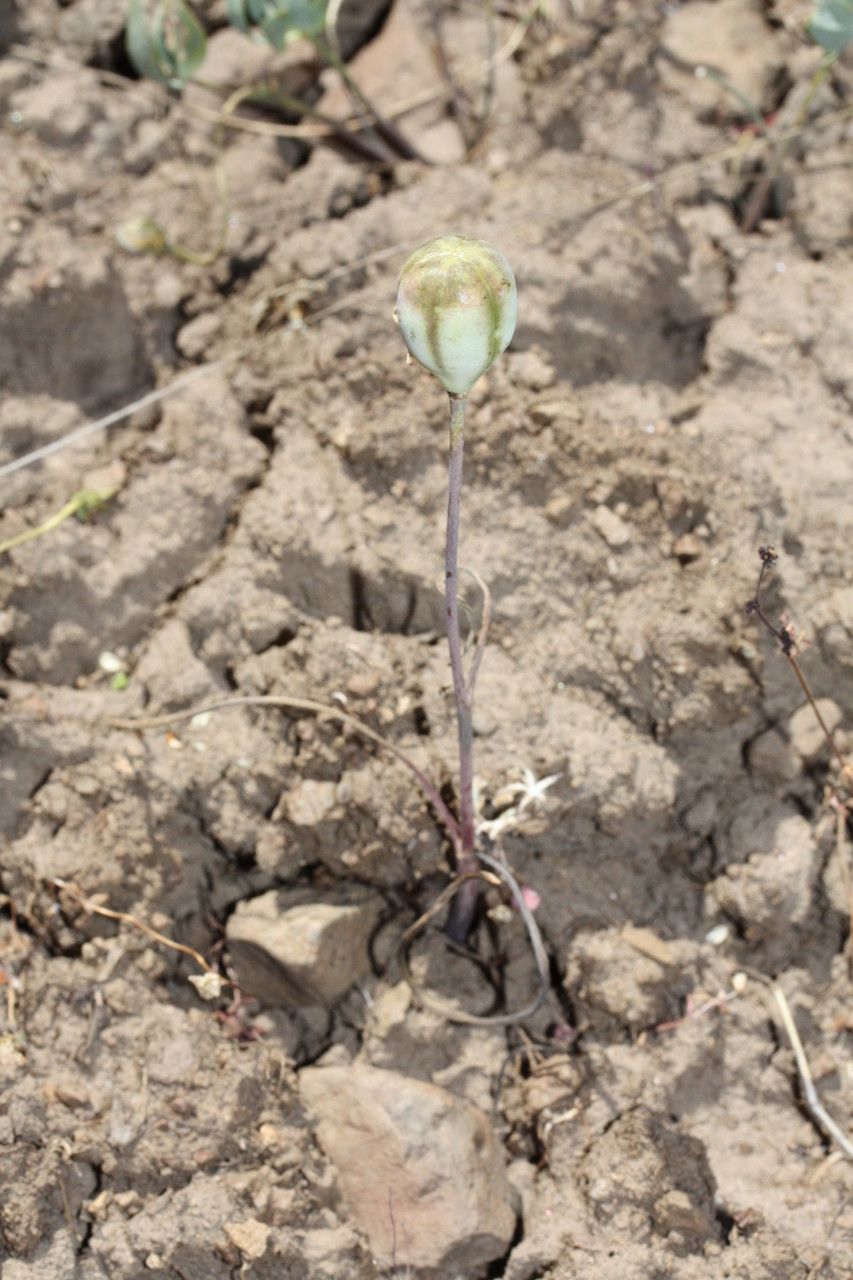
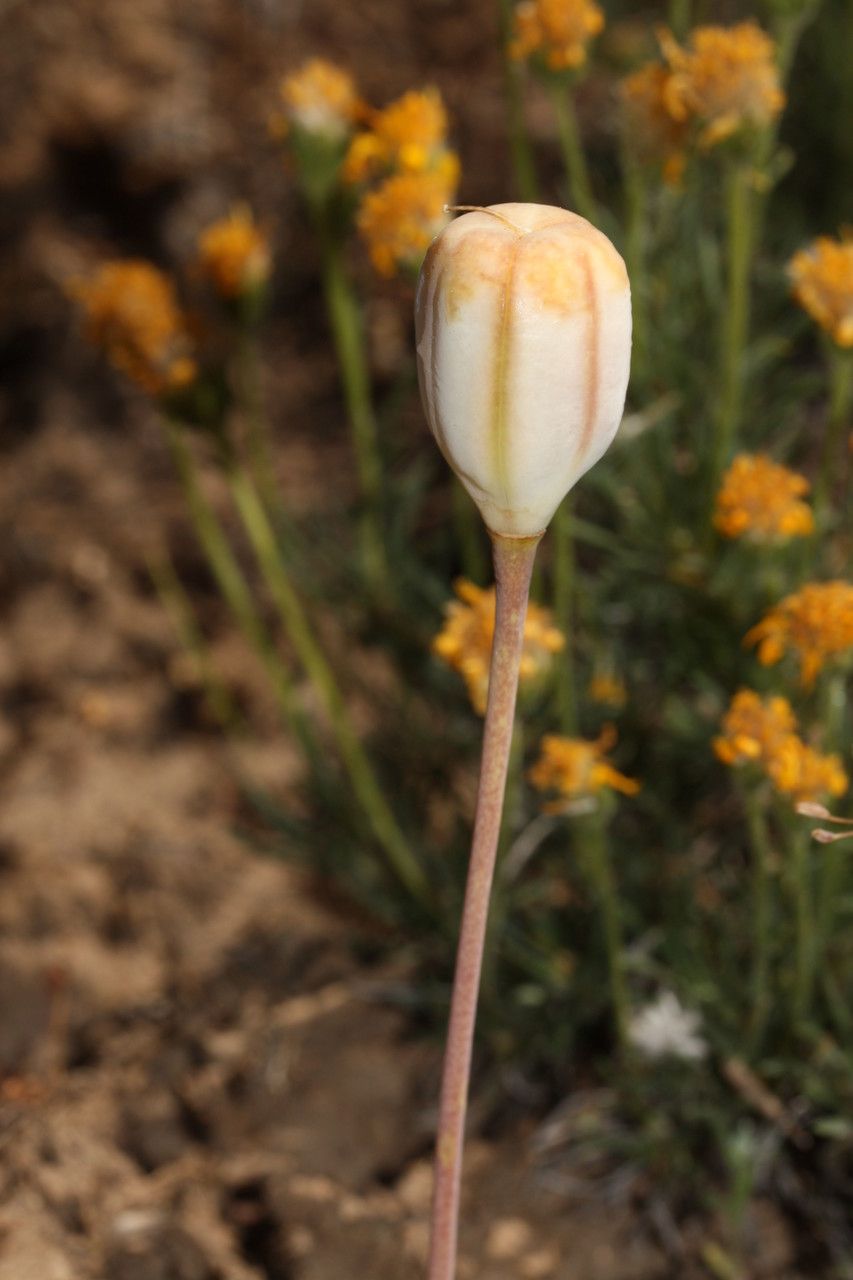
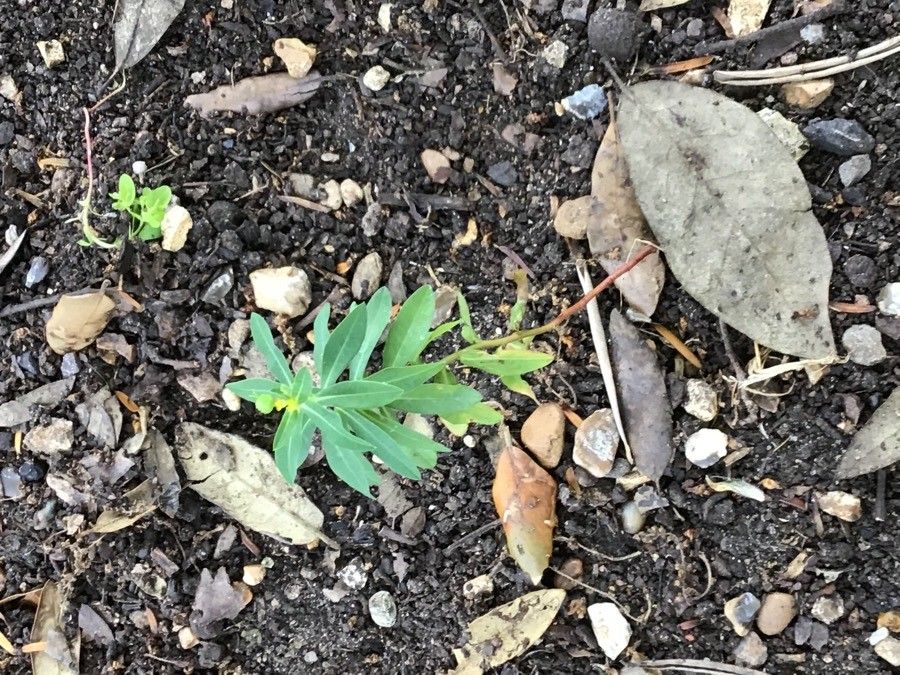
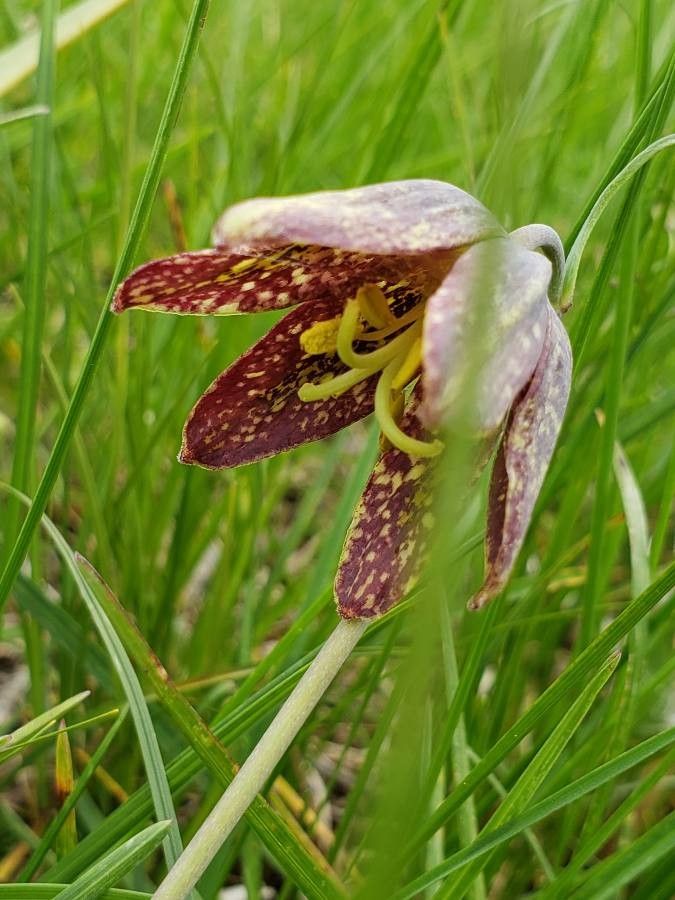
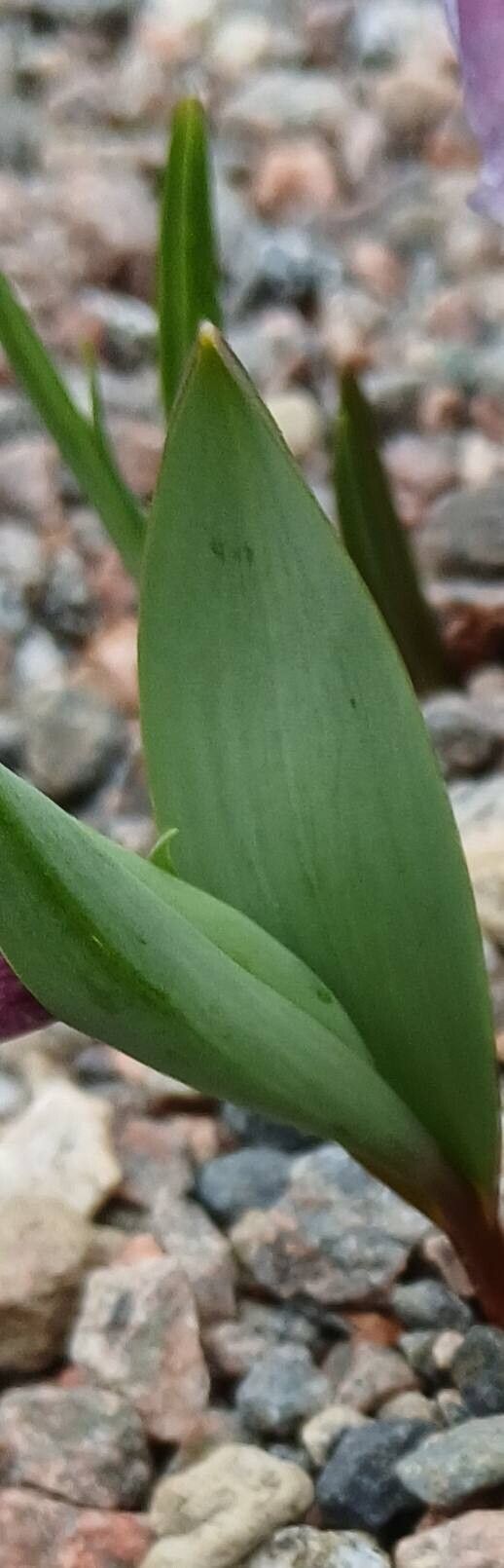
Fritillaria pudica, the yellow fritillary, is a small perennial plant found in the sagebrush country in the western United States (Idaho, Montana, Oregon, Washington, Wyoming, very northern California, Nevada, northwestern Colorado, North Dakota and Utah) and Canada (Alberta and British Columbia). It is a member of the lily family Liliaceae. Another common (but somewhat ambiguous) name is "yellow bells", since it has a bell-shaped yellow flower. It may be found in dryish, loose soil; it is amongst the first plants to flower after the snow melts, but the flower does not last very long; as the petals age, they turn a brick-red colour and begin to curl outward. The flowers grow singly or in pairs on the stems, and the floral parts grow in multiples of threes. The species produces a small corm, which forms corms earning the genus the nickname 'riceroot'. During his historic journey, Meriwether Lewis collected a specimen while passing through Idaho in 1806.The corm can be dug up and eaten fresh or cooked; it served Native Americans as a good source of food in times past, and is still eaten occasionally. Today these plants are not common, so digging and eating the corms is not encouraged. The plant is called [ˈsɨkni] in Sahaptin.
Yellow fritillary has strong disease resistance and is generally not vulnerable to illnesses. However, it can be affected by pests and diseases present in its environment. These issues are usually mild. In terms of care, the plant is moderately demanding. It requires regular pruning to maintain a neat appearance and healthy growth. Fertilizing can also help encourage flowering. Yellow fritillary is suitable for anyone with outdoor space, such as a garden or patio, and does not need extensive plant-care experience. When grown indoors, it may require more attention.
How to keep Fritillaria Pudica.
Light
The yellow fritillary does best with plentiful sunlight for most of the day, which promotes its healthy growth. It can also tolerate intervals of reduced light. Its growing conditions, without naming any specific region, are marked by significant sun exposure. Changes in light levels can influence its health or cause stress to the plant.
Water
The yellow fritillary, which naturally grows on dry slopes, prefers infrequent rainfall and thrives in drier conditions. It is drought-tolerant and generally needs watering every 1-2 weeks. It benefits from early spring rains, which support its growth cycle without the need for excessive additional watering.
Temperature
The yellow fritillary originates in temperate environments and prefers a temperature range of 32 to 90°F (0 to 32°C). It can accommodate seasonal changes and may require temperature adjustments for optimal growth.
Fertilizer
For Yellow fritillary, the best time to fertilize is in early spring while the flowers are forming. The proper fertilizer encourages improved blooms and helps Yellow fritillary produce attractive flowers. Fertilizing in early spring ensures excellent flowers throughout the season and provides energy for dormant growth stages.
Pruning
The yellow fritillary is known for its nodding yellow flowers and benefits from pruning between early and late spring. Removing dead or spent foliage helps promote better health and air circulation, reducing the risk of disease. Always use clean, sharp tools to minimize stress on the plant and prevent disease transmission.
Botanical profile.
- Plant Type
- Herb
- Life Cycle
- Perennial
- Genus
- Fritillaria
- Family
- Liliaceae
- Hardiness Zone
- 3-7
- Mature Height
- 8 cm to 30 cm
- Mature Spread
- 30 cm
- Leaf Color
- Green
- Leaf Type
- Deciduous
- Flower Color
- Yellow
- Flower Size
- 1.27 cm to 2.29 cm
- Bloom Time
- Early spring, Mid spring
- Planting Time
- Spring, Autumn
- Harvest Time
- Late spring, Early summer
- Native Area
- Canada, western US
Other names.
Reader questions.
How should I water my Yellow fritillary?
To properly water the Yellow fritillary, it is best to use filtered water at room temperature or slightly warmer. Tap water should be avoided as it may contain harmful particles. The Yellow fritillary is adapted to warm environments, so cold water can shock its system. It is also advisable to avoid overhead watering as it can cause issues with the foliage. Instead, gently apply filtered room temperature water directly to the soil until it is completely soaked. This helps to moisturize the roots and ensure they can spread throughout the soil and absorb necessary nutrients.
Why do I have to add fertilizer to my Yellow fritillary plant?
Fertilization is important for the Yellow fritillary for a few reasons. It provides essential nutrients for the plant's growth above and below ground. Despite this, the Yellow fritillary has relatively low fertilization needs and can sometimes survive without it. However, annual fertilization can greatly benefit the plant by keeping it alive and enhancing the longevity of its flowers. Therefore, those who want their Yellow fritillary to thrive should prioritize annual fertilization.
What are the sunlight requirements for Yellow Fritillary?
Yellow Fritillary thrives in full sun, requiring more than 6 hours of sunlight daily, but it can also tolerate partial sun, which means about 3-6 hours of sunlight. It's important to observe how sunlight moves through your garden to find the perfect spot that ensures a balance of light and shade, meeting the needs of your Yellow Fritillary and promoting its health and happiness.
What is the native environment and preferred temperature range for yellow fritillary?
Yellow fritillary, with its botanical name Fritillaria pudica, is native to temperate environments. It prefers a wide temperature span from 32 to 90°F (0 to 32°C), demonstrating its adaptability to seasonal variations. For optimal growth, it may require adjustments in care to align with these temperature preferences.
What should I do if I give my Yellow fritillary too much or too little water?
Both overwatering and underwatering can harm the health of your Yellow fritillary, but overwatering is more common. Overwatering can cause wilting, yellowing leaves, and may lead to diseases like root rot, mold, and mildew that can kill the plant. Underwatering is less common as the Yellow fritillary is drought-tolerant, but it can still happen, resulting in brittle, brown leaves. It's important to recognize signs of overwatering early to prevent irreversible damage. Reduce watering if signs appear and consider using well-draining soil. If your plant shows signs of not enough water, simply water more regularly until the signs go away.
When should I fertilize my Yellow fritillary?
The best time to fertilize a Yellow fritillary is in late winter to early spring when it is coming out of dormancy and starting to grow. This will help promote healthy growth and give the plant a great start for the season. While it's generally recommended to fertilize in early spring, it is also okay to fertilize in the fall if needed. Avoid fertilizing in summer and winter as it is not beneficial for the Yellow fritillary.
Can Yellow Fritillary grow with artificial lighting?
Yes, Yellow Fritillary can grow under artificial lighting, especially in conditions where natural sunlight is insufficient, like during winter or in less sunny spaces. LED lights are recommended for indoor plants, as they can provide specific wavelengths needed for plant growth. Full sun plants require 30-50W/sq ft of artificial light, partial sun plants need 20-30W/sq ft, and the light source should be placed 12-36 inches above the plant. Most plants will benefit from 8-12 hours of artificial light per day to mimic natural daylight hours.
How does yellow fritillary handle cold temperatures and winter conditions?
Yellow fritillary is markedly cold-tolerant and does not necessitate additional protective measures against frost during the winter season. To prepare for the first freeze of autumn, it's advisable to water the plant abundantly to ensure the soil remains moist and enters a frozen state fully hydrated. This strategy helps avert drought and water scarcity issues for the plant throughout the winter and the onset of spring.
How often should I water my Yellow fritillary plant?
If your Yellow fritillary plant is in a pot, you can check if it needs water by sticking your finger into the soil. If the top two to three inches of soil are dry, it's time to water it. If you're growing the plant outdoors in the ground, you can use the same method to test the soil. When the top few inches of soil are dry, it's time to water it. Generally, during spring and early fall, you'll need to water the plant about once a week. But in extremely hot weather, you may need to water it twice a week or more. However, mature and well-established Yellow fritillary plants can endure drought well.
When is the best time to not put fertilizer on my Yellow fritillary plant?
To care for your Yellow fritillary, only fertilize it during late winter and early spring. This plant doesn't need much fertilizer, so one feeding per year is enough. Avoid fertilizing in spring, summer, and fall to prevent overfertilization and its complications. However, if you missed fertilizing in spring, you can feed it in the fall. The plant doesn't require fertilization during winter because it is in a dormant phase and doesn't produce new growth.
What are some symptoms of inadequate light exposure in Yellow Fritillary?
Inadequate light exposure can lead to several symptoms in Yellow Fritillary, such as smaller new leaves, leggy or sparse growth, faster leaf drop, slower or no new growth, lighter-colored new leaves, chlorosis, sunscald, leaf curling, wilting, and leaf scorching. These symptoms indicate either too much or too little light, affecting the plant's ability to perform photosynthesis, maintain its structural integrity, and sustain healthy growth.
What should be done if the winter temperature drops below -35°C for yellow fritillary?
Despite its exceptional cold tolerance, yellow fritillary's winter temperature should ideally stay above -35°C. Falling below this temperature threshold doesn't pose immediate visible harm during winter, yet it might lead to a reduced sprouting activity or complete absence of it come spring. The recommended course of action in spring is to remove any parts of the plant that have failed to sprout, ensuring healthy growth for the remainder.