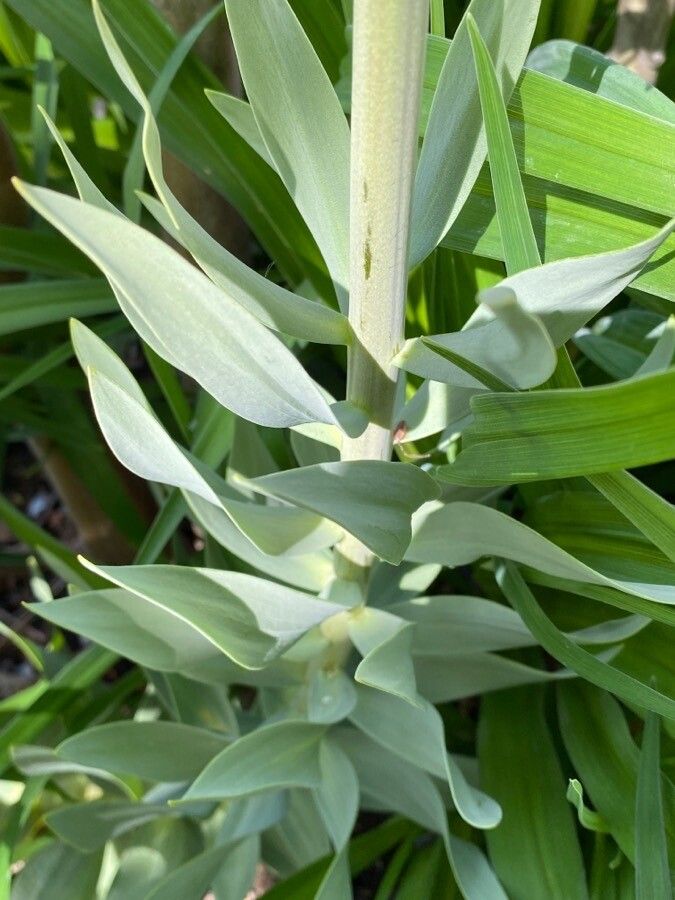
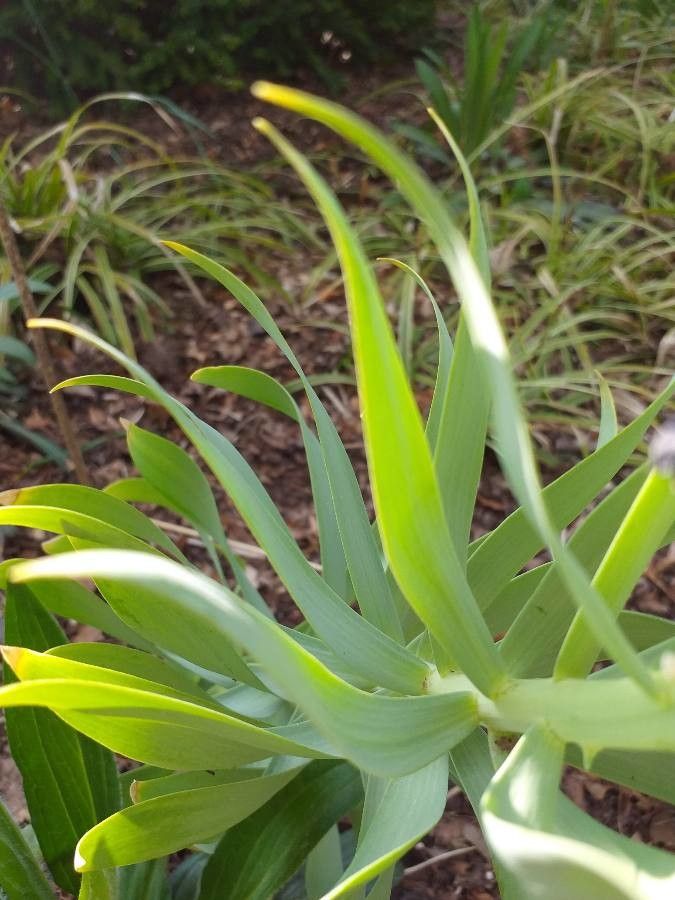
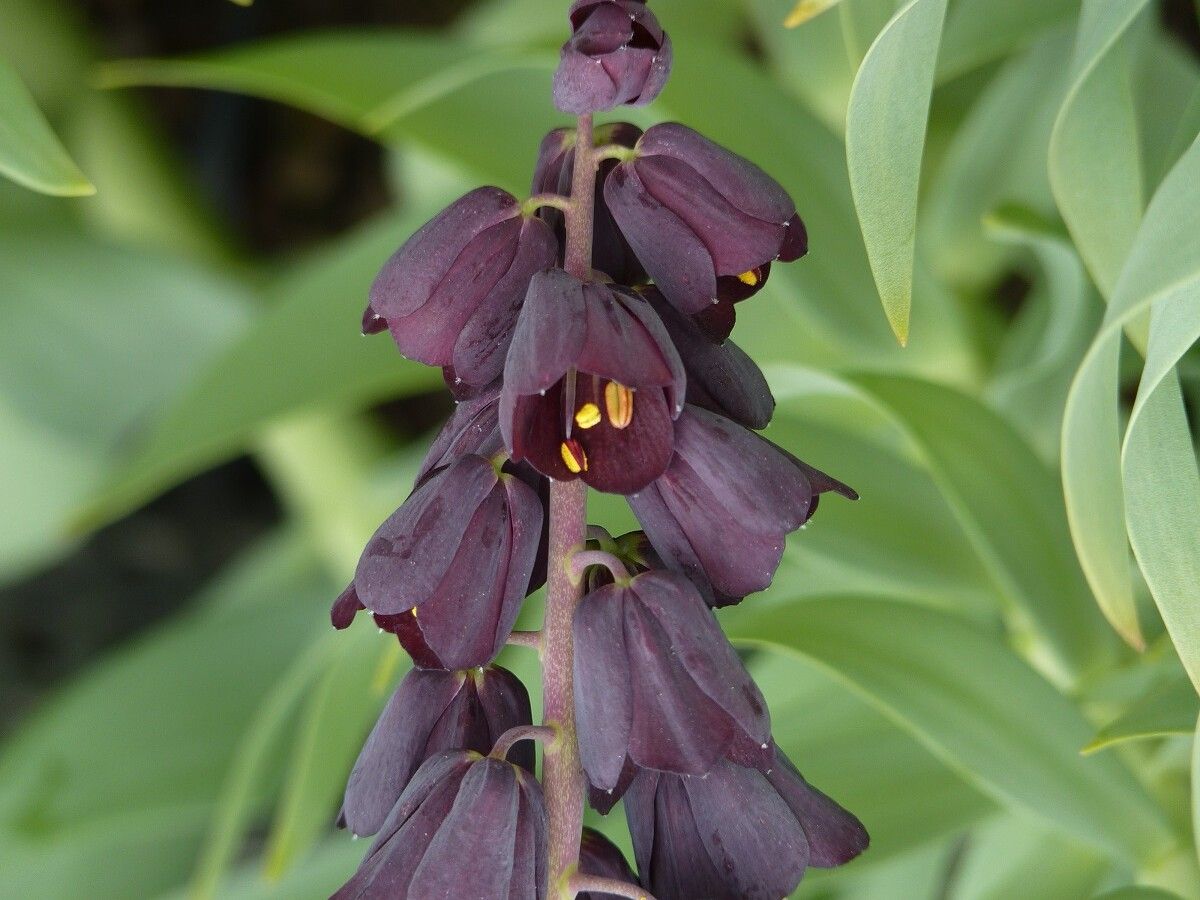
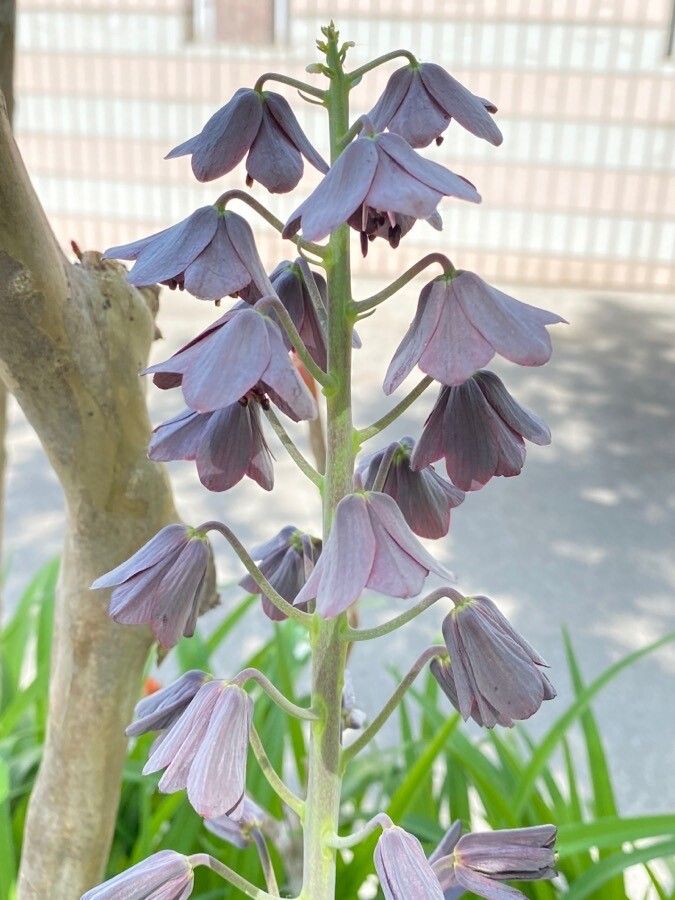
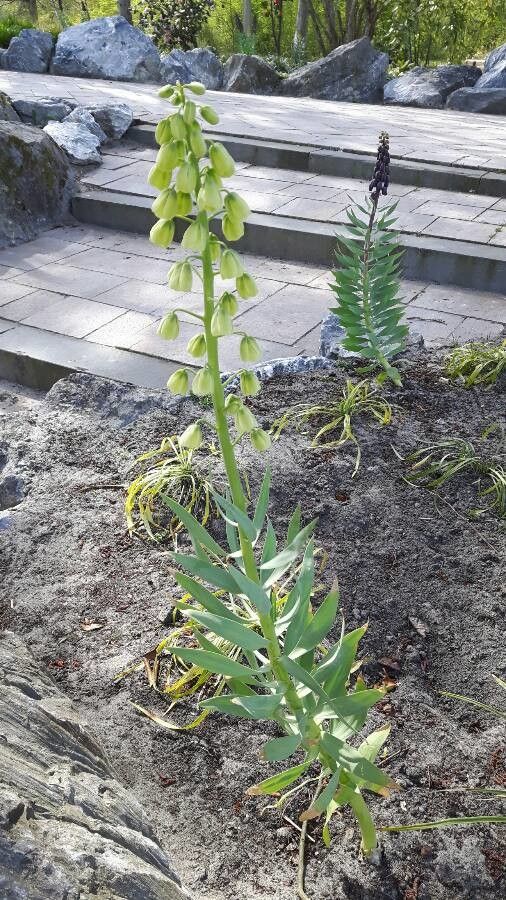
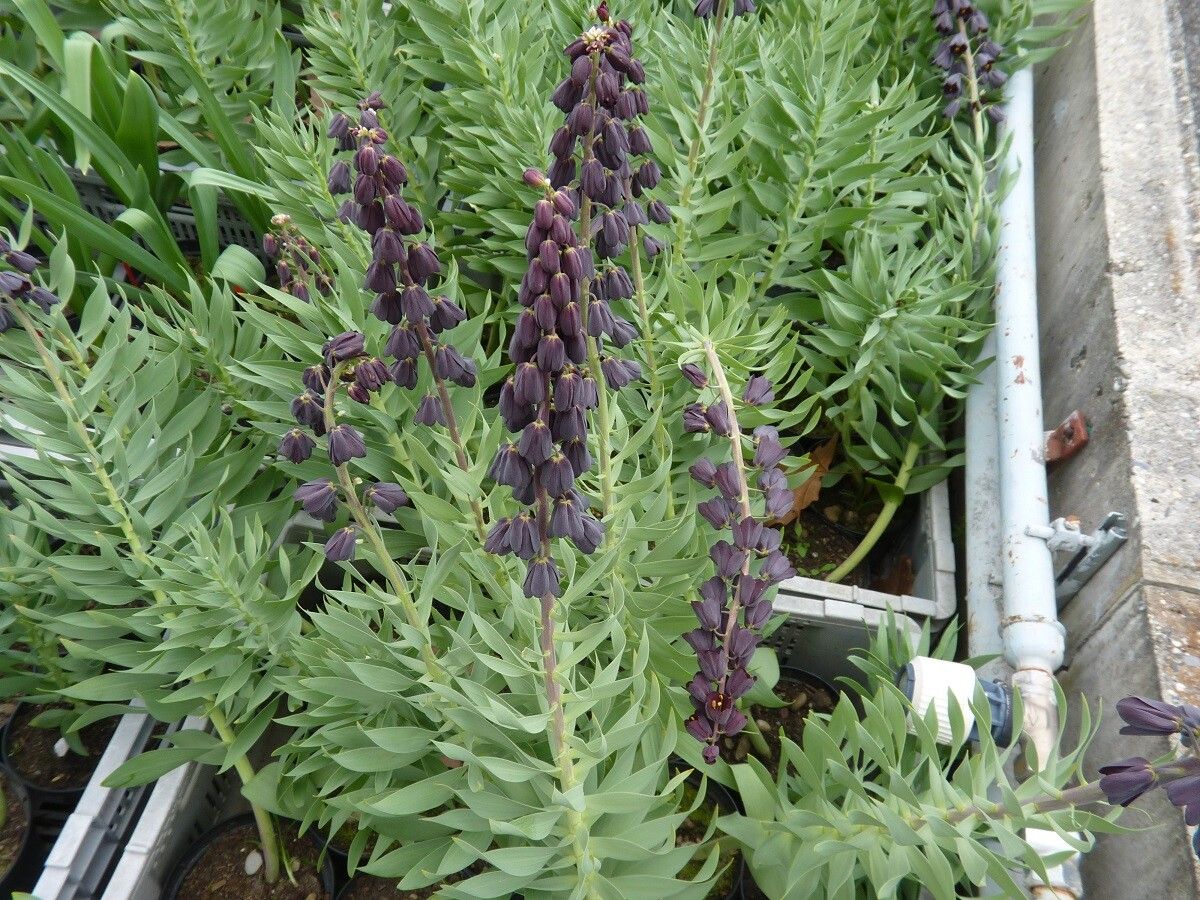
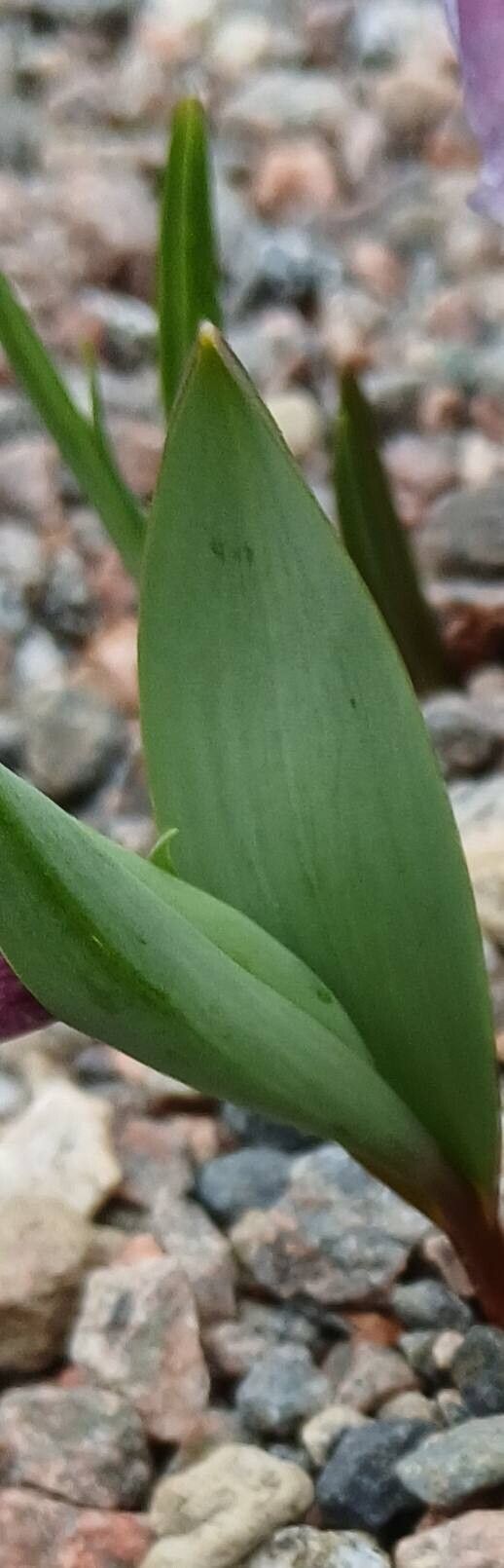
Fritillaria persica is a Middle Eastern species of flowering plant in the lily family Liliaceae, native to southern Turkey, Iran, Iraq, Lebanon, Syria, Cyprus, Palestine and Israel. It is widely cultivated as an ornamental and naturalized in the Lazio region of Italy. It is the sole species in Fritillaria subgenus Theresia. The Latin specific epithet persica means “Persian”, referring to the modern country of Iran.Fritillaria persica is a robust bulbous perennial growing 30–60 cm (12–24 in) tall. Each plant may bear up to 30, conical, narrow, bell-shaped flowers, up to 0.75 in (1.9 cm) long, ranging in colour from deep purple to greenish brown.A plant commonly found in cultivation outside its range is the cultivar 'Adiyaman', which is taller and more free-flowering than populations of the species inside its native range. This cultivar has gained the Royal Horticultural Society’s Award of Garden Merit.
Persian fritillary has strong resistance to disease and is generally not easily affected by illnesses. Nevertheless, it can be vulnerable to pests and diseases present in its environment. These infections are generally mild. Regarding care, the plant requires moderate maintenance. It should be pruned regularly to maintain a neat appearance and support healthy growth. Applying fertilizer can also encourage flowering. Persian fritillary is appropriate for anyone with outdoor space, such as a garden or patio, and does not demand extensive gardening experience. It may need more attention when grown indoors.
How to keep Fritillaria Persica.
Light
Persian fritillary does best in places that receive abundant sunlight during the day. However, it can also tolerate spots with somewhat less light. The strength of sunlight plays a major role in its health and vigor. Both excessive and insufficient light can affect its condition. Its original growing environment consisted of open areas frequently bathed in sunlight.
Water
The Persian fritillary flourishes in conditions with moderate moisture and well-drained soil, effectively balancing its tolerance for drought with its need for hydration. For optimal health, water the plant weekly and apply mulch to help retain soil moisture during the growing season. This practice will enhance the plant’s vigor and improve the quality of its blooms.
Temperature
The Persian fritillary is native to temperate environments and prefers temperatures between 41 and 89.6 °F (5 to 32 ℃). During the summer months, temperatures should be monitored closely because the Persian fritillary cannot tolerate excessive heat.
Fertilizer
For Persian fritillary, the primary time to fertilize is in early spring when the flowers are starting to form. The proper fertilizer promotes better blooms and helps the plant produce attractive flowers. Fertilizing in early spring ensures strong flowering during the season and supplies energy for dormant growth phases.
Pruning
The Persian fritillary features tall stems and bell-shaped flowers. It requires spring pruning to remove dead foliage and spent blooms. This practice not only promotes growth and flowering but also helps prevent disease. By carefully trimming the plant, you can improve air circulation and direct the plant's energy towards producing a vibrant display of flowers.
Botanical profile.
- Plant Type
- Herb
- Life Cycle
- Perennial
- Genus
- Fritillaria
- Family
- Liliaceae
- Hardiness Zone
- 5-8
- Mature Height
- 91 cm
- Mature Spread
- 30 cm
- Leaf Color
- Green, Gray, Silver
- Leaf Type
- Deciduous
- Flower Color
- Purple
- Flower Size
- 2.03 cm to 3.05 cm
- Bloom Time
- Mid spring, Late spring
- Planting Time
- Spring
- Harvest Time
- Early summer, Mid summer
- Native Area
- Iraq, Turkey, Syria, Iran, Cyprus, Lebanon
Other names.
Reader questions.
How should I water my Persian fritillary?
To properly water the Persian fritillary, it is recommended to use filtered water at room temperature. Tap water may contain harmful particles for this plant. The water should be at room temperature or slightly warmer to avoid shocking the plant, considering its warm native environment. Overhead watering should be avoided as it can cause problems with the foliage. Instead, the filtered room temperature water should be applied to the soil until it is completely soaked. This helps the plant by moistening the roots and aiding in the spreading of nutrients throughout the soil.
Why should I put fertilizer on my Persian fritillary?
Fertilization plays an important role for the Persian fritillary and other plants as it provides essential nutrients that promote growth above and below ground. While the fertilization needs of the Persian fritillary are generally low and it may survive without fertilization, annual fertilization can greatly benefit the plant. Regular fertilization not only helps to sustain the plant but also enhances the production of longer-lasting, more beautiful flowers. Therefore, those wishing to maintain the best appearance for their Persian fritillary should prioritize annual fertilization.
What are the sunlight requirements for Persian Fritillary?
Persian fritillary thrives best in areas that receive generous sunlight throughout the day, preferring full sun conditions, which means over 6 hours of sunlight. However, it is also adaptable to partial sun conditions, receiving about 3-6 hours of sunlight. It is essential to watch how sunlight moves through your garden, choosing spots that provide the right balance of light and shade to ensure the plants' happiness. The intensity of sunlight significantly affects the healthy growth and vigor of Persian fritillary, with too much or too little light impacting its well-being. Originally, Persian fritillary grew in open spaces often bathed in sunlight.
What is the ideal temperature range for Persian fritillary?
Persian fritillary thrives in temperate environments, with a preference for temperatures between 41 to 89.6 °F (5 to 32 °C). During the summer, it's important to monitor the temperature closely, as Persian fritillary cannot withstand excessive heat. This plant has a strong resistance to cold, and usually, special frost protection measures aren't required in winter. However, should winter temperatures drop below -25°C, implementing cold protection by covering the plant with soil or straw is advisable.
What do I do if I give my Persian fritillary either too much or too little water?
Both overwatering and underwatering can harm the health of your Persian fritillary, but overwatering is more common. When this plant gets too much water, its stems and leaves may wilt and turn yellow. Overwatering for a long time can also cause diseases like root rot, mold, and mildew, which can be fatal. Underwatering is less likely because the Persian fritillary can tolerate some drought. But if it happens, the leaves may become brittle and brown. It's important to recognize the signs of overwatering early, as some diseases like root rot may not be fixable if left too long. If you see early signs, reduce watering immediately and check the soil. If it drains poorly, replace it with a loose, well-draining mix. If signs of underwatering are present, simply water more regularly until they go away.
When should I fertilize my Persian fritillary?
The best time to fertilize a Persian fritillary is in late winter to early spring, when it is coming out of dormancy and starting to grow. Fertilizing at this time helps promote healthy growth for the season ahead. Although it is generally recommended to fertilize in early spring, it is also okay to fertilize in the fall. However, it is not recommended to fertilize during summer or winter.
How can artificial lighting supplement natural sunlight for Persian Fritillary?
For indoor Persian fritillary plants, when natural sunlight is insufficient, especially during winter or in less sunny spaces, artificial lighting serves as an essential solution for optimal growth. LED lights are recommended for providing specific wavelengths needed by the plants. Full sun plants require 30-50W/sq ft of artificial light, partial sun plants need 20-30W/sq ft, and full shade plants need 10-20W/sq ft. The light source should be placed 12-36 inches above the plant to mimic natural sunlight. Most plants require 8-12 hours of artificial light per day.
How should Persian fritillary be cared for in winter to prevent drought and water scarcity?
Before the first freeze in autumn, it's recommended to water Persian fritillary abundantly to ensure the soil is moist as it freezes. This practice helps protect the plant from drought and water scarcity throughout the winter and into early spring by maintaining a level of moisture in the soil that supports the plant's needs during these colder months.
How frequently do I need to water my Persian fritillary?
If your Persian fritillary is in a pot, you can determine if it needs water by checking the soil. Stick your finger into the soil and if the top two to three inches are dry, then it's time to water it. If you have it planted outdoors in the ground, you can also test the soil in a similar way. Once again, if the first few inches of soil are dry, it's time to water. Usually, during the spring and early fall, you'll need to water this plant about once a week using this method. However, during extremely hot weather, you might need to water it twice or even more times per week. But keep in mind that mature and well-established Persian fritillaries are able to withstand drought.
When is it not a good idea to give fertilizer to my Persian fritillary?
To prevent overfertilization and its complications, it is recommended to fertilize your Persian fritillary only in late winter and early spring. This plant has low fertilization needs, so a single annual feeding is sufficient. However, if you didn't fertilize in spring, it is okay to feed it in the fall. It is important to avoid fertilizing during the rest of the growing season and winter, as the plant is either dormant or has minimal growth during these times.
What are the symptoms of inappropriate lighting for Persian Fritillary?
Inadequate lighting can lead to several symptoms indicating light deficiency in Persian fritillary, including small leaves, leggy or sparse growth, faster leaf drop, slower or no new growth, and lighter-colored new leaves. Excessive sunlight exposure may cause chlorosis, sunscald, leaf curling, wilting, and leaf scorching. These conditions indicate a lack of chlorophyll and essential nutrients or direct damage from intense sunlight, negatively affecting the plant's ability to photosynthesize, retain hydration, and maintain overall health.
What are the signs and solutions of low temperature impact on Persian fritillary?
Persian fritillary is notably cold-tolerant and ideally should be kept in temperatures above 5°C. If winter temperatures fall below -25°C, the plant may not show immediate distress, but you may observe a decrease in sprouting or a complete lack of sprouting in the spring. In such cases, the solution is to remove any parts of the plant that have failed to sprout by spring to ensure the plant's health.