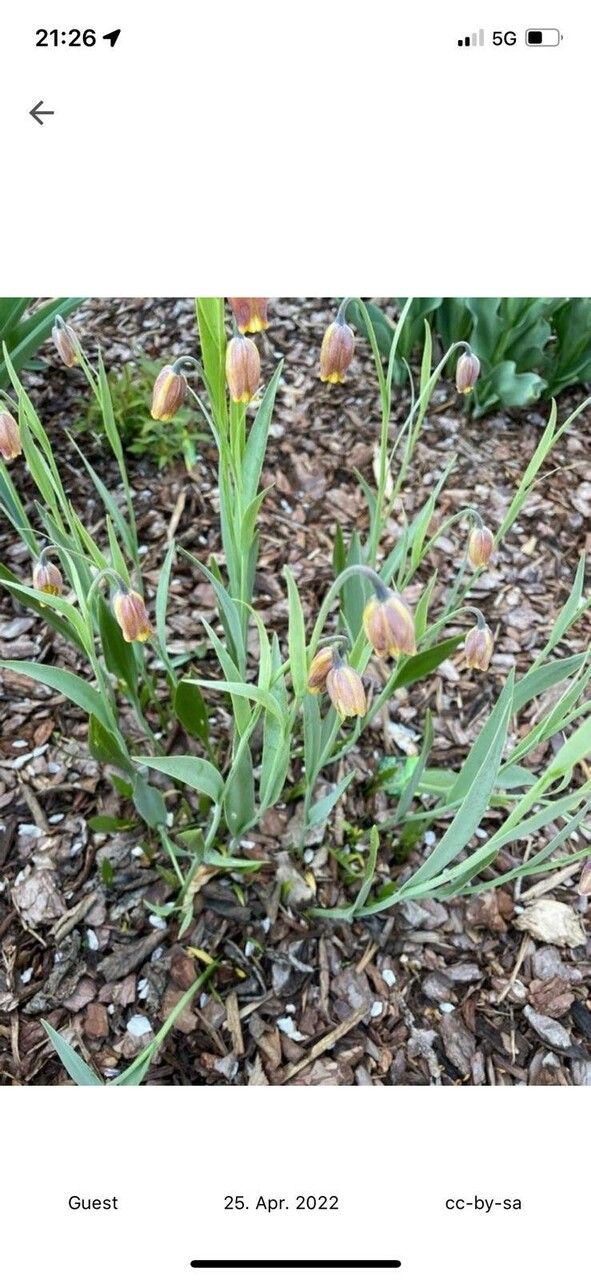
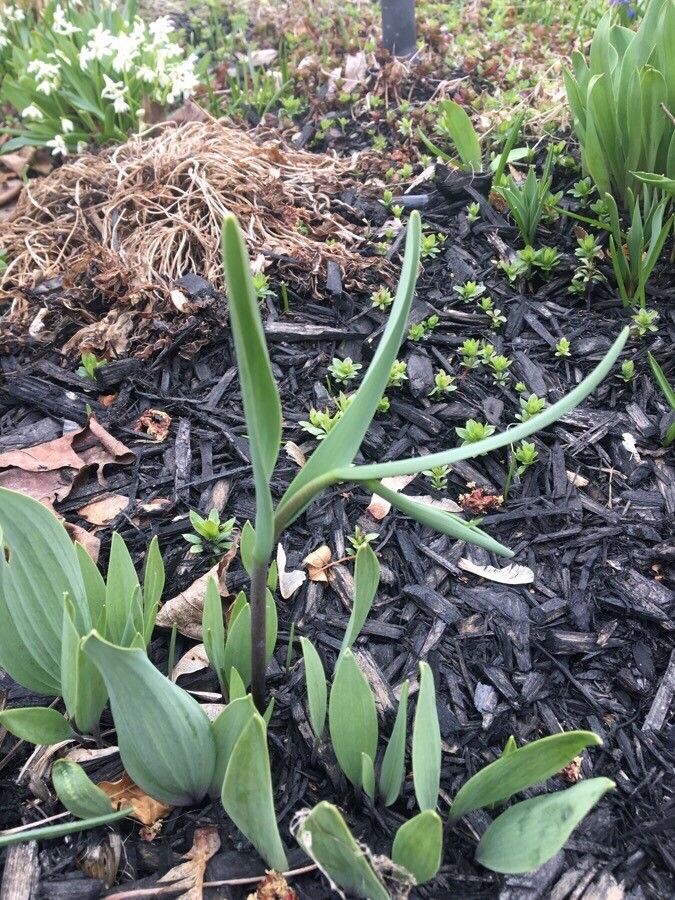
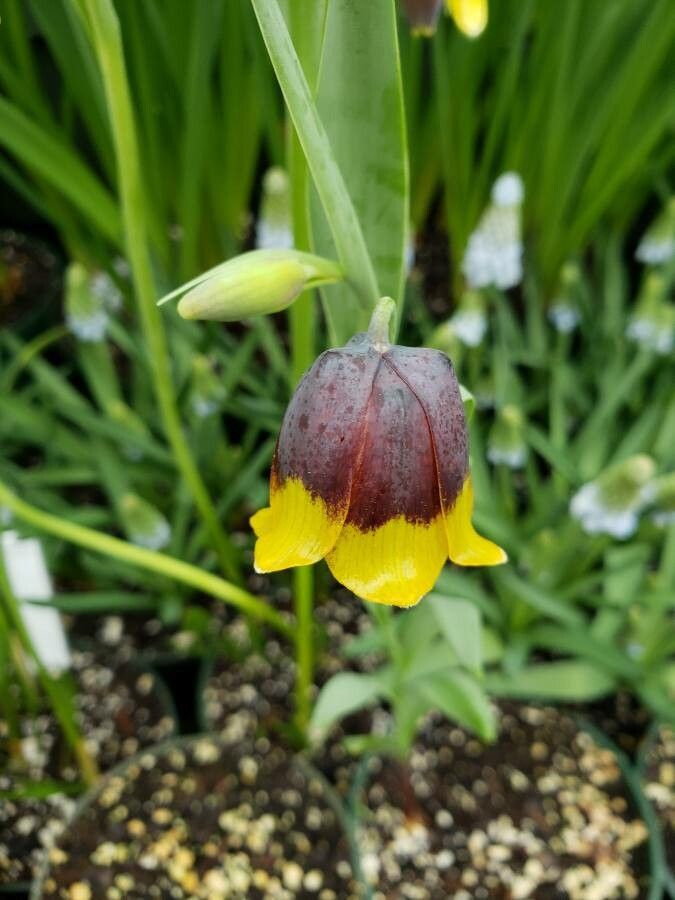
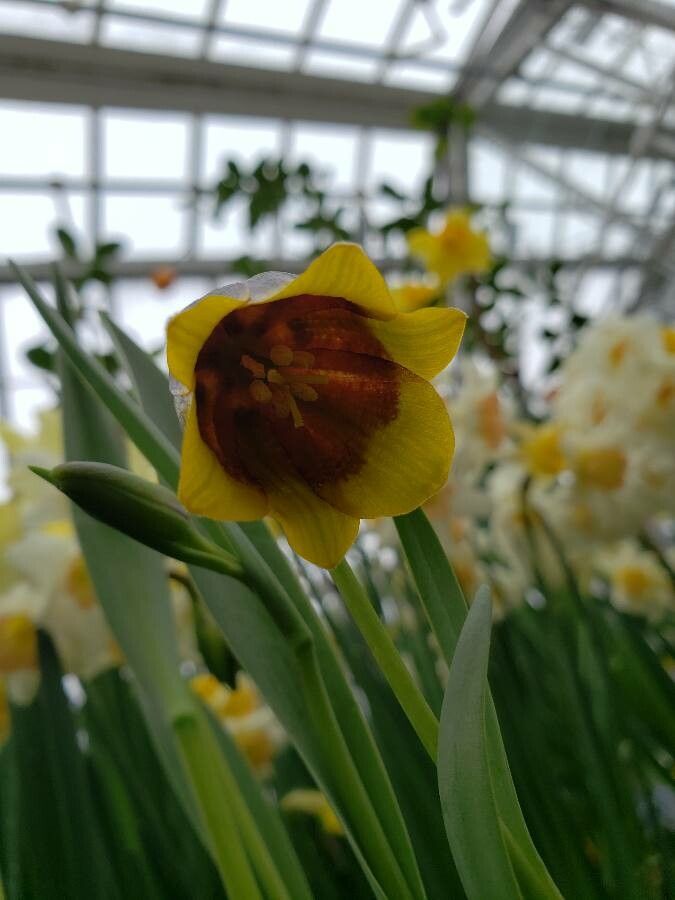
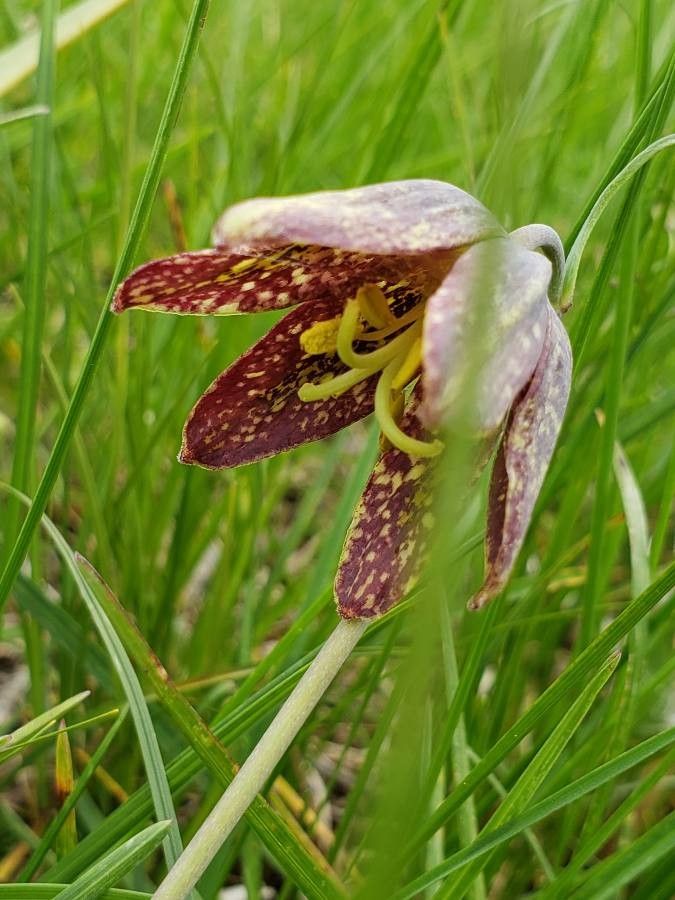
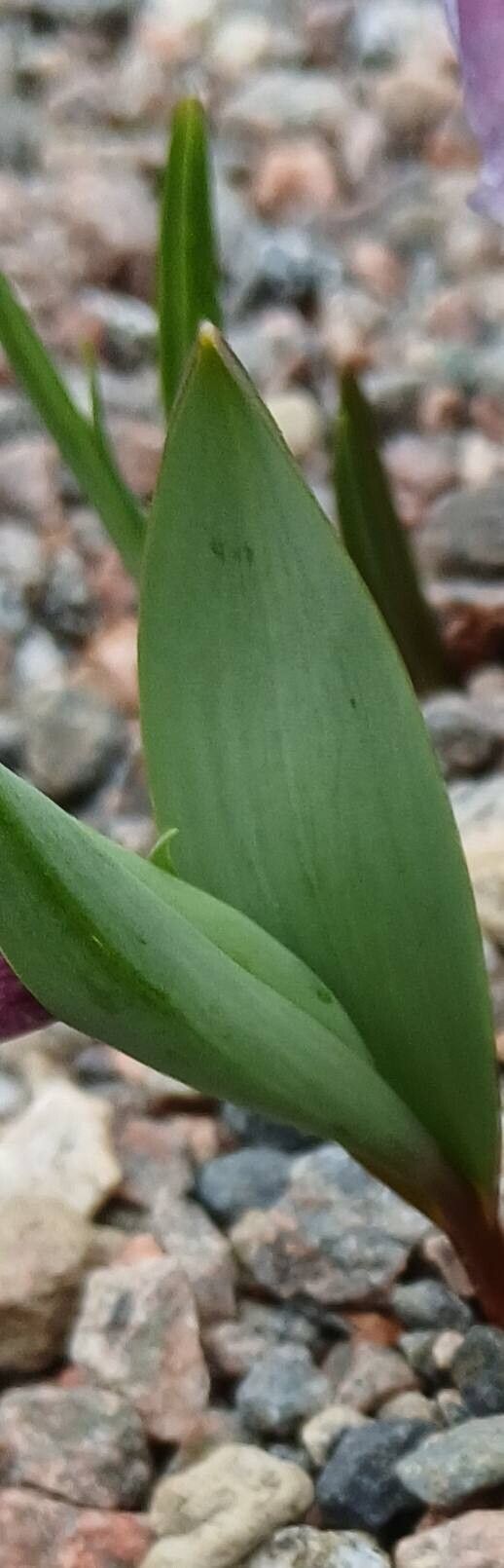
Fritillaria michailovskyi is a species of flowering plant in the lily family Liliaceae, native to mountainous areas of northeastern Turkey. It is a bulbous perennial growing to 10–20 cm (4–8 in) tall, with narrow strap-shaped leaves and nodding umbels of distinctive, pendent, bell-shaped maroon flowers with yellow tips in spring.In cultivation, it requires very well-drained conditions, as it does not tolerate winter wet.
Michael's flower is fairly resistant to disease and usually not prone to illnesses. However, it can be vulnerable to pests and diseases present in its environment. These problems are typically mild. Regarding care, this plant requires moderate maintenance. It should be pruned regularly to preserve a tidy appearance and encourage healthy growth. Fertilizing can also help stimulate flowering. Michael's flower is appropriate for anyone with outdoor space, such as a garden or patio, and does not demand a great deal of care experience. It may need more attention when grown indoors.
How to keep Fritillaria Michailovskyi.
Light
Michael's flower originates from habitats such as forest understories or rocky areas, where it is subject to natural shade. It favors partial sun but can adjust to full sun or full shade, demonstrating its versatility and hardiness.
Water
Michael's flower thrives in rocky slopes and alpine meadows, where it needs regular moisture and good drainage. It can tolerate moderate drought conditions, but it should be watered weekly. As a herbaceous perennial, it flourishes in well-drained soil, making it an excellent choice for outdoor cultivation.
Temperature
Michael's flower can adjust to a wide range of temperatures, but its distribution may still be restricted by various combinations of moisture and heat. It performs best in warm summer climates with sufficient rainfall or watering. Long stretches of cloudy, rainy weather, as well as prolonged high temperatures, can raise the likelihood of the flower dying. In winter, giving the plant proper protection from the cold can improve its chances of survival.
Fertilizer
The primary time to fertilize Michael's flower is in early spring, when the flowers are developing. The appropriate fertilizer promotes better blooms and helps Michael's flower produce attractive flowers. Fertilizing in early spring ensures excellent flowers during the season and supplies energy for dormant growth phases.
Pruning
Michael's flower is characterized by its bell-shaped blossoms and requires only minimal pruning. To encourage blooming and prevent disease, trim away any dead foliage in early spring. After the flowers have bloomed, remove the spent flowers to encourage new growth. Be careful to avoid heavy pruning, as it can damage the plant. With regular maintenance, Michael's flower will remain a vibrant addition to the garden.
Pot & Repot
Repot Michael's flower in late summer every 2-3 years. Use a slightly larger container with good drainage. After repotting, place the plant in indirect light and water it regularly. Be careful not to overwater, as excess moisture can cause the bulb to rot. Following these steps will help ensure optimal recovery and renewed blooming.
Botanical profile.
- Plant Type
- Herb
- Life Cycle
- Perennial
- Genus
- Fritillaria
- Family
- Liliaceae
- Hardiness Zone
- 4-8
- Mature Height
- 15 cm to 30 cm
- Mature Spread
- 10 cm
- Leaf Color
- Green, Silver, Gray
- Leaf Type
- Deciduous
- Flower Color
- Purple, Yellow
- Flower Size
- 2.03 cm to 3.05 cm
- Bloom Time
- Early spring, Mid spring
- Planting Time
- Spring
- Harvest Time
- Late spring, Early summer
- Native Area
- Turkey