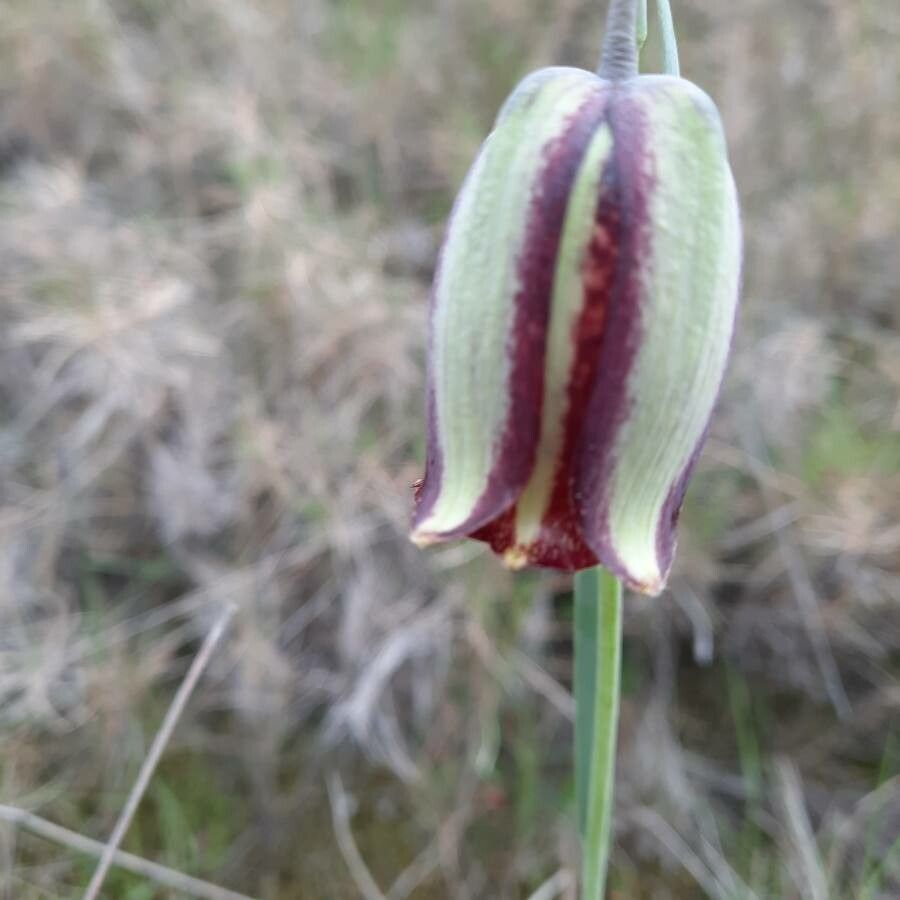
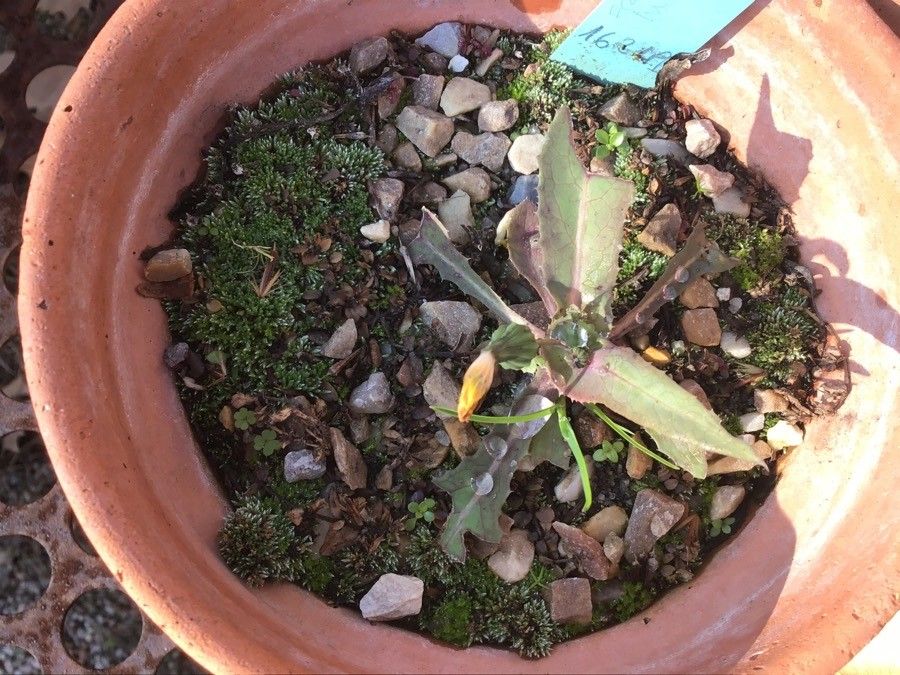
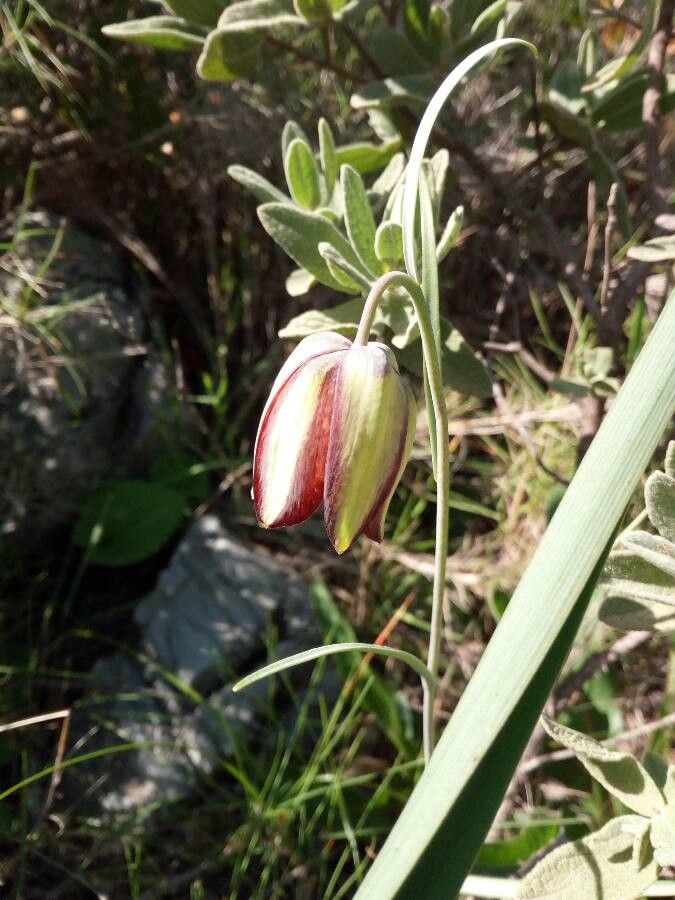
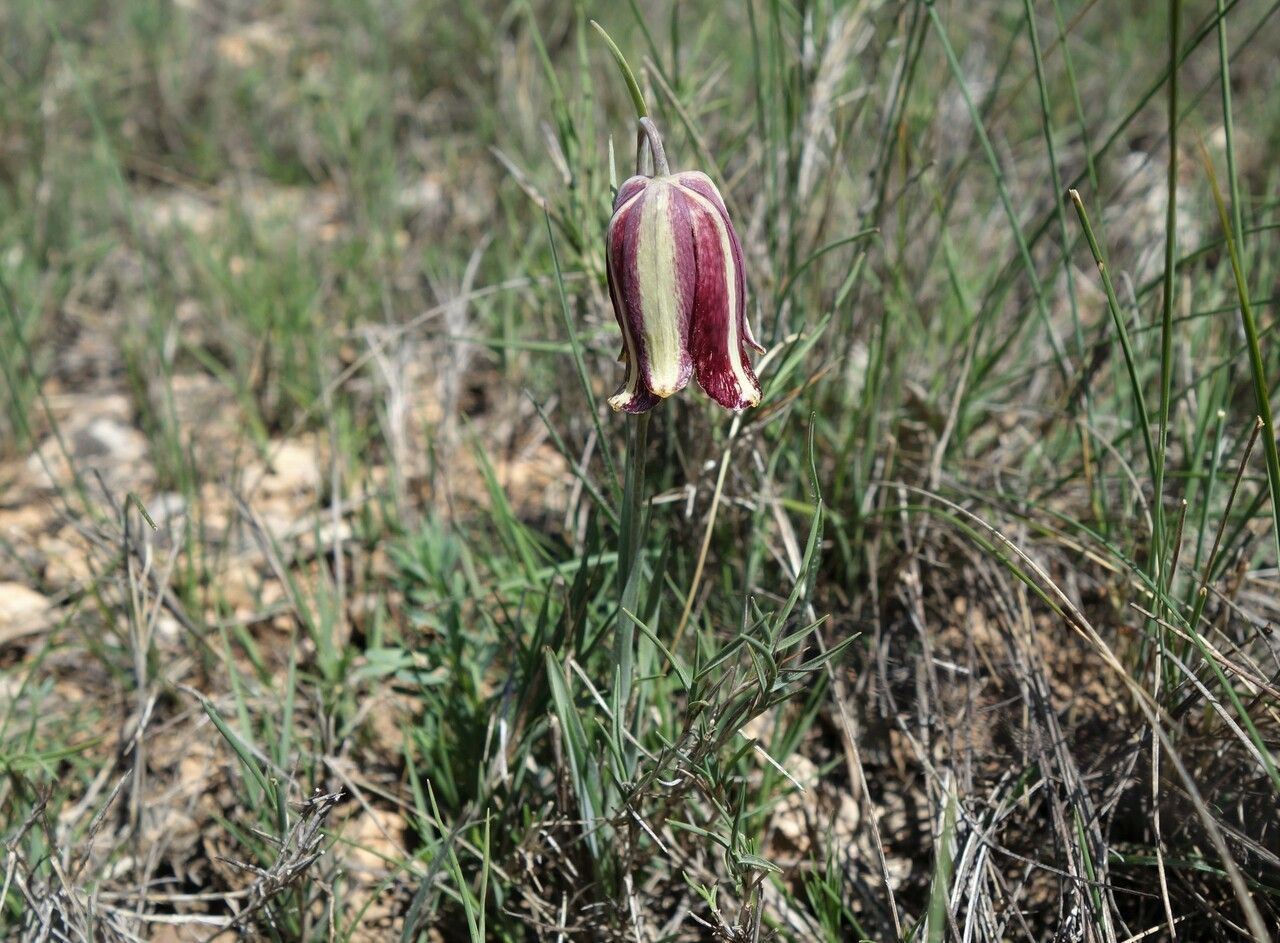
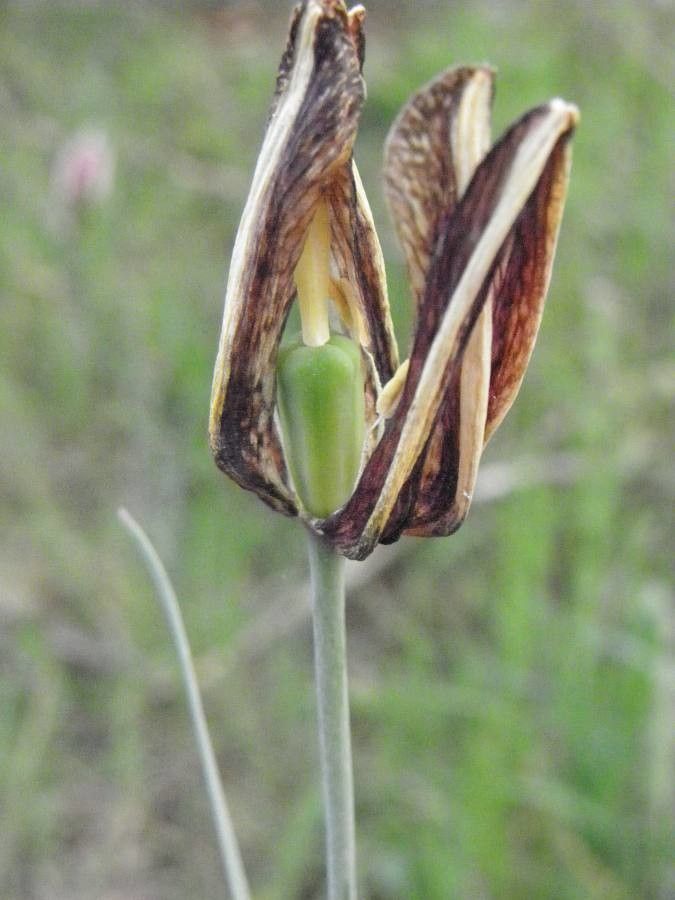
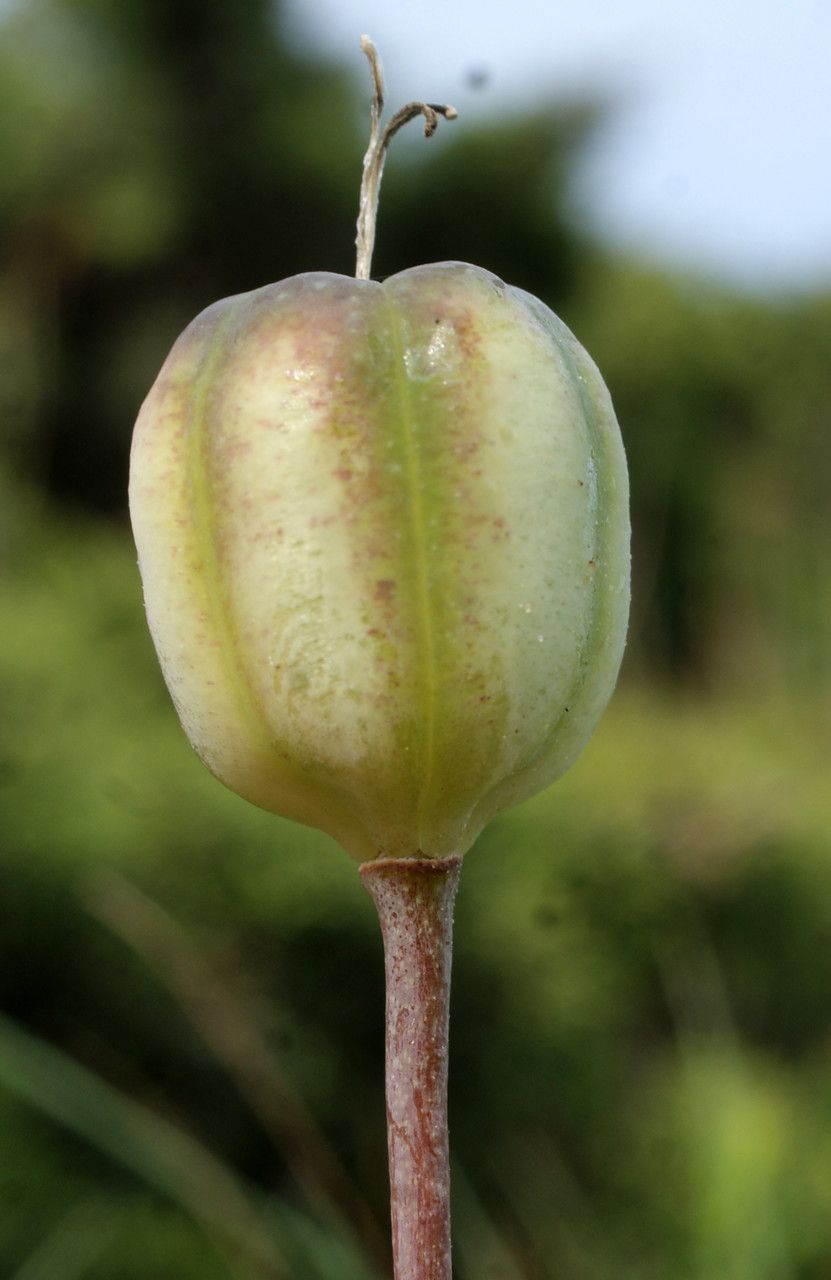
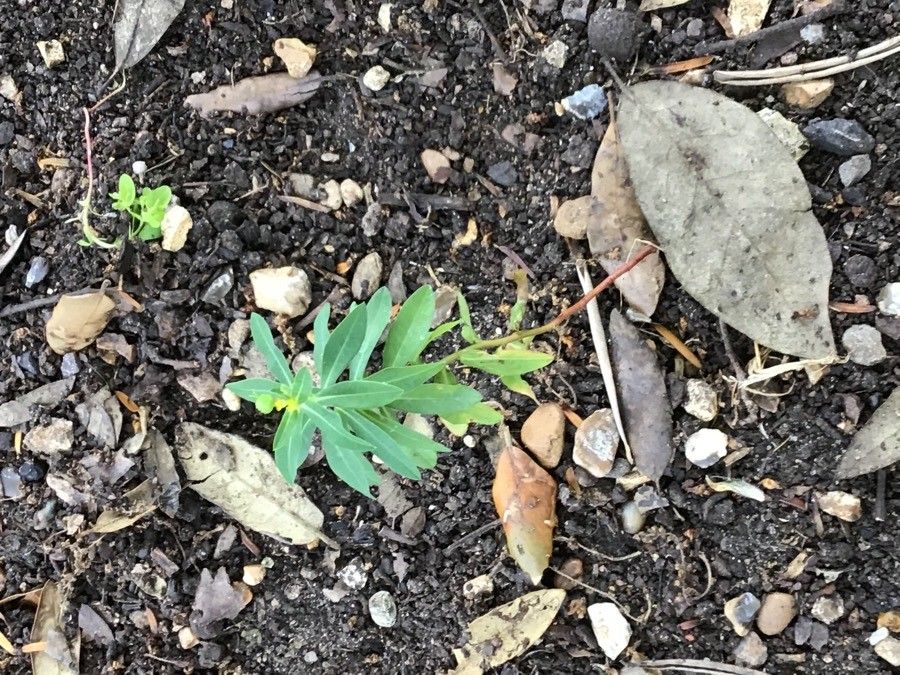
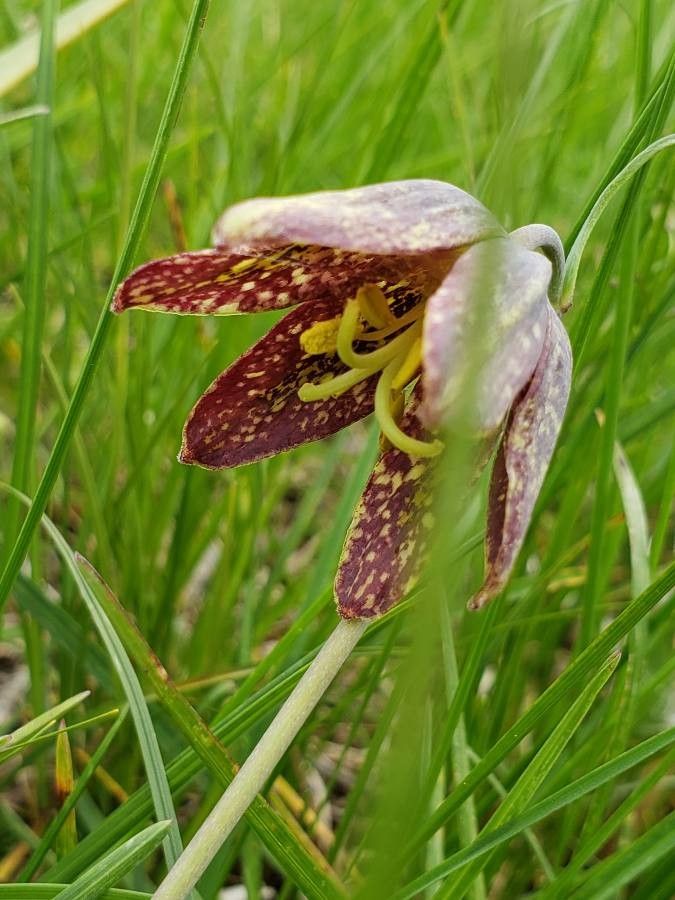
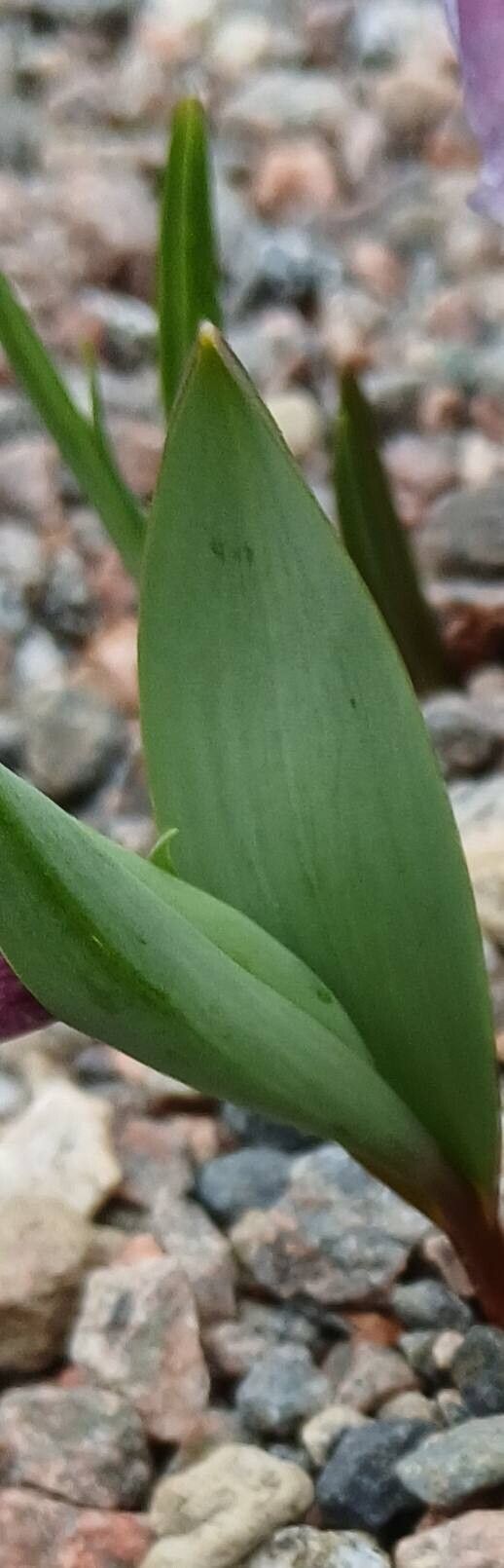
Fritillaria lusitanica is a species of plant in the lily family Liliaceae, endemic to the Iberian Peninsula.It is a bulb-forming herbaceous perennial. The flowers are nodding (hanging), purple, sometimes with a green stripe along the central part of each tepal.Its populations occurs scattered and usually with small numbers of individuals in central and southwestern areas of the Peninsula. SubspeciesFritillaria lusitanica subsp. lusitanica Fritillaria lusitanica subsp. stenophylla (Boiss. & Reut.) K.Richtformerly includedSeveral other names have been coined at the varietal and subspecific levels for taxa once thought to be parts of the species Fritillaria lusitanica but now considered better suited to other species.
Fritillaria lusitanica var. algeriensis, now called Fritillaria oranensis Fritillaria lusitanica subsp. macrocarpa, now called Fritillaria macrocarpa Fritillaria lusitanica var. neglecta, now called Fritillaria messanensis subsp. neglecta Fritillaria lusitanica subsp. neglecta, now called Fritillaria messanensis subsp. neglecta Fritillaria lusitanica subsp. oranensis, now called Fritillaria oranensis
Iberian fritillary has strong disease resistance and is generally not susceptible to illnesses. However, it can be affected by pests and diseases present in its surroundings. These infections are usually not severe. In terms of care, this plant requires a moderate level of maintenance. It should be pruned regularly to maintain a good appearance and healthy growth. Fertilization can also help promote flowering. Iberian fritillary is suitable for anyone with an outdoor space, such as a garden or patio, and does not require a lot of care experience. It may require more care when grown indoors.
How to keep Fritillaria Lusitanica.
Light
Iberian fritillary is a sun-loving perennial herbaceous plant native to open habitats, frequently flourishing in meadows and grasslands. It favors full sun but can also tolerate partial sun.
Water
The Iberian fritillary thrives in Mediterranean climates, as it prefers dry conditions and can tolerate brief periods of drought. It is recommended to water it weekly. This plant is often found in rocky substrates, which help optimize water retention. This adaptation allows it to survive the fluctuating temperatures and sporadic rainfall typical of its natural habitat.
Temperature
Iberian fritillary can tolerate a wide range of temperatures, though its range may still be restricted by different combinations of moisture and heat. It does best in warm summer climates when there is sufficient rainfall or watering. Extended periods of cloudy, rainy weather, as well as prolonged high temperatures, can raise the likelihood of the Iberian fritillary dying. In winter, adequate protection from the cold can increase the plant's chances of survival.
Fertilizer
The primary time to fertilize Iberian fritillary is in early spring when its flowers are forming. Using the proper fertilizer promotes better blooms and helps the Iberian fritillary produce attractive flowers. Fertilizing in early spring helps ensure excellent flowers throughout the season and supplies energy for dormant growth phases.
Pruning
The Iberian fritillary is a bulbous perennial known for its bell-shaped flowers. To encourage bulb growth, prune in early spring by removing spent flowers. It's important to only cut back the foliage after it has turned yellow to ensure nutrients are fully returned to the bulb. Regular pruning not only enhances the Iberian fritillary's appearance and health but also improves its floral displays in future seasons.
Botanical profile.
- Plant Type
- Herb
- Life Cycle
- Perennial
- Genus
- Fritillaria
- Family
- Liliaceae
- Hardiness Zone
- 5-9
- Mature Height
- 76 cm
- Mature Spread
- 15 cm to 25 cm
- Leaf Color
- Medium Sea Green
- Leaf Type
- Deciduous
- Flower Color
- Brown, Purple
- Flower Size
- 2.03 cm to 3.05 cm
- Bloom Time
- Mid spring, Late spring
- Planting Time
- Spring, Summer, Autumn
- Harvest Time
- Early summer, Mid summer
- Native Area
- Spain, Portugal
Other names.
Reader questions.
What are the sun requirements for Iberian fritillary (Fritillaria lusitanica)?
The Iberian fritillary, known botanically as Fritillaria lusitanica, thrives in conditions that align with its sun exposure needs. To support its growth, it requires full sun, which translates to more than 6 hours of sunlight daily. However, it can also tolerate partial sun, needing about 3 to 6 hours of sunlight each day. It's essential to watch how sunlight moves through your garden to identify spots that offer an ideal balance of light and shade. This careful observation ensures that your plants remain happy and healthy by receiving the right amount of sunlight they need.
What is the Iberian fritillary?
The Iberian fritillary, known botanically as Fritillaria lusitanica, is a plant species. The information provided does not include details about its essentials or symptoms, suggesting that further context is needed for a comprehensive overview.