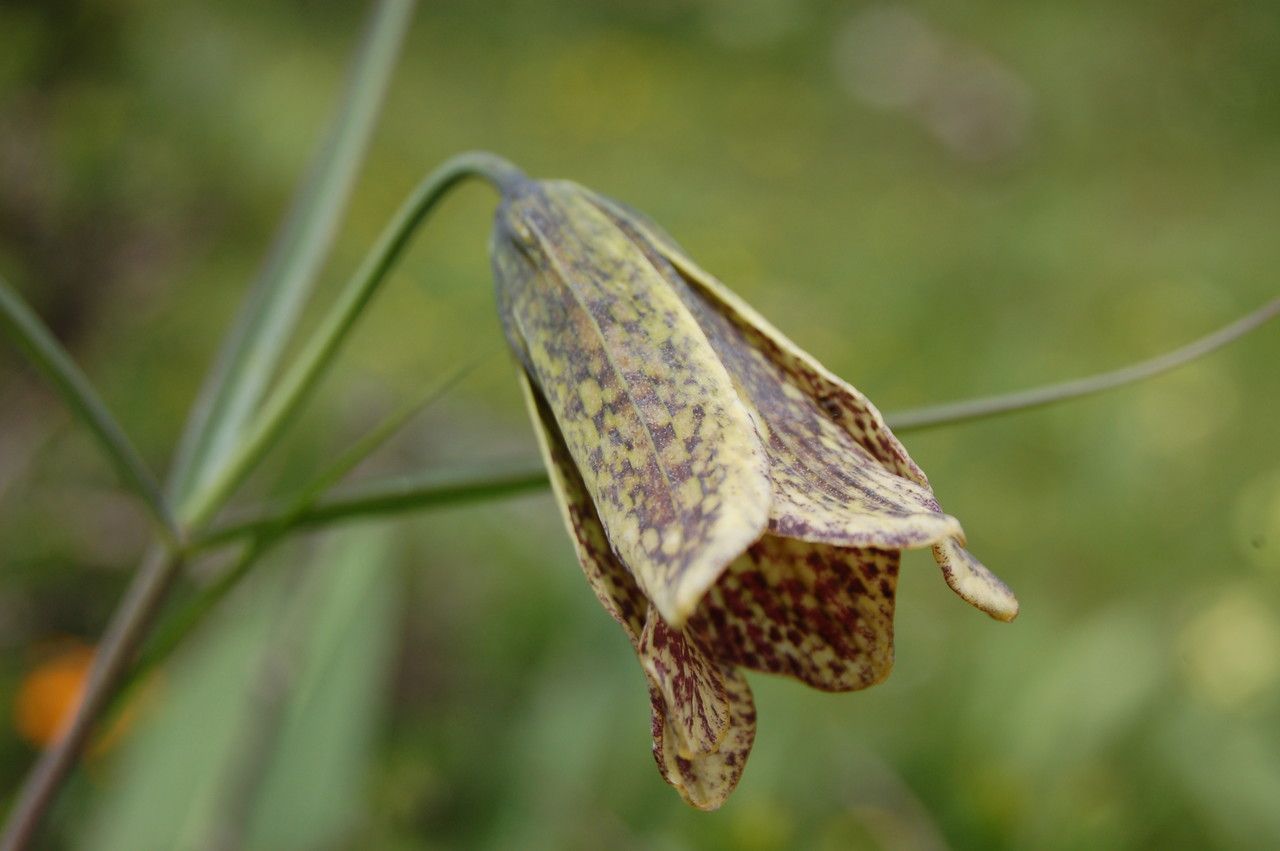
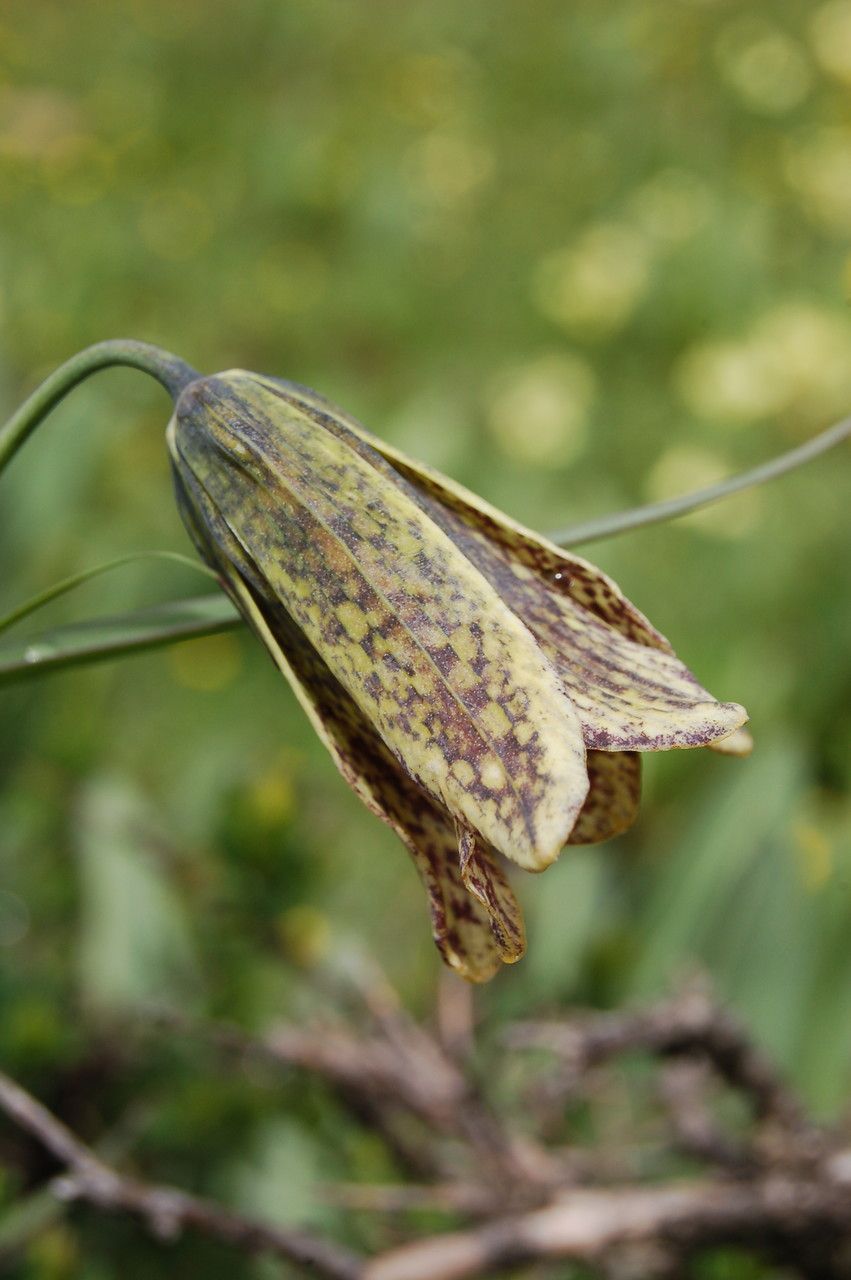
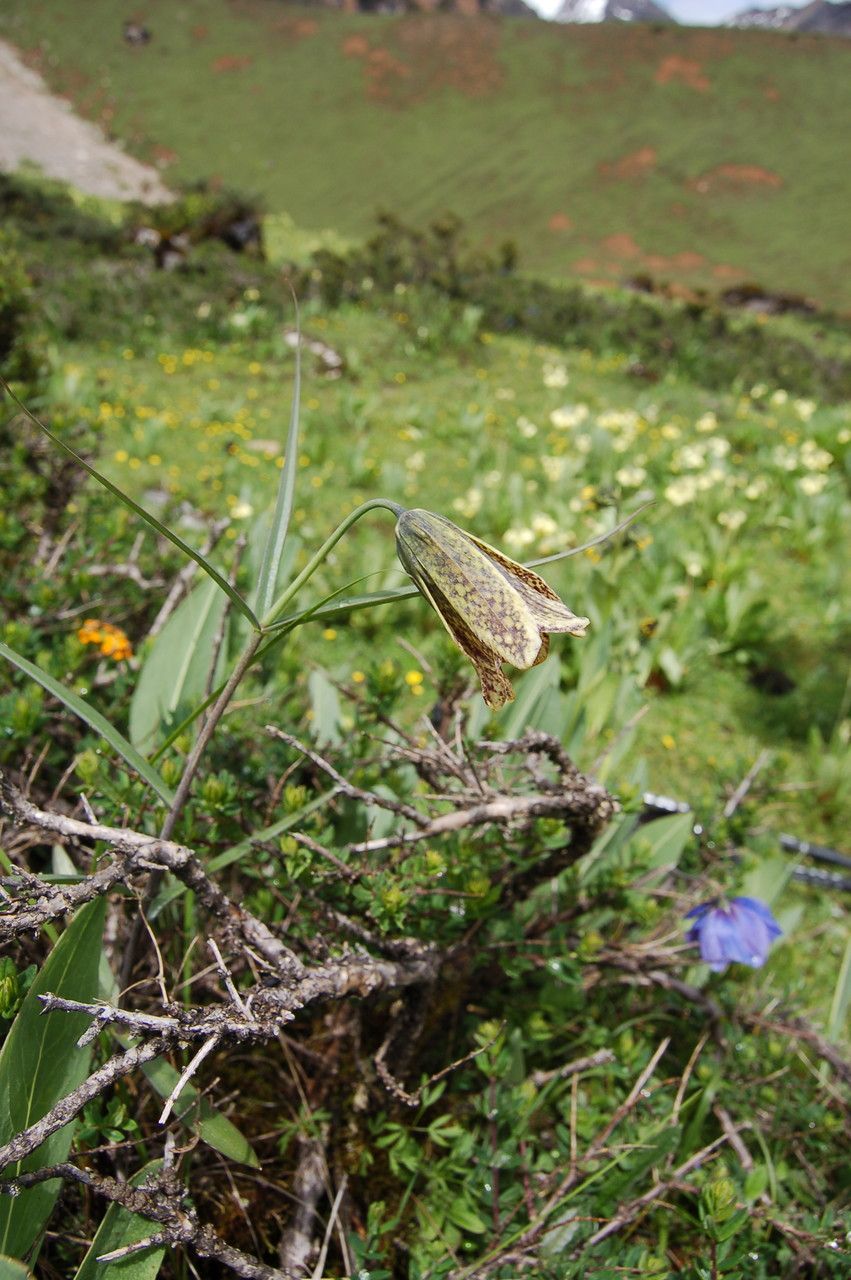
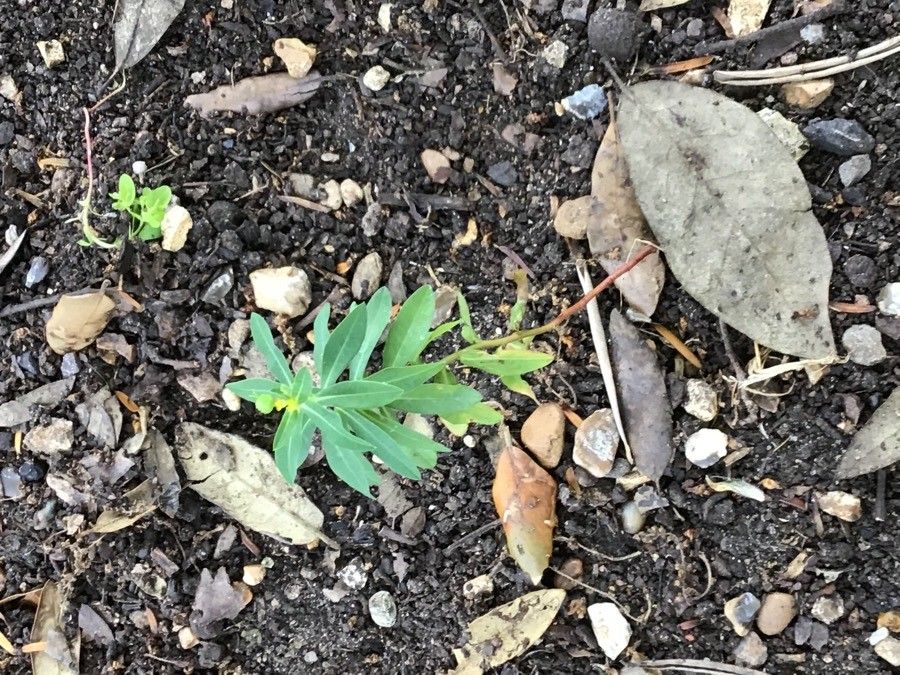
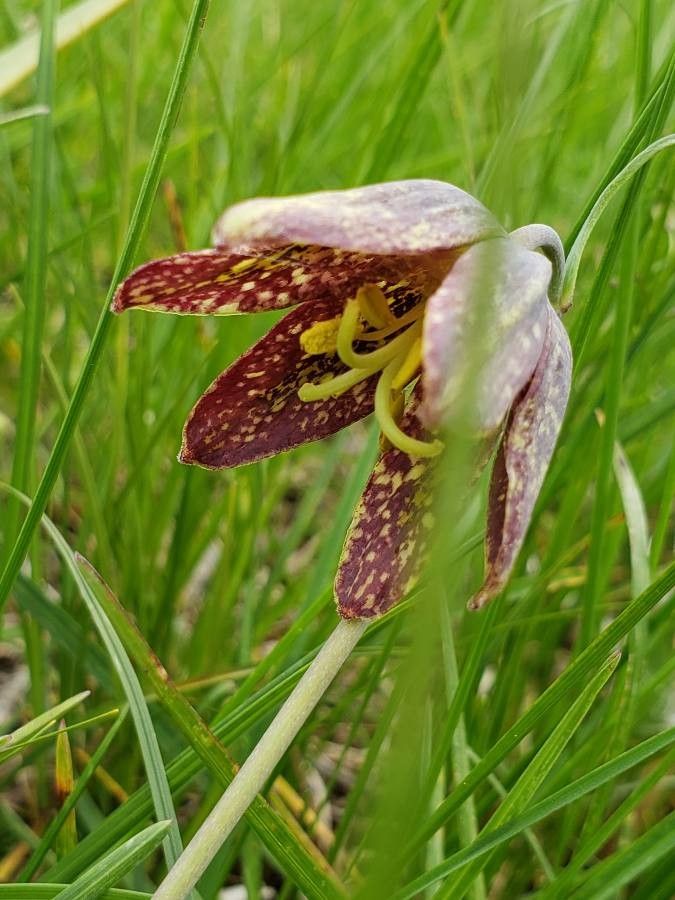
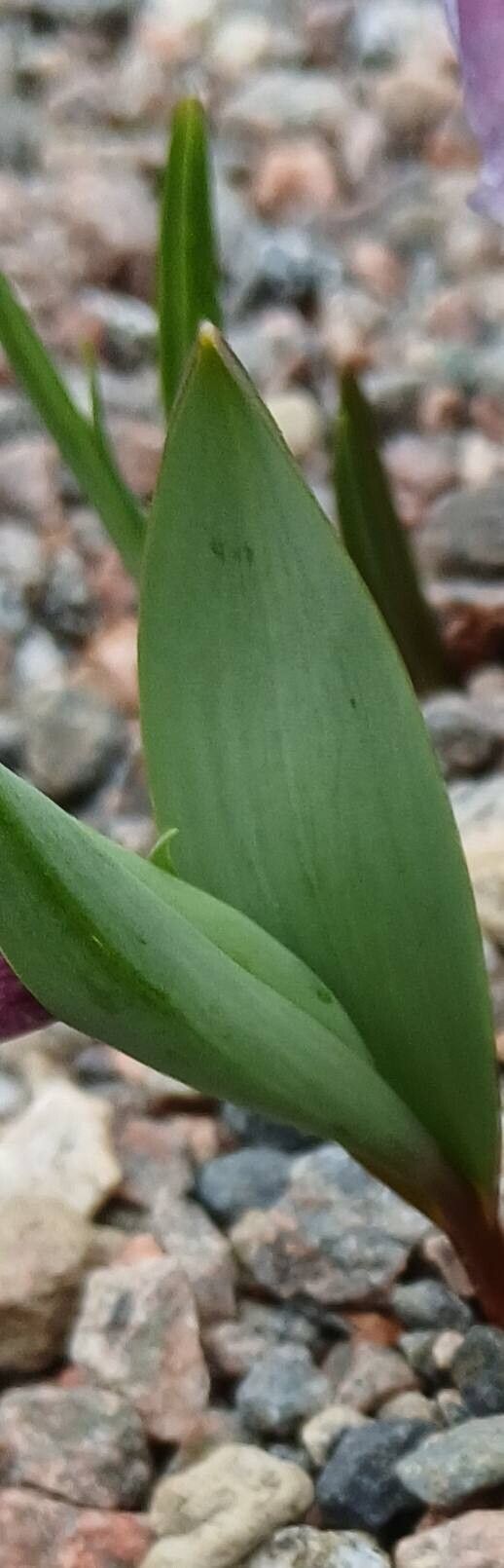
Fritillaria cirrhosa, common name yellow Himalayan fritillary, is an Asian species of herbaceous plant in the lily family, native to China (Gansu, Qinghai, Sichuan, Tibet, Yunnan), the Indian Subcontinent (Nepal, Pakistan, India, Bhutan), and Myanmar.Fritillaria cirrhosa produces bulbs up to 20 mm (0.8 in) in diameter. The stem is up to 60 cm (24 in) tall, usually with one flower at the top, sometimes two or three. Leaves are narrowly lanceolate, usually opposite, sometimes whorled, up to 13 cm (5.1 in) long. Flowers are bell-shaped, yellowish-green to brownish-purple flowers which are usually with a chequered pattern in dull purple. The plant is commonly found in alpine slopes and shrublands of the Himalayas, at altitudes of 2,700–4,000 m (9,000–13,000 ft). It is in danger of extinction, due to be being aggressively collected to make a traditional Chinese medicine, Bulbus fritillariae cirrhosae.
Yellow himalayan fritillary has good disease resistance and is generally not prone to diseases. However, it can be vulnerable to pests and diseases present in its surroundings. These infections are typically not severe. In terms of care, this plant requires medium maintenance. It should be pruned regularly to maintain a neat appearance and healthy growth. Fertilization can also help promote flowering. Yellow himalayan fritillary is suitable for anyone with outdoor space, such as a garden or patio, and does not demand extensive care experience. It may need more attention when grown indoors.
How to keep Fritillaria Cirrhosa.
Light
Yellow himalayan fritillary is indigenous to habitats like forest understories and rocky areas, where it receives natural shade. It prefers partial sun but can tolerate full sun or full shade, showing its versatility and hardiness.
Water
The Yellow Himalayan Fritillary is native to mountainous regions, where it thrives with moderate moisture and occasional dry spells. This plant prefers consistent hydration and should be watered every 1-2 weeks. As an herbaceous perennial, the Yellow Himalayan Fritillary benefits from natural rainfall when grown outdoors, which helps meet its growth needs and seasonal water requirements.
Fertilizer
For Yellow himalayan fritillary, the primary time to fertilize is in early spring when flowers are forming. The proper fertilizer encourages better blooms and helps Yellow himalayan fritillary produce lovely flowers. Fertilizing in early spring ensures excellent flowers during the season and provides energy for dormant growth phases.
Pruning
The yellow Himalayan fritillary is known for its bell-shaped, nodding flowers and offers medicinal benefits. To promote growth and flowering, prune the plant in early spring by removing dead foliage to improve air circulation. After the blooms have faded, light trimming helps maintain its shape, but be careful to avoid heavy pruning. This will ensure the plant's vigor and enhance flowering for the following season.
Botanical profile.
- Plant Type
- Herb
- Life Cycle
- Perennial
- Genus
- Fritillaria
- Family
- Liliaceae
- Hardiness Zone
- 6-9
- Mature Height
- 30 cm to 61 cm
- Mature Spread
- 20 cm to 30 cm
- Leaf Color
- Green, Dark Green
- Leaf Type
- Deciduous
- Flower Color
- Yellow, Green
- Flower Size
- 3.05 cm to 5.08 cm
- Bloom Time
- Early summer, Mid summer
- Planting Time
- Spring
- Harvest Time
- Late summer, Early fall
Other names.
Reader questions.
What are the sun requirements for Yellow Himalayan Fritillary (Fritillaria cirrhosa)?
The Yellow Himalayan Fritillary (Fritillaria cirrhosa) thrives in different levels of sunlight, making it adaptable to various garden spots. For full sun exposure, ensure it receives above 6 hours of sunlight daily. If planted in partial sun, it should get about 3-6 hours of sunlight. It's important to observe how sunlight moves through your garden throughout the day. By doing so, you'll be able to select locations that provide an optimal balance of light and shade, creating an ideal environment for your plants to flourish.
What is the Yellow Himalayan Fritillary?
The Yellow Himalayan Fritillary, scientifically known as Fritillaria cirrhosa, is a plant species with no provided details on its essentials or symptoms associated with it in the given data.