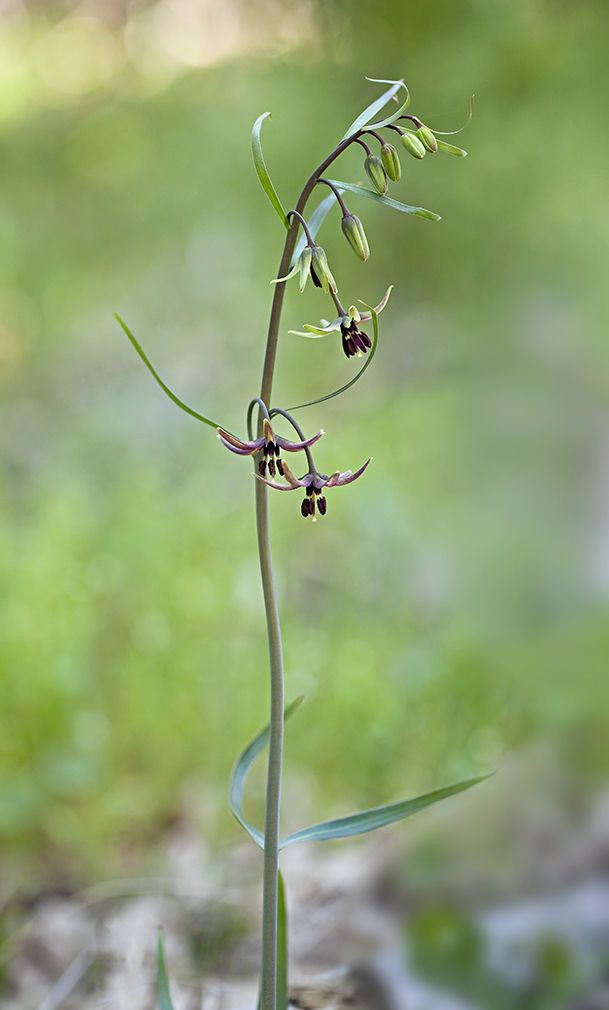
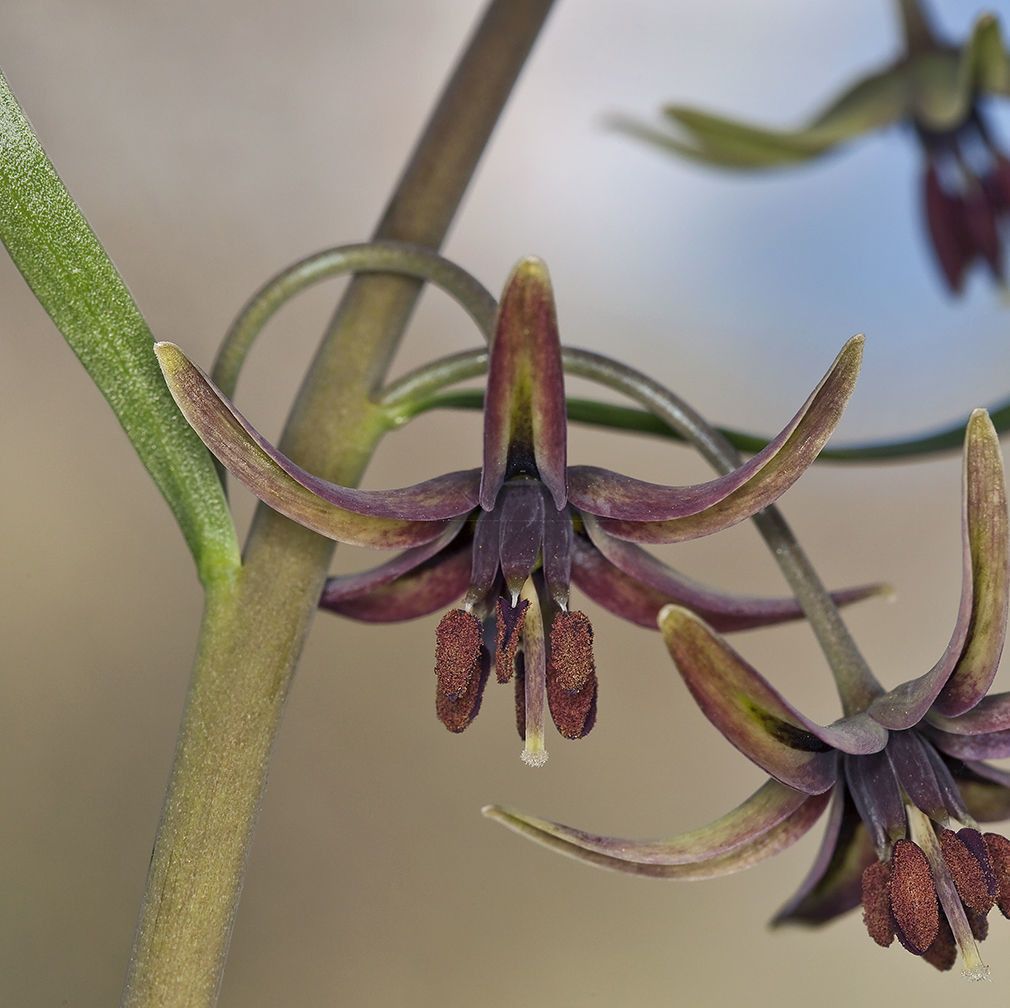
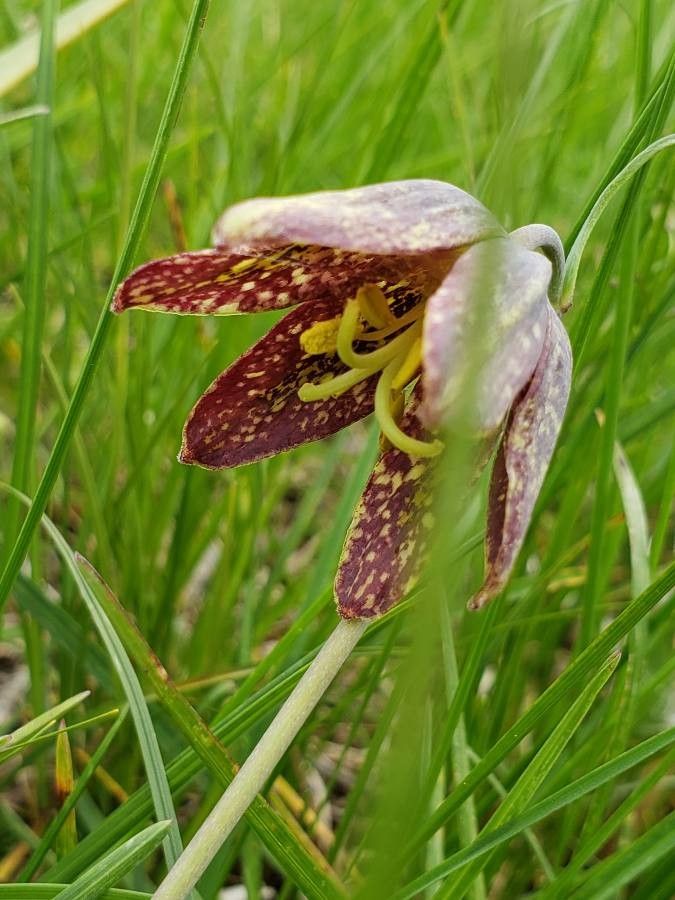
Fritillaria brandegeei, commonly known as Brandegee's fritillary, is a perennial herbaceous plant in the Liliaceae family. Native to the western United States, it thrives in rocky areas and meadows at elevations between 1,500 and 3,500 meters.
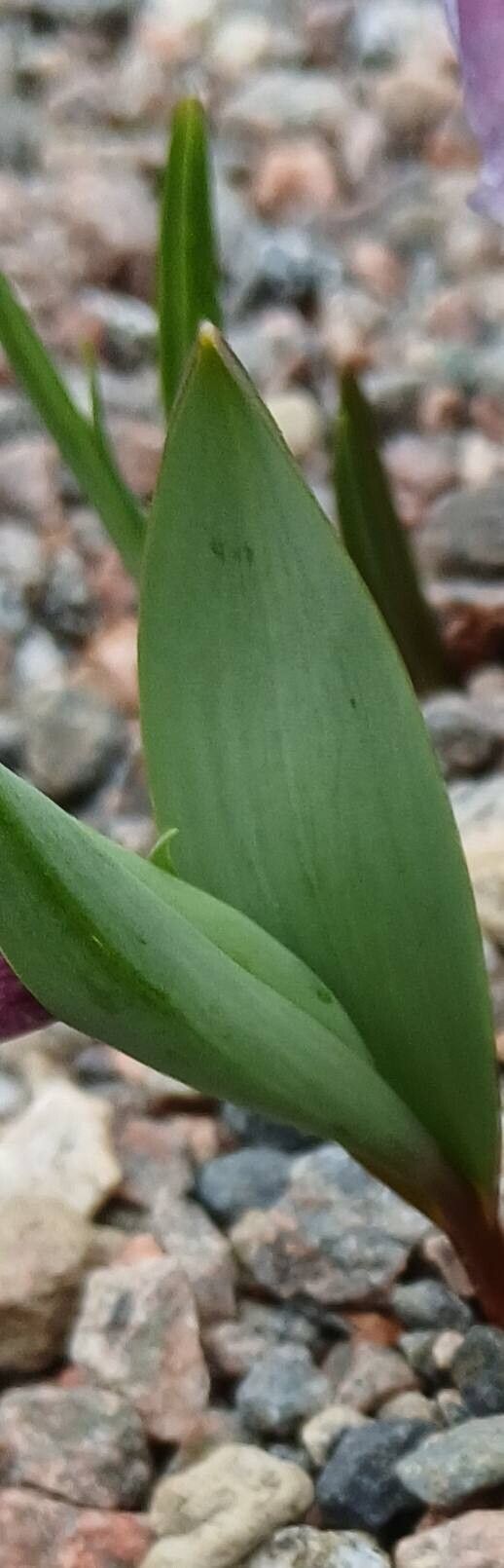
This plant grows up to 30 centimeters tall and features a single stem with one or two narrow, lance-shaped, bluish-green leaves. The bell-shaped flowers, adorned with six reddish-brown petals with yellow markings on the inside, bloom from April through June and attract pollinators such as bees and butterflies.
Some Native American tribes have utilized Fritillaria brandegeei for medicinal purposes, particularly for treating respiratory ailments. The plant prefers well-drained soil and can grow in either full sun or partial shade. It is propagated through seed or bulb division during its dormant period in late summer or early fall.
Unfortunately, due to habitat loss from human activities such as mining, grazing, logging, and road construction, Fritillaria brandegeei was listed as an endangered species in 1997 under the Endangered Species Act. Conservation efforts focus on habitat restoration and seed propagation programs to protect and increase the population of this rare species over time.
Botanical profile.
- Genus
- Fritillaria
- Family
- Liliaceae
Other names.