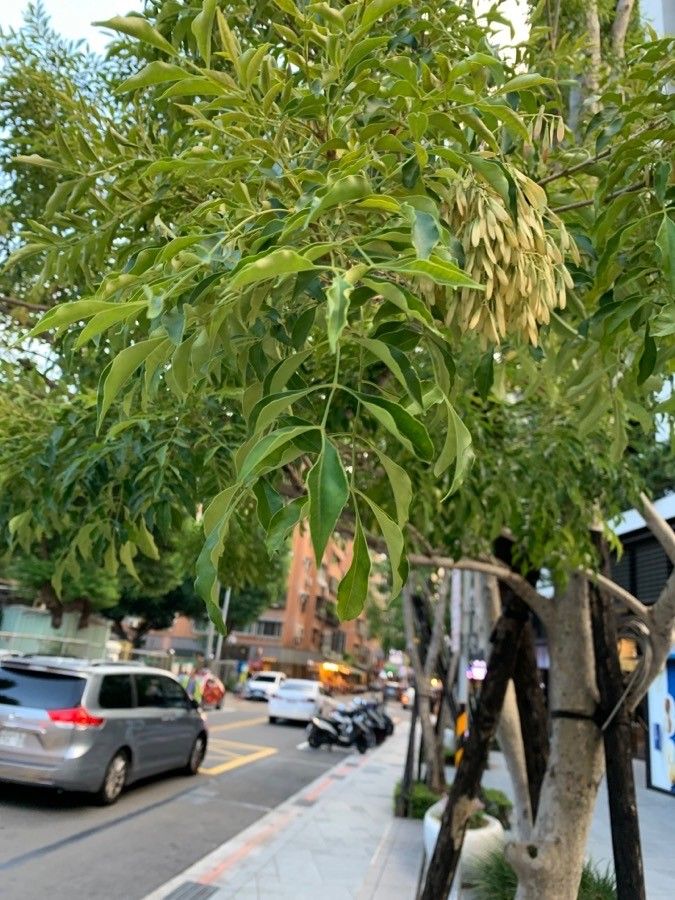
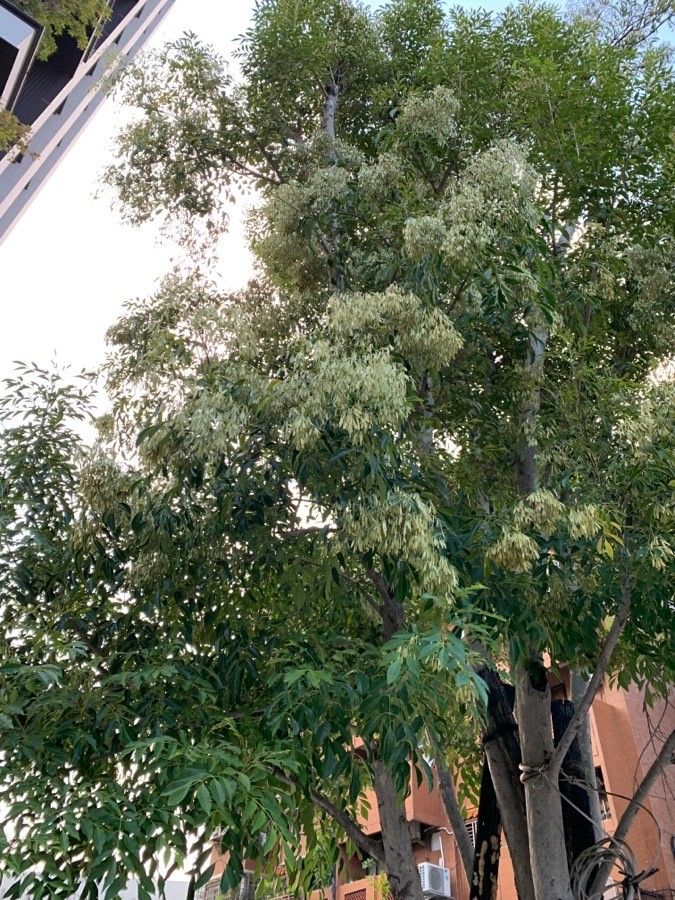
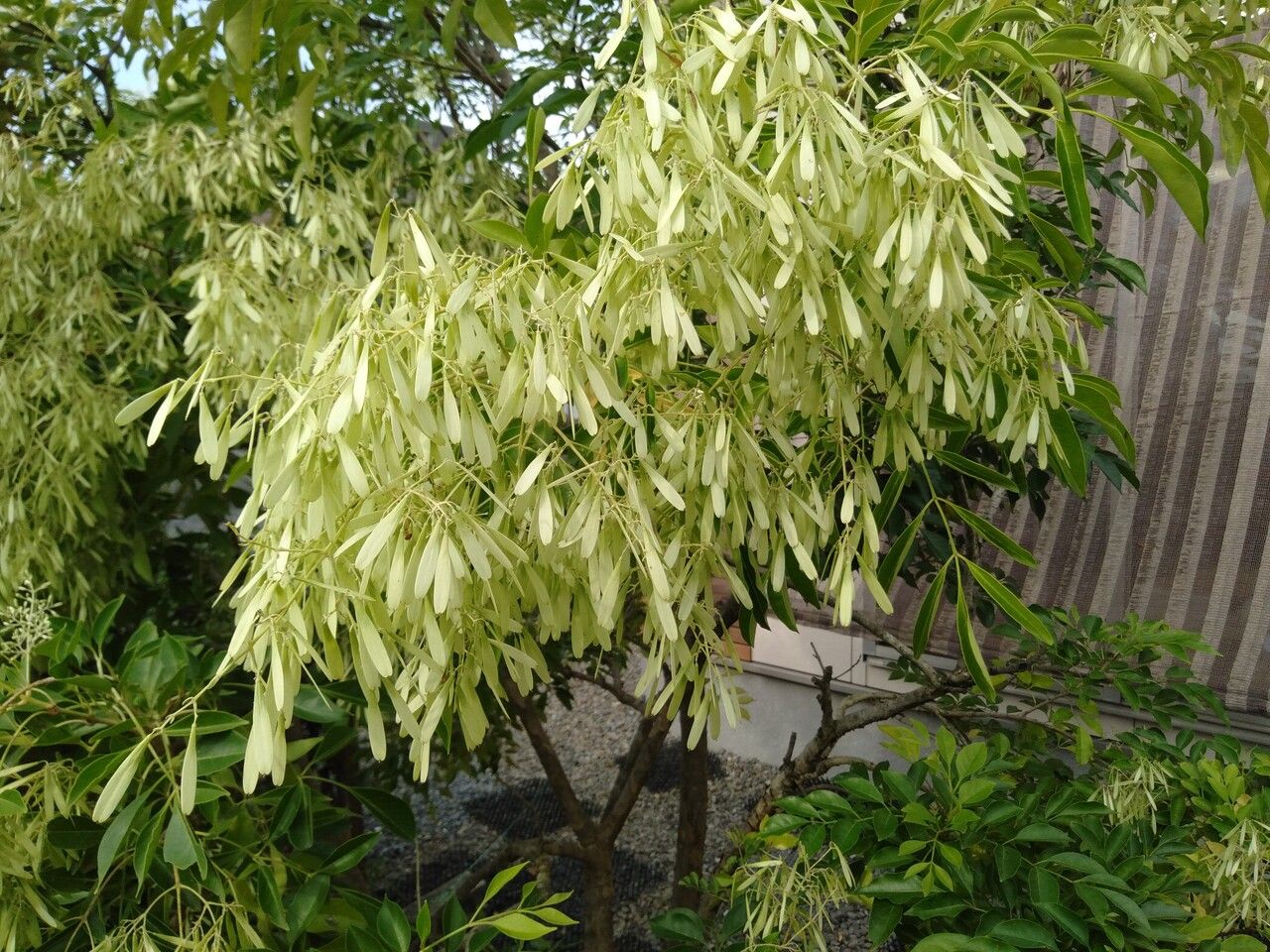
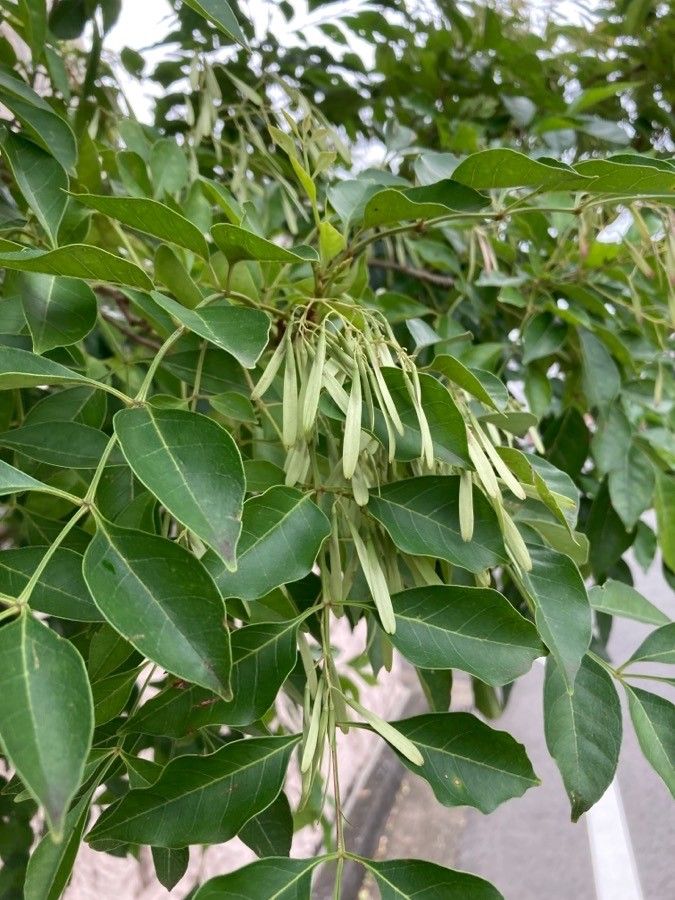
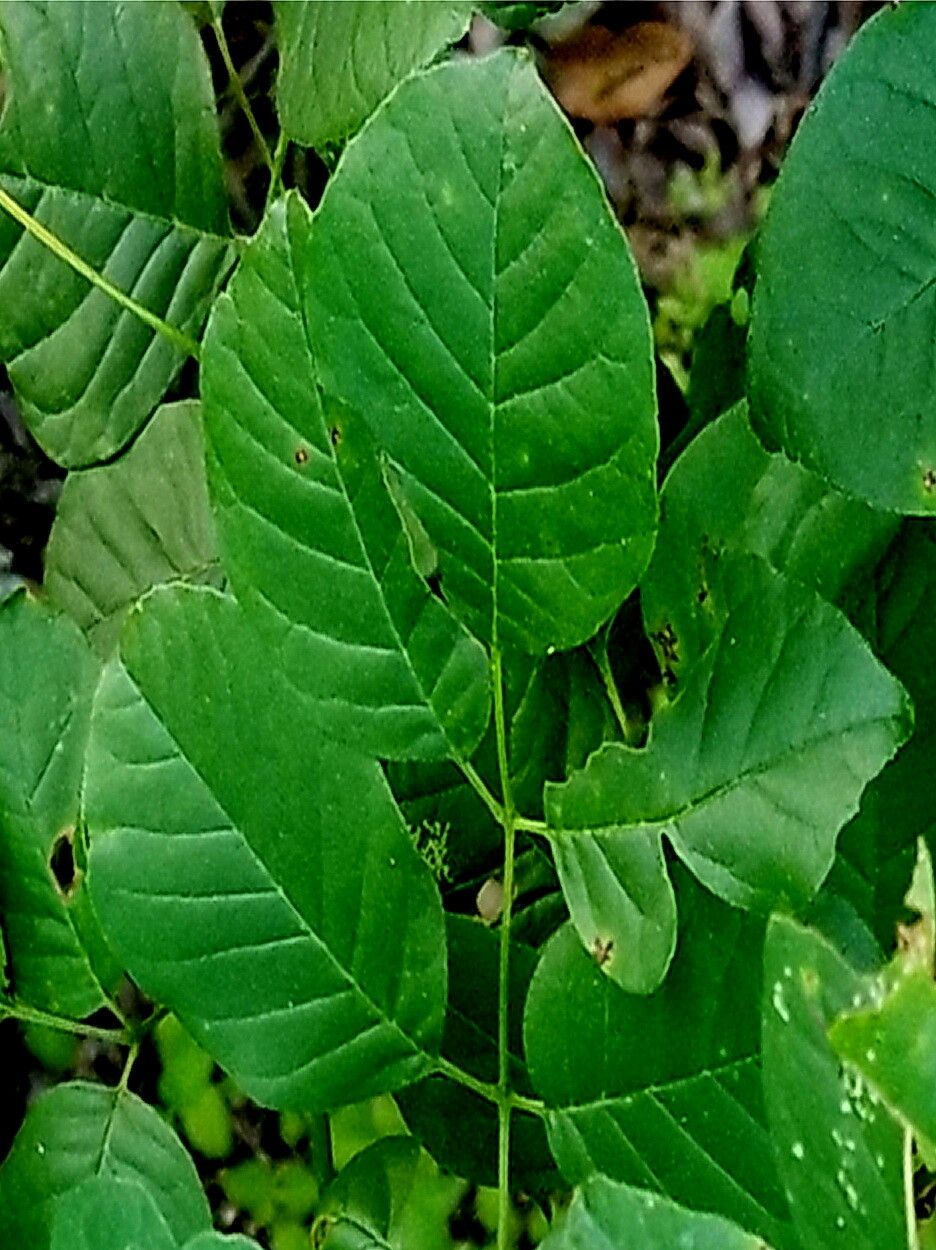
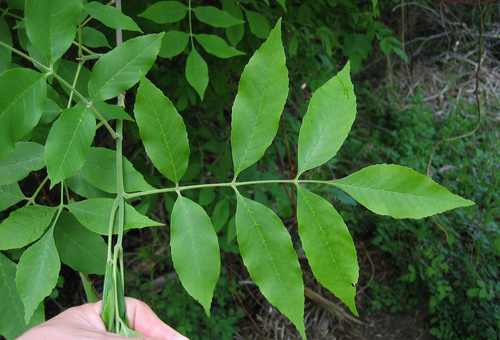
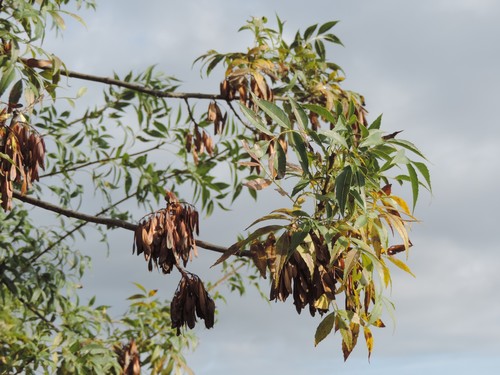
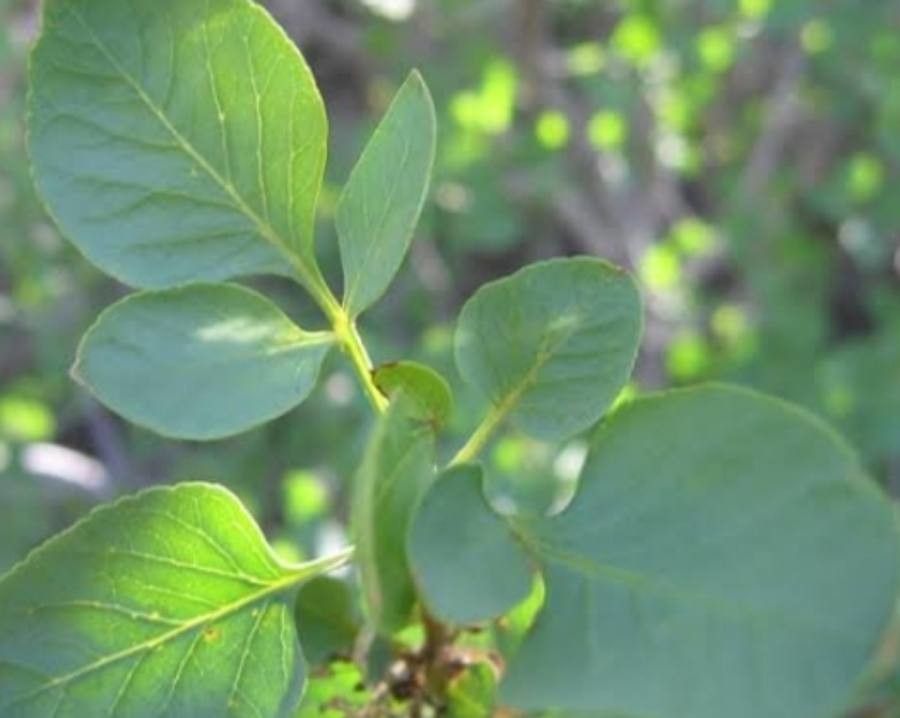
Fraxinus griffithii, commonly known as Griffith's ash, is a deciduous tree belonging to the Oleaceae family. Native to the Himalayan region, it can be found in countries such as India, Nepal, Bhutan, and China. This tree can grow up to 20 meters tall with a trunk diameter of up to 1 meter.
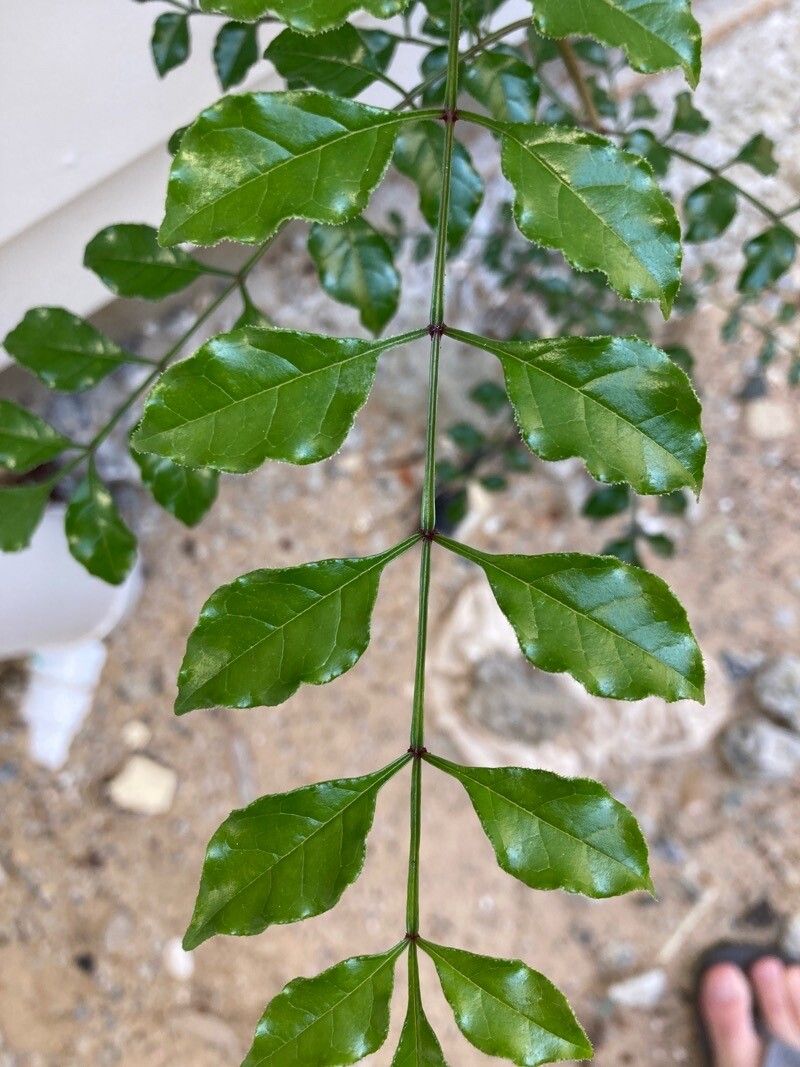
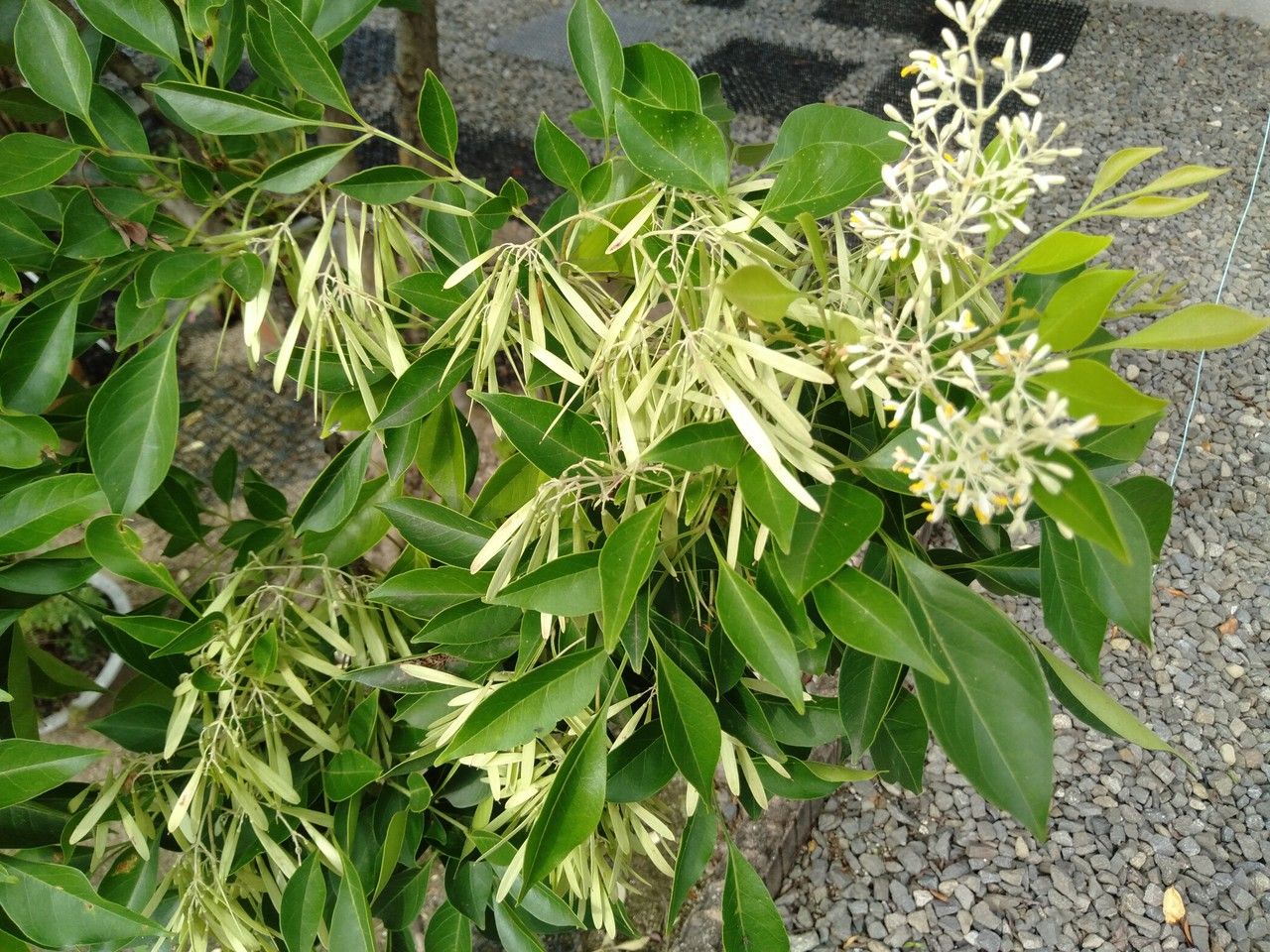
The leaves of Fraxinus griffithii are compound, consisting of 5-9 ovate-lanceolate leaflets with serrated margins and a dark green color. Its flowers are small and inconspicuous, featuring greenish-white petals that bloom in clusters during the spring.
The fruit of Fraxinus griffithii is a samara, which consists of two winged seeds attached at one end. These light-weight samaras ripen in autumn and easily fall from the tree.
This exotic tree is excellent for street planting, but it has been classified as an invasive species in Australia. It is an evergreen tree that, unlike many other ash trees, blooms in the spring. FUN FACT · FROM THE LIBRARY
Fraxinus griffithii has several uses. Its strong wood is used in timber production due to its resistance to decay caused by fungi and insects. Additionally, the bark extracts of this tree have medicinal properties and have been used to treat fever, coughs, and other respiratory ailments.
However, this species faces threats from deforestation activities, leading to its listing as Vulnerable on the IUCN Red List of Threatened Species since 1998. Conservation efforts, such as reforestation programs, need to be implemented to prevent this species from going extinct in the near future.
Griffith's ash demonstrates strong disease resistance and is generally not prone to illnesses. In terms of care, this plant is relatively low-maintenance. When grown outdoors it needs minimal watering, and larger specimens typically do not require pruning. Smaller plants, however, should be pruned after they have bloomed. Griffith's ash is suitable for anyone with an outdoor area, such as a garden or deck, and does not demand much prior care experience.
How to keep Fraxinus Griffithii.
Light
The griffith's ash flourishes with uninterrupted daily light, promoting vigorous growth. Native to areas under clear skies, it tolerates neither too little nor too much illumination. Either extreme can damage the plant, causing stunted growth or leaf scorch.
Water
Griffith's ash is moderately drought-tolerant and thrives when the soil stays consistently moist, ideally requiring watering every 2-3 weeks. This resilient outdoor plant flourishes in a range of climate zones and prefers well-draining soil that retains enough moisture to support its growth cycles.
Temperature
Griffith's ash originates from areas with a temperate climate and generally favors temperatures between 41 and 95°F (5 and 35°C). Seasonal care can include providing shade to protect it from excessive summer heat and applying mulch to insulate it against winter frost.
Fertilizer
The timing of fertilization is important for Griffith's ash. Apply fertilizer in early spring and continue monthly until early summer. Fertilizer encourages attractive blooms and supplies energy during both dormant and active growth periods.
Pruning
Griffith's ash is a small to medium-sized tree known for its attractive foliage and resilience. To maintain its shape and health, prune the tree from early to late winter, focusing on removing dead or crossing branches. Thinning the canopy improves air circulation, which is beneficial for the tree. Regular pruning also promotes vigorous growth and maintains the tree's structural integrity.
Botanical profile.
- Plant Type
- Tree
- Life Cycle
- Perennial
- Genus
- Fraxinus
- Family
- Oleaceae
- Hardiness Zone
- 5-9
- Mature Height
- 10.06 m to 20.12 m
- Mature Spread
- 3.96 m to 4.88 m
- Leaf Color
- Green
- Leaf Type
- Evergreen, Semi-evergreen
- Flower Color
- White
- Flower Size
- 0.25 cm to 0.51 cm
- Bloom Time
- Mid spring, Late spring, Early summer
- Planting Time
- Spring, Autumn
- Harvest Time
- Mid summer
- Native Area
- India, Indonesia, Vietnam, Myanmar, Japan, Philippines, Bangladesh, China
Other names.
Reader questions.
What are the sunlight requirements for Griffith's Ash?
Griffith's ash requires specific sunlight conditions to thrive, which include both full sun and partial sun exposures. Full sun exposure means the plant should receive above 6 hours of sunlight daily, while partial sun exposure refers to about 3-6 hours of sunlight daily. It's important to watch how sunlight moves through your garden to find spots that provide a perfect balance of light and shade, ensuring your plants grow healthy and happy.
What is Griffith's ash and where is it native to?
Griffith's ash, botanically known as Fraxinus griffithii, is native to regions that enjoy a moderate climate. It thrives best in temperatures ranging from 41 to 95°F (5 to 35°C), making it well-suited to areas that don't experience extreme heat or cold. This plant's strong cold resistance and preference for moderate climates highlight its adaptability to a range of weather conditions.
How does insufficient or excessive sunlight affect Griffith's Ash?
Griffith's ash thrives under unhindered daily illumination but is sensitive to both insufficient and excessive sunlight. Originating from clear, sunny habitats, it requires a precise balance of light. Insufficient sunlight can lead to stunted growth, while too much sunlight may cause leaf scorch. To ensure optimal growth, adequate lighting is essential, especially indoors where natural sunlight may be limited. In such cases, artificial lighting such as LED lights can provide the necessary wavelengths for healthy plant growth.
How should Griffith's ash be cared for in seasonal extremes?
Seasonal care for Griffith's ash involves adjustments to manage extreme temperatures. During hot summers, providing shade can help protect the plant from overheating. In contrast, winter care is primarily focused on preventing frost damage. Although Griffith's ash has good cold resistance, it's advisable to mulch the base to insulate against frost. If temperatures are expected to drop below -25°C, additional cold protection measures, such as wrapping the trunk and branches with non-woven fabric or cloth, are recommended. Ensuring the soil is moist before the first freeze is also crucial to help the plant withstand winter and early spring conditions.
What are the signs of insufficient sunlight in Griffith's Ash?
When Griffith's ash doesn't receive enough sunlight, several symptoms can manifest, including smaller new leaves, leggy or sparse growth, faster leaf drop, slower or no new growth, and lighter-colored new leaves. Conditions like chlorosis, sunscald, leaf curling, wilting, and leaf scorching may also occur from excessive sunlight, indicating the importance of maintaining an ideal balance in light exposure for the plant's well-being.
What are the symptoms of low and high temperature stress in Griffith's ash?
Griffith's ash displays distinct symptoms under temperature stress. Low temperature stress occurs when conditions fall below -25°C, leading to brittle and dry branches in spring with no new shoots emerging. The primary solution is to prune any dead branches that fail to produce new leaves. High temperature stress is evident when summer temperatures exceed 38°C, causing leaves to lighten in color, tips to dry and wither, and increased susceptibility to sunburn. Solutions include trimming sunburned and dried parts, providing shade during the hottest parts of the day, and maintaining soil moisture with morning and evening watering.
How can I address sunlight-related issues in Griffith's Ash?
Addressing sunlight-related issues in Griffith's ash involves gradual adjustments to its lighting environment. Indoors, you can gradually move your plant to a sunnier location weekly until it receives at least 6 hours of sunlight daily, or use artificial lighting if the plant is large or immobile. For outdoor plants, also gradually adjust their position to sunnier spots to avoid sunburn. Pruning obstructive branches and considering transplantation during the plant's dormant period can also improve sunlight exposure. Remember, while parts of the plant affected by lack of sunlight may not recover, new growth will be healthy with improved light exposure.