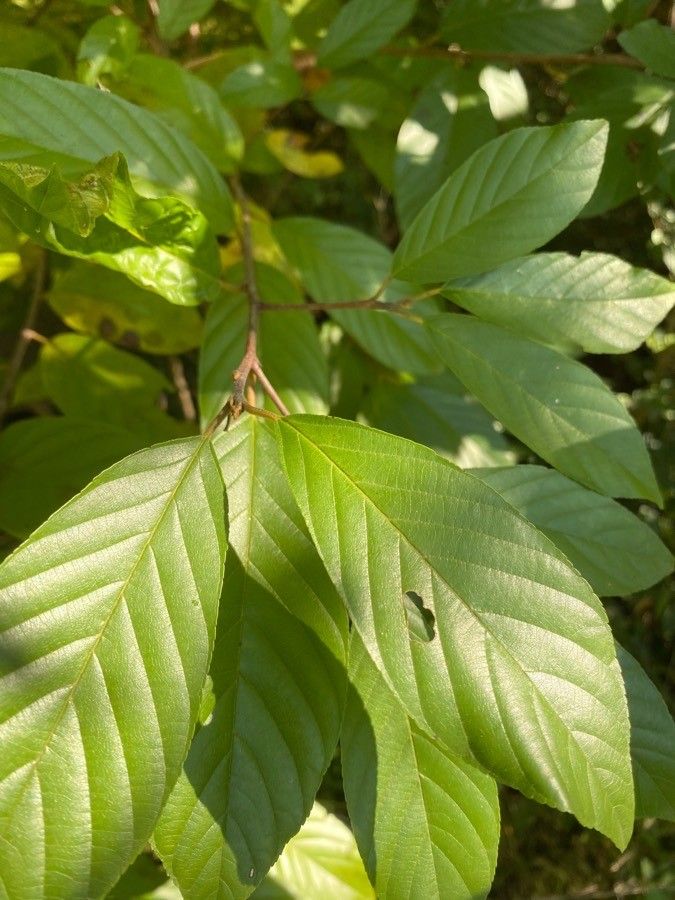
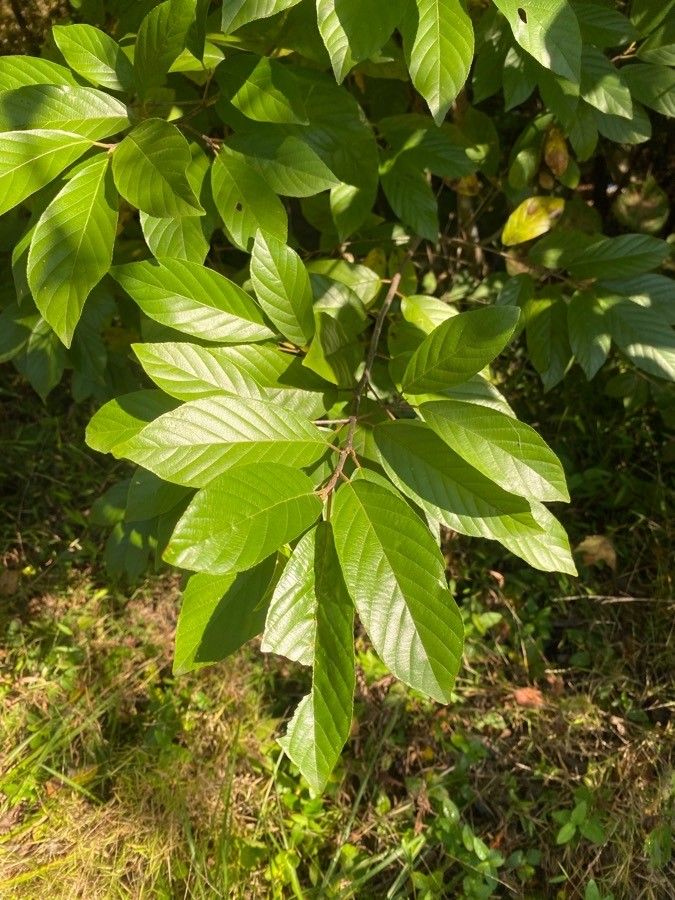
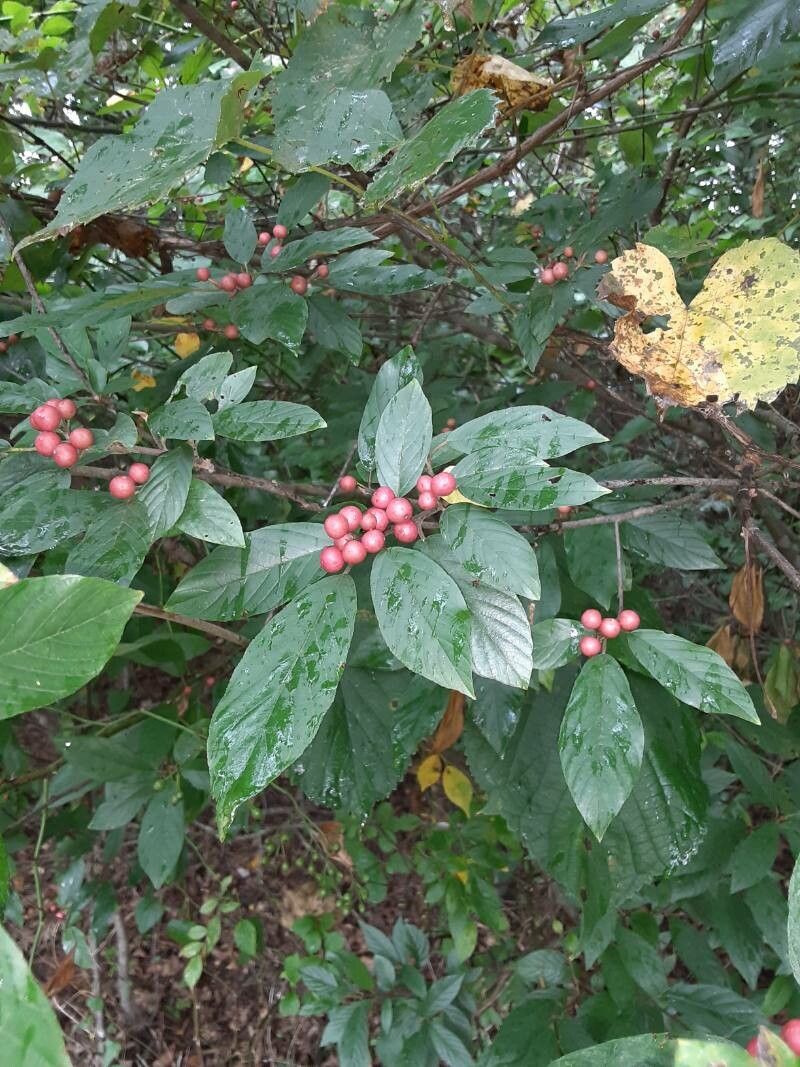
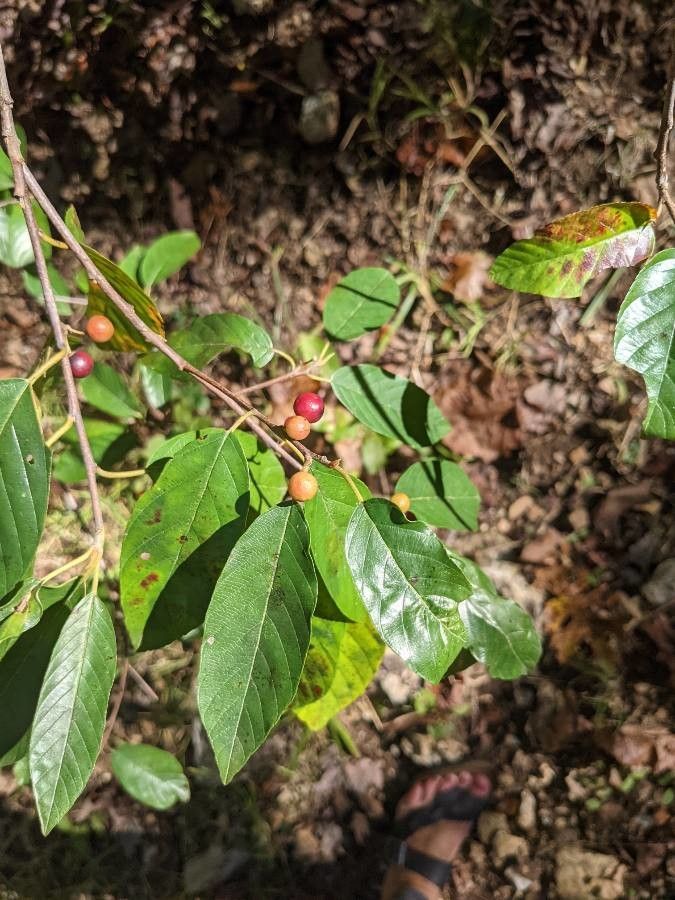
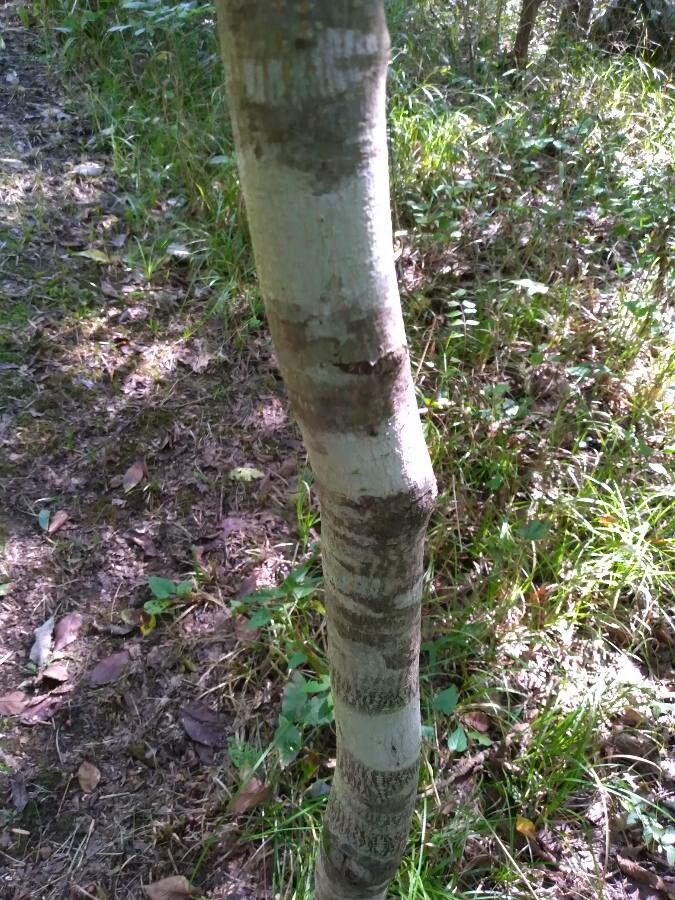
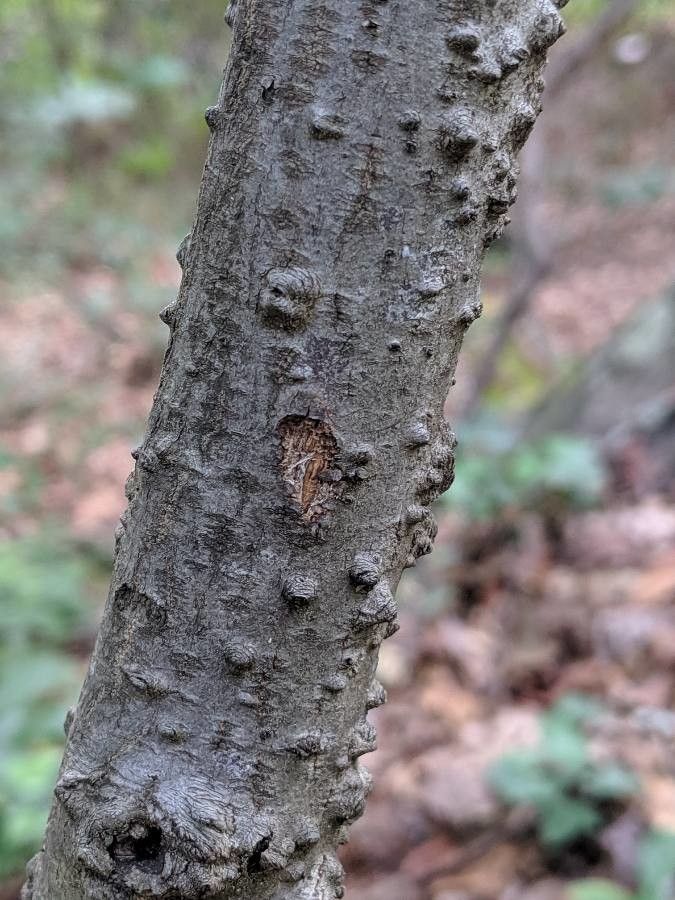
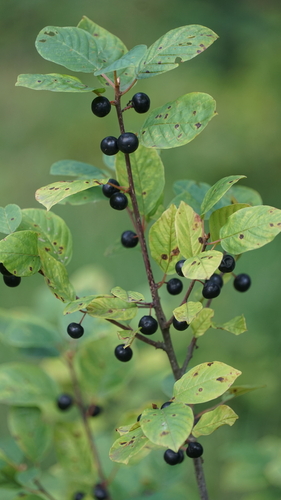
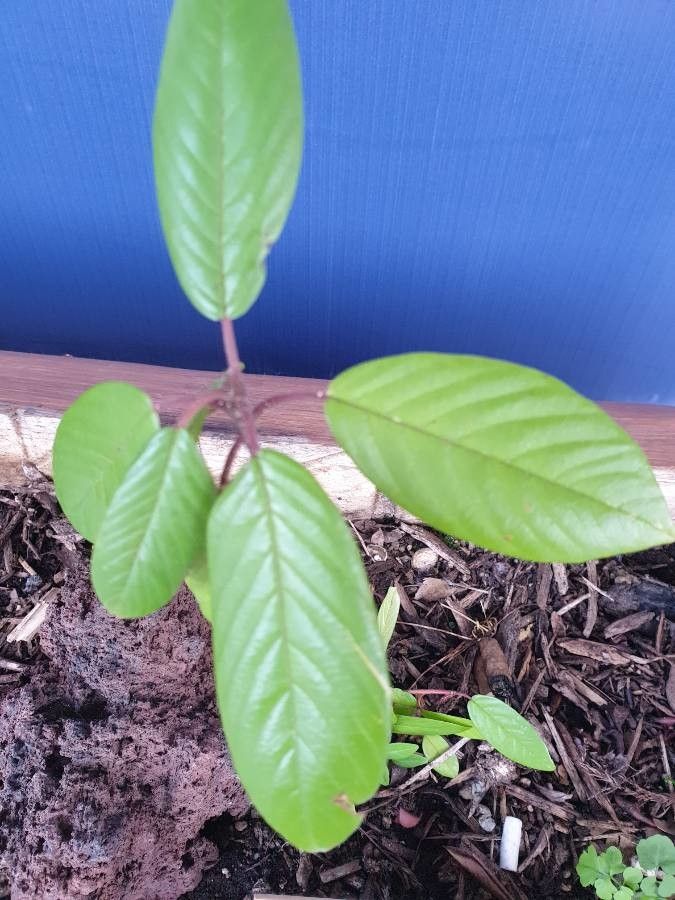
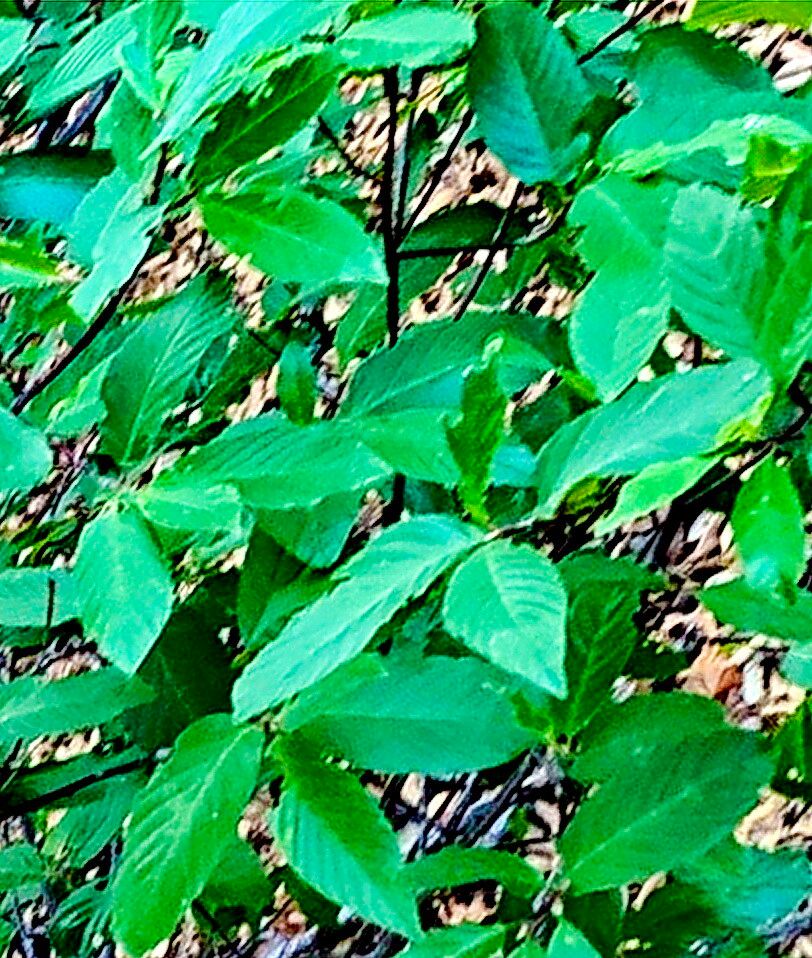
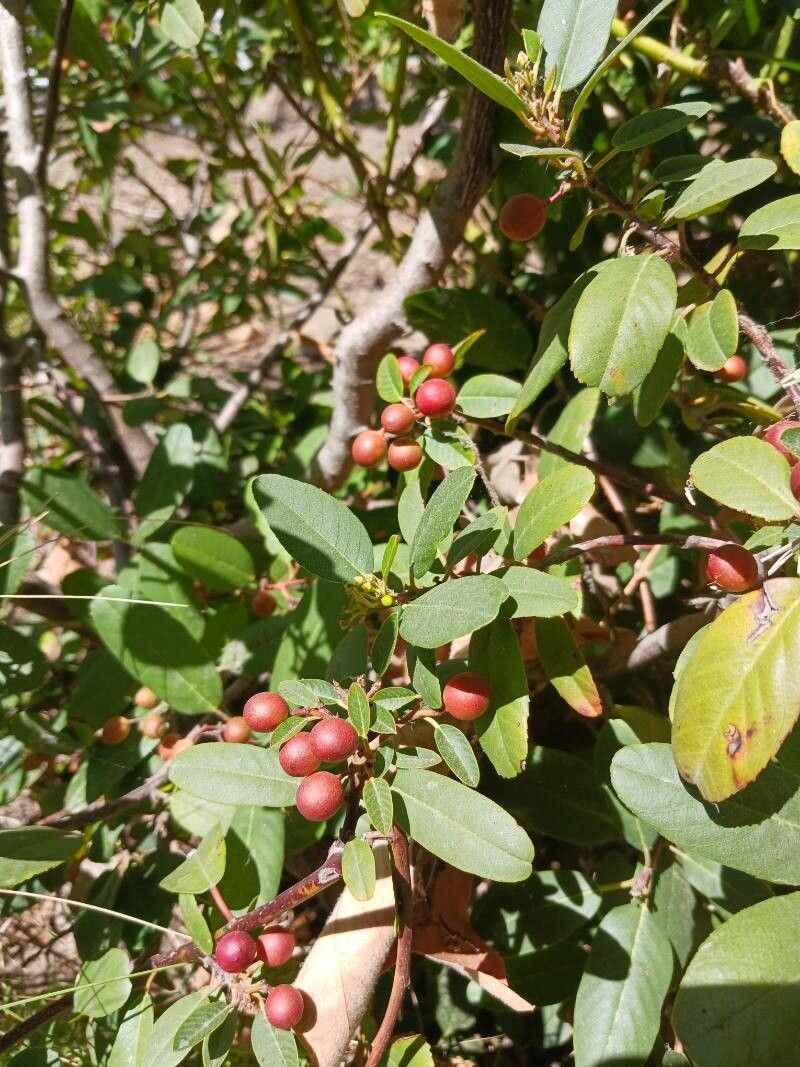
Frangula caroliniana, commonly called the Carolina buckthorn, is a deciduous upright shrub or small tree native to the southeastern, south-central, and mid-western parts of the United States, from Texas east to Florida and north as far as Maryland, Ohio, Missouri, and Oklahoma. There is also an isolated population in the State of Nuevo León in northeastern Mexico. It is found in a wide variety of habitats, including barrens, forests, and limestone bluffs.
Carolina buckthorn shows good resistance to disease and is generally not prone to ailments. Regarding care, this plant is fairly low-maintenance. When grown outdoors it needs only minimal watering, and larger specimens typically do not require pruning. Smaller plants, however, should be pruned after they finish blooming. Carolina buckthorn is appropriate for anyone with outdoor space, such as a garden or deck, and does not demand extensive gardening experience.
How to keep Frangula Caroliniana.
Light
Carolina buckthorn does best in locations that receive ample sunlight each day. While full sunlight exposure is ideal, it can adapt to areas where light is partially filtered through foliage. Its vigorous growth is reduced if light levels are notably low or excessively intense, affecting overall vitality.
Water
Carolina buckthorn thrives in humid environments and needs plenty of water. Ideally, it should be watered every 1-2 weeks. As an evergreen, it keeps its leaves year-round, requiring consistent watering even during colder months to maintain optimal hydration levels.
Temperature
The carolina buckthorn prefers a moderate temperature range of 41 to 95 ℉ (5 to 35 ℃) and originates from areas with temperate climates. In warmer seasons, the carolina buckthorn can endure higher temperatures if it is given sufficient water and shade. In colder months, it should be protected from frost and freezing temperatures.
Fertilizer
To encourage healthy growth, fertilize your Carolina buckthorn in early spring. Regular fertilization improves overall health, producing vigorous growth, greater tolerance of challenging conditions, and enhanced resistance to pests and diseases. Adhere to a specific fertilization schedule for your Carolina buckthorn to maintain lush foliage with deep color and a vibrant appearance.
Pruning
Carolina buckthorn is known for its attractive foliage and berries. To keep the plant healthy and visually appealing, prune it in early spring. Focus on removing dead branches and thinning crowded areas to improve air circulation. Avoid heavy pruning to preserve berry production and maintain its aesthetic charm. This approach will help ensure a well-structured plant that enhances both the resilience and attractiveness of your garden.
Botanical profile.
- Plant Type
- Shrub
- Life Cycle
- Perennial
- Genus
- Frangula
- Family
- Rhamnaceae
- Hardiness Zone
- 5-9
- Mature Height
- 3.66 m to 6.1 m
- Mature Spread
- 3.05 m to 4.57 m
- Leaf Color
- Green, Yellow, Gold
- Leaf Type
- Deciduous
- Flower Color
- White
- Flower Size
- 0.25 cm to 0.51 cm
- Bloom Time
- Late spring, Early summer, Mid summer
- Planting Time
- Summer
- Harvest Time
- Mid summer, Late summer
- Native Area
- Mexico
Other names.
Reader questions.
What's the best way to water my Carolina buckthorn tree?
To promote excellent root development, consider using a garden hose placed at the base of your plants. Be cautious not to spray the leaves directly, especially if they are exposed to direct sunlight outdoors. Adding bubblers to each plant can help keep the roots moist. Soaker hoses are useful for watering the entire garden or bed, allowing the roots to be deeply nourished when adding or removing plants. Afterwards, make sure to drain any excess water and wait for the soil to dry before watering again. Watering at ground level is recommended to prevent diseases. On sunny days, it may be beneficial to spray the entire bush with water. Keep in mind that whether your Carolina buckthorn is in a pot or in the ground, deep watering is preferred over light sprinkling.
Why should I put fertilizer on my Carolina buckthorn?
To ensure that your Carolina buckthorn thrives, it is important to fertilize it regularly. Regardless of the type of Carolina buckthorn you have, providing the proper nutrients will promote robust growth and enhance its ability to withstand challenging environmental conditions as well as fend off diseases and pests. The foliage of your Carolina buckthorn is particularly attractive, so it is essential to maintain it. This involves following a consistent fertilization schedule that is tailored to your specific Carolina buckthorn. By doing so, you can expect your Carolina buckthorn to produce deeply colored leaves and have an overall lush appearance.
What are the sun requirements for Carolina buckthorn?
Carolina buckthorn thrives in conditions where it receives ample sunlight throughout the day. It requires full sun, defined as more than 6 hours of direct sunlight daily, but it can also adapt to partial sun, receiving about 3-6 hours of sunlight. Observing how sunlight moves through your garden helps in choosing spots that provide the right balance of light and shade, essential for the plant's health.
What is the ideal temperature range for Carolina Buckthorn?
The Carolina Buckthorn thrives in a moderate temperature range of 41 to 95°F (5 to 35°C), native to temperate climates. During warmer seasons, it tolerates higher temperatures well if provided with sufficient water and shade. Although it has strong cold resistance, during colder months, it's advisable to protect the plant from frost and freezing temperatures, especially if they drop below the critical growth limit. Adequate watering before the first freeze in autumn to keep the soil moist can help the plant endure winter and early spring better.
What should I do if I give Carolina buckthorn too much or too little water?
If you notice an overwatered Carolina buckthorn, you may see yellow, wilting leaves that eventually fall off. The plant will appear dull and unhealthy, with mushy stems. It's important to adjust your watering schedule when you see these signs. Conversely, wilting can also be a sign of under watering, causing leaves to become crispy and dry. If the soil is dry and watering alone doesn't help, give the plant a thorough watering. This will help the Carolina buckthorn recover, although it may still have dry, yellow leaves due to damage to the roots. Once it returns to normal, the yellowing of leaves will stop. When tending to a Carolina buckthorn indoors, always check the moisture levels in the pot. Avoid overwatering and be on the lookout for black spots. If you see black spots, stop watering the plant for a few days to let the soil dry out. Overwatering can lead to root rot, so if you notice discolored and slimy roots, consider transferring the plant to a different pot. Preventing root rot is crucial; don't let the soil become too soggy. When planting a Carolina buckthorn outdoors, dig deeper and check the moisture level of the soil. If it's too dry, it may indicate under watering. Adequate watering is necessary for the plant's recovery.
When should I fertilize my Carolina buckthorn?
To ensure healthy growth for your Carolina buckthorn, it is recommended to fertilize it for the first time in late winter or early spring. This will provide the necessary nutrients for the buckthorn to thrive when the weather warms up. Additionally, if you live in a warm climate region, it is beneficial to give your Carolina buckthorn an extra fertilizer feeding in early fall. This will supply additional nutrients for the next growing season and make the buckthorn more resilient to winter cold, preventing foliage damage. Fertilizing earlier in the fall will allow enough time for new branches to develop and withstand the cold winter.
What are the essentials for growing Carolina buckthorn effectively?
For optimal growth, Carolina buckthorn should be planted in areas that receive generous daily sun exposure. While it prefers the fullest intensity of sunlight, it is adaptable and can grow in light filtered through foliage. Its growth and vitality might suffer if it's either in very low light or exposed to excessively strong sunlight. If necessary, particularly for indoor plants or during less sunny seasons, artificial lighting can be used to supplement natural light. LED lights are recommended, with intensity and duration tailored to the plant's needs.
How do I protect Carolina Buckthorn in winter?
Carolina Buckthorn generally has strong cold resistance, so special frost protection measures aren't usually necessary. However, in winters with temperatures expected to fall below its tolerance limit, protecting the plant can be beneficial. This protection could include wrapping the trunk and branches with non-woven fabric or cloth to keep them from freezing. Before the onset of winter, it's also recommended to water the plant thoroughly, ensuring the soil is moist as it freezes, aiding in drought and water scarcity prevention during the colder months.
How frequently should I water my Carolina buckthorn plant?
The Carolina buckthorn prefers deep and infrequent watering, especially when it is planted in pots. Since pots have limited water storage, the soil dries out faster and watering is required every 3 to 5 days in cold regions. It is best to water early in the morning when the soil is dry, both outdoors and indoors. You can also check the soil inside the pot to determine if watering is needed - if the top 2-3 inches of soil are dry, it's time to give the plant a full watering. On hot days, it's important to monitor the soil moisture daily as the heat can quickly dry it out. If you have a garden, irrigation of the soil is necessary. In hot climates, watering once a week is recommended, but only when about 2 to 3 inches of soil have become too dry. Take into consideration the amount of rainfall and refrain from watering if there has been plenty. Carolina buckthorn typically grows during spring and fall, so when they are outdoors, adding mulch about 3 to 4 inches deep can help conserve water. Sandy soil drains faster, so more frequent watering is needed, while clay soil requires less frequent watering to avoid rotting the roots. It might be helpful to mark the watering dates on a calendar and keep an eye on the leaves - if they start to droop, it may be an indication that watering is needed soon.
When is not a good time to fertilize my Carolina buckthorn?
There are specific times during the year when you should avoid fertilizing your Carolina buckthorn. The first time is during the early and mid-winter months when the plant is dormant and does not require any feeding. Additionally, it is not advisable to fertilize the plant in the late spring and throughout the summer. During this period, the weather is usually hotter and drier, increasing the chances of a negative reaction to fertilization. To prevent any problems, it is best to stick to a fertilization schedule that focuses on early spring and early fall.
What symptoms indicate Carolina buckthorn is not receiving enough light?
Carolina buckthorn exhibits several symptoms when light conditions are suboptimal. These include smaller new leaves, leggy or sparse growth, faster leaf drop, slower or halted new growth, and lighter-colored new leaves indicating insufficient sunlight. Exposure to excessive sunlight can lead to chlorosis (yellowing of leaves), sunscald, leaf curling, wilting, and leaf scorching. Each symptom suggests an adjustment in the plant's light exposure is necessary for its health.
What should I do if my Carolina Buckthorn has been exposed to low temperatures?
If exposed to temperatures below its minimum tolerance, the Carolina Buckthorn's branches might become brittle, dry, and devoid of new shoots by spring. In such cases, it's advisable to prune away any dead branches that have failed to produce new leaves once spring arrives. This proactive measure ensures that the plant maintains its health and appearance despite the winter's challenges.