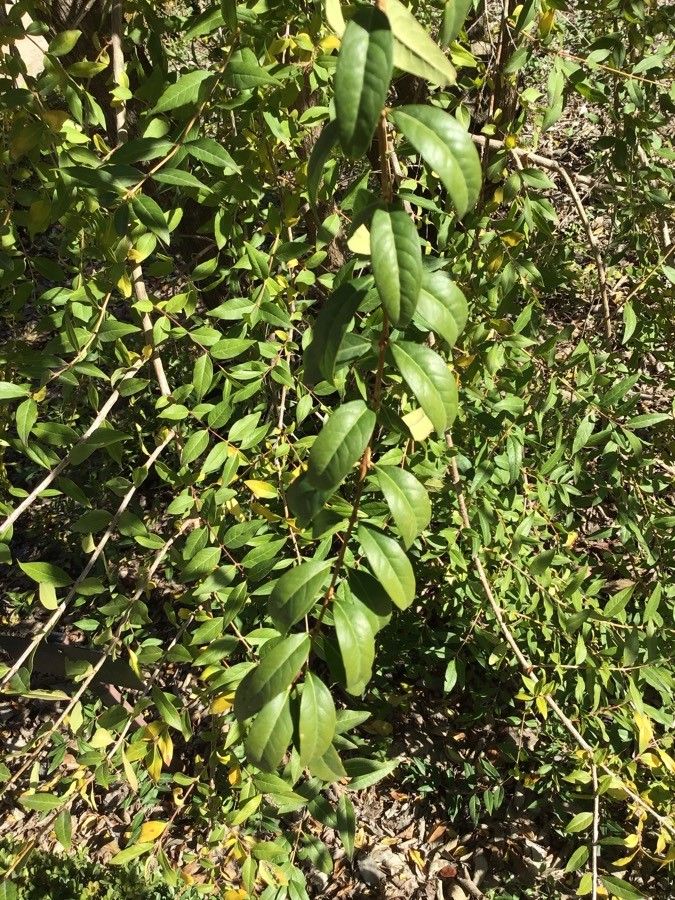
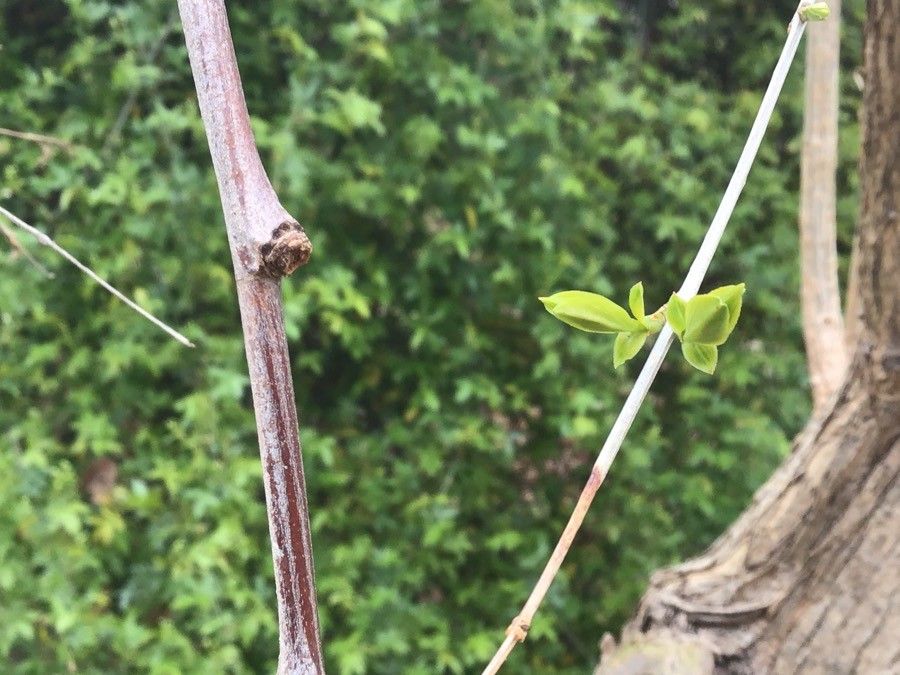
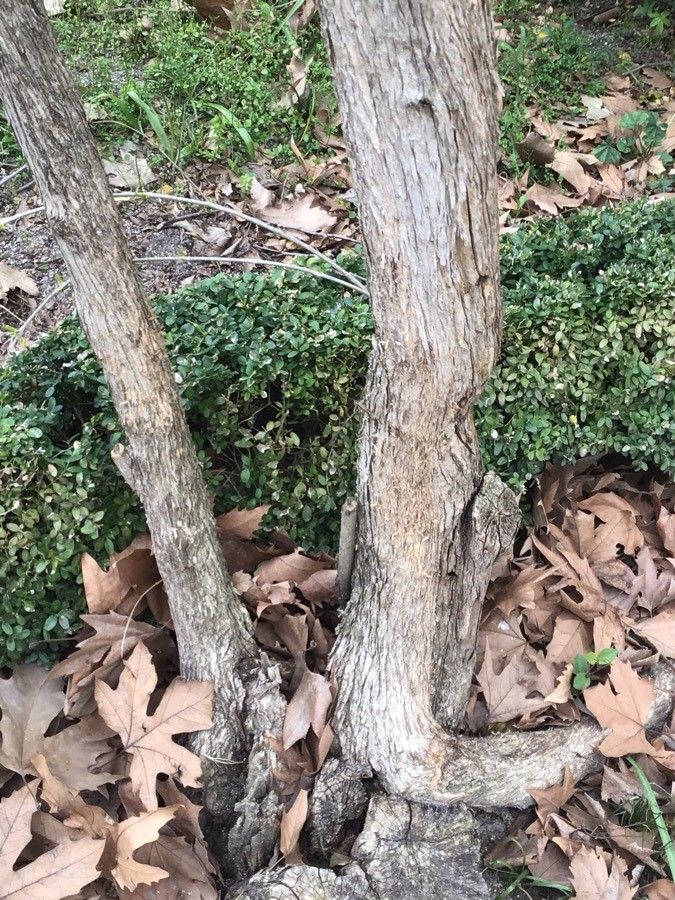
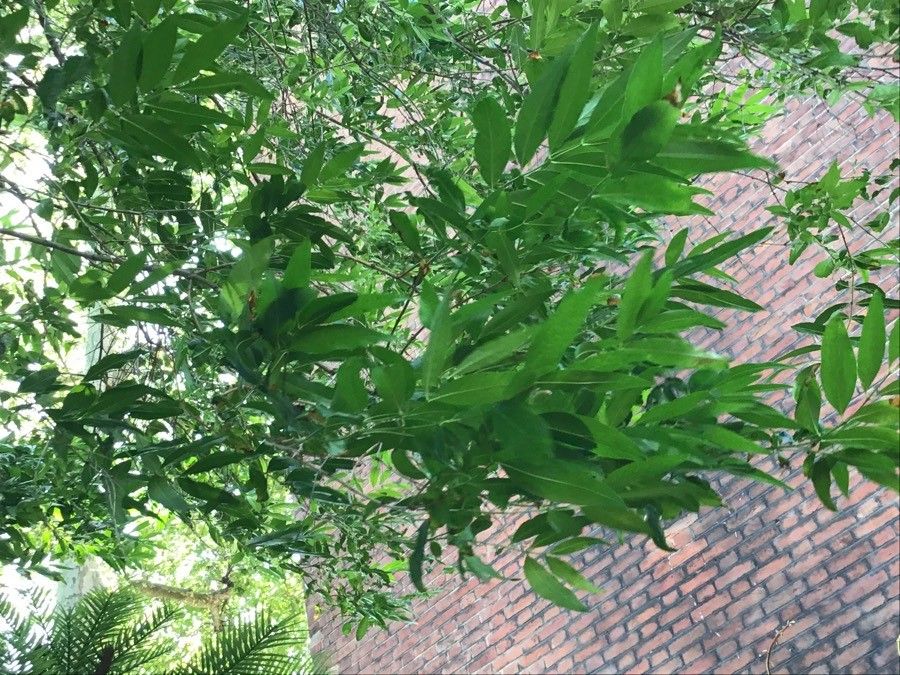
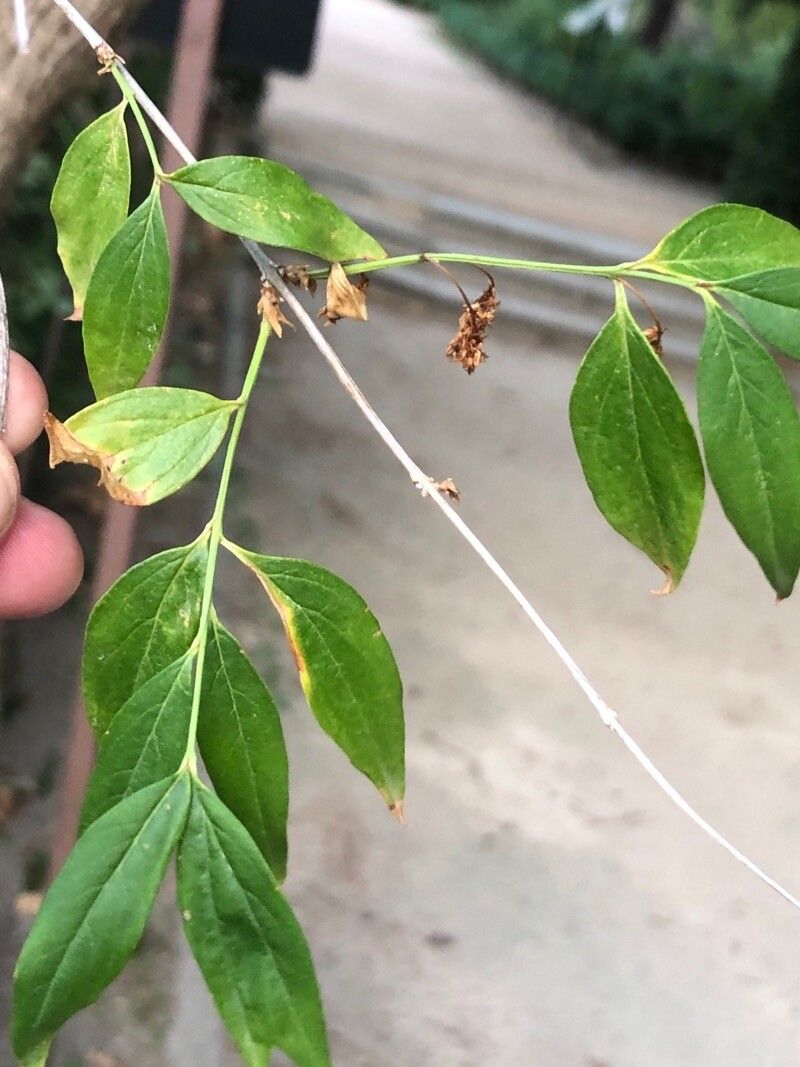
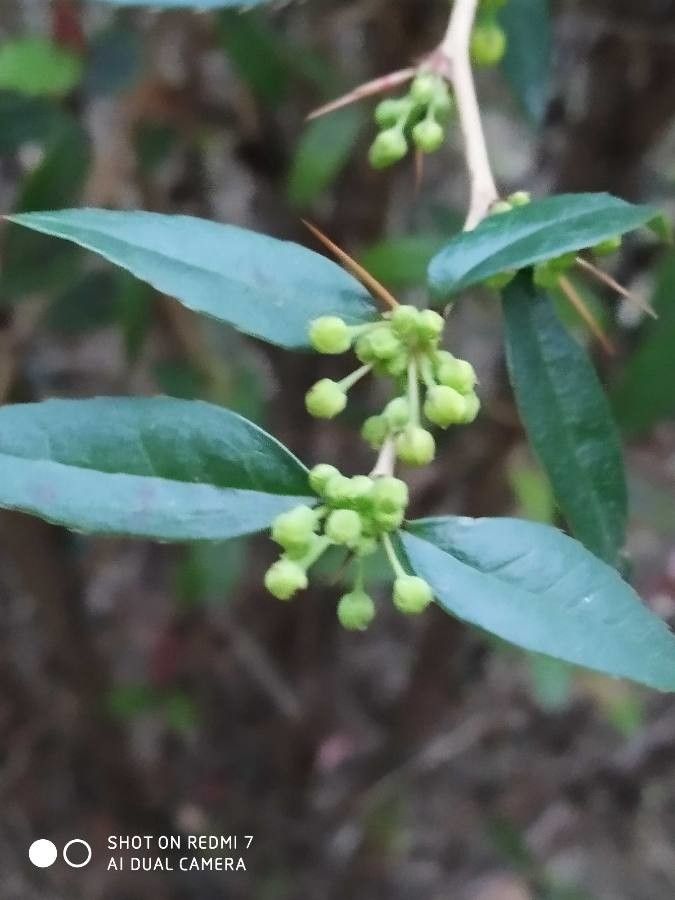
Fontanesia is a genus of flowering plants in the family Oleaceae, usually treated as comprising a single species Fontanesia phillyreoides, though some authors split this into two species (see below). It is native to southern Europe (Sicily), southwestern Asia (Lebanon, Syria, Turkey) and eastern Asia (China), with two well-separated populations.It is a deciduous shrub growing to 8 m tall. The leaves are opposite, lanceolate to narrow ovate, 3–12 cm long and 8–26 mm broad, with an acute apex and a usually entire margin, sometimes finely serrated. The flowers are white, with a deeply four-lobed corolla; they are produced in panicles 2–6 cm long. The fruit is a flat samara, surrounded by a wing.There are two subspecies, often treated in the past as separate species. Despite the distance separating the two, the differences between them are minimal; the leaves of subsp. phillyreoides are sometimes cited as having finely serrated margins, but this character is not reliable. Fontanesia phillyreoides subsp. phillyreoides. Italy, Turkey, Syria, Lebanon. Leaves up to 8 cm long, dull green above. Fontanesia phillyreoides subsp. fortunei (Carr.) Yalt. (syn. F. fortunei Carr.; F. phillyreoides var. sinensis Debeaux). China (Anhui, Hebei, Henan, Hubei, Jiangsu, Shaanxi, Shandong, Zhejiang). Leaves up to 12 cm long, glossy green above.The species epithet was originally published erroneously as "philliraeoides", but this a correctable error, because it refers to the genus Phillyrea.
Syrian-privet shows strong resistance to disease and is generally not prone to illnesses. In terms of care, this plant is fairly low-maintenance. When grown outdoors it needs only light watering, and larger plants typically do not require pruning. Smaller plants, however, should be pruned after they have bloomed. Syrian-privett is suitable for anyone with an outdoor area, such as a garden or a deck, and does not demand much gardening experience.
How to keep Fontanesia Phillyreoides.
Light
The Syrian-privet flourishes in full sunlight conditions, however, it can also withstand areas with less sunlight. Due to its inherent characteristics, it is able to cope with suboptimal lighting conditions. Nevertheless, overexposure or underexposure must be avoided as it hampers its growth and health.
Water
Syrian privet thrives in semi-arid environments, showing a tolerance for drought conditions. It requires watering every 2-3 weeks. Although it is mostly grown outdoors, maintaining consistent soil moisture during the growing season promotes healthier growth and enhances its resilience to temperature fluctuations.
Temperature
The Syrian-privet plant originates from regions with a mild climate, favoring temperatures between 50-95 °F (10-35 ℃). These temperature requirements indicate its adjustment to fluctuating seasons in its natural habitat. During hotter or colder seasons, adapt its surroundings to its desired temperature range for the best growth.
Fertilizer
The timing for fertilizing the Syrian-privet is critical. Begin the process in the early spring and continue on a monthly basis until the onset of early summer. Supplying it with fertilizer aids in the generation of beautiful blossoms and offers energy during both resting and active growth stages.
Pruning
The Syrian privet is a popular ornamental plant known for its lance-shaped leaves and fragrant flowers. To ensure healthy growth, improve air circulation, and maintain its shape, it's best to prune the plant in early spring. Regular pruning encourages a denser canopy and increases flowering, enhancing its decorative appeal.
Botanical profile.
- Plant Type
- Shrub
- Life Cycle
- Perennial
- Genus
- Fontanesia
- Family
- Oleaceae
- Hardiness Zone
- 6-9
- Mature Height
- 7.92 m
- Mature Spread
- 2.13 m
- Leaf Color
- Dark Green
- Leaf Type
- Deciduous
- Flower Color
- White, Yellow
- Flower Size
- 2.03 cm to 6.35 cm
- Bloom Time
- Mid spring, Late spring
- Planting Time
- Spring, Summer
- Harvest Time
- Mid summer, Late summer, Early fall
- Native Area
- Turkey, Syria, Lebanon
Other names.
Reader questions.
What are the sunlight requirements for Syrian-privet?
Syrian-privet, also known as Fontanesia phillyreoides, requires full sun exposure of above 6 hours of sunlight a day to thrive but can also tolerate partial sun, which is about 3-6 hours of sunlight. It's essential to observe how sunlight moves through your garden to select the ideal locations that offer a balance of light and shade, ensuring the plant's growth and health.
What are the ideal temperature conditions for Syrian-privet to grow?
Syrian-privet, or Fontanesia phillyreoides, thrives in environments with a moderate climate, where temperatures are between 50-95°F (10-35°C). This range reflects the seasonal variances of its native habitat. However, the plant possesses strong cold resistance, and typically does not require special frost protection measures. If winter temperatures are expected to dip below -25°C, it is recommended to wrap the plant's trunk and branches with non-woven fabric or cloth to offer cold protection. Additionally, watering the plant abundantly before the first freeze in autumn helps keep the soil moist, preventing drought and water scarcity during the colder months.
Can Syrian-privet grow in indoor conditions?
Yes, Syrian-privet can grow indoors under adequate lighting conditions. When natural sunlight is not sufficient, especially during winter or in less sunny spaces, artificial lighting becomes crucial for optimal growth. LED lights are recommended because they can be customized to provide specific wavelengths needed by the plants. Full sun plants require 30-50W per square foot of artificial light, partial sun plants need 20-30W per square foot, and full shade plants require 10-20W per square foot. The light source should be placed 12-36 inches above the plant, and the lighting duration should mimic natural daylight hours, typically 8-12 hours per day.
What should be done if Syrian-privet is exposed to temperatures below its cold tolerance?
Syrian-privet can tolerate low temperatures and thrives best when it's kept above 10°C. In winter, it's advisable to ensure that temperatures do not fall below -15°C. If the temperatures drop below -25°C, the plant may not show immediate changes, but its branches can become brittle and dry, failing to produce new shoots in spring. To address this, any dead branches should be pruned away to encourage healthy growth.
What are the symptoms of light deficiency in Syrian-privet?
When Syrian-privet does not receive enough light, it may exhibit symptoms such as smaller new leaves compared to previous growth, leggy or sparse growth, faster leaf drop, slower or no new growth, lighter-colored new leaves, chlorosis, sunscald, leaf curling, wilting, and leaf scorching. These symptoms indicate that the plant is not receiving optimal light levels, affecting its health and development.
How should Syrian-privet be cared for during high temperature conditions?
During the summer, it's important to maintain Syrian-privet temperatures below 35°C. Exposure to temperatures above 38°C can cause the leaves to lighten in color, with the tips becoming dry and withered, increasing susceptibility to sunburn. To mitigate these effects, trim away sunburned and dried parts of the plant. Moving the plant to a shaded location or using a shade cloth can protect it from the midday and afternoon sun. Ensure the soil remains moist by watering the plant in the morning and evening.
How can I address light deficiency issues in Syrian-privet?
To address light deficiency in Syrian-privet, gradually move your plant to a location where it receives at least 6 hours of direct sunlight daily. For indoor plants, use direct sunlight from a south-facing window or consider artificial lighting, such as desk lamps or professional plant grow lights, keeping them on for at least 8 hours daily. For outdoor plants, move them gradually to sunnier spots to avoid sunburn. Remove any obstructions that block sunlight, and consider transplanting smaller plants during their dormant period to a location with ample sunlight and good drainage. Note that while parts of the plant affected by insufficient sunlight may not recover, new growth can be healthy with improved light exposure.