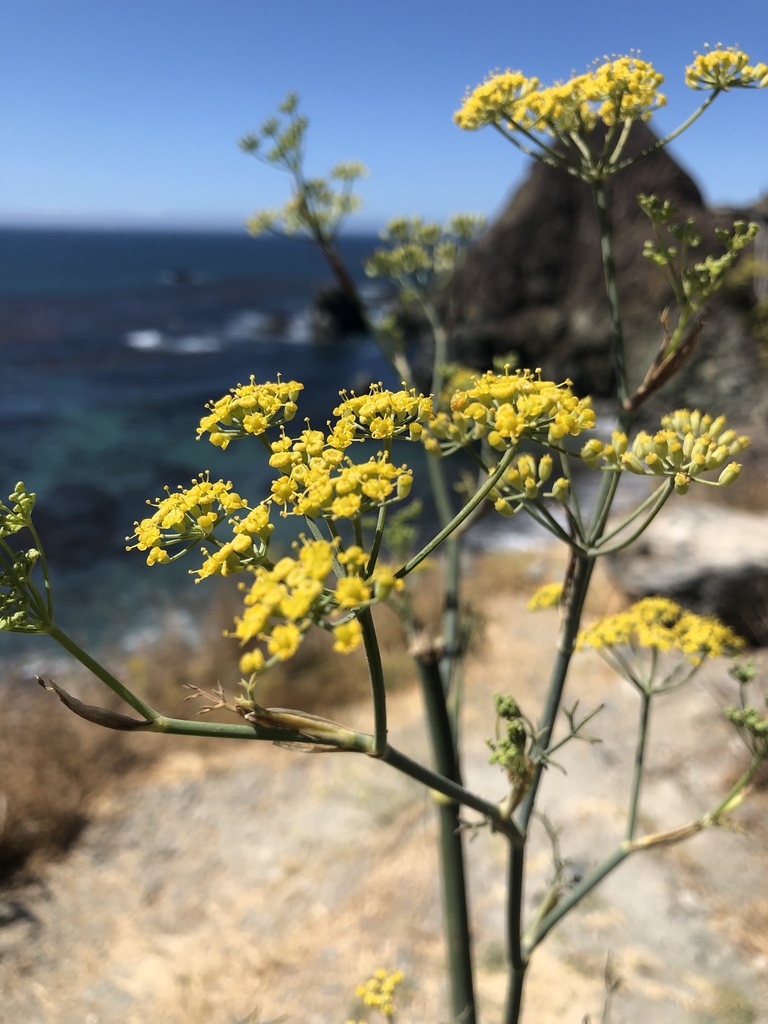
Fennel (Foeniculum vulgare) is a flowering plant species in the carrot family. It is a hardy, perennial herb with yellow flowers and feathery leaves. It is indigenous to the shores of the Mediterranean but has become widely naturalized in many parts of the world, especially on dry soils near the sea-coast and on riverbanks. It is a highly flavorful herb used in cooking and, along with the similar-tasting anise, is one of the primary ingredients of absinthe. Florence fennel or finocchio (UK: , US: , Italian: [fiˈnɔkkjo]) is a selection with a swollen, bulb-like stem base that is used as a vegetable.
Sweet fennel is a highly aromatic plant, prized for its wonderful flavor commonly used in cooking. The name "fennel" originates from the Middle English words "fenel" or "fenyl." The herb's naturally sweet taste gave rise to the name "sweet fennel."
Fennel has moderate resistance to disease but can be prone to illnesses such as leaf spot. Its vulnerability to insect pests varies with the variety, though many are not highly resistant to pests. Regarding care, fennel requires regular watering and fertilization, and yellow leaves should be pruned frequently. It is important to manage pests and diseases as they appear and to harvest the plant in a timely manner. Fennel is appropriate for people who can dedicate some time and energy to routine care.
How to keep Foeniculum Vulgare.
Light
Fennel grows best when it gets plenty of daylight, which promotes strong growth. Its native habitat has long periods of sunlight. Still, it can survive under a canopy of filtered light. Too much or too little sun can cause less-than-ideal growth.
Water
Sweet fennel, which originates from the Mediterranean, thrives in dry conditions and is notably tolerant of drought. It grows best in well-drained soil and requires moderate watering, usually about twice a week, to prevent over-saturation. During wet seasons, when there is more rainfall, it needs less watering.
Humidity
This plant will thrive in moderate humidity, which is probably the level in your home. However, misting it a few times a week can be very beneficial. Make sure the room has good ventilation.
Temperature
Fennel is naturally suited to moderate environments and prefers temperatures of 68 to 95 °F (20 to 35 ℃). Seasonal temperature shifts may require appropriate acclimatization techniques to ensure its growth.
Fertilizer
To maximize fennel’s yield and flavor, supply ample nitrogen throughout the entire growth cycle, including pre-planting and at harvest. Well-watered, properly fertilized plants produce abundant, healthy leaves and reduce bitterness. Before planting, amend the soil with organic matter like compost or manure, ideally 2 to 8 weeks beforehand.
Pruning
Sweet fennel features delicate, feathery leaves and bright yellow flowers. To encourage bushier growth and eliminate any dead parts, prune it from early to late spring by cutting back the stems. Regular trimming helps prevent legginess and keeps the plant's height under control. Be sure to use clean, sharp tools to minimize damage and reduce the risk of disease.
Pot & Repot
Repot Fennel in early spring. Choose a pot that is wider than it is deep and has good drainage. Use a well-draining, loamy potting mix amended with compost. Gently remove old soil from the bulb and plant it at a depth equal to the bulb’s height. Water thoroughly after repotting and place the pot in a sunny spot. Avoid overwatering to prevent bulb rot.
Toxicity
Fennel is generally non-toxic; however, sensitive individuals may experience allergic reactions. Skin irritation and redness from physical contact with the plant are also common. The oil of fennel may also cause hallucinations and seizures.
Further reading →
The toxicity and danger assessments provided are for reference only. We do not assure their accuracy, so it's crucial not to depend on them. Seek professional advice when necessary for accurate guidance.
Botanical profile.
- Plant Type
- Herb
- Life Cycle
- Perennial, Biennial, Annual
- Genus
- Foeniculum
- Family
- Apiaceae
- Hardiness Zone
- 3-10
- Mature Height
- 0.4 m to 2.13 m
- Mature Spread
- 91 cm
- Leaf Color
- Green, Blue
- Leaf Type
- Deciduous
- Flower Color
- Yellow
- Flower Size
- 5.08 cm to 8.89 cm
- Bloom Time
- Early summer, Mid summer
- Planting Time
- Spring
- Harvest Time
- Mid summer
- Native Area
- Libya, Egypt, Turkey, Slovakia, Montenegro, Pakistan, Slovenia, Morocco, Croatia, Yemen, Uzbekistan, Russia, Iraq, Jordan, Portugal, France, Saudi Arabia, Tajikistan, Tunisia, Cyprus, Bulgaria, Armenia, Greece, Lebanon, Serbia, China, Afghanistan, Syria, Italy, Spain, Bosnia and Herzegovina, Israel, Iran, Albania, Azerbaijan, Algeria, Turkmenistan
Other names.
Reader questions.
What should I do if I give my Sweet fennel too much or too little water?
Sweet fennel is prone to overwatering, which can cause bulb rot. Some symptoms of overwatering include a mushy bulb, spotted and flopping stems, droopy flowers, and yellowed stalks. While it is normal for leaves to turn yellow at the end of the blooming period, if they turn yellow before the flowers have bloomed, it is a sign of overwatering. Unfortunately, bulb rot cannot be reversed, but if caught early, the affected parts of the bulb should be carefully removed, along with the soil. Pots and tools should be disinfected to prevent the spread of fungus. Outdoor plants should be replanted in a different location. Underwatering is less problematic, but signs include no blooms, sagging stalks, and browning around the edges of flower petals. If you have underwatered your Sweet fennel, give it a good drink without saturating the soil. Avoid overwatering, as this can lead to root rot and fungus growth on the bulb. Symptoms of fungal damage include spots on leaves and buds, as well as discoloration and death of leaf tips.
Why is it important to add fertilizer to my Sweet fennel?
Sweet fennel, which is cultivated for its edible leaves, requires specific nutrients to grow properly. Among the main nutrients plants need (nitrogen, phosphorus, and potassium), nitrogen plays the most crucial role in supporting foliage development. However, Sweet fennel often struggles to obtain sufficient nitrogen from the soil for a satisfying harvest. To overcome this, many gardeners choose to supplement by providing Sweet fennel with additional nitrogen-rich food.
What are the sunlight requirements for sweet fennel?
Sweet fennel requires full sun exposure to thrive, which means it needs more than 6 hours of sunlight daily. It can also grow under partial sun, receiving about 3-6 hours of sunlight. Ensuring your garden spots provide a balance of light and shade is crucial for the optimal growth of your plants.
What is the preferred temperature range for Sweet fennel?
Sweet fennel is naturally adapted to moderate environments and thrives best within a temperature range of 68 to 95 °F (20 to 35 °C). It prefers relatively warm temperatures, which is important for its growth, especially during winter cultivation. Keeping the environment above 20°C and ensuring it remains above freezing point are key to preventing damage to the plant. During colder winters, when temperatures approach -5°C (25°F), protective measures such as indoor relocation or the creation of a temporary greenhouse using materials like plastic film or fabric are advisable.
How frequently should I water my Sweet fennel?
Sweet fennel is a relatively low-maintenance plant that can be grown in a pot or directly in the ground. However, it thrives best when planted directly in the ground in the sunniest and hottest part of your garden. Since it is a bulb plant, it is important to be careful not to overwater it while it is growing, as this could cause the bulb to rot. After planting, give the fennel a good watering to kickstart its growth, but then you can leave it alone until you start to see shoots appear. Once new leaves have grown, it is best to check the moisture of the soil before watering again. To do this, stick your finger about 2-3 inches below the surface of the soil. If it feels wet, there is no need to water the plant. For potted plants, also check the water collection tray for any standing water, as this indicates that the plant does not need to be watered. For a more accurate reading, you can use a moisture sensor inserted about 2-3 inches into the soil. Ideally, the reading should be in the middle of the "moist" category. It is recommended to water your Sweet fennel once per week for the best results.
When should I fertilize my Sweet fennel to get the best results?
To benefit your Sweet fennel, there are a few important points to keep in mind when applying fertilizer throughout the growing season. First, prepare the ground at least 2 to 8 weeks before planting by thoroughly amending the soil with nutrient-rich organic material like compost or manure. At planting time, amend the soil again using the same method. Once your seedlings emerge and reach around 2 inches tall, apply the next dose of fertilizer. From there, you can continue regularly feeding your Sweet fennel with rich organic matter or a commercial fertilizer until harvest. A good schedule to follow is fertilizing every two to three weeks. Additionally, it's beneficial to add a layer of compost or manure around the plant to provide a continuous supply of nutrients.
How does sunlight affect sweet fennel's growth?
Ample sunlight during the day is essential for the robust growth of sweet fennel, as it originates from habitats characterized by extensive sunlight exposure. Although sweet fennel can survive under a canopy of filtered light, both an overabundance and a lack of sunlight can lead to suboptimal growth patterns.
How does Sweet fennel react to low temperatures, and what solutions are available?
Sweet fennel has a moderate tolerance to low temperatures but thrives optimally between 20°C and 35°C. During winter, it's crucial to keep it above 0°C to prevent damage. If temperatures fall below -35°C, the plant's leaves may darken, and in severe conditions, symptoms such as water-soaked necrosis, wilting, drooping, and a gradual color change to brown can occur. To remedy frost damage, affected parts should be trimmed, and the plant should be moved indoors to a warm environment or protected with a makeshift greenhouse. Placement near a south-facing window ensures ample sunlight, and supplemental lighting can be used if light is insufficient.
How should I change my watering routine for Sweet fennel based on different conditions?
Sweet fennel is a hardy plant that can withstand tough conditions. When planted outdoors, it usually doesn't need much water and can tolerate long dry spells. Just ensure that the soil has good drainage. However, when growing in pots, be cautious with watering as overwatering can cause bulb rot. Water it less frequently indoors and ensure the pots have drainage holes and well-drained soil. During the growing phase, water the sweet fennel about one inch per week to encourage flower growth. Adjust the watering frequency based on the climate, as hot and dry conditions may require more frequent watering while humid climates may need less. Always check the soil moisture level to avoid excessive wetness. Sweet fennel prefers moist soil with good drainage.
When is the best time to not fertilize my Sweet fennel?
When it comes to fertilizers, remember that nitrogen-rich ones are great for lush foliage growth. However, be cautious about using them near other vegetable plants that need to prioritize bearing fruit instead of growing more leaves. Otherwise, you might end up with vegetable plants that have plenty of foliage but produce few actual vegetables. If you're nurturing Sweet fennel, avoid getting any fertilizer on its leaves as it can cause burns. Apply fertilizer a few inches away from the plant's base instead. In case your Sweet fennel is facing issues such as disease, pests, or drought, hold off on fertilizing until those problems are resolved. Fertilizer can help healthy plants thrive, but it can harm plants that are already struggling.
What should I do if my indoor plants don't get enough natural sunlight?
If your indoor plants aren't receiving sufficient natural sunlight, especially in winter or less sunny spaces, consider using artificial lighting. LED lights are recommended because they can be customized to provide specific wavelengths needed by your plants. Full sun plants require 30-50W/sq ft, partial sun plants 20-30W/sq ft, and full shade plants 10-20W/sq ft of artificial light. Ensure the light source is placed 12-36 inches above the plant and mimics natural daylight hours, with most plants needing 8-12 hours of light per day.
What should be done when Sweet fennel experiences high temperatures?
During hot summer months, keeping Sweet fennel's temperature below 35°C is essential to avoid inhibiting its growth. Excessive heat above 41°C can lighten leaf colors and increase susceptibility to sunburn. Solutions include trimming sunburned or dried-up parts, relocating the plant to a shaded area, especially from the afternoon sun, and maintaining soil moisture by watering in the morning and evening.