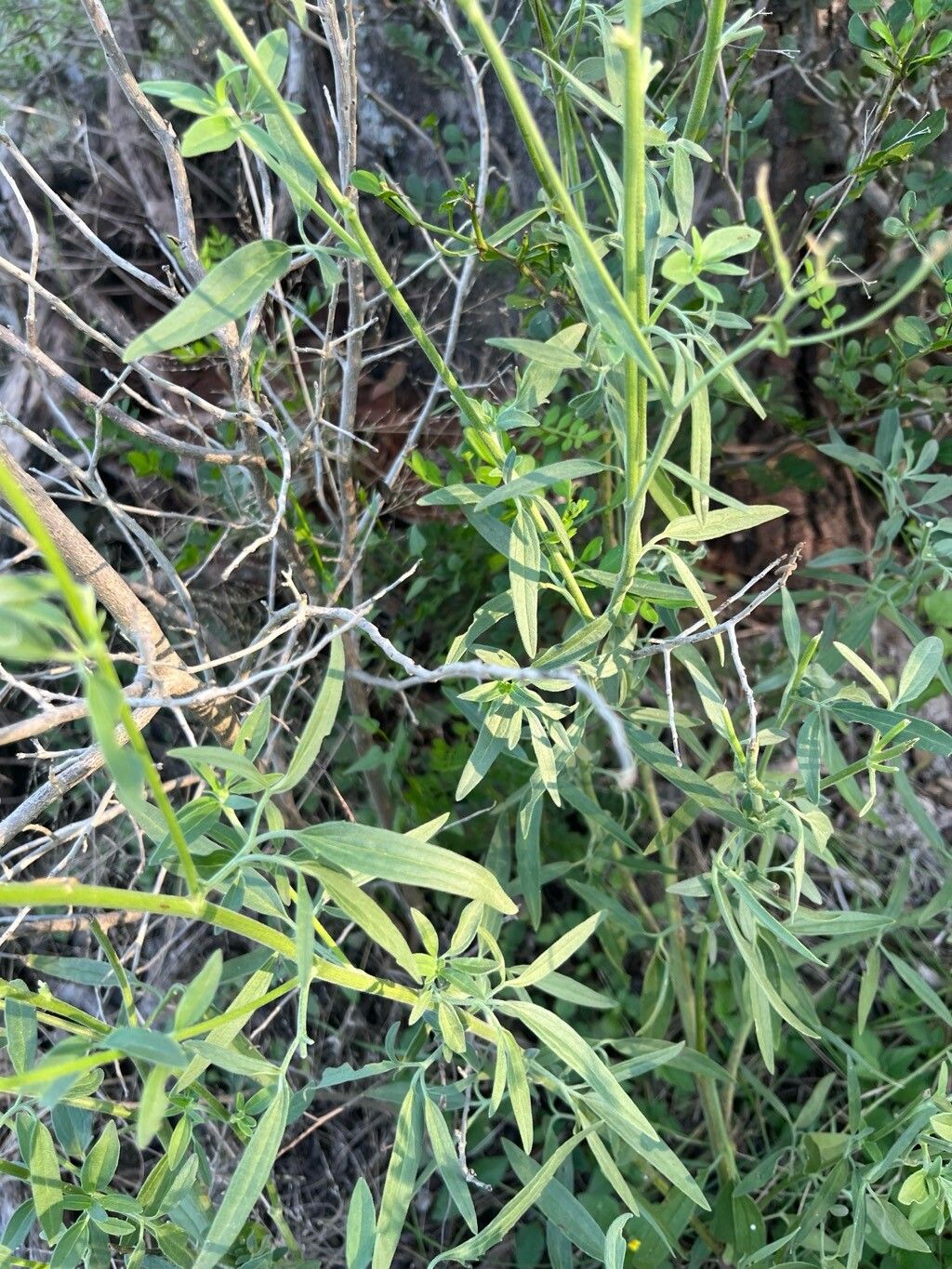
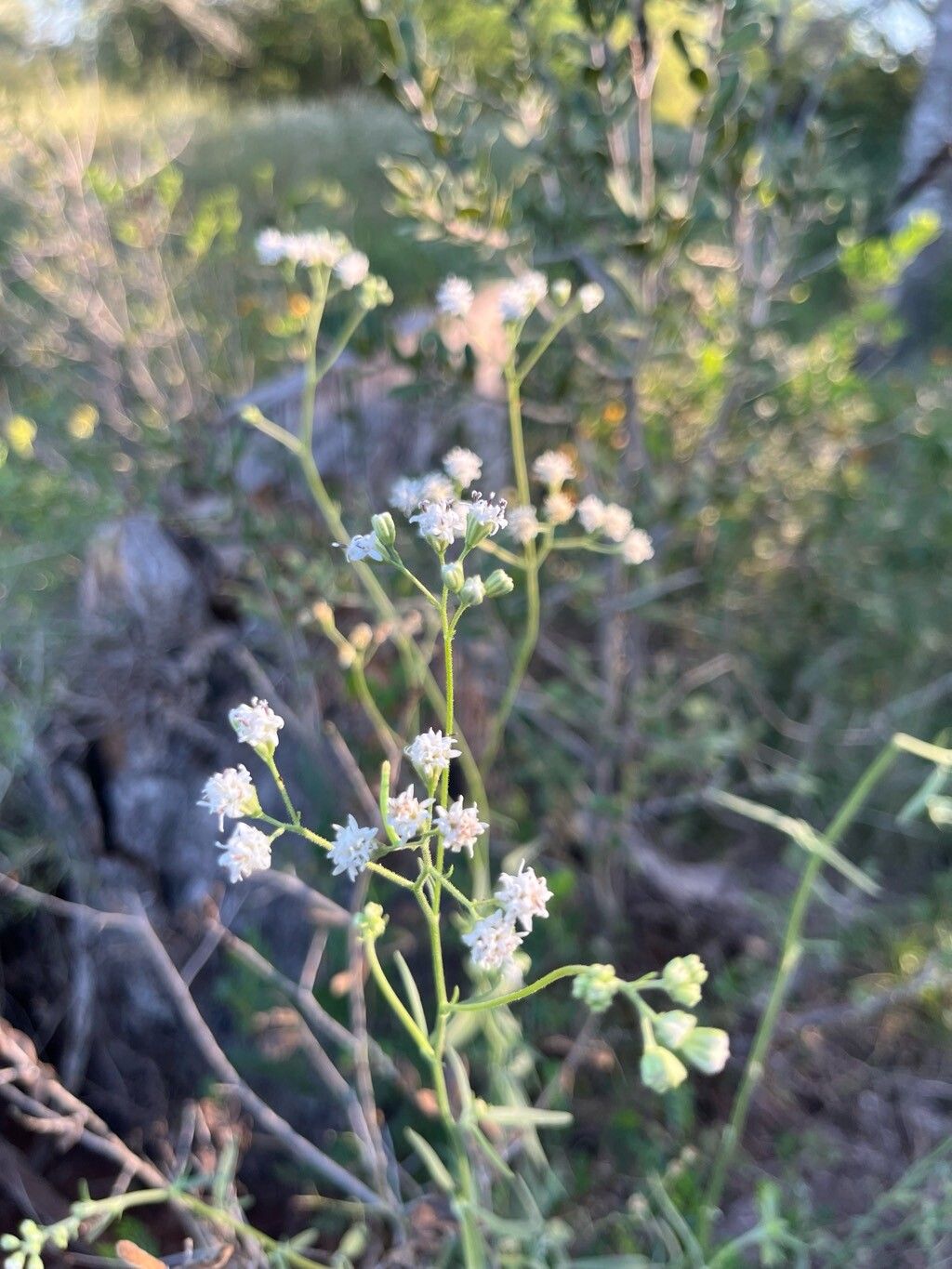
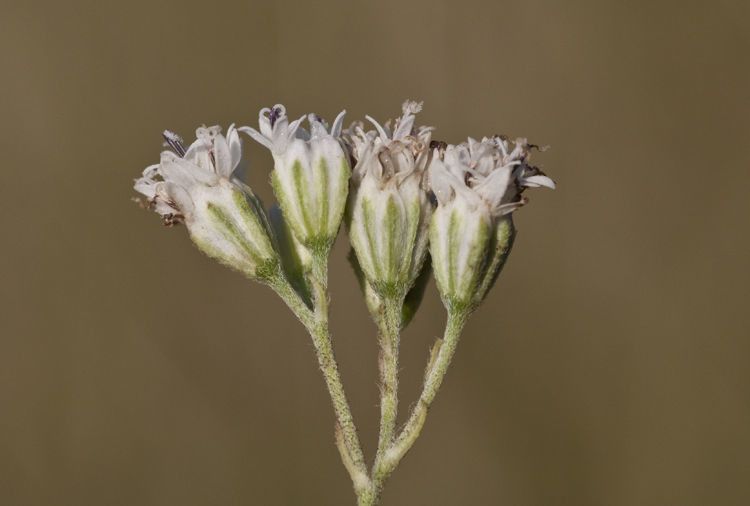
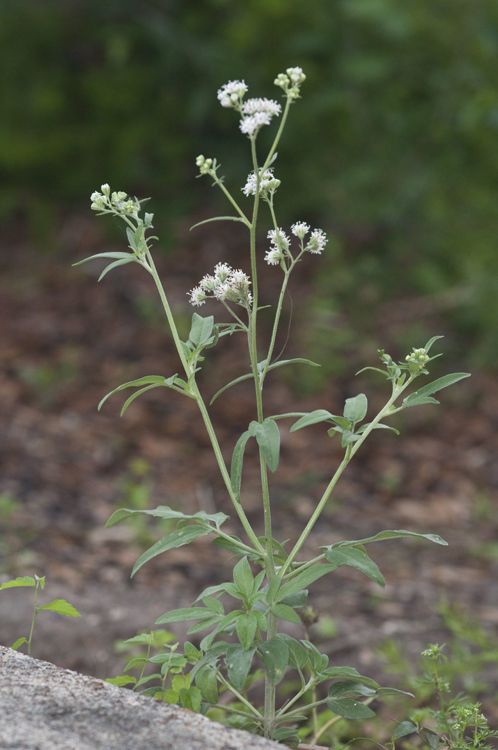
Florestina tripteris, the sticky florestina, is a North American species of flowering plants in the sunflower family. It is found in Mexico (from Chihuahua and Nuevo León as far south as Guerrero) and in the south-central United States (Texas).Florestina tripteris is a perennial herb up to 60 cm (2 feet) tall. One plant produces many flower heads in a branching array. Each head contains as many as 30 white disc flowers but no ray flowers. The species grows in open, sunlit locations.
Sticky florestina has strong resistance to disease and is generally not susceptible to illnesses. Still, it can be vulnerable to pests and diseases present in its environment. When infections do occur, they are typically mild. Regarding care, this plant needs moderate upkeep. It should be pruned regularly to preserve a neat appearance and support healthy growth. Applying fertilizer can also encourage flowering. Sticky florestina is appropriate for anyone with an outdoor area, like a garden or patio, and does not demand extensive care experience. It may require increased attention if kept indoors.
How to keep Florestina Tripteris.
Light
The sticky florestina is indigenous to luminous, open habitats where it prospers in total sun exposure. It can endure conditions with partial sun, but it best grows under the direct sunlight. This plant, which completes its lifecycle in one or two years, is recognized for its predilection towards the sun.
Water
Sticky florestina flourishes in areas with intermittent rainfall, needing to be watered just twice a week. This plant's drought tolerance and resilience make it well-suited for outdoor growth. To mimic the moisture levels of its native habitat, it's important to water it carefully during active growth periods.
Temperature
Sticky florestina adapts well to temperature, tolerating higher heat and broader temperature fluctuations. In hot weather, pay attention to watering and provide appropriate shade to prevent sunburn. However, Sticky florestina is fairly sensitive to low temperatures; it can withstand some cold, but excessively cold conditions may cause frost damage.
Fertilizer
Administering regular, low intensity applications of fertilizer can be beneficial for Sticky florestina in encouraging robust leaf development. Sticky florestina should be fertilized roughly on a monthly basis throughout the summer. Nitrogen is an essential nutrient for leaf growth and utilizing sources rich in nitrogen can facilitate the flourishing of Sticky florestina.
Pruning
Sticky florestina is a flowering plant known for its sticky texture. To help it thrive, it's important to prune it from early to late spring. Start by removing any dead or damaged stems to encourage new growth and maintain its shape. Pruning also improves air circulation, which lowers the risk of disease. Be sure to make careful cuts to preserve the plant's natural form and prevent unnecessary stress.
Botanical profile.
- Plant Type
- Herb
- Life Cycle
- Annual
- Genus
- Florestina
- Family
- Asteraceae
- Hardiness Zone
- 9-11
- Mature Height
- 30 cm to 61 cm
- Mature Spread
- 20 cm to 40 cm
- Leaf Color
- Green
- Leaf Type
- Deciduous
- Flower Color
- White
- Flower Size
- 0.51 cm to 0.76 cm
- Bloom Time
- Summer
- Planting Time
- Spring, Autumn
- Harvest Time
- Late summer, Early fall, Mid fall
- Native Area
- Mexico
Other names.